REVIEW · BERLIN
Cold War and Berlin Wall Tour in Italian
Book on Viator →Operated by Vive Berlin Tours · Bookable on Viator
Berlin’s Cold War story clicks fast on foot. This 3.5-hour Italian-guided walk links the Memorial of the Berlin Wall with the East Side Gallery, while sprinkling in the politics, architecture, and escape attempts that made Berlin so tightly controlled. I especially liked how the Italian commentary helps you connect the dots between places that look ordinary from street level but were anything but ordinary back then.
Two things I really liked: you get a time-saving route to hit several key sites in one go, and you’re guided clearly enough to understand why each spot mattered, from ghost stations to the GDR’s grand buildings. One thing to consider: the pace is built for coverage, not long independent wandering—so if you want to linger in each place, bring that mindset (and plan a little extra time on your own afterward).
In This Review
- Key Highlights You’ll Notice Right Away
- Why This Italian Cold War Walk Works So Well
- Finding Vive Berlin Tours at Potsdamer Platz (And Getting Started Smoothly)
- Berlin-Nordbahnhof Ghost Stations: A Short Stop With a Strong Payoff
- Memorial of the Berlin Wall: The 50 Minutes That Give Meaning to Everything Else
- Alexanderplatz and GDR Architecture: Where Politics Show Up in Plain Sight
- Berlin TV Tower Outside Only: Views Are a Bonus, Not the Main Course
- Karl-Marx-Allee: Stalinist-Era Buildings and the Early GDR Vibe
- East Side Gallery: Murals, Freedom, and the Wall’s Longest Stretch
- Getting the Most Out of the Italian Commentary
- Practical Stuff That Makes or Breaks a Walking Tour
- Who This Tour Suits Best (And Who Might Want Another Option)
- Should You Book This Cold War and Berlin Wall Tour in Italian?
- FAQ
- What language is the guide?
- How long is the tour?
- Where does the tour start and end?
- When does the tour start?
- Do I need to buy tickets for the sights?
- What sights are included on the walk?
- Is transportation included?
- Are food and drinks included?
- What’s the cancellation policy?
Key Highlights You’ll Notice Right Away
- Italian-speaking guide who keeps the story moving site to site
- Berlin Wall Memorial stop with context on victims and escape systems
- Ghost station talk at Berlin-Nordbahnhof in a short but meaningful window
- GDR architecture moments at Alexanderplatz and Karl-Marx-Allee
- East Side Gallery murals on the wall’s longest preserved stretch
- Outside-only TV Tower view so you keep the tour on schedule
Why This Italian Cold War Walk Works So Well
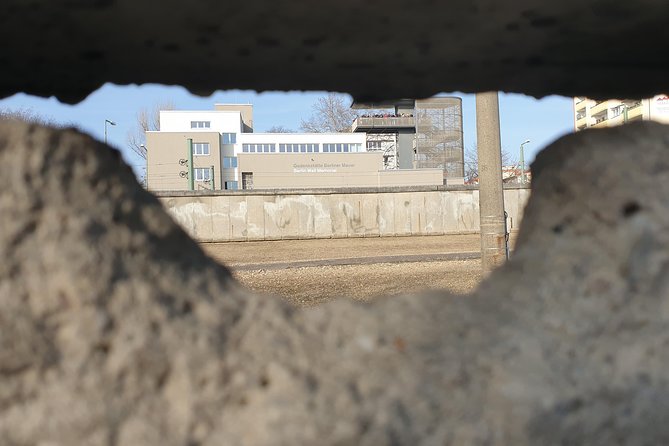
Berlin can feel like a museum you didn’t buy tickets for—there’s history everywhere, but it’s easy to miss the meaning. This tour solves that with a simple promise: walk a smart route and get the story explained in Italian as you go. You spend less time figuring out what’s worth your time and more time understanding what you’re actually looking at.
At $27.87 per person for about 3 hours 30 minutes, it’s priced like a very practical “get your bearings” experience. The value isn’t just that it’s guided. It’s that it ties together multiple Cold War-era locations—Memorial, GDR-era city planning, and the wall’s remaining wall segment—so the trip adds up to more than the sum of the stops.
Also, the group size is kept to a maximum of 25. That matters. Big crowds can turn a historical walk into a slow shuffle. Here, you’re more likely to hear the guide and keep moving without constantly playing catch-up.
You can also read our reviews of more tours and experiences in Berlin.


Finding Vive Berlin Tours at Potsdamer Platz (And Getting Started Smoothly)
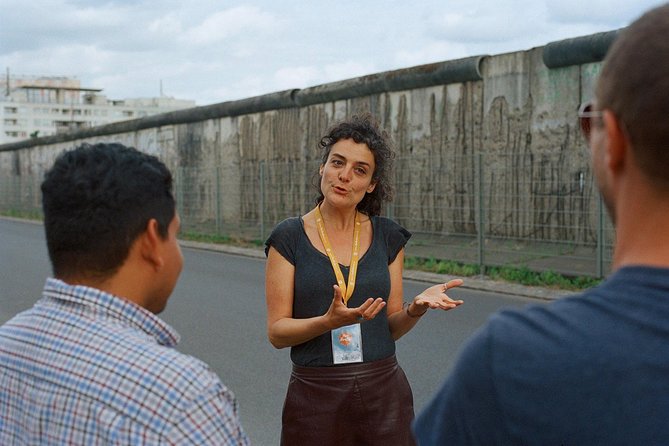
The tour starts at Potsdamer Platz 10, near the S/U-Bahn Potsdamer Platz station. When you arrive, look for the blue bicycle and the VIVE BERLIN TOURS logo/flag—this is your visual shortcut so you don’t waste time scanning faces.
Start time is 10:00 am, and the tour runs roughly 3 hours 30 minutes. You’ll also finish at the East Side Gallery area, and the guide can tell you which public transport to use next. That little bit of advice is more useful than it sounds. In Berlin, station hopping can be confusing if you’re already walking and thinking.
You’ll get a mobile ticket, so you don’t need to hunt for paper instructions. And since transportation to and from the sights isn’t included, I’d treat this as a guided walking-and-stops experience: you arrive, you walk, you leave with the route explained.
Berlin-Nordbahnhof Ghost Stations: A Short Stop With a Strong Payoff
One stop happens at Berlin-Nordbahnhof, and it’s only about 10 minutes—but it’s a great example of what makes this tour work. You’re not spending all day on one location. Instead, you’re learning what to notice.
Here, the guide focuses on the history of ghost stations. Even if you don’t know the Cold War timeline yet, you can still understand the idea quickly: places that look like normal infrastructure can carry an entire story of control, avoidance, and division. You’ll walk away with a new mental lens for the stations you see later on your own.
If you want to get the most out of this stop, keep your attention on what the guide points out. In a short time, your job is simple: look first, ask questions if you have them, and don’t rush to your next photo.
Memorial of the Berlin Wall: The 50 Minutes That Give Meaning to Everything Else
The Memorial of the Berlin Wall is the heart of the tour, with about 50 minutes there. This is where the experience becomes more than city sightseeing. You’ll learn how it was possible to build the Wall, plus the tragic stories connected to the victims.
The tour also covers the escape systems used by people trying to leave. That part is the emotional core: you’re watching how a physical barrier turned into an entire system of risk. The guide’s commentary helps you understand what the Wall was meant to do, not just what it looked like.
Because this is the longest stop, it’s also where your planning matters most. Wear comfortable shoes. Take a few moments to slow down while you’re there—don’t treat it like a quick photo checkpoint. You’ll get more from the explanations if you give your brain time to process what you’re seeing.
And yes, entry is free for this stop as part of the experience.
Alexanderplatz and GDR Architecture: Where Politics Show Up in Plain Sight
After the Memorial, the route moves to Alexanderplatz for about 15 minutes. This is a smart pairing. You go from the Wall’s human story to the GDR’s public face.
At Alexanderplatz, the guide explains the German Democratic Republic (GDR) and points out typical architecture. You’ll also hear about major public demonstrations that helped lead toward the fall of the Wall. The key is that you’re not only learning about buildings. You’re learning how people used public space—how crowds and political pressure mattered.
This stop is short, so you won’t have time to do a deep architectural study. But you will leave with clearer “what am I looking at?” instincts. That’s huge in Berlin. The city looks bold and monumental, but without context it can stay just aesthetic.
If you’re the type who likes to take notes, this is a good place to do it. The guide’s thread between architecture and events gives you a timeline you can carry forward.


Berlin TV Tower Outside Only: Views Are a Bonus, Not the Main Course
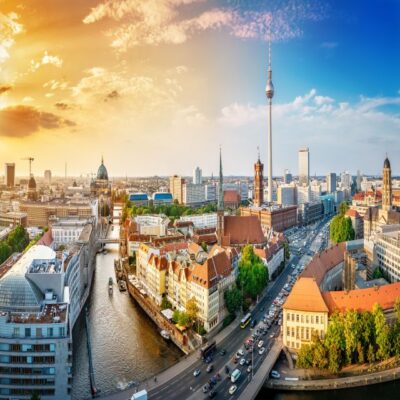
Next up is the Berlin TV Tower for about 10 minutes, with a note that the visit is outside only. So don’t expect to go inside. The point here is more about recognizing the GDR’s most impressive structure in Berlin and seeing it as part of the era’s identity.
Even standing outside, the TV Tower is hard to ignore. It’s one of those landmarks that automatically changes how you understand the skyline. Here, your guide frames it as something built for an old political mindset—then brings you back to what changed after.
Because the stop is brief, this is a “look and learn” moment. If you want a tall-building experience later, you can plan that separately. For this tour, the value is the context around what you’re seeing.
Karl-Marx-Allee: Stalinist-Era Buildings and the Early GDR Vibe
Karl-Marx-Allee gets about 20 minutes, and this stop is where the tour really feels like a walk through the GDR’s visual language. You’ll move along a boulevard surrounded by buildings from the Stalinist era, and the guide explains the beginnings of the GDR.
This is one of those areas where architecture can feel like propaganda without ever saying a word. The buildings are big, planned, and force you to slow your mind down to match their scale. With the guide’s commentary, you’re better able to see why the state wanted places like this to exist.
Practical tip: take photos if you want them, but don’t let the camera block the explanations. You can snap a couple of shots while still paying attention to what the guide is connecting in the story.
East Side Gallery: Murals, Freedom, and the Wall’s Longest Stretch
The final highlight is the East Side Gallery, about 20 minutes at the longest preserved part of the Berlin Wall. This is the stop that many people recognize already—but guided explanation is what turns recognition into understanding.
You’ll learn why it became famous for its murals and why the artwork became a symbol of freedom. Even if you’ve seen images online, seeing the Wall here in person lands differently. It’s physical. It’s long. And you can feel how a wall can go from barrier to message.
This is also a satisfying ending because the mood shifts. After stories about control, victims, and escape attempts, you’re left with a visual declaration of change. The tour closes here, and the guide can help you figure out your next public transport move.
Getting the Most Out of the Italian Commentary
The guide provides commentary in Italian throughout, which is the core “how” of this experience. You don’t need to be fluent to enjoy it, but you’ll get the best experience if you can follow at least the main ideas.
A helpful mindset: listen for place names, time references, and the cause-and-effect language. For example, one of the guide’s strengths is making moments feel connected—there’s an emphasis on the feeling of 1989, the period when things shifted quickly.
If you speak a bit of Italian, you’ll probably catch more details. If you don’t, visuals still do a lot of work here, because each stop is a clear physical prompt: memorial features, station context, GDR architecture, and wall murals.
Either way, this is a great option if you’re tired of piecing together Berlin’s Cold War story from websites and signs.
Practical Stuff That Makes or Breaks a Walking Tour
This tour lasts about 3 hours 30 minutes and is structured as a sequence of stops, each with a set time. That means you’ll be moving at a steady pace and you won’t get a long free-roam period.
So here’s what I’d do:
- Wear comfortable walking shoes. You’ll be on your feet.
- Bring a camera, but also keep some time with your eyes off the screen.
- If it’s chilly or wet, dress for walking—stops don’t stop the weather.
- Expect short windows of explanation, especially at the TV Tower and Alexanderplatz.
Group limit is 25, which should help with hearing the guide. And the tour uses a mobile ticket, so you don’t need to print anything.
Food and drinks aren’t included. Plan a snack break either before you start or after you finish near East Side Gallery.
Who This Tour Suits Best (And Who Might Want Another Option)
This is ideal if you want to:
- Understand the Berlin Wall story without doing hours of research first
- See multiple key Cold War locations in one walk
- Prefer an Italian-speaking guide over reading everything yourself
- Like architecture and city planning when it comes with real context
It may not be ideal if you:
- Want lots of free time to wander independently inside each site
- Prefer deep museum-style time at one location rather than several stops
- Expect an inside visit at the TV Tower (here, it’s outside only)
If you’re the type who likes to “get the story first, then explore,” this tour fits that rhythm well. If you already know the basics and want only the newest details, you might feel the time is capped by the need to cover the whole route.
Should You Book This Cold War and Berlin Wall Tour in Italian?
I’d book it if you want a focused, guided way to make sense of Berlin’s Cold War landmarks without turning your day into research homework. The strongest reason is the pairing of sites: the Memorial gives weight, while Alexanderplatz, Karl-Marx-Allee, and the East Side Gallery show how the era shaped the city’s public face—and how that face changed.
Two added confidence boosts: the guide-led route keeps you oriented, and the overall experience is short enough that you can still do independent exploring afterward. If you’re curious, bring comfy shoes and keep your expectations realistic: you’re getting an excellent overview with story-rich commentary, not an all-day deep dive into one exhibit.
If that sounds like your style, this is a solid value for $27.87.
FAQ
What language is the guide?
The guide provides commentary in Italian.
How long is the tour?
The duration is about 3 hours 30 minutes.
Where does the tour start and end?
It starts at Potsdamer Platz 10, 10785 Berlin, Germany and ends in the East Side Gallery area (10243 Berlin, Germany).
When does the tour start?
The listed start time is 10:00 am.
Do I need to buy tickets for the sights?
Admission for the stops listed is free within this experience, and you’ll use a mobile ticket.
What sights are included on the walk?
You’ll see Berlin-Nordbahnhof (ghost station talk), the Memorial of the Berlin Wall, Alexanderplatz, Berlin TV Tower (outside only), Karl-Marx-Allee, and the East Side Gallery.
Is transportation included?
No. Transportation to and from the attractions isn’t included.
Are food and drinks included?
No. Food and drinks are not included.
What’s the cancellation policy?
You can cancel for a full refund up to 24 hours before the experience’s start time. If you cancel less than 24 hours before, the amount paid isn’t refunded.