REVIEW · BERLIN
Berlin from Rostock-Warnemünde Cruise Port
Book on GetYourGuide →Operated by T J Travel · Bookable on GetYourGuide
Berlin arrives fast from the cruise port. This 10-hour coach day strings together major sights on both sides of the city, from Charlottenburg Palace exterior views to the Brandenburg Gate and the Holocaust Memorial. I like that you’re not left figuring it out alone, because you get a certified English-speaking guide and a guaranteed return to your ship on time.
The schedule mixes longer reflection stops with shorter “see it and move” moments. I like that the route gives you real time at places like the Fuhrerbunker site, not just a quick glance. The main consideration: the day is packed, so you’ll be looking from façades and monuments more than doing full museum-style experiences.
In This Review
- Key highlights worth knowing
- A one-day Berlin route that fits a cruise schedule
- Price and timing: what $222 really covers
- West Berlin in daylight: Charlottenburg Palace and Kurfürstendamm
- Reichstag exterior and the Brandenburg Gate: big symbols, short stops
- Holocaust Memorial and Fuhrerbunker: time for reflection on a hard subject
- Central Berlin landmarks: Alexanderplatz, Museum Island, and Bebelplatz
- Cold War edges: Checkpoint Charlie and Topography of Terror
- Coach-day realities: what will make or break your experience
- Who this tour is best for (and who should skip it)
- Should you book Berlin from Rostock-Warnemünde on this schedule?
- FAQ
- Where do I meet the tour in Warnemünde?
- How long is the Berlin tour from the cruise port?
- How will we travel between Warnemünde and Berlin?
- Do we stop only for photo views, or is there guided time?
- Are food and beverages included?
- Is this tour wheelchair accessible?
Key highlights worth knowing
- A straight-day Berlin route from Warnemünde Cruise Center with air-conditioned coach comfort for long travel time
- Serious focus on 20th-century memory sites, including the Holocaust Memorial and Topography of Terror
- Charlottenburg Palace exterior plus West Berlin pass-bys like Kurfürstendamm and Siegessäule
- Political Germany in quick hits, with the Reichstag façade and nearby landmarks by the Spree River
- Lunch time built in after the Fuhrerbunker stop, with the guide helping you find places with convenient restrooms
- Tight timing that can be affected by road traffic and whether the ship docks smoothly
A one-day Berlin route that fits a cruise schedule
If Berlin is on your list but you only have a day off the ship, this kind of tour is built for that exact reality. You start at Warnemünde Cruise Center, ride into Berlin, and come back the same day. It’s a lot of ground for one day, but the order makes sense: you move from the city’s west-side grandeur toward the center, then into the memorial-heavy stops, and finally into a few Cold War and landmark areas before the return coach.
The feel is practical. You’re not trying to do everything you could in Berlin. You’re doing the most recognizable landmarks and the most important historical stops, with a guide to keep the story straight and your logistics from turning into a scavenger hunt.
You’ll spend a lot of time seeing exteriors and walking short sections near the sights. That’s not a weakness here—it’s the way you make a 10-hour day work from a cruise port with a long coach ride each way.
You can also read our reviews of more boat tours in Berlin


Price and timing: what $222 really covers
At $222 per person for a 10-hour outing, you’re paying for more than sightseeing. You’re paying for three things that matter on a cruise day trip: transportation, a guided narrative, and the pressure-relieving promise of getting you back on time.
First, there’s the travel time. The plan includes about a three-hour coach ride into Berlin and about three hours back. That alone eats up most of your day, which is why the schedule leans on quick stops and pass-by views. Second, you’re getting a certified English-speaking guide in Berlin, which helps you connect the dots between monuments that can otherwise feel like disconnected photo stops. Third, the included pickup and drop-off plus the guaranteed return to your ship is a big part of the value.
What you should know for expectations: this is not a slow, museum-deep Berlin day. It’s a curated highlights route with enough time to look, walk a bit, and understand what you’re seeing—then move on.
Also, food and beverages are not included. The tour builds in a lunch break after the Fuhrerbunker stop, and your guide will help you locate a dining option with convenient restrooms. Plan on paying for your own meal, and treat it as part of your day’s cost budgeting.
West Berlin in daylight: Charlottenburg Palace and Kurfürstendamm
Your first Berlin stop is Charlottenburg Palace. You get about 30 minutes focused on the exterior. Even outside, this matters because it sets a different tone from the memorial-heavy parts that come later. This palace, built in the 17th century as a summer residence for Sophie Charlotte (Queen consort of Prussia), gives you a quick lesson in how Berlin’s power and culture also expressed itself through architecture and royal life.
Then you pass along Kurfürstendamm, one of Berlin’s most famous shopping and cultural avenues. The tour frames it as a long stretch—about 3.5 kilometers—lined with boutiques, cafes, theaters, and shops. You don’t stop for a long wander here, but the pass-by is useful. You get a sense of the city’s everyday energy and its long-running tradition as a major address for culture and commerce.
You also get a pass by Victory Column (Siegessäule). Seeing it from the road is about context more than close-up detail—this is the kind of monument that reads differently once you later learn the surrounding political and historical landscape.
Drawback to watch for: because these are exterior views and pass-bys, you won’t get the kind of time you’d want if you’re the type who loves interior rooms, galleries, or a long photo session. But for a cruise day trip, it’s a smart use of limited hours.
Reichstag exterior and the Brandenburg Gate: big symbols, short stops
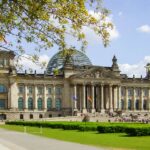
From Charlottenburg/Kurfürstendamm, the route turns toward the political center. You’ll see the Reichstag building façade, with about 15 minutes allotted just to appreciate what Germany’s parliament calls home. The stop is brief, but the façade is famous for a reason, and your guide’s role here is to help you connect the building to the broader story of German governance you’ll keep hearing about at other stops.
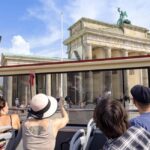
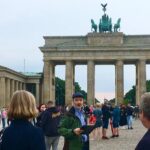
Next comes the Brandenburg Gate, given around 10 minutes. It’s built between 1788 and 1791 and is one of Berlin’s most recognizable landmarks. You’ll likely have time to take photos, read the general context, and then keep moving—exactly what you need on a timed itinerary.
A practical note: photo timing matters around these central sites. Even with a guide, you’re sharing space with other visitors at landmarks that people flock to. Go in expecting motion, not a calm, private moment.
If you want a tour that lets you linger longer at each central monument, this may feel too quick. But if your goal is to see the headline Germany symbols and understand their placement in Berlin’s story, this portion hits the right notes.
Holocaust Memorial and Fuhrerbunker: time for reflection on a hard subject
This tour doesn’t treat the darkest parts as an add-on. You get the Holocaust Memorial for about 15 minutes. It consists of 2,711 concrete slabs spread across a large area. Even if you don’t memorize details, having guided time here helps you understand what you’re looking at and why the design matters.
Then comes the Fuhrerbunker stop, about one hour with a brief walk to the site marking the end of Adolf Hitler’s regime. This is one of the most important blocks on the schedule, and it’s built in a way that gives you more time than the quick-hit viewing stops. Afterward, you get a lunch break, with guide help to find convenient dining and restrooms.
This structure is thoughtful. Lunch after a heavy visit is not just about food—it’s about pacing. You get a chance to reset so you’re not walking straight into your next historical scene while emotionally overloaded.
Possible consideration: if you’re sensitive to sites tied to Nazi-era atrocities and don’t like being guided through them, the schedule can feel intense. But if you prefer a guided approach rather than trying to interpret everything alone, this is one of the tour’s strengths.


Central Berlin landmarks: Alexanderplatz, Museum Island, and Bebelplatz
After the darker stops, the route moves into places that help you see Berlin as a functioning modern capital while still anchored to the past.
You pass Alexanderplatz, one of Berlin’s busiest squares. You’ll take in features like the World Clock and the Fernsehturm (TV Tower) while getting a feel for how the city looks and moves day-to-day. It’s a pass-by, so don’t expect a long stroll, but it’s a good way to break up the emotional weight of the memorial sequence.
Next is Museum Island, with about 15 minutes in the area. This UNESCO World Heritage Site is known for landmark museum buildings, including the Berlin Cathedral and the Old Museum. Again, you’re mostly appreciating architecture from the outside or in the immediate area rather than doing a full museum visit. Still, it gives you a clear visual sense of why people make Berlin a museum destination.
Then there’s Bebelplatz for about 10 minutes. This is where Nazi book burnings occurred in 1933. It’s a short stop, but it’s a powerful one because it connects political repression to culture and everyday life. The tour also includes a drive along Unter den Linden, one of Berlin’s key historical avenues, which helps you understand how central streets stitch together different eras.
Cold War edges: Checkpoint Charlie and Topography of Terror
You’ll make time for Checkpoint Charlie for about 20 minutes. It’s the best-known crossing point between East and West Berlin during the Cold War. The value of a guided stop here is context: the location isn’t just a photo spot; it’s a way to understand Berlin as a city divided in everyday life, not only on maps.
After that you get Topography of Terror for about 15 minutes. This area is tied to the former headquarters of the SS and Gestapo. It’s another emotional, reflective stop where the guide helps you keep the story focused. The duration is short, but it’s the kind of site where even a brief visit can change how you interpret everything else you saw earlier.
Practical note: these Cold War and Nazi-era sites often involve walking and standing. Even if the time blocks look “short” on paper, the mental load adds up.
Coach-day realities: what will make or break your experience
The tour is built around coach travel and guided time, not free-roaming. That’s a positive for cruise passengers, because it reduces risk. You don’t have to figure out train lines, walking routes, or where you’ll meet at the end. The included pickup and drop-off from the cruise port, plus the guaranteed return, is exactly what you want when your ship departure clock is not negotiable.
Still, a coach day is only as smooth as the day itself. One practical lesson from real-world experience: when entry to the port was impossible, a cancellation happened and a refund was not provided. That’s not something you can control, but it’s a reason to double-check your own risk tolerance for cruise-day logistics. If you’ve had docking surprises before, keep that in mind.
Timing is another factor. In one case, the start was delayed, and additional minutes were lost before the group recovered time and kept the promised sights. The guide was described as excellent during that recovery. That tells me two things you can plan around: delays can happen, and a good guide matters when the schedule gets tight.
What you can do to help the tour run well:
- wear comfortable shoes for short walks at multiple monuments
- bring something small to drink, since food and beverages aren’t included
- keep your pace steady at stops so you don’t fall behind the group
Who this tour is best for (and who should skip it)
This experience fits best if you want a guided highlights day without the stress of planning transport and routing. It works well for cruise passengers who want to see major Berlin landmarks like the Brandenburg Gate, plus the memorial sites tied to the Holocaust and Nazi-era terror, plus Cold War landmarks like Checkpoint Charlie.
It’s less ideal if you want deep, inside-the-museum time. Many stops are exterior views, façades, pass-bys, or relatively short monument visits.
It’s also not suitable for people with mobility impairments or wheelchair users. Strollers are allowed, but the tour is still described as not wheelchair accessible. You’ll want a moderate level of fitness for the walking segments and the long coach day.
If you like history and you can handle emotionally heavy stops with respect, this route makes sense. If you prefer lighter sightseeing only, you might feel the balance is too serious.
Should you book Berlin from Rostock-Warnemünde on this schedule?
I’d book this if you’re trying to maximize your one-day Berlin time from the cruise port and you value guided context, especially around the memorials. The pricing reflects the reality of long coach transfers and a structured route, and the guide-led approach is a practical advantage when you’re fitting a capital city into a single day.
I would hesitate if your comfort level with timed stops is low, or if you want lots of inside access. I’d also think carefully if you’re worried about cruise docking reliability, because cancellations linked to port access issues have shown up in real cases.
If you want a “see the headlines and understand the meaning” Berlin day trip, this one is built for you.
FAQ
Where do I meet the tour in Warnemünde?
You’ll meet at the cruise port and the driver/guide will be holding a sign that reads J A T. The pickup time shown in your confirmation is approximate, and you’ll receive the final meeting time by email or message closer to the day of your excursion.
How long is the Berlin tour from the cruise port?
The tour duration is 10 hours.
How will we travel between Warnemünde and Berlin?
You’ll ride in a modern air-conditioned coach, with about a three-hour ride into Berlin and about a three-hour ride back to the ship.
Do we stop only for photo views, or is there guided time?
There is a guided English tour in Berlin. Some parts are pass-by views (like Kurfürstendamm, Victory Column, and Alexanderplatz), while other stops have set viewing or walking time such as Charlottenburg Palace exterior, the Holocaust Memorial, Fuhrerbunker, Checkpoint Charlie, and Topography of Terror.
Are food and beverages included?
No. Food and beverages are not included. After the Fuhrerbunker visit, you’ll have a lunch break and your guide will help you find a place to eat with convenient restrooms.
Is this tour wheelchair accessible?
No, it is not wheelchair accessible. Strollers are allowed, and it requires a moderate level of fitness for the walking parts. It is also noted as not suitable for people with mobility impairments.