REVIEW · BERLIN
An Introduction to Berlin Walking Tour
Book on GetYourGuide →Operated by insightcities.com · Bookable on GetYourGuide
Prussia to the Cold War, all on foot. This 3-hour Berlin walking tour connects the dots between power, ideology, and everyday city space, using major landmarks like the Holocaust Memorial and the Reichstag. I especially like the way the route follows the Berlin Wall line through the center city, and how you get a true academic feel from historians and writers, including guides like Dr. Martin Sauter. One thing to plan for: you’ll use public transport one or twice because some key stops are too far apart to walk comfortably.
You start at Cafe Einstein on Unter den Linden, then move through the political and cultural stages of Berlin: imperial grandeur, Nazi terror, postwar division, and the reunified capital you see today. The pace fits a mixed group well, and the guide format (professors, doctoral students, historians, journalists, art critics, and authors) tends to keep explanations clear and grounded, not just dramatic.
In This Review
- Key highlights worth planning for
- Starting at Cafe Einstein on Unter den Linden
- Potsdamer Platz and the Berlin Wall’s former line
- Holocaust Memorial to the Reichstag dome: democracy you can read
- Napoleon through the Brandenburg Gate, and why Prussia mattered
- Bebelplatz book burning and the mechanics of Nazi power
- Museum Island to Hackescher Markt: Berlin builds culture, then rearranges it
- Alexanderplatz and the Cold War city rewrite
- Checkpoint Charlie: when borders ended, but memory didn’t
- How the 3-hour format works (and what to wear)
- Price and value: is $135 worth it?
- Who should book this Berlin walking tour
- Should you book it?
- FAQ
- How long is the Berlin walking tour?
- What is the price per person?
- Where does the tour start?
- What languages are available?
- Will I need to use public transport during the tour?
- What transit ticket options are provided?
- What kind of guides lead the tour?
- Is the tour refundable if I cancel?
- Can I book now and pay later?
Key highlights worth planning for
- A guided, historian-led route that explains cause and effect across centuries, not just dates
- Berlin Wall path moments that help you visualize how the city was cut in half
- Holocaust Memorial and Reichstag dome linked to how Germany remembers and how democracy is symbolized
- Napoleon, Frederick the Great, and the Brandenburg Gate tying European politics to German nationalism
- Bebelplatz book burning as a direct on-ramp to understanding how the Nazi regime consolidated control
- Checkpoint Charlie at the end where the Cold War’s daily reality becomes concrete
Starting at Cafe Einstein on Unter den Linden
The tour begins at Cafe Einstein, right on Unter den Linden, Berlin’s royal boulevard. Even if you’ve never been to Berlin, this stretch helps you orient fast: you’re in the historic spine of the city, where palaces, museums, and civic buildings line up like chapters in a textbook.
What I like here is the framing. Your guide doesn’t treat Berlin as one timeline. Instead, they treat it like a city where the same streets keep taking on new meanings. You’ll hear how political power reshapes what gets built, what gets controlled, and what gets erased. That theme shows up repeatedly as you move from site to site, especially once the tour reaches the twentieth century.
If you’re the type who wants a walking tour that actually explains the why, not just the what, this starting point is a good signal. It sets the tone for a structured, historian-led walk rather than a casual sightseeing loop.
You can also read our reviews of more walking tours in Berlin


Potsdamer Platz and the Berlin Wall’s former line
From the beginning, the tour’s logic is clear: you’ll start where Berlin’s modern center re-grew from a damaged core. Potsdamer Platz is the anchor. The area is now a business and transport hub, but it once sat in a wasteland linked to East Germany’s most notorious border-zone reality. That contrast is the first gut-check moment of the day.
Then you follow the path where the Berlin Wall once stood, moving toward Tiergarten. For most people, seeing the modern city is one thing. But walking the same general line where the wall ran gives you a different kind of understanding. You begin to notice how access, sightlines, and movement became political tools.
A practical consideration: because Berlin is big and the distance between some key stops can’t be comfortably covered on pure walking, you may need public transport one or twice. The good news is your guide will help you buy tickets in the first metro station if you don’t have a Berlin metro pass.
Holocaust Memorial to the Reichstag dome: democracy you can read
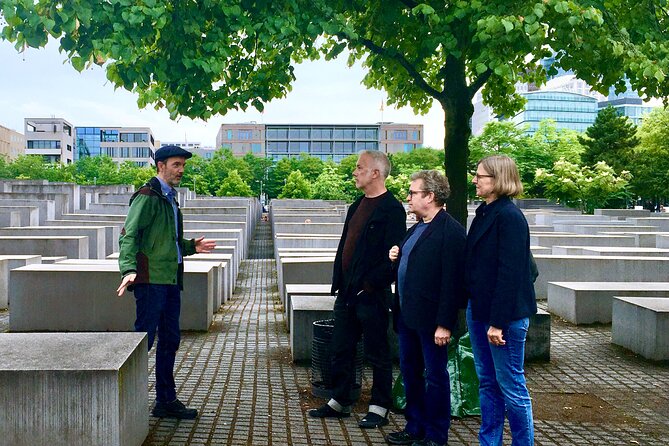
Next comes one of the tour’s most serious stops: the dramatic Holocaust Memorial. Even before your guide speaks, the layout and scale make it hard to look away. Your guide uses this moment to connect memory to politics—how societies decide what to honor, what to expose, and what to warn against.
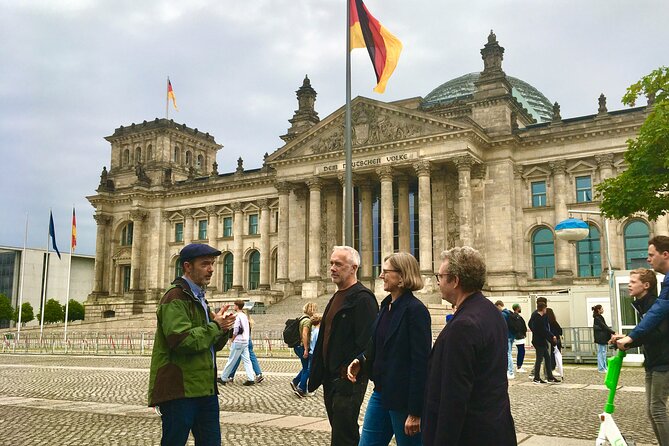
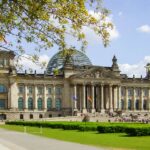
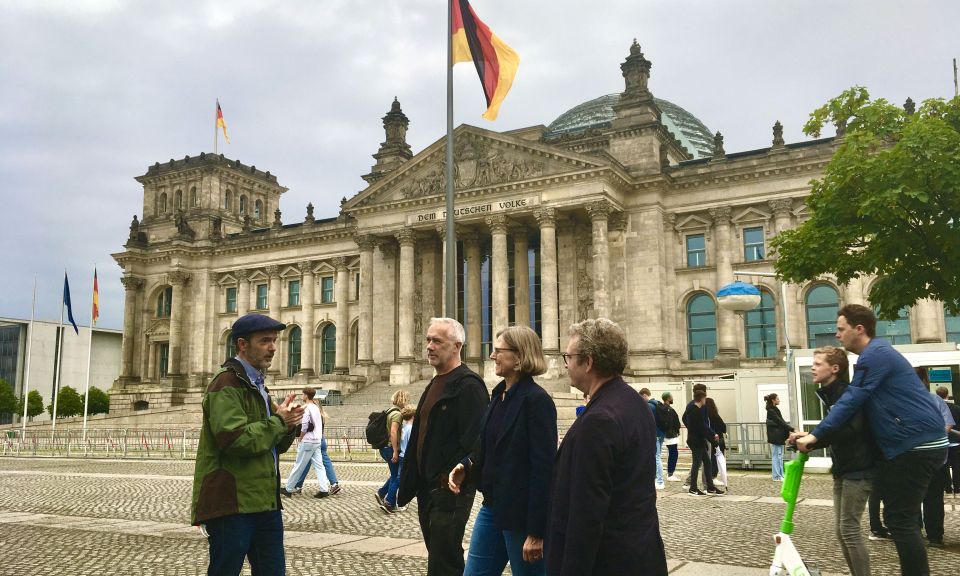
From there, you move to the Reichstag. This is where Berlin stops being just a story about the past and becomes a story about symbolism. You’ll hear about the 1933 Reichstag fire and how the Nazis used it as the excuse to suspend civil liberties and arrest political opponents. That part matters because it shows how authoritarian regimes often move through legal cover.
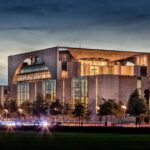
Then you get the other side of the building: the glass dome added in 1992 by Norman Foster. From the ground and in the surrounding explanation, it becomes more than an architectural feature. Your guide points out the idea behind the dome—reunification, transparency, and commitment to democracy—plus how the dome and its walkways create a kind of visual metaphor for how citizens can look back into government.
If you’re trying to understand modern Germany without getting lost in politics-only talk, this pairing is strong. The Holocaust Memorial gives the moral gravity. The Reichstag dome gives a direct line to how democratic intent is built into public space.
Napoleon through the Brandenburg Gate, and why Prussia mattered
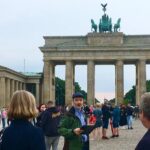
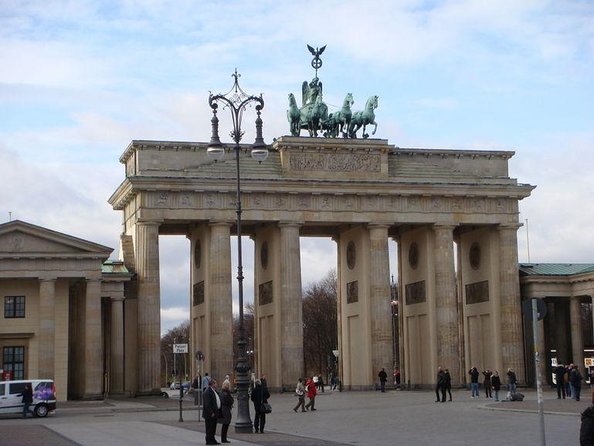
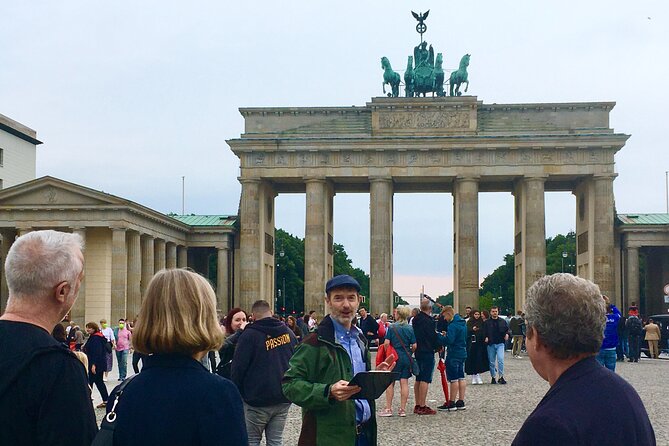
One of the coolest stretches on this tour is where you track Napoleon’s footsteps through the Brandenburg Gate. The guide connects the French Revolution’s ideas to the rise of German nationalism. It’s the kind of explanation that turns a famous postcard into a political mechanism.
From there, you pass through Unter den Linden again in spirit if not in exact repeat walking, and you pause around the equestrian statue of Frederick the Great. Your guide talks about his role as the so-called Poet King and the influence of Prussia’s cultural and militaristic directions. The point isn’t to worship him. It’s to show how small states can remake themselves through force, discipline, and institutions—and how that can echo forward into later tragedies.
This is where the tour’s long view really earns its keep. You start to see how the seeds of twentieth-century catastrophe weren’t born overnight. They grew from earlier power structures, nationalism, and the way states learned to mobilize people.
Bebelplatz book burning and the mechanics of Nazi power
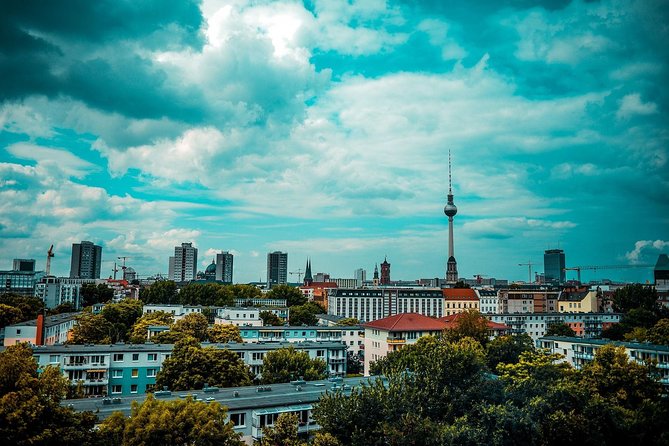
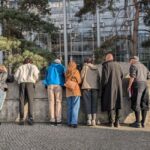
At Bebelplatz, you learn about the Nazi book burning in 1933. The setting is historical, but the meaning is blunt: the regime didn’t only seek control of people. It sought control of ideas.
Your guide connects Adolf Hitler’s rise to power with the broader pattern of what comes next when governments decide that certain voices must disappear. The book burning scene helps you understand the early stages of cultural suppression, which then makes later violence feel like less of a sudden rupture and more like a logical progression.
This stop is emotionally heavier than some landmarks, so it’s worth giving yourself permission to pause and absorb. If you’re sensitive to harsh history, this is the place to slow down. The guide’s job is to keep the story clear, and you’ll feel that clarity when the tour moves from propaganda and suppression to the next layer of twentieth-century division.

Museum Island to Hackescher Markt: Berlin builds culture, then rearranges it
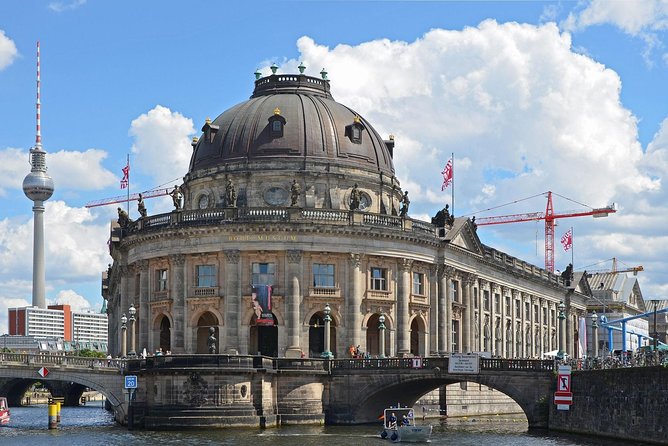
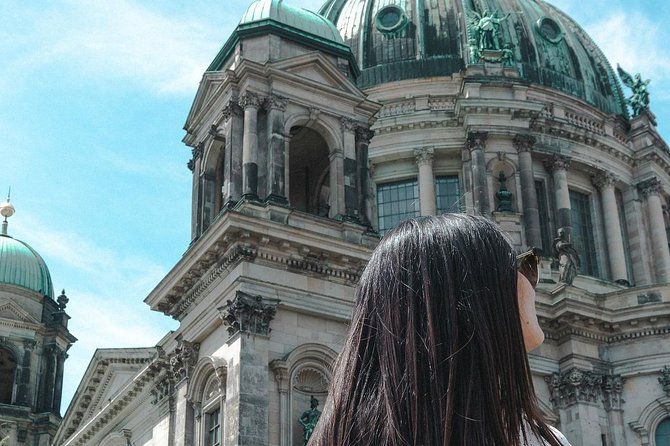
As you cross Museum Island, the tour shifts to nineteenth-century development—Berlin growing into a cultural center and building its identity through art and institutions. You’ll hear it described as Berlin’s answer to major European cultural hubs, which helps you understand why the city’s self-image was never only political. It was also about learning, architecture, and museums as national statements.
Then you move to Hackescher Markt, a pocket of older Berlin where the streets feel calmer and more textured. This area is a nice break from the big monumental sites. It gives you a chance to ramble through nearby courtyards and side spaces where you get a different sense of how Berlin lived before the twentieth century’s extreme breaks.
If you like tours that include at least a moment of human-scale Berlin—brick courtyards, smaller streets, the feeling of moving through older fabric—this is one of the stops that works well without turning into a shopping detour.
Alexanderplatz and the Cold War city rewrite
Then comes Alexanderplatz, and it functions like a visual contrast test. You start with Berlin’s imperial and cultural identity, then you’re brought face to face with how the East rebuilt the city as a showcase.
Your guide explains how in the 1960s East Berlin turned Alexanderplatz into a communist bloc showpiece with new apartment blocks and government buildings, plus the famous TV Tower. Walking here gives you a sense of state power made visible in scale and design choices.
I like this stop because it’s not just about architecture. It helps you understand how regimes use space to signal permanence and control. Even when the political system falls later, buildings remain and shape how people navigate and remember.
Checkpoint Charlie: when borders ended, but memory didn’t
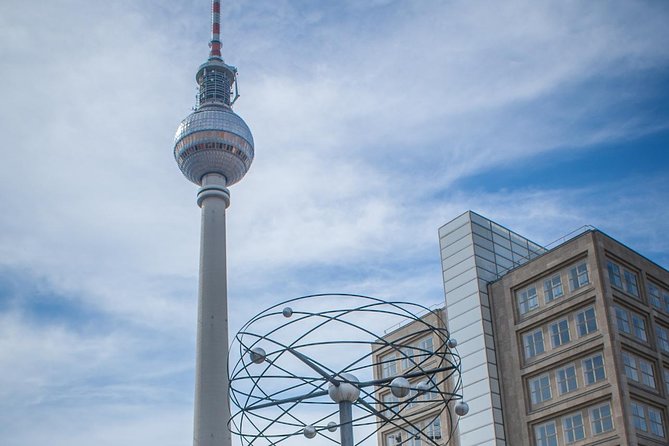
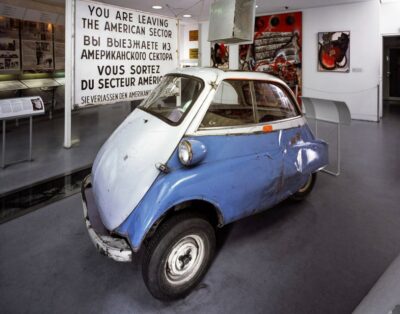
You finish at Checkpoint Charlie, the legendary crossing point between West Berlin and East Berlin. By the time you reach it, the story has stacked up: Prussia’s transformation, imperial nationalism, Nazi consolidation, the Cold War division.
At Checkpoint Charlie, the end of the Cold War becomes real in your mind. Your guide discusses 1989 and how thousands of East Germans poured across the border when the situation changed. It’s a powerful closing note because it ties everyday life to the big global story.
And then your guide brings it back to today: the east/west division still affects Berlin in small ways, even as the city evolves new sensibilities and creative energy. That balanced wrap-up is important. It avoids a simplistic happy ending. Berlin’s present includes both progress and the lingering effects of division.
How the 3-hour format works (and what to wear)
A three-hour walking tour can either feel rushed or feel focused. Here, the structure seems built for focus. You get landmark clustering across time periods, but your guide also gives enough context that each stop feels connected.
Still, plan your day with realistic shoes. You’ll spend time standing near memorials and civic buildings. And because you may take public transport once or twice, keep your schedule flexible around the metro stop rhythm rather than expecting a perfectly continuous on-foot walk.
If you want to prepare in advance, look up the general locations of the stops so you’re not trying to translate Berlin geography while learning serious history.
Price and value: is $135 worth it?
At $135 per person for a 3-hour guided walk with a historian, you’re paying for something that’s hard to replicate on your own: expert interpretation at street level.
This is the key value question. For Berlin’s big sites, you can absolutely create your own DIY route with a map and some reading. But a guide like this adds meaning fast—connecting Prussia’s earlier military and cultural transformation to the later tragedies, explaining why the Reichstag dome was built the way it was, and translating locations like Bebelplatz into how regimes gain control.
The reviews you’ll see around this tour highlight the guide quality and the personal, individualized feel. One review specifically mentions Dr. Martin Sauter and praises the tour as being very individual, with strong subject knowledge. That’s the kind of consistency you want when the content is heavy and the details matter.
So for me, the value lands best if:
- You want history explained with an academic voice, not a casual narration
- You care about linking eras together instead of treating them as isolated stops
- You want a route that’s efficient and well paced for a 3-hour window
Who should book this Berlin walking tour
This tour is a strong fit if you:
- Want a guided, big-picture path through Prussian, Nazi, and Cold War Berlin
- Like walking tours that include serious context and not just monuments
- Prefer an English guide who is a historian or academic professional
- Enjoy structure: a start point, a clear endpoint, and a coherent timeline
It may be less ideal if you:
- Want a purely scenic, light walk with minimal political content
- Dislike memorial sites or heavy twentieth-century history
- Are hoping to avoid any public transport at all (you may use it one or twice)
Should you book it?
If you want Berlin in one focused arc—Prussia to imperial Germany, then the Nazi and Cold War eras, ending with Checkpoint Charlie—this tour is easy to recommend. The pairing of the Holocaust Memorial with the Reichstag dome alone is worth the guided explanation, and the Wall-route walk adds a layer you don’t get from a quick photo stop.
Book it if you like your history tied to the street where it happened, and if you want an expert guide shaping the story for you. Skip it only if you need a light sightseeing day or if you’re strongly opposed to public transport during a walking tour.
FAQ
How long is the Berlin walking tour?
It runs for 3 hours.
What is the price per person?
The price is $135 per person.
Where does the tour start?
The meeting point is Cafe Einstein, Unter den Linden 42, 10117 Berlin, Germany.
What languages are available?
The tour is available in English.
Will I need to use public transport during the tour?
You will use public transport one or twice because some distances between key sites are too far to walk.
What transit ticket options are provided?
You can use a Berlin Transit One Way Tarif AB Ticket for 2.8 EUR (senior discount 1.70 EUR) or a Berlin Transit Day Ticket for 7 EUR (senior discount 4.70 EUR). If you do not have a Berlin metro pass, your guide will help you purchase tickets in the first metro station.
What kind of guides lead the tour?
The guides are listed as professors, doctoral students, historians, journalists, art critics, and published authors.
Is the tour refundable if I cancel?
Yes. You can cancel up to 24 hours in advance for a full refund.
Can I book now and pay later?
Yes. You can reserve your spot and pay nothing today.