REVIEW · BERLIN
Explore The Berlin Wall: Cold War Berlin and Behind the Berlin Wall
Book on Viator →Operated by Birchys Berlin Tours · Bookable on Viator
Berlin sifts time like no other city. This 3-hour Wall tour hits multiple key surviving sites without turning into a scavenger hunt, and it connects each stop to real escape attempts and Cold War life. I love the route efficiency—big Wall moments packed into a short morning—and I love the escape-story detail that makes the division feel personal instead of abstract.
One possible drawback: you’ll spend time outdoors and walking between points, so bring warm layers and comfortable shoes.
In This Review
- Key Things That Make This Tour Worth It
- Getting Oriented Fast: Why This Berlin Wall Route Works
- Memorial of the Berlin Wall: Where the Wall Becomes Evidence
- Checkpoint Charlie: More Than the Most Famous Crossroads
- Topography of Terror: A Surviving Wall Fragment With a Powerful Neighborhood Context
- GDR Watch Tower: Climbing the Last BT-Variant Tower
- Potsdamer Platz: Seeing How Reunified Berlin Replaces the Death Strip
- Guides Who Make It Click: What the Best Reviews Tell You to Expect
- Price and Value: What $32.67 Buys You in Real Life
- How to Plan Your Morning So You Enjoy It
- Who This Tour Is Best For (and Who Might Want Something Else)
- Should You Book This Berlin Wall Tour?
- FAQ
- How long is the Berlin Wall tour?
- What’s the meeting point and start time?
- Where does the tour end?
- Is the tour offered in English?
- What tickets or admissions are included?
- Do I need to bring a paper ticket?
- Is food or water included?
- What happens if the tour is canceled due to minimum traveler requirements?
Key Things That Make This Tour Worth It
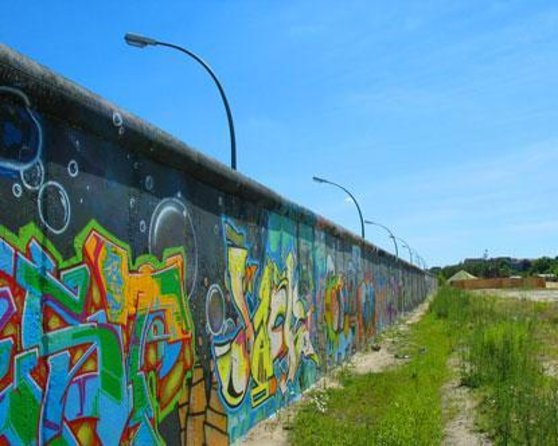
- A tight route through surviving Wall sections so you don’t waste hours searching for fragments
- Stories of escape and survival tied to specific locations, not just general history
- The Memorial’s preserved cross-section and Death Strip gives you a clear, physical understanding of how the system worked
- Checkpoint Charlie in a Cold War face-off context rather than only as a photo stop
- A GDR watchtower visit with the option to go up, including an entrance component
- Small-group feel (capped at 15), which makes questions easy and the pace human
Getting Oriented Fast: Why This Berlin Wall Route Works
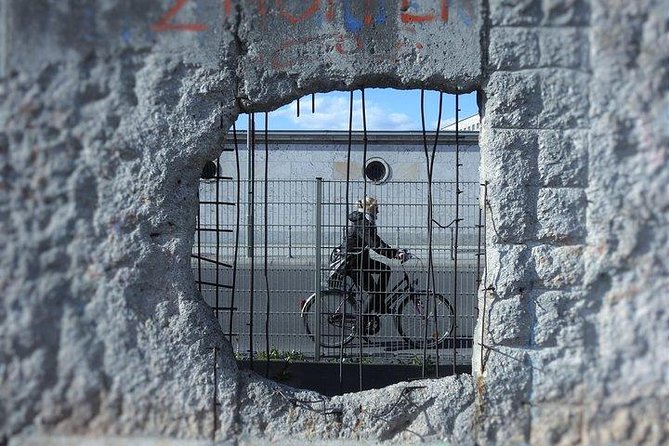
If you only have a morning and you want the Wall to make sense, this tour is built for that. You start at a major Wall memorial, then move through the best-known Cold War reference points while still keeping the stops focused and close enough to feel efficient.
The biggest value is how the tour turns scattered remnants into a single story. You’re not just ticking off landmarks. You’re learning how the border system was designed, how people tried to escape it, and how reunification erased much of what used to separate the city.
You can also read our reviews of more tours and experiences in Berlin.


Memorial of the Berlin Wall: Where the Wall Becomes Evidence
This is the anchor stop, and for good reason. The Memorial of the Berlin Wall is over 1 km long, and it includes the only preserved complete cross-section of the Wall and the Death-Strip. That means you’re not guessing what you’re looking at. You can visually understand the layers and the design meant to prevent crossings.
It’s also the place where tragedy and daring show up in the same frame. The site covers over an hour, so you get time to absorb what the Wall looked like in section and to hear how the area functioned during Communist rule. If you’re the kind of history lover who hates vague statements, this stop usually clicks fast.
Practical note: this is the longest stop, so you’ll want to arrive rested and ready to read and look. The time budget here is your signal that the tour considers this more than a quick stop-for-a-photo stop.
Checkpoint Charlie: More Than the Most Famous Crossroads
Checkpoint Charlie is iconic, but the best part is the context you get around it. You spend about 15 minutes here, which keeps the visit efficient, but it’s placed in the Cold War timeline where it matters: many escape attempts—both failed and successful—and the high-tension face-off between American and Soviet forces in autumn 1961.
In a short visit, you can’t cover everything. But you can learn what made Charlie so symbolic: it was a public, high-profile point in a system where most movement and most resistance happened far less openly.
If you’re worried you’ll feel rushed, that’s worth noting. The time here is brief, so it’s best if you already want the big storyline and you’re okay with moving on to the next location quickly.
Topography of Terror: A Surviving Wall Fragment With a Powerful Neighborhood Context
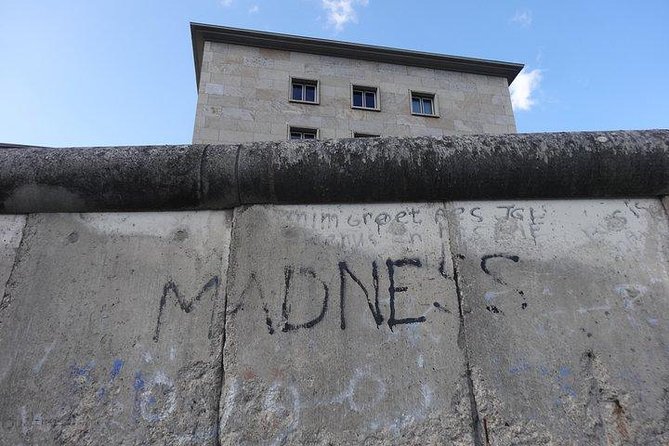
Next comes a smaller stop, but it has a big punch. The section on Niederkirchnerstrasse is described as the only surviving fragment of the wall in this part of Berlin, and it’s positioned near the former Luftwaffe Headquarters. During the East German period, that building was used as the House of Ministries.
That mix matters because it links two stories that can blur together when you only see one side. You get a sense of how border enforcement and state power sat in the same urban fabric, close to places where government authority was concentrated.
This stop is also where one of the more incredible escapes is tied to the site. It’s only about 10 minutes on the clock, so you’ll want to treat this as a moment to sharpen your understanding, not as a deep research session.
If you like your history neatly organized, this stop can feel like a jump. It’s short, but it’s dense.
GDR Watch Tower: Climbing the Last BT-Variant Tower
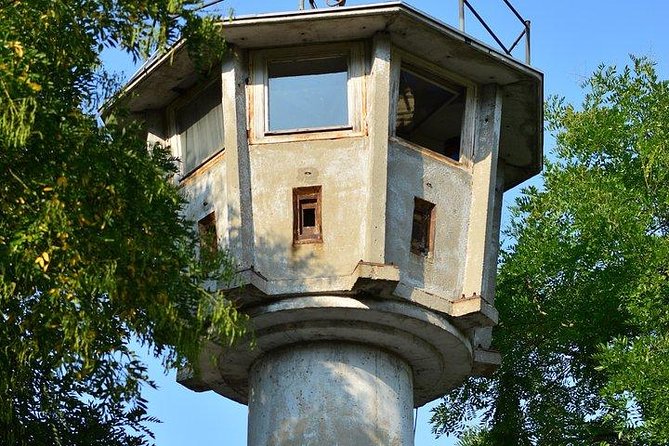
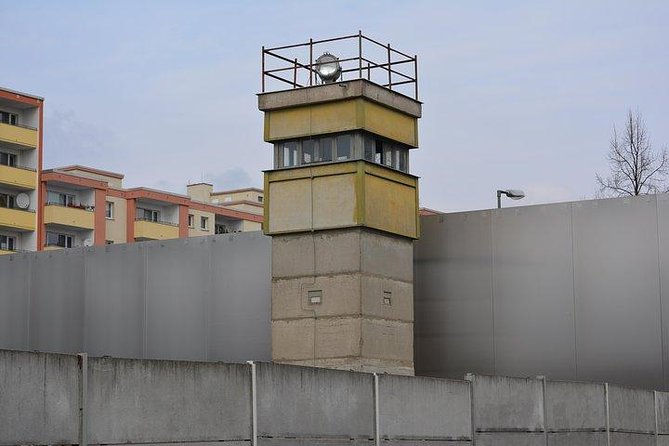
Now for the part that often turns an education into a physical experience: the GDR Watch Tower. You visit and may be able to ascend the last of the “BT-variant” watchtowers that once surrounded West Berlin, and the survival of this particular tower is credited to a private initiative.
About 15 minutes is scheduled here, and the admission is included. That’s a simple value win: you’re paying the tour price, but you also get a ticketed experience instead of just standing outside and looking.
Going up a tower (if you choose to) gives you a different kind of understanding than memorial exhibits do. You start thinking about lines of sight, timing, and how visibility affects escape plans. The Wall wasn’t just a wall. It was a monitored system.
One consideration: towers and stairs aren’t for everyone. The tour does say most travelers can participate, but if you have mobility limits, this is the one stop to think about before committing.



Potsdamer Platz: Seeing How Reunified Berlin Replaces the Death Strip
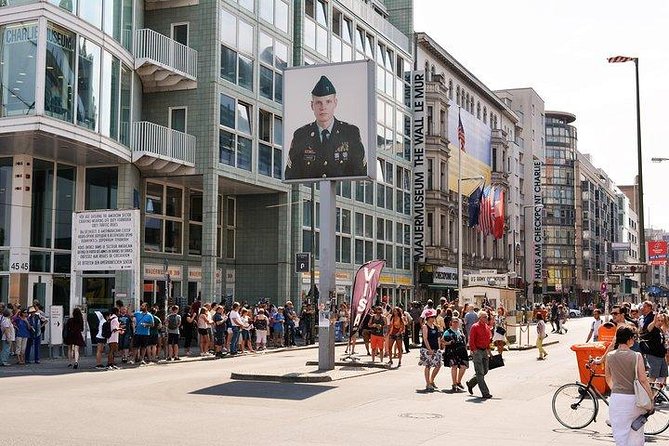
After the darker sites, Potsdamer Platz shows the other half of the Wall story. You see how a formerly desolate area—inside and bounding the death-strip—developed into a high-rise business and entertainment quarter.
This stop is only about 10 minutes, but it’s a smart ending beat. You leave with contrast. The Wall era becomes tangible, then the modern city becomes tangible, and you can connect them in your head instead of feeling like you’ve jumped between unrelated attractions.
If your brain likes cause-and-effect, this is where it can click: reunification didn’t just change borders. It changed land use, traffic patterns, and how Berlin fills space.
If you’re a photographer, you’ll likely want to pause here a little longer, since this is one of the easiest places to compare “then vs now” visually.
Guides Who Make It Click: What the Best Reviews Tell You to Expect
This tour is run by guides described as highly educated experts on the material. In practice, what stands out from the guide praise is clarity plus follow-up answers.
Names that come up again and again include Ciaran, Eugen, Paul, and Steve (and a guide noted as Aurel G.). People describe them as friendly, articulate, and good at answering questions that go beyond the planned stops.
One really useful detail from the guide style: you may hear stories supported by old photos, including images from earlier visits to Wall sites before reopening and redevelopment. That kind of comparison can help you see change over decades, not just history as a static event.
Also, the tour tends to work well for people who don’t just want facts. You get the human dimension—what it felt like to live under Communist rule, and what desperation and planning looked like in real escape attempts.
Price and Value: What $32.67 Buys You in Real Life
At about $32.67 per person for roughly 3 hours, the price feels fair when you look at the mix of what you’re getting. Most stops are free admission, and the tour includes the GDR watchtower admission, which turns part of your fee into an actual entry experience rather than only interpretation.
The big value is guide time plus logistics. Berlin can be confusing when you’re trying to line up Cold War sites efficiently. Paying for a tight route saves you from hopping between locations with no context and no story glue.
You also get a mobile ticket option, which makes the day easier. And because it’s offered in English, it’s built for clarity rather than hoping translations at museums will do the heavy lifting.
If you’re trying to fit Berlin’s hardest history into a limited schedule, this is the kind of tour that usually pays back quickly.
How to Plan Your Morning So You Enjoy It
This experience starts at 10:00 am and runs for about three hours. It begins at Birchys Berlin Tours at Ebertstraße 24, 10117 Berlin, and it ends back at the meeting point.
Because you’re covering multiple sites, your plan should be simple:
- Dress for cold or damp weather if you’re visiting outside summer. One guide-praised cold-day experience comes up in the feedback, so expect the outdoors to matter.
- Bring comfortable shoes. The stops are short, but you’re still moving across the city.
- Don’t count on snacks or bottled water being provided. This isn’t a coffee-and-pastries tour.
If you want the best experience, go into it with one mindset: treat this like a guided walk through the border system’s logic. When you see the preserved cross-section, you’ll better understand why later stops feel the way they do.
Who This Tour Is Best For (and Who Might Want Something Else)
This works especially well for people who enjoy WWII and Cold War history and want the Berlin Wall explained in a tight, practical way. It’s also a strong choice for couples and families because the stops are varied—memorial, crossroads, surviving fragments, a watchtower, and modern city space.
It can be less ideal if you want a totally unhurried museum day with deep independent browsing. The time at each stop is controlled. You’re there to learn the story in sequence, not to spend hours in one exhibit.
If you’re a history buff who likes asking questions, this is a good match. Small-group touring and the guide’s extra answering style tend to help.
Should You Book This Berlin Wall Tour?
Yes, I’d book it if you want the Wall explained clearly and efficiently in one morning. The strongest reason is the combination of surviving, specific locations plus escape storytelling that turns the border into a real system you can picture.
Book it sooner rather than later if your dates are fixed—this tour is commonly booked about a month in advance. And if you care about having a guide you can talk to, the small-group cap is a real plus.
If you hate walking in cold weather or you need very long museum time, you might consider pairing a shorter Wall visit with a later self-guided stop. But for most visitors, this hits a sweet spot: you get the key sites without losing the plot.
FAQ
How long is the Berlin Wall tour?
It runs for about 3 hours.
What’s the meeting point and start time?
The tour starts at Birchys Berlin Tours, Ebertstraße 24, 10117 Berlin, and begins at 10:00 am.
Where does the tour end?
It ends back at the meeting point.
Is the tour offered in English?
Yes, it is offered in English.
What tickets or admissions are included?
Admission is free for the Memorial of the Berlin Wall, Checkpoint Charlie, and Topography of Terror. The GDR Watch Tower admission is included.
Do I need to bring a paper ticket?
No. You can present either a paper or an electronic voucher.
Is food or water included?
No. Snacks and bottled water are not included.
What happens if the tour is canceled due to minimum traveler requirements?
If it’s canceled because the minimum isn’t met, you’ll be offered a different date/experience or a full refund.
If you tell me your travel dates and your group (couple, family, age range, mobility needs), I can help you decide whether this morning plan fits your style.