REVIEW · BERLIN
Gastro Tour with Klaus though the Wrangelkiez, Kreuzberg
Book on Viator →Operated by Kontext Berlin · Bookable on Viator
Berlin’s border history is still written in walkways. This gastro tour threads Kreuzberg food through landmarks like the Oberbaumbrücke and a preserved GDR watch tower, so you get flavor and context in the same evening. I also like the hands-on guidance from Klaus, with stops designed to keep you away from the usual tourist lanes.
The biggest plus for me is the tasting plan: you’ll sample at five gastro partners, with enough variety that it can feel like a meal rather than a snack crawl. A second standout is the mix of food cultures tied to what you’re seeing along the way, which makes the neighborhood feel less like a stop on a map and more like a living place.
One possible drawback: the tour includes snacks, but drinks aren’t included, so you’ll want to budget for what you choose in the Kiez pub (or elsewhere) after the final stretch.
In This Review
- Key highlights at a glance
- What You’ll Taste and Learn in Kreuzberg’s Wrangelkiez
- Price and Logistics: What $83.08 Gets You (and What It Doesn’t)
- Oberbaumbrücke: East-West Berlin in a Landmark You Can Walk Across
- Lohmühleninsel: A Quiet Piece of Land With Architectural Clues
- The GDR Watch Tower: Seeing the Partition Up Close
- Görlitzer Park: Why Its Reputation Comes From Real History
- Falckensteinstraße: The International Food Street Plan That Beats Guesswork
- Wrangelstraße and the Romanesque-Style Church Stop
- Schlesisches Tor Finale: Finish Easy, Keep Your Night Flexible
- What Makes Klaus’s Approach Work (Food Meets Local Stories)
- Who This Tour Suits Best
- Should You Book This Gastro Tour With Klaus?
- FAQ
- How long is the Gastro Tour through Wrangelkiez and Kreuzberg?
- What’s included in the $83.08 price?
- Is the tour offered in English?
- Where does the tour start and where does it end?
- How many people are in the group?
- What’s the cancellation policy?
Key highlights at a glance
- Oberbaumbrücke context: a famous bridge with East-West meaning
- GDR watch tower: a preserved border relic you can actually see
- Görlitzer Park stories: how its reputation connects to local history
- Falckensteinstraße food density: international choices with guided picks
- Wrangelstraße ending near Schlesisches Tor for easy transit
What You’ll Taste and Learn in Kreuzberg’s Wrangelkiez

This tour works because it doesn’t treat food as an add-on. You walk through parts of Kreuzberg and the Wrangelkiez where Berlin’s past still shows up in structures and street patterns, then you taste your way through the neighborhood’s modern international scene.
The guiding style matters here. Klaus is described as engaging and full of local history, and that energy comes through in how the stops connect. When the food choices are explained in relation to the streets you’re on, you understand the why, not just the what.
You also get a practical pacing that fits an evening out. The tour is about 3 hours, and it keeps moving without feeling like a forced march. That timing works well if you want a memorable food experience but still plan to continue the night on your own.
You can also read our reviews of more tours and experiences in Berlin.


Price and Logistics: What $83.08 Gets You (and What It Doesn’t)
At $83.08 per person for about three hours, the value depends on two things: how many tastings you expect and whether you’re the kind of person who likes learning as you eat.
Here, the math is helped by the structure. You’ll stop at five gastro partners for selected tasting portions, including options that can be street-food style. Even better, the tour is limited to a maximum of 15 people, which usually means you get easier conversation and better flow between stops than big group tours.
What’s not included is drinks. That means you should assume you’ll pay extra if you want beer, wine, soda, or a coffee after a tasting. If you like to sip slowly while chatting, build that cost into your plan so the night stays comfortable instead of slightly stressful.
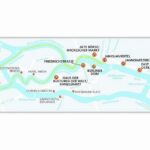
Logistically, the tour is built for simple arrival. It’s English-language, you get a mobile ticket, and it runs with you near public transport. The route starts at Cuvrystraße 2, 10997 Berlin and finishes at Schlesisches Tor (not underground), with the exact ending spot near metro lines depending on the season.
One more practical detail: this tour tends to sell fairly far ahead, with an average booking window around 94 days. If you’re traveling in a popular season or on a specific day of the week, early booking is smart.
Oberbaumbrücke: East-West Berlin in a Landmark You Can Walk Across

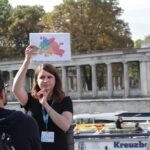
The tour begins at the Oberbaumbrücke, and that’s a smart first stop. This bridge is one of Berlin’s most recognizable sights, and it’s tied to the city’s dividing-and-connecting history in a way that’s easy to understand while you’re standing there.
What I like about starting here is that it sets the frame immediately. Before you get pulled into the food streets, you learn what this part of Berlin meant as a crossing point between East and West. Instead of learning history in a classroom moment, you learn it while orienting yourself to the neighborhood.
Another benefit: the stop is short, around 10 minutes. That keeps the energy up and makes it feel like an evening plan rather than a lecture tour. Admission details are simple too, since the stop is noted as free.
A possible consideration is that this is the kind of landmark stop where photos are natural. If you hate waiting for others to frame the shot, keep your eyes moving along the bridge and the surrounding viewpoints so you stay engaged while the group settles.
Lohmühleninsel: A Quiet Piece of Land With Architectural Clues

Next is Lohmühleninsel, a small parcel of land that’s easy to overlook if you’re just passing by. The tour gives it attention for a reason: it has an eventful history and a few lesser-known architectural monuments that help you see Berlin as more than the big headline sites.
I enjoy stops like this because they slow you down in a good way. You’re not only chasing famous buildings; you’re noticing smaller elements that explain how the area changed over time. In a food tour, that matters, because it prevents the tasting portion from feeling random.
The stop is about 10 minutes and noted as free for admission. Since it’s compact, it also helps the group stay on schedule before you move toward the more story-heavy border relic.
The GDR Watch Tower: Seeing the Partition Up Close

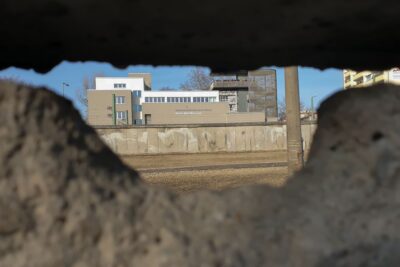
Then comes one of the most direct history moments: the GDR watch tower in the former border area. This is the kind of stop where you can look at the structure and immediately connect it to what the Wall did to life here.
The tour explains that the Wall made Kreuzberg and Alt-Treptow’s peripheral areas, and the watchtower is a preserved relic you can still see. That adds weight to the whole evening. You’re not just tasting food in a trendy area; you’re eating in the landscape shaped by separation and control.
This stop is brief—about 5 minutes—and marked as free. That quick timing helps, because the watchtower is visually powerful without needing a long detour.
One consideration: if you’re the type who prefers deep museum time, you might wish this were longer. But for most people, a short, meaningful border stop works because it keeps the food momentum moving.

Görlitzer Park: Why Its Reputation Comes From Real History

Next up is Görlitzer Park, and the tour leans into something important: it’s a recreational area for the neighborhood, but it also has a bad reputation today. What you get is the backstory and the anecdotes that explain how a place gains that reputation.
I like that the tour doesn’t pretend the park is just romantic greenery. Instead, it offers a grounded look at how history shapes public spaces and how people use them. That makes the neighborhood feel honest, not sanitized.
The stop is about 10 minutes. It’s enough time for you to understand the narrative without turning your night into a history seminar. And since it’s a public park area, it’s also easy to read the environment while listening.
A practical tip: if you plan to linger later in the evening, use this stop to decide what kind of atmosphere you want to return to. The tour helps you do that with context, so your later wandering feels intentional.
Falckensteinstraße: The International Food Street Plan That Beats Guesswork

Now you hit the part that most people book for: the Falckensteinstraße stretch. This street is described as having an extraordinary density of international gastro options, and the practical move here is that you don’t just wander and hope.
The tour gives you personally tested highlights. That matters because with a street full of choices, it’s easy to pick a place based on luck, line length, or English signage that doesn’t match your mood. Here, Klaus guides you toward tastings that fit the tour’s theme and the evening’s flow.
This stop runs about 30 minutes, which is a big chunk of time compared to the earlier landmark stops. It’s designed for eating. Since snacks are included and you’ll sample at multiple gastro partners, this is where your stomach finally gets the big payoff.
Keep in mind: the tastings are selected. That’s the tradeoff versus pure freedom. If you want to fully control your order, you may feel constrained during the guided portions. But if you want variety without overthinking it, this is exactly where you benefit.
Wrangelstraße and the Romanesque-Style Church Stop

After Falckensteinstraße, you move to Wrangelstraße, the name-giving street of the neighborhood. The tour also includes a stop to see a church built in the style of a Romanesque monastery, which adds a visual and architectural beat between food moments.
That church stop is useful because it breaks the evening into readable sections. You’re walking, listening, looking, then you’re back into the food streets. It keeps attention from dropping, especially on a 3-hour evening route.
The density of international gastro continues here too. So even if you’re full from the earlier tastings, you’ll still get value from the variety and the way the guide connects choices to the neighborhood.
Schlesisches Tor Finale: Finish Easy, Keep Your Night Flexible

The tour ends with a practical choice. From the Wrangelstraße area, you either get a final option to rest in a Kiez pub or you go to Schlesisches Tor. The tour notes that the subway at Schlesisches Tor is not underground, which is a small detail but helpful when you’re planning how you’ll continue.
I like endings like this because they don’t lock you into a strict schedule after you finish. If you want to sit with your group, you can. If you want to head out solo for dinner or a drink, transit is simple.
Also, the ending gastro partner can vary by season, but the core idea stays the same: you finish near metro, so you’re not left stranded far from options.
What Makes Klaus’s Approach Work (Food Meets Local Stories)
The strongest praise tied to this tour is how Klaus blends food and history. You get anecdotes of the neighborhood, and that storytelling approach helps the tastings feel connected rather than random.
A second praised aspect is variety. The tastings cover many types of food, with enough food volume that it can turn into an evening meal. That’s a big deal if you’re the type who hates spending money twice—once for a tour and again for dinner.
And the review highlights mention fusion in a way that feels practical: you’re tasting a mix of cultures in an area where that mix is part of daily life. When you experience that connection on foot, you understand why Kreuzberg’s food scene looks the way it does.
If you’re planning a Berlin itinerary, this tour can also act like a neighborhood orientation. After it, you tend to know which streets feel like your style and which ones you’d rather revisit for a second round.
Who This Tour Suits Best
This is a great fit if you want:
- a small-group food walk (max 15) with conversation
- a balanced evening of landmarks plus tastings
- a guide who knows how to connect what you see to what you eat
- an English tour that still feels local, not scripted and sterile
It may be less ideal if you prefer only famous sights or you want a fully self-guided route with zero structured stops. The tour is guided for a reason, and the tastings are part of that framework.
If you’re traveling as a couple or solo, this still makes sense because the group size is small and the route is designed for chatting as you move between points.
Should You Book This Gastro Tour With Klaus?
If your goal is an evening that mixes Kreuzberg food with real Berlin context, I’d book it. The price isn’t bargain-basement, but the value is strong because you’re getting five included tastings, a local guide, and a route that intentionally avoids just repeating the standard tourist checklist.
I’d especially recommend it if you’re curious about places like Oberbaumbrücke and the GDR watch tower, and you want that history tied to how people live now. The food portion works best when you accept the guidance and let Klaus steer you toward choices you might not pick alone.
The one thing to plan for is drinks. If you want beer or wine with your tastings, treat it as an add-on and you’ll enjoy the night more.
If you like food plus narrative, this is the kind of tour that leaves you with a better sense of place, not just a full stomach.
FAQ
How long is the Gastro Tour through Wrangelkiez and Kreuzberg?
It’s about 3 hours (approx.).
What’s included in the $83.08 price?
The tour includes snacks, a local guide, and tastings at five gastro partners. Drinks are not included.
Is the tour offered in English?
Yes, the tour is offered in English.
Where does the tour start and where does it end?
It starts at Cuvrystraße 2, 10997 Berlin and ends near the metro at Schlesisches Tor (the exact final gastro partner near the metro can vary by season).
How many people are in the group?
The maximum group size is 15 travelers.
What’s the cancellation policy?
Free cancellation is available up to 24 hours before the experience starts for a full refund. If you cancel less than 24 hours before, you won’t get a refund.