REVIEW · BERLIN
Berlin Reunited and Revived! 3-Hour Alternative Tour
Book on GetYourGuide →Operated by Insider Tour Berlin · Bookable on GetYourGuide
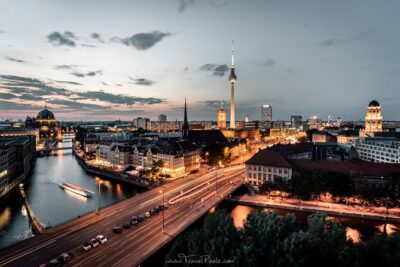
Berlin after the Wall still shows up today. This 3-hour walk connects the big story of reunification to what you see on streets, in courtyards, and in daily life. I love how it moves beyond the usual photo stops to focus on gentrification and the alternative side of Berlin, especially in Friedrichshain and Kreuzberg. I also like the way the tour explains change in plain language, from restored buildings in Mitte to street art with political undertones at the East Side Gallery. One possible drawback: it’s a compact 3 hours, so if you’re hoping for long time in any single place, you may wish you had more time in Berlin that day.
You’ll cover four very different neighborhoods without feeling rushed into history trivia. The guide keeps the vibe grounded in real-world details, from the rise of young professionals and families in Prenzlauer Berg to how rent pressure shows up in left-wing districts. And if you’re lucky, you’ll get a guide who brings real personality; I’ve seen guides like Tom with great humor, Maria with a lively style, and JJ with lots of energy and engagement. Still, it’s a walking tour, so bring comfortable shoes and plan for some steady time on your feet.
In This Review
- Key moments you’ll remember from the walk
- Why Berlin’s reunification still feels personal on foot
- Mitte first: restored buildings and the speed of reinvention
- Prenzlauer Berg and Kulturbrauerei: 90s creativity meets new families
- Friedrichshain and Kreuzberg: alternative districts under real pressure
- East Side Gallery: street art with origins and political overtones
- Turkish Market finale: Landwehr Canal and everyday food culture
- Price, pacing, and what makes the value work
- What you’ll learn about ordinary Berliners today
- Who this 3-hour alternative tour suits best
- Practical tips for your walk (especially April to October)
- Should you book this Berlin Reunited and Revived tour?
- FAQ
- How long is the Berlin Reunited and Revived 3-hour alternative tour?
- Where does the tour take place?
- What neighborhoods will I visit?
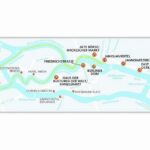
- What are the main stops on the route?
- Is food included?
- What days does this tour run?
- What language(s) is the guide speaking?
- Is it private?
- Is pickup included, and how do I find the guide?
- Is the tour wheelchair accessible?
- What’s the cancellation policy?
Key moments you’ll remember from the walk
- Mitte’s post-Wall restoration: a first look at how quickly neglected areas were made new again.
- Prenzlauer Berg’s 90s art legacy: how it became a magnet for upwardly mobile young professionals and families.
- Kulturbrauerei inside an old brewery: culture housed in buildings that once served a very different purpose.
- Friedrichshain and Kreuzberg’s pushback: the ongoing fight against corporate expansion and rent-raising pressure.
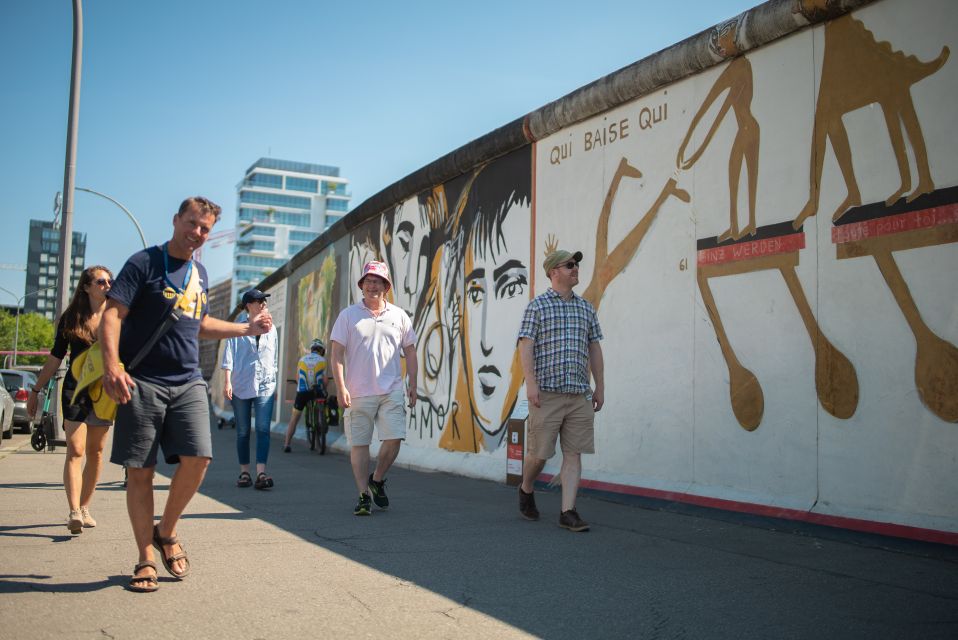
- East Side Gallery as street-art politics: why the murals matter beyond aesthetics.
- Turkish Market on Landwehr Canal: a lively finale that extends far past produce and food.
Why Berlin’s reunification still feels personal on foot

Berlin’s division wasn’t just political. It shaped neighborhoods, buildings, and the everyday routines of ordinary people. This tour takes that idea seriously. You don’t just hear about the Berlin Wall and then jump to a souvenir viewpoint. You walk through areas that show what happened next: restoration, new money, shifting communities, and the alternative culture that keeps pushing back.
I like that the tour uses a simple through-line. After the fall of the Wall, the city moved fast. Some places got repaired and reinvested. Other places tried to protect what made them “theirs.” You’ll see both sides—change and resistance—within a short radius.
This also helps you understand why Berlin can feel both “cool” and complicated at the same time. People talk about the city as poor but sexy, but the tour gives you enough context to see what that means in practice: the atmosphere comes from real tradeoffs, not just branding.
You can also read our reviews of more tours and experiences in Berlin
Mitte first: restored buildings and the speed of reinvention

The walk begins in Mitte with a focus on how fast neglected spaces were put back together after the Berlin Wall fell. Mitte is often treated as the “central” part of town, but the tour frames it as a place that tells you how quickly a city can re-sort itself. You get a feel for how restoration changes not only buildings, but also the vibe of streets.
When you hear that the tour starts with the once neglected buildings of Mitte, it’s not just a trivia point. It’s a clue about what you’ll keep noticing: Berlin doesn’t do one-size-fits-all redevelopment. Some areas are rebuilt into something polished and familiar. Other areas become battlegrounds between different visions of the city.
If you like urban change stories—who gains space, who gets pushed out, and why the physical shape of neighborhoods matters—Mitte is a strong opener. It sets your eyes up for what comes next.
Prenzlauer Berg and Kulturbrauerei: 90s creativity meets new families

Next comes Prenzlauer Berg. The tour highlights how it became an artistic hub in the 90s, and how it later drew an influx of young professionals and families. This is where you start seeing the softer side of gentrification—the kind that brings both caretaking and rising pressure.
Prenzlauer Berg can feel like a place where the city’s creative roots got partially turned into a lifestyle. The tour doesn’t oversell it. Instead, it helps you notice the mix: old creative energy, plus the sort of stability and consumption that tends to come when a neighborhood becomes popular.
Then there’s Kulturbrauerei, an old brewery turned into a center for culture and arts. That detail matters. A repurposed industrial building tells you a lot about how Berlin recycles its past. It’s not just preservation. It’s transformation. The tour uses Kulturbrauerei as a mirror for the larger shift happening in East Berlin: people remake spaces, and the “meaning” of a district changes along with the bricks.
If you’re the type who likes to connect architecture to social change, Kulturbrauerei will click. You’ll see how a place can keep a hint of its former self while becoming a new meeting point for the present-day city.
Friedrichshain and Kreuzberg: alternative districts under real pressure

After the more polished story of restoration and re-population, the tour pivots to Friedrichshain and Kreuzberg. This is where the emphasis shifts to the alternative scene and to political resistance at street level.
The tour focuses on left-wing residents in these districts who keep fighting attacks from corporate businesses and rent-raising landlords. That’s a blunt summary, but it’s the kind of real tension that helps you understand why Berlin’s identity is never one simple thing.
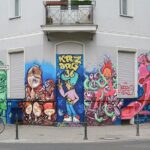
Kreuzberg and Friedrichshain are famous for their cultural edge. But the tour is careful to connect that edge to why people care. When rents rise, communities change. When corporate expansion arrives, the small institutions—those local hangouts, creative workshops, and community spaces—feel the squeeze. You get a sense that the alternative vibe isn’t just a style. It’s also a survival strategy.
If you want a Berlin tour that treats politics as something you can actually observe—through neighborhoods rather than just monuments—this is the part you’ll appreciate most.
East Side Gallery: street art with origins and political overtones

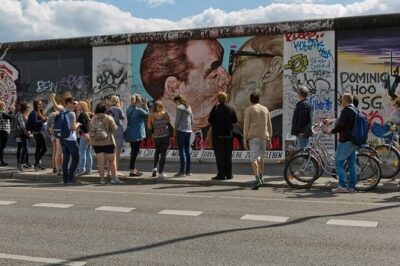
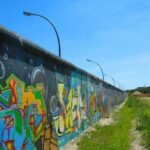
The tour reaches the East Side Gallery next. This colorful stretch of the Berlin Wall is now the largest open-air gallery in the world. That’s a striking fact on its own, but the tour’s value is the explanation behind it: the origins and political overtones of Berlin’s street art scene.
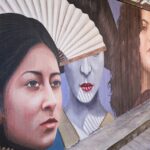
Street art can look like decoration if you don’t have context. Here, it’s framed as commentary. It’s a way of marking who has power, who gets ignored, and what people want to say when they can’t say it in official spaces.
As you walk and look, think about the Wall as more than a structure. It became a surface for public messages. After reunification, the meaning didn’t vanish. The murals remained, and the location kept pulling people in. That’s why the East Side Gallery works as a link between past and present: it sits on a literal scar of the city and turns it into a platform for ongoing expression.
This is also where your guide’s role matters. On a good day, you’ll hear the story in a way that makes you look longer instead of just snapping a picture and moving on.
Turkish Market finale: Landwehr Canal and everyday food culture

The last stop lands at the Turkish Market, an outdoor bazaar on the banks of the Landwehr Canal. It’s described as infamous for a reason: it’s lively, it’s diverse, and it’s not trying to be a museum piece.
The weekly market starts with the basics—fresh produce and authentic Turkish cuisine. But the tour emphasizes how it has expanded far beyond that original identity. You’ll also find patterned fabric, artisans, local farmers, and even impromptu live music. In other words, it’s a practical snapshot of a multi-identity city, not just a snack stop.
This ending is smart for two reasons. First, it gives you a break after walking through multiple districts with big social themes. Second, it lets you see Berlin as people experience it: shopping, eating, chatting, listening to music, and taking in the canal setting.
If you’re trying to plan your day, this is the part you can build a little freedom around. Even though food isn’t included on the tour, you can use the market as your natural next step—grab something simple to eat or browse for small gifts.
Price, pacing, and what makes the value work

The tour costs $352 per group, up to 20 people, and it lasts about 3 hours. For Berlin, that price makes sense mainly because you’re booking a guided walking route that covers multiple neighborhoods and includes a live English-speaking guide (and German as well).
Here’s how I think about value. This isn’t a “sit in one spot and read facts” tour. You’re getting a neighborhood-spanning experience that links architecture, culture, and politics. That’s exactly the kind of thing where a strong guide earns their fee. In the past, I’ve heard from guides like Tom, Maria, and JJ, and the shared thread in their style seems to be energy and humor—plus a real focus on keeping the story understandable.
Your time is also well used. Three hours is long enough to feel like you’ve moved through Berlin’s layers, but short enough that you can still plan other parts of your trip afterward. If you’re juggling a busy itinerary, this is a realistic, high-information option.
One small consideration: food and drinks aren’t included. That’s normal for walking tours, but it means you’ll likely want to budget for at least one stop if you plan to snack at the Turkish Market.
What you’ll learn about ordinary Berliners today

The tour doesn’t treat Berlin as a distant past. It aims to explain what it’s like for ordinary citizens to live in Berlin now. That matters because reunification can become a story told from government buildings and memorial plaques. Here, the focus is on how the city feels on the ground—through neighborhood change, cultural institutions, and community pressure.
You’ll see:
- How restored areas in Mitte reflect major investment and shifting priorities after reunification.
- How Prenzlauer Berg changed from an artistic hub into a place pulling in young professionals and families.
- How Kulturbrauerei’s reuse signals the city’s talent for turning old structures into new public life.
- How Friedrichshain and Kreuzberg show the tension between alternative communities and rent or corporate pressure.
- How East Side Gallery connects street art to political voices and public meaning.
- How the Turkish Market shows everyday diversity in food, crafts, and music.
That’s what makes the tour more than just a sightseeing loop. It helps you interpret what you see after the guide leaves you—so you can keep reading the city yourself.
Who this 3-hour alternative tour suits best

This is a good fit if you:
- Want to understand Berlin beyond the big iconic stops
- Like walking tours that connect neighborhoods to social change
- Care about street art as political expression, not just visuals
- Enjoy a balance of history, culture, and present-day neighborhood tensions
- Prefer a small-group feel, since this is a private group
If you want a tour focused purely on monuments and closed-form history lessons, this may feel a bit more like a living-city perspective. But if you want Berlin’s layers—restoration, reinvention, resistance—this one is built for that.
Practical tips for your walk (especially April to October)
Bring weather-appropriate clothing. Berlin can shift quickly from pleasant to chilly, especially when you’re walking in open areas and canal-side neighborhoods.
Wear shoes you can stand and walk in for a few continuous hours. The whole point is that you’re moving through multiple districts, not just hopping between indoor stops.
For meeting up, pickup is included. Wait in your hotel lobby about 5 minutes before your scheduled pickup time, and look for your guide with a yellow name tag for easy recognition. If you’re traveling with someone who prefers English or German, you’ll have a guide speaking both languages.
Tours run Tuesdays and Fridays from April through October, so check your calendar early if you’re traveling outside those months.
Should you book this Berlin Reunited and Revived tour?
Book it if you want a strong neighborhood overview in just 3 hours, with an honest look at how Berlin changed after the Wall—and how communities are still negotiating the city’s future. The route is well chosen: Mitte for restoration, Prenzlauer Berg for the creative-to-professional shift, Kulturbrauerei for repurposed culture, Friedrichshain and Kreuzberg for alternative resistance, the East Side Gallery for street art with political meaning, and a real-world finale at the Turkish Market.
Skip it if you want deep time in one site or you’re not interested in neighborhood change and political context. In that case, you’d probably be happier with a longer, more focused tour.
FAQ
How long is the Berlin Reunited and Revived 3-hour alternative tour?
It lasts 3 hours.
Where does the tour take place?
It’s a walking tour in Berlin, Germany.
What neighborhoods will I visit?
You’ll see Mitte, Prenzlauer Berg, Kreuzberg, and Friedrichshain, along with stops at Kulturbrauerei, the East Side Gallery, and the Turkish Market.
What are the main stops on the route?
The tour includes Kulturbrauerei, the East Side Gallery, and ends at the Turkish Market on the banks of the Landwehr Canal.
Is food included?
No. Food and drinks are not included.
What days does this tour run?
Tours run Tuesdays and Fridays from April to October.
What language(s) is the guide speaking?
The guide is available in English and German.
Is it private?
Yes, it’s a private group.
Is pickup included, and how do I find the guide?
Pickup is included. Wait in your hotel lobby 5 minutes before your scheduled pickup time, and look for the guide wearing a yellow name tag.
Is the tour wheelchair accessible?
Yes, it is wheelchair accessible.
What’s the cancellation policy?
You can cancel up to 24 hours in advance for a full refund.