REVIEW · BERLIN
Berlin: Neukölln Walking Tour
Book on GetYourGuide →Operated by ReinholdSteinle · Bookable on GetYourGuide
Neukölln has hidden stories on every block. This 90-minute walking tour in Berlin’s Neukölln mixes place-based history with memorable local characters, and it all lands at the stunning neo-Baroque Körner Park. I like how the route stays on the ground level, so you understand the neighborhood instead of just collecting facts. I also love the way the guide connects everyday streets to bigger ideas, including a surprising link to David Bowie. One heads-up: the tour is in German, and it isn’t suitable for people with mobility impairments.
You’ll meet your private-group guide at Leuchtstoff Kaffeebar on Siegfriedstraße and then walk at an easy pace through the layers of Neukölln. I especially like the focus on lesser-known details, like the archaeological discovery from 1912 and the 1920s residential complex called Ilsenhof, because it turns Berlin’s “normal” streets into something you can actually read. The one potential drawback is simple: it’s only 90 minutes, so if you want a long sit-down history lesson, you’ll want to pair this with a longer day out.
In This Review
- Key things you’ll notice on the Neukölln walk
- Why Neukölln makes sense best with a guide
- Entering Neukölln through Leuchtstoff Kaffeebar
- Körner Park’s neo-Baroque garden: the highlight that changes your whole view
- Ilsenhof and the 1920s housing story you can actually walk through
- The 1912 archaeological moment: history not locked behind glass
- Glory Halls of Neukölln and Will Meisel: the neighborhood’s strange, human side
- The David Bowie thread: how pop culture ties into place
- How the last 10 years show up in what you see now
- The guide factor: Reinhold Steinle’s storytelling approach
- Price and group value: $70 for up to 6 people
- Who this Neukölln walk suits best
- Should you book Berlin: Neukölln Walking Tour?
- FAQ
- How long is the Berlin: Neukölln Walking Tour?
- What does it cost?
- Is it a private tour?
- Where do we meet for the tour?
- What language is the tour guide speaking?
- Is there free cancellation?
- Is the tour suitable for people with mobility impairments?
Key things you’ll notice on the Neukölln walk

- Körner Park neo-Baroque garden energy, right inside the older streets of Neukölln
- Ilsenhof: a 1920s residential complex you’d otherwise pass by
- 1912 archaeological discovery shown on the way to the park
- David Bowie connection woven into neighborhood storytelling
- Glory Halls of Neukölln and the name Will Meisel, explained in context
Why Neukölln makes sense best with a guide

Neukölln can feel like Berlin’s “in-between” place: not as heavily packaged as the center, but still full of history. That’s exactly why a guided walk works here. You start with streets and buildings, but you end with patterns—how the neighborhood changed, why certain landmarks mattered, and how culture (including pop culture) found its way into local life.
This tour is built for short attention spans and fast understanding. It lasts 90 minutes and is designed as a compact orientation to the district. For you, that means you’ll get your bearings quickly and still come away with a few specific places you can return to on your own.
The tour is private, with a group size up to 6 for $70 per group. That’s an important value point: for the same price you might pay for a larger group experience, you typically get more direct conversation and a route that can match the pace of your little group.
You can also read our reviews of more walking tours in Berlin



Entering Neukölln through Leuchtstoff Kaffeebar

The meeting point is Leuchtstoff Kaffeebar, Siegfriedstraße 19, 12051 Berlin. I like this kind of start because it’s a real neighborhood spot, not some “tour bus” zone. It helps you transition into walking mode fast.
Because the tour is German-language, your preparation matters. If your German is basic, you can still follow a lot from the places themselves, but you’ll get the most if you can handle guided explanation at normal speaking speed. If you’re not comfortable in German, consider it more of a “place-reading” tour than a full narrative history.
Practical tip: wear comfortable shoes. This is a walking experience through compact neighborhood streets, and the stops are spaced so you can keep moving while still getting the story behind each location.
Körner Park’s neo-Baroque garden: the highlight that changes your whole view

If you only remember one thing from this walk, make it Körner Park. This garden is described as one of Berlin’s most important neo-Baroque gardens, and the wow factor comes from the contrast: you’re surrounded by the older, more ordinary streets of Neukölln, and then you step into a planned garden space with order and structure.
What I like about this stop is the way it teaches you to look. Berlin gardens can be dramatic on their own, but Körner Park works because it’s embedded in the neighborhood fabric. You’re not just admiring greenery—you’re seeing how city planning and lifestyle aspirations once shaped everyday life here.
The guide also frames the park within the neighborhood’s past, so you understand why this garden matters and why it feels like a statement. Even if gardens aren’t your main interest, this is the kind of place you’ll remember because it’s both pretty and instructive.
Ilsenhof and the 1920s housing story you can actually walk through

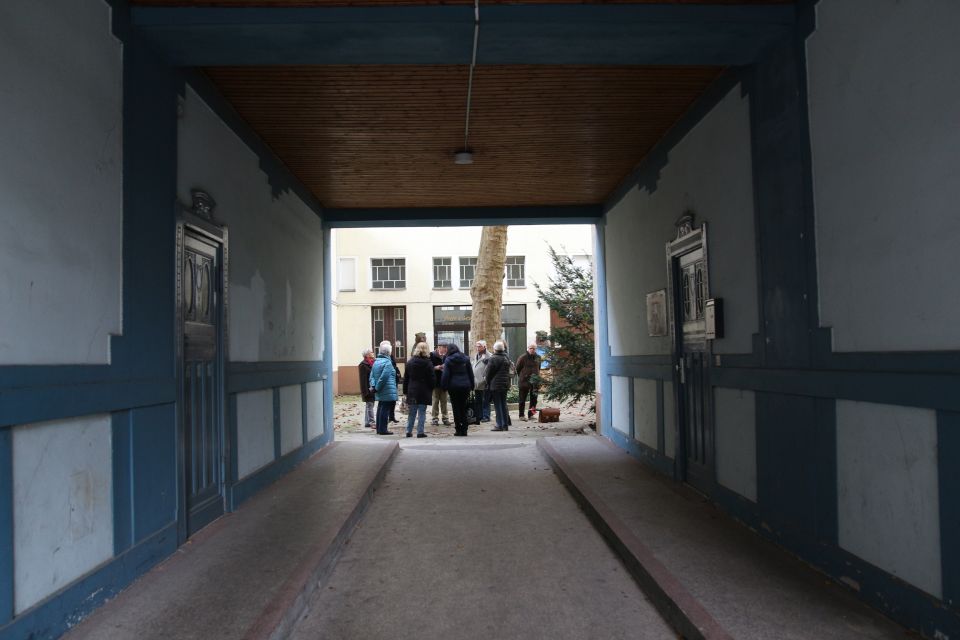
After the park-oriented wow, the tour pulls you back toward architecture and daily life. One of the featured stops is Ilsenhof, a residential complex dating from the 1920s.
This is where the tour becomes more than “pretty places.” Housing from the interwar years can tell you a lot about how a neighborhood imagined itself—how people wanted to live, what urban life was expected to look like, and how design choices shaped community routines.
I like this stop because it’s practical. You can stand outside and connect it to what you’ve been hearing: the neighborhood’s transformations, changes over the last 10 years, and the way past decisions influence what you see today.
If you’re the kind of traveler who enjoys understanding cities like a system—streets, housing, public space—this is a strong match.
The 1912 archaeological moment: history not locked behind glass
On the way to Körner Park, the guide shows an archaeological discovery from 1912. This kind of detail is gold on a short tour because it brings history down to the street level. Instead of thinking of the past as something distant, you realize parts of it literally sit under the neighborhood.
I find these “underfoot history” points especially satisfying because they make your walk feel layered. After you hear about it, you’ll start noticing surfaces differently. You’ll also understand why Berlin can feel like a city built on repeated waves of life—excavation, redevelopment, and new eras on top of old ones.
It’s also a good way to keep interest during the walk segments. When you have one strong story anchored to the ground, the route stops feeling like getting from A to B.






Glory Halls of Neukölln and Will Meisel: the neighborhood’s strange, human side
Neukölln isn’t only architecture and gardens. This tour also includes some sharper, more unusual neighborhood history, including the story of the Glory Halls of Neukölln and who Will Meisel was.
These are the kinds of topics that you might never find from a quick guidebook stop. They help explain how a neighborhood gained reputations and how entertainment, scandal, and personalities can become part of the local identity over time.
The guide’s storytelling style matters here. Reinhold Steinle (often addressed as Herr Steinle) is described as an ambassador for Neukölln, meaning he doesn’t just list facts—he frames them with a sense of personality. That approach makes the story feel lived-in, not like a lecture.
You can expect anecdotes that put real people into the narrative, including references to past residents with eccentric reputations. Even if you’re only half-interested in the specific names, the takeaway is broader: the district’s identity wasn’t one-note, and the neighborhood has always contained surprises.
The David Bowie thread: how pop culture ties into place

One of the tour’s most intriguing claims is a link between the neighborhood and David Bowie. The idea isn’t that Bowie’s fame replaces local history. It’s that creative people and scenes tend to follow specific kinds of city energy, and Neukölln has its own version of that.
On a walk like this, Bowie’s connection works as a “spotlight.” It helps you connect the neighborhood you’re standing in with a wider cultural map. When you hear that thread explained, you’ll likely look at the district less as a generic part of Berlin and more as a place that has attracted artistic gravity.
If you’re a music fan, this stop alone can make the tour feel worth it. But even if you’re not, pop culture links are still useful because they pull history into something you can remember.
How the last 10 years show up in what you see now

The guide also talks about changes happening in Neukölln over the last 10 years. This part is valuable because it turns the tour from past-tense history into an explanation of the present.
You’ll likely notice that the district feels like it’s still actively writing its story. New rhythms show up in how places function, and you can often sense the difference between older structures and more recent changes in street life.
What I like here is the balance: the tour doesn’t erase the past to explain the present. It uses the past to explain the direction things have moved.
The guide factor: Reinhold Steinle’s storytelling approach

The most consistently praised part of this experience is the guide himself: Reinhold Steinle. The descriptions point to big engagement, lots of knowledge, and a storytelling style with a sense of humor and character. People report that after the walk, they saw things they hadn’t noticed before—even if they’d lived in Berlin for a long time.
That’s the real skill. Great guiding doesn’t just provide information. It trains your eyes. After a tour like this, you don’t just “know about” Neukölln. You start spotting the reasons a place feels the way it does.
There’s also a small bonus element: the guide shares tips for further ventures and places worth seeing. One story included his advice that helped the group catch a Rosinenbomber flyover in real time. Not something you can schedule into your trip, but it shows the guide is paying attention beyond the tour script.
Price and group value: $70 for up to 6 people
Let’s talk value in plain terms. The price is $70 per group up to 6, lasting 90 minutes. That means the per-person cost drops fast if you’re traveling with friends or family. Even if you’re solo, the “private group” setup tends to feel more personal than a big walking pack.
So you’re not just buying a route. You’re buying a guided narrative delivered at neighborhood scale, with time to ask questions and get direct explanations.
If you’re the kind of traveler who wants to leave with a shortlist of places to return to, this is a good fit. Körner Park and Ilsenhof are clear anchors. The Bowie and Will Meisel threads give you ideas to look up later and connect to other parts of Berlin.
Who this Neukölln walk suits best
This tour works especially well if you:
- want an off-the-main-track district orientation that doesn’t feel sterile
- like neighborhood storytelling with human characters, not just dates
- enjoy architecture and public space, especially when tied to real context
- prefer a compact 90-minute experience over a long day commitment
It’s less ideal if you:
- need step-free access (it’s not suitable for mobility impairments)
- only want English-only guidance (the tour guide speaks German)
- expect a full museum-level history lesson, because it’s intentionally short
Should you book Berlin: Neukölln Walking Tour?
I’d book this if you want a smart, place-based introduction to Neukölln and you enjoy learning through stories tied to specific corners, buildings, and public spaces. The biggest selling points are Körner Park, the stop at Ilsenhof, and the way Reinhold Steinle connects odd local history (including the Glory Halls and Will Meisel) to bigger cultural links like David Bowie.
If you’re comfortable following a German-speaking guide and you can handle a 90-minute walk, this is a high-value way to understand a side of Berlin that many people pass through too quickly.
If not—especially if language access is a problem—this might feel less rewarding. In that case, you could look for an English-language option or plan a self-guided day focused on the two concrete anchor stops: Körner Park and the Ilsenhof area.
FAQ
How long is the Berlin: Neukölln Walking Tour?
The tour lasts 90 minutes.
What does it cost?
It’s $70 per group, up to 6 people.
Is it a private tour?
Yes, it’s a private group tour.
Where do we meet for the tour?
The meeting point is Leuchtstoff Kaffeebar, Siegfriedstraße 19, 12051 Berlin.
What language is the tour guide speaking?
The live tour guide speaks German.
Is there free cancellation?
Yes. You can cancel up to 24 hours in advance for a full refund.
Is the tour suitable for people with mobility impairments?
No, it’s not suitable for people with mobility impairments.