REVIEW · BERLIN
Berlin Battlefield Tour – Operation Berlin 1945 (Small Group)
Book on Viator →Operated by On the Front Tours · Bookable on Viator
Berlin is full of monuments. This tour is about the moment before them. You’ll walk the key ground of Operation Berlin 1945 with a clear storyline, moving from major landmarks to the exact spots where the fighting turned the city into a battlefield.
What I like most is the small-group format (max 15) and the way the guide ties each stop to the decisions armies had to make in real time. You also get practical help—bottled water and rain ponchos if the weather turns—so you stay focused on the story, not the discomfort. The main drawback: the route is short but it’s still outdoor walking, so come ready for a brisk pace and weather.
In This Review
- Key moments you’ll walk through
- Why Berlin Battlefield ground-truths WWII in a way photos can’t
- A quick reality check
- Your route: Hauptbahnhof to Wiedendammer Brücke (and why the start/end matter)
- Small group means more than comfort
- Timing and weather
- Stop 1: Berlin Central Station sets the battle’s orientation
- Stop 2: Moltke Bridge shows how one crossing can decide everything
- What you’ll learn by standing there
- Stop 3: Bundeskanzleramt, the “Himmler House,” and point-blank violence
- Why this stop is valuable
- Stop 4: Platz der Republik turns “distance” into a real obstacle
- A small drawback to keep in mind
- Stop 5: Reichstag and the rooftop banner that marked the end
- Why hearing names matters here
- Stop 6: Weidendammer Brücke on May 1, 1945—one of the last intact exits
- After the tour: easy next steps
- What makes this tour worth your $54.01
- Who you should be if you book this
- Booking and getting the most out of it (without stress)
- Should you book Berlin Battlefield Tour – Operation Berlin 1945?
- FAQ
- How long is the Berlin Battlefield Tour – Operation Berlin 1945?
- How much does it cost?
- What language is the tour offered in?
- How big is the group?
- Where does the tour start and end?
- Is a mobile ticket provided?
- What’s included for weather?
- Is this tour near public transportation?
- Is cancellation free?
Key moments you’ll walk through
- Moltke Bridge: see why this red sandstone crossing became a brutal point of contact in the fight
- The “Himmler House”: understand what happened after a point-blank artillery barrage in the interior ministry area
- No-man’s land at Königsplatz/Platz der Republik: grasp the 300m reality the Soviet infantry faced
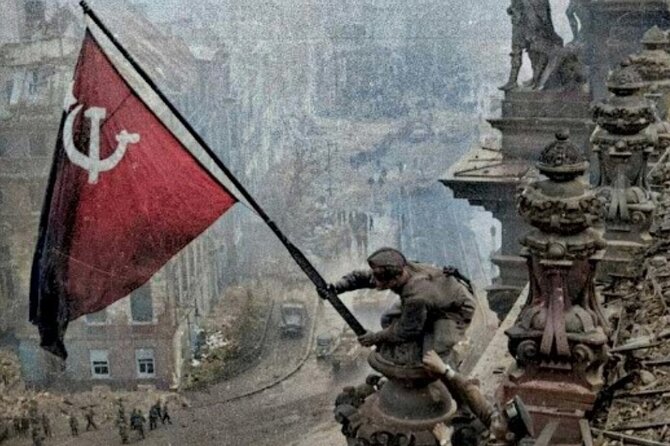
- Reichstag and the banner No. 5: hear the stories of Sergeants Yegorov and Kantariya and what their roof banner meant
- Wiedendammer Brücke on May 1, 1945: follow the route of one of the last intact bridge crossings during the breakout attempt
Why Berlin Battlefield ground-truths WWII in a way photos can’t
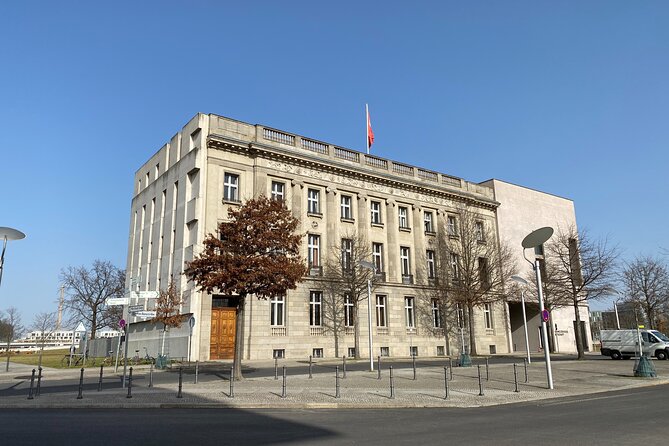
The Battle of Berlin doesn’t read like a normal campaign. It’s dense, fast, and brutally close—street to street, room to room, decision to decision. That’s exactly why a walking tour works here. When you’re on the ground, distances and sightlines stop being abstract.
This tour gives you a strong framework: it follows the battle’s motion, not just famous buildings. You start at a modern transport hub, then move toward the landmarks that were surrounded, contested, and finally symbolic. By the time you reach the Reichstag area, you’re not just looking at a dome—you’re standing near the ground where the end was unfolding.
If you care about how wars actually play out, you’ll appreciate how the guide keeps returning to the same theme: what each side could see, reach, and survive. And if you like asking questions, the small group size makes that realistic.
You can also read our reviews of more tours and experiences in Berlin.


A quick reality check
This is not a museum-style sit-down. You’ll be outside for a total of about 2 hours 30 minutes, moving between six stops with short explanations at each. If you want lots of indoor exhibits or long pauses for photos, you might find the pacing quick. But if you want a focused, coherent route, that pace is the point.
Your route: Hauptbahnhof to Wiedendammer Brücke (and why the start/end matter)
The tour meets on the southern side of Berlin Hauptbahnhof (Berlin Central Station) at Ella-Trebe-Straße 9, 10557 Berlin. The walking segment starts with a short setup—about 10 minutes—so you can orient yourself before the battle story begins.
You finish at Weidendammer Brücke in central Berlin: 10117 Berlin, about 50 meters from the S+U Friedrichstraße train station. That end location is a practical win. After the tour, you’re already near a major transit stop, so you can keep your day moving without extra detours.
Small group means more than comfort
With a maximum of 15 travelers, you don’t get shuffled through a scripted route with no room for questions. The format also helps the guide adapt explanations on the fly, which matters a lot for WWII topics where people naturally ask, What about this street? Why that position? How did they move?
Timing and weather
The tour requires good weather. That’s normal for an outdoor route, but it’s still worth planning around. Bring a layer you can move in, and if it’s rainy, you’re covered with rain ponchos provided.



Stop 1: Berlin Central Station sets the battle’s orientation
You begin at Berlin Central Station (Hauptbahnhof), specifically on the southern side of the station. The first 10-minute introduction is more than a formality—it’s your mental map. The guide sets the scene, then you head toward Moltke Bridge, which becomes the first major “contact point” in the story.
This is a clever opening because it gets you thinking like a fighter on the ground: where is movement possible, what routes matter, and how do forces converge. Even though Hauptbahnhof is modern, the walking path you take from there leads you into historic terrain where movement and access were everything.
Practical tip: On a battle-focused tour, the best photos are often the ones you take after you understand why the place mattered. Let the guide talk first, then shoot.
Stop 2: Moltke Bridge shows how one crossing can decide everything
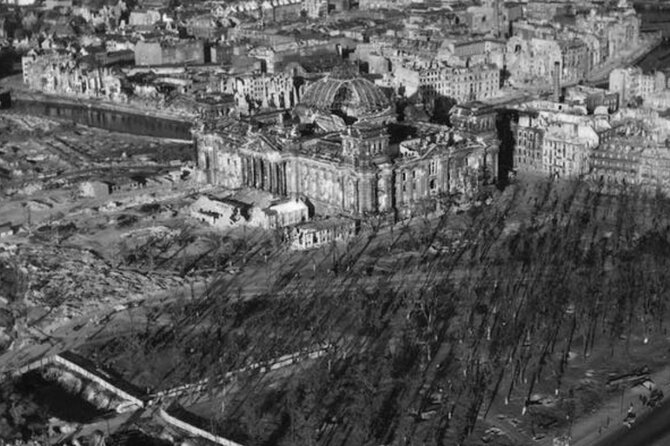
The second stop is Moltke Bridge (MoltkeBrücke), a striking red sandstone crossing. The tone shifts here. This bridge is presented as a setting for some of the city’s most brutal fighting, and the guide uses it to anchor the battle’s movement.
You’ll orient to the Soviet 3rd Shock Army’s axis of advance and hear how that mattered for both the attackers and the defenders. That’s one of the tour’s strengths: it doesn’t treat one side as a machine. It explains what the Soviets needed to overcome and what the German defenders had to hold under intense pressure.
What you’ll learn by standing there
Bridges are traffic funnels. That’s true in peacetime, and it’s even more true in war. From Moltke Bridge, the story becomes physical: approaches, choke points, and the grim reality of trying to move forces across open or exposed ground.
This is also where you start noticing the tour’s style. The guide doesn’t just name sites; they connect the terrain to the tactical problem.
Stop 3: Bundeskanzleramt, the “Himmler House,” and point-blank violence
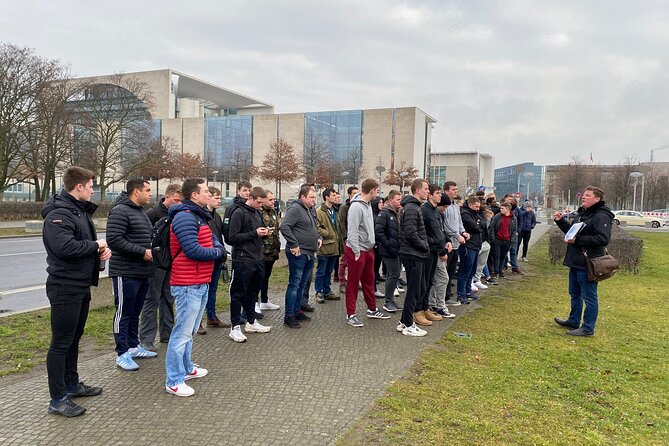
Next you cross Moltke Bridge and head toward the then interior ministry area, nicknamed the “Himmler House”. That nickname is used to help you picture the site’s identity in the wartime diplomatic quarter, and it becomes the stage for a particularly intense part of the story.
The key detail here is how close the artillery came: the tour notes a Soviet artillery barrage at point blank range. From there, the guide explains the outcome you’re expecting at this stage of the war—horrific room to room fighting.
Why this stop is valuable
It’s easy to think of WWII as big-picture maneuvering. This stop forces the scale down to something human and terrible: the fight isn’t just outside. It’s inside, in corridors and rooms where the defenders can control angles and the attackers suffer for every meter.
Also, because this stop is still in the modern city, you see the contrast between today’s smooth surfaces and what those walls once meant. That contrast is where the lesson lands.
Stop 4: Platz der Republik turns “distance” into a real obstacle
Continuing the walk toward former Königsplatz, the tour reaches Platz der Republik. Here you’re asked to take stock of a 300m moon scape the 207th and 150th rifle divisions would have had to cross before reaching the Reichstag.
This is one of the more effective teaching moments on the route. The guide doesn’t just drop the number. You’re standing in an area where you can feel how long 300 meters is when it’s exposed and contested. In a history book, distance is just a measurement. On foot, it becomes time under fire.
A small drawback to keep in mind
Because the story is so grounded, there can be moments when you want to stop and take more photos or look around longer. But the tour timing keeps you moving. If you prefer slow sightseeing, plan to give yourself extra time afterward around the Reichstag area.
Stop 5: Reichstag and the rooftop banner that marked the end
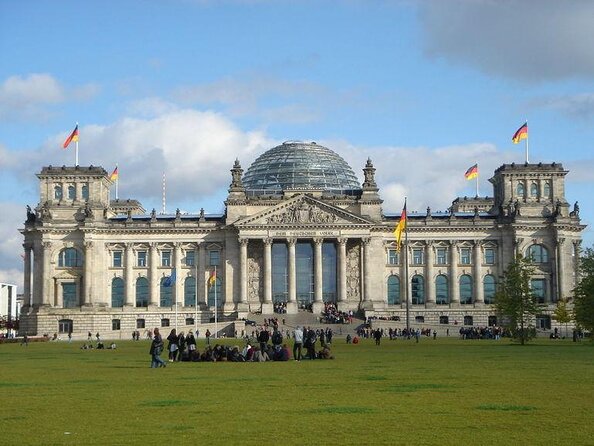
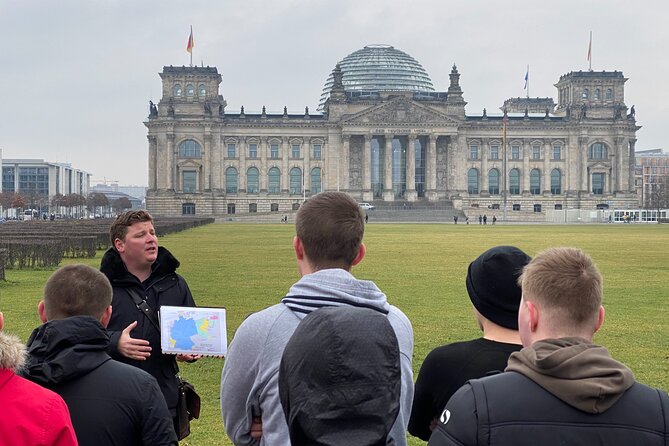
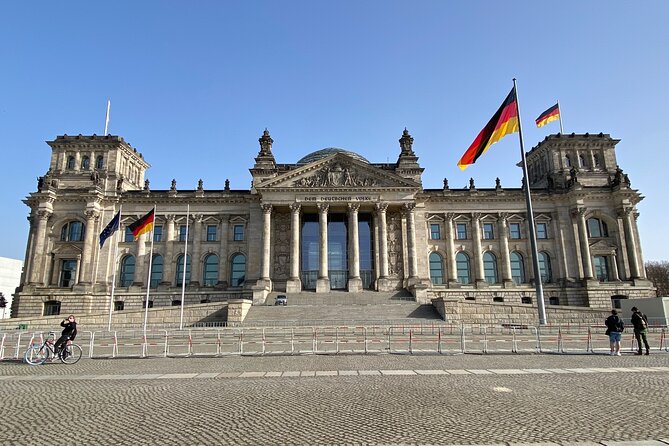
Now the walk moves toward the Reichstag Building. The guide connects the setting to the final days: Hitler’s final moments in the Führer bunker were only a few hundred meters away.
Then the tour hits its emotional peak. At the foot of the Reichstag, you hear the stories of Sergeant Yegorov and Sergeant Kantariya, and how they raised special banner No. 5 on the roof—signifying the end.
Why hearing names matters here
That moment could be treated like a ceremonial fact. Instead, the guide uses it as a human anchor. Knowing the names and the significance of banner No. 5 makes the Reichstag stop feel less like a landmark and more like a moment in time.
If you’re someone who likes history with faces and decisions, this is the stop to pay attention to.
Practical tip: Bring a phone battery that can handle some time outdoors. Reichstag photos are easy to take, but you’ll want to reference what the guide just explained before you shoot.
Stop 6: Weidendammer Brücke on May 1, 1945—one of the last intact exits
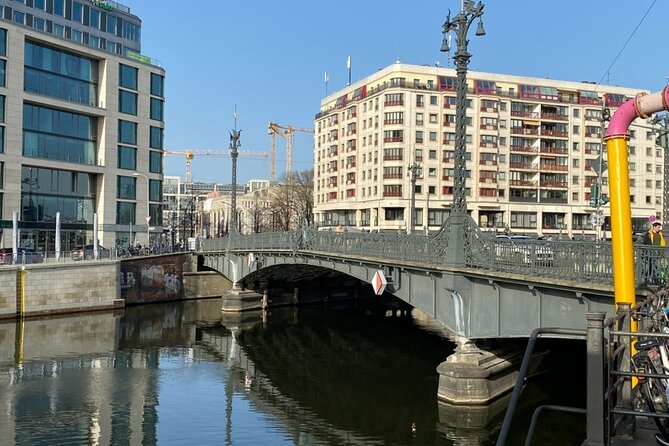
The final stop is Weidendammer Brücke. During the last days of the Battle of Berlin, it was one of the few bridges still intact over the Spree.
The tour explains that on the night of May 1st, 1945, the bridge became the scene of terrible carnage following a breakout attempt from the Führerbunker.
This closing stop works because it resolves the tour’s core question: where could anyone actually go? When the city is collapsing and routes are cut off, bridges become desperate lifelines.
After the tour: easy next steps
Since the bridge is about 50 meters from S+U Friedrichstraße, you’re not stuck coordinating a taxi or backtracking far. You can continue exploring Berlin from one of the easiest central hubs.
What makes this tour worth your $54.01
At $54.01 per person for roughly 2.5 hours, this is positioned like a high-impact walk rather than a long, multi-day immersion. For the price, you’re paying for three things:
- Focused route design: six stops tied into a coherent battle narrative
- Live interpretation: a guide who can explain why terrain and timing mattered
- Comfort add-ons: bottled water and rain ponchos are small, but they help a lot on an outdoor route
Also, admission tickets at stops are listed as free, which matters for value. You’re not paying again to enter sites—you’re learning from the ground-level context.
Who you should be if you book this
This tour is a strong match if you:
- like WWII history but want it tied to real streets and distances
- enjoy asking questions and hearing answers in a small group
- want a structured way to see major central Berlin landmarks without turning it into a random sightseeing day
It may be less ideal if you want mostly architectural highlights with minimal discussion. The emphasis here is battle context and tactical movement.
Booking and getting the most out of it (without stress)
You’ll receive a mobile ticket, and the tour runs in English. The group cap of 15 people helps keep the experience personal, and the tour is designed for most travelers to participate.
If you’re coming from another part of Berlin, you’ll likely find the walk easy to chain onto the rest of your day because the start and end are both anchored by transit. And if you get cold or wet easily, lean on the water and ponchos included.
If you’re sensitive to weather, keep an eye on forecasts. Since the tour needs good weather, plan flexibility.
Should you book Berlin Battlefield Tour – Operation Berlin 1945?
I’d book it if you want a clear, grounded way to understand the Battle of Berlin without getting lost in names and dates. The route makes sense: you move from major crossings to contested interiors, then to the Reichstag moment, and finally to the Spree crossing that closes the story.
You shouldn’t book it if you hate outdoor walking, want lots of time to linger at each stop, or prefer a museum-heavy format. This tour is short by design—its value is in the momentum and the chain of cause-and-effect between locations.
If you book, arrive with curiosity about how armies moved and why some places were unavoidable. You’ll come away with a sharper picture of what those landmarks meant at the worst possible moment.
FAQ
How long is the Berlin Battlefield Tour – Operation Berlin 1945?
It’s about 2 hours 30 minutes.
How much does it cost?
The price is $54.01 per person.
What language is the tour offered in?
The tour is offered in English.
How big is the group?
There’s a maximum of 15 travelers.
Where does the tour start and end?
It starts at Ella-Trebe-Straße 9, 10557 Berlin, Germany, and ends at Weidendammer Brücke, 10117 Berlin, Germany.
Is a mobile ticket provided?
Yes, the tour includes a mobile ticket.
What’s included for weather?
Bottled water and rain ponchos are provided if needed.
Is this tour near public transportation?
Yes. The tour ends about 50 meters from the S+U Friedrichstraße train station, and the route is near public transportation.
Is cancellation free?
Yes. You can cancel up to 24 hours in advance for a full refund.