REVIEW · BERLIN
Berlin during Nazism – Tour in Italian
Book on Viator →Operated by Vive Berlin Tours · Bookable on Viator
Nazism is written into Berlin streets. This 3-hour Italian walk turns heavy history into real places you can actually see. I especially like the small group format (up to 20 people), which keeps the discussion human and not rushed, and I love the free entry at major sites so your money goes toward the guide and the story.
You also get a strong mix of themes: how power was built, how resistance pushed back, and how Nazi policy targeted Jewish people and disabled Germans. The one drawback to plan for is the emotional weight of the topics, plus you’ll be doing meaningful walking in all weather, so bring sturdy shoes and expect a more serious tone than a normal sightseeing day.
If you’ve noticed Berlin can feel confusing at first, this tour helps you read it. Guides from Vive Berlin Tours that show up in past groups include Lorenzo, Fabio, Paolo, Vita, Federica, Silvio, and Zuleika, and the consistent vibe is clear explanations and a focus on facts over drama.
In This Review
- Key things that make this tour worth your time
- Setting the tone at Potsdamer Platz (and why this start matters)
- German Resistance Memorial Center: Operation Valkyrie and real pushback
- The T4 Memorial: how Nazi eugenics turned into mass murder
- Anhalter Bahnhof ruins: death trains, no euphemisms
- Scheunenviertel: Jewish Berlin, then and later
- Otto Weidt’s workshop: the Schindler of Berlin angle, with substance
- Neue Synagoge and the Old Jewish Cemetery: symbols and erased traces
- How Berlin changed after the war (and why you notice it more on this route)
- Price and value: is $27.87 fair for 3 hours?
- Transportation and the walking reality (keep it simple)
- What kind of traveler should book this?
- Tips to get the most from the 3-hour schedule
- Book it or skip it: my recommendation
- FAQ
- What’s the duration of the Berlin during Nazism tour in Italian?
- What language is the guide?
- How many people are on the tour?
- Where does the tour start and end?
- Is transport included during the tour?
- Are the attractions paid separately?
- Does the tour run in bad weather?
Key things that make this tour worth your time
- Italian guidance with a 3-hour pacing that fits a first visit without dragging
- Max 20 people, so you can ask questions and stay engaged
- Memorial stops that connect Nazi ideology to real-world harm, including the T4 euthanasia program
- A route that includes both resistance and Jewish Berlin landmarks, not just one side of the story
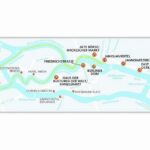
- You’ll finish near Hackescher Markt, handy for continuing your day on foot or by transit
- All-weather operation, so you get a reliable plan even when Berlin weather acts like Berlin weather
Setting the tone at Potsdamer Platz (and why this start matters)
Most Nazi-era history walks start in a museum. This one starts in a place that instantly feels modern, at Potsdamer Platz. From there, you’re guided toward the darker years, and that contrast matters: it helps you understand how the world that eventually became unimaginable started in ordinary urban life.
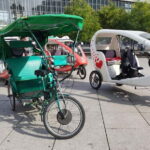
Look for the meeting point at Potsdamer Platz 10 by the S/U-Bahn station area, and spot the distinctive blue bicycle of VIVE BERLIN TOURS. The tour uses a mobile ticket, which is handy if you’re already juggling maps, reservations, and a pocket full of coins you don’t really want.
You can also read our reviews of more tours and experiences in Berlin.


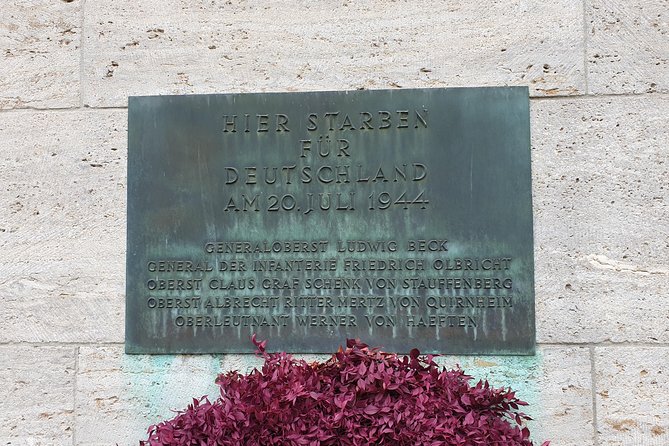
German Resistance Memorial Center: Operation Valkyrie and real pushback
This stop is built around the German Resistance Memorial Center, located at the place tied to where Operation Valkyrie was directed. Even if you only have a basic knowledge of the plot, this is where the story becomes personal: resistance wasn’t a movie scene, it was people making dangerous choices under dictatorship.
You’ll see how the center focuses on action by individuals and groups against National Socialism from 1933 to 1945. The value here is balance. It gives you a framework beyond victimhood by showing that opposition existed, even when it was risky, incomplete, and often brutally suppressed.
Practical tip: because this theme can shift quickly from history to ethics, it helps to listen closely to the guide’s explanations rather than trying to speed-read plaques. This is a stop where pausing and taking notes pays off.
The T4 Memorial: how Nazi eugenics turned into mass murder
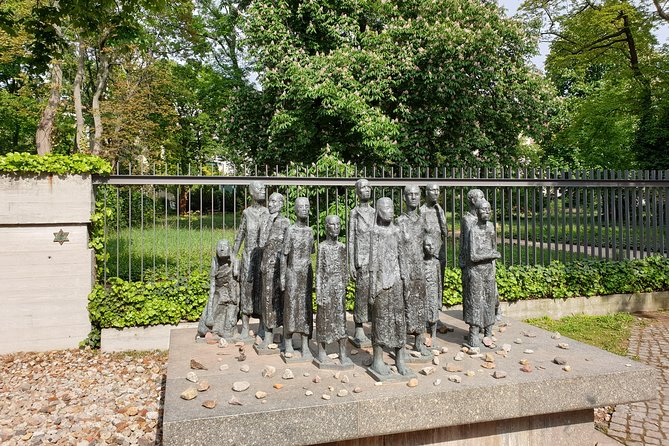
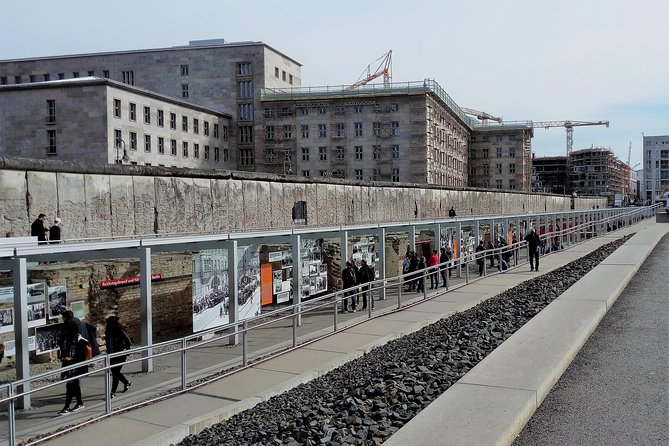
Next comes the T4 Memorial for the Victims of the Nazi Euthanasia Program. The name T4 refers to the office on Tiergartenstrasse 4 where the program was directed, and the scale you’re given is grim: about 300,000 victims, killed because of mental and physical disabilities or chronic diseases.
This is considered a precursor to the Holocaust. That link is crucial, because it shows how Nazi ideology moved from classification to elimination. You’re not just learning about a later genocide; you’re learning about the system’s logic and how it trained institutions to do the next step.
I like that this stop is treated as a historical component, not a random add-on. It helps you understand that Nazi violence wasn’t only about one group or one war-era moment. It was policy, repeated and expanded.
Anhalter Bahnhof ruins: death trains, no euphemisms
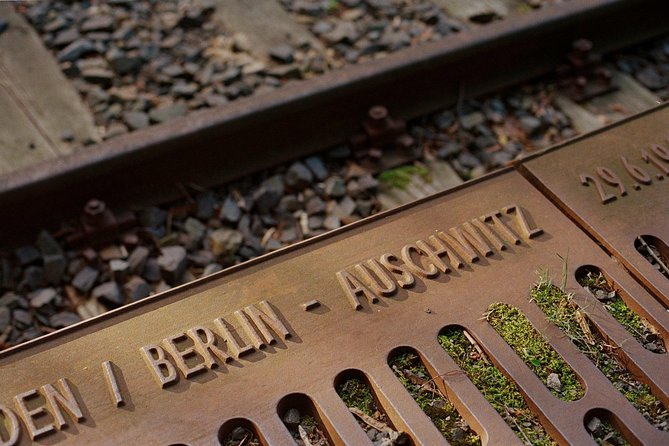
Anhalter Bahnhof used to be a major European station at the end of the 1800s. Today, what remains are the ruins after Second World War destruction, but the story connected to it doesn’t stay in the past.
From 1942 to 1945, trains departed from here for deportations—often described as death trains. When you stand near what’s left of the station, the history stops being abstract. It becomes a question of logistics: how everyday transport infrastructure was converted into an engine of terror.
If you want one reason to do this tour early in your trip, it’s this: Berlin’s memorials can feel scattered. A guide ties them together so the route forms a clear line instead of a list of sites.
Scheunenviertel: Jewish Berlin, then and later
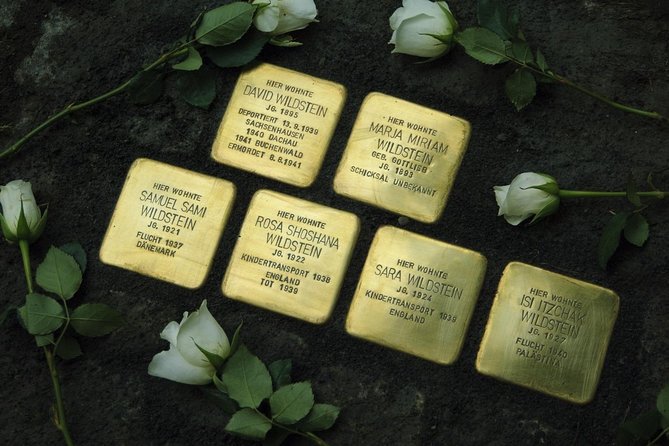
Scheunenviertel is part of Mitte, and it’s also known as the Jewish Quarter area. Here, the tour takes an important turn from sites tied directly to Nazi operations and toward Jewish institutions and community life.
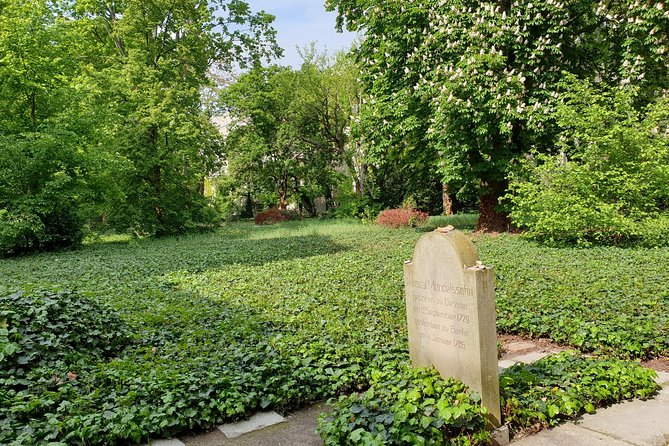
In this segment, you visit key Jewish landmarks, including the New Synagogue and also institutions associated with figures like Moses Mendelssohn, who helped shape modern Jewish thought. The practical value is that you get context for what was attacked—not just that it was attacked.
A smart way to approach this stop: try to picture the community as it existed before persecution. The guide’s job is to connect the architecture and institutions to history, but your job is to stay aware that these weren’t just “historical objects.” They were living spaces.


Otto Weidt’s workshop: the Schindler of Berlin angle, with substance
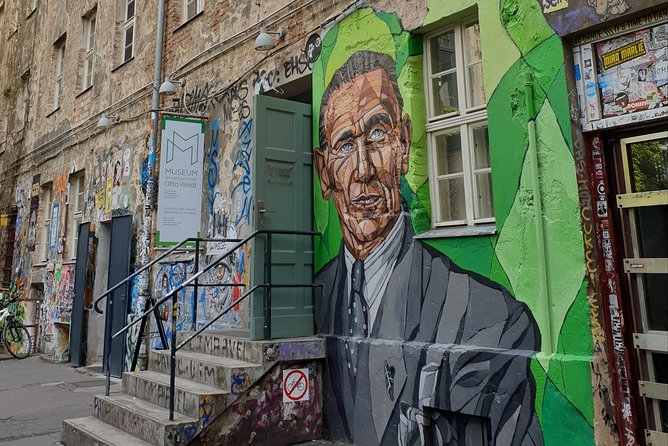
Museum Blindenwerkstatt Otto Weidt is one of the most memorable stops on the route. Otto Weidt is often called the Schindler of Berlin, and the story given here focuses on how he hired Jewish workers, including blind and disabled employees, to help protect them from deportation to Nazi extermination camps.
This stop matters because it’s not only about what Nazis did. It’s also about how people exploited small openings to save lives when the system was built to crush them. You also learn that the history is remembered in the original factory location connected to Weidt.
You might find yourself wanting to linger longer than the scheduled time. If you’re the type who reads slowly and notices details, keep that in mind and don’t book anything tight right after the tour ends.
Neue Synagoge and the Old Jewish Cemetery: symbols and erased traces
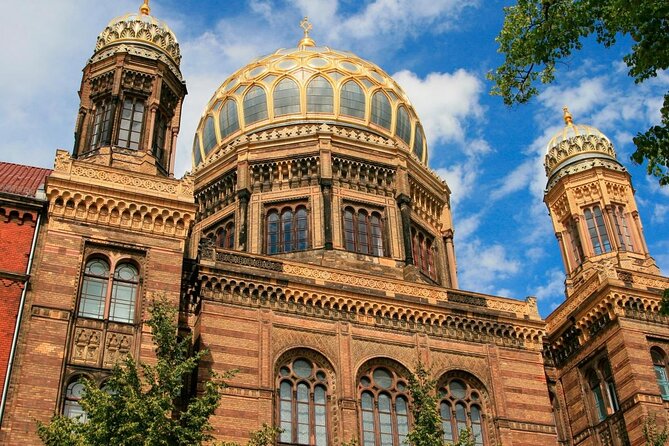
The Neue Synagoge (New Synagogue), built in 1866, is one of Berlin’s most significant Jewish landmarks. It seated around 3,200 people and was described as a major symbol of the thriving Jewish community—before the Nazi period shattered it.
Later, you also visit the Alter Judischer Friedhof (Old Jewish Cemetery) in Hamburger Straße. It’s among the oldest recognizable cemeteries in the inner city, but it’s also a site shaped by loss. During the Nazi period, it was destroyed by the Gestapo, and today very little remains of the original place.
These two stops work together. The synagogue shows what continuity looked like, and the cemetery shows how deliberate destruction tried to cut memory at the roots. Even if you don’t have perfect German language skills, the guide’s explanations help you connect the physical remains to the policies that caused the damage.
How Berlin changed after the war (and why you notice it more on this route)
A good Nazi-era tour in Berlin doesn’t just point at ruins. It shows how the city adapted, rebuilt, and decided what to preserve. This tour is designed to help you see that shift, with landmarks that reflect different layers of Berlin’s past—from war-era infrastructure to memorial education and post-war remembrance.
That city change is part of the value. Berlin is one of Europe’s most visible “after” cities. You can see where history got erased, where it got documented, and where it got rebuilt so people could keep living while confronting what happened.
Price and value: is $27.87 fair for 3 hours?
At $27.87 per person for roughly 3 hours, this is priced like a high-quality walking tour that doesn’t nickel-and-dime you. The big reason is what’s included: a professional guide, an Italian guide, and local taxes.
Just as important, the major stops listed are marked with free admission tickets. That means the cost is really paying for interpretation and guiding, not entry fees. The tour also has mobile tickets, which tends to reduce friction when you’re juggling tram routes.
Not included: transportation to and from attractions, plus food and drinks, and tips (optional). That’s normal for Berlin walking tours, but it’s worth calling out because it affects your total day cost.
Transportation and the walking reality (keep it simple)
The tour ends at Hackescher Markt, and it starts at Potsdamer Platz 10. Since transport isn’t included, I recommend planning a Berlin day ticket for zones AB if you’ll be using the transit system before and after the tour.
You’ll also want to think about shoes and weather. The tour runs in all weather conditions, so bring a rain layer or umbrella depending on what you tolerate. This isn’t a sit-down experience, and even with breaks, you’re moving between sites that require real walking.
A practical mindset: treat it like a focused morning or early afternoon plan. Don’t schedule a museum marathon right after unless you know you have that energy.
What kind of traveler should book this?
This tour fits best if you want history tied to places, not just dates. It’s also a good pick for people who can handle serious subject matter and want structure: you’ll hear about Hitler’s rise to power in 1933 and the chain of events leading toward World War II, while also seeing how Berlin memorializes afterward.
It’s especially suitable if you’re visiting with:
- Adults who want a clearer timeline and explanation
- Teenagers and older kids who can engage with difficult history (the guides are used to explaining complex material clearly)
- Anyone who prefers a small group over crowd-size tours
If you’re someone who struggles with emotionally heavy topics or needs very light, upbeat sightseeing right now, you might be happier picking a lighter theme for your day.
Tips to get the most from the 3-hour schedule
- Bring comfortable shoes. Even when each stop is short, the total walking adds up.
- Charge your phone or make sure your mobile ticket works offline. Berlin transit and meeting points can move fast.
- If you’re traveling with questions, write them down before you start. With a small group, you’ll actually get a chance to ask.
- Plan a slower rest of the day. This tour leaves you thinking, and you’ll probably want quiet time afterward.
- If you’re visiting in rain, a light rain jacket beats battling wind with an umbrella.
Book it or skip it: my recommendation
I’d book this tour if you want a structured, Italian-language way to understand Nazi Germany through Berlin’s most connected sites. The price feels fair for the length and the guide attention, and the mix of resistance, T4 euthanasia history, deportation infrastructure, and Jewish landmarks gives you a fuller picture than one-topic walks.
Skip it only if you need an upbeat day or you don’t want to engage with difficult subject matter. Otherwise, this is the kind of tour that helps Berlin make sense, one stop at a time.
FAQ
What’s the duration of the Berlin during Nazism tour in Italian?
It runs for about 3 hours.
What language is the guide?
The tour includes a professional guide and a guide in Italian.
How many people are on the tour?
The tour has a maximum of 20 travelers.
Where does the tour start and end?
It starts at Potsdamer Platz 10, near the S/U-Bahn Potsdamer Platz, and ends at Hackescher Markt.
Is transport included during the tour?
No. Transportation to and from attractions isn’t included, and you should plan to use public transit (zones AB are suggested).
Are the attractions paid separately?
The stops listed are marked with admission ticket free, so you don’t need to pay entry fees at those sites.
Does the tour run in bad weather?
Yes. It operates in all weather conditions, so dress appropriately.