REVIEW · BERLIN
Karl-Marx-Allee Tour: Life and Architecture in East Berlin
Book on Viator →Operated by Beyond and Beneath Tours · Bookable on Viator
East Berlin politics is written in stone. This walking tour turns Karl-Marx-Allee from a long boulevard into a clear story: socialist rebuilding in the early 1950s, bold (and sometimes rejected) architectural dreams, and the propaganda machinery that grew around it. I especially like how the architecture becomes evidence—you’re not just seeing buildings, you’re learning why they were designed and what they were meant to do.
The big win for me is the small group size (up to 15) and a strong guide-led pace that fits a short visit. One thing to consider: this is East Germany history with heavy political themes, and since it’s outdoors, good weather matters for the tour to run.
In This Review
- Key points worth knowing before you go
- Why Karl-Marx-Allee still feels like a message
- Getting the most from a 2-hour walk (pacing, guide, and group size)
- Stop 1: Frankfurter Tor and the socialist-street blueprint
- Stop 2: Laubenganghäuser and Hans Scharoun’s rejected utopia
- Stop 3: Hochhaus an der Weberwiese, luxury, and the propaganda machine
- Stop 4: 17 June 1953 and the uprising you can’t ignore
- Stop 5: Café Sibylle and Joseph Stalin’s shadow until 1961
- Stop 6: Karl-Marx-bustendenkmal and ideology in daily life
- Stop 7: Strausberger Platz and what’s left after the Wall
- Logistics that actually matter on the day
- How I’d decide if this is the right tour for you
- Should you book Karl-Marx-Allee: Life and Architecture in East Berlin?
- FAQ
- How long is the Karl-Marx-Allee walking tour?
- Is the tour offered in English?
- What is the group size limit?
- Where does the tour start and end?
- Do I need admission tickets for the stops?
- What happens if the weather is bad?
Key points worth knowing before you go
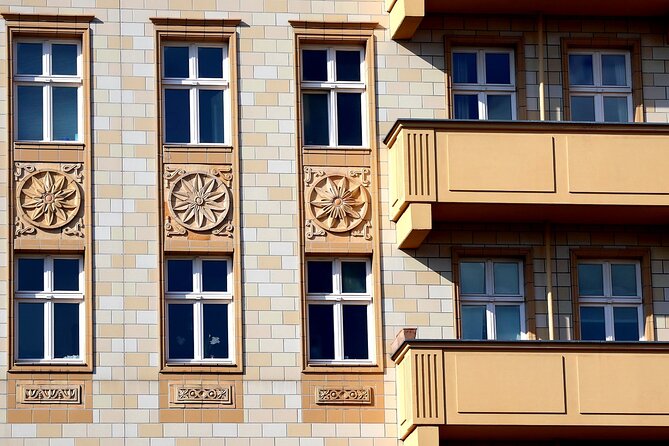
- Frankfurter Tor sets the tone with Herman Henselmann towers and early-1950s plans for a socialist street
- Hans Scharoun’s Laubenganghäuser show the utopia-versus-reality clash after WWII, then political rejection
- Hochhaus an der Weberwiese was a prototype and a propaganda tool that even drew Western architects
- 17 June 1953 is not sugarcoated: you’ll see the uprising site and the associated controversial monument
- Café Sibylle ties into Soviet symbolism through Joseph Stalin’s statue, which was there until 1961
- Strausberger Platz brings it forward to after the Wall with stories about life then and now
Why Karl-Marx-Allee still feels like a message
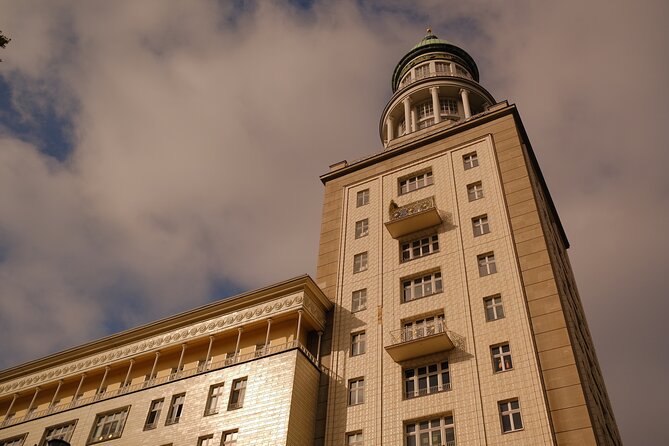
Karl-Marx-Allee is the kind of place where your eyes start out scanning for “nice buildings” and end up reading political intent. This tour is built for that shift. You move block to block along one of East Berlin’s most famous showpieces, and each stop answers a practical question: who designed this, what did it promise, and what did it really mean for people?
The feel is not academic for the sake of it. The guide connects design choices—symmetry, modernist forms, apartment-building planning—with the East German state’s goals. You get the sense that architecture wasn’t neutral here. It was a tool: for rebuilding after destruction, for demonstrating success, and for sending a message to East Germans and outsiders alike.
And yes, the story includes propaganda. It also includes the limits of utopian ideas when the regime tightened control.
You can also read our reviews of more tours and experiences in Berlin.


Getting the most from a 2-hour walk (pacing, guide, and group size)
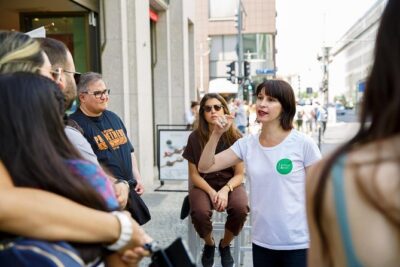
This is a 2-hour walking tour that stays intentionally focused. With a maximum of 15 people, you’re more likely to get real attention than you would on a huge bus-style group. The flow also matters: stops are timed to keep momentum, so you’re not stuck waiting around while your guide turns the talk into a lecture.
You’ll also want an English-friendly guide-led experience if you’re aiming to leave Berlin knowing more than what you can easily spot on your own. The tour is described as offered in English, and the guide brings facts you’re likely to miss if you just wander the boulevard.
In the past, guides such as Martina have stood out for depth, strong preparation, humor, and organization. If you get a guide with that mix, the whole walk tends to feel like a story with scenes—rather than a list of dates.
Stop 1: Frankfurter Tor and the socialist-street blueprint
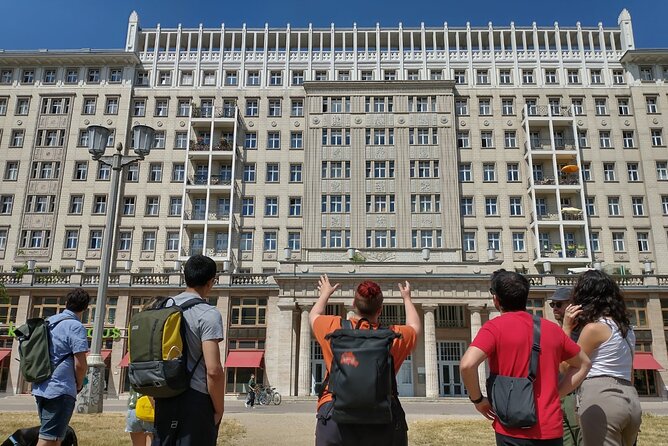
Your tour begins at U Frankfurter Tor. The first stop is Frankfurter Tor, where you’ll notice the symmetry of the towers built by Herman Henselmann. That visual balance is more than just “pretty.” It’s part of the East German plan to project order and confidence.
From there, the guide connects the site to early-1950s planning for what was described as the first socialist street in Germany. You’ll also hear about a national rebuilding program that mobilised thousands of volunteers—the kind of detail that helps explain why these projects moved fast and why they were framed as a shared victory.
Practical upside: this stop doesn’t require an admission ticket. So you can spend your time looking and listening instead of budgeting for extra entry fees.
Stop 2: Laubenganghäuser and Hans Scharoun’s rejected utopia
Next comes Laubenganghäuser, a jump into immediate post-WWII modernist architecture credited to Hans Scharoun. This is where the tour starts to show the tension between creativity and power.
The key idea at this stop is that Scharoun’s urbanist concepts were shaped by the ashes of destroyed Berlin—full of rebuilding hope. But those utopian ideas were rejected soon after by the new East German regime. You start to see how political control could override even sincere architectural thinking.
This is a great stop if you like your history with contrast. You’re not just learning what was built—you’re learning what was considered and then shut down. It makes the boulevard’s final look feel less inevitable.
Like the first stop, there’s no admission ticket required, which keeps the pacing smooth.
Stop 3: Hochhaus an der Weberwiese, luxury, and the propaganda machine
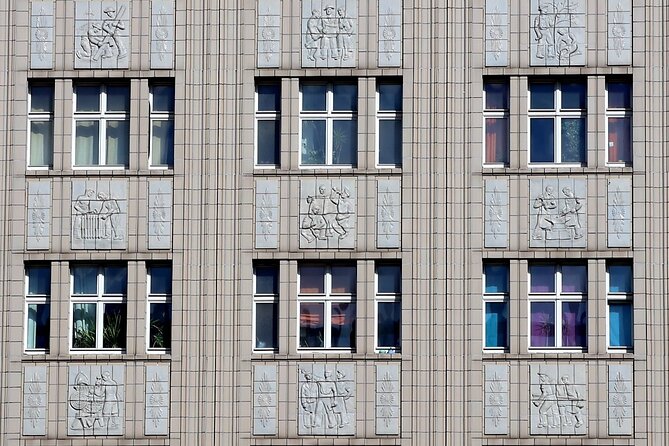
At Hochhaus an der Weberwiese, the tour zooms out and then zooms in again. This building is described as a prototype for the rest of socialist Karl-Marx-Allee. In other words: it wasn’t just an apartment block. It was a starting model.
One of the most useful details here is that it offered its first tenants unprecedented luxury. That’s a powerful detail because it complicates the stereotype of austerity-only life. At the same time, the tour explains how the project became a propaganda tool—a way to sell the system as modern, successful, and worth emulating.
Then comes an interesting twist: it was also a magnet for Western architects. That detail helps you understand how East Berlin wasn’t only performing for locals. It also attracted attention from outside the Iron Curtain, whether for admiration, curiosity, or critique.
Again, there’s no admission ticket required. So you can focus on visual clues and the guide’s interpretation, not on logistics.

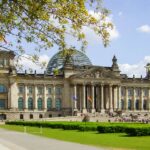
Stop 4: 17 June 1953 and the uprising you can’t ignore
The walk takes a darker turn at the Gedenkstätte Arbeiteraufstand 17 Juni 1953. This is the place where disgruntled workers started a mass uprising in June 1953, one that almost toppled the socialist government of East Germany.
This stop is important because it moves the story from buildings-as-messaging to buildings-as-background for real political conflict. The tour doesn’t treat it like distant history. It emphasizes that the uprising shook the state seriously enough to nearly topple it.
You’ll also see the monument dedicated to the uprising, and it’s described as controversial. That word matters. It signals that public memory here is not settled and people interpret it differently. If you’re the type who likes your tours to be respectful but honest, this stop is likely to hit.
No admission ticket is required at this stop either, so you can linger without extra cost.
Stop 5: Café Sibylle and Joseph Stalin’s shadow until 1961
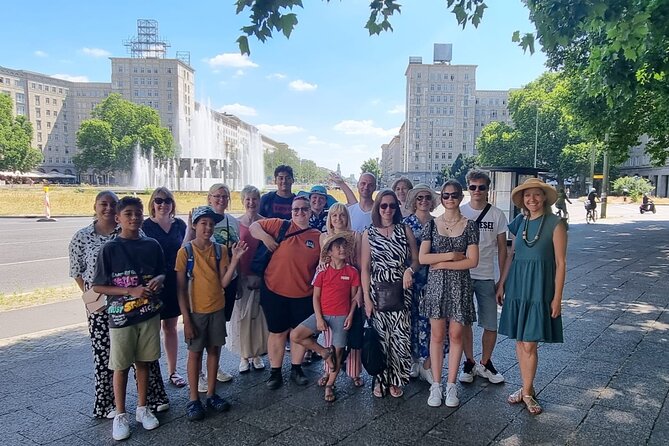
Now the tour returns to a more everyday angle with Café Sibylle. This is one of those stops that makes history feel close to daily routines instead of only museums and monuments.
The connection here is Joseph Stalin. The tour explains how the café is tied to the statue of Stalin, which stood nearby until 1961. That’s a striking detail because it turns a political symbol into something people likely passed by while going about normal life.
What I like about this stop is how it demonstrates that power doesn’t only live in government buildings. It shows up in public spaces and in the atmosphere around places where people would spend time.
And again: no admission ticket is required.
Stop 6: Karl-Marx-bustendenkmal and ideology in daily life
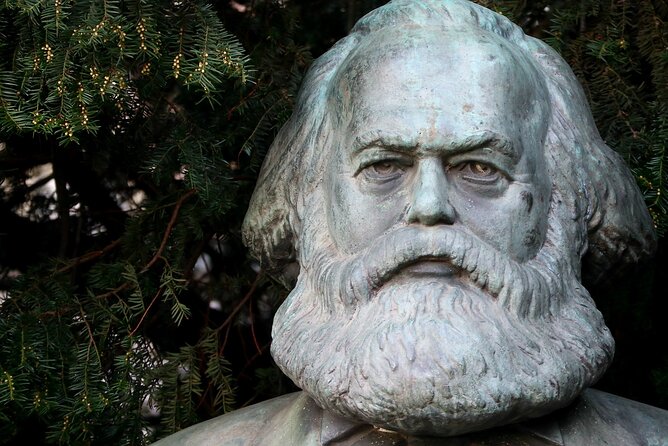
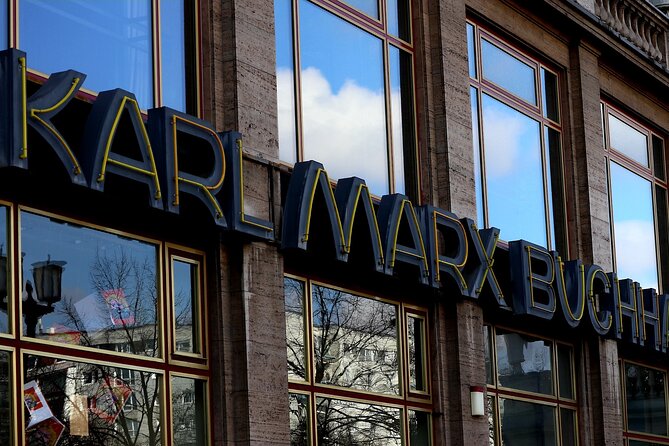
At the Karl-marx-bustendenkmal, the tour brings you face to face with the author of the Communist Manifesto—Karl Marx—and uses that to talk about how socialist ideology affected everyday life in East Berlin.
This is where the tour shifts from architecture and monuments into the idea level. The practical payoff is that you stop treating the boulevard like a “set piece” and start understanding it as part of a broader system that shaped beliefs, routines, and public messaging.
If you’re more into people than buildings, this is a key stop. It’s also useful if you want to connect what you see (the structures and symbols) to what those symbols were trying to produce in real life.
No admission ticket required here either.
Stop 7: Strausberger Platz and what’s left after the Wall
The tour ends at Strausberger Platz. You’ll be guided through another prominent point along the boulevard, including a “splendid example” in the style of Hermann Henselmann.
But the ending is the most forward-looking part of the walk. You’ll hear stories about life on Karl-Marx-Allee after the Fall of the Berlin Wall, and also what it looks like today. That matters because it prevents the tour from stopping at political tragedy or political victory.
The final location is Strausberger Pl. on the eastern side of the roundabout. It’s noted as about a 10-minute walk from Alexanderplatz, which makes it easy to keep your day going without backtracking.
Logistics that actually matter on the day
This tour is built to be easy to plug into a Berlin itinerary.
- English is available, and the tour is designed so most people can participate.
- It’s a small group (max 15), which supports a more personal pace.
- You’ll use a mobile ticket.
- The meeting point is at U Frankfurter Tor (10243 Berlin), and the tour ends at Strausberger Platz (Strausberger Pl., 10243 Berlin).
- It runs outdoors and requires good weather, so expect a reschedule or full refund if conditions don’t allow it.
One more detail to plan around: each stop is listed as ticket free for admission ticket purposes, which keeps costs predictable while you’re out walking and learning.
How I’d decide if this is the right tour for you
Book this if you want East Berlin that you can read. If your dream day includes architecture that’s tied to real political decisions, you’ll likely enjoy the way this tour links design, ideology, and conflict.
It’s also a strong choice if you’re short on time. Two hours is enough to get the core story arc—rebuilding and idealism, propaganda and “success,” dissent and uprising, and the later reshaping of memory.
Consider it a careful match if you prefer only lighter history. This route includes moments tied to socialist rule, Soviet symbolism, and a mass uprising site with a monument described as controversial. You don’t have to be political to appreciate it, but you should expect seriousness.
Finally, if you value a guide who tells stories with humor and structure, this tour has a track record with guides such as Martina being singled out for that exact style.
Should you book Karl-Marx-Allee: Life and Architecture in East Berlin?
Yes, if you want value measured in understanding. At about $30.01 for roughly 2 hours with an expert local guide, a capped group size, English-language instruction, and multiple ticket-free stops, the math works—especially when you want the “why” behind what you’re seeing.
You should probably pass if you’re only chasing pretty facades and quick photos. This tour is about how the buildings were used and what those uses reveal.
My simple call: if you like architecture with an explanation and you’re okay with a politically honest story, this is a smart way to spend a slice of your Berlin time.
FAQ
How long is the Karl-Marx-Allee walking tour?
It lasts about 2 hours.
Is the tour offered in English?
Yes, the tour is offered in English.
What is the group size limit?
The tour has a maximum of 15 travelers.
Where does the tour start and end?
It starts at U Frankfurter Tor (10243 Berlin) and ends at Strausberger Platz (Strausberger Pl., 10243 Berlin). The end point is on the eastern side of the roundabout, about a 10-minute walk from Alexanderplatz.
Do I need admission tickets for the stops?
The listed stops are free in terms of admission tickets.
What happens if the weather is bad?
The experience requires good weather. If it’s canceled due to poor weather, you’ll be offered a different date or a full refund.
If you want, tell me your travel dates and what else you’re doing around Alexanderplatz, and I’ll suggest a tight before/after plan to make this stop land perfectly in your day.