REVIEW · BERLIN
Kreuzberg Tour – Kriminell und kuschelig
Book on Viator →Operated by Adventure World Tours · Bookable on Viator
Kreuzberg is a neighborhood with sharp edges and soft corners. This guided walk pairs street-level sights with the story behind Kotti and the lanes around Oranienstraße. You get a simple way to navigate Berlin’s most mix-and-match district without having to decode everything on your own.
What I like most is the 2-hour format. It’s long enough for real context, but short enough that you stay focused. And the guide style is key here: names like Sammy show up because the storytelling hits history, daily life, and even humor, at a pace that feels steady rather than rushed.
The one drawback to plan for: this is a public walking tour, and you have to keep up. If you have major walking problems, this may not fit your day.
In This Review
- Key highlights worth lining up
- Kreuzberg in two hours: why this walking route works
- Meeting on Reichenberger Straße, finishing by Curfew Bar
- Kotti: the fast history briefing that sets the tone
- Oranienstraße and the backyards: imagining daily life in crowded courtyards
- Between stops: parks, main roads, and backstreets you can navigate later
- The guide matters: pace, clarity, and humor that doesn’t feel forced
- What makes the Kreuzberg story click today
- Price and logistics: when $27.27 is a smart buy
- Who should book this Kreuzberg Tour
- Should you book this Kreuzberg Tour?
- FAQ
- How long is the Kreuzberg walking tour?
- Where does the tour start and end?
- What does the tour include?
- Is a mobile ticket provided?
- What’s the minimum age?
- Is it suitable if I have walking problems?
- What’s the cancellation policy?
Key highlights worth lining up
- Kotti as your starting pulse: a central Kreuzberg anchor with an immediate history briefing
- Oranienstraße and the backyards idea: you’ll picture how “courtyard apartments” shaped working-class life
- Hands-on neighborhood orientation: you’ll walk parks, main streets, and backstreets so you understand the layout
- A guide who keeps momentum: the group stays on track for the full 2 hours
- Small enough to ask questions: maximum 25 people
- End point that still works for your night: finish near Curfew Bar at Falckensteinstraße
Kreuzberg in two hours: why this walking route works
Berlin can feel like it’s made of big distances and bigger plans. This tour solves that with a practical format: a guided group walk for about 2 hours. You trade time-consuming map-wrangling for a route that teaches you how Kreuzberg is organized and why it developed the way it did.
At $27.27 per person, the value depends on how you travel. If you like neighborhood context, it’s a fair price for an actual guide-led route, not just “walk and look.” If you already know Kreuzberg deeply, you might feel it’s short. But for most first-timers, two hours is a sweet spot: you leave with bearings and a clearer sense of where to explore next.
This is also a mobile ticket style tour. That means fewer logistics headaches for your day. You’ll be walking on sidewalks and crossing streets with a group, so build in normal city-walking time and energy.
Group size is capped at 25 people. That matters. With a smallish group, you don’t feel like you’re being herded in a crowd that the guide can barely see.
You can also read our reviews of more tours and experiences in Berlin.



Meeting on Reichenberger Straße, finishing by Curfew Bar
The start is at Reichenberger Str. 174, 10999 Berlin. The end is at Curfew Bar, Falckensteinstraße 47, 10997 Berlin. That end point is handy because it puts you back near a bar you can use as a pivot for food, drinks, or just continuing your night.
One more practical note: the tour is near public transportation. So if you’re timing it between museums, a food crawl, or a neighborhood wander, you’re not stuck with a single transit plan. You can usually reach the start and then walk the rest without needing a car or long detours.
Also, the tour is minimum age 18. If you’re traveling as a family with teens, this one won’t be a match.
Kotti: the fast history briefing that sets the tone
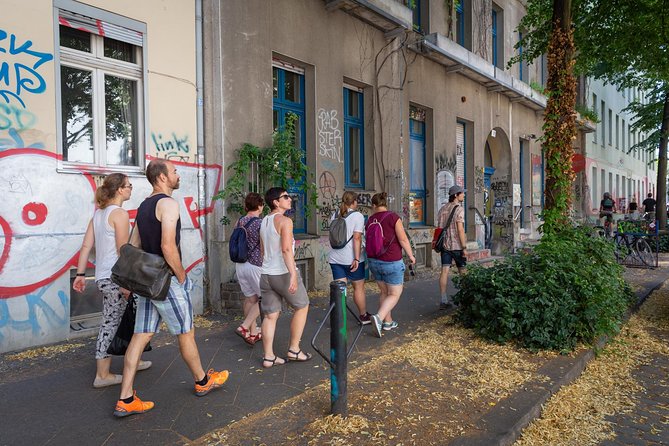
The walk kicks off at Kotti, one of Kreuzberg’s central gathering points. Your guide starts with a short introduction about Kreuzberg’s history, life, and culture. That first segment is more than a formality. It gives you a framework for what you’re about to see, so the buildings and street shapes don’t feel random.
Then the story gets grounded in how the neighborhood worked when it was built up in the mid-19th century. Kreuzberg grew as a working-class neighborhood, shaped by large building complexes and the idea of space that was… tight, to say the least. The tour focuses on places along Oranienstraße, which helps you connect the history to streets you can still find on foot today.
A good guide doesn’t just recite facts. The goal is that you leave with a mental picture. Here, that picture is about air, crowding, and how people lived when fresh air wasn’t a given.
Oranienstraße and the backyards: imagining daily life in crowded courtyards
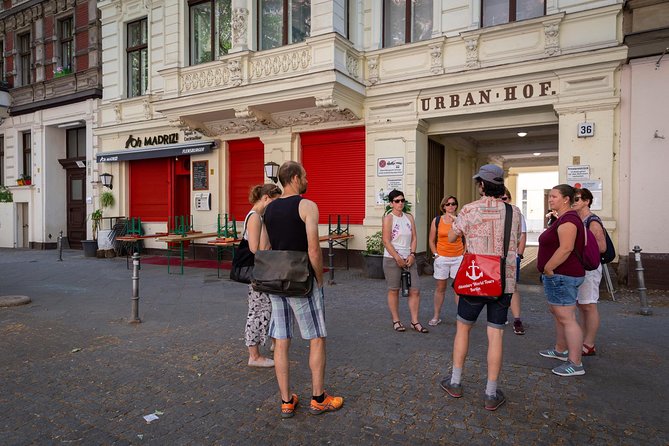
One of the most memorable parts is the tour’s attention to the “backyard” life inside the Oranienstraße area. The neighborhood had huge building complexes, and people lived in large structures where even the courtyards and backyards mattered. The tour invites you to visualize life in those multi-level spaces—especially the parts sometimes described as fifth or sixth backyards.
Here’s what this kind of stop does for you as a visitor: it changes the way you look at the street. Today, Kreuzberg can feel like modern shops and movement. But when you’re told to imagine the past layout—where fresh air was hard to come by, and where people didn’t rent a whole flat—you start noticing how the built environment shapes lived experience.
The tour paints a brutal detail that sticks: some people didn’t rent entire rooms or apartments. Instead, there’s the idea of sleeping for an 8-hours stay on a mattress. You don’t have to love every part of the grim story to understand the point. It helps explain why the neighborhood’s social and political energy grew so intensely.
There’s also the politics thread. The working-class population often held (radical) left-wing views, and the tour uses that to connect Kreuzberg to Berlin’s wider history of protest, change, and community organizing.
Between stops: parks, main roads, and backstreets you can navigate later
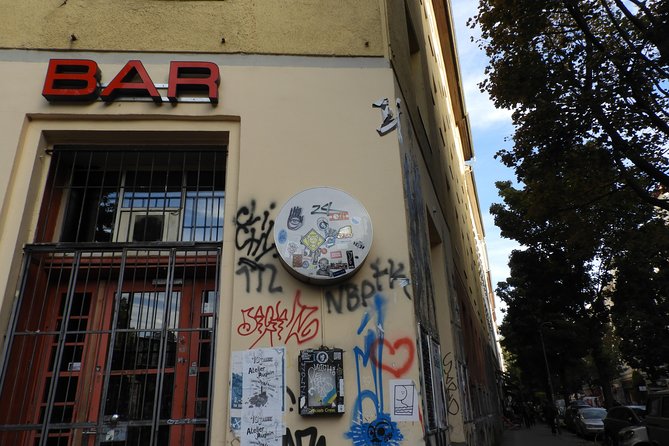
Even though the tour highlights its main historical “anchor moments,” the rest of the 2 hours is about movement and orientation. The goal is that you walk Kreuzberg in a way that makes sense—covering parks, iconic avenues, and backstreets as you go.
This is where a guided walk becomes more valuable than a self-guided stroll. You get a sequence. You’re not only seeing a few pretty blocks; you’re building a map in your head. You also learn what the guide thinks matters, which saves you time when you’re planning the rest of your Berlin days.
If you’re the type who likes to return to places later, this approach pays off. After the tour, you’ll likely know where to aim your next walk—either to go deeper on streets the guide mentioned, or to pair Kreuzberg with nearby sights.
One small drawback: because it’s a walking route, you’ll still need your own energy for other exploration afterward. This tour doesn’t replace a full afternoon in the neighborhood. It sets you up for it.



The guide matters: pace, clarity, and humor that doesn’t feel forced
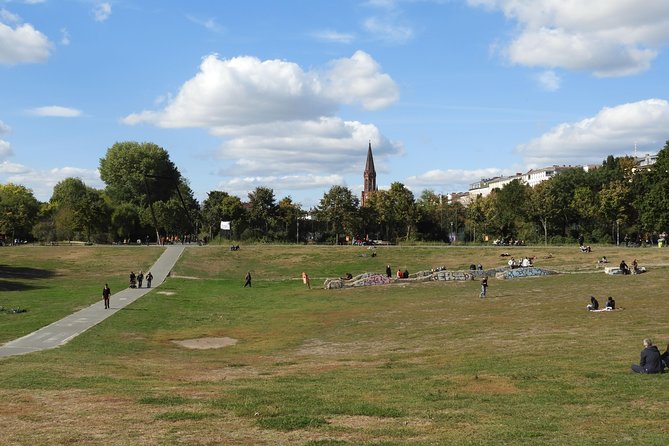
The best thing about this experience is the way it’s described as not foolish and not raced. You get an informative route with a good tempo—structured enough to keep you from wandering, but paced enough that the story lands.
From guide-name mentions like Sammy, you can expect more than schoolbook delivery. The storytelling style is described as sharp and engaging, with history that connects to the present. You also get a sense the guide knows how to keep a group moving while still fitting in multiple layers of context.
That balance is hard to do on a neighborhood walk. Too fast, and you learn nothing. Too slow, and you feel dragged. Here, the reviews underline that the tour feels well-paced and well-routed—exactly what you want when you’re on a limited schedule.
What makes the Kreuzberg story click today
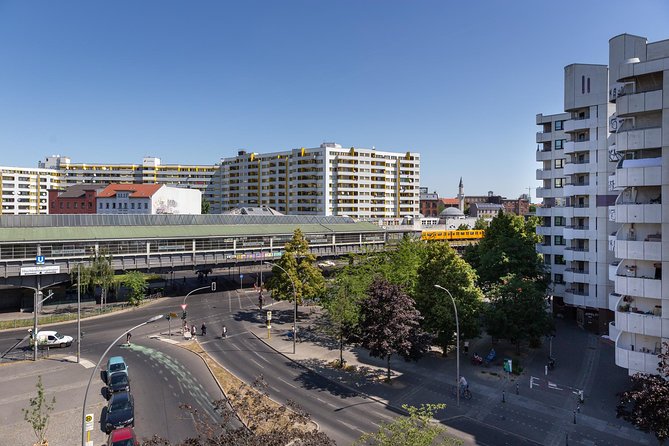
Kreuzberg’s appeal isn’t only architecture or photo spots. It’s how people lived, argued, organized, and adapted over time. This tour uses that lens: working-class origins, crowded living conditions, strong political leanings, and then the idea that Kreuzberg today is the result of constant change.
I like how the tour’s framing makes the neighborhood feel understandable. You’re not handed a long list of facts. You’re walked through a sequence that explains why the district has its particular mix of cultures and attitudes.
And because the tour is on foot, it’s physical. When you hear about backyards and courtyards, then stand near the streets that connect those spaces, the history feels more than an abstract timeline. It turns into something you can recognize when you keep exploring after the walk ends.
Price and logistics: when $27.27 is a smart buy
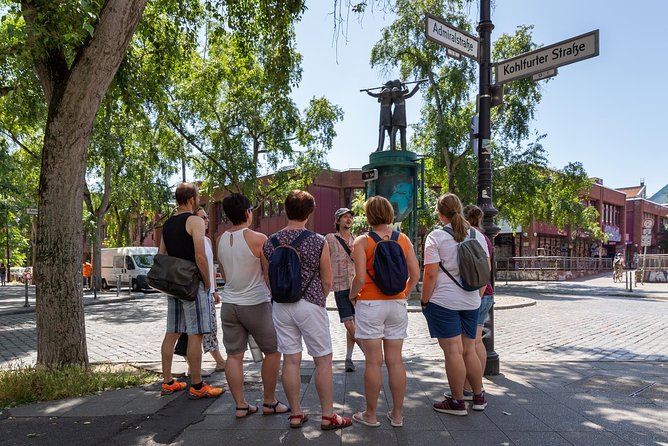
Let’s talk value in plain terms. At $27.27 per person for about 2 hours, this works best when you want guided context rather than just a stroll. Berlin is full of low-cost free walking. So the question is: do you want someone to interpret what you’re seeing?
If yes, you’re paying for three things:
- a structured route (so you don’t waste time deciding where to go),
- background that ties streets to history,
- and a guide you can follow without getting lost mid-story.
What you’re not paying for: hotel pickup, and not food or drinks unless specifically added. So plan on bringing water and using nearby stops for meals.
You should also know the walk is not recommended for anyone with major walking problems. This is a public walking tour where you have to keep up with the guide, so don’t plan to treat it like a slow sightseeing stroll.
Who should book this Kreuzberg Tour
This is a strong fit if you:
- want Kreuzberg context fast without a long schedule,
- like history that’s connected to everyday life, not just monuments,
- prefer a guide who keeps things moving at a reasonable pace,
- are comfortable walking through a mix of parks, avenues, and side streets.
It may be less ideal if you:
- have limited mobility or need a slow pace,
- need a tour with lots of sitting breaks (this one is still a walking format),
- already know Kreuzberg’s political and social history very well and crave something more specialized.
If you’re planning a first Berlin trip, I’d treat this as an early orientation move. Do it early in your week, then use it to steer your later wandering.
Should you book this Kreuzberg Tour?
I’d book it if you want a guided, story-driven way to understand why Kreuzberg feels the way it does. The combination of Kotti, the focus on Oranienstraße and backyards, and a pace that stays readable makes it a practical use of a couple hours.
Skip it only if your walking stamina is limited or if you’d rather spend your time on your own picks without structure. Otherwise, this is one of those tours that doesn’t demand your attention for a whole day. It gives you bearings, meaning, and a route you can actually build on afterward.
FAQ
How long is the Kreuzberg walking tour?
It runs for about 2 hours.
Where does the tour start and end?
It starts at Reichenberger Str. 174, 10999 Berlin and ends at Curfew Bar, Falckensteinstraße 47, 10997 Berlin.
What does the tour include?
You get a motivated tour guide, detailed background information, and the full 2-hour tour.
Is a mobile ticket provided?
Yes, you’ll receive a mobile ticket.
What’s the minimum age?
The tour has a minimum age of 18.
Is it suitable if I have walking problems?
It’s not recommended for travelers with major walking problems, because it’s a public walking tour and you need to keep up with the guide.
What’s the cancellation policy?
You can cancel for a full refund if you cancel up to 24 hours in advance. If you cancel less than 24 hours before the start time, the amount paid is not refunded.