REVIEW · BERLIN
Berlin: Government District Tour and Reichstag Dome Visit
Book on GetYourGuide →Operated by Regional Tours · Bookable on GetYourGuide
Berlin’s politics get human-sized fast. This guided walk through the government district turns big buildings into stories, with stops built around the Chancellery and Berlin’s modern parliamentary complex. You also finish with a Reichstag dome visit and strong viewpoints over the city.
Two things I especially like: the way a local guide connects architecture to real events, and the payoff at the top—Berlin looks different once you’ve seen it from the Reichstag area. The one drawback to keep in mind is the language choice: the German-speaking option includes the plenary hall presentation, while the English option does not.
In This Review
- Key points before you go
- What This Tour Does Better Than a Lonely Reichstag Visit
- Language Choice: Plenary Hall With German, Roof Terrace With English
- Government District Walk: Chancellery, Embassies, and the Parliamentary Campus
- Starting point and early photo stop
- German Chancellery: where modern political Berlin shows its face
- Swiss Embassy: a reminder that diplomacy runs alongside parliament
- A sharper institutional shift at Marie-Elisabeth-Lüders-Haus
- Platz der Republik: the open-air pause for perspective
- Reichstag Dome and the Roof Terrace Views You’ll Actually Want
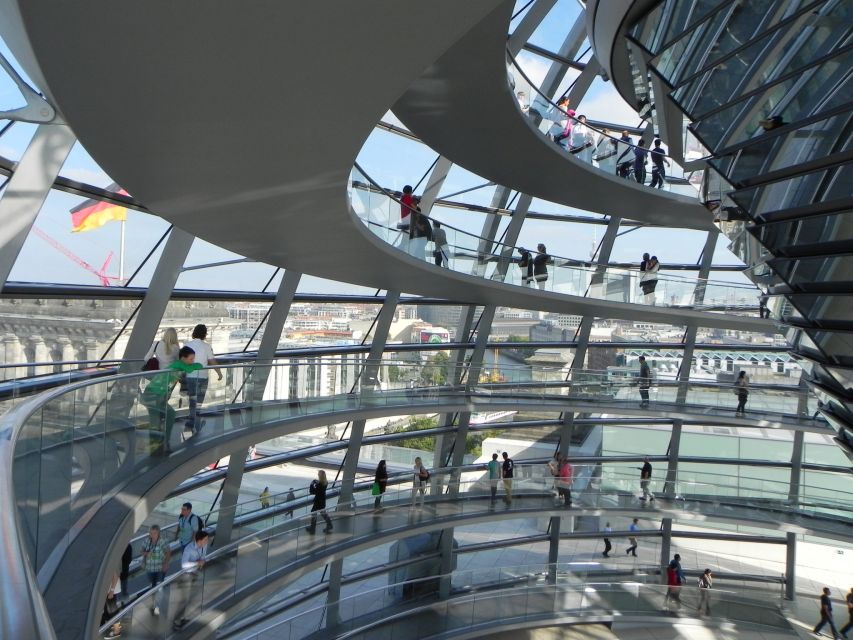
- Reichstag dome visit
- Roof terrace time
- Guides and Storytelling: The Real Reason This Tour Gets High Scores
- Price and Value: Why $45 Can Be a Deal (or Not)
- Practical Tips for Security, IDs, and the Things You Can’t Bring
- Bring the right ID
- Expect a rules-based security environment
- Show up on time
- Who Should Book This Tour?
- Should You Book This Reichstag Dome Tour?
- FAQ
- FAQ
- Do I need a passport or ID card for this tour?
- Which tour option includes the plenary hall presentation?
- How long is the tour?
- Is transportation included?
- Are there restrictions on what I can bring?
- What’s the best way to decide between German and English?
Key points before you go
- Local guide storytelling: you’ll hear how Germany’s capital and parliament evolved, not just facts on a signboard
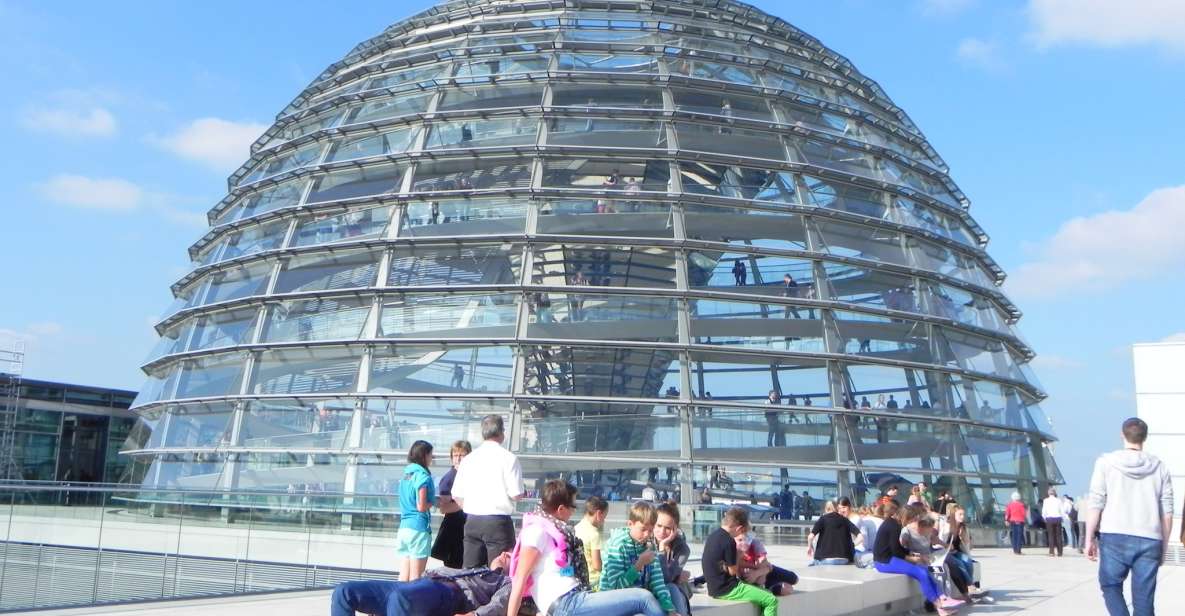
- Reichstag dome + roof terrace views: you get the payoff after the walking portion
- German vs English difference: German tours can include a plenary hall presentation; English tours focus on the roof terrace
- Passport-required registration: your full name and birthdate are needed for entry setup
- Short, efficient stops: photo stops and quick walks keep the whole route moving
- Calm handling of security timing: guides are used to last-minute entrance delays and changing conditions
What This Tour Does Better Than a Lonely Reichstag Visit
If you only show up at the Reichstag on your own, you’ll see the building. If you take this tour, you understand why it matters. The government district walk is built around the shift from old power to modern parliamentary life, and your guide uses the architecture as the thread.
I like that the tour isn’t just a museum-style lecture. It’s a walk with momentum: quick photo stops, brief pass-bys, and enough context to help you read what you’re looking at. Then the tour turns into the centerpiece—Reichstag dome time—so your brain gets a visual reward right after the story work.
One practical note: this is not a long, slow stroll. Expect some walking and a brisk pace that fits a 1.5–3 hour window.
You can also read our reviews of more tours and experiences in Berlin.


Language Choice: Plenary Hall With German, Roof Terrace With English
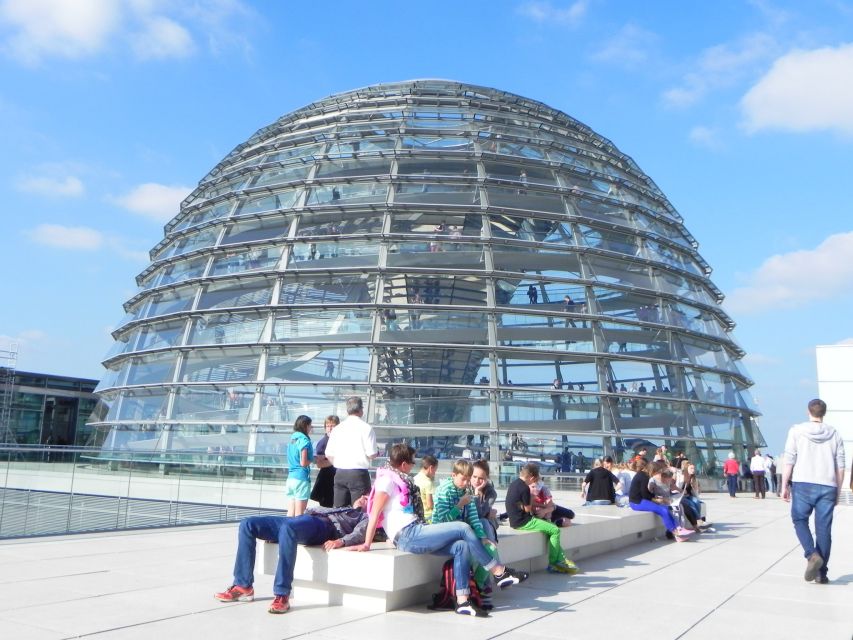
This is the big decision before you book.
- German-language option: after the walking portion, you visit the Reichstag with the plenary hall presentation (recommended for ages 15 and over), then you have dome access.
- English-language option: you’ll still go to the Reichstag for the roof terrace story and views, but a plenary hall visit isn’t possible.
If you care about seeing the plenary hall itself, go German. If you want the experience in English and don’t mind that the storytelling happens from the rooftop level, the English tour still gives you the Reichstag moment and the panoramas.
Also, plan on being strict about language: translations into other languages aren’t available for this format. Pick the one that matches what you want to hear.
Government District Walk: Chancellery, Embassies, and the Parliamentary Campus
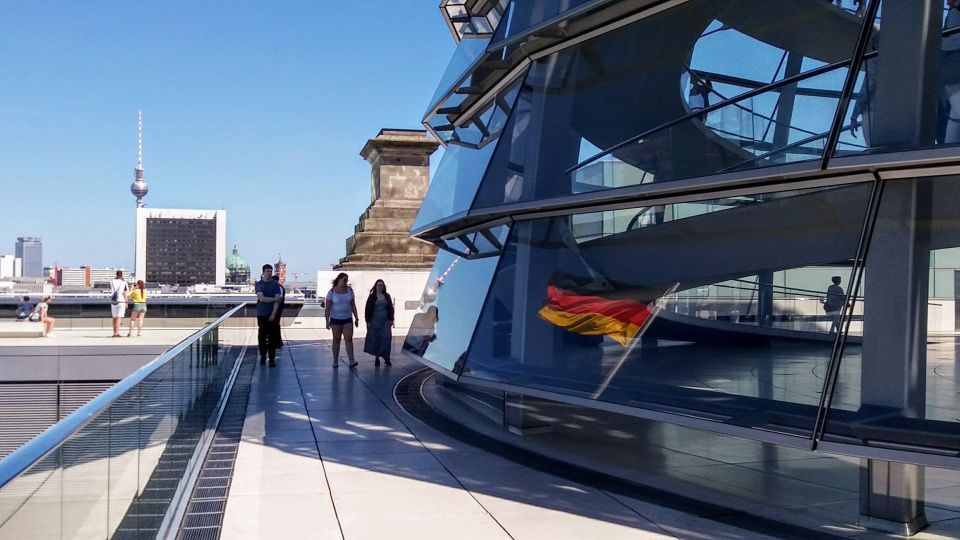
This tour works because it’s selective. You don’t wander randomly—you hit the key buildings that shape how Berlin presents itself as the seat of government.
Starting point and early photo stop
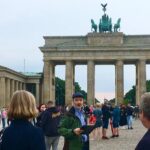
Depending on the option you pick, you meet at one of the listed starting spots around the Reichstag government area (the exact meeting point can vary). Right away, there’s a short photo stop and walk that sets the stage: you get oriented to how the district is laid out and what you should pay attention to as the tour progresses.
German Chancellery: where modern political Berlin shows its face
You then move past the German Chancellery. Your guide’s job here is to make the building feel political, not just photogenic. Expect stories about why it sits where it does and how government branding and architecture became part of the story after reunification and rebuilding.
This stop is brief, but it’s one of the most important “anchor” points because it frames what you’ll see later at the Reichstag.


Swiss Embassy: a reminder that diplomacy runs alongside parliament
You pass the Swiss Embassy, another quick visual checkpoint. These embassy buildings can look similar at street level, but your guide uses the contrast to highlight how international relationships sit right next to Germany’s domestic political world.
If you’re the type who likes details—materials, sightlines, how spaces are controlled—this kind of pass-by pays off.
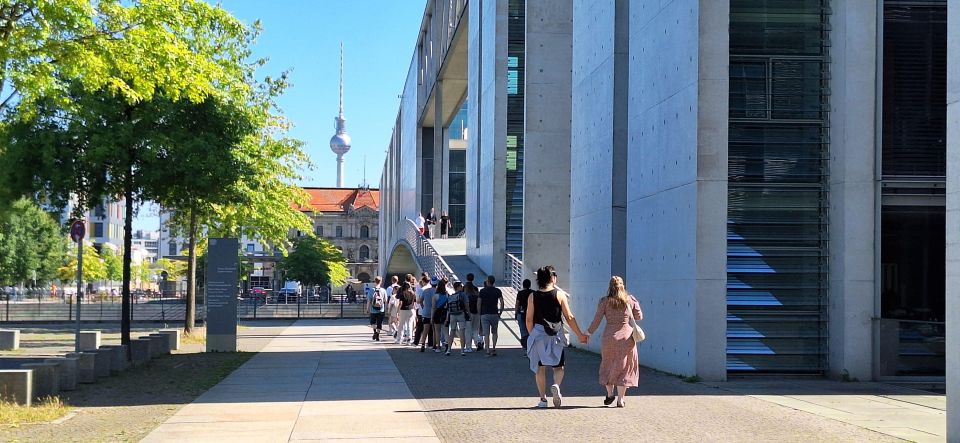
A sharper institutional shift at Marie-Elisabeth-Lüders-Haus
One of the most meaningful stops is at the Marie-Elisabeth-Lüders-Haus. You’ll get a guided moment here, plus time to look around. The focus tends to be on how parliamentary work extends beyond the Reichstag dome and roof level.
It’s also where the tour’s tone often changes: less “big landmark” and more “how the system actually functions.” That’s good if you want political context without reading a textbook.
Platz der Republik: the open-air pause for perspective
You’ll end the walking portion at Platz der Republik for another photo stop. Open squares are useful on tours like this because they give your feet a break and your eyes a wider view of how the district connects.
If you’ve been seeing buildings at close range, this pause helps everything click before the Reichstag visit.
Reichstag Dome and the Roof Terrace Views You’ll Actually Want
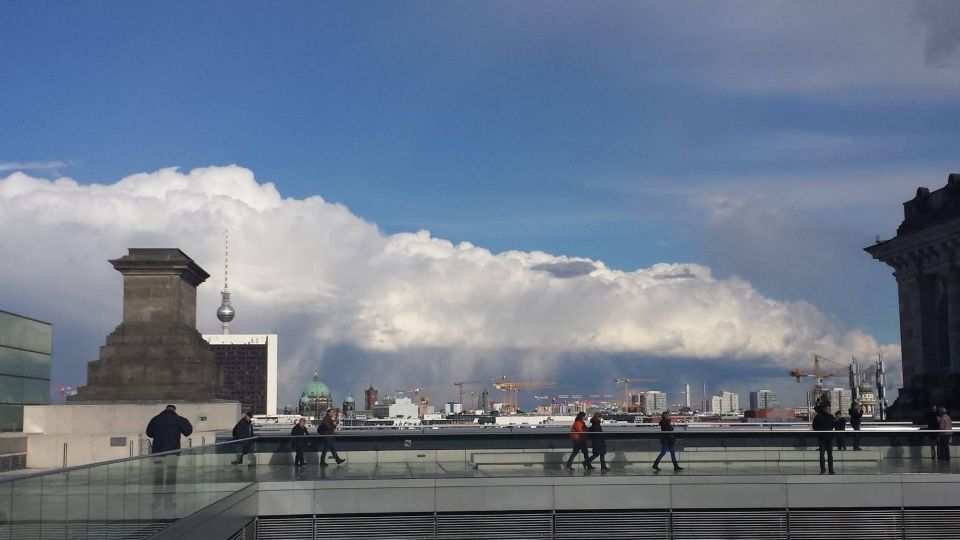
After the walk, the tour’s centerpiece begins.
Reichstag dome visit
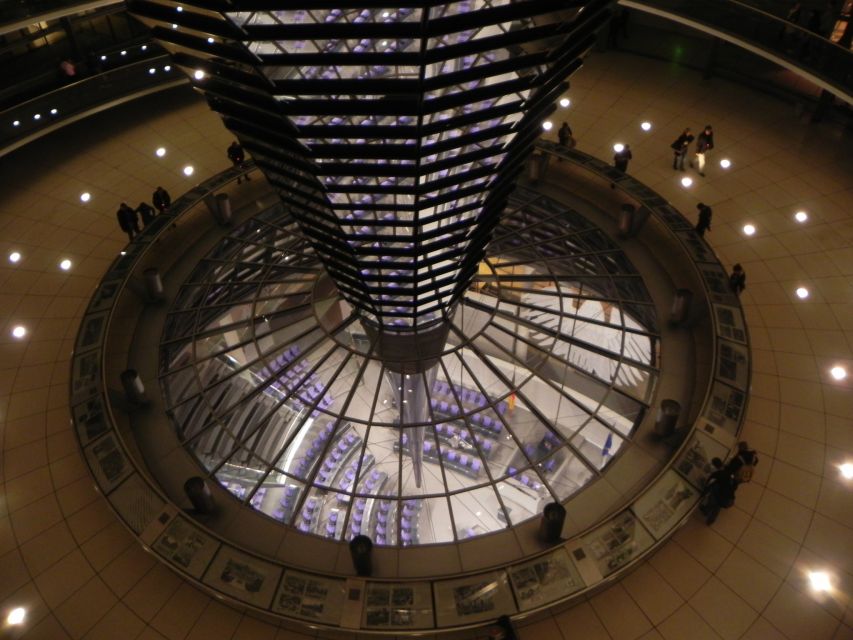
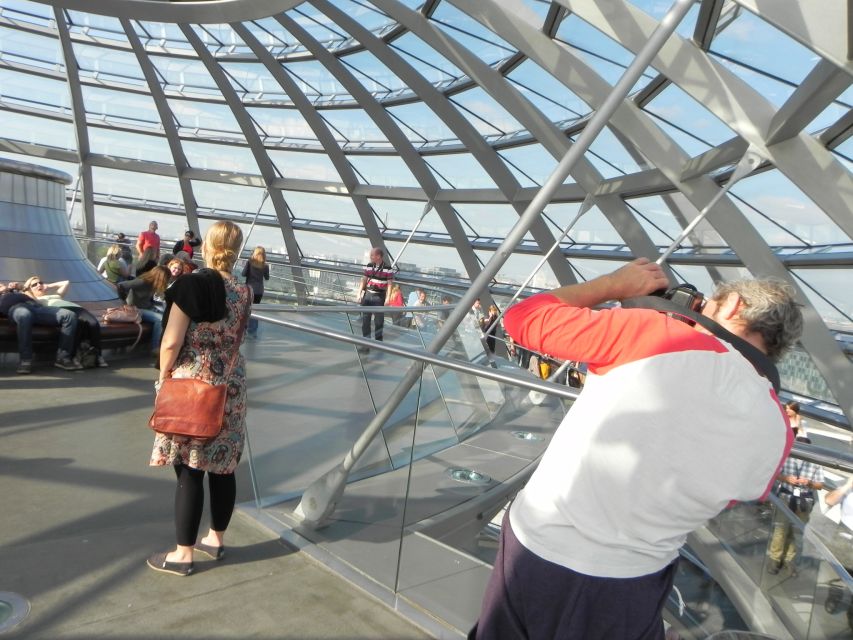
You get about 20 minutes at the dome. It’s not a long time, so treat it like a sprint with good planning. Bring your passport or ID card—security and registration requirements mean you don’t want to lose time once you arrive.
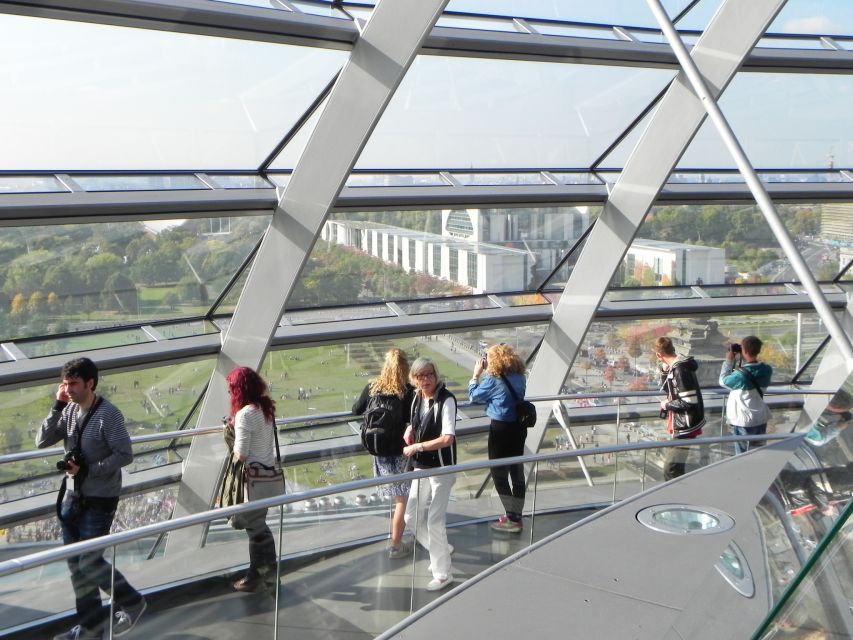
The best part is that the dome visit turns the whole area into a “big picture” view. You’ll come away with a sense of Berlin’s scale and geometry that street-level walking can’t give you.
Roof terrace time
Then there’s about 10 minutes at the Reichstag rooftop terrace area. Depending on your language option, this is where the English tour focuses, and it’s also part of the German tour flow.
Even if you’re not a “view person,” this is the moment where the Reichstag stops being an isolated monument and becomes part of the city you’re exploring.
A couple of practical realities: plan for security timing and for the fact that the entrance process can take longer than you’d expect. Some guides handle last-minute timing changes with patience and humor, but your best move is to show up early and keep your expectations flexible.
Guides and Storytelling: The Real Reason This Tour Gets High Scores
The buildings are impressive. The difference here is the guide.
In the feedback, names come up again and again—Daniela, Arvid, Tobias, Dotty, Richard, Matthias, Dorothea, and others—each bringing a distinct style. What they have in common is clear, organized storytelling that makes Germany’s political journey understandable.
What I’d call “top-tier tour behavior” shows up repeatedly:
- Guides share personal perspective, like bringing in memories of life around major 20th-century events (including how Berlin’s division affected ordinary people)
- They keep the walk active and the group engaged, with time for questions
- They explain the architecture’s purpose, not just its appearance
- When delays happen at the Reichstag entrance (usually tied to registration details), the guide keeps the group calm and moving
One review-style pattern I’d take seriously if you’re choosing between tours: this one tends to feel less like a scripted route and more like a conversation with structure. You’re not stuck hearing a monologue the whole time.
Price and Value: Why $45 Can Be a Deal (or Not)
At $45 per person for roughly 1.5–3 hours, the price can sound steep—especially because you may know the Bundestag building visits are free.
Here’s the value logic you should use:
- You’re paying for a guided government-district walk with a local guide
- You’re also paying for Reichstag visit registration handling through the operator
- That registration step matters because the Parliament requires precise information for entry
A few people have flagged that the Reichstag itself is free, so they expected to pay less. That’s a fair reaction if your goal is only the dome. But if you want the story behind why the architecture looks the way it does, and you want help managing the entry setup, the price starts to make sense.
My advice: treat this as a “guided context + secured access” package, not a basic ticket.
Practical Tips for Security, IDs, and the Things You Can’t Bring
This tour depends on smooth entry. The Parliament requires registration, so come prepared.
Bring the right ID
You’ll need a passport or ID card. Registration requires the full names and dates of birth of all guests, and you’ll be expected to present valid identification on site.
Expect a rules-based security environment
The day can go faster if you already know the limits. It’s not a place for bulky carry-ons. Large bags and luggage aren’t allowed. Also, avoid anything like weapons/sharp objects, glass objects, sprays/aerosols, and pets (assistance dogs are allowed).
Show up on time
Meeting points vary by option. If you arrive late, you can create a bottleneck that affects the whole group and can stretch the time you get at the dome.
Who Should Book This Tour?
This is a strong fit if you:
- Want a first-timer-friendly orientation to Berlin’s government district
- Like architecture but also want the “why” behind it
- Want politics explained in plain language, with stories tied to real events
- Prefer a guided experience that leads into a standout viewpoint at the end
It’s less ideal if you want total freedom with no structure, or if you mainly care about the dome and don’t care about hearing what happened here and why it was rebuilt.
Should You Book This Reichstag Dome Tour?
Yes, if you want the Reichstag dome visit connected to a guided walk that turns buildings into meaning. The best reason to book is the guide: the storytelling quality—often with personal context—creates the kind of understanding that makes the dome feel worth your time, not just your photo.
Skip it (or reconsider language choice) if plenary hall access is your only goal—make sure you choose the German option—or if you’re uncomfortable with security rules and a short, efficient walking route.
FAQ
FAQ
Do I need a passport or ID card for this tour?
Yes. You’ll be asked to bring a passport or ID card because the Parliament requires registration using each guest’s full name and date of birth, and you must present valid ID on site.
Which tour option includes the plenary hall presentation?
Only the German-language tour includes a presentation in the plenary hall. The English-language tour does not allow a plenary hall visit.
How long is the tour?
The duration is listed as 1.5 to 3 hours, depending on the specific starting time and option.
Is transportation included?
No. Transportation is not included.
Are there restrictions on what I can bring?
Yes. Weapons or sharp objects, luggage or large bags, pets (assistance dogs allowed), sprays or aerosols, and glass objects are not allowed.
What’s the best way to decide between German and English?
If seeing the plenary hall is important to you, pick German. If you prefer English and are happy with the Reichstag storytelling coming from the roof terrace, the English option still delivers the dome/terrace views.