Berlin has a habit of hiding entire worlds behind plain doors. This 2-hour walk turns Berlin-Mitte into a chain of courtyards you’d never notice at street level. I especially liked how the guides bring the Jewish quarter story to life, and how the stops feel like real places people still use.
Two of my favorite moments were seeing the art-studio yard of Haus Schwarzenberg and then stepping into the colorful Heckmann-Höfe courtyard, a break from the surrounding noise. You’ll also get context for the Spandauer Vorstadt, and how the area shifted into the center of Jewish life around the New Synagogue. One possible drawback: it is a rain-or-shine walking tour, so bring footwear and rain gear that can handle cobbles and wet stone.
In This Review
- Key highlights you’ll care about
- Entering Berlin’s Courtyard World: Why This Walk Works
- Starting at BUTLERS Hackescher Markt: The Best Way to Begin Mitte
- Haus Schwarzenberg Courtyard: Art Studios Behind a Historic Shell
- Hackesche Höfe and Rosenhöfe: The Courtyard Complexes Locals Know
- Sophienkirche and Auguststraße: Where Faith Meets Neighborhood Change
- Spandauer Vorstadt Origins: The Story Thread You’ll Carry All Day
- Heckmann Höfe: A 19th-Century Courtyard Break from Berlin Noise
- Price and Pace: Is $23 for Two Hours Worth It?
- Who This Courtyard Tour Suits Best
- Rain, Raincoats, and Other Practical Tips That Actually Help
- Should You Book Berlin Hidden Backyards?
- FAQ
- How long is the Berlin Hidden Backyards Guided Walking Tour?
- Where do I meet the guide?
- Where does the tour drop off?
- What language is the tour offered in?
- Does the tour run in bad weather?
- Is the tour wheelchair accessible?
- What is included in the price?
- Can I get a refund if I cancel?
Key highlights you’ll care about
- Meet at Hackescher Markt: easy start point at BUTLERS Berlin Hackescher Markt 4
- Haus Schwarzenberg courtyard: street-art walls and art studios inside a historic shell
- Hackesche Höfe + Rosenhöfe: Berlin’s courtyard-and-passageway style, built for everyday use
- Sophienkirche and Auguststraße: religious roots tied to the neighborhood’s evolving streetscape
- Heckmann Höfe: a 19th-century courtyard that feels like a hidden pause button
Entering Berlin’s Courtyard World: Why This Walk Works
Berlin is famous for big sights. This tour is famous for the in-between ones.
You’ll spend two hours walking through Berlin-Mitte and repeatedly stepping from busy sidewalks into quieter courtyard spaces. That rhythm is the whole point: you learn to see the city’s “Berlin mixture” style of old buildings, repurposed spaces, and communal outdoor life.
What makes this tour valuable is the explanation you get as you move. You’re not just looking at architecture—you’re learning why courtyards, passageways, and neighborhood design mattered in the past and still matter now. And yes, it’s a fun feeling when you keep rounding a corner and suddenly find a whole yard behind a doorway.
You can also read our reviews of more walking tours in Berlin



Starting at BUTLERS Hackescher Markt: The Best Way to Begin Mitte
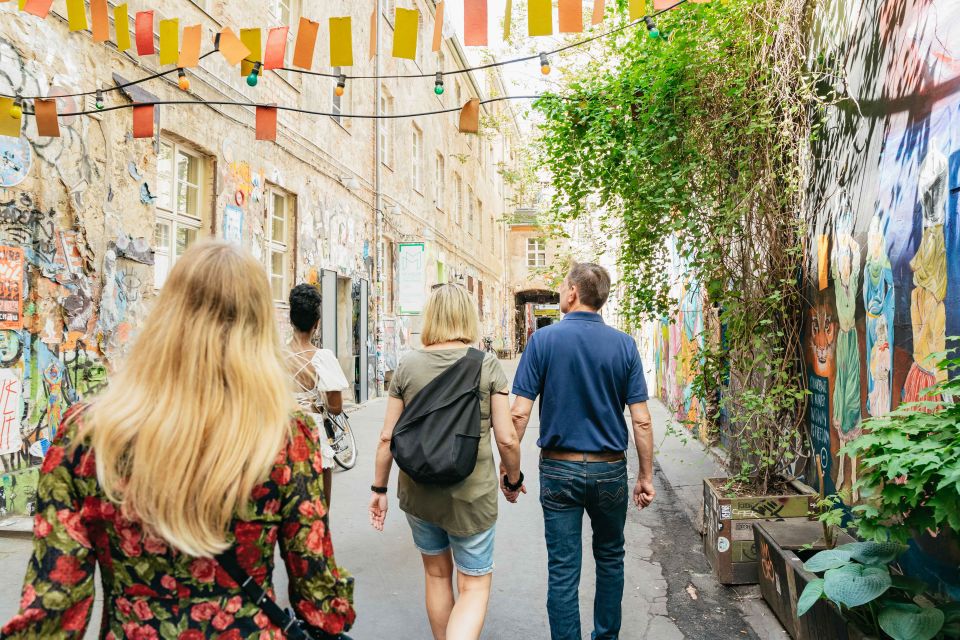
You meet your guide at BUTLERS Berlin Hackescher Markt 4. This is a practical choice because Hackescher Markt is easy to reach and easy to regroup around if you arrive early.
From the start, the tour aims to help you read the neighborhood. You’ll walk through Spandauer Vorstadt and start noticing how streets feed into courtyards, and how those semi-private spaces shape daily life. It’s a great mindset shift for Berlin, where the most interesting scenes are often behind you, not on the postcard path in front of you.
One tip: since you’ll be moving continuously, keep your phone battery topped up and don’t plan to stop for every photo. The tour’s courtyard sequence is built like a set of reveals.
Haus Schwarzenberg Courtyard: Art Studios Behind a Historic Shell
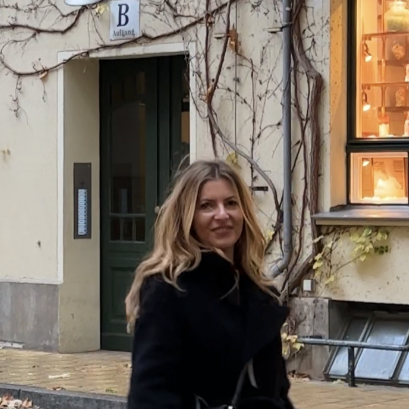
One of the central stops is the courtyard of the Schwarzenberg House. This site is described as a relic of a bygone era, now adapted for art studios and creative spaces. That mix of old structure plus new use is pure Berlin.
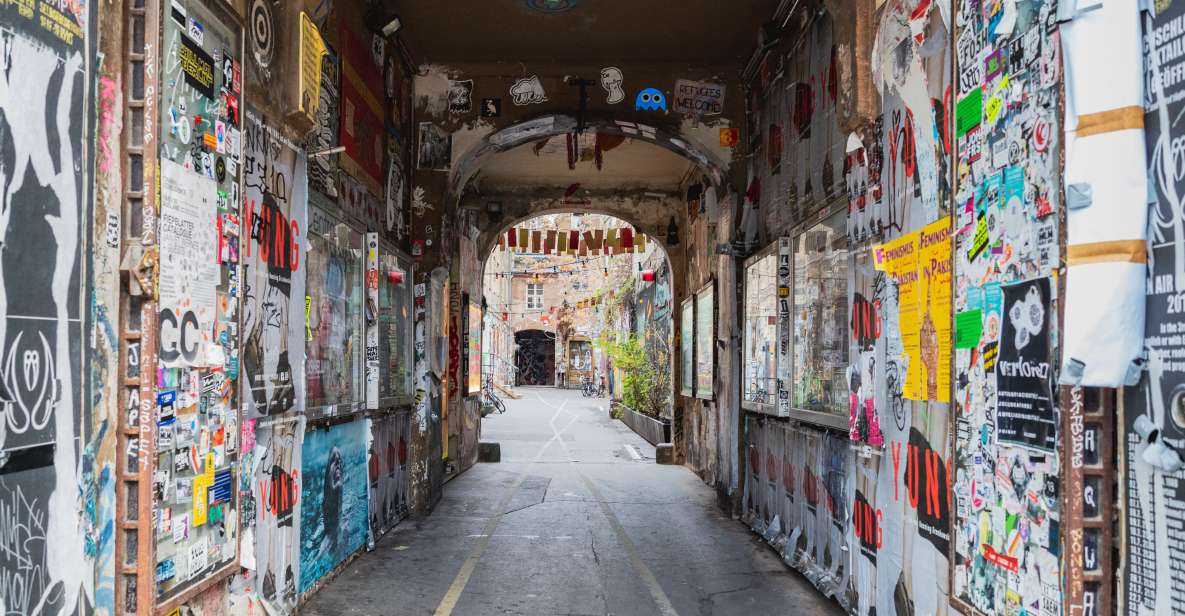
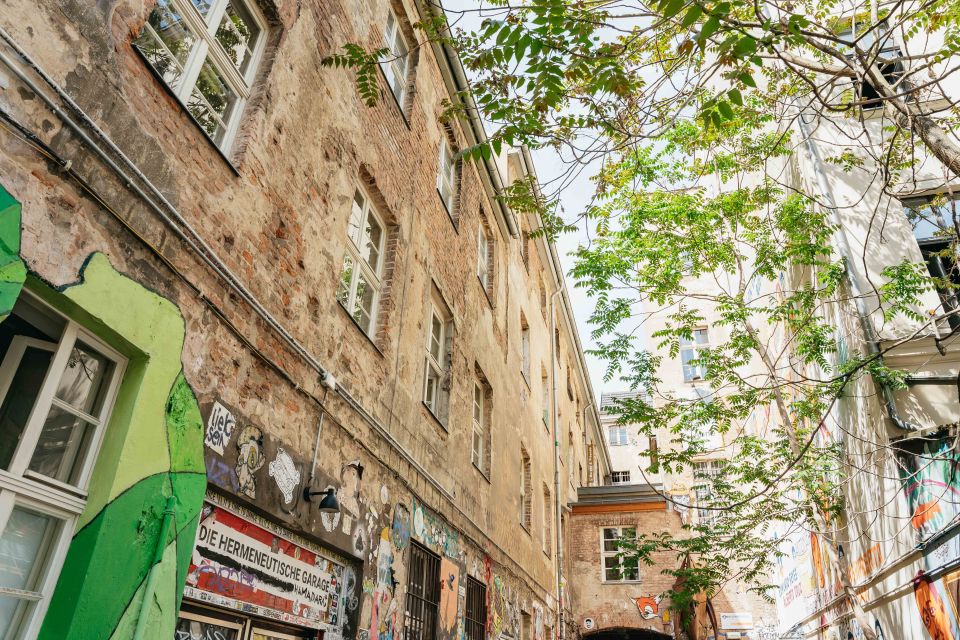
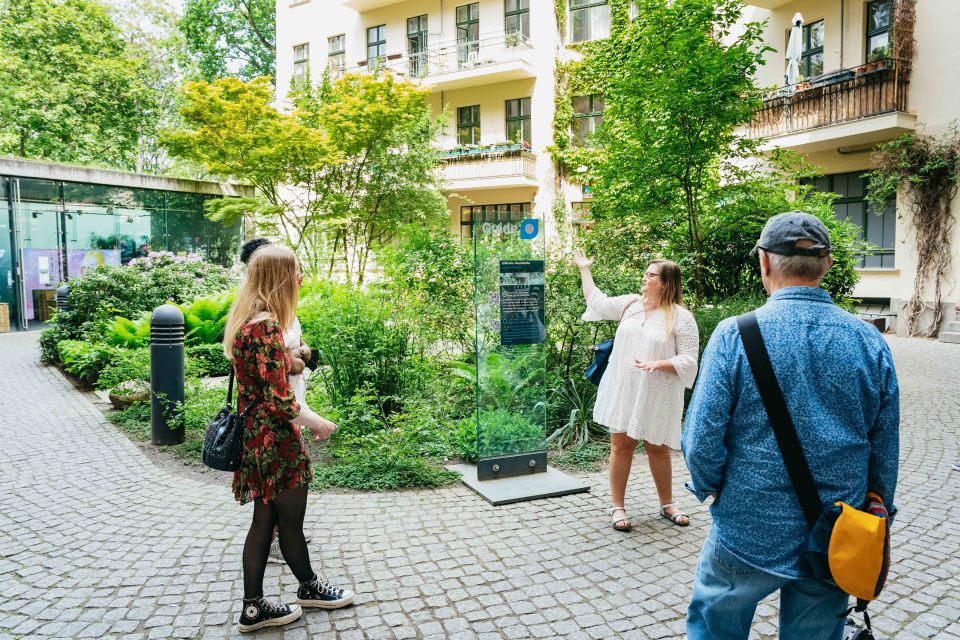
In the yard, you’ll be able to spot street art on the walls alongside the historic buildings themselves. The vibe is not museum-still. It feels like a working place—more like a creative neighborhood workshop than an exhibit.
Why this stop is worth your time: it shows how the city reuses space instead of resetting it. Berlin’s courtyards often act like social engines, and this one explains that idea in a very visual way. You’ll come away understanding that these are not decorative throwbacks—they’re functional, lived-in spaces.
Hackesche Höfe and Rosenhöfe: The Courtyard Complexes Locals Know
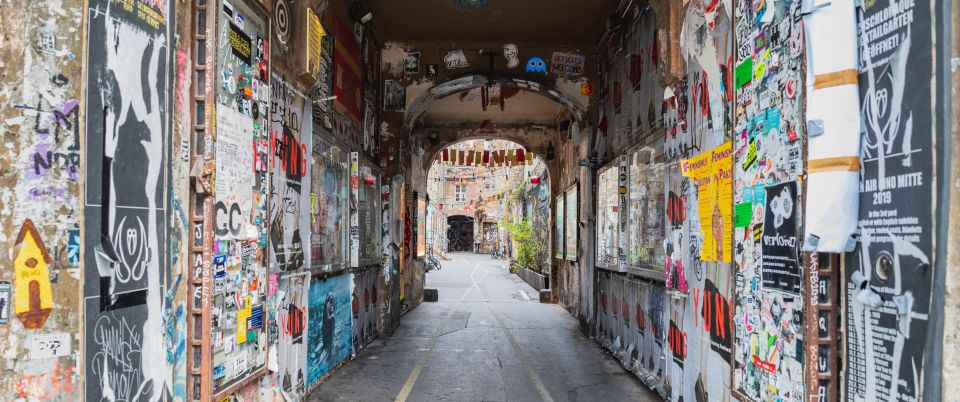
After Haus Schwarzenberg, you’ll continue into the Hackesche Höfe area. This part of Berlin is strongly tied to the “passageway into courtyard” experience—walking links that open into larger inner spaces.
You’ll also visit Rosenhöfe. Together, these stops help you see how courtyard life isn’t just a single hidden pocket. It’s a whole neighborhood pattern: buildings facing inward, small-scale streets made of stone and light, and spaces that can host both calm and activity depending on the time of day.
What I like about this stretch is the contrast. The tour keeps moving you between street context and interior courtyards, so you get a clear mental map of the area. And even without knowing the architecture beforehand, the guide makes it easy to connect what you see with how the neighborhood grew.
Sophienkirche and Auguststraße: Where Faith Meets Neighborhood Change
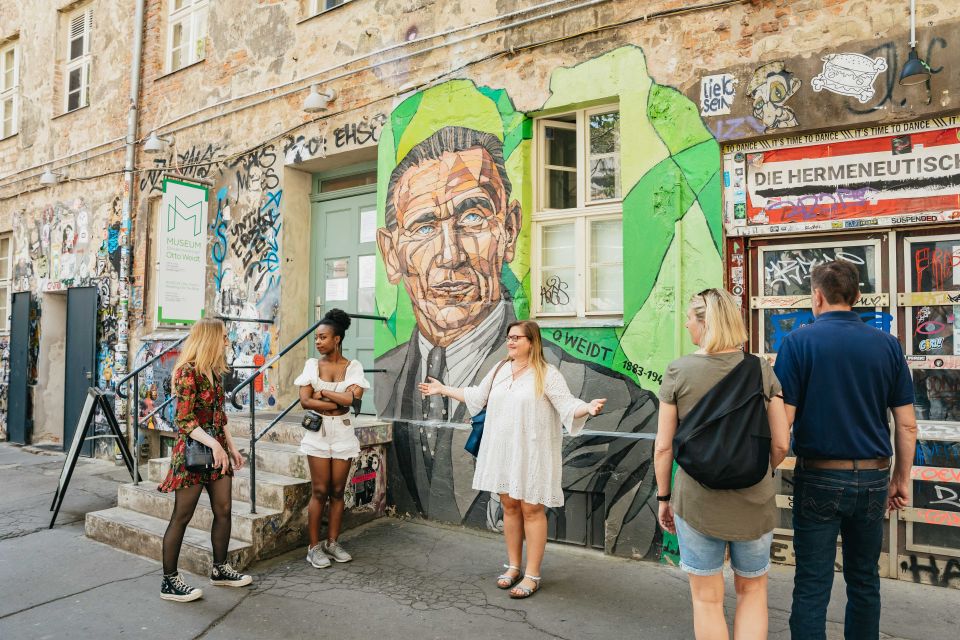
You’ll make time for Sophienkirche and then head along Auguststraße. These stops ground the tour in the idea that neighborhoods are shaped by more than commerce and housing—they’re shaped by institutions too.
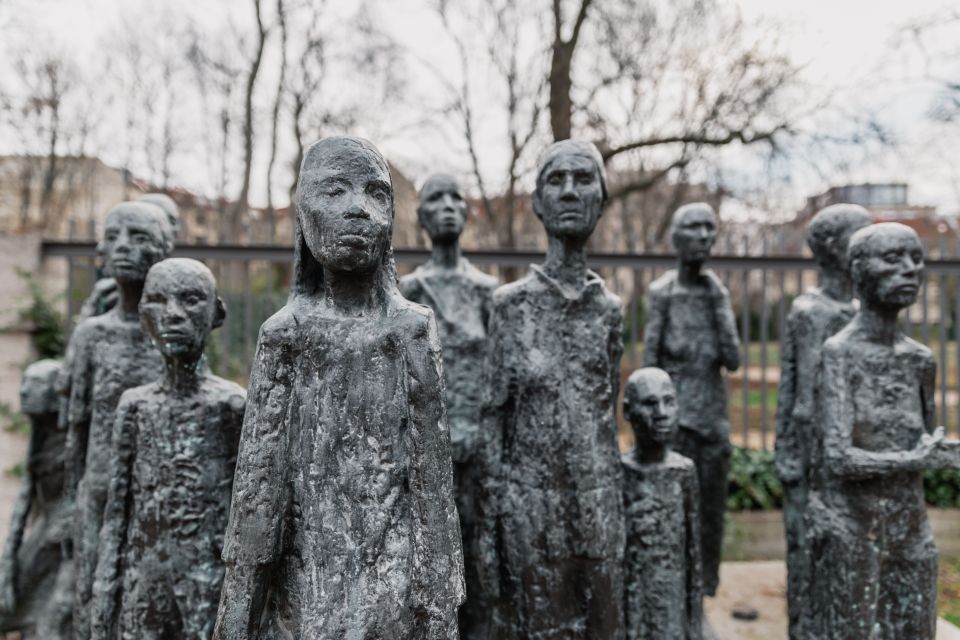
The tour focuses heavily on the Jewish history of the area around the New Synagogue, and this is where those themes start to feel more concrete. You’re not just hearing dates. You’re watching how the street grid and surrounding buildings support the life that formed there.
Auguststraße also helps you understand the neighborhood transformation angle. The Spandauer Vorstadt section of the story shows how the area moved toward becoming a center of Jewish life, and later into the trendy, international character you see today.
A small practical note: church areas can be more formal, so keep your pace respectful and quiet when you’re near the sites.
You can also read our reviews of more guided tours in Berlin






Spandauer Vorstadt Origins: The Story Thread You’ll Carry All Day
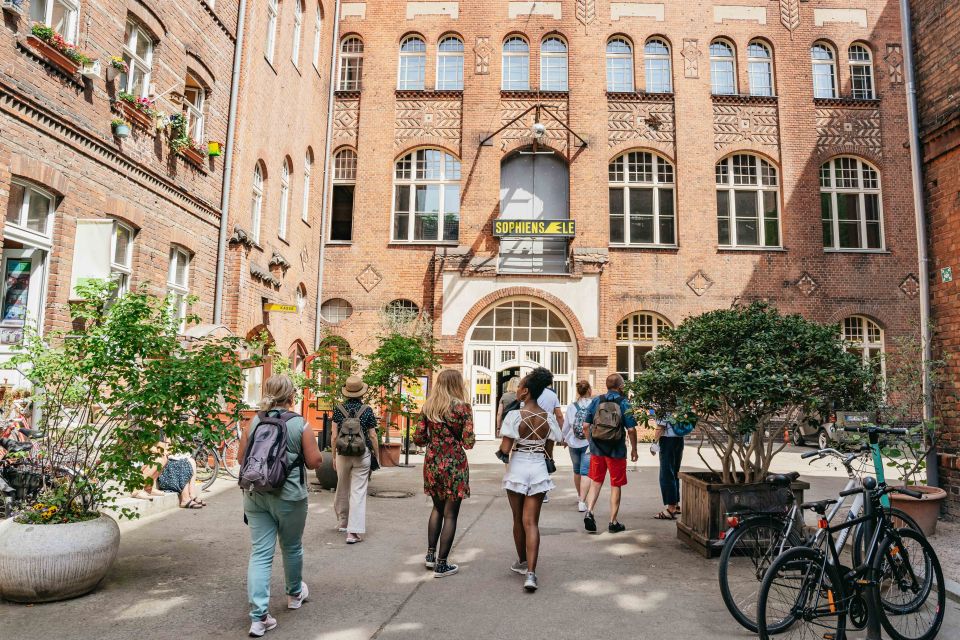
The tour’s storytelling thread is the transformation of Spandauer Vorstadt. You’ll learn how the quarter developed, and how it became deeply connected to Jewish tradition in the period around the New Synagogue.
This is not a dry history lecture. It’s framed as neighborhood evolution—how the built environment supported communities, and how those same structures later took on new functions. One review even mentions the architecture-and-society connection in the area, which fits the tour’s approach perfectly.
You’ll also hear about why these courtyards are more than leftover architecture. Courtyards are social space. They affect how people meet, work, create, and relax without needing to leave the block.
If you like walking tours that give you a story you can repeat later while standing in the same spots, this one works.
Heckmann Höfe: A 19th-Century Courtyard Break from Berlin Noise
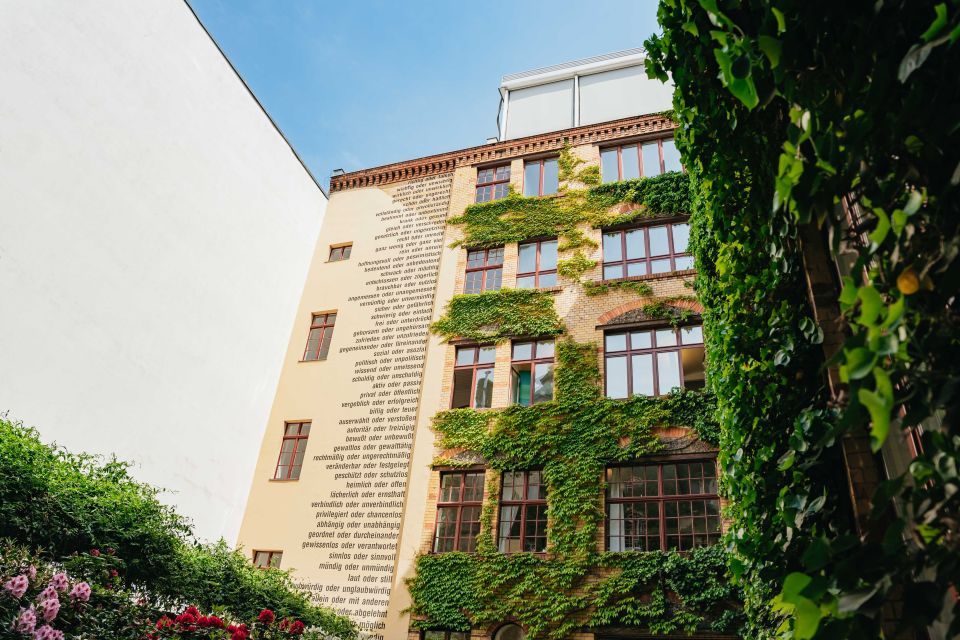
The tour ends with a stop at Heckmann Höfe, the colorful courtyard that many locals seem to use as a regular hangout.
The courtyard is described as a popular spot, with vibrant color in the shadow of trees and ivy-lined buildings. That description matters: you’re not just seeing a courtyard—you’re seeing a courtyard that has a specific atmosphere, one that makes the outside street feel far away.
Heckmann Höfe is also described as a hidden oasis from the busy streets of Berlin. That’s the best way I can frame it: after moving through several historical and architectural contexts, you get a simple reward. A quiet pocket. A place to pause.
And since this is a walking tour, that last courtyard is a smart finish. Your brain has time to absorb what you learned before you head back into the wider city.
Price and Pace: Is $23 for Two Hours Worth It?
At about $23 per person for a 2-hour guided walk, you’re paying for interpretation as much as sightseeing.
That matters because Berlin courtyards are not always obvious on your own. You might walk past a doorway or courtyard entrance and miss the story entirely. With a guide, you get context—what the buildings were, why courtyards exist here, and how the Jewish quarter evolved into what you see today.
The pace is also a big part of the value. The tour is an easy walk and not a sprint through ten neighborhoods. You get time at each stop to look around, ask questions, and understand what you’re looking at.
Two things you should plan around: it takes place rain or shine, and there’s no food or drinks included. If you’re doing this earlier in the day, you’ll want to eat before or after your walk.
Who This Courtyard Tour Suits Best
This is a strong match if you want Berlin beyond the usual checklist. You’ll enjoy it if you like architecture but also want the human story behind it—community life, reuse of buildings, and neighborhood transformation.
It’s also a great choice if your schedule is tight. Two hours is long enough to see multiple signature courtyards, but short enough to fit between other plans in Mitte.
If you prefer very informal walking tours that feel like a conversation, the guide style can be that friendly and personal. Reviews highlight guides like Nick (Nicolas) and Susanne as engaging storytellers, and others mention how the route felt realistic and positive rather than heavy-handed.
One more thing: the tour is offered in English and German. Still, I suggest you confirm the language for your exact departure, because at least one booking experience noted the tour ran in German only.
Rain, Raincoats, and Other Practical Tips That Actually Help
Because it’s rain or shine, you should treat weather as part of your planning.
Bring shoes you trust on wet stone and cobblestones. Courtyards can be slick, and you’ll be on your feet for the full 2 hours. A small umbrella or a compact rain jacket is often more useful than a full-size canopy in tight passageways.
Also, bring a layer. Even when the day is mild, courtyards can feel cooler once you’re in shade under trees and ivy-lined walls.
Finally, don’t over-schedule right after the tour. Your head will be full of names, timelines, and architecture details, and a short break helps it stick.
Should You Book Berlin Hidden Backyards?
I’d book it if you want a guided way to experience Berlin’s courtyard culture in a short time. For the money, you’re getting multiple standout stops—Haus Schwarzenberg, Hackesche Höfe, Rosenhöfe, Sophienkirche/Auguststraße context, and Heckmann Höfe—plus a clear story about Spandauer Vorstadt and Jewish life around the New Synagogue.
Skip it only if you hate walking in the rain or if you’re looking for big monument viewing. This tour is built around interior spaces, not landmarks. And if you strongly need English throughout, double-check the language for your departure.
If you want Berlin to feel like a living city rather than a photo backdrop, this one delivers.
FAQ
How long is the Berlin Hidden Backyards Guided Walking Tour?
The tour lasts 2 hours.
Where do I meet the guide?
Meet your guide in front of BUTLERS Berlin Hackescher Markt 4.
Where does the tour drop off?
The tour ends at Oranienburger Straße (with two drop-off locations on Oranienburger Straße).
What language is the tour offered in?
The live guide is available in English and German.
Does the tour run in bad weather?
Yes. The tour takes place rain or shine.
Is the tour wheelchair accessible?
Yes, it is listed as wheelchair accessible.
What is included in the price?
The price includes the walking tour and the tour guide.
Can I get a refund if I cancel?
You can cancel up to 24 hours in advance for a full refund.