REVIEW · BERLIN
Berlin: Hop-On-Hop-Off Bus with Boat Cruise Option
Book on GetYourGuide →Operated by Tours & Tickets · Bookable on GetYourGuide
Berlin by bus feels like cheat codes.
This hop-on-hop-off route uses a double-decker with roof views so you can take in Berlin’s big landmarks on your own schedule, and optionally add a Spree boat cruise. I especially like how the stops line up with classic sights like Checkpoint Charlie and the Brandenburg Gate, so you can plan quick hops without guessing transit routes.
Two things I’d bet on for value: the buses run often (departures every 25–35 minutes), and you get GPS audio plus a city map right in the package. Add free Wi‑Fi on board, and it’s a comfortable way to move between neighborhoods while still keeping your day flexible.
One drawback to keep in mind: you may run into ticket or device friction. Some people report that mobile vouchers weren’t always accepted smoothly at boarding, and the audio device can be hard to hear in spots—especially on the boat—so have a plan B like walking closer to the front speakers or using phone audio as backup.
In This Review
- Key highlights worth your attention
- Why Berlin’s double-decker hop-on hop-off works so well in one day
- Getting on: Kurfürstendamm start points and the Spree cruise meeting point
- Audio GPS guide and free Wi‑Fi: what you’ll actually use
- Your full loop: how to use every bus stop without wasting time
- West Berlin highlights: shopping boulevard to culture block
- Straight shot to the historic center
- East Berlin icon run: squares, murals, and the Wall-adjacent feel
- Museum-area core and the government/Brandenburg axis
- Victory Column and the Zoo side: finish with green-and-monument vibes
- The real trick: don’t try to do everything
- Spree river cruise option: when that 1-hour boat ride is worth it
- Timing tips to see more than just bus windows
- Price and value for a 1-day pass at about $51
- Ticket reality check: what can slow you down
- Who should book this bus-and-boat combo
- Should you book it? My practical call
Key highlights worth your attention
- Roof-level views for major Berlin sights without committing to a strict walking plan
- Frequent buses every 25–35 minutes for quick hop-on hop-offs
- GPS audio guide in 15 languages plus a route map
- Free Wi‑Fi on the bus for messages, maps, and quick research
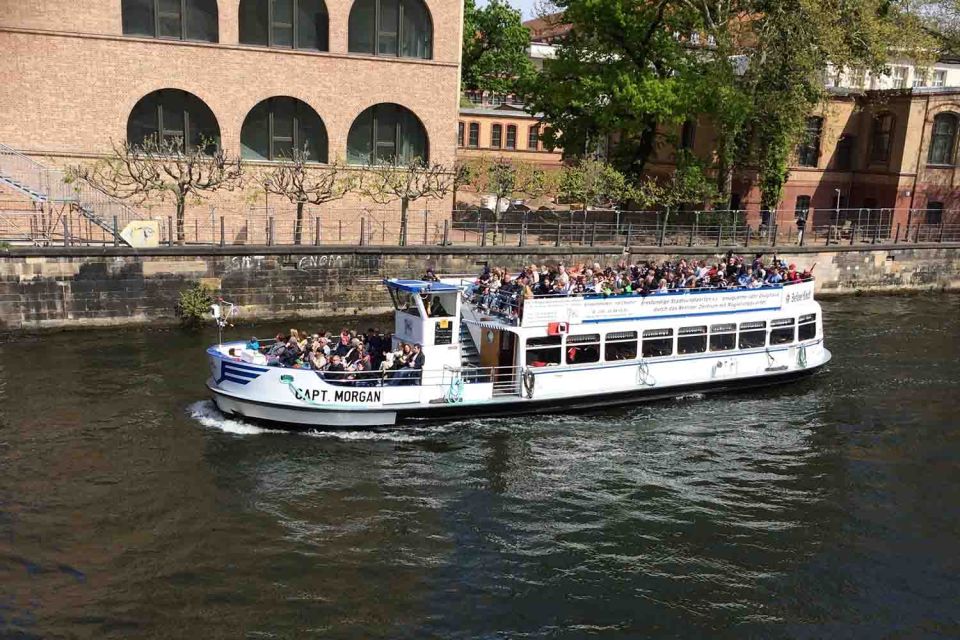
- Optional 1-hour Spree cruise for a different angle on Berlin’s architecture
- A long stop list that covers both historic landmarks and modern areas
Why Berlin’s double-decker hop-on hop-off works so well in one day
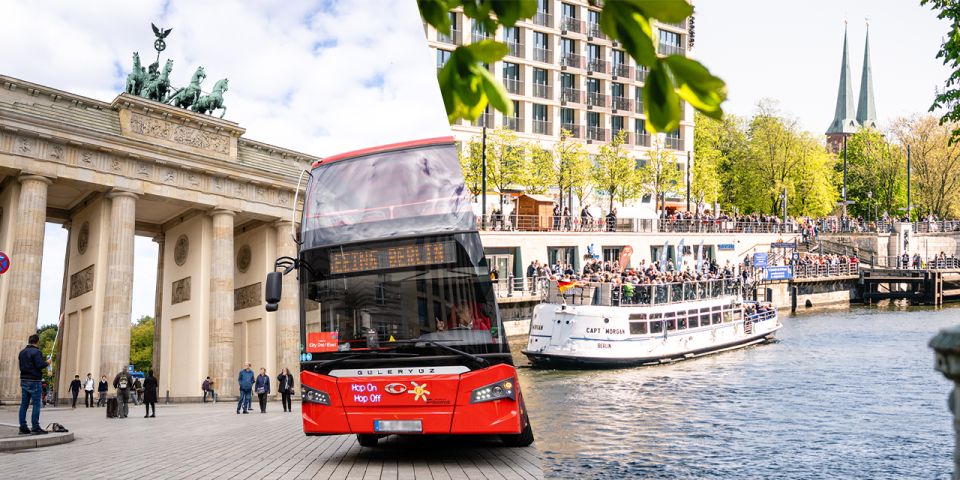
Berlin is big, and the sights are spread out. This kind of tour helps because you get an easy overview first, then decide later what’s worth your walking time. From the top deck, you’re seeing straight lines of streets, recognizable monuments, and the way districts shift from one vibe to another.
The best part is the rhythm. You’re not stuck in a group march. You can stay on until something catches your eye, then jump off, grab a snack, and continue when the next bus shows up. That works great for a first visit, or for a day when your feet need a break but your curiosity doesn’t.
And yes, the landmarks here are the right ones. You pass or stop at icons like Checkpoint Charlie, Gendarmenmarkt, Alexanderplatz, the East Side Gallery, and Brandenburg Gate. Even if you skip most museum time, you’ll still leave with a mental map of how central Berlin fits together.
You can also read our reviews of more boat tours in Berlin

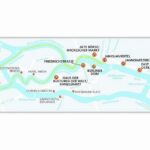

Getting on: Kurfürstendamm start points and the Spree cruise meeting point
Your hop-on hop-off day starts with a clear first bus stop: Kurfürstendamm 238. The tour also notes two starting location options, including Tauentzienstraße 16 and Kurfürstendamm 238, so arrive a bit early and don’t assume signage will be perfect.
The meeting point details for the boat add one more piece of geography. For the Spree cruise boarding, you’re directed to pass the Marx-Engels-Forum park at Karl-Liebknecht-Str. 1a, then look for the stop of Stern & Kreis Nikolaiviertel right by the river Spree. That’s useful because it means the boat part is tied to the downtown waterfront area rather than some distant pier.
Tip: plan to use the provided map on day-of. Some boarding points aren’t marked like traditional bus stops, so having the route map handy helps you know where to stand for the right bus.
Audio GPS guide and free Wi‑Fi: what you’ll actually use
The ticket includes a GPS audio guide in 15 languages and a city map with the route and stops. That’s the backbone of the experience. When it’s working well, it turns the bus into a moving mini-lesson—so you’re not just sightseeing, you’re connecting names to places.
Two practical notes from how the setup tends to feel:
- The audio should be audible on the bus, but some people say the handheld device wasn’t loud enough in certain situations.
- On the boat portion, the audio can be very hard to hear—so you may want to rely more on your surroundings and the visuals than the narration alone.
Good news: free Wi‑Fi on board gives you flexibility. If the audio is difficult where you’re sitting, you can quickly look up what you’re passing (or open saved directions for your next hop-off stop).
Your full loop: how to use every bus stop without wasting time
This route is designed to cover the core sights efficiently. A complete loop tends to take around 2.5 to 3 hours, which is perfect for building a day around it: ride once, then hop off for deeper time at the spots you care about.
Here’s how I’d think about the stops as you ride, in order:
West Berlin highlights: shopping boulevard to culture block
- Kurfürstendamm (Kurfürstendamm 234)
A classic starting area for the western side. It’s a good launchpad if you want easy access to shopping streets.
- Tauentzienstraße (Tauentzienstraße 15)
A quick pass for city views and a glimpse into the big commercial axis.
- KaDeWe (Tauentzienstraße 21–24)
This is your “stretch break” stop. Even if you don’t shop, KaDeWe is a recognizable landmark that anchors this whole west side.
- Lützowplatz (Kulturforum Tiergarten)
This area signals you’re reaching the cultural zone near the Tiergarten.
- Potsdamer Platz / Kolhoff-Hochhaus
A modern counterpoint to older landmarks—great for seeing how Berlin’s post-reunification story looks in architecture.
- Balzac Coffee (Potsdamer Platz 10)
Useful as a practical pause point. If you want coffee or a snack before crossing into more historical areas, this is convenient.



Straight shot to the historic center
- Gropiusbau
A major venue area. It’s mostly a pass-by stop unless you plan to visit what’s on there.
- Checkpoint Charlie (Friedrichstraße 45)
This is one of the stops you should not rush past. It’s one of the most famous Cold War markers in the city, and it helps you understand Berlin’s division-and-reunification story.
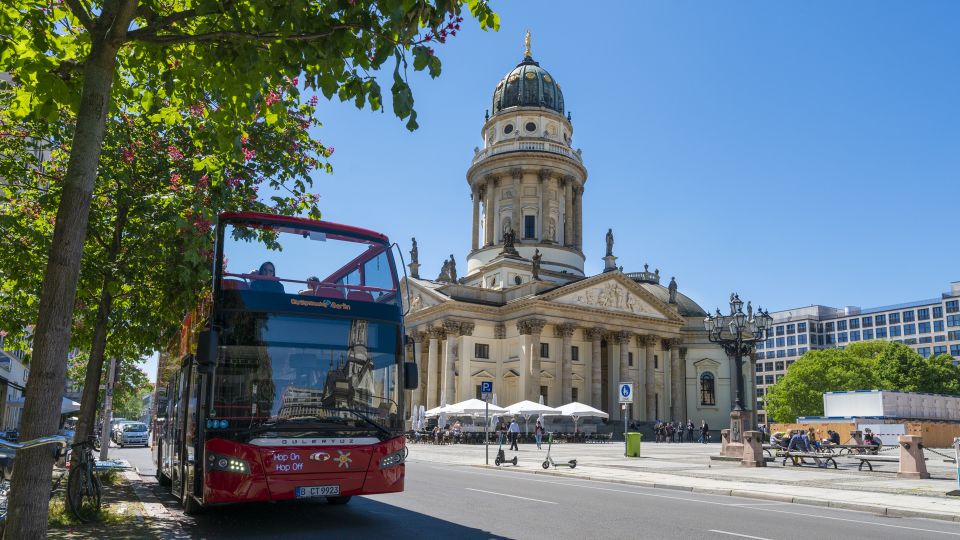
- Gendarmenmarkt
A gorgeous square area—ideal if you want a strong visual moment without needing tickets.
- Neptunbrunnen / Neptunbrunnen (Rotes Rathaus area, Rathausstraße 1)
A central landmark near the city hall area. It’s a good “walk 10 minutes, see something, return to the bus” type of stop.
East Berlin icon run: squares, murals, and the Wall-adjacent feel
- Alexanderplatz / Park Inn
This is a major hub and a great reference point for your bearings. You can also use it to reset your plan mid-day.
- Karl-Marx-Allee
A long boulevard feel—good for understanding Berlin’s planned-era urban design.
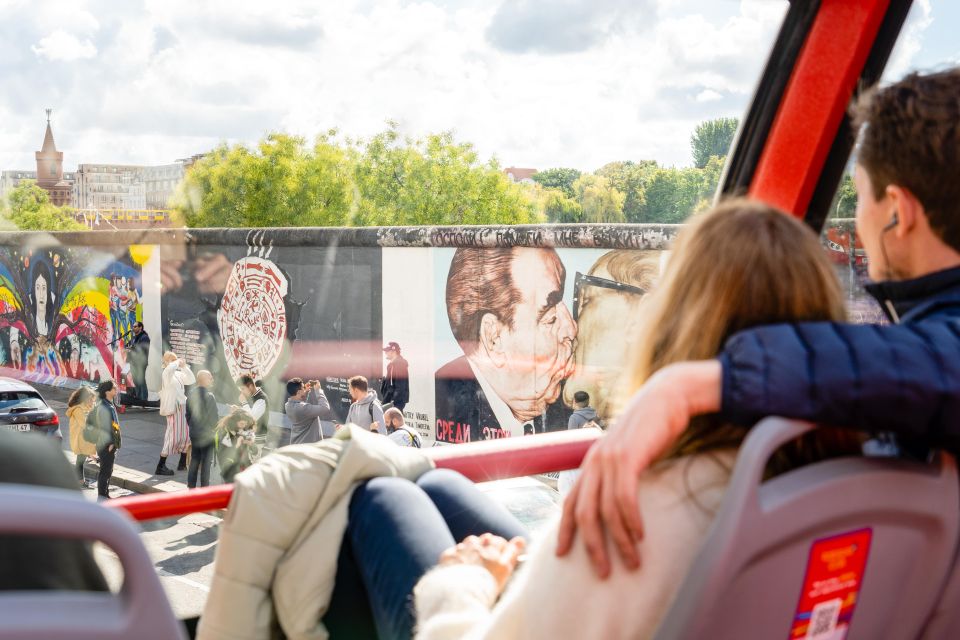
- East Side Gallery
A top sightseeing anchor if street art and Cold War symbolism interest you. It’s one of the most memorable stops on the whole route.
- Ostbahnhof
A transit node that’s useful for orientation and timing. If you’re trying to connect to something else later, this area is a good point.
Then the route notes Neptunbrunnen / Rathausstraße 1 again as a recurring stop (15). That can be helpful if you realize you want to revisit the city-hall area after getting a second look at the morning/afternoon sights.
Museum-area core and the government/Brandenburg axis
- DomAquarée (Karl-Liebknecht-Straße)
A central river-adjacent stop that pairs nicely with the idea of the Spree cruise later.
- Lustgarten (Unter den Linden 1)
A park stop that makes the next sights more dramatic. This is a great location for a short stretch and a quick landmark-photo loop.
- Unter den Linden / Friedrichstraße
This corridor is where you feel the city’s grand “Avenue of importance” energy.
- Brandenburg Gate, Brandenburger Tor (Ebertstraße / Pariser Platz)
You’ll recognize it immediately. This is a must for most first timers.
- Berlin Central Station, Hauptbahnhof
A practical stop. It helps you avoid feeling trapped far from transit and gives you a central anchor.
Victory Column and the Zoo side: finish with green-and-monument vibes
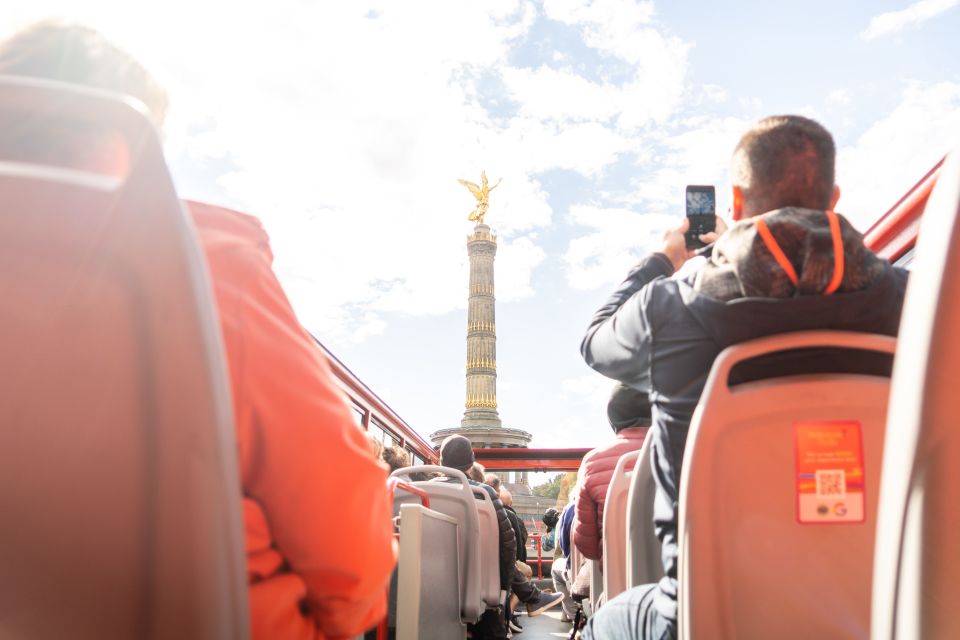
- Victory Column (Siegessäule) / Bundespräsidialamt
A strong viewing moment and a great capstone if you want Berlin’s monument style one last time.
- Victory Column / Hofjägerallee
A nearby alternative access point—useful if you’re hopping off and need the exact curb-side location.
- Zoo / Elephant Gate (Elefantentor)
The Zoo area gives you a different Berlin texture. It also helps if you want to keep the day close to hotels or a train connection.
- Café Kranzler (Kurfürstendamm 21–24)
A convenient end-of-ride mental marker. If you need a sit-down café after all the standing and looking, this stop makes it easier.
The real trick: don’t try to do everything
The route gives you 18+ stops that are individually worth time. But your best day is one where you pick two or three “walk-off” stops and then just ride through the rest. If you hop off for everything, you’ll end up exhausted and rushed.
Spree river cruise option: when that 1-hour boat ride is worth it
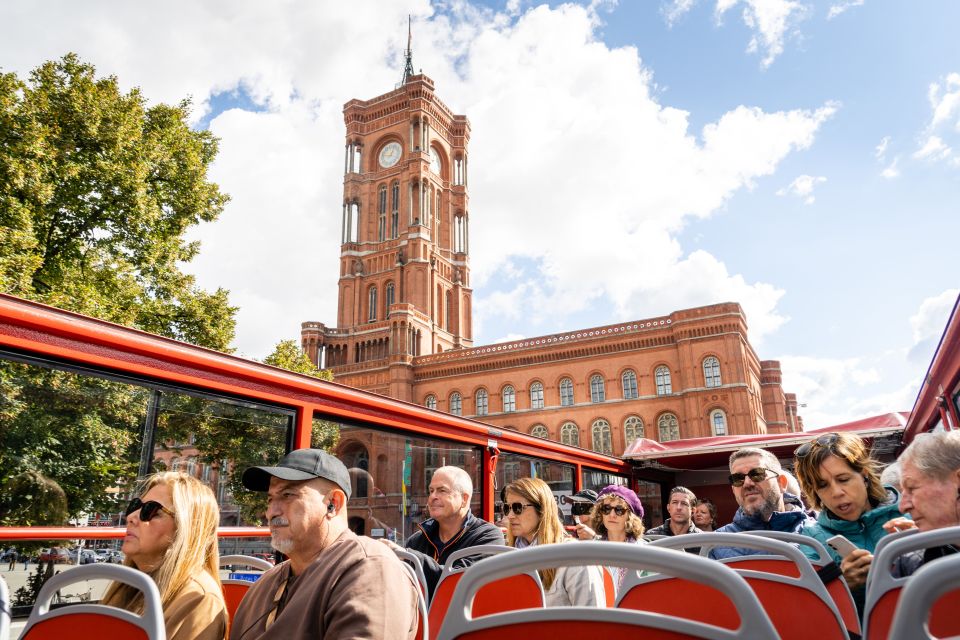
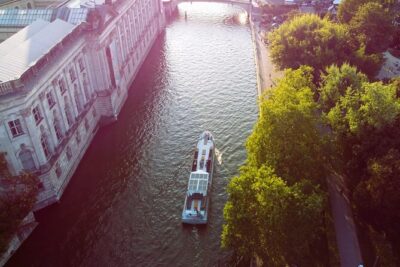
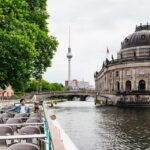
If you upgrade to include the 1-hour Spree river cruise, you’re adding a second perspective: skyline views from the water and architecture you don’t see well from streets. This is especially valuable if your day is short and you want a fast “Berlin from another angle” moment.
The cruise is paired with the bus loop, but the meeting point for the boat ties to the downtown waterfront (near the Stern & Kreis Nikolaiviertel stop by the Spree). That makes it easy to treat the cruise as a midday reset or a late-afternoon wind-down.
One caution: the boat narration may be hard to hear. If you’re the type who likes to follow a spoken explanation closely, be ready for more visual learning than audio learning.
Timing tips to see more than just bus windows
The departures every 25–35 minutes mean you can build a schedule that breathes. Here’s the pacing that usually works best in Berlin:
- Ride the loop once early to learn where things sit, then hop off later with a plan.
- If it’s a cold or rainy day, use hop-on hop-off as your shelter between stop visits. The roof deck is great, but you won’t want to stay up there the whole time.
- For meal planning, use stop points like Balzac Coffee (Potsdamer Platz) or Café Kranzler (Kurfürstendamm) as your easy, low-stress options.
If you’re trying to do this with minimal walking, focus on stops that are already central and close to other attractions: Brandenburg Gate, Checkpoint Charlie, Gendarmenmarkt, Alexanderplatz, and the East Side Gallery.
Price and value for a 1-day pass at about $51
At around $51 per person for a 1-day hop-on-hop-off, you’re paying for convenience and coverage more than for a single attraction. You’re buying:
- a full-day transport loop through many major sights,
- a GPS audio guide in multiple languages,
- a city map,
- and free Wi‑Fi on board.
If you add the Spree cruise, the overall value gets stronger because you’re effectively stacking two Berlin sightseeing formats—land and water—into one ticket set. That’s a smart move if you’re time-limited, because it reduces the need to stitch together separate tickets and schedules.
What you might still want to add: time for walking and any sites that require their own ticket. This bus won’t replace museum entry, but it will help you decide what’s worth paying extra for later.
Ticket reality check: what can slow you down
Even when a tour is simple on paper, day-of details can matter. A few issues to be aware of so you don’t lose time:
- Some boarding staff may prefer a printed ticket/PDF rather than relying only on a phone voucher view.
- If you booked a boat-and-bus combination, it’s mandatory to print boat tickets for check-in.
This is why I recommend you show up with more than one proof method if possible: have your QR code ready, and also keep a printed copy of what you need for the boat portion.
If you get any staff questions during boarding, stay calm and let them verify your ticket. Once you’re on the bus, the whole system is straightforward.
Who should book this bus-and-boat combo
This is a good match if:
- you’re on a first Berlin visit and want a fast overview,
- you want flexibility more than a strict schedule,
- you’d rather save your legs for walking through a few standout areas,
- you like audio-guided sightseeing with multiple languages.
It also makes sense if mobility is limited, because hop-on hop-off transportation lets you control how much you walk between sites.
If you already know Berlin well and only want one or two specific places, you might find it more cost-effective to skip the bus and focus on targeted tickets. But if you want breadth in one day, this format is hard to beat.
Should you book it? My practical call
Yes, I think you should book this if your goal is to cover Berlin’s major landmarks in a single day without stress. The frequent departures, the stop list built around recognizably important sights, and the combo of bus plus optional Spree cruise make it a solid value for the time it saves.
I’d book it confidently if:
- you want an easy first pass through the city,
- you’re planning to do at least a couple of hop-off walks (Checkpoint Charlie, Brandenburg Gate, East Side Gallery are the obvious starters),
- you’re okay with an audio guide that may be more reliable on the bus than on the boat.
If you hate anything ticket-related that might require printing, then consider whether you’ll be able to handle a printed boat ticket requirement and any possible voucher verification issues. If that’s a dealbreaker, you might choose a different Berlin plan and buy only the segments you’re sure you can enter smoothly.