REVIEW · BERLIN
Private Taxi Tour of Berlin East and West and Neighbourhood approx. 4-6h
Book on Viator →Operated by Gunter Bauer GAT-Productions · Bookable on Viator
Berlin history glides by your window.
This private taxi tour strings together the key East and West landmarks fast, with short photo stops and the kind of street-level context that makes the city feel logical instead of chaotic. You’ll ride in an air-conditioned vehicle with WiFi onboard, and you’ll have pickup within the S-Bahn ring (about 5 km around the Brandenburg Gate) so you can start right in the action.
I especially like how the route focuses on meaning, not just monuments. You’re given clear explanations for why buildings matter (parliament, embassies, memorials, and what was rebuilt after the Wall), and stops like the Reichstag area and the Humboldt Forum rooftop viewpoints help you get your bearings fast. One thing to consider: the timing is tight, so some places are more “look, learn, and move on” than “slow museum visit,” and traffic can shorten walking time at the exact spot you want most.
In This Review
- Key things you’ll notice on this Berlin East–West ride
- Price and Logistics: what $179.82 buys you (and what it doesn’t)
- East Berlin power and reunification symbolism: Reichstag to Brandenburg Gate
- Parliament on three floors: where Berlin makes decisions
- Unter den Linden and Forum Fridericianum: royal boulevards meet WWII memory
- Gendarmenmarkt and Berlin’s cultural stagecraft
- Courtyards and the Humboldt Forum roof: Berlin rebuilt after the gaps
- Nikolaiviertel and the sense of old Berlin (reconstructed or not)
- Federal President’s residence, Victory Column, and royal-era framing
- Hauptbahnhof, Friedrichstraße, and the Wall’s transportation reality
- Topography of Terror, Niederkirchnerstraße, and Checkpoint Charlie
- East Side Gallery and Oberbaum Bridge: Berlin Wall in public art form
- West Berlin essentials: Ku’damm, KaDeWe, and memorial churches
- Kulturforum and modern architecture: Mies van der Rohe and the National Gallery idea
- Potsdamer Platz modern skyline: the Sony Center
- Should you book this taxi tour of East and West Berlin?
- FAQ
- How long is the private taxi tour?
- What does the tour cost?
- Is pickup included, and where does it cover?
- Is this a private tour?
- Is the tour offered in English?
- What’s included in the taxi experience?
- Are child seats available?
- What’s the cancellation policy for a full refund?
Key things you’ll notice on this Berlin East–West ride
- Gunter Bauer and smooth, practiced logistics: pickup, parking, and route planning designed for getting multiple districts in one go
- Wall-era sites without the public-transport puzzle: Topography of Terror, Checkpoint Charlie area, and the East Side Gallery zone
- Big-view moments that help the whole city click: Reichstag dome area and the Humboldt Forum roof terrace
- A balanced hit of Prussian, WWII, Cold War, and reunification Berlin in one afternoon
- Comfort-first touring: air-conditioned vehicle, WiFi, and frequent chances to step out for photos
Price and Logistics: what $179.82 buys you (and what it doesn’t)
At $179.82 per person for roughly 4–6 hours, you’re paying for two things: private driving across Berlin’s widest gaps, and an English-speaking guide who explains how the city changed. Included pickup within the S-Bahn ring (around the Brandenburg Gate area) is a big deal here. Berlin can be easy to visit in the usual way, but it gets harder when you want East and West and Wall history in the same day.
This isn’t a “drop you at a museum and disappear” deal. The ride is part of the experience, too—parking close to sights, re-routing around closures, and using the car so you spend time seeing rather than waiting. The trade-off is that in a 4–6 hour window, not every stop can be a long indoor visit.
You can also read our reviews of more private tours in Berlin
East Berlin power and reunification symbolism: Reichstag to Brandenburg Gate
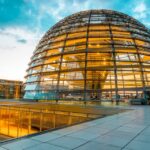
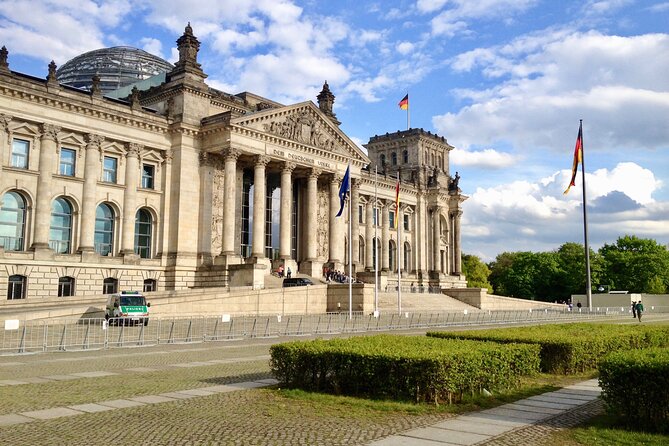
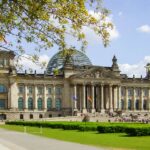
You start with the Reichstag area—the iconic “new Berlin” symbol that also carries the weight of conflict. Even before you get to the dome, the building’s story is the point: it’s tied to how Berlin and Germany tried to redefine themselves after the Wall and after reunification.
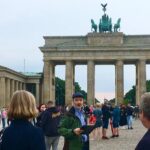
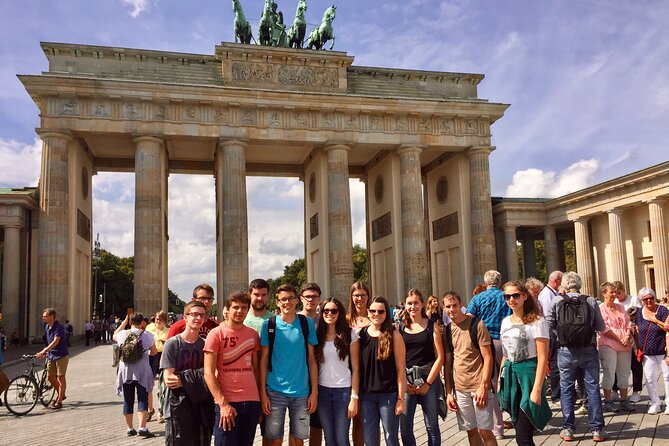
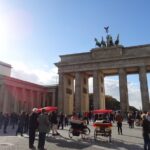
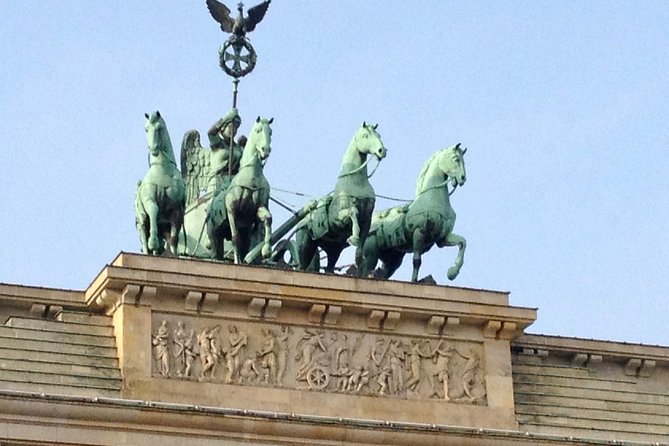
From there, the tour settles into the heart of the classic “parlor room” of Berlin: Pariser Platz and the Brandenburg Gate. The gate can look isolated in photos, but up close it’s about location and contrast. You’ll also get the context that the area didn’t always function as a welcoming plaza. For you, the value is simple: you learn what used to block movement here and what changed once the Wall came down.
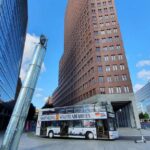
Next, the route swings into the modern reshaping of central Berlin: Leipziger Platz and Potsdamer Platz territory. This is where the city moved from history-stalled streets to rebuilt hubs. You’ll see why the architecture and the traffic feel like the city is still deciding what it wants to be.
Parliament on three floors: where Berlin makes decisions
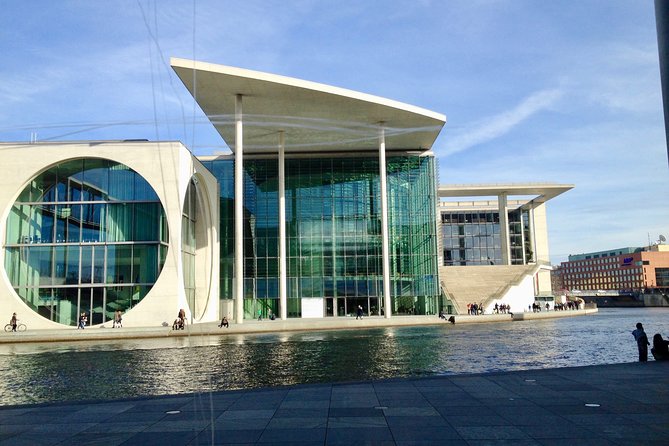
A highlight of the political Berlin segment is the parliament complex itself—the part of the city where “government” becomes visible. You’ll get the idea that real work is done in committees, while the formal moments are what visitors usually associate with parliament.
If you like architecture, this stop is satisfying because it shows how design communicates power. And if you care about accessibility, the car positioning matters too; you get views of big structures without spending the whole day walking between them.
Unter den Linden and Forum Fridericianum: royal boulevards meet WWII memory
Now you roll into Unter den Linden, Berlin’s grand boulevard feel. This isn’t just a street name stop. You’ll see how the boulevard was planned to connect royal power, and how the “planting decisions” (trees lining the route) became part of the city identity.
Nearby sits the Forum Fridericianum area. You’ll connect a cluster of institutions—like St. Hedwig Cathedral, the State Opera, and Humboldt University—to the way Berlin tried to look and feel “major” in different eras. One reason this section works well on a taxi tour: the streets are wide and the buildings are spread out, so having a driver who knows where to stop saves real energy.
Then comes Neue Wache and the memorial mood. The changing details of the site make it a sharp contrast to the grand boulevard. It’s a place where the city’s grief and remembrance are designed into the architecture, and you’ll understand that memorial doesn’t mean silence only—it means a built-in national conversation.
Gendarmenmarkt and Berlin’s cultural stagecraft
At Gendarmenmarkt, Berlin shows off its “perfect square” face. You’ll see the German and French cathedral-like buildings, plus the idea that this isn’t a random pretty postcard spot. It’s a square designed to hold civic and cultural life, and the surrounding institutions keep the vibe tied to performance and public gathering.
From there, the tour keeps moving through big cultural signals: the Neue Synagogue area (with its guarded entrance and Moorish-style elements) and the German Historical Museum in the old armory building. The museum stop is especially meaningful if you like how Berlin re-uses heavyweight buildings. Instead of hiding wartime scars, the site helps you understand how the country tells its own story.

Courtyards and the Humboldt Forum roof: Berlin rebuilt after the gaps
A pivot point is Hackesche Höfe, where the city turns into Art Nouveau charm and small-scale street life. This stop is one of the best “walk a bit” moments on the route. You get a sense of how courtyards can feel human even in a big city, and you’ll see that this area survived long enough to be restored into something recognizable again.
Then you reach Humboldt Forum, the place that matters because it’s a reunion-era rebuild with complicated history attached. You’ll hear how the palace footprint returned, and how today’s use includes non-European art collections and a modern concrete structure. The rooftop terrace is a practical payoff: it helps you see the city as a whole instead of as separate neighborhoods.
Nikolaiviertel and the sense of old Berlin (reconstructed or not)
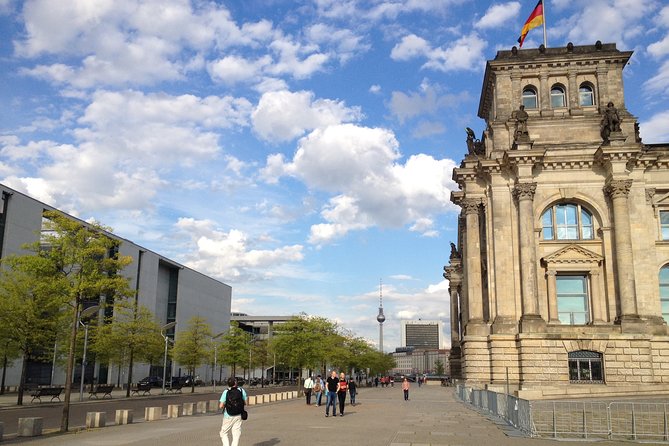
If you want “old Berlin” without committing to a full day in the Museumsinsel zone, Nikolaiviertel is a strong hit. You’ll get the feeling of older streets and tighter scale, and you’ll also understand that this is partly a deliberate reconstruction project.
The Nikolaikirche area and nearby historic house like the Knoblauchhaus give you something you can’t easily get from the car. Even a short stop here helps you remember that Berlin’s story isn’t only political. It’s also daily life, crafts, and neighborhood identity.
Federal President’s residence, Victory Column, and royal-era framing
The tour also includes several stops that frame Berlin’s leadership imagery. You’ll see Schloss Bellevue, the Federal President’s seat, and understand how the building’s purpose and neutrality debates played out during the Cold War.
Then there’s the Victory Column area. It’s a “monument that tells you what a state wanted to celebrate,” and the details make it more than just a tall photo spot. It’s tied to unification wars, and you’ll get the sense of how the meanings of monuments can be re-written with time.
You may also pass by the Tiergarten Zoo zone area, including Berlin’s long-running zoo location and nearby landmark gateways. Even if you don’t go inside, the setting gives you a green break from the dense politics-and-architecture rhythm.
Hauptbahnhof, Friedrichstraße, and the Wall’s transportation reality
Berlin’s Cold War split wasn’t just ideological—it was engineered into transit. The route includes Hauptbahnhof, presented as Europe’s biggest crossing-style station with many platform levels. It can feel overwhelming if you try to navigate it alone, so seeing it from the outside (and getting the context) is useful.
Then comes Friedrichstraße station, the famous “bridge” point across East and West travel. You’ll understand why this station mattered for departures and escapes, and you’ll also hear why the area is tied to the emotional term Palace of Tears. If your schedule allows, this is one of the best places to add a quick extra walk rather than just taking photos from the curb.
Topography of Terror, Niederkirchnerstraße, and Checkpoint Charlie
This is where the tour gets serious—fast. You’ll visit Topography of Terror, tied to excavations and information about Nazi security organs and imprisonment. The setting matters because you’re seeing a physical remainder of the place where atrocities happened, not just a museum item behind glass.
Then you’ll get a short look at the Wall remnant in Niederkirchnerstraße. The wall here shows how different sections felt: less dramatic “death strip” imagery and more of the city’s real texture, including patches altered over time.
Finally, Checkpoint Charlie is treated as a reality check. You’ll hear how it functioned as an Allied checkpoint, and you’ll also understand why it looks different today than it did during the Cold War. Even if it’s not the most “authentic wall” moment, it’s still a powerful stop for getting the geography right.
East Side Gallery and Oberbaum Bridge: Berlin Wall in public art form
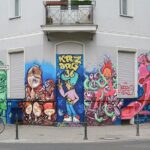
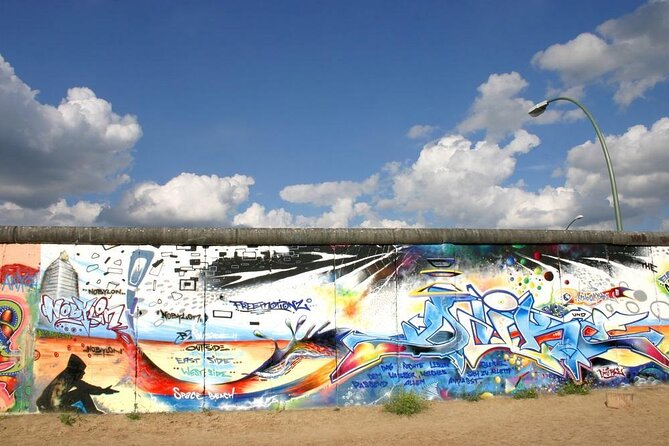
The tour ends this Wall arc at the East Side Gallery—the longest surviving Wall stretch in Berlin. You’ll get the distinction between what was “front wall” and how the riverfront setup protected the area. That context makes the murals more than decoration. They become a public record of what artists turned history into after reunification.
Then you roll toward the Oberbaum Bridge area, where medieval towers and coats of arms mark the boundary story. You’ll see how the bridge connects districts today, but once you understand the customs border angle, it stops being just a pretty crossing and becomes a map of Berlin’s division.
West Berlin essentials: Ku’damm, KaDeWe, and memorial churches
On the west side, the tour shifts into boulevard mode: Kurfürstendamm (Ku’damm) and the Tauentzien stretch. This is classic Berlin shopping energy, but you’ll also learn why the boulevard model was inspired by Paris. It helps you understand why the street feels like a grand stage even when today it’s more storefront than mansion row.
A big stop here is KaDeWe, including its gourmet food floor. Even if you don’t plan to shop, it’s worth seeing because it shows what “West Berlin luxury” meant in practice.
The Kaiser Wilhelm Memorial Church adds contrast. You’ll see how the preserved damaged tower and the newer modern church elements communicate the meaning of reconstruction after WWII. It’s not just a church stop—it’s Berlin’s way of holding onto a scar and still building.
Kulturforum and modern architecture: Mies van der Rohe and the National Gallery idea
If you’re into architecture, don’t skip this segment. The route includes the Kulturforum area, where several major cultural buildings sit together and where modern Berlin tried to look confident through art and design.
You’ll also see the Neue Nationalgalerie by Ludwig Mies van der Rohe. The design logic matters here: a bold roof, an open feeling, and the way exhibitions are handled without “walls everywhere.” It’s a great example of modernist design thinking turned into a museum question.
Another architecture payoff in the same general zone is the Bendlerblock area (the German Defense Ministry complex). The site ties directly to the July 20, 1944 plot context, including where Claus Schenk Graf von Stauffenberg was shot. If your visit to Berlin is partly about WWII memory, this stop lands hard in the best way.
Potsdamer Platz modern skyline: the Sony Center
Back around Potsdamer Platz, you’ll reach the Sony Center—a signature piece of modern Berlin redevelopment. The story is practical: why the design is daring, and why one older wing (from the Hotel Esplanade) had to be moved and reused. For you, that detail turns the building from “cool glass” into an actual case study in rebuilding.
Should you book this taxi tour of East and West Berlin?
Book it if you want maximum contrast in one day—Reichstag politics, Wall reality, memorials, and both East-leaning and West-leaning city identities—without the hassle of transit planning between far-apart neighborhoods. It’s also a strong pick if walking for long stretches isn’t your thing, because the route is built around comfort and short exits.
Skip it (or add more days) if you’re planning to spend lots of time inside museums or you know you only care about one theme, like purely Wall history or purely architecture. In a 4–6 hour format, you’ll see and understand a lot, but you won’t replace a full museum day.
FAQ
How long is the private taxi tour?
It runs about 4 to 6 hours (approx.).
What does the tour cost?
The price is listed as $179.82 per person.
Is pickup included, and where does it cover?
Pickup is included within the S-Bahn ring, roughly about 5 km around the center near the Brandenburg Gate. Pickup outside the S-Bahn ring or from BER airport is an extra charge.
Is this a private tour?
Yes. It’s a private tour/activity, and only your group participates.
Is the tour offered in English?
Yes, it’s offered in English.
What’s included in the taxi experience?
You get collection from your desired city location (hotel or apartment), an air-conditioned vehicle, parking fees, private transportation, WiFi onboard, and the taxi ride and city tour included taxes (7% and 19% VAT).
Are child seats available?
Yes. A child seat for toddlers from six months to three years is available, and a booster seat is available for older children.
What’s the cancellation policy for a full refund?
You can cancel for a full refund if you cancel at least 24 hours in advance. If you cancel less than 24 hours before the start time, you won’t get a refund.