REVIEW · BERLIN
Berlin: Modernist Architecture Tour in the Hansaviertel
Book on GetYourGuide →Operated by Beyond and Beneath Tours · Bookable on GetYourGuide
Berlin has a neighborhood built like a science project. In Hansaviertel, you’ll connect late-19th-century elegance to Cold War modernism, walking a leafy patch of Berlin between the Spree and the Tiergarten.
I love how the tour ties design to real life questions, like what Interbau 1957 architects thought a city should do for you. I also love the emotional honesty of the stop at a memorial site connected to Jewish life that was destroyed by Nazis and later by Allied bombing.
One possible drawback: this is a proper walking tour, so you should be ready for about two hours of standing and walking, plus the historical material can be heavy.
In This Review
- Key highlights you’ll feel on the walk
- Entering Hansaviertel: a bold Berlin experiment in walking distance
- The setting: between the Tiergarten and the Spree
- Starting at Biergarten der Tiergartenquelle: get your bearings fast
- Hansaviertel’s late-19th-century elegance: villas, gardens, and big-city ambition
- The memorial stop: where Jewish life was torn away
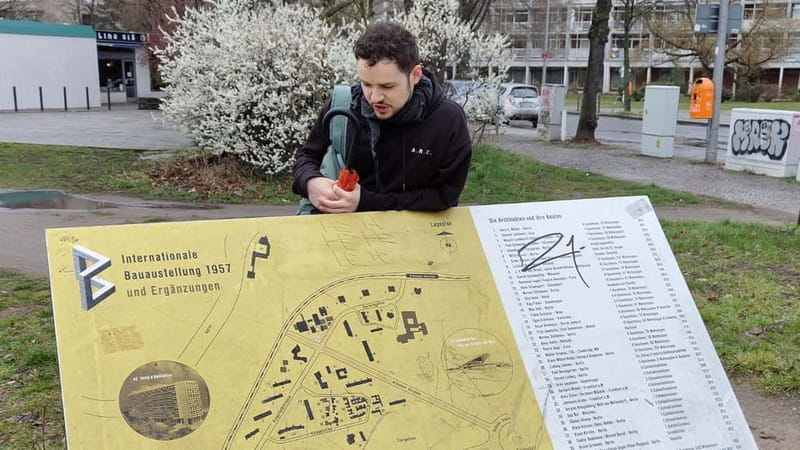
- Interbau 1957: turning rubble into a Cold War showcase
- Spotting Gropius, Niemeyer, Aalto, and the modernism ideas behind them
- The question you’ll be left with: does it still feel modern?
- Price and value: $23 for expert-led architecture in one focused district
- What to bring, and what to expect on the ground
- Who this tour suits best (and who might find it less useful)
- Should you book? My practical decision guide
- FAQ
- How long is the Berlin Hansaviertel modernist architecture tour?
- How much does the tour cost?
- Where do I meet the guide?
- Where does the tour end?
- What languages are offered?
- Is the tour accessible for wheelchair users?
- Is this tour suitable for children?
Key highlights you’ll feel on the walk
- Two cities in one neighborhood: villas and gardens, then Interbau 1957 modernism right on top of WWII aftermath
- Architects you’ll recognize fast: Gropius, Niemeyer, Aalto, and more, with ideas behind the shapes
- A memorial stop with context: Jewish community life lost to Nazi persecution, and the later bombing raids
- Leafy but central: a calmer walk in the middle of Berlin, squeezed between the Spree and the Tiergarten
- A guide who answers as you go: expect back-and-forth questions during the walk with guide Morgan
- Good value for time: $23 for about a 2-hour guided experience focused on one district
Entering Hansaviertel: a bold Berlin experiment in walking distance
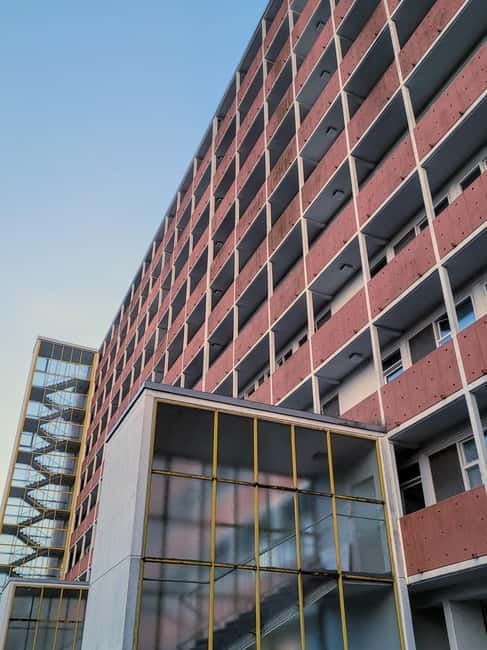
Hansaviertel is the kind of place you’d miss if you only chase Berlin’s biggest tourist stops. That’s exactly why I like this tour. You’re stepping into an odd, fascinating contrast: quiet streets and garden layouts beside buildings that were meant to prove a political and design point.
This is not just architecture trivia. It’s a “how did a city think about the future?” walk, with the past sitting in the ground the whole time. You’ll start in a familiar spot near the Berlin-Tiergarten S-Bahn area and end at Hansaplatz, keeping the focus on one coherent neighborhood story.
The tour also gives you a useful way to read what you see. You don’t just look at modern buildings; you learn what they were trying to promise about daily life.
You can also read our reviews of more tours and experiences in Berlin.



The setting: between the Tiergarten and the Spree
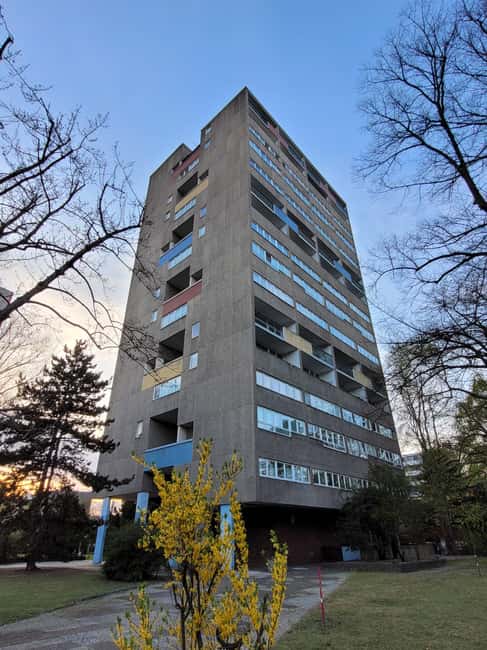
Hansaviertel sits in central Berlin, tucked between the Tiergarten and the Spree. That location matters. The district feels calmer than you’d expect, because it’s literally a pocket of designed space—trees, paths, and the sense of moving through a plan rather than just wandering city blocks.
The design story here also has two timestamps that matter for your brain. First, the area takes shape in the late 19th century as a middle- and upper-class enclave, with villas and landscaped gardens. Second, WWII rubble and Cold War ambition reshape the area again, with West Berlin hosting Interbau in 1957 as a showcase of a new kind of modern city.
So while you’re walking, you’re basically switching lenses: elegance from one era, then experimental forms from another.
Starting at Biergarten der Tiergartenquelle: get your bearings fast
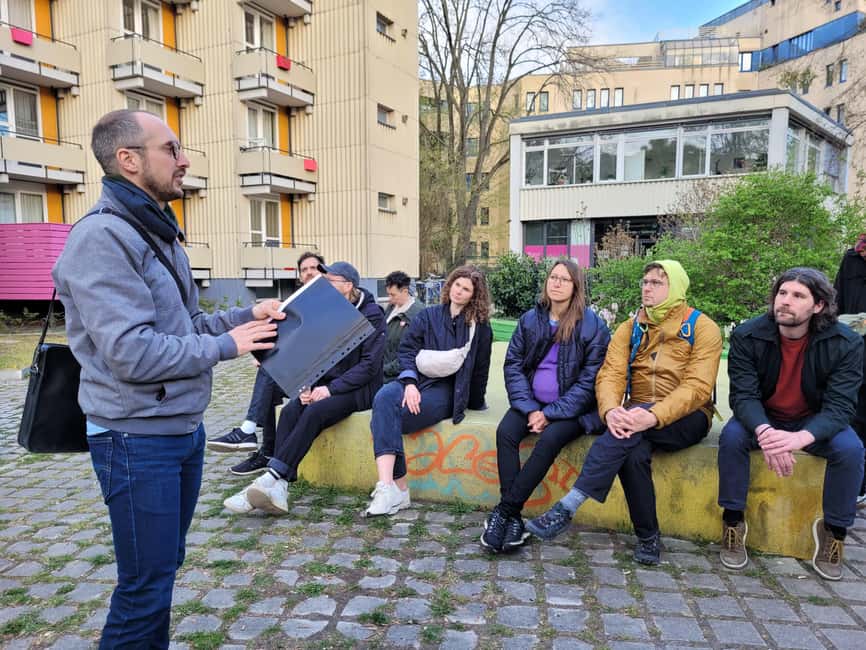
You meet at the Berlin-Tiergarten S-Bahn station area, specifically in front of the station on the exit side labeled Siegmunds Hof / Bachstraße, next to the beer garden Biergartenquelle. The guide is easy to spot with an orange umbrella.
This start point is practical. You’re in a transit-ready area, and the setting already sets the tone: Berlin doesn’t always have to be loud to be important. From here, you’ll transition into Hansaviertel’s streets with a clear sense of what to watch for.
A good tour moment you’ll appreciate: you’re not dumped into a random collection of buildings. The walk’s structure helps you track changes across time, from villa-era character to postwar modernism.
Hansaviertel’s late-19th-century elegance: villas, gardens, and big-city ambition

Before the Cold War buildings steal the spotlight, you’ll spend time on the older face of the neighborhood. Hansaviertel grew when Berlin’s population was booming and the city was expanding quickly. This part of the walk helps you understand that the district wasn’t always a modernist showcase—it started as a more traditional, comfortable enclave.
As you move along, you’ll notice the cues of an upper- and middle-class residential area: the feel of manicured gardens and elegant facades. The point isn’t to treat the older architecture as “the real Berlin” and the modernism as an interruption. It’s to show how Berlin kept redefining itself.
You’ll also hear names tied to the area’s wider story—people like Rosa Luxemburg, Nelly Sachs, and Käthe Kollwitz. Even if you don’t know their biographies in detail, the inclusion makes you look beyond buildings and toward the human lives orbiting them.
The memorial stop: where Jewish life was torn away
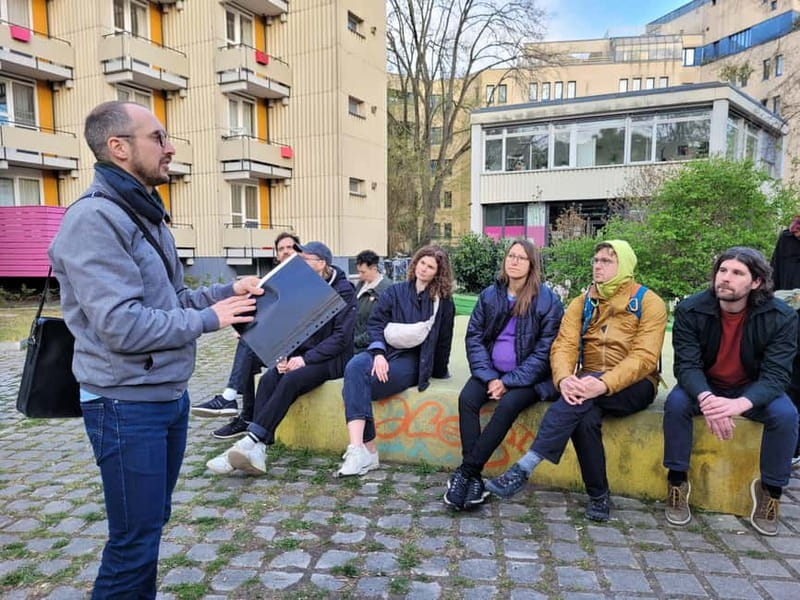
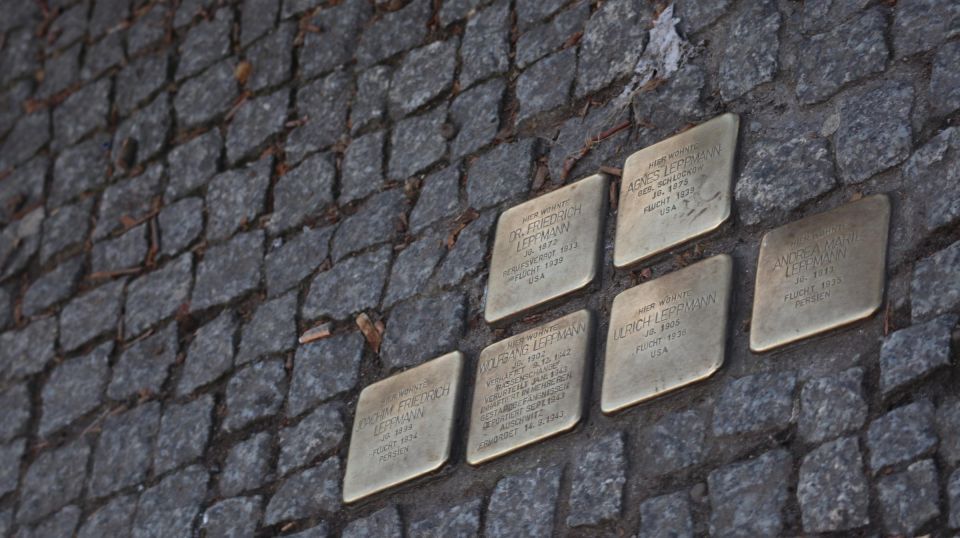
One part of this tour is quiet but powerful: a site connected to one of Berlin’s most significant Jewish communities, and how that community was destroyed socially and physically by the Nazi regime. You’ll also learn that Allied bombing raids caused additional devastation.
This isn’t treated like a quick checkbox. The tour uses this stop to reset your perspective. Once you know the tragedy under the neighborhood, the Cold War reconstruction story hits differently. You stop seeing modern buildings as just style and start seeing them as part of a longer, brutal timeline.
Practical tip: bring mental space for this section. If you rush, it won’t land. Give it a moment, look around the way the guide suggests, and let the context do its job.



Interbau 1957: turning rubble into a Cold War showcase
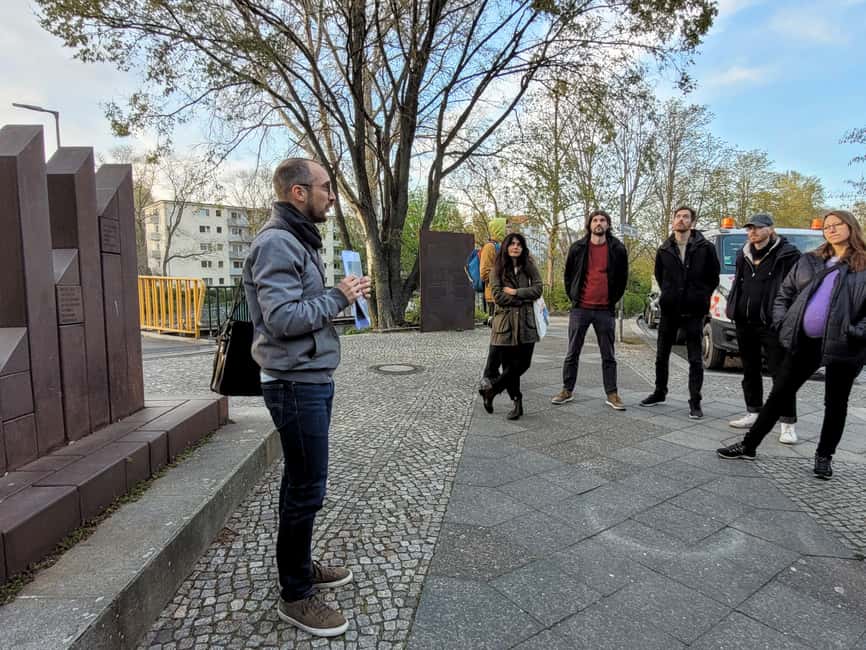
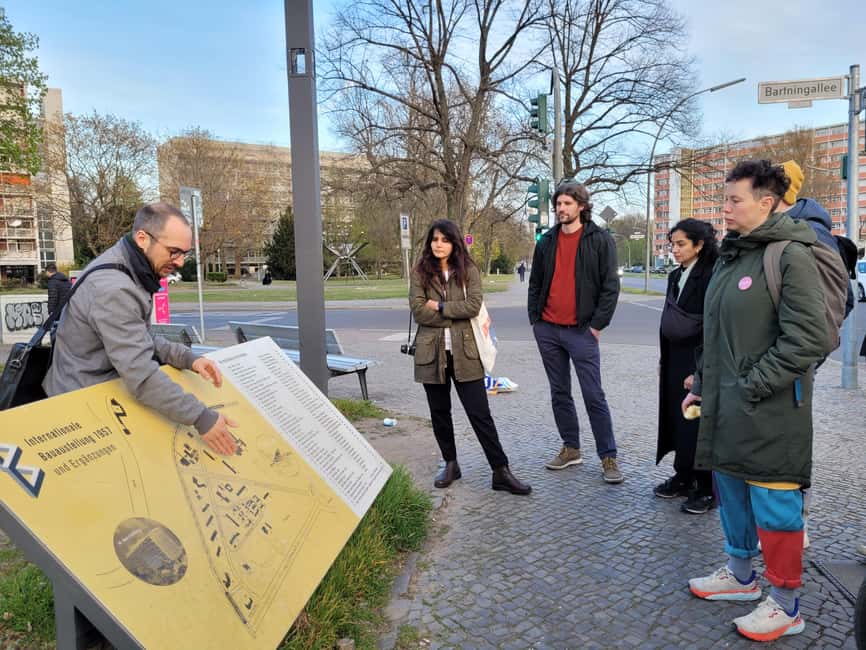
Then the walk makes a sharp, purposeful turn. In 1957, West Berlin hosted Interbau, an international architecture exhibition designed to redefine what a postwar city could be.
Here’s the key idea you’ll carry with you as you walk: Interbau wasn’t only about buildings. It was about proving a future. After WWII, land had been cleared, and the district became a stage where architects could show what they believed good urban life should look like.
You’re essentially walking through an argument. The shapes, layouts, and design choices weren’t neutral—they were meant to influence how people live, move, and think about modern identity.
That’s why this tour feels more meaningful than a normal photo walk. You’re learning the pitch behind the design.
Spotting Gropius, Niemeyer, Aalto, and the modernism ideas behind them
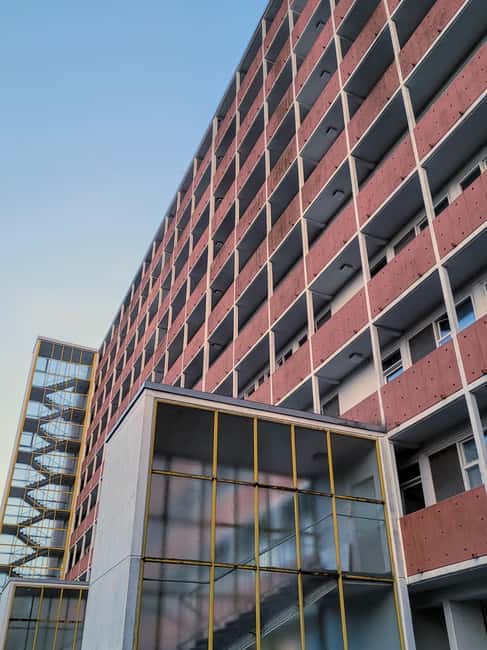
Interbau brought in major modernist figures, and you’ll see their influence as you move through Hansaviertel. The tour highlights Walter Gropius, Oscar Niemeyer, Alvar Aalto, and other influential architects.
What I like about how this is taught: you’re not just memorizing names. You get guiding questions that help you interpret what you’re looking at, like:
- What did this architecture promise?
- What kind of life did it hope to shape?
- Does it still feel modern?
Those questions matter because modernism can look simple at a glance, but it often carries a complicated intention. Even when you can’t explain every detail, you start noticing patterns—how buildings relate to space, and how the district’s planning affects movement and atmosphere.
And yes, some designs can feel provocative. That’s part of the point. Hansaviertel became a testing ground for modern thinking, not a careful museum display.
The question you’ll be left with: does it still feel modern?
By the end of the walk, you’ll have covered more than a century of Berlin’s social and architectural history inside one neighborhood. That’s rare. Most tours divide history into separate days or separate districts. Here, the layers stack in the same streets: villa-era identity, Nazi-era loss, wartime destruction, and Cold War reinvention.
When I think about whether something “feels modern,” I don’t mean shiny or new. I mean: does it still answer the questions we ask now about housing, public space, and the relationship between people and buildings?
That’s the vibe you’ll get here. You’ll be comparing the modernist vision to today as you walk, asking whether the promises aged well—or whether the ambition was only half fulfilled.
Also, don’t rush the last stretch. The tour ends at Hansaplatz, and that’s a nice moment to take in how the district plan hangs together. Even if you only remember a few buildings, the overall effect is memorable.
Price and value: $23 for expert-led architecture in one focused district
At $23 per person for about a 2-hour tour, this is strong value if your goal is understanding rather than collecting tickets. You’re paying for an expert local guide who connects architecture to political history and personal stories.
A typical “free-choice” approach in Berlin is to wander and take photos until you’re tired. This tour gives you something more efficient: a guided narrative that helps you interpret modernist design quickly and accurately. You also avoid the time cost of bouncing between multiple neighborhoods to get the same layered story.
And because the tour is concentrated in Hansaviertel, you don’t lose your attention to constant transit. You can spend your energy looking instead of navigating.
What to bring, and what to expect on the ground
This is a walking tour. You should wear comfortable shoes and plan to stand and walk for about 2 hours. It’s smart to bring water, especially if the weather is warm.
The guide works in German and English, so you’re covered either way. The tour is also listed as wheelchair accessible, which is a big plus for a sightseeing activity in a planned neighborhood with paths and streets.
Age note: it’s not recommended for very young kids. It’s described as not suitable for children under 14, and it’s suggested for ages 14 and up because of the historical depth.
Who this tour suits best (and who might find it less useful)
This tour is a great fit if you like:
- architecture that has an argument behind it
- Cold War history that connects directly to places you can walk
- thoughtful memorial context rather than “pass-by” sightseeing
- a calmer, leafy Berlin experience away from the loudest crowds
It may feel less suited for you if you want a mostly light, photo-only outing or if you’re not comfortable with heavier history topics. The memorial stop is part of the core experience, not an optional detour.
Should you book? My practical decision guide
Book this tour if you want a focused way to understand Berlin’s modern identity—without spending days bouncing between sites. For $23, you get a guided walk that covers postwar ambition, modernist architects, and a memorial linked to lost Jewish life, all in one neighborhood you can revisit later on your own.
Skip it if you’re looking for a casual stroll with minimal history, or if you can’t do about two hours of walking. In that case, a lighter neighborhood walk will probably fit better.
If you’re the type who enjoys asking why buildings look the way they do, this one is worth it.
FAQ
How long is the Berlin Hansaviertel modernist architecture tour?
The experience is about 2 hours in total. The guided tour segment is listed as 1.5 hours.
How much does the tour cost?
It’s listed at $23 per person.
Where do I meet the guide?
Meet in front of the Berlin-Tiergarten S-Bahn station (Exit Siegmunds Hof / Bachstraße), next to the beer garden Biergartenquelle. The guide carries an orange umbrella.
Where does the tour end?
The activity ends back at the meeting point, with the finish described as Hansaplatz.
What languages are offered?
The guide offers the tour in German and English.
Is the tour accessible for wheelchair users?
Yes, it’s listed as wheelchair accessible.
Is this tour suitable for children?
It’s not suitable for children under 14 years old. Minors must be accompanied by an adult.