REVIEW · BERLIN
Berlin Third Reich Sites: Half-Day Walking Tour
Book on Viator →Operated by Original Berlin Walks · Bookable on Viator
Nazi Germany is written into Berlin’s streets. This half-day walk strings together the major Third Reich locations with an English-speaking historian-guide, so you don’t just see buildings—you understand what they were used for. You’ll also get time to ask questions as you go, and the tour finishes early enough to explore on your own afterward.
I love two things most: the early framing on Hitler and the Nazi Party (so names and dates make sense), and the way the route connects the regime’s power to specific places like the SS and Gestapo headquarters area on Prinz-Albrecht-Strasse. The focus stays tight from start to finish: 1933 to 1945, plus the persecution that grew out of dictatorship.
One consideration: this is heavy material, and much of the time you’ll be outdoors in all weather. Also, several stops are brief snapshots—great for an overview, but not a replacement for longer museum visits.
In This Review
- Key highlights at a glance
- Why This Berlin Third Reich Route Works So Well for 4 Hours
- Meeting at Hackescher Markt and the Real-World Pace
- Price and Value: What $21.77 Gets You (and What It Doesn’t)
- Stop-by-Stop: From Otto Weidt to the Reichstag
- Museum Blindenwerkstatt Otto Weidt (≈5 minutes)
- Stiftung Neue Synagoge Berlin – Centrum Judaicum (≈5 minutes)
- Anhalter Bahnhof (≈5 minutes)
- Topography of Terror (≈15 minutes)
- Aviation Ministery of Berlin (≈10 minutes)
- Johann Georg Elser Sculpture (≈5 minutes)
- Holocaust Memorial – Memorial to the Murdered Jews of Europe (≈10 minutes)
- Monument to Homosexuals Persecuted Under National Socialist Regime (≈10 minutes)
- Soviet Memorial Tiergarten (≈10 minutes)
- Reichstag Building (≈10 minutes)
- What You’ll Learn From a Historian-Guide (That Self-Guided Visits Miss)
- Who Should Book This Tour—and Who Might Want Something Else
- Should You Book Berlin Third Reich Sites: Half-Day Walking Tour?
- FAQ
- Where does the tour start?
- Where does the tour end?
- What time does the tour begin?
- How long is the walking tour?
- How much does it cost, and what’s included?
- Is the tour offered in English, and how many people are in a group?
- Do I need a public transport ticket?
- Is there admission cost at the stops?
- Does the tour run in bad weather, and can I cancel?
Key highlights at a glance
- Hitler-to-collapse context in a smooth, half-day flow instead of random sightseeing
- Topography of Terror tied directly to what SS and Gestapo did
- Memorials for multiple targeted groups, including Jews, Roma and Sinti, homosexuals, and Soviet victims
- Short, efficient stops that cover a lot without feeling rushed
- English mobile ticket and a small group (max 25) for better Q&A
- Guides praised for clarity and sensitivity, including Peter, Glen, Tom, Hannah, and Giles
Why This Berlin Third Reich Route Works So Well for 4 Hours
This tour is built for people who want a clear overview without spending a whole day in transit or bouncing between sites on their own. In about four hours, you cover key locations linked to how the Nazi dictatorship was run, how persecution unfolded, and how Berlin remembers the crimes afterward.
I like that it’s structured as a walk with direction, not a checklist. Your guide sets the stage up front with the Nazi Party’s rise and how the dictatorship reshaped Germany between 1933 and 1945. Then the route becomes a chain of evidence—addresses and memorials that turn abstract history into concrete geography.
There’s also a practical bonus: it’s half-day. When you’re done near the Reichstag area, you can keep the momentum going with your own explorations while the story is still fresh in your head.
You can also read our reviews of more walking tours in Berlin



Meeting at Hackescher Markt and the Real-World Pace
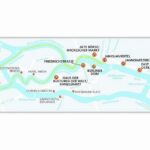
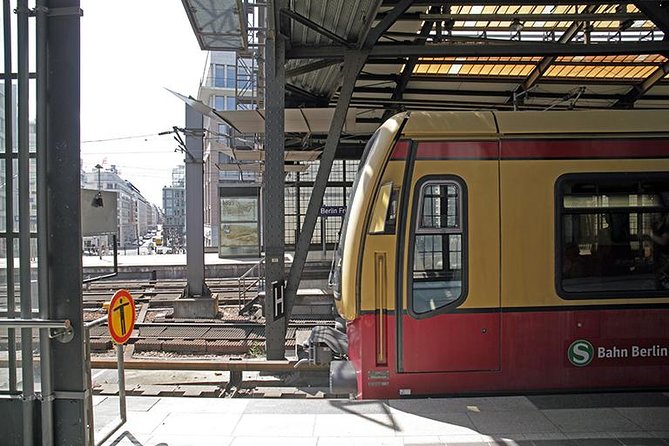
You start at 10:00 am and you’ll meet your guide near Hackescher Markt S-Bahn station. The provided start point on the tour map is Neue Promenade 3, 10178 Berlin, and the tour ends at Platz d. Republik 1, 11011 Berlin—right in the Reichstag zone.
Because it’s a walking tour, the pace matters. Several reviews mention the need for comfy shoes, and that matches what you should expect: four hours of walking and stopping. If weather turns nasty (and the tour runs in all conditions), you’ll want layers and something for wind or rain.
Finally, you’ll be guided in English, and the group is capped at 25 travelers. That small size is a big deal with a topic like this: you can actually ask questions, and your guide can keep track of the group without turning it into a lecture hall.
Price and Value: What $21.77 Gets You (and What It Doesn’t)
At $21.77 per person, you’re paying mainly for the guide and the structured route. The tour includes a professional guide speaking perfect English and the full 4-hour walking experience.
What makes the price feel more reasonable is that the stops are listed with free admission tickets for the time you spend there. That means your money goes to interpretation, not gate fees. You still may need to plan for Berlin transit, though.
Not included: an AB Zone transport ticket (about €3.80). If you already have a day pass or you’re traveling within the right zone, you might be set. Otherwise, budget for that ticket at the station near the meeting point.
Stop-by-Stop: From Otto Weidt to the Reichstag
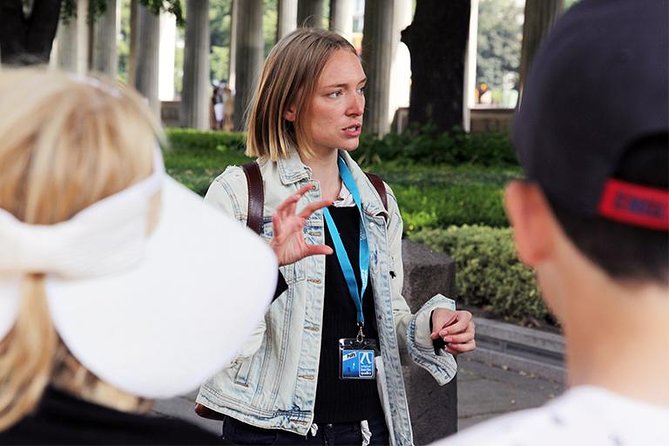
Before you begin the mapped stops, the guide starts with an introduction to Adolf Hitler and the Nazi Party, explaining the context for a dictatorship built on violence. That’s important because many of the later sites won’t hit as hard if you only know names without understanding how the system worked.
Here’s what you can expect at each stop, based on the tour’s timing and focus:
Museum Blindenwerkstatt Otto Weidt (≈5 minutes)
You begin with Museum Blindenwerkstatt Otto Weidt, where your guide explains the history of the site. Even in a short stop, this matters because it adds texture to daily life and survival under Nazi persecution rather than keeping everything at the level of government buildings.
Potential drawback: if you’re hoping for deep museum time, this is just a brief orientation stop.
You can also read our reviews of more tours and experiences in Berlin


Stiftung Neue Synagoge Berlin – Centrum Judaicum (≈5 minutes)
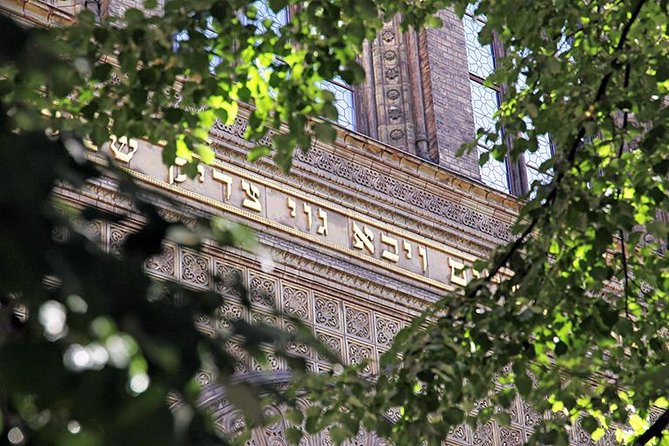
Next is Stiftung Neue Synagoge Berlin – Centrum Judaicum. The guide explains the history of the site, and it helps you connect the Nazi era to Berlin’s Jewish community and the cultural/religious life that was targeted.
Why it’s worth it: it puts the later deportation story in a broader human context.
Anhalter Bahnhof (≈5 minutes)
At Anhalter Bahnhof, the tour focuses on what happened here: many Berlin Jewish residents were deported to concentration camps. The fact that you’re walking near the ruins makes it feel less like a textbook scene and more like a place that still remembers.
Tip for your mindset: take a moment here. This stop is where the story shifts from “how the regime grew” to “what the regime did.”
Topography of Terror (≈15 minutes)
This is one of the tour’s anchors. You walk to the former SS and Gestapo headquarters on what was once Prinz-Albrecht-Strasse, now the Topography of Terror museum area. Your guide explains how the regime operated and the role these institutions played.
You’ll have more time here (about 15 minutes) than most stops, which makes sense. This is where you’re supposed to connect the dots between an authoritarian state and the machinery that enforced it.
Consideration: Topography of Terror can support a full museum visit on its own. In a half-day tour, you’ll get the main path and interpretation, not every exhibit.
Aviation Ministery of Berlin (≈10 minutes)
Then you visit the former Ministry of Aviation site, where your guide discusses the former German Luftwaffe headquarters and the consequences of Nazi rule for Jewish people and for Sinti and Roma communities.
This stop is valuable because it broadens the story beyond one persecuted group. The Nazi system reached into many institutions, including those tied to war and bureaucracy.
Johann Georg Elser Sculpture (≈5 minutes)
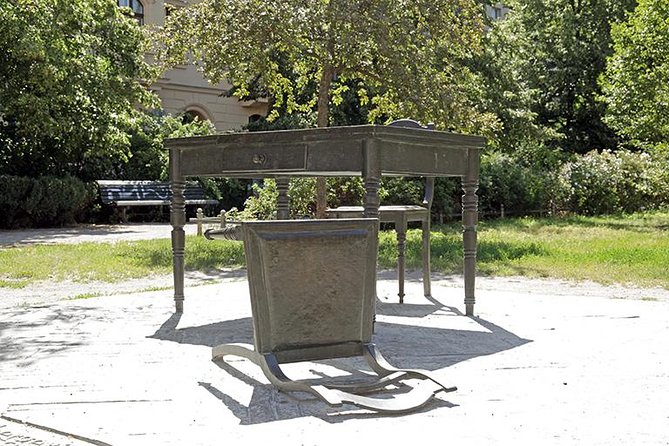
You’ll find the Johann Georg Elser sculpture and hear about the attempted assassination of Hitler. This is a shorter stop, but it changes the emotional tone in a useful way: the story isn’t only victims; it’s also resistance and the attempts—however complicated—to break the Nazi grip.
Holocaust Memorial – Memorial to the Murdered Jews of Europe (≈10 minutes)
At the Memorial to the Murdered Jews of Europe, the guide explains the history of the site. This is a time for reflection, not trivia.
Why this works on a walking tour: you’re not just reading about the Holocaust—you’re standing where Berlin keeps the memory front and center.
Monument to Homosexuals Persecuted Under National Socialist Regime (≈10 minutes)
Next is the Monument to Homosexuals Persecuted Under National Socialist Regime. Your guide explains the history of the site, and it’s a key part of why this tour feels more complete than “Third Reich buildings only.”
If your mental map of Nazi persecution is mostly about Jewish history, this stop gives you another axis you may not have studied deeply.
Soviet Memorial Tiergarten (≈10 minutes)
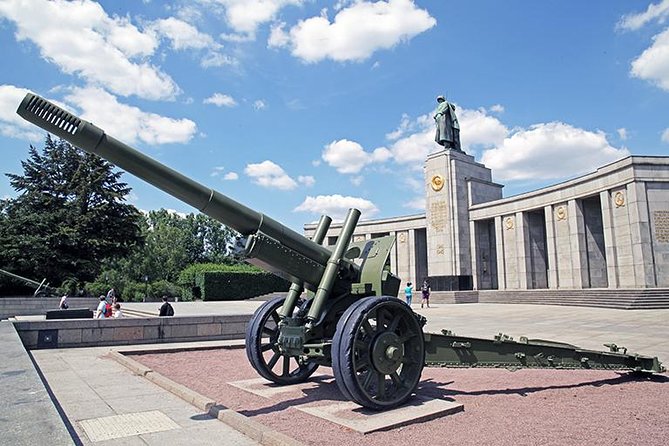
At Soviet Memorial Tiergarten, the guide explains the history of the site. This adds another piece to the wartime story: Berlin wasn’t only shaped by Nazi victims; it was also shaped by Soviet losses during the war’s endgame.
Reichstag Building (≈10 minutes)
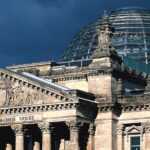
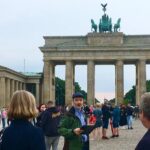
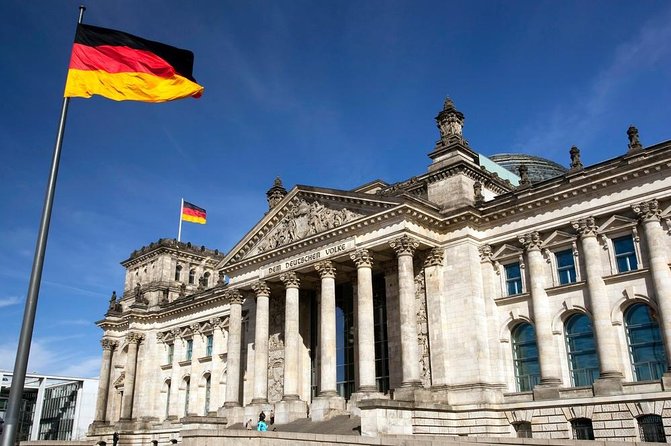
The tour concludes outside the Reichstag building. Your guide explains how the Nazis came to power in 1933 and what happened there in the final days of World War II in 1945.
Why the ending lands: the Reichstag isn’t just “another landmark.” It’s where power was claimed, displayed, and ultimately engulfed by collapse.
What You’ll Learn From a Historian-Guide (That Self-Guided Visits Miss)
If you only wander, you can end up with a pile of stops that feel disconnected. This tour tries to prevent that by building cause-and-effect.
You start with the political rise—Hitler and the Nazi Party—then move through institutions tied to enforcement and war. The tour’s sequence makes a point: the SS and Gestapo weren’t just historical villains in the abstract; they were organs of control, and their presence shaped daily life and who got targeted.
The guide also helps you see how persecution spread across different groups. You don’t just hear about Jews. You also get the tour’s explicit attention to Sinti and Roma and to homosexuals persecuted under National Socialism, plus the Soviet story connected to the memorials.
One theme that comes through in the way people describe their guides: they’re careful with tone. Many reviewers also highlight that guides are open to questions and can explain clearly enough that you’re not straining to catch details.
If you want to get the most from it, come with one or two questions ready. For example: How did ordinary bureaucracy feed into violence? Or: why do Berlin’s memorial choices look the way they do today? A good guide will help you connect those dots.
Who Should Book This Tour—and Who Might Want Something Else
This is a strong pick if you:
- want an organized, guided overview of Nazi-era Berlin in about four hours
- care about how persecution affected multiple targeted groups
- like the idea of asking questions while you walk, rather than reading alone
- prefer a half-day format that leaves your afternoon free
It may not be your ideal choice if you want a lighter route or a tour that spends equal time on non-Nazi periods. The focus stays on the Third Reich and related memorials—by design. If you’re craving Weimar-era context or other chapters of Berlin, you might pair this with a separate, more general neighborhood walk later.
Also, plan for emotional weight. You’re visiting memorials connected to mass murder, persecution, and war. This isn’t the kind of tour where you multitask on your phone the whole time.
Should You Book Berlin Third Reich Sites: Half-Day Walking Tour?
Yes—if you want a guided, respectful overview that covers a lot without overwhelming you with museum hours. At $21.77 for a live English guide, the value is mostly in interpretation: the tour gives you the “why” behind each place, not just the “what.”
I’d especially book it if you know you’ll struggle to connect sites on your own. The route works because it’s tied together by a story—Hitler’s rise, the system of terror, and the memory Berlin keeps through memorials.
One last practical thought: if you can choose your guide or request one, people repeatedly praise certain names, including Peter, Glen, Tom, Hannah, and Giles. You can’t rely on a specific guide every time, but that kind of consistent praise is a good sign of overall tour quality.
If you’re ready for heavy history, wear comfortable shoes, dress for weather, and come prepared to ask questions. You’ll leave with a clearer, harder-to-forget map of how Berlin’s Nazi-era story unfolded.
FAQ
Where does the tour start?
The tour meeting point is at Hackescher Markt S-Bahn station. The tour map start point is listed as Neue Promenade 3, 10178 Berlin.
Where does the tour end?
It ends at Platz d. Republik 1, 11011 Berlin, in the Reichstag area.
What time does the tour begin?
The start time is 10:00 am.
How long is the walking tour?
It lasts about 4 hours.
How much does it cost, and what’s included?
The price is $21.77 per person. It includes a professional guide speaking English and the 4-hour walking tour.
Is the tour offered in English, and how many people are in a group?
The tour is offered in English and has a maximum group size of 25 travelers. Most travelers can participate, and service animals are allowed.
Do I need a public transport ticket?
Yes. The AB Zone transport ticket (about €3.80) is not included. It’s available from the station at the meeting point.
Is there admission cost at the stops?
Admission is listed as free for the stops included in the tour (the times shown for each site are part of the tour experience).
Does the tour run in bad weather, and can I cancel?
It operates in all weather conditions, so dress appropriately. You can cancel for a full refund up to 24 hours before the experience starts.