
REVIEW · BERLIN
Berlin: The Feuerle Collection Meditation Experience
Book on GetYourGuide →Operated by The Feuerle Collection · Bookable on GetYourGuide
A silent art detour in Berlin. The Feuerle Collection turns looking at art into a 1-hour mobile detox you can feel in your body, not just your brain. I like the way the experience is structured around quiet movement, then stillness, in front of Khmer sculptures, Imperial and Scholar Chinese furniture, and striking modern works. The one drawback to consider: it is not a guided tour, so you’ll need to be okay with experiencing the art without explanations.
What really makes it work is the passage through special spaces—the path to the Sound Room, then a walk in the Lake Room—before you settle down in front of the collection. You can also choose your style: meditation is not mandatory, and you may simply walk around quietly or sit with a mat. If you want lots of narration, debate, or big group instruction, this might feel too quiet and too self-directed.
In This Review
- Key points to know before you go
- Why this Feuerle meditation experience feels different from a museum visit
- The 1-hour flow: Sound Room passage, Lake Room walk, then quiet contemplation
- You start by moving toward the Sound Room
- Then you walk in the Lake Room
- Then you meditate (or simply sit quietly) in front of the works
- What you’ll see: Khmer sculptures, Chinese scholar furniture, and contemporary artworks
- Early Khmer sculptures (7th–13th century A.D.)
- Imperial and Scholar Chinese furniture (2nd century B.C.–17th century A.D.)
- Contemporary works by major artists
- Silent doesn’t mean stiff: how to participate if you’re not a meditation pro
- Price and value: why $25 for 1 hour can actually feel like more
- Who this experience suits best (and who should skip it)
- You’ll probably love it if you:
- You might want to skip it if you:
- Practical tips for a smoother, calmer hour
- Should you book the Feuerle Collection Meditation Experience?
- FAQ
- FAQ
- How long is the Feuerle Collection Meditation Experience?
- How much does it cost?
- Is there a guided tour during the session?
- Do I have to meditate?
- What is included with the experience?
- What rooms or spaces will I go through?
- What types of art are included?
- Is it wheelchair accessible?
- Is it suitable for children?
- Can I cancel and get a refund?
Key points to know before you go
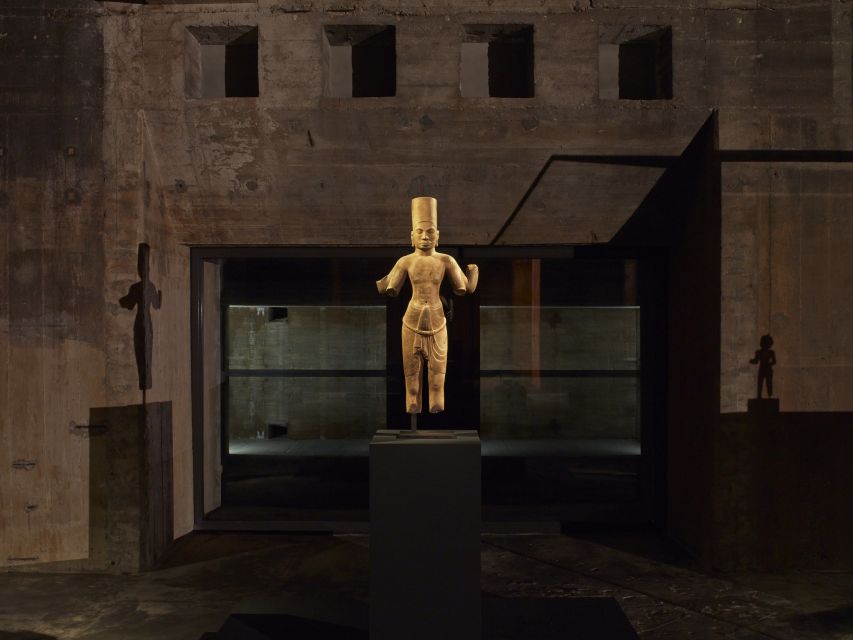
- Silent, mobile-detox atmosphere with a focus on going offline
- Sound Room then Lake Room as part of the experience flow
- Not a guided tour and the collection is open only for meditation
- Yoga mat and blanket included, so you can settle comfortably
- Khmer (7th–13th c.) + Chinese furniture (2nd c. BC–17th c.) + contemporary works
- Not suitable for children under 16, and it’s designed for calm, adult-paced visiting
Why this Feuerle meditation experience feels different from a museum visit
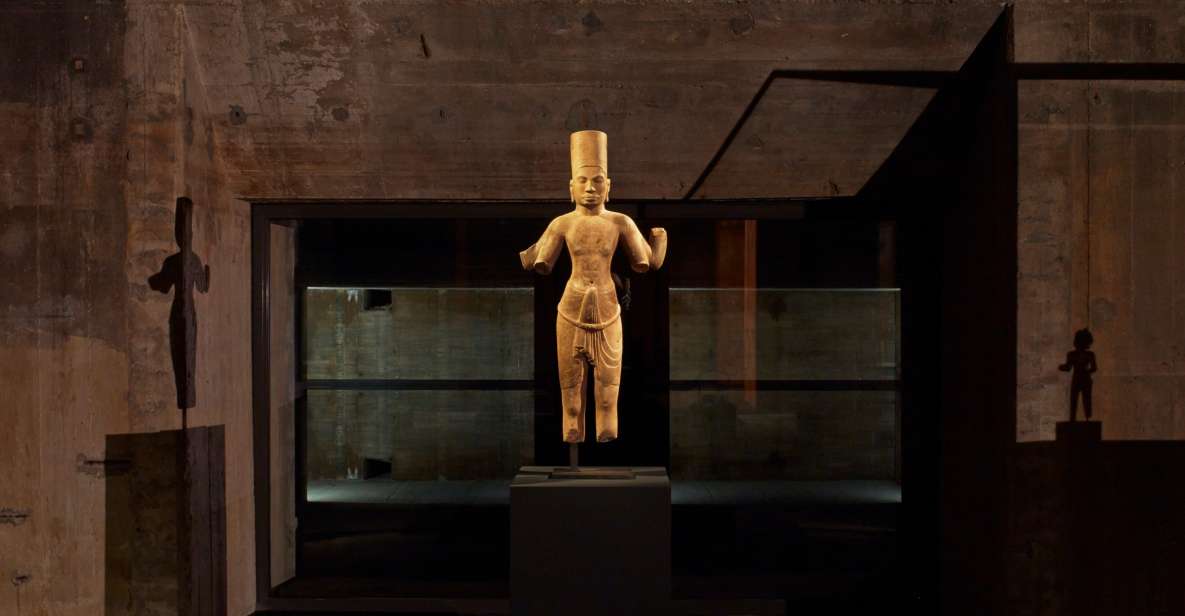
A normal museum asks you to do homework. Labels. Dates. Names. This experience asks for the opposite. You show up and practice being still while you’re surrounded by art that doesn’t need you to rush to the next room.
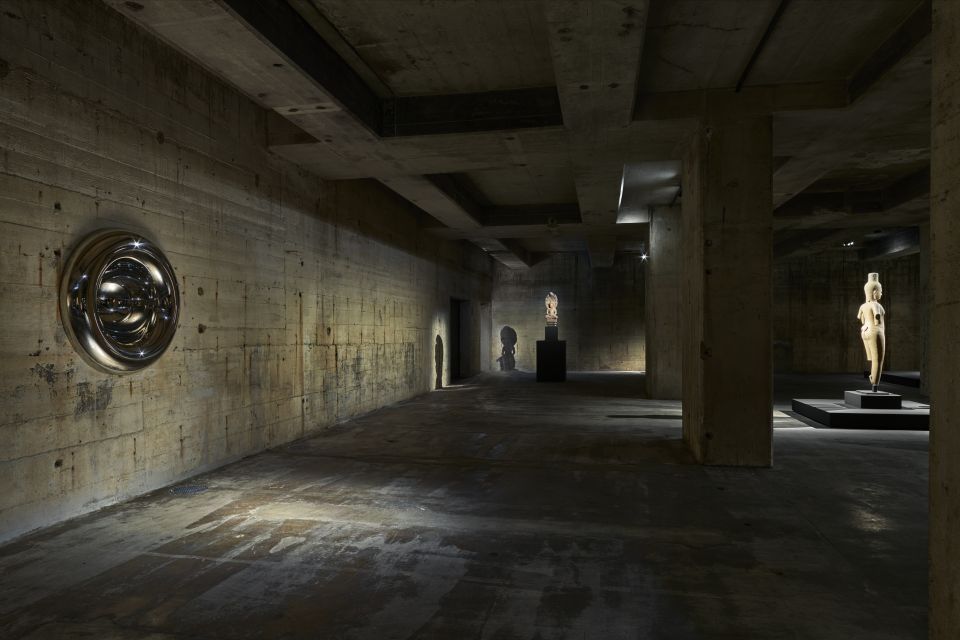
I really like how the collection sets up unexpected contrasts. You’re not stuck with one school or one time period. Instead, you move among early Khmer sculptures from the 7th to 13th century A.D., then into the world of Imperial and Scholar Chinese furniture spanning roughly the 2nd century B.C. through the 17th century A.D. After that, you meet contemporary voices, including works by Anish Kapoor, Cristina Iglesias, Adam Fuss, Zeng Fanzhi, James Lee Byars, and Nobuyoshi Araki.
That time-jump effect matters. It trains your attention. When you don’t have a guide talking over everything, your mind starts noticing patterns: materials, shapes, repeated motifs, how your body reacts to stillness versus motion. It’s not about learning facts fast. It’s about slowing down enough to sense what’s there.
And yes, there’s also the practical side: the setting is designed for quiet. You’re given a yoga mat and blanket, so you can sit without turning your visit into a sore-legs contest.
You can also read our reviews of more tours and experiences in Berlin.



The 1-hour flow: Sound Room passage, Lake Room walk, then quiet contemplation
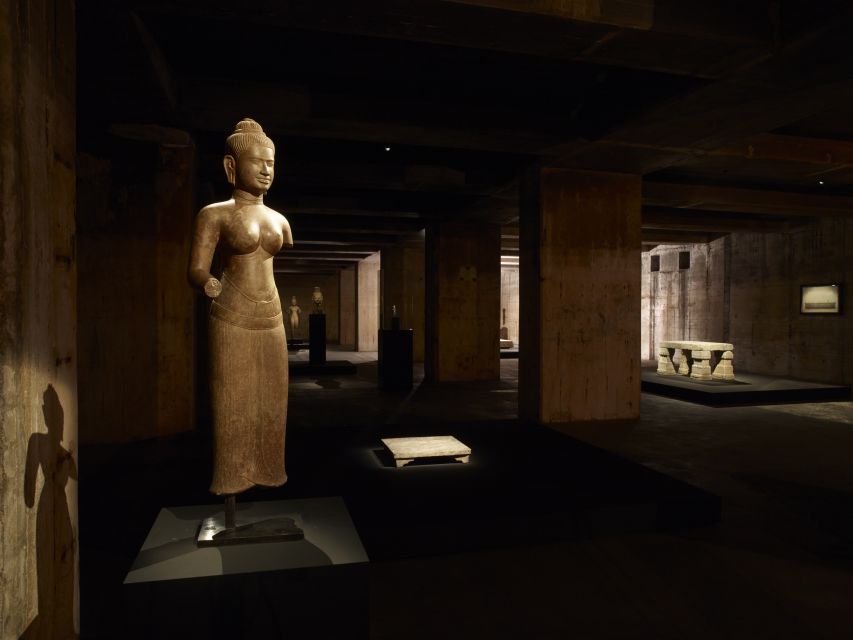
This is a tight, focused schedule: about 1 hour total. That matters, because the experience is built around pacing. You’re not asked to wander for hours or treat this like a standard open-ended museum stroll. It’s more like a sequence of states—movement, sound, then stillness.
Here’s the order you should expect:
You start by moving toward the Sound Room
Before you reach the meditation spaces, you pass through a passage to the Sound Room. Even if you’re not thinking about sound in a technical way, this is a psychological reset. Sound rooms make you aware of how silence actually behaves. You may notice small ambient noises more clearly. That awareness can help you drop into the moment.
Then you walk in the Lake Room
After the Sound Room passage, you walk in the Lake Room. This part is a nice break from “sit and stare.” Moving slowly through a space like that gives your mind something gentle to do besides overthinking.
Then you meditate (or simply sit quietly) in front of the works
Once you’re in the main meditation areas, you settle down and contemplate artworks. The collection is open only for meditation, not for regular browsing. That means you’re not drifting from object to object at full speed. You’re pausing, breathing, and letting the art come to you.
One key point: meditation is not mandatory. If you don’t want to sit with eyes closed, you can still participate by moving quietly or simply staying present. In other words, you’re allowed to show up your own way—as long as you keep the atmosphere respectful and calm.



What you’ll see: Khmer sculptures, Chinese scholar furniture, and contemporary artworks
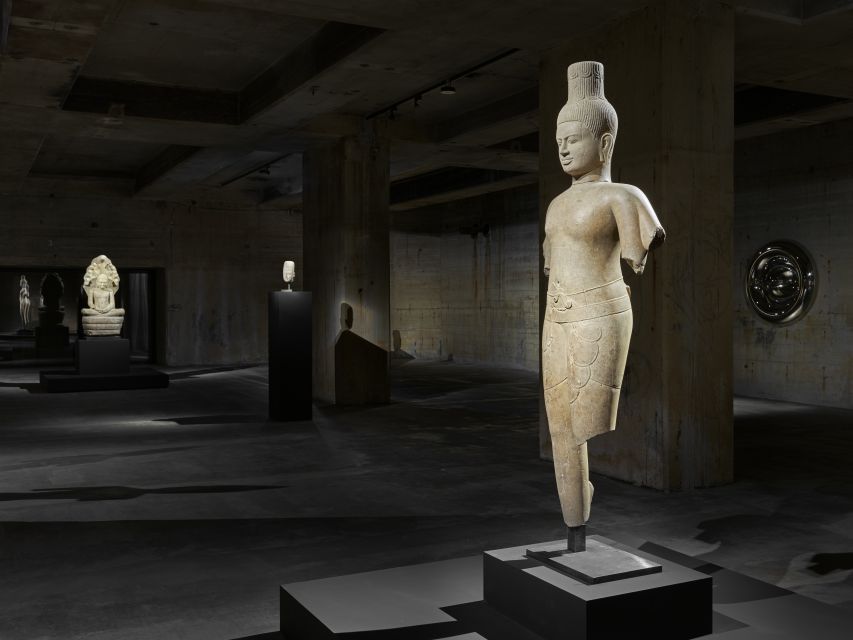
This is one of those experiences where the art mix is the whole point. You’re not just visiting a single style. You’re experiencing a conversation across time.
Early Khmer sculptures (7th–13th century A.D.)
You’ll encounter early Khmer sculptures dated from the 7th to 13th century A.D. Khmer art often brings a sense of physical presence—figures, symmetry, and form that feel built to be looked at slowly. In a silent environment, that can be powerful. You don’t need to be able to name every detail to feel the weight and balance of the pieces.
Imperial and Scholar Chinese furniture (2nd century B.C.–17th century A.D.)
Next comes Imperial and Scholar Chinese furniture spanning the 2nd century B.C. through the 17th century A.D. Furniture is easy to overlook in a typical museum visit. In this format, it’s different. You’re sitting in the same world as objects shaped for lived attention—things designed for scholars, for rooms, for daily rituals of reading, composing, and hosting.
You may find yourself looking at proportions and joinery as if they were art forms in their own right. When you slow down, even “just furniture” starts to feel intentional.
Contemporary works by major artists
Finally, the collection includes contemporary pieces by artists such as Anish Kapoor, Cristina Iglesias, Adam Fuss, Zeng Fanzhi, James Lee Byars, and Nobuyoshi Araki. Contemporary art can feel loud or confusing—until you give it the right conditions. Silence helps. Being stationary helps. You can let your reaction arrive without immediately judging it.
If you prefer art that provokes questions, the contemporary mix is likely to keep your mind awake in a good way. If you want comfort and softness only, you might still enjoy it, but you may need to be okay with modern intensity.
Silent doesn’t mean stiff: how to participate if you’re not a meditation pro
Some people worry that a meditation experience means being forced into one specific technique. That’s not the vibe here. You can meditate, or you can simply stay quiet and move gently.
I like that freedom. It makes the experience work for different personalities:
- If you meditate, bring a simple plan: start with your breath, then expand attention to what’s in front of you.
- If you don’t meditate, treat it like a slow visit where you’re not performing anything. Sit when you want. Stand when you want. Walk softly when you want.
- If you get restless, use the spaces as transitions. Movement through the Sound Room passage and Lake Room gives you a chance to reset.
The main rule is respect. This is a silent environment and a mobile detox. That means no phone scrolling, no loud conversations, and no turning the visit into a social event.
Also, since the collection is open only for meditation, you’ll want to plan for quiet presence instead of browsing. If you’re the type who likes to read every label and take notes, you may feel impatient at first. But if you can let go of that urge, you’ll probably end up surprised by how much you notice.
Price and value: why $25 for 1 hour can actually feel like more
At $25 per person for about 1 hour, you’re not paying for a traditional guided tour experience. You’re paying for access to a very specific kind of setting: quiet, structured movement through Sound and Lake spaces, plus time to contemplate a major art collection without the usual museum noise.
Here’s what makes the value feel real:
- You get the physical support: a yoga mat and blanket are included, which saves you from finding a place to sit comfortably.
- You’re not competing with constant foot traffic the way you might in a standard gallery.
- The “no guide” format can be a benefit, not a downside. You’re spared the pace of someone else’s explanation and allowed to experience the art directly.
So the question isn’t just cost. It’s what you want from your Berlin time. If you’ve already filled your day with tours and talking heads, this is a smart counterbalance. If you’re hoping for factual storytelling, $25 may feel expensive relative to that goal—because the experience is designed for quiet, not interpretation.
Who this experience suits best (and who should skip it)
This is best for people who want calm. Not everyone does.
You’ll probably love it if you:
- Like art but are tired of information overload
- Enjoy stillness, breath work, or quiet time in unusual spaces
- Want a structured break from phones, notifications, and constant activity
- Appreciate contrasts across cultures and eras: Khmer sculpture, Chinese scholar furniture, and contemporary art
You might want to skip it if you:
- Need a guided explanation to stay engaged
- Prefer a regular museum browse with flexible wandering
- Are traveling with kids under 16 (it’s not suitable for children under 16)
- Feel uncomfortable in silent environments
One more note: this is wheelchair accessible, which is a big plus if you want a calm cultural experience without accessibility barriers.
Practical tips for a smoother, calmer hour
These are the small things that help you get the most out of the session:
- Plan to arrive ready to be quiet. This is not the moment to do last-minute catch-up conversation.
- Dress for comfort. You’ll have a mat and blanket, but you’ll also be in a space designed for sitting and stillness.
- If you don’t want to meditate with eyes closed, decide ahead of time how you’ll participate. For example: eyes open, slow breathing, and a gentle focus on form.
- Treat the spaces as part of the experience. The Sound Room passage and Lake Room walk aren’t filler. They’re your transition tools.
Also, because the collection is open only for meditation, don’t show up expecting a freeform gallery hangout. Think of it as an art encounter with rules that make it work.
Should you book the Feuerle Collection Meditation Experience?
If you want something different from a standard museum visit—something quiet, slow, and hands-off—this is an easy yes. The combination of Sound Room passage, Lake Room walking, and meditation time in front of Khmer, Chinese, and contemporary works is a rare format. For $25, you’re paying for an hour where your attention is guided by the environment itself, not by a lecture.
Book it if you’re craving a reset: a mobile detox that feels meaningful rather than performative. Skip it if you’re mainly in Berlin for guided commentary or if silence feels like a problem rather than a gift.
FAQ
FAQ
How long is the Feuerle Collection Meditation Experience?
It lasts 1 hour.
How much does it cost?
The price is $25 per person.
Is there a guided tour during the session?
No. It is not a guided tour. The collection is open only for meditation.
Do I have to meditate?
No. Meditation is not mandatory. You can also walk around quietly and enjoy the art.
What is included with the experience?
You get a yoga mat and a blanket.
What rooms or spaces will I go through?
You’ll pass through the Sound Room passage and walk in the Lake Room.
What types of art are included?
You’ll see early Khmer sculptures (7th–13th century A.D.), Imperial and Scholar Chinese furniture (2nd century B.C.–17th century A.D.), and contemporary works by Anish Kapoor, Cristina Iglesias, Adam Fuss, Zeng Fanzhi, James Lee Byars, and Nobuyoshi Araki.
Is it wheelchair accessible?
Yes, it is wheelchair accessible.
Is it suitable for children?
No. It is not suitable for children under 16.
Can I cancel and get a refund?
Yes. You can cancel up to 24 hours in advance for a full refund.