REVIEW · BERLIN
Potsdam Bike Tour with Rail Transport from Berlin
Book on Viator →Operated by Fat Tire Tours - Berlin · Bookable on Viator
Potsdam is prettier when you roll through it. This 6.5-hour bike-and-train day trip strings together Sanssouci Park sights and major Cold War landmarks without making you fight city traffic alone. You start in central Berlin, pick up a comfortable Beach Cruiser bike, and glide into another world of palaces, gardens, and history.
I especially liked two things: the small group size (up to 18) and the guide-led storytelling that puts each stop in context, from Frederick the Great’s ambitions to the politics after WWII. When guides like Maggi or Simon set the tone, you get the feeling you’re on a guided walk, just on wheels.
One thing to consider: it’s still a full active day. You’ll ride about 17 km (10.5 miles) and you’ll be out for hours, plus lunch and any extra palace entry are on you.
In This Review
- Key highlights worth aiming for
- Meeting at Alexanderplatz and Rolling Into Potsdam by Train
- A 17 km Ride Built for History Lovers (Not Fitness Athletes)
- Sanssouci Park in Stages: Palaces, Windmill Gardens, and the Chinese Pavilion
- Old Town Potsdam and Prussian Symbols: Alter Markt, St. Nicholas, and the Obelisk
- Cold War to WWII Memory: Cecilienhof and the Bridge of Spies
- Lunch in the Dutch Quarter: Time to Eat and Wander at Your Own Pace
- Price and Value: What You’re Really Paying For
- Who Should Book This Potsdam Bike Tour (and Who Might Not)
- Tips to Get the Best Day from Your Bike and Your Guide
- Should You Book the Potsdam Bike Day Trip?
- FAQ
- What’s the duration of the Potsdam Bike Tour from Berlin?
- Where do you meet, and what time does the tour start?
- How do you get to Potsdam?
- What bike gear is included?
- Is lunch included?
- Is palace or site admission included?
- What’s the group size?
- What fitness level do you need?
Key highlights worth aiming for
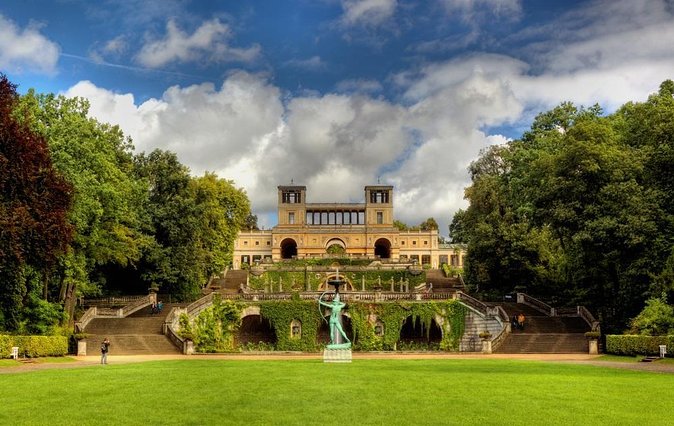
- Train ride included: you skip the hassle of planning transit to Potsdam
- Sanssouci Palace photo stop: one of Germany’s most famous UNESCO sites, outside views and big-picture context
- Cold War hits close to the route: Glienicke Bridge and WWII-era Cecilienhof views
- A real mix of neighborhoods: Russian colony Alexandrowka, Dutch Quarter, and Potsdam’s gardens
- Comfort-first bikes: Beach Cruiser style with helmets provided (optional)
Meeting at Alexanderplatz and Rolling Into Potsdam by Train
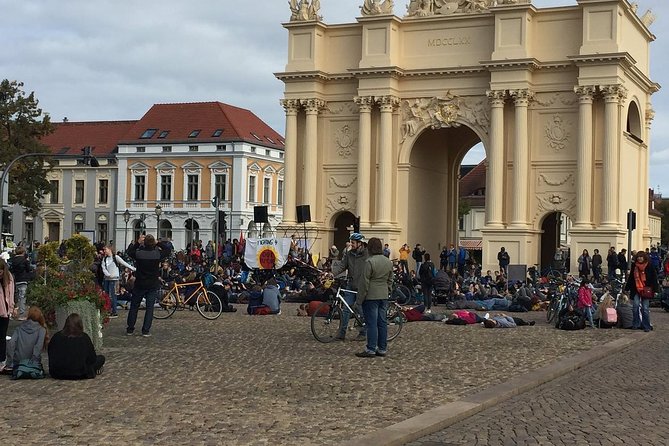
You’ll meet near the entrance area of the Berlin TV Tower in Alexanderplatz, one of the city’s busiest hubs. If you’ve spent any time in Berlin, you know Alexanderplatz is basically the place where multiple transit lines and lots of pedestrians meet. That makes it convenient to find, and it also means you can get there early and not feel rushed.
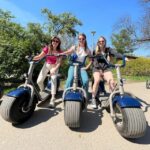
The morning starts with a quick meet-and-greet and then you’re fitted for a Beach Cruiser bike plus a helmet. Helmets are provided and you can choose whether to wear one. After that, the group takes the train to Potsdam. The train segment is short, but it’s a smart move: you’re saving energy for the ride and you’re not spending half the morning on logistics.
Before biking, the guide gives a short Potsdam intro. This matters more than you might think. Potsdam can feel like a bunch of big buildings and gardens until someone explains how Frederick the Great and later rulers shaped the city’s identity. When that context clicks, the stops stop feeling random and start feeling like a timeline.
You can also read our reviews of more cycling tours in Berlin

A 17 km Ride Built for History Lovers (Not Fitness Athletes)
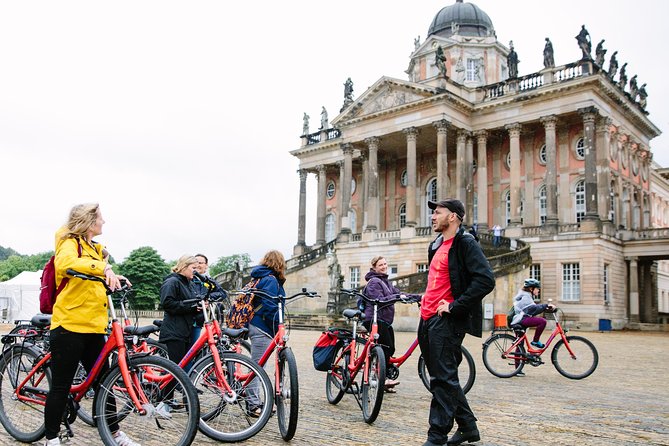
This tour includes roughly 4.5 hours of cycling to cover around 17 km (10.5 miles). That puts it in the “moderate fitness” zone—active, but not an all-out workout. Reviews back up the fact that the ride is fairly flat, and the route mixes parks and city paths rather than constant climbing.
Expect frequent pauses. The rhythm is part of the value: you cycle between sights, then you stop just long enough to take photos and hear the story. That works well if you like architecture and politics, not just scenery.
Because you’ll be cycling through urban areas, you should also be comfortable with crowds. Some segments can have busy sidewalks and intersections, especially near popular sights. The small group helps, and the guide keeps the group together, but you’ll still want to pay attention at crossings and when bikes slow down for a photo stop.
Sanssouci Park in Stages: Palaces, Windmill Gardens, and the Chinese Pavilion
Once you’re in Potsdam’s palace-garden orbit, the route keeps returning to Sanssouci Park themes: royal power, landscape design, and the comfort of rulers who wanted beauty on demand.
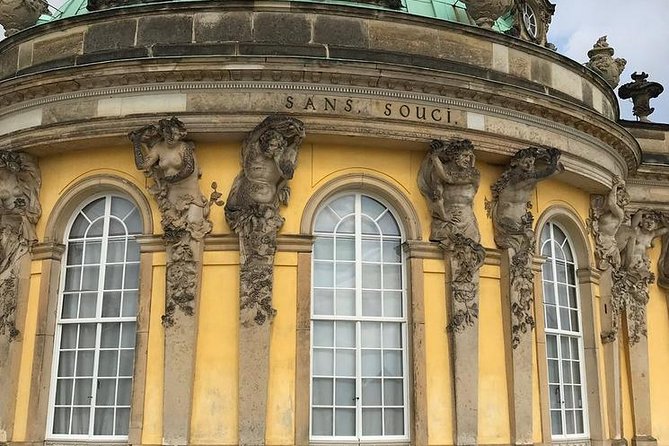
You’ll first see Sanssouci Palace from the outside. It’s a classic photo stop, but the best part is how the guide connects it to Frederick the Great’s early life and priorities. Even from the outside, it’s a serious visual statement, and that’s why it works at the start: it sets a high bar for everything that follows.
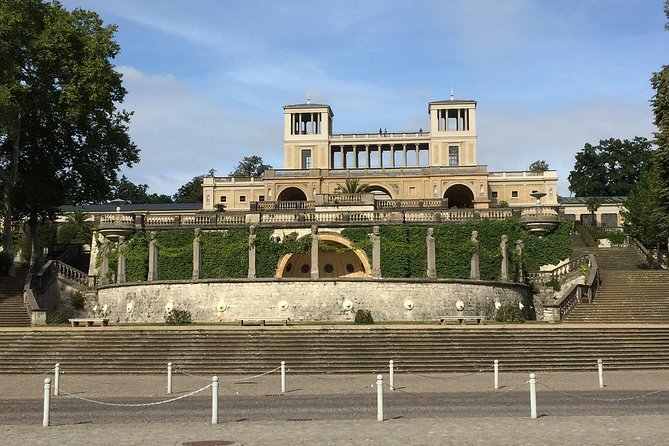
Next comes the Orangerie in Sanssouci Park, with time to walk through the area around the windmill and gardens. This is a good break in pace. Instead of only looking at stone and domes, you’re seeing how the park’s design uses water, views, and cultivated space to create a place for leisure.
From there, you ride through the Potsdam Paradise Garden area—short enough to stay fun, long enough that it doesn’t feel like the day is only “and then we stop, then we stop again.” Then you’ll get to the Chinese House (Chinese Teahouse) in Sanssouci Park. This is one of those stops you’ll remember because it’s unusual: a garden pavilion with a different vibe than the surrounding palace styles. If you like “why did they build that here?” questions, this is a great one.
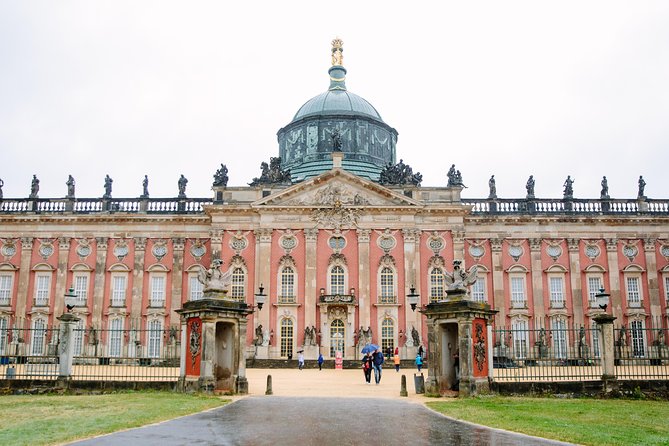
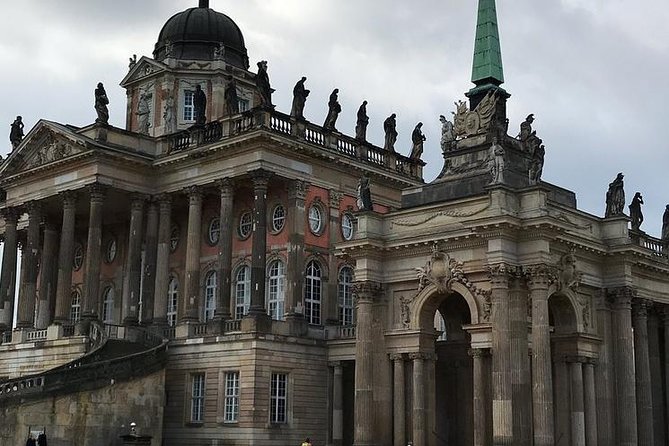
Later, you pass the Neues Palais (New Palace). It’s a major palace ensemble tied to Frederick the Great’s victory in the Seven Years War. Even as an outside stop, it’s impressive, and it helps you understand how Potsdam used architecture as political messaging.
You also get the Orangerieschloss area, associated with Frederick-Wilhelm IV—romantic-era tastes and an emphasis on exotic fruit cultivation through the greenhouse idea. It’s another reminder that Potsdam isn’t just one ruler’s hobby; it’s a long-running royal project with changing styles.
There’s also a Grosse Orangerie Schloss Charlottenburg photo stop/short look on the route. It reinforces the greenhouse-and-gardens theme and gives you a final sweep through that orange-and-green world before the colder, more political stops.
Old Town Potsdam and Prussian Symbols: Alter Markt, St. Nicholas, and the Obelisk
After the palace park focus, the route shifts into older Potsdam city center energy. You’ll ride past or stop around Alter Markt (Old Market Square), with the guide covering Potsdam’s role as a garrison town and the beginnings of Prussia’s military rise. This is where Potsdam starts to feel more like a working royal base than a fairy-tale postcard.
Expect time near St. Nicholas Church as a photo and explanation stop. This is one of those sites that helps you orient yourself in the historic center. When the guide ties the church and square to the wider Prussian story, it becomes more than background scenery.
You’ll also see an Obelisk with earlier iconography tied to Prussian electors and early Hohenzollern Kings. These little monuments matter because they show how power got expressed in public spaces, not just palaces.
The route includes the Altes Rathaus (Old Town Hall) area. Even with limited time, it’s enough to sense the city’s civic backbone beneath all the royal spectacle. Another stop on the route mentions Luisenplatz, named for Queen Louise, often described as a well-known Queen Consort of Prussia—another piece of the royal naming system that helps you read the city.
There’s also a short look at places like Jägertor and Nauener Tor (gate areas). These aren’t huge headline stops, but they add texture. They help you see Potsdam as a city with boundaries and movement, not only as a park with castles.
Cold War to WWII Memory: Cecilienhof and the Bridge of Spies
If you’re even slightly interested in the 20th century, this part of the route is a big reason to book.
You’ll view Schloss Cecilienhof from the outside. This is the Marble Palace connected to the Potsdam Agreement, when Truman, Stalin, and Churchill met to shape how Germany would be partitioned after WWII. Admission here is not included for whatever interior access you might want, so plan for an outside view as the core experience. If you care about going inside, you’ll need to pay separately.
Then you head toward one of the most famous Cold War symbols in the whole region: Glienicke Bridge, tied to spy exchanges. The guide explains the Bridge of Spies story and connects it to famous figures including Rudolf Abel and Gary Powers. Even if you’ve read about it before, it hits differently when you can stand where the exchange became real.
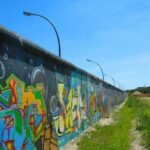
Later in the route, you also coast along segments tied to Berlin’s division—so you get a sense of how East and West Berlin’s physical boundary played out in the surrounding landscape. The tour includes time to ride along the Berlin Wall in Potsdam and see where the former No Man’s Land / Death Strip was located. That’s not just a fact stop; it’s a “this is what separation looked like on the ground” moment.


Lunch in the Dutch Quarter: Time to Eat and Wander at Your Own Pace
At the midpoint, you’ll get a lunch break in the Dutch Quarter. Lunch is on your own expense, so bring your appetite and choose a place that fits your mood—beer garden style or a sit-down spot if that’s your thing.
The Dutch Quarter is special because it’s not a modern theme area. It dates back to Frederick-Wilhelm I, often called the Soldier King, who had 134 Dutch houses built to attract Dutch craftsmen, including stone workers and linen weavers. That backstory gives the neighborhood a purpose beyond looks. When you see it with the guide’s explanation, you understand why the architecture and immigration angle matter.
You’ll have a solid block of time for lunch and a wander—long enough to grab food, walk a few streets, and take photos without feeling herded.
One practical note: if you’re picky about where you eat, consider arriving with a couple of go-to preferences in mind (something casual, vegetarian-friendly options if needed, or a quick beer garden stop). The tour can’t include every meal choice, so a little planning helps.
Price and Value: What You’re Really Paying For
The price is $102.58 per person, and what makes it feel fair is that it bundles the expensive-to-plan parts: guided history, bike rental, and rail transport between Berlin and Potsdam. You’re not just buying “a ride.” You’re buying structure—someone to manage the route, the timing, and the context.
Here’s what you should remember in value terms:
- Included: city-cruiser style bike, rail transport to and from Potsdam, an English-speaking guide, and a helmet (optional).
- Not included: lunch and drinks, plus any admission where it’s listed as not included.
There are several palace and city stops where you’re seeing views and learning the story rather than paying for entry. That keeps the flow moving and keeps the day affordable compared to doing a bunch of separate paid admissions on your own. If you want interior palace time, you may pay extra. If you’re happy with outside views plus park time and strong explanations, the price likely feels right.
Who Should Book This Potsdam Bike Tour (and Who Might Not)
This tour suits you if you:
- like history that connects rulers, events, and places
- can handle a moderate ride for about 4.5 hours
- want a structured day trip from Berlin without extra planning stress
It also fits families and mixed groups well, since reviews often mention people with different bike comfort levels feeling accommodated by the guide. The group stays together, and pauses make it easier for non-cyclists to keep up visually.
You might want to skip (or at least choose another option) if:
- you can’t ride for a good chunk of time
- you prefer a slower sightseeing day with less cycling
- you need guaranteed interior access at every palace stop (some stops have admissions not included)
Tips to Get the Best Day from Your Bike and Your Guide
A few practical moves make a real difference.
1) Bring a layer. Mornings near the lakes and along park paths can feel cooler than central Berlin, even when the forecast says sunny.
2) Plan for your lunch budget. Lunch is on your own expense, so decide whether you want a quick meal or a proper sit-down.
3) Wear comfortable shoes. You’ll stop, walk a bit at photo points, and spend time standing around palaces and squares.
4) If you want more than exteriors, be ready with extra funds. Some stops specify admission not included, so you can choose whether to pay for interior access.
5) If it rains, don’t panic. The tour still runs as long as conditions allow. A light rain jacket beats a heavy umbrella in crowded spots.
Should You Book the Potsdam Bike Day Trip?
Book it if you want the classic Potsdam highlights—Sanssouci Palace area, royal residences, and Cold War landmarks—and you prefer getting around by bike instead of joining another bus tour. The rail transport plus bike rental is a nice combo for time-saving, and the small group size helps you actually hear the guide instead of just being carried along.
Skip it if you’re looking for an ultra-relaxed sightseeing day with lots of indoor time, or if riding 17 km sounds like too much for you.
If you’re the kind of traveler who likes learning why a place matters, not just what it looks like, this one is a strong choice for a memorable Berlin day trip.
FAQ
What’s the duration of the Potsdam Bike Tour from Berlin?
It runs for about 6 hours 30 minutes.
Where do you meet, and what time does the tour start?
You meet near the entrance of the TV Tower in Alexanderplatz at Panoramastraße 1A, Berlin, and the start time is 9:30 am.
How do you get to Potsdam?
Rail transportation to Potsdam is included, and you ride back to Berlin at the end.
What bike gear is included?
You get a city-cruiser style bike. A helmet is provided but optional.
Is lunch included?
No. You’ll have time for lunch in the Dutch Quarter, and food and drinks are generally on your own expense unless specified.
Is palace or site admission included?
Some stops are free from an admission standpoint, while others list admission as not included. Cecilienhof and several city-center stops note admission not included.
What’s the group size?
The tour has a maximum of 18 travelers.
What fitness level do you need?
You should have moderate physical fitness since the ride covers about 10.5 miles (17 km) over roughly 4.5 hours.