REVIEW · POTSDAM
In the Forbidden City – Potsdam Walking Tour
Book on Viator →Operated by Berlins Taiga · Bookable on Viator
Espionage has a street address in Potsdam. This 2.5-hour walk connects the Bridge of Spies with the Soviet-era “forbidden city,” so you see how WWII and the Cold War played out in everyday streets, not just textbooks. I like that you get a clear route on foot, and I especially like the way the tour points your eyes at real locations tied to Soviet intelligence and CIA–KGB exchanges.
The one catch: it’s history-first and mostly exterior-only viewing. You won’t go inside Cecilienhof Palace, so if you want grand indoor rooms and long palace time, you may feel a bit impatient.
In This Review
- Key takeaways before you set out
- Why this Potsdam walk is really about WWII and the Cold War
- Price and what you get for $23.72
- Route basics: starting at Glienicke Bridge and ending near Potsdam bus 603
- Stop 1: Glienicke Bridge, the Bridge of Spies in real life
- Stop 2: Schwanenallee and what the Berlin Wall changed
- Stop 3: Cecilienhof Palace outside views and the Potsdam Conference
- Stop 4: Neuer Garten UNESCO grounds under Cold War restrictions
- Stop 5: Leistikowstraße and the Soviet “forbidden city” mindset
- Guide approach, pacing, and small-group advantage (max 15)
- Who should book this Potsdam walking tour (and who might prefer something else)
- Should you book the Forbidden City – Potsdam Walking Tour?
- FAQ
- How long is the Forbidden City – Potsdam Walking Tour?
- What does the tour cost?
- Where does the tour start and end?
- What time does the tour begin?
- What group size should I expect?
- Is there a mobile ticket?
- What’s included in the price?
- Do we enter Cecilienhof Palace?
- Is free cancellation available?
Key takeaways before you set out
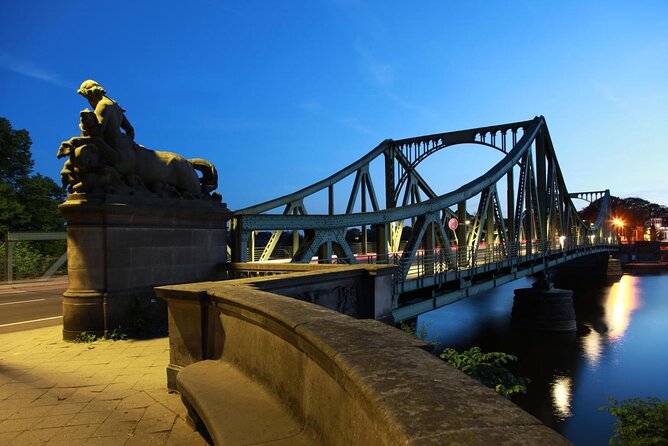
- Glienicke Bridge (Bridge of Spies): a former exchange crossing between the CIA and KGB, right on the old border line.
- Schwanenallee’s Berlin Wall backdrop: villas now, but this used to be Wall-protected living.
- Cecilienhof Palace from the outside: the Potsdam Conference site, where WWII’s end also sparked the Cold War.
- Neuer Garten UNESCO grounds: a park that once sat under Cold War restrictions, with Wall fortifications cutting through.
- Leistikowstraße’s Soviet “forbidden city”: Soviet military town No. 7 and the former KGB prison area.
Why this Potsdam walk is really about WWII and the Cold War
Potsdam can look like a postcard: palaces, parks, and tidy waterfronts. This tour gives you the other side of the same city. You’ll follow a line from Berlin’s Cold War border crossing to Potsdam’s Soviet-controlled areas, using landmarks that many people only hear about in connection with espionage.
What makes it work is the pacing and the focus. You’re not doing a long, vague “history tour.” You’re walking stop to stop, with each location acting like a chapter. One moment you’re standing at a bridge tied to prisoner-and-agent swaps. Next you’re looking at palace grounds connected to the Potsdam Conference, where the leaders shaped post-WWII Europe. Then you end up in Leistikowstraße, the area linked to Soviet intelligence and a KGB prison.
You can also read our reviews of more walking tours in Potsdam


Price and what you get for $23.72
At $23.72 per person for about 2 hours 30 minutes, the value comes from structure. You’re paying for a guided, small-group route (max 15) that takes you to multiple major Cold War sites without relying on your own research.
The stops also help the math. Each listed stop has admission ticket free, and the tour includes a local guide plus a professional guide. What’s not included is transportation to and from the attractions, so you’ll want to plan how you’ll reach the start point in Berlin and how you’ll get back from the end point in Potsdam.
If you enjoy guided context, this is a straightforward deal: you’re buying someone’s ability to connect names, timelines, and borders to what you’re actually seeing on the ground.
Route basics: starting at Glienicke Bridge and ending near Potsdam bus 603
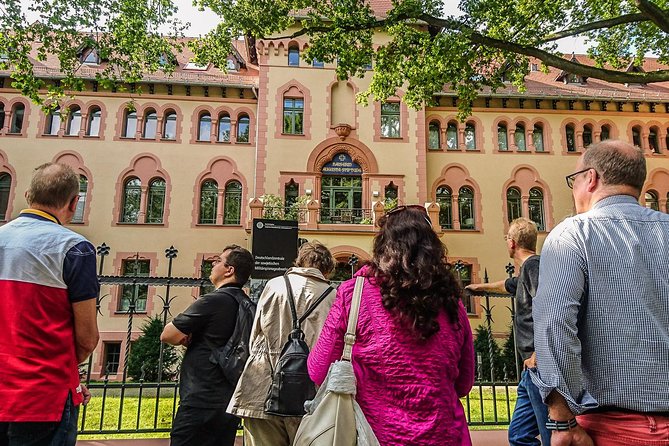
This tour starts at 1:15 pm at Glienicker Brücke (Königstraße, 14467 Berlin). It ends near the Memorial and Meeting Place Leistikow Street in Potsdam (Leistikowstraße 1, 14469). The walk is long enough to matter, but short enough that it fits well into a day that’s already set up for Berlin–Potsdam sightseeing.
Plan for an out-and-back style of thinking, even though it’s not an actual out-and-back walk. You’re starting in Berlin and finishing in Potsdam, so you’ll want to keep your return options simple. The tour ends near the bus 603 stop called Langhansstraße/ Große Weinmeisterstraße, which can help you get back toward Potsdam city center.
Also, it operates in all weather conditions. That means you should show up with shoes that handle wet pavement and bring a rain layer if the forecast looks sketchy. The fitness level listed is moderate, so expect walking and some time standing.
Stop 1: Glienicke Bridge, the Bridge of Spies in real life
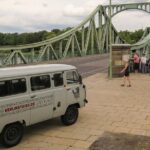
Glienicke Bridge is where the Cold War becomes very physical. This is the crossing famously known as the Bridge of Spies. During the Cold War, it was used for agent exchanges between the CIA and KGB, so you’re looking at a place where high-stakes swaps happened, not just a scenic bridge.
The bridge also matters because it sat on a border. It was the line between the GDR and the American sector in West Berlin, and until the Berlin Wall fell it was tightly secured and restricted. When you’re standing near it, that “restricted zone” context helps you understand why people treated these crossings like lifelines and threats at the same time.
One bonus detail: the Hollywood movie Bridge of Spies was shot here. Even if you’re not a movie person, it’s a useful way to anchor the bridge in pop culture without losing the real history.
What to watch for: think about movement and control. Agent exchanges meant people could cross, but only under strict rules—so look at the bridge as a mechanism of borders, not just an object.
Stop 2: Schwanenallee and what the Berlin Wall changed
After the bridge, the tour shifts to the living side of the Wall story at Schwanenallee. This was once located directly next to the Berlin Wall. The wall shielded houses from the riverbank, which tells you something important: the Wall wasn’t only about politics. It reshaped where people could live comfortably and what they had to endure.
Today, Schwanenallee’s villas are in a prime location. That contrast is the point. The same stretch of space that was once tied to a restricted defensive barrier now reads as desirable residential real estate. The city’s face changed, but the historical line is still written into the geography.
A practical tip: if you like photo stops, this is where you’ll feel tempted to stop for quick snapshots. Just remember the context matters more than the view. The value here is learning why the neighborhood’s layout and waterfront relationship ended up the way it did.
You can also read our reviews of more city tours in Potsdam

Stop 3: Cecilienhof Palace outside views and the Potsdam Conference
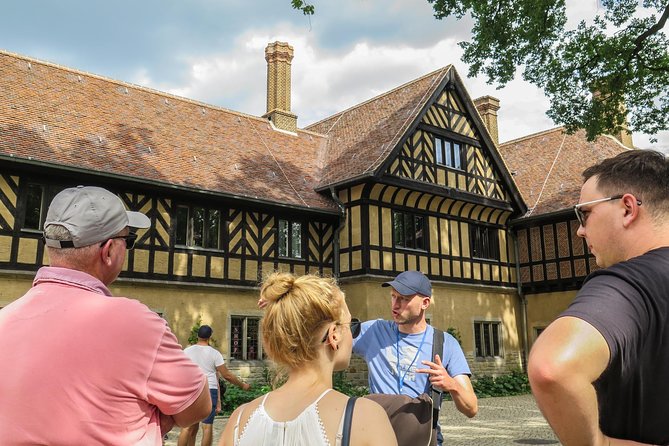
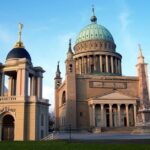
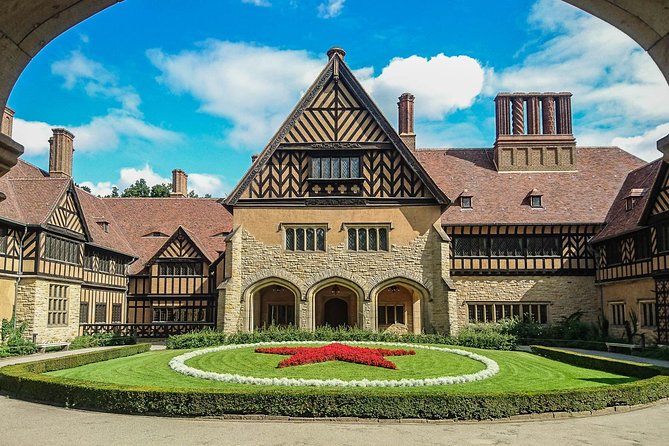
Cecilienhof Palace is the historic venue of the Potsdam Conference, held in summer 1945. This is the meeting where Harry S. Truman, Winston Churchill, and Josef Stalin gathered to shape the post-WWII world. The tour won’t take you inside the palace, but you’ll see it from the outside, which still works because the building’s identity is the story.
This stop is important for your mental timeline. The conference is described as an end point of WWII—but also a starting point for the Cold War. That’s a big idea to carry while you walk. It turns the city into a bridge between eras: war ends here, but tensions don’t dissolve. They reorganize.
What to expect on the ground: a slower, more reflective pause. The goal isn’t climbing for angles. It’s absorbing the meaning of the site and how quickly alliances and trust collapsed after the war’s formal end.
If you’ve visited other WWII-related sites before, you’ll likely appreciate how this one connects diplomacy to the Cold War system that came next.
Stop 4: Neuer Garten UNESCO grounds under Cold War restrictions
Newer Garten is a UNESCO World Heritage site, but it wasn’t always free and open the way parks usually feel. This park was also a restricted area for a long time. The Berlin Wall border fortifications ran through the park with its historic palaces.
That’s the key twist. The garden’s beauty is real, but the tour asks you to see the boundaries and the limitations that once controlled movement through the space. A UNESCO site can be more than architecture and landscaping (literal or otherwise). It can be a record of how power and separation were enforced.
When you look around Neuer Garten through this lens, it becomes easier to understand why the Cold War felt so close to daily life in this region. It wasn’t only about far-away “fronts.” It was about access, routes, and who was allowed to be where.
How to make this stop rewarding: pay attention to the concept of passage—what feels open now may have been restricted for decades. Your brain starts mapping borders onto pathways.
Stop 5: Leistikowstraße and the Soviet “forbidden city” mindset
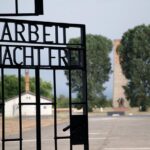
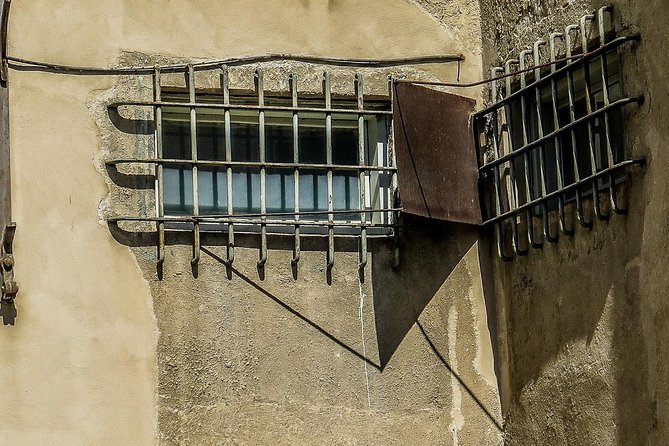
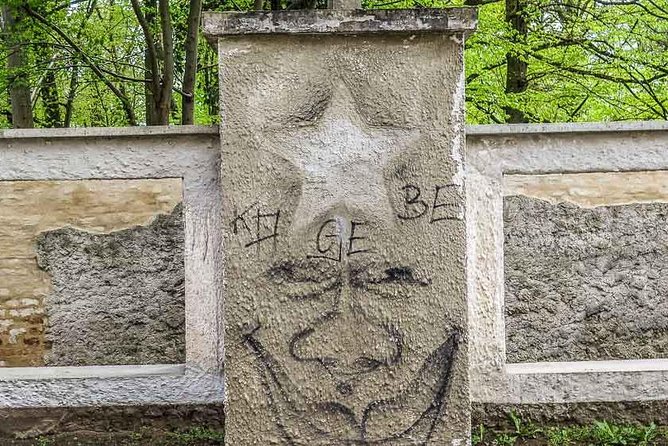
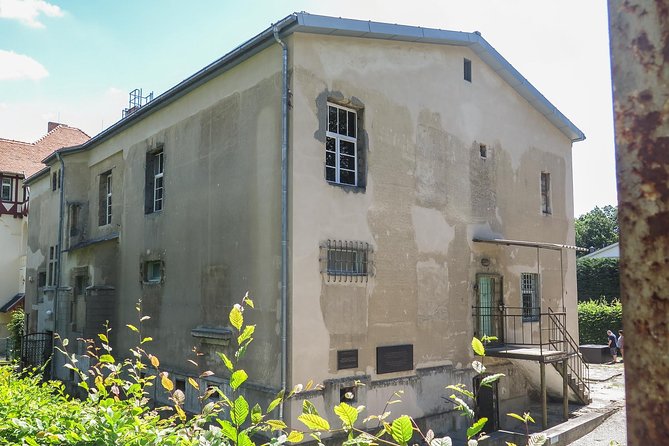
The final stretch is the most intense theme in the route. The area around Gedenk- und Begegnungsstatte Leistikowstrasse is tied to Soviet military town No. 7, often described as a forbidden city. This was one of the most important intelligence sites of the Soviets during the Cold War, and the former KGB prison is located in this area.
On this stop, you’re not just seeing a single landmark. You’re learning about the neighborhood as a Soviet restricted zone for almost 50 years in the middle of Potsdam. That kind of “place-based” story is powerful because it shows how intelligence operations relied on ordinary city planning—streets, buildings, and boundaries—rather than mysterious movie sets.
The tour is built so that this stop lands after you understand the earlier mechanics: borders, restricted zones, and the idea that crossing lines could be regulated and deadly. By the time you reach Leistikowstraße, those themes click into place.
Emotionally, this is where the walk can feel heavier. If you’re the type who needs a moment to process, use the 45-minute block to slow down and listen rather than rushing for photos.
Guide approach, pacing, and small-group advantage (max 15)
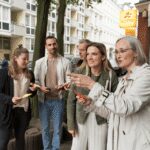
This is a small-group tour with a maximum of 15 people, and that matters more than it sounds. With a group that size, you can ask questions and keep track of what the guide is pointing out. The tour includes both a local guide and a professional guide, which often means you get context from someone who knows the area and someone who knows how to connect the dots.
From what I’d look for in a good guided walk, this one seems designed for clarity. The best part is how the guide brings Soviet-era details to life by tying each name and event to a location you can actually stand near. That’s the difference between reading about the Cold War and sensing how it shaped this city.
The pacing is also realistic for a walking route of about 2.5 hours. The stops aren’t all equal time, and that prevents the common problem of spending forever at one photo spot while the rest of the story stays underfed.
My practical advice: wear comfortable shoes and keep your camera ready, but don’t let it steal your attention. This tour rewards listening.
Who should book this Potsdam walking tour (and who might prefer something else)
Book it if you like Cold War history, WWII follow-through, and the way borders show up in real places. You’ll get a guided line through major sites: Glienicke Bridge, Cecilienhof Palace from the outside, Neuer Garten, and the KGB prison area at Leistikowstraße.
It also suits you if you’re already planning to be in the Berlin area and want Potsdam as more than just gardens and palaces. The route gives you Potsdam as a political and intelligence hub, not only a scenic destination.
Skip it (or think twice) if you want more classic sightseeing time inside palaces or long park wandering. Since Cecilienhof is exterior-only and the tour is concentrated into a set route, you won’t get the slow, lingering feel of a garden day.
Should you book the Forbidden City – Potsdam Walking Tour?
I’d book it if you want a guided, small-group walk that connects big political events to specific streets and structures. The mix of the Bridge of Spies, the Potsdam Conference site, UNESCO grounds, and the Soviet restricted-zone area at Leistikowstraße is a rare combination, especially at a budget-friendly price for a 2.5-hour guided route with free admission at the stops.
I’d pass if your ideal Potsdam day is mostly about interiors, long rest breaks, and purely scenic wandering. This is a walk for history-minded people who enjoy context as much as viewpoints.
If that sounds like you, this one is worth the time.
FAQ
How long is the Forbidden City – Potsdam Walking Tour?
The tour lasts about 2 hours 30 minutes.
What does the tour cost?
It costs $23.72 per person.
Where does the tour start and end?
It starts at Glienicker Brücke, Königstraße, 14467 Berlin, Germany. It ends near the Memorial and Meeting Place Leistikow Street at Leistikowstraße 1, 14469 Potsdam, Germany.
What time does the tour begin?
The start time is 1:15 pm.
What group size should I expect?
The tour has a maximum of 15 travelers.
Is there a mobile ticket?
Yes, the tour features a mobile ticket.
What’s included in the price?
The tour includes a local guide and a professional guide.
Do we enter Cecilienhof Palace?
No. You will see Cecilienhof Palace from the outside.
Is free cancellation available?
Yes. You can cancel up to 24 hours in advance for a full refund.
If you want, tell me your travel dates and whether you’re staying in Berlin or Potsdam—I can help you map this start-to-finish timing into your day.