REVIEW · BERLIN
One Up to 3 Rickshaws(6 GUESTS)-Taylor Made Rickshaw Berlin Tour
Book on Viator →Operated by Berlin-Rickshaw / Berlin-Excursions · Bookable on Viator
Berlin is huge; this tour keeps you moving.
What makes this rickshaw tour interesting is the pace: you’re handed a driver and a route that strings together the city’s big landmarks in about three hours. I especially like that you can ride alone or in pairs, so the experience can feel either personal or social without turning into a slow bus crawl.
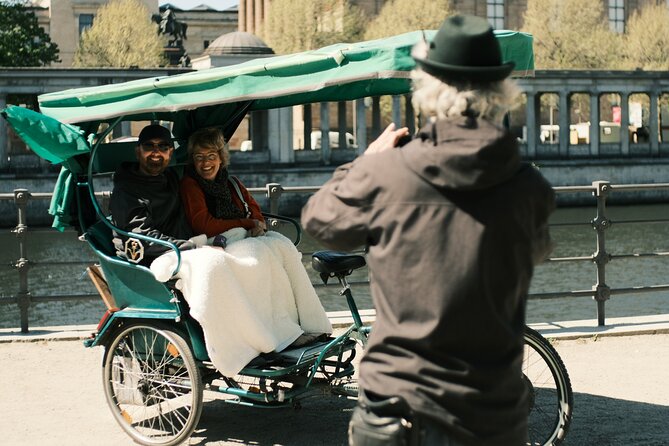
You’ll also appreciate the practical extras. WiFi on board and a cozy blanket for cooler days turn a sight-seeing sprint into something you can actually enjoy from the seat. The one tradeoff to consider: most stops are brief (often 5–10 minutes), so this is best for getting your bearings and seeing everything, not for lingering like you would in a museum visit marathon.
In This Review
- Key things to know before you go
- Why a rickshaw tour works so well in Berlin
- The value: what you’re really paying for
- Your 3-hour loop: from Alexanderplatz to the Brandenburg Gate
- Alexanderplatz and the Fernsehturm: your tallest landmark start
- Museum Island and Unter den Linden: grand buildings, fast orientation
- Bebelplatz and the book burning memorial: where memory has a physical place
- Gendarmenmarkt: Berlin’s most postcard-perfect square
- Checkpoint Charlie and the Wall story: quick, but clear
- Topography of Terror and the Martin-Gropius-Bau area
- Potsdamer Platz and the modern Berlin skyline feeling
- The Holocaust Memorial: a stop that asks you to slow down
- Brandenburg Gate and the Government District: icons and power centers
- Fuhrerbunker (now parking) and Berliner Dom: ending with two very different tones
- How the guide style shapes the whole day
- Who this tour fits best (and who should choose differently)
- Should you book this Berlin rickshaw tour?
- FAQ
- How long is the rickshaw tour?
- Is pickup available, and where can we end?
- Are tickets included for the sights?
- What’s included in the experience besides the guide?
- Is this tour private?
- Can we bring a service animal, and is the tour suitable for less mobile guests?
Key things to know before you go
- Private, small-group feel: only your group rides together, not a mix-and-match crowd.
- Time-saving routing: you hit major sights in a tight loop without doing navigation math.
- Photo-friendly flexibility: you can stop for memorable pictures and stay very close to monuments.
- Short stop length: plan to skim highlights; deep museum time is not the focus.
- Included comfort: WiFi and a cozy blanket if you choose rickshaw transport.
- One paid admission stop: Berliner Fernsehturm admission isn’t included; many other stops are free to view.
Why a rickshaw tour works so well in Berlin
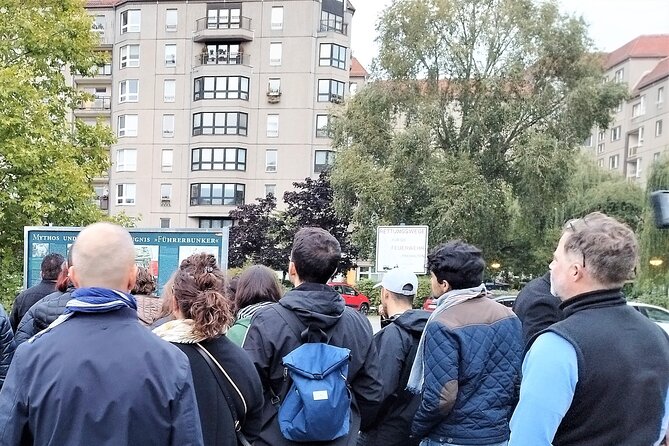
Berlin can be deceptively spread out. Even when the sights look close on a map, walking times add up fast, and detours multiply when you’re trying to line up photos, landmarks, and restroom breaks.
This tour is built to solve that problem. You’re not just sightseeing—you’re moving. A professional, licensed guide handles the route, and you get the driver advantage: you arrive without the constant stop-and-go of figuring out where you are and what’s next.
I also like the tone of the experience. It’s not a rigid script that forces you to pretend you understand everything immediately. The guide can adapt based on what you already saw and what you care about most that day. That matters because Berlin isn’t one mood—it’s many. You might want grand architecture, then switch to WWII-era memory sites, then land back on iconic modern landmarks.
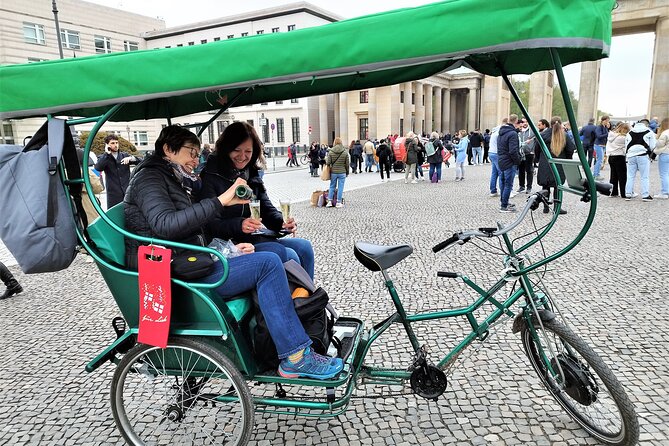
And yes, this is a photo tour in the best sense. The guides have an eye for the best angles, and you can even get close enough that you don’t always need to hop out for a picture.
You can also read our reviews of more tours and experiences in Berlin.


The value: what you’re really paying for
The price is listed at $420.08 per group (up to 2), and the format can scale up with multiple rickshaws (up to six guests total). On the surface, that sounds “premium,” but rickshaw touring is less about luxury and more about efficiency—especially in a city where transit and walking add time.
Here’s how to think about value:
- If you’re traveling in a pair and you’d otherwise split taxis/ride shares, you may find this is easier and less stressful than piecing together transport all afternoon.
- You’re buying route design plus a licensed guide, not just rides.
- The time is tight on purpose. You get a “best of Berlin” sweep that helps you decide what deserves your next visit.
The one cost item you should budget for is tips. Tips aren’t included, so it’s worth deciding what feels fair for the guide and the day.
Your 3-hour loop: from Alexanderplatz to the Brandenburg Gate
Even with a long list of famous stops, the tour stays organized. Think of it as a guided route with short “look and learn” moments—enough to understand what you’re seeing, and enough to make future visits easier.
Most stops are pass-by with time to look around and grab photos. The guide also points out the parts that people usually miss: street-level context, how neighborhoods connect, and what each site represents beyond the postcard version.
Because the tour can be ended in different places (for example, near your hotel area or by a monument/restaurant/café/market), it’s also easier to keep the rest of your day rolling rather than feeling stuck back where you started.
Alexanderplatz and the Fernsehturm: your tallest landmark start
The tour begins at Berliner Fernsehturm in Alexanderplatz. It’s Germany’s tallest structure, and it’s instantly recognizable—like Berlin’s version of a compass point. Starting here is smart. Even if you’ve never been, you quickly understand the city’s layout.
You’ll get about 5 minutes here. Admission isn’t included, so treat this stop as a “see it and orient yourself” moment. If you want to go up inside, you’d need tickets separately.
Best use of your time at the Fernsehturm:
- Take a wide shot that includes the square around it.
- Watch how the surrounding streets fan out; Berlin’s center starts to make more sense fast.
If you’re the type who wants to buy tickets and spend time inside icons, you may want to plan that separately after this tour.
Museum Island and Unter den Linden: grand buildings, fast orientation
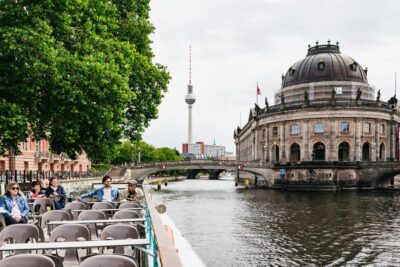
Next you’ll pass Rotes Rathaus (the Red Town Hall) and make your way toward Museum Island. This stretch is where Berlin shows its classic cultural backbone.
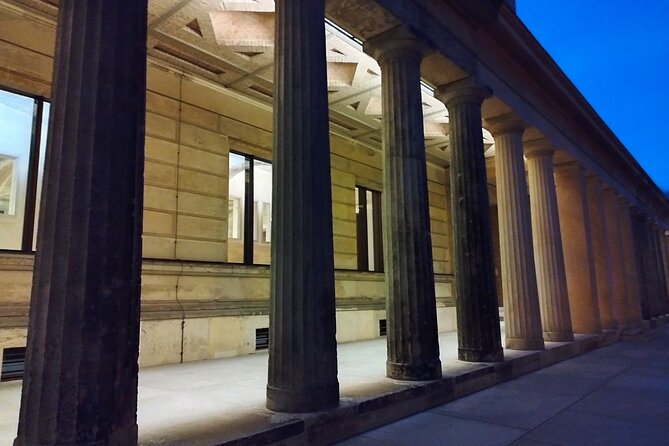
At Museum Island, you’re looking at one of the world’s most important museum clusters and a UNESCO World Heritage Site. You’ll also get to see the grand historic boulevard of Unter den Linden—one of those streets that looks impressive even from a distance.
The tour notes quick highlights you can keep in your mental checklist:
- Berlin Cathedral in view
- The unfinished reconstruction of the City Palace
- Old Museum
- Old National Gallery
- Pergamon Museum
- Bode Museum
Admission is listed as free for this stop, which is great for what it is: a strong “I can see why people come here” introduction. You won’t have time to do deep museum study, but you’ll learn where the museums sit relative to each other, so choosing which one to revisit later becomes much easier.
Bebelplatz and the book burning memorial: where memory has a physical place
After the island, you head to Bebelplatz. This square connects the grand academic vibe of the area with a darker chapter in history.
You’ll pass the forum zone around Humboldt University and see St. Hedwig’s Cathedral nearby. Then the spotlight turns to Bebelplatz as the famous Nazi Book Burning Square from 1933. A memorial marks what happened, and it’s powerful precisely because it’s not just a big building in the distance—you’re standing in the place where the story unfolded.
This stop is about 5 minutes. That’s short, but it’s enough time to understand the symbolism and move on. If this topic is a major interest for you, you may want to follow up later with a longer visit to related memorial spaces.
Gendarmenmarkt: Berlin’s most postcard-perfect square
Then comes Gendarmenmarkt, one of the city’s most beautiful squares in Europe. You’ll see:
- The former Royal Concert Hall
- The German Dom on one side
- The French Dôm on the other
This is a great “breather” stop after heavier history. The buildings are symmetrical, the square feels staged in the best way, and it’s easy to get good photos without feeling like you’re fighting for position.
Time here is around 10 minutes, which is usually just right: enough for photos and a relaxed look.
Checkpoint Charlie and the Wall story: quick, but clear
Next is Checkpoint Charlie, probably the most famous border crossing associated with the Berlin Wall. The tour frames it in the context of how tense the Cold War period was—so even though you only have about 5 minutes, the stop lands with meaning.
Practical note: Checkpoint Charlie can be crowded at certain times of day. Since you’re in a rickshaw, you usually get a good viewing angle without doing the full squeeze-and-shuffle you’d face on foot.
If you’re someone who wants depth on the Wall, you’ll be glad the route continues into stronger documentary sites next.
Topography of Terror and the Martin-Gropius-Bau area
After Checkpoint Charlie, you follow along the former border strip and reach the Topography of Terror area. This is tied to the documentation center about the National Socialism period and the headquarters of the SS and Gestapo.
This is another short stop (around 5 minutes), but the surrounding context is meaningful: you’re seeing parts connected to how the Wall and the state machinery shaped daily life.
Right nearby is the Martin-Gropius-Bau, known for exhibitions, including references to artists and exhibitions like Ai Weiwei and David Bowie. The tour also points toward the Prussian Parlement in front—so you get a sense of layered time: older institutions, Cold War reality, then cultural exhibitions later.
If you want more than a quick orientation, this is one of the places where you may want an additional half-day or a separate longer visit.
Potsdamer Platz and the modern Berlin skyline feeling
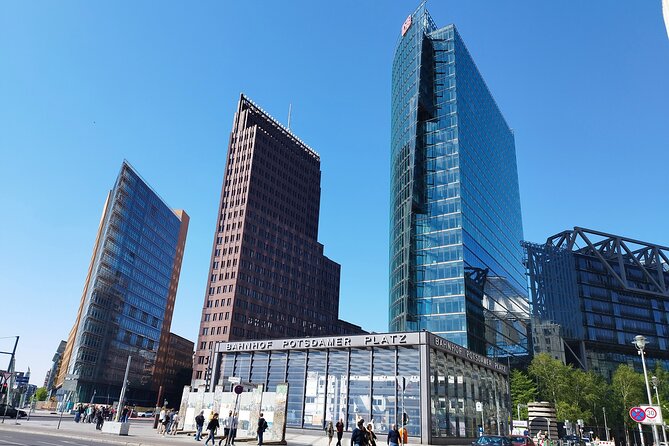
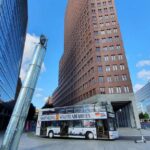
Next up is Potsdamer Platz, once described as Europe’s largest construction site. Now it reads like Berlin’s answer to the modern city: a mix of skyscraper energy and newer structures, including the Sony Center area.
You’ll have about 10 minutes, which is perfect for two things:
- Taking in the contrast with the Wall-zone stops you’ve just done
- Getting a feel for Berlin’s modern-day “center of gravity”
Even if your interests are mostly historical, this stop helps you see that Berlin rebuilt itself, not just remembered its past.
The Holocaust Memorial: a stop that asks you to slow down
After Potsdamer Platz, you reach the Memorial to the Murdered Jews of Europe, opened in 2005. This is the Holocaust Memorial, and it commemorates the murder of more than six million Jews during National Socialism.
You’ll have about 10 minutes. That’s enough time to find your place within the memorial’s layout and to reflect. The structure doesn’t work like a monument you can speed through—it’s built to make you move at your own pace.
If you’re traveling with someone who finds silence difficult, it’s still usually worth stepping out of the rickshaw briefly and taking a minute before rushing to the next stop.
Brandenburg Gate and the Government District: icons and power centers
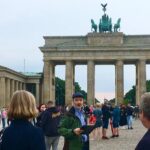
Then you roll to the Brandenburg Gate, one of Berlin’s most famous landmarks. Expect around 10 minutes. This is the classic Berlin photo stop, but it’s also a line in the story: it’s where you feel the shift between old world empires and modern Germany.
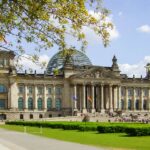
After that, you go toward the Reichstag Building area. The route leaves the former Eastern part of Berlin and heads through the Government District, including the Reichstag/Bundestag and the Chancellery.
The tour also references the Memorial to the Murdered Sinti and Roma, tying together remembrance with the political heart of the country.
The stops here are short (around 5 minutes for the Reichstag area), but the effect is strong: you see how memory and governance sit in the same modern geography.
Fuhrerbunker (now parking) and Berliner Dom: ending with two very different tones
The route then includes Fuhrerbunker, noted as a parking area today. It’s one of those Berlin facts that feels almost unreal: a site associated with the Nazi leadership period is now part of the everyday city rhythm.
You’ll have about 10 minutes. It’s a reminder that history in Berlin isn’t locked behind museums. It sits inside the city’s current spaces.
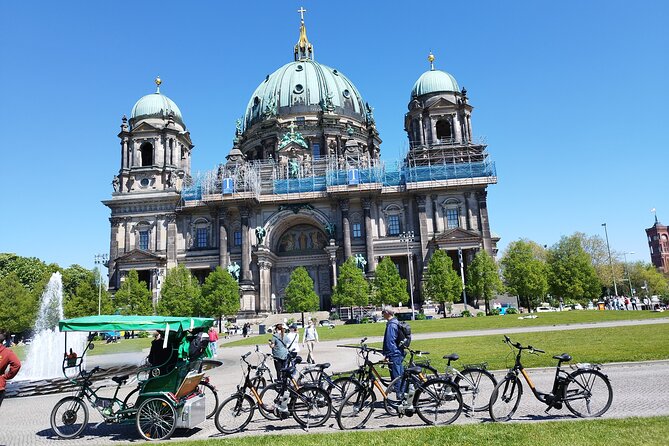
Finally, you end at Berliner Dom. The stop is about 10 minutes. This is a major “return to grandeur” ending point—big architecture, a strong skyline presence, and an easy place to transition into dinner plans nearby afterward.
How the guide style shapes the whole day
Small details are where tours win or lose. A licensed guide does more than list names. You get the ability to ask follow-ups and keep the day aligned with your interests.
From the guide names shared in past experiences—Levent Aydin and Tille—you can also pick up a pattern: friendly, serious about facts, and focused on making the route work smoothly for the group. One thing I like about that style is it usually leads to better photo stops. The guide tends to know where the light and angles are best and where you can stop for quick pictures without wasting your limited time.
Also, the tour setup includes WiFi on board and a cozy blanket if you choose rickshaw transport. That matters when you’re out for three hours and want to stay comfortable rather than sweaty and irritated.
Who this tour fits best (and who should choose differently)
This is a great fit for you if:
- You want to see a lot without getting lost
- You’re visiting for the first time and want a fast Berlin orientation
- You prefer short stops with guidance rather than long museum sessions
You might choose something else if:
- You want to spend serious time inside museums or on guided indoor visits
- You’re hoping for a slow, reflective pace with lots of time to linger in one place
And if you have mobility concerns, the tour notes that you can enter the rickshaw in just a few steps, and you can stop for pictures without always stepping out. That’s a big help when you still want close views.
Should you book this Berlin rickshaw tour?
Yes—if you want a smart first-pass through Berlin that mixes top icons, key history areas, and photo stops in a single private 3-hour loop. The strongest reasons to book are the time-saving structure, the licensed guide who can adapt the route, and the way the rickshaw keeps you comfortable while still getting very close to monuments.
If you’re planning a longer Berlin stay, this tour works like a map you can feel. Afterward, you’ll know what to revisit—whether that’s a museum island you want to go inside, or a Wall-related site that deserves more time than a quick stop.
If you’re traveling with a pair and you want maximum “sights per hour” without the stress of transit and navigation, this is one of the easier ways to get value out of a limited day.
FAQ
How long is the rickshaw tour?
The tour runs for about 3 hours.
Is pickup available, and where can we end?
Pickup is offered, and the tour can end at a different location. The end point can be based on your preference, including options like returning toward your hotel or ending by a monument, restaurant, café, market, or a starting point for a boat tour.
Are tickets included for the sights?
Admission isn’t included for Berliner Fernsehturm. Other listed stops on the route show admission as free to view.
What’s included in the experience besides the guide?
You get a professional licensed guide, WiFi on board, and a cozy blanket if you choose rickshaw transport. Tips are not included.
Is this tour private?
Yes. It’s listed as a private tour/activity, so only your group participates.
Can we bring a service animal, and is the tour suitable for less mobile guests?
Service animals are allowed. The tour also notes it can work for less mobile guests because you enter the rickshaw in a few steps, and you can stop for pictures without always needing to step out.