REVIEW · POTSDAM
Potsdam: Guided Walking Tour of UNESCO Site and Architecture
Book on GetYourGuide →Operated by Eat the World GmbH · Bookable on GetYourGuide
Potsdam feels small, but the stories add up fast. This 2-hour guided walk connects the northern city center to Sanssouci Palace and the standout Nikolaikirche church dome, with a guide explaining what you’re actually looking at. It’s a nice way to get your bearings before you wander on your own.
I especially like the focus on UNESCO Sanssouci and the architectural “why,” not just the “what.” You’ll also get classical-architecture context at Nikolaikirche, including how the massive dome ties back to ancient Greek ideas and what that means in Potsdam’s German-Prussian setting.
One possible drawback: the tour can lean a bit heavily toward Frederick the Great’s era (think more emphasis on his period than later chapters). If you’re hoping for extra attention to the DDR years, you may want to plan some independent reading or a separate stop.
In This Review
- Key takeaways before you go
- From the northern city center to Sanssouci: why this route works
- UNESCO Sanssouci Palace: Rococo summer home, power in the details
- Nikolaikirche and the Greek-rooted dome: Classicist architecture in Potsdam
- How the guide storytelling shapes your experience (Herr Schneider is a good sign)
- What you actually get for $29: value in context, not just landmarks
- Meeting point, timing, and what to bring for a smooth walk
- Who this Potsdam walking tour is best for
- Should you book this Potsdam UNESCO walking tour?
- FAQ
- FAQ
- How long is the Potsdam guided walking tour?
- How much does the tour cost?
- What’s included in the ticket price?
- What is not included?
- Where do I meet the guide?
- Is the tour offered in English?
- Does the tour run in bad weather?
- Is there free cancellation?
- Can I reserve first and pay later?
- Are pets allowed on this tour?
- Is the tour suitable for people with mobility impairments?
Key takeaways before you go
- UNESCO Sanssouci Palace, explained on the ground: You’ll see designated parts of the site and understand its Rococo role as Prussian summer power.
- Nikolaikirche’s dome has a design backstory: You’ll connect Classicist architecture in Potsdam to ancient Greek modeling.
- Short city walks, big context: The tour is built for learning the “meaning” of each stop, not rushing through photos.
- A guide who handles questions well: One guide named Herr Schneider is specifically noted for adapting to questions and wishes.
- Anecdotes alongside facts: Expect small stories mixed into the core explanations, not just a lecture.
- Two hours means smart pacing: It’s long enough for real context, short enough to keep the day flexible.
From the northern city center to Sanssouci: why this route works
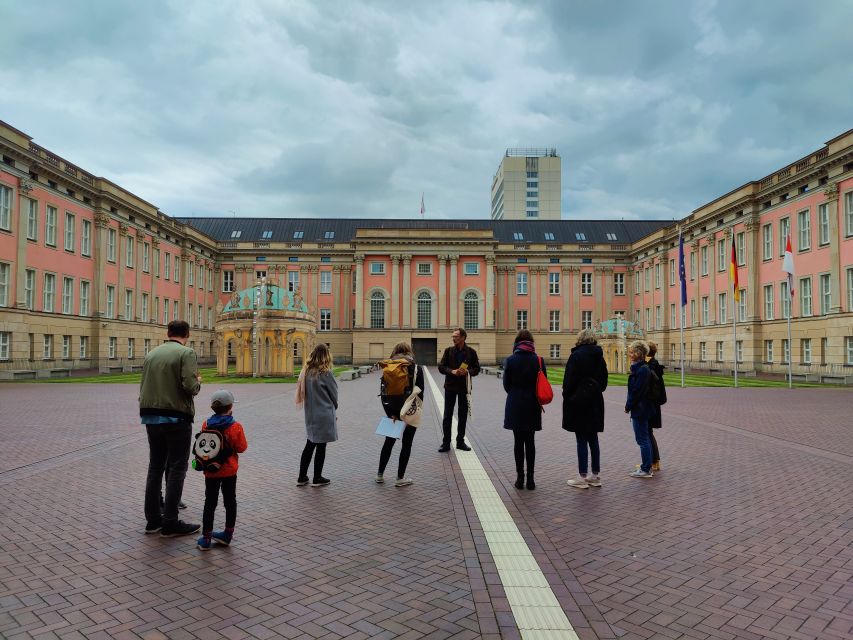
Potsdam can feel like a postcard until someone tells you what you’re seeing. This tour starts you in the northern city center and guides you toward the UNESCO area at Sanssouci Palace, so you’re not guessing where to look or what to care about first. With just 2 hours, the pacing matters: you get context early, then you’re free to explore the rest of Potsdam after.
The format also helps. You’re not stuck staring at one palace for the whole time. Instead, you’ll move between points that show different sides of Potsdam—Prussian rulership style at Sanssouci, then Classicist religious architecture at Nikolaikirche. That mix is practical for first-timers because it stops the city from feeling like one long sightseeing line.
You’ll want comfortable shoes and weather-ready clothing since the tour runs rain or shine. Also plan for standing and walking more than sitting, because this is a walking experience designed for people who can keep moving.
You can also read our reviews of more walking tours in Potsdam


UNESCO Sanssouci Palace: Rococo summer home, power in the details

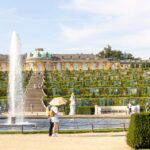
Sanssouci Palace is the headline for a reason. Even without going deep into palace interiors, you’ll see designated parts of the UNESCO site tied to the Rococo design language. The key idea your guide will help you grasp is that this wasn’t decoration for decoration’s sake—it was about showing status, taste, and authority.
The tour frames Sanssouci as the summer home of the Prussian ruler Frederik the Great. That matters because Rococo looks light and playful compared to stricter styles, but it still communicates power. You’ll get a guided sense of how style and politics worked together in the Prussian court culture, and why that specific architecture became part of the Potsdam identity.
A smart move for you: use this time to build a mental map. When you later walk around Sanssouci on your own, you’ll recognize what’s Rococo, what’s part of the broader UNESCO-designated environment, and what to look for beyond the obvious big views. It’s the kind of orientation that turns a “nice visit” into a “now I get it” visit.
One practical note: entrance fees are not included, so if you want to go further into specific areas, you may need to budget separately. The tour itself focuses on guided viewing and explanation rather than guaranteed paid access to every indoor space.
Nikolaikirche and the Greek-rooted dome: Classicist architecture in Potsdam
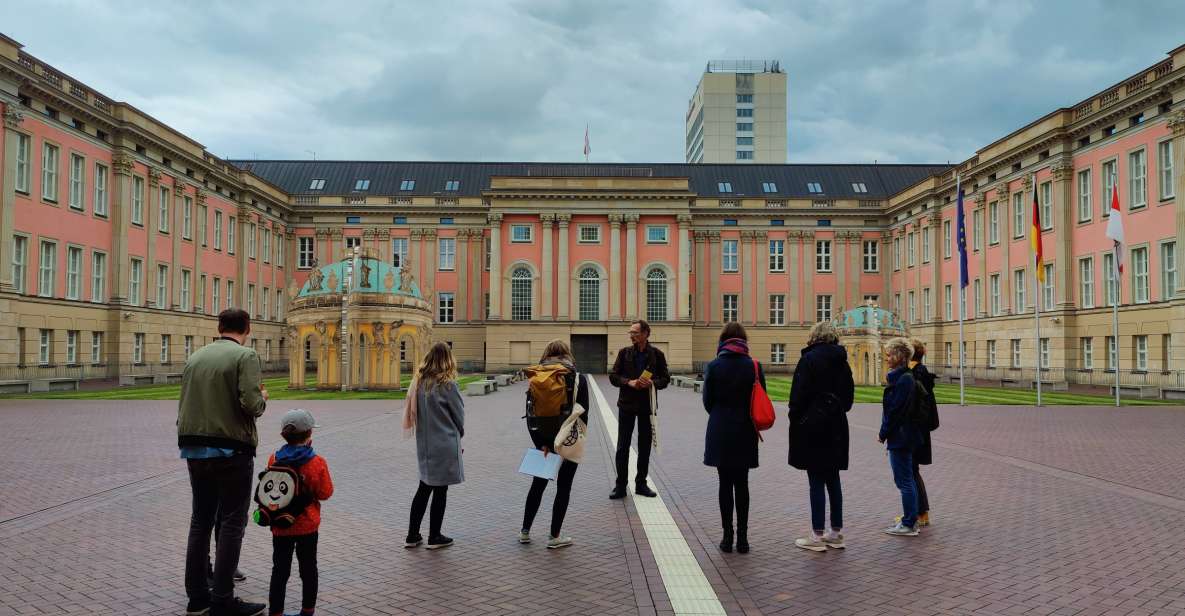
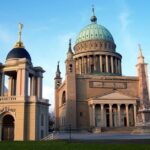
After Sanssouci, the tour shifts gears to Nikolaikirche (St. Nicholas Church), and that change is one of the better parts of this experience. Nikolaikirche is described here with a massive Classicist style dome modeled after ancient Greek architecture, completed in the 1830s. That specific detail is exactly what makes the stop more than a quick church photo.
Here’s what I think you’ll appreciate: your guide won’t treat the church like a generic landmark. They’ll connect the dome design to the broader Classicist idea—forms inspired by ancient models—and then bring it back to Potsdam’s local story. It’s a great example of how architecture can be a kind of time machine: you’re standing in 19th-century Potsdam, but looking at design language tied to ancient Greece.
Also, the dome’s “big presence” helps you understand why it’s such a recognizable feature on the skyline. Once you learn the modeling and dating (1830s completion, with Classicist Greek inspiration), you’ll start noticing other architecture in Potsdam with a more critical eye.
If you like your sightseeing with a bit of engineering sense—how shape and style communicate meaning—this church stop will feel like a payoff rather than a detour.
How the guide storytelling shapes your experience (Herr Schneider is a good sign)
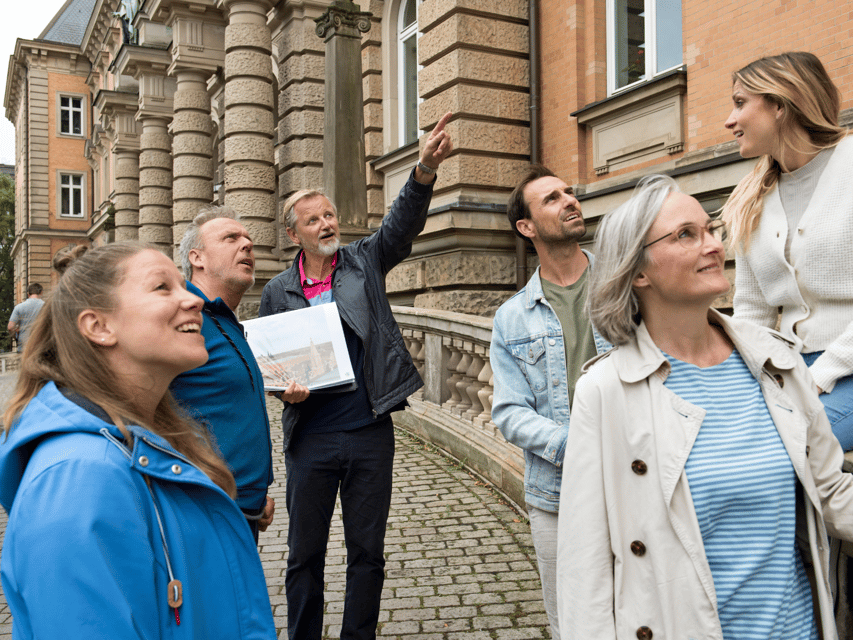
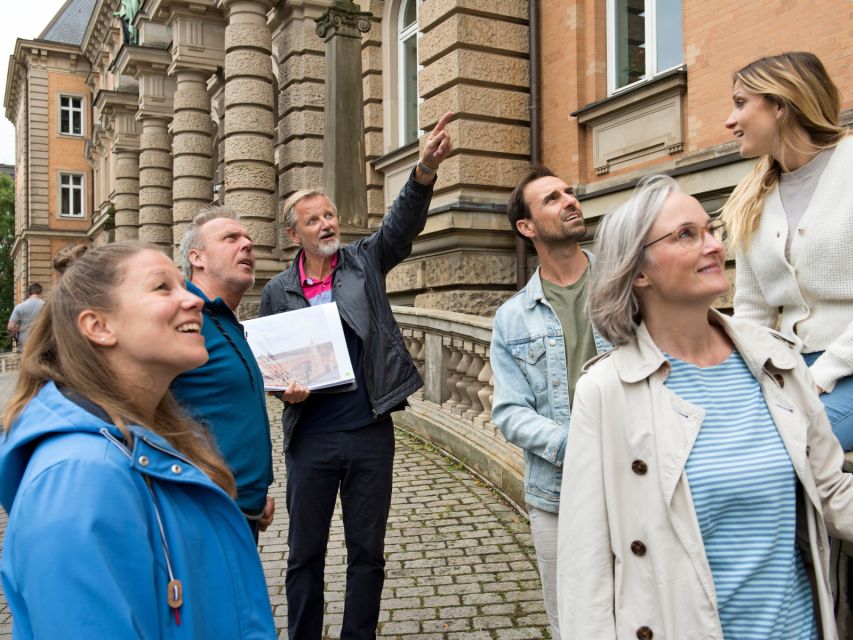
This tour is built around a live guide with in-depth historical knowledge, and that choice shows in the way the tour is described: your guide dissects each stop in terms of history and cultural significance. You’re guided through “anecdotal” locations too, meaning you’re not only covering the big monuments. You’re learning why the small details matter just as much as the headline structures.
One guide name that comes up in the experience’s feedback is Herr Schneider. The standout praise around him is that he adjusts well to questions and responds quickly to wishes. That’s more than customer-service fluff. On a tour like this, responsive Q&A turns confusing architecture into something you can actually remember.
There’s also a balance signal in the feedback: you’ll get small anecdotes alongside the straightforward information. In practice, that keeps the tour from feeling like a nonstop facts dump. Instead, you get the human side—why someone might have built something, what a designer or ruler likely wanted you to feel, and how the city’s layers connect.
One consideration: the content may lean toward the Frederick the Great era, based on how some people experienced the weighting. If you’re very focused on later 20th-century Potsdam, you might still enjoy the walk, but you may want to plan an extra stop elsewhere afterward to round out the story.
What you actually get for $29: value in context, not just landmarks

At $29 per person for a 2-hour guided walking tour, you’re paying for two main things: an expert guide and guided historical interpretation. The landmarks are impressive, but the value is in the translation—your guide turns architecture into meaning and turns Potsdam from a list of sights into a coherent story.
You’ll also receive an accompanying tour brochure with illustrative pictures from the past. That’s useful because it gives you visual anchors while you’re walking and helps you keep the details straight once you’re back out on the street.
What’s not included is also important for planning. Food and drinks aren’t included, and entrance fees aren’t included. So if your day is already packed, plan to eat before or after the tour. And if you want paid access to particular parts of Sanssouci, be ready for extra costs beyond the tour price.
This is also a smart spend if you’re short on time. Two hours doesn’t cover everything in Potsdam, but it gives you enough context to avoid wandering blindly. You’ll know what to prioritize next—especially around Sanssouci and the classical architecture themes you just learned to recognize.
You can also read our reviews of more guided tours in Potsdam

Meeting point, timing, and what to bring for a smooth walk
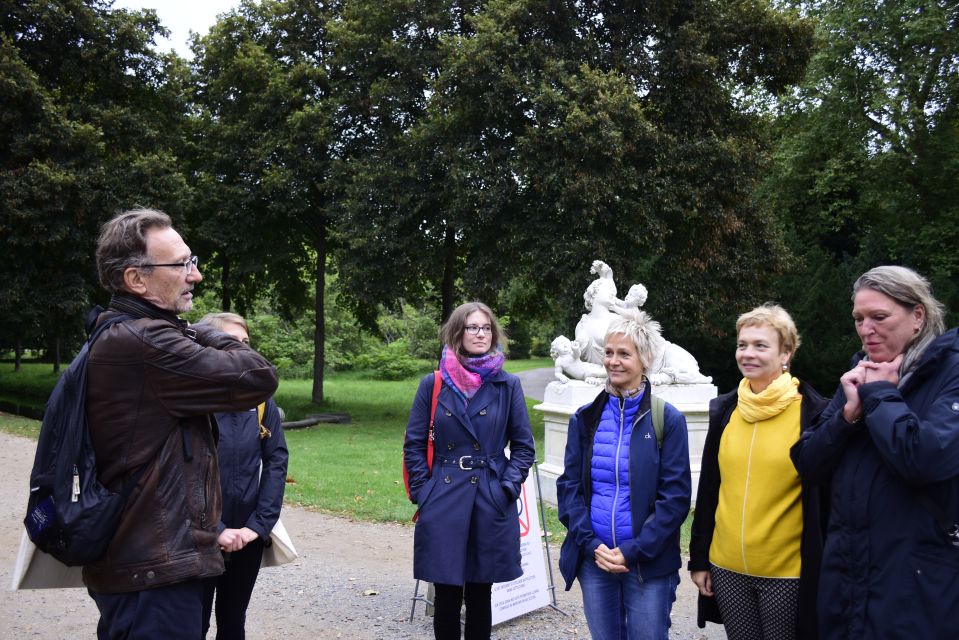
You’ll meet your guide waiting in front of the obelisk. That’s simple, but don’t treat it like a suggestion. Obelisks can look similar in different towns, and you’ll save yourself stress by arriving a few minutes early and checking you’re with the right group before the walk starts.
The tour is 2 hours, and starting times depend on availability. If you’re trying to coordinate this with other Potsdam plans, treat it like a fixed appointment rather than a casual stroll.
Bring:
- Comfortable shoes (you’ll be walking)
- Weather-appropriate clothing (it runs rain or shine)
- A reusable water bottle (simple, but it matters for an efficient 2-hour outing)
Not allowed: pets. If you’re traveling with an animal, you’ll need to look for a different option.
Also, this tour is not suitable for people with mobility impairments. Since the experience is explicitly designed for walking, plan to choose an alternative if mobility is a concern.
Who this Potsdam walking tour is best for
I’d book this if you’re a first-timer (or a return visitor who wants better context). The tour is designed to help you understand Potsdam’s small-city feel without skipping the big themes: UNESCO Sanssouci Palace tied to Frederik the Great, plus Nikolaikirche’s Classicist, ancient-Greek-inspired dome story.
You’ll also like it if you enjoy architecture that has a “reason behind the shape.” Rococo at Sanssouci and the Classicist dome at Nikolaikirche give you two different design languages to compare—and your guide helps you connect them to the city’s culture.
It may not be the best fit if your main goal is a deep, balanced run-through of later 20th-century history. The tour can be a bit Frederick-heavy, and some people would like more coverage of later periods. You can still learn a lot here, just don’t assume it’s the only stop you’ll need for complete Potsdam history.
Finally, it’s a good fit for people who want a practical setup for self-guided exploring afterward. You leave with a mental checklist of what matters, and the brochure helps you keep the story straight while you continue on your own.
Should you book this Potsdam UNESCO walking tour?
If you want a guided introduction that actually teaches you how to read Potsdam, I think this one is worth booking. For $29, you get a live German guide, a brochure with historical pictures, and a tight 2-hour route linking Sanssouci Palace’s UNESCO setting with Nikolaikirche’s Greek-influenced dome—plus plenty of context at each stop.
Book it if:
- You care about architecture and want the “why,” not just the photos
- You want a short orientation that makes later wandering easier
- You’re happy with a tour that may emphasize Frederick the Great’s era more than later chapters
Skip or rethink it if:
- You need strong coverage of the DDR period in one sitting
- Mobility limitations affect your ability to do a walking tour
- You were hoping for entrances/indoor access to be included
FAQ
FAQ
How long is the Potsdam guided walking tour?
The tour lasts 2 hours.
How much does the tour cost?
The price is $29 per person.
What’s included in the ticket price?
You get an accompanying tour brochure with illustrative pictures from the past and a personal tour guide with in-depth historical knowledge.
What is not included?
Food and drinks are not included, and entrance fees are not included.
Where do I meet the guide?
Meet your guide in front of the obelisk.
Is the tour offered in English?
No. The tour takes place in German.
Does the tour run in bad weather?
Yes. The tour runs rain or shine.
Is there free cancellation?
Yes. You can cancel up to 24 hours in advance for a full refund.
Can I reserve first and pay later?
Yes. The tour offers reserve now & pay later.
Are pets allowed on this tour?
No, pets are not allowed.
Is the tour suitable for people with mobility impairments?
No, it is not suitable for people with mobility impairments.