REVIEW · POTSDAM
City Sightseeing Potsdam Hop-On Hop-Off Bus Tour
Book on Viator →Operated by City Sightseeing Ltd - Europe · Bookable on Viator
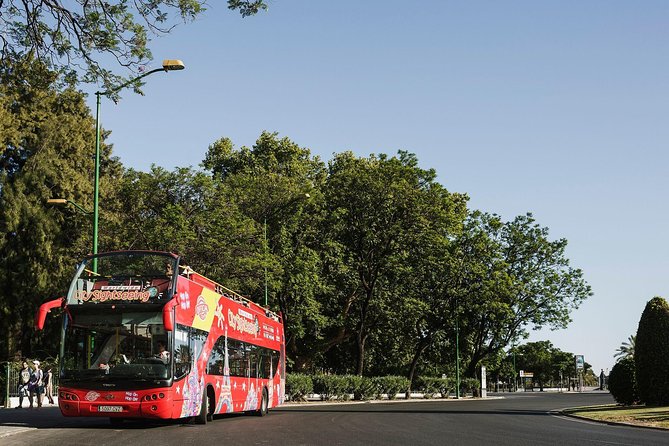
Potsdam’s palaces look better from a double-decker. I love how this one-day City Sightseeing ticket mixes big, panoramic views with a true hop-on hop-off format so you can linger at the stops that matter to you. The route hits the headliners like Sanssouci and Cecilienhof, which makes it a solid “see the city first, plan the next steps later” choice.
That said, there are a couple real-world gotchas: the bus runs about every 60 minutes, and some days that can mean longer waits than you’d hope—especially if you’re trying to coordinate palace time. If you need very detailed history delivered perfectly in English, you may find the commentary less consistent than you want.
In This Review
- Key things to notice before you ride
- Why a hop-on bus works so well in Potsdam
- Price and what you actually get: one day, not one ride
- The route overview: from Luisenplatz to Park Sanssouci
- Stop 1: Luisenplatz and the start-of-day strategy
- Stop 2 and 3: Hauptbahnhof area and Filmmuseum Potsdam
- Stop 4: The Dutch Quarter (and why it feels like a palate cleanser)
- Stop 5 and 6: Glienicke Bridge and Marmorpalais viewpoints
- Stop 7: Cecilienhof Palace and the partition-of-Germany story
- Stop 8: Museum Alexandrowka and a cultural detour
- Stop 9: Neues Palais and the scale factor
- Stop 10: An der Orangerie and Orangerie Palace style cues
- Stop 11: Obeliskportal and the photo-and-pause moments
- Stop 12: Park Sanssouci and UNESCO time management
- How often the bus comes (and how to not waste time)
- Commentary: live guide vs audio, and what that means for you
- Comfort and the reality of cobblestones
- Who this tour suits best (and who should skip it)
- Should you book City Sightseeing Potsdam?
- FAQ
- What’s the duration of the Potsdam hop-on hop-off bus tour?
- How long is the hop-on hop-off ticket valid?
- Where do the buses depart from, and what are the operating hours?
- How often does the bus arrive at stops?
- Is the tour audio available in English, and are headphones included?
- Are hotel pickup and drop-off included?
- Can I get a refund if I cancel?
Key things to notice before you ride
- One-day, unlimited hop-on hop-off access means you can repeat your route logic and not feel rushed.
- Open-top, double-decker views make Sanssouci Park and the palace corridor easier to take in at a glance.
- UNESCO power stops include Sanssouci Palace and Cecilienhof Palace, both big-name priorities in Potsdam.
- Free headphones + on-board audio keep you independent even if the group’s language shifts.
- Frequency is about every 60 minutes, so your plan should assume some waiting time.
- Several stops are intentionally spaced so you can move between palaces, quarters, and viewpoints without booking separate tours.
Why a hop-on bus works so well in Potsdam

Potsdam is compact, but its highlights are spread out. Palaces sit in parks, museums are tucked into districts, and the scenic bits are easier to connect by bus than by guess-and-check walking. This tour’s best trick is that you don’t have to decide upfront which stop will be your favorite—you can just ride, get your bearings fast, and then hop off where your eyes keep going back.
The other reason this works is simple: the bus gives you context. On the move, you see how places relate to each other—Sanssouci Park’s layout, the palace belt, and the city’s different neighborhoods—before you commit time to the most famous sites.
And yes, the open-top ride is fun in daylight. On a good weather day, it feels like sightseeing without the pressure.
You can also read our reviews of more city tours in Potsdam

Price and what you actually get: one day, not one ride

The tour costs $24.06 per person for about 105 minutes of ride time, but the value comes from the ticket format, not from a single circuit. Your pass is valid for one day from the time you first use it, and it’s unlimited hop-on hop-off across all the listed stops.
You also get free headphones for the on-board audio commentary. That matters because you’re not stuck listening only at random volume levels or with whatever language the bus happens to be running with.
No hotel pickup, no meal, and no guided ticketed entry included for palaces. So you’re paying for transportation plus commentary, and you handle the rest—mostly your own pacing and palace admission rules.
The route overview: from Luisenplatz to Park Sanssouci
This is the kind of hop-on tour where the stop list helps you understand the city’s “story arc.” You start at Luisenplatz and then work through a mix of city-center areas, museums, quarters, viewpoints, and the palace parks.
Your stops include:
- Luisenplatz
- S Potsdam Hauptbahnhof/Nord ILB
- Filmmuseum Potsdam
- Dutch Quarter
- Glienicke Bridge
- Marmorpalais
- Cecilienhof Palace
- Museum Alexandrowka
- Potsdam, Neues Palais
- An der Orangerie
- Obeliskportal
- Park Sanssouci
Most days, you’ll be using the bus like a moving timeline: city first, then the palace corridor, then you end up back in the Sanssouci Park area where you can keep exploring on foot.
Stop 1: Luisenplatz and the start-of-day strategy

Luisenplatz is your launch point, with the first departure at 10:25 AM from Stop 1 and the last departure at 3:25 PM. This is useful information because it frames your palace timing.
One practical consideration: there can be some waiting around the first stop. A longer pause here can tempt you to hop off early and wander, but it can also cost you time if you’re trying to hit multiple palaces the same afternoon. If you’re aiming for Sanssouci and Cecilienhof, I’d treat Luisenplatz as your moment to get oriented, not your moment to max out walking time.
If you want a smooth day, plan to be on the bus for the first portion so you can map the route in your head.
Stop 2 and 3: Hauptbahnhof area and Filmmuseum Potsdam
The next stop you’ll likely use is near Potsdam Hauptbahnhof/Nord ILB. This is handy if you’re arriving by train, or if you’re building your day around a rail connection from Berlin.
Filmmuseum Potsdam is another stop where you can break off if you want a cultural detour. Even if you skip the museum itself, the stop is still valuable because it shows you the city isn’t only palaces and parks. Potsdam has neighborhoods with their own identity, and this helps you avoid spending the whole day in “palace mode.”
If your goal is purely sightseeing efficiency, you can stay on the bus past this stop and save your energy for Sanssouci Park and Cecilienhof.




Stop 4: The Dutch Quarter (and why it feels like a palate cleanser)
The Dutch Quarter is a different vibe from the palace ensembles. It gives you architectural variety and a change in pace, which can be a relief if you’re spending the day outdoors in palace gardens.
Hop off here if you want to reset your brain before jumping back into the UNESCO-heavy stretch. Even a short stroll can make the rest of the day feel more “two worlds” instead of one long royal corridor.
Stop 5 and 6: Glienicke Bridge and Marmorpalais viewpoints
Glienicke Bridge is one of those places where the view does part of the narration. Bridges and water crossings in Potsdam often carry strong historic associations, and from a bus you can usually get enough of the angle to know whether you’ll want more time on foot.
Next up is Marmorpalais, which helps you transition from general landmarks into the palace landscape itself. If you’re the type who likes to photograph details—facades, garden edges, and the way buildings sit in the park—these intermediate stops are worth at least a quick look.
Stop 7: Cecilienhof Palace and the partition-of-Germany story
This is one of the tour’s biggest “you came for this” stops. Cecilienhof Palace is where Churchill, Truman, and Stalin discussed the partition of Germany and shaped decisions that changed Europe.
Cecilienhof matters because it’s not just a palace. It’s a history marker. When you hop off here, you’re stepping into a place tied to major 20th-century events, and the surrounding environment helps you feel the weight of the moment.
Practical advice: don’t treat Cecilienhof as a 20-minute photo stop unless you already know what you want to see inside. If you’re serious about history, give it real time and then let the rest of the route be a bonus.
Stop 8: Museum Alexandrowka and a cultural detour
Museum Alexandrowka is the tour’s “surprise stop.” It reflects Potsdam’s connection to the Russian colony of Alexandrowka. This break from German royal residences helps you understand that the city’s story is broader than monarchs and architecture.
If you like museums but you don’t want a full museum day, Alexandrowka can be the compromise. You’ll get cultural depth without losing your whole schedule.
Stop 9: Neues Palais and the scale factor
At Potsdam, Neues Palais, you’re back in the palace ensemble zone. This stop is notable because the Neues Palais is described as the largest and most impressive palace ensemble in Sanssouci.
Even if you only see it from the outside at first, it helps you grasp scale. When you later stand in Sanssouci Park, the spaces feel more intentional instead of random.
Stop 10: An der Orangerie and Orangerie Palace style cues
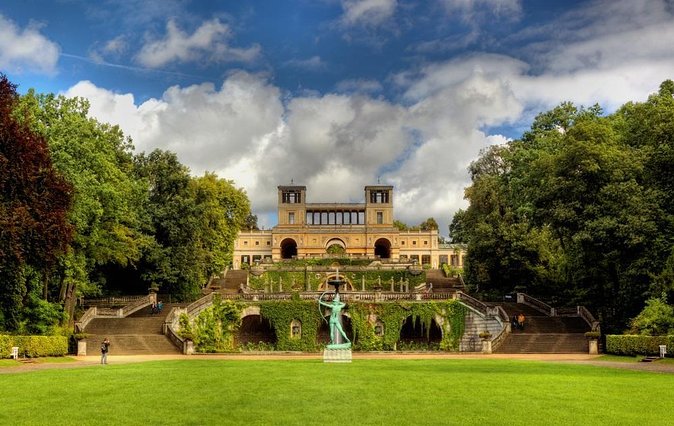
An der Orangerie is your access point for the Orangerie Palace, built in the High Renaissance style and commissioned by King Frederick William IV.
The Orangerie is a different kind of “wow” than the main palace buildings. It’s about style and setting—the relationship between the palace, the park, and the garden rhythm. If you like visual variety, hopping off here makes your day feel less like a checklist.
Stop 11: Obeliskportal and the photo-and-pause moments
Obeliskportal is a stop where you can catch a quick change in perspective. It’s the kind of place that’s good for photos, and it can also work as a mental waypoint: you’re getting closer to the heart of Sanssouci Park.
If you’re short on time, you can treat this as a “peek then keep moving.” If you have time, pause long enough to understand how the garden axes work in the park.
Stop 12: Park Sanssouci and UNESCO time management
Finally, you arrive at Park Sanssouci, which anchors your visit. The big headliner is Sanssouci Palace, one of the largest UNESCO World Heritage sites in Germany, plus the broader Sanssouci Park setting.
The route coverage also points you toward the smaller palace elements in the area, including Charlottenhof Palace, described as small and neo-classical, and the wider ensemble logic inside the park. You’re essentially working through the Sanssouci “stack”: palace main, additional palace buildings, and the park spaces that connect them.
Here’s the key scheduling reality: your last departure from Stop 1 is 3:25 PM. Since you’re hopping off along the way, plan to spend the late afternoon in Sanssouci Park (and possibly hop off earlier for Cecilienhof if you want a full, calm visit). Several people found the buses ended before they could fully absorb the palaces, so your best move is to protect time for the final zone.
Also, palace opening days matter. Some visitors explicitly recommend checking when the palaces are open so your hop-on plan doesn’t meet closed doors at the worst moment.
How often the bus comes (and how to not waste time)
The tour runs about every 60 minutes. That’s not a problem if you’re using the bus as a flexible connector.
It becomes a problem if you treat it like “every 30 minutes” sightseeing. Some experiences reported that the timing felt less frequent during parts of the year, which can turn a relaxed day into a waiting game.
So here’s the practical way I’d use this ticket:
- Start by doing a full ride once to learn where the stops sit relative to each other.
- Then plan your hop-off time for the palace you care about most.
- Leave yourself a buffer between hop-offs so you’re not sprinting to catch the next bus.
If your day includes multiple palace interiors, consider prioritizing two “must-see” sites and letting the rest be photo stops or short walks.
Commentary: live guide vs audio, and what that means for you
You get live and audio commentary in multiple languages, and the experience is offered in English. Headphones are included, so audio is your default.
In practice, the match between commentary and your real location can vary. Some people noted that the English audio didn’t feel perfectly synchronized with what they were passing, and a few said the English narration felt less detailed than the live German explanation.
If you’re a history buff who wants richer, more specific storytelling in English, you might prefer a more guided option. But if you’re happy with an overview plus on-the-ground wandering, the audio plus stop list is enough to build a satisfying day.
My advice: use the audio to set your expectations and then use your eyes to confirm what’s in front of you. That way, even when the narration is brief, you still get value.
Comfort and the reality of cobblestones
Open-top buses are great for views, but the tradeoff is comfort. Some experiences complained about a bumpy ride, with cobblestone streets adding to the shake. Seat size can also feel tight depending on where you sit.
Add in the fact that city traffic can slow things down. When a route takes longer than you expect, the “hop-on hop-off” magic can turn into tight scheduling.
If you’re sensitive to bumps, bring patience and wear shoes you don’t mind walking in. And if you’re prone to motion sickness, consider that open-top riding plus city streets can be a factor.
Who this tour suits best (and who should skip it)
This bus tour is a great fit if you want:
- A low-effort way to see Potsdam’s top highlights in one day
- The flexibility to spend time at Sanssouci and Cecilienhof without a fixed group pace
- A simple structure for building a route, especially if you’re starting from Berlin or a train station area
It’s less ideal if you need:
- Deep, perfectly timed history in English for every stop
- A schedule that guarantees lots of time inside multiple palaces
- Comfort that rivals a private car on smooth roads (because cobblestones are still cobblestones)
If you want to slow down significantly in the parks or do longer interior visits, you may end up using the bus to get there, then switching to walking after.
Should you book City Sightseeing Potsdam?
Yes, I’d book it if you’re visiting Potsdam for the first time and you want a practical route to the UNESCO palaces and key landmarks without complicated planning. The one-day, unlimited format is a real advantage, and the stop coverage helps you understand how Potsdam is organized.
I’d think twice if your plan depends on precise timing inside palaces later in the day, or if you’re expecting high-detail English narration to match every turn. In that case, use the bus for orientation and then consider adding targeted time on the sites you care about most.
Bottom line: for most visitors, it’s an efficient, affordable way to see Potsdam’s highlights. Just treat it as transport plus overview, not as a replacement for spending serious time in the palaces.
FAQ
What’s the duration of the Potsdam hop-on hop-off bus tour?
The tour runs for about 1 hour 45 minutes (approximately 105 minutes).
How long is the hop-on hop-off ticket valid?
Your ticket is valid for 1 day from the time of first use.
Where do the buses depart from, and what are the operating hours?
The first departure is at 10:25 AM from Stop 1 (Luisenplatz), and the last departure from Stop 1 is at 3:25 PM. The tour operates daily during the listed period from 03/28/2026 to 11/01/2026, with hours Monday through Sunday.
How often does the bus arrive at stops?
Buses run with a frequency of about every 60 minutes.
Is the tour audio available in English, and are headphones included?
Yes. The tour offers English, and you receive free headphones for the on-board audio commentary.
Are hotel pickup and drop-off included?
No. Hotel pickup and drop-off are not included.
Can I get a refund if I cancel?
Yes. You can cancel up to 24 hours in advance for a full refund. If you cancel less than 24 hours before the experience starts, the amount you paid is not refunded.