REVIEW · BERLIN
Berlin : Guided Private Sightseeing Tours with Funbikes, Teambikes
Book on Viator →Operated by Funbike Berlin · Bookable on Viator
Berlin by bike sounds risky. It is not, thanks to the electric motor support and a guide who makes each stop click fast. I also like the free photo service during the ride, which saves you from juggling a phone while trying to take in major sights. One thing to weigh: many landmark moments are intentionally short, so this is not the tour for deep museum time.
This feels like Berlin with your own rhythm. It is a private tour for your group, with regular picture breaks and the option to play your own tunes through Bluetooth speakers, plus chilled drinks available if you want an extra treat.
In This Review
- Key highlights worth caring about
- Electric Funbikes and Teambikes: riding Berlin without the sweat tax
- Price and value: why about $42 per person can feel fair
- Cold War and government sights: from Reichstag to Checkpoint Charlie
- Stop 1: Reichstag Building (photo + history, ticket not included)
- Stop 2: Memorial to the Murdered Jews of Europe (Holocaust Memorial, free)
- Stop 3: Topography of Terror (free)
- Stop 4: Museum Island (photo + meaning, free)
- Stop 5: Potsdamer Platz (photo, wall pieces + square history, free)
- Stop 6: Fuhrerbunker (photo, free)
- Stop 7: Checkpoint Charlie (photo + history, free)
- Pariser Platz, Pergamon Museum pass, and the Museum Island repeat factor
- Stop 8: Gendarmenmarkt (photo + refreshment stop, free)
- Stop 9: Bebelplatz (photo, free)
- Stop 10: Berliner Dom (photo + explanations, ticket not included)
- Stop 11: Humboldt Forum (Schlüterhof visit, free)
- Stop 12: Lustgarten (photo + guide explanations, free)
- Tiergarten and the memorial chain: what you learn while moving
- Stop 13: Neue Wache (memorial visit, Käthe Kollwitz, free)
- Stop 14: Altes Museum (photo + explanations, ticket not included)
- Stop 15: Museum Island again (guided exploration + photos, free)
- Stop 16: Pariser Platz (history explanations, free)
- Stop 17: Memorial of the Berlin Wall (construction + death strip + fall, free)
- Stop 18: GDR Watch Tower (free)
- From TV Tower views to Brandenburg Gate: closing with Berlin’s symbols
- Stop 19: Brandenburg Gate (history + symbolism, photo stop, free)
- Music, drinks, and the social side of sightseeing
- Who this tour suits best, and who should pick something else
- Should you book Funbike Berlin’s private sightseeing tour?
- FAQ
- How long is the private bike sightseeing tour?
- Is this a private tour or a group tour?
- Where do we meet?
- Can pickup be arranged?
- What language is the tour guide?
- Are tickets for major attractions included?
- Are alcoholic beverages included?
- Can we play our own music during the tour?
- Is the tour suitable for people who cannot pedal much?
- Should you book Funbike Berlin’s private sightseeing tour?
Key highlights worth caring about
- Electric-assisted riding keeps it fun and not a leg workout
- Private group pace means you can ask questions and pause for photos
- Free guided photo service helps you actually get the shot
- Cold War focus with real memorials and key checkpoints, not just viewpoints
- Music on demand via Bluetooth speakers for a lighter ride vibe
- Easy start point near Pariser Platz where you can get moving quickly
Electric Funbikes and Teambikes: riding Berlin without the sweat tax
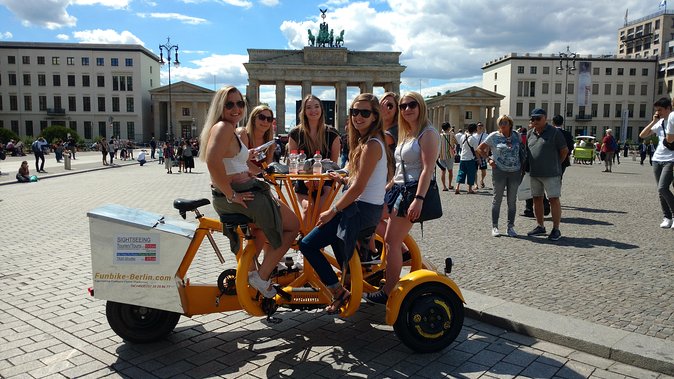
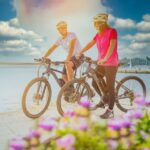
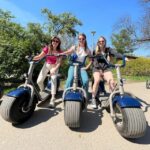
The big idea here is simple: you get a bike tour feel, but you do not have to pay for it with exhaustion. The bikes are electric motor supported, and that is a deal for a lot of people. If you can pedal, great. If you cannot pedal much, you still keep moving with the motor help. One review even called out that it was easy enough to enjoy a beer while pedaling through historic areas, which says a lot about the effort level.
You also get an experienced multilingual guide per vehicle, so you are not just following a route. The guide is there to explain what you are seeing, then give you a photo pause at the right moment. That matters because many of Berlin’s most famous sights are also visually intense. Without context, you can rush past something important. With the guide, you know what you are looking at before you move on.
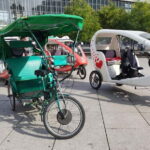
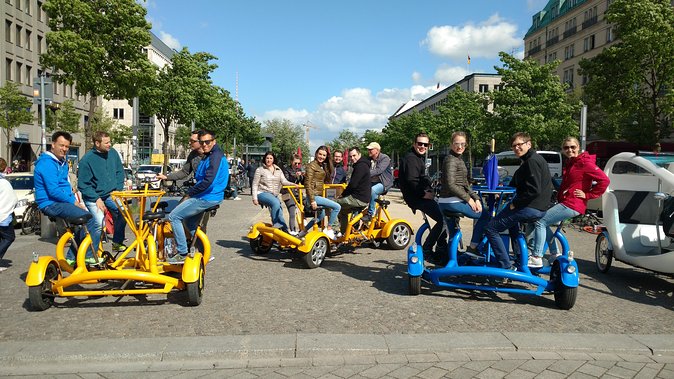
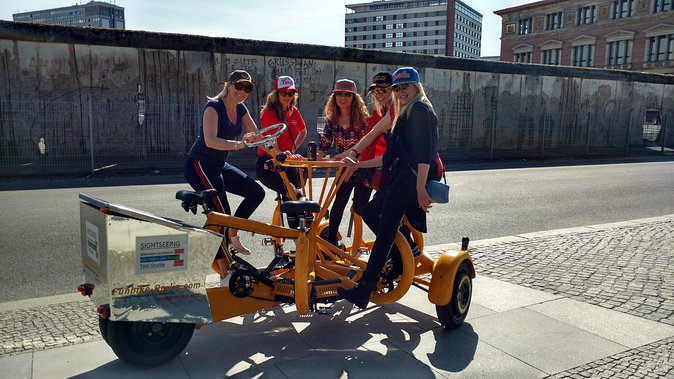
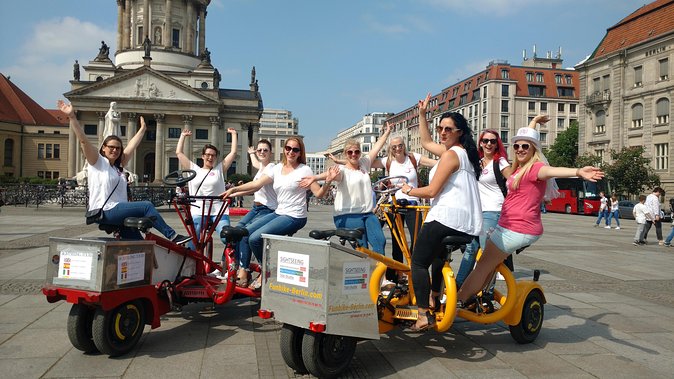
Bike style can change by your group, including multi-person options. In one review, a guide named Olaf described a seven-seater Conference Bike with electric assistance. Translation: if you are traveling with friends, family, or a group that wants to stay together, this setup is built for it.
One practical note: you are traveling outdoors, so comfortable shoes and weather-ready clothing matter. This kind of ride depends on good weather, and Berlin can switch moods fast.
You can also read our reviews of more guided tours in Berlin


Price and value: why about $42 per person can feel fair
At roughly $42.01 per person for a 1 to 2 hour private guided experience, you are paying for three things: a guide, the bike and support system, and the time you save versus piecing together transport and self-guided stops.
If you are a first-time visitor, value comes from compression. In a short window, you see major anchor points across the city’s most famous historical storylines—Reichstag area, Holocaust Memorial area, Berlin Wall memorials, Checkpoint Charlie, Museum Island, and more—without sitting through bus time or walking long distances. A bike also changes how it feels. You can glide past buildings and plazas at a human pace.
You also get included extras that add up. Free photo service is not just a nice touch; it removes friction. You can look up, not down at your screen. Plus you can play your own music during the ride, which is rare for many guided sightseeing options in Europe.
Costs you should plan around: admission tickets for certain stops are not included. The Reichstag Building, Berliner Dom (Berlin Cathedral), and Altes Museum list admission not included. If those are musts for your group, budget for tickets or decide where you want the money to go.
Cold War and government sights: from Reichstag to Checkpoint Charlie
Your ride starts at Pariser Platz 4A (near the Brandenburg Gate area) and loops through Berlin’s landmark belt with a clear theme: how the city became the front line of modern history. Expect photo stops plus guide explanations, typically around 5 to 10 minutes each. That short format is a strength if you want breadth, and a limitation if you want to linger.
Stop 1: Reichstag Building (photo + history, ticket not included)
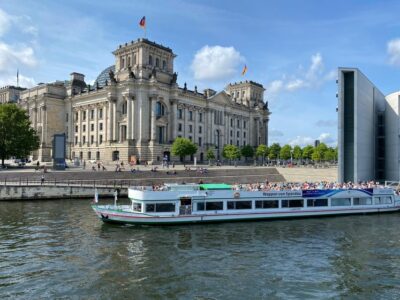
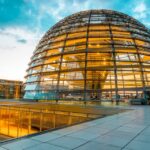
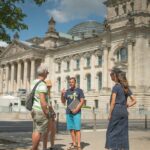
You begin at the Reichstag Building, the seat of German parliamentary power. The guide explains the building and its history, then you get a brief photo stop. It is a quick hit, but the context helps you understand why this structure is more than architecture.
If you want to go inside, remember the admission ticket is not included here. If your goal is the exterior plus the story, you are set.
Stop 2: Memorial to the Murdered Jews of Europe (Holocaust Memorial, free)
Next is the Holocaust Memorial. The guide explains its meaning, and the stop includes a photo moment for passengers. Even with a short stop, the guide’s framing can make a difference, because this memorial reads differently depending on what you know beforehand.
The good news: admission is free for this stop.
You can also read our reviews of more private tours in Berlin

Stop 3: Topography of Terror (free)
Topography of Terror is where the guide connects the location to what happened there, including the longer section of the Berlin Wall you see as part of the experience. You also get a photo stop with some added time compared with the shortest stops.
This is one of the places where you might want to pause longer if your group is into details. The ride format keeps it moving, so treat this as a first orientation rather than a full visit.
Stop 4: Museum Island (photo + meaning, free)
You then reach Museum Island, and the guide explains why the place matters. Even if you are not going inside right away, Museum Island is a strong visual anchor. It helps set up why Berlin’s cultural story and political story overlap in this area.
Stop 5: Potsdamer Platz (photo, wall pieces + square history, free)
At Potsdamer Platz, you get pieces of the Berlin Wall plus context about the square’s history, including major modern landmarks around it. It is a good reminder that Berlin is not frozen in the 20th century. It changed. Fast.
Stop 6: Fuhrerbunker (photo, free)
The Fuhrerbunker stop is brief but pointed. You get explanations of the place and its history, then a photo moment. This is not a stop for casual mood shifts. The guide’s framing helps your group keep it grounded.
Stop 7: Checkpoint Charlie (photo + history, free)
One of the most famous Cold War crossings, Checkpoint Charlie, comes next. You get explanations of what it meant and its history, then time for photos.
Practical tip: if your group is photo-heavy, this is a good stop to go ready. Everyone gets their moment, but the time is still limited.
Pariser Platz, Pergamon Museum pass, and the Museum Island repeat factor
There is a smart strategy in how this tour handles Berlin’s museum weight. You see and hear context first, then you can decide later what deserves a standalone museum visit.
You pass by the Pergamon Museum and the guide shares important information about the building, even without a long stop inside. That works well because Pergamon is one of those names you hear in Berlin planning. Seeing it from the outside with guidance helps you understand what you might want to prioritize later.
Stop 8: Gendarmenmarkt (photo + refreshment stop, free)
Gendarmenmarkt is next, and it often feels like a break in the intensity. The guide explains the importance of the place, you get a photo stop, and there is also a refreshment stop. Even with a tight schedule, this kind of stop matters because it resets the group.
Stop 9: Bebelplatz (photo, free)
At Bebelplatz, the guide explains the history of the place and you get a photo stop. It is another quick moment where context makes what you see feel less abstract.
Stop 10: Berliner Dom (photo + explanations, ticket not included)
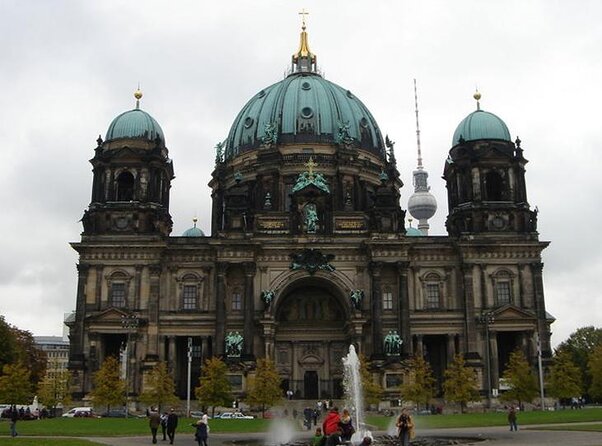
You stop in front of Berlin Cathedral for photos and guide explanations. This is a classic big skyline moment. The cathedral is impressive even from outside, but if you want to enter, you will need admission on your own.
Stop 11: Humboldt Forum (Schlüterhof visit, free)
You visit the Schlüterhof at Humboldt Forum with guided explanations. This stop gives you a taste of the area’s function and story without forcing a long indoor session.
Stop 12: Lustgarten (photo + guide explanations, free)
The Lustgarten stop mixes shots with short explanations. It is a good “pause and look” zone before you move into Berlin’s park and memorial stretch.
Tiergarten and the memorial chain: what you learn while moving
A lot of Berlin sightseeing becomes walking and sitting. Here, you cover a different kind of ground—especially in the Tiergarten area. The tour drives through Berlin’s largest park, described as the former hunting ground of the Hohenzollern kings, with small waterways and photo stops.
That park time is not filler. It gives your brain room between heavy memorial stops. You also see that Berlin’s story lives in both stone and space—monuments, routes, and the layout of the city.
Stop 13: Neue Wache (memorial visit, Käthe Kollwitz, free)
Neue Wache is a memorial to the victims of the world wars, featuring a work by Käthe Kollwitz. The guide leads you through the meaning of what you see. This is one of the stops where a short visit still lands, because the monument’s message is strong on its own.
Stop 14: Altes Museum (photo + explanations, ticket not included)
You get a photo stop in front of the Altes Museum and brief building explanations. Like Berliner Dom and Reichstag, admission is not included. Even so, you get enough context to understand why it belongs to the Museum Island lineup.
Stop 15: Museum Island again (guided exploration + photos, free)
This is the second Museum Island moment, and it reads like a mini recap. The guide explores world-famous museums with explanations and a photo stop. The advantage here is that the earlier stops built your orientation. Now you can appreciate what you are seeing with better context.
Stop 16: Pariser Platz (history explanations, free)
You circle back to Pariser Platz for guide explanations on its history. This is useful because it anchors where the whole ride started and connects the city’s symbolism to the space itself.
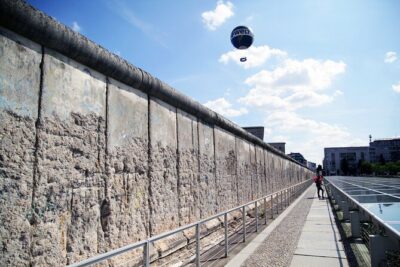
Stop 17: Memorial of the Berlin Wall (construction + death strip + fall, free)
This is a key learning stop. You learn about how the wall was constructed, its course and structure, the death strip expansion, and the event of the fall of the Berlin Wall—plus why it happened. Photo opportunities are included.
This is one of the places where the bike format can feel surprisingly effective. You are close to the story but still moving, which keeps energy up while the guide supplies the narrative.
Stop 18: GDR Watch Tower (free)
You learn about GDR border watchtowers and how the death strip expansion tied into surveillance and control. Photos are possible here too.
From TV Tower views to Brandenburg Gate: closing with Berlin’s symbols
As you continue, the tour adds modern landmarks plus big-picture symbolism. You get a photo stop connected to Germany’s tallest building, the Berlin TV Tower, along with guide learning about the tower.
Then you cross through more of the largest and most beautiful park area, spotting monuments along the way and even driving along small waterways. It is a nice reset: the ride becomes a mix of history and scenery.
Stop 19: Brandenburg Gate (history + symbolism, photo stop, free)
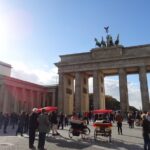
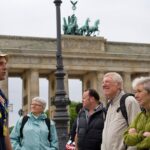
You finish at the Brandenburg Gate with the guide explaining its history and significance. You also learn about its function as a city gate and its symbolic role during the Cold War. The photo stop lasts long enough for a group picture and a few personal shots.
Because the tour ends back at the meeting point, your group does not need to plan last-mile logistics right after the most camera-happy moment.
Music, drinks, and the social side of sightseeing
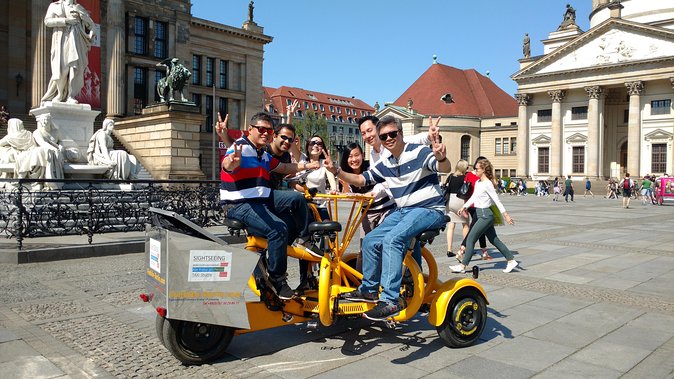
This is not just about stopping at famous landmarks. The tone of the ride is built for groups to enjoy each other while you cover distance.
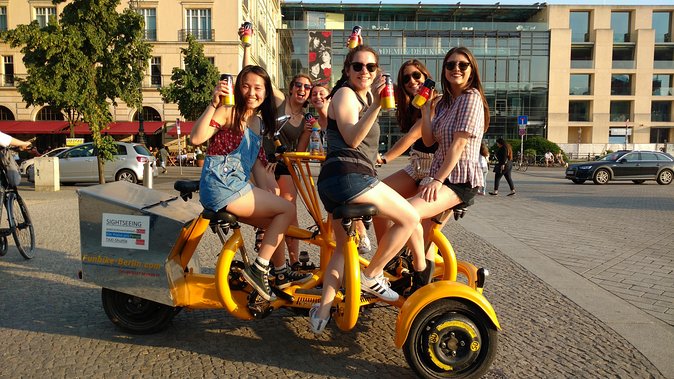
You can play your own music using the bike’s Bluetooth speakers. That lets you bring the vibe—something calm for history stops, or something upbeat for park time. It also helps if your group has kids. A guided ride can feel rigid when everyone is bored. Music makes it feel more like an outing.
Drinks are available, but not included. Alcoholic beverages can be provided chilled on request for an additional charge. Non-alcoholic drinks like water and soft drinks are offered additionally too. If you care about drinks, decide ahead of time what you want so your group is not surprised at the moment.
Who this tour suits best, and who should pick something else
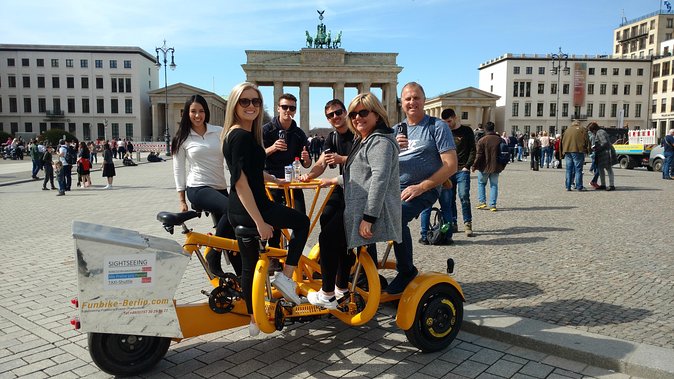
This experience fits best if you want to see a lot of Berlin fast, without long walking stretches. It is great for families, birthday groups, team outings, and stag or hen parties because it blends a social ride with real historical stops. The electric assistance also makes it practical for people who cannot pedal for physical reasons.
It is less ideal if your top priority is deep museum time. Several key cultural sites are either photo stops or short guided moments, and some major buildings have admission not included. If you want to spend hours inside one museum, plan to pair this with a separate museum booking afterward.
Should you book Funbike Berlin’s private sightseeing tour?
Book it if you want a fun, low-effort way to hit Berlin’s biggest Cold War and landmark highlights in a tight window, with a guide doing the storytelling and a photo service handling the picture chaos. It is also a smart choice if your group has mixed fitness levels because the electric support makes participation realistic.
Skip it if you plan to spend most of your time inside ticketed attractions like the Reichstag, Berliner Dom, or Altes Museum, or if your ideal tour involves long stays at each stop with no momentum. In Berlin, this kind of ride is best as a first hit that sets your next day’s priorities.
FAQ
How long is the private bike sightseeing tour?
It runs for about 1 to 2 hours.
Is this a private tour or a group tour?
It is private. Only your group participates.
Where do we meet?
The start meeting point is Pariser Platz 4A, 10117 Berlin, Germany.
Can pickup be arranged?
Pickup is possible but not included in the price. The travel fee depends on distance to the Brandenburg Gate. A free pick-up service is offered within one kilometer of the Brandenburg Gate.
What language is the tour guide?
The tour is offered in English, and the bikes include an experienced multilingual guide per vehicle.
Are tickets for major attractions included?
Admission tickets are not included for the Reichstag Building, Berliner Dom, and Altes Museum. Other listed stops are free.
Are alcoholic beverages included?
Alcoholic beverages are not included. They can be provided chilled on request for an additional charge.
Can we play our own music during the tour?
Yes. You can play your own music via Bluetooth speakers during the guided private tour.
Is the tour suitable for people who cannot pedal much?
Yes. The vehicles have electric motor support, and the activity is very suitable for people who cannot pedal for physical reasons.
Should you book Funbike Berlin’s private sightseeing tour?
If you want to see Berlin’s big-name landmarks and major Cold War sites without long walking or bus time, this is a strong match. It is especially worth it for groups who want a social ride, easy participation, and a guide-led story at each stop.