Few cities tell survival stories this close.
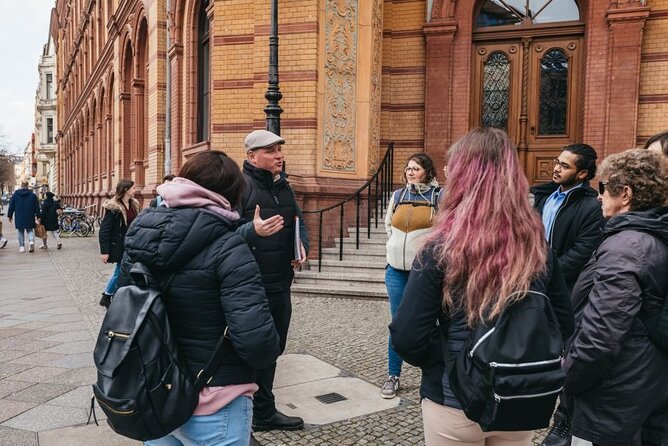
This small-group walking tour pulls you through Berlin on foot, linking major wartime landmarks with lesser-known acts of resistance and rescue across roughly 2.5 hours. You start at the Neue Synagogue and finish at Friedrichstraße, with a guide who uses then-and-now photos and maps to help you place each story in context.
What I like most is the way it connects everyday places to extraordinary choices people made under Nazi rule. I also love the pace: you cover a lot of ground in a short time without turning it into a rapid history lecture, and the maximum group size of 15 keeps the experience personal. For help, guides named in past tours include Johan, Jochen, Scott, Jorg, and Benjamin, and one guide (Scott) is noted for years of guiding experience.
One consideration: this is a lot of standing and walking through busy public spaces, so if your legs tire easily, plan to go with comfortable shoes and a calm mindset. The subject matter is also heavy, even when the stories focus on resistance and rescue.
In This Review
- Key things to know before you go
- Why this Berlin walking route hits differently
- Price and value: $48.01 for 2.5 hours that stays focused
- Stop 1: Neue Synagoge (Centrum Judaicum) and the story of a community erased
- Stop 2: Moses Mendelssohn Jewish Gymnasium and how education was turned into detention
- Stop 3: Jewish Cemetery and Holocaust Memorial, where destruction was public and humiliating
- Stop 4: Otto Weidt’s workshop and resistance through bribery, paperwork, and risk
- Stop 5: Denkmal Rosenstraße and the power of protest from ordinary people
- Stop 6: Lustgarten and the shrinking space for free speech
- Stop 7: Zeughaus and the resistance plot tied to captured Soviet weapons
- Stop 8: Neue Wache and a memorial for war and tyranny
- Stop 9: Book Burning Memorial at Bebelplatz and the attack on ideas
- Stop 10: Trains to Life – Trains to Death and the Kindertransport contrast
- What the guides and pacing do for you
- Who should book this tour—and who might choose something else
- Bottom line: should you book Path of Resistance in Berlin?
- FAQ
- How long is the tour?
- What does it cost?
- Is the tour offered in English?
- How big is the group?
- Is the ticket mobile?
- Do I need to buy admission tickets for the stops?
- Is food included?
- What is the cancellation policy?
Key things to know before you go
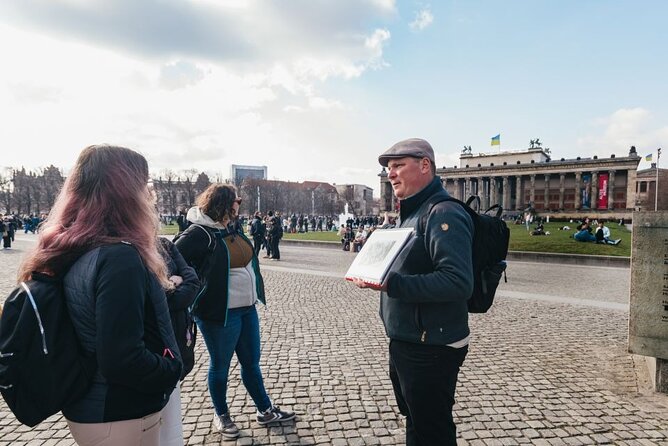
- Small group size (up to 15): enough conversation without feeling crowded.
- English mobile ticket: easy to manage on the day.
- Free site admissions listed for each stop: you’re not paying extra at the memorials.
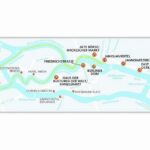
- “Then & now” maps and photos: you’ll understand what changed—and what didn’t.
- A route built around resistance, not only tragedy: the emphasis is on defiance and saving lives.
- You’ll likely do some standing: comfortable shoes matter.
Why this Berlin walking route hits differently
Berlin’s WWII story is everywhere—signs, plaques, buildings, names on streets. This tour’s power comes from how it threads those locations into a single narrative about people who refused, resisted, hid, protected, or protested when it was dangerous to even have the wrong label.
You’ll also notice the tour’s structure: it’s not only about camps and battles. It’s about schools turned into holding spaces, cemeteries destroyed on Nazi orders, workshops that saved people from deportation, and protests that briefly moved power. That’s a different angle than the usual greatest-hits sightseeing day.
And because you’re walking, you’re forced to slow down just enough to look up, not just read. The guide’s photos and maps help you do what Berlin often demands: connect what you’re seeing now to what once stood there.
You can also read our reviews of more tours and experiences in Berlin.


Price and value: $48.01 for 2.5 hours that stays focused
At $48.01 per person for about 2 hours 30 minutes, the big value lever here is what you get for that time. You’re paying for an expert guide, a small-group format, and added interpretation through then-and-now visuals—all while admissions at the listed stops are marked as ticket-free.
You’re also getting a dense route. Many memorial days feel scattered because you’re bouncing between far-apart sites. Here, the emphasis is on key wartime landmarks you can reach on foot, with an ending at S+U Friedrichstraße, which is convenient for your next step.
If you’re weighing whether this is worth it, ask yourself this: do you want a guided story that links places together, or do you prefer to self-tour with your own reading? If you want the first option, this price makes more sense than you might think.
Stop 1: Neue Synagoge (Centrum Judaicum) and the story of a community erased
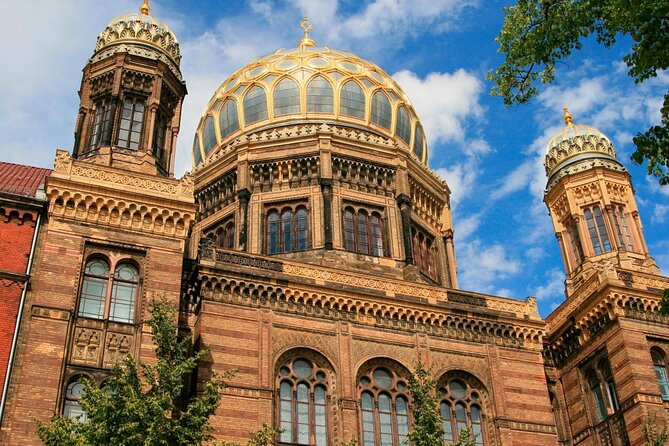
You begin at Stiftung Neue Synagoge Berlin – Centrum Judaicum, the New Synagogue known for its role in the city’s Jewish life in the 1800s. Built in 1866, it represented a community of about 160,000 Berlin Jews at the time—thriving, visible, and integrated.
The building’s wartime path is the opening jolt. It was saved from vandals during Kristallnacht, stayed in use until 1940, then was confiscated and used to store military uniforms. In November 1943, an Allied bombing raid severely damaged it, and later the main hall was torn down in 1958 with partial rebuilding in 1988, reopening officially in 1995.
The practical takeaway for you: this stop is not only a memorial. It’s also a living cultural institution now. You’re seeing how physical spaces can be repurposed, damaged, and then rebuilt into a place for memory and tradition.
Stop 2: Moses Mendelssohn Jewish Gymnasium and how education was turned into detention
Next is Jüdisches Gymnasium Moses Mendelssohn, founded in 1779 as a Jewish boys’ school. It’s notable for its rules of access—first Jewish school in Germany without fees—and its openness beyond one faith, plus a progressive choice to accept female students in 1931.
Then the Nazi machine takes over. In the fall of 1941, deportations to newly conquered eastern territories brought a ban on Jewish schools. By 1942, the Reich Main Security office under the SS turned the building into a transit camp: windows barred, Jews packed inside to await deportation.
This stop can feel especially frustrating, because it shows how quickly a society can break its own promises. You’re not only learning what happened; you’re learning how life was systematically stripped down—learning to waiting, classrooms to confinement.
Stop 3: Jewish Cemetery and Holocaust Memorial, where destruction was public and humiliating
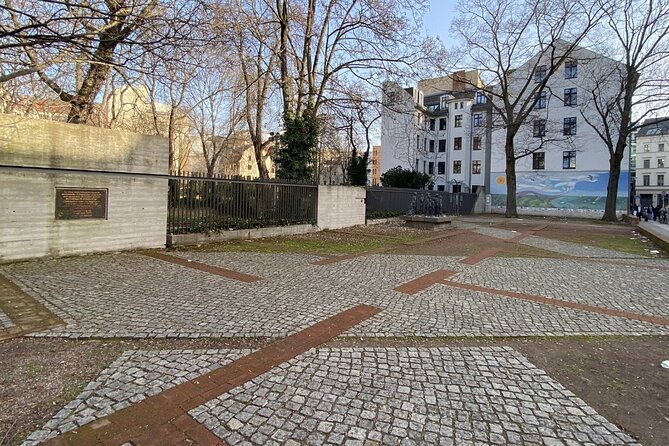
The tour then moves to a Jewish cemetery and Holocaust memorial, tied to burials between 1672 and 1827. Around 12,000 community members were buried there, making it a long-term anchor of Jewish presence in Berlin.
In 1943, the Gestapo ordered the SS to destroy the cemetery—smashing thousands of gravestones, discarding remains, and committing one of the most chilling acts of humiliation: playing football with skulls. In April 1945, burials resumed again, and mass graves include about 2,500 German soldiers and Berlin civilians killed during the fighting or shot for hanging white flags.
Here’s why this stop matters for you as a visitor: it shows how memory was attacked, not just bodies. The contrast—original burials, then destruction, then mass graves—makes the timeline hard to ignore, even if you know the broader history.


Stop 4: Otto Weidt’s workshop and resistance through bribery, paperwork, and risk
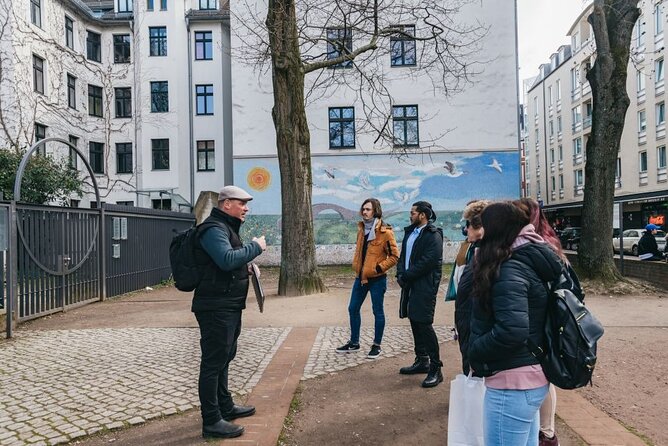
In a hidden courtyard, you reach Museum Blindenwerkstatt Otto Weidt, the workshop of Otto Weidt. Weidt and his wife Else employed more than 30 blind and deaf Jewish workers from 1940 to 1945, and that detail matters because it explains the risk: these weren’t abstract victims. They were people with needs, jobs, and relationships.
As Nazi pressure intensified, Weidt tried to protect his employees from persecution and deportation. That effort included bribing Gestapo officers, falsifying documents, and even going as far as traveling to Auschwitz to try to break one employee out.
This stop is often where the tone shifts—still tragic, but more stubbornly human. You’ll see how resistance can be practical: documents, money, access, and nerve. It’s not only revolts and slogans; it’s also survival logistics.
Stop 5: Denkmal Rosenstraße and the power of protest from ordinary people
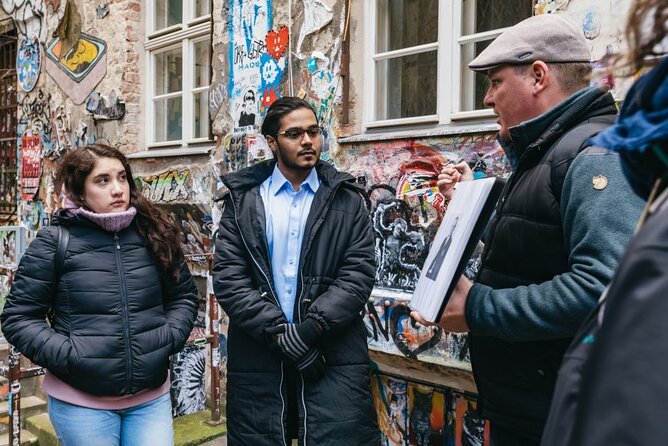
Denkmal Rosenstraße centers on a moment that’s surprisingly specific. On February 27, 1943, the Gestapo, Waffen-SS, and Berlin police arrested about 2,000 Jewish men who were married to non-Jewish German women.
Then came resistance from outside the system. The wives—numbering in the hundreds—gathered to protest. They were threatened, told they’d be shot if they didn’t disperse. They complied briefly, then returned in larger numbers to continue protesting.
Pressure built until Goebbels authorized the prisoners’ release. What you can take from this, as you stand at the monument, is that resistance sometimes looks like persistence in daylight. Not weapons—people.
Stop 6: Lustgarten and the shrinking space for free speech
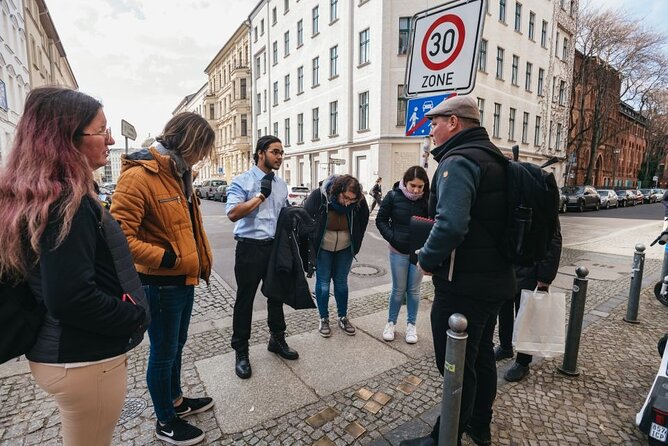
At Lustgarten, you’re surrounded by landmarks that used to frame public debate: Berlin Cathedral, the Altes Museum, and the Zeughaus. Before the Nazis, Lustgarten was a popular spot for protests and speeches.
Soon, Nazi rule tightened the grip. One week after Hitler became chancellor, about 200,000 Berliners protested the new government. Over the following months, strict regulations restricted Germans’ right to protest, and fines and arrests made speaking out very dangerous.
By 1934, the Lustgarten was paved over for Nazi propaganda rallies, swearing-in ceremonies, and military parades. It’s a stark reminder that public space can be redesigned for control, not community.
Stop 7: Zeughaus and the resistance plot tied to captured Soviet weapons
Next is Zeughaus, built in 1730 as an artillery arsenal and later part of Berlin’s monumental “Unter den Linden” axis. On March 21, 1943, it became a venue to exhibit captured Soviet weapons.
The resistance story centers on Major General Rudolf Christoph Freiherr von Gersdorff, a member of the Wehrmacht resistance. He led the exhibit planning, despite repeated failed assassination attempts against Hitler. Gersdorff planned a last attempt: with two concealed British clam mines, he intended to embrace Hitler and trigger the explosion.
This stop ends with a tension-filled setup—your guide explains what happened next during the tour itself. Expect this moment to feel like a shift from personal rescue to planned political action.
Stop 8: Neue Wache and a memorial for war and tyranny
Neue Wache is a different kind of stop: a moving memorial placed in the middle of a busy city. It’s described as Germany’s central memorial for the victims of war and tyranny.
If you’ve been walking through specific events, this one gives your brain a pause. It’s not anchored to one operation or one group; it’s more about the overall cost of a brutal system. For you, that pause can help the rest of the day land without turning into overload.
Stop 9: Book Burning Memorial at Bebelplatz and the attack on ideas
At Bebelplatz near Humboldt University, you find the Book Burning Memorial. On May 10, 1933, Nazi student groups and their professors gathered for a national action against the so-called un-German spirit, burning upwards of 25,000 volumes they labeled un-German.
This is one of the clearest “then-and-now” moments for readers. The target wasn’t only people; it was thought. You’ll probably feel how that kind of censorship creates fear long before arrests happen.
Stop 10: Trains to Life – Trains to Death and the Kindertransport contrast
The final stop is the sculpture Trains to Life – Trains to Death, depicting Jewish children facing opposite fates. One group’s lives were saved through the Kindertransport to England, while the other represents suffering after deportation to concentration camps.
The artist is Frank Meisle, who is himself among those rescued by the Kindertransport traveling from this place to England in 1939. That personal connection matters because it turns a public monument into a life story.
For the end of the tour, this is a strong closing note. You’re not left only with destruction. You see the hinge: decisions made in time, doors that opened for some, and doors that slammed for others.
What the guides and pacing do for you
The format—small group, on-foot route, and “then & now” photos and maps—helps you avoid the common problem with history tours: you know dates, but you can’t picture the geography.
Guides named in past experiences include Johan, Jochen, Scott, Jorg, and Benjamin. One detail that stands out is that Scott has been providing tours for about seven years, which often shows in how smoothly a route runs and how well a guide handles questions without rushing.
Also, the tour is structured around 10-minute blocks at many stops, which keeps momentum. You’ll still feel the day in your legs, but the interruptions to sit and scan photos likely help you reset your focus.
Who should book this tour—and who might choose something else
This tour fits best if you want Berlin history connected to resistance and survival—not only victims, not only perpetrators, but the people who tried to stop the machine. It’s also a good match if you like walking routes that make you look at buildings and squares as evidence, not just scenery.
If you need to avoid heavy emotional material, you might still be fine, since the route includes defiance and rescue. But keep expectations honest: it covers deportations, destroyed cemeteries, forced confinement, and the danger of protesting under Nazi rule.
If your mobility is limited, the tour is described as accessible, and it’s set near public transportation. Still, the “many stops” and some standing time mean you’ll want to plan for comfort.
Bottom line: should you book Path of Resistance in Berlin?
Yes, if you want a guided route that makes sense of locations tied to Holocaust-era resistance and rescue, and you value small-group attention. The value is strong for the price: an expert guide, a dense on-foot path, and added interpretation tools like then-and-now maps and photos, with ticket-free admissions at the stops.
I’d skip it if you hate walking, can’t handle standing, or prefer history told in museums instead of in public squares and original sites. But for most visitors who want a meaningful Berlin day that goes beyond typical sightseeing, this one earns its high marks.
FAQ
How long is the tour?
It runs for about 2 hours 30 minutes.
What does it cost?
The price is $48.01 per person.
Is the tour offered in English?
Yes, it’s offered in English.
How big is the group?
The tour has a maximum of 15 travelers.
Is the ticket mobile?
Yes, you receive a mobile ticket.
Do I need to buy admission tickets for the stops?
No—each listed stop notes admission ticket free.
Is food included?
No, food and drinks are not included.
What is the cancellation policy?
You can cancel for a full refund up to 24 hours in advance. The experience may also be canceled due to poor weather, with an offered different date or a full refund.