
REVIEW · BERLIN
The Old Berlin Tour: Travel Through Time With a Historian
Book on Viator →Operated by Stewart Sean Devin · Bookable on Viator
Berlin has a talent for hiding its past in plain sight.
This Old Berlin tour is built for exactly that kind of city-reading: you get a guided walk through imperial Berlin’s layers, from medieval landmarks to the story that ends at the Berlin Wall era. I love how the route stays at an easy walking pace while still feeling like a real narrative, and I especially like that the guide teaches you how to interpret what you’re seeing, not just where to stand for photos. The one drawback to plan around is that it’s weather-dependent and you’ll be outside most of the time.
The best part is the way Sean Stewart works with a small group (maximum 8). In reviews, people talk about him using a historian’s logic and a guide’s instincts, including asking what you want from Berlin if it’s your first visit. One consideration: this isn’t a long, stop-and-stare museum day, so if you want lots of ticketed entrances or long indoor time, you may find the format a bit more walk-and-story than hands-on.
You’ll start at Espresso House at Rathausstraße 6 near Alexanderplatz at 11:00 am, and you’ll finish at Berlin Cathedral by the Lustgarten. Expect a mobile ticket and a route that mixes iconic sights with places that feel almost too specific to have been planned.
In This Review
- Quick hits before you go
- Why this Old Berlin walk feels like time travel
- Meet historian Sean Stewart: how the guide changes the experience
- Stop-by-stop: from Alexanderplatz’s lost streets to Berlin Cathedral’s finish
- Stop 1: Alexanderplatz and the idea of vanished city blocks
- Stop 2: Franziskaner Klosterkirche, Berlin’s medieval ruin
- Stop 3: St. Mary’s Church and medieval faith that still shows up
- Stop 4: Nikolaiviertel, medieval-themed reconstruction
- Pace and group size: why the route stays pleasant
- Price and value: what $23 buys in Berlin
- Where it starts and ends matters more than you think
- What kind of traveler will like this most?
- When the weather isn’t cooperative
- Should you book the Old Berlin Tour?
- FAQ
- How long is the Old Berlin Tour?
- Where does the tour start and end?
- What time does the tour begin?
- Is the tour in English?
- Do I need to buy admission tickets for the stops?
- How many people are in the group?
- What’s included in the price?
- Is there a cancellation option if plans change?
Quick hits before you go
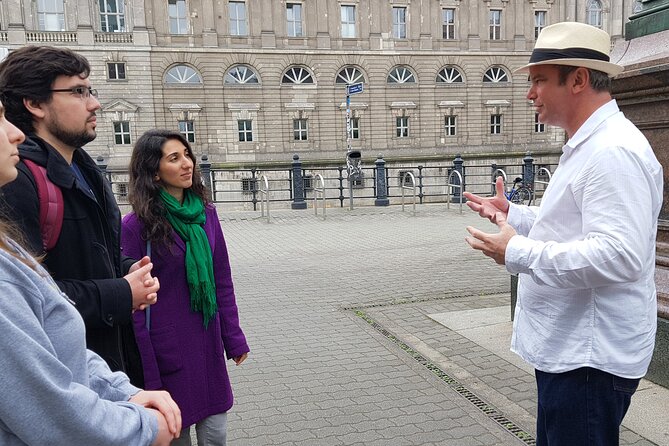
- A 2-hour, small-group walk (max 8), easy pace, and focused on how to read the city
- Historian-led storytelling with English guidance from Sean Stewart
- Four major stops tied to the medieval-to-modern arc, plus context between locations
- Alexanderplatz to Berlin Cathedral gives you a clean start-and-finish line for your day
- Admission is free for the listed sights, so you’re paying for the guide, not entrances
- This route is designed for good-weather walking, not rain-soaked detours
Why this Old Berlin walk feels like time travel
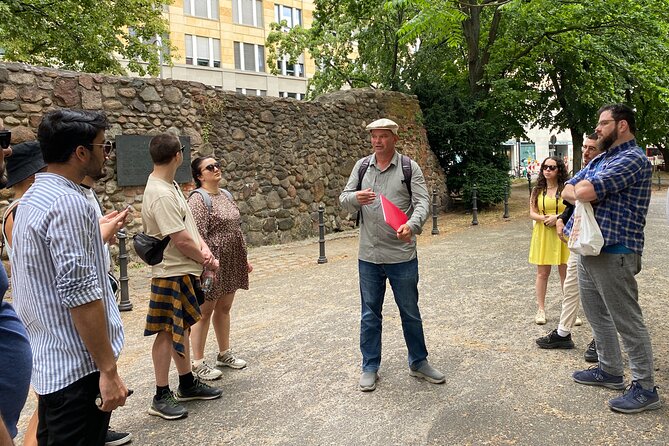
Berlin can feel like a patchwork of eras. That’s not a criticism. It’s the point. This tour helps you see the city as a chain of decisions: what got built, what got erased, and what got rebuilt to make a point. Even when you’re standing in the middle of a modern square or near a big landmark, you’ll hear how the area got to where it is now.
I like the tone of the tour: it doesn’t treat history like a lecture you have to endure. It treats it like a set of clues. You learn why certain places still matter today, and you learn how to notice the small contradictions that make Berlin interesting—places that seem to belong to one century while clearly showing another.
And because the guide is a professional historian, the story isn’t just about dates. It’s about patterns: power, religion, rebuilding, division, and the way the city keeps moving its pieces.
You can also read our reviews of more tours and experiences in Berlin.



Meet historian Sean Stewart: how the guide changes the experience
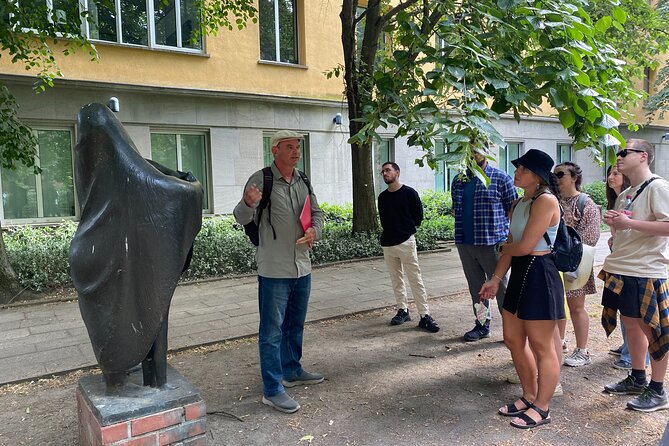
A huge difference on walking tours is whether the guide shows up with “facts” or with methods. On this one, the method shows through. Reviews describe Sean Stewart as someone who doesn’t focus on taking pictures of everything. Instead, he teaches you what Berlin is saying—how to connect the street-level view to bigger historical forces.
People also mention that he knows the city in a very practical way, including courtyards and the little pockets where you can feel the past. Another detail that came through clearly: he listens first. If you’ve been to Berlin before (or only have a partial wishlist), he’ll shape the route so you don’t end up with the same highlights you already saw on your own.
That matters for value. A tour at $23 is cheap enough that you can justify it even if you’re on a tight schedule, but only a good guide turns that money into understanding. Here, the guide is the product.
Stop-by-stop: from Alexanderplatz’s lost streets to Berlin Cathedral’s finish
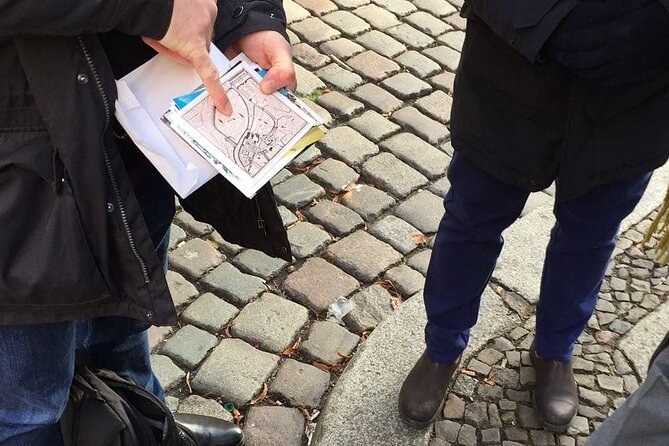
This route runs for about two hours at an easy walking pace. The key stops are short (around 15 minutes each), which is exactly what you want if your goal is to connect multiple eras without burning an entire day on one neighborhood.
Between stops, you’ll hear how Berlin developed from medieval times up through modern moments associated with the Berlin Wall. The physical sights are specific and compact, but the storyline stretches further than the map does.
Stop 1: Alexanderplatz and the idea of vanished city blocks
You begin at Alexanderplatz, one of Berlin’s busiest intersections. The tour’s angle here is what’s missing: the vanished streets and buildings that once shaped the area. Standing near a modern landmark, it’s easy to forget that cities constantly replace themselves.
The practical takeaway: you’ll learn to look at Alexanderplatz not just as a square, but as evidence of change—how urban planning and political priorities can erase a “before” so completely that only context brings it back.
Potential drawback: because Alexanderplatz is busy, you’ll want to keep your listening ears sharp. If you’re the type who needs silence to concentrate, this first section may require a little patience.
Stop 2: Franziskaner Klosterkirche, Berlin’s medieval ruin
Next you head to the Franziskaner Klosterkirche, described as Berlin’s only medieval romantic ruin. It’s a striking contrast: one foot in the medieval period, the other in the modern habit of preserving fragments.
This stop is short, but it’s the kind that changes how you look at ruins. Instead of treating it as a scenic leftover, you’ll hear why it matters and what it suggests about the way Berlin handled religious spaces, preservation, and rebuilding over time.
If you love atmosphere, this is a good moment to slow down and just watch how the structure frames the surrounding city.



Stop 3: St. Mary’s Church and medieval faith that still shows up
Then you’ll visit St. Mary’s Church, an important church from medieval times. Even if you’ve seen older European churches before, Berlin’s story can feel different because the city’s later history constantly interrupts and reshapes older layers.
This is where the tour’s “read the city” approach pays off. You’re not just looking at architecture; you’re learning how religious institutions fit into the broader power story of Berlin.
A small note for expectations: this is a walk-and-explain style stop, so don’t plan it like a long interior church visit unless you’ve got extra time later in your day.
Stop 4: Nikolaiviertel, medieval-themed reconstruction
Finally, you’ll reach Nikolaiviertel, often described as Berlin’s reconstructed medieval Disneyland. That nickname is not meant as an insult—it’s a hint that reconstruction can be both historical and theatrical.
This stop is valuable because it forces a question: what do we want from the past? Sometimes we preserve. Sometimes we recreate. Sometimes we recreate with a purpose, shaping how visitors and locals imagine history.
In other words, you learn to tell the difference between authenticity and interpretation. That skill follows you around Berlin after the tour ends.
Pace and group size: why the route stays pleasant
The whole tour lasts about two hours. The pacing is designed to feel easy, not rushed. And with a maximum of 8 travelers, you’re not trapped in a huge blob of people listening at the same volume.
That small group size helps in two ways. First, you can hear the guide without straining. Second, you’re more likely to get the kind of tailored attention that makes history stories feel personal rather than generic.
What to bring: comfy walking shoes are the obvious answer. Beyond that, wear something you can move in easily. This isn’t a sitting-on-a-bench tour; it’s a city-walk where the route and the conversation are the experience.
Price and value: what $23 buys in Berlin
$23 for a two-hour, historian-led walking tour is strong value, mainly because your money goes into the guide’s expertise. There’s also a clear bonus built in: the listed sights have free admission for the stop moments, so you’re not paying extra for entrances along the way.
Here’s how to think about it. Berlin is a city where you can spend money on attractions. But the bigger challenge is understanding how everything connects. This tour pays for that connection in a tight timeframe. You get a route, a narrative thread, and a guide who can explain why the city still makes sense.
It’s a particularly good deal if you only have one half-day to get your bearings. You’ll leave knowing which parts of Berlin to look at more closely later.
Where it starts and ends matters more than you think
Starting at Espresso House at Rathausstraße 6 is handy because it’s close to public transportation. Ending at Berlin Cathedral near the Lustgarten also gives you a natural finish point you can build the rest of your day around.
This setup is practical if you’re planning a route with other plans: you’re not returning to your exact starting point, and you’re not wandering blindly after the tour is over. You can walk to nearby areas, grab food somewhere convenient, or continue exploring with less friction.
One more small detail: the tour uses a mobile ticket. That’s one less thing to manage when you’re moving through central Berlin.
What kind of traveler will like this most?
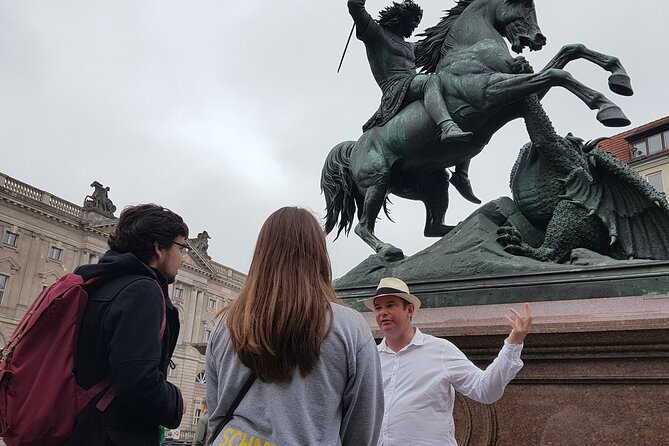
This is a great choice if:
- You’re the type who likes history stories that connect buildings to events
- You want to learn the arc from medieval Berlin toward the Berlin Wall era without hopping around all day
- You prefer short stops with a guide’s context rather than long museum sessions
- You like walking tours where the guide teaches you how to notice things you’d otherwise miss
If you’re traveling with someone who only wants the biggest photo stops, you might need to keep expectations realistic. This tour is more about interpretation than pure sightseeing.
It can also be a good fit for first-time visitors who want to build a mental map fast. And because it’s near public transit with a moderate walking pace, most people can participate comfortably.
When the weather isn’t cooperative
The tour requires good weather. If Berlin’s mood turns, you may have to switch dates or choose another option. If you’re booking during shoulder seasons or you’re the type who hates rainy walking, check your day’s forecast closely and keep your schedule flexible.
Also keep in mind there’s a minimum number of travelers for the tour to run. If it doesn’t hit that threshold, you’ll be offered a different date or a full refund.
Should you book the Old Berlin Tour?
Yes—if your goal is understanding Berlin, not just checking boxes.
Book it if you want a guided narrative that ties medieval sites, reconstructed history in Nikolaiviertel, and the city’s modern turning points into one story. The small group size (max 8) and the historian-led approach make it feel focused, not generic. And at $23, it’s priced like a smart add-on rather than a “big splurge.”
Skip it only if you hate walking tours, want lots of long indoor time, or you’re planning a day that can’t handle outdoor conditions. Otherwise, this is a strong way to leave Berlin with more than photos—leave with a better way to read the city as it changes around you.
FAQ
How long is the Old Berlin Tour?
The tour is approximately 2 hours.
Where does the tour start and end?
It starts at Espresso House, Alea 101, Rathausstraße 6, 10178 Berlin, Germany, and ends at Berlin Cathedral, Am Lustgarten, 10178 Berlin, Germany.
What time does the tour begin?
The start time is 11:00 am.
Is the tour in English?
Yes. The tour guide is English-speaking.
Do I need to buy admission tickets for the stops?
Admission is listed as free for the stops included on the itinerary.
How many people are in the group?
The tour has a maximum of 8 travelers.
What’s included in the price?
The service of a professional historian and a tour guide is included. Food and drinks are not included.
Is there a cancellation option if plans change?
Yes. You can cancel for a full refund up to 24 hours before the experience starts. If you cancel less than 24 hours before, the amount paid is not refunded.