REVIEW · BERLIN
Berlin: Decolonial Berlin Castle/ Humboldt Forum Guided Tour
Book on GetYourGuide →Operated by deSta- Dekoloniale Stadtführung · Bookable on GetYourGuide
Berlin’s castle looks the same, but the story changes.
This guided tour at the Humboldt Forum uses an Afrocentric and decolonial perspective to make the usual museum narrative feel far more honest and human. I also love how the guide pushes a critical lens on the ethnological collection, so you learn how objects, labels, and displays connect to colonial power.
The main trade-off is time: the format includes about 1 hour outside first, and the museum portion can feel a bit tight, especially if you want lots of slow reading inside.
In This Review
- Key highlights you should care about
- Why a Decolonial Humboldt Forum Tour Changes the Usual Museum Story
- Meeting at the Reconstructed Sanchi Gate and Using the 2-Hour Format Smartly
- Berlin Palace, 500 Years of Story, and the New Lens You’re Given
- Humboldt Brothers: Why German Science Gets Linked to Colonial Structures
- Inside the Ethnological Collection: Audio Walk Plus Critical Reading
- Missionaries, the Roof Cross, and the Symbolic Language of the Museum
- Price, Value, and What You’ll Get in 2 Hours
- Should You Book This Decolonial Berlin Castle / Humboldt Forum Tour?
- FAQ
- How long is the guided tour?
- Where do I meet the guide?
- Is the tour in English?
- Is entry to the ethnological collection included?
- Will I spend time outside before going into the museum?
- Is there an audio component inside the museum?
- Is the tour wheelchair accessible?
- What should I bring?
- Is there anything I should not bring?
- Is it possible to cancel and get a refund?
Key highlights you should care about
- Afrocentric, decolonial framing: You get a different storyline for Berlin’s palace and the museum it houses.
- Critical look at the ethnological collection: You learn how context and interpretation shape what you think you’re seeing.
- Colonial history made specific: The guide connects colonialism to Berlin’s castle legacy.
- Humboldt brothers explained through impact: Their scientific role is treated as part of the bigger history.
- Symbolism you’ll notice later: Even the roof cross and missionary involvement get decoded.
- Audio walk inside the collection: You’ll analyze exhibits instead of just passively watching them.
Why a Decolonial Humboldt Forum Tour Changes the Usual Museum Story

The Humboldt Forum can be confusing in the best and worst ways: the building is monumental, the exhibitions feel official, and it’s easy to assume the labels explain everything. This tour deliberately breaks that spell. You’re guided to see how the museum’s story was assembled, whose voices were centered, and which narratives got pushed aside.
I like that the approach stays grounded in explanation, not just opinions. You’ll connect the dots between Berlin’s palace history and the wider colonial world that helped shape European collecting. Instead of treating colonialism as a distant chapter, the tour treats it like a working system that left physical and cultural marks we still live with today.
If you want your museum visits to feel like history class with teeth, you’ll probably enjoy this. If you expect a neutral, smoothing-over tone, you might feel discomfort here. The point is not to shock you, but to make you see what you’ve likely been trained to overlook.
You can also read our reviews of more guided tours in Berlin



Meeting at the Reconstructed Sanchi Gate and Using the 2-Hour Format Smartly

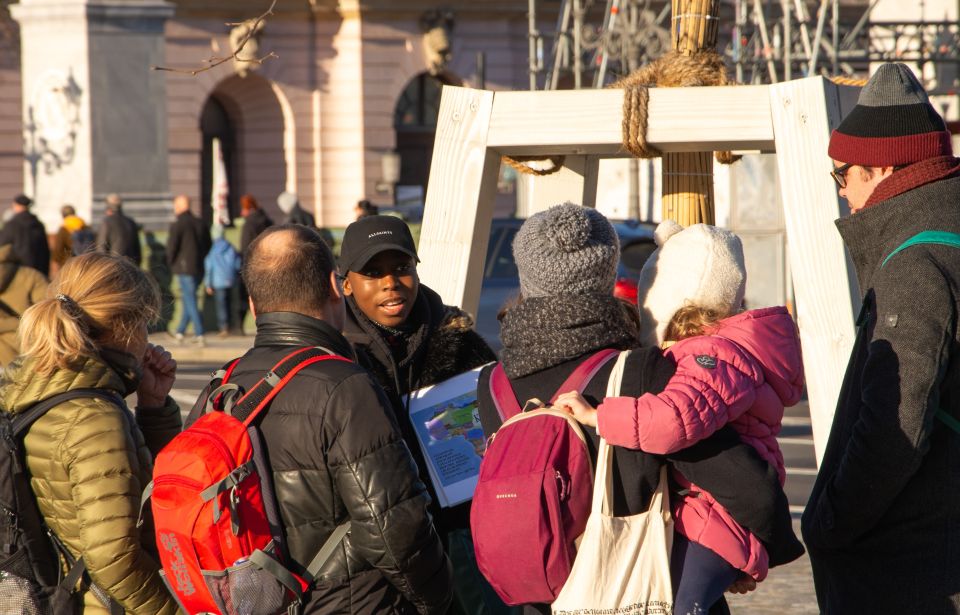
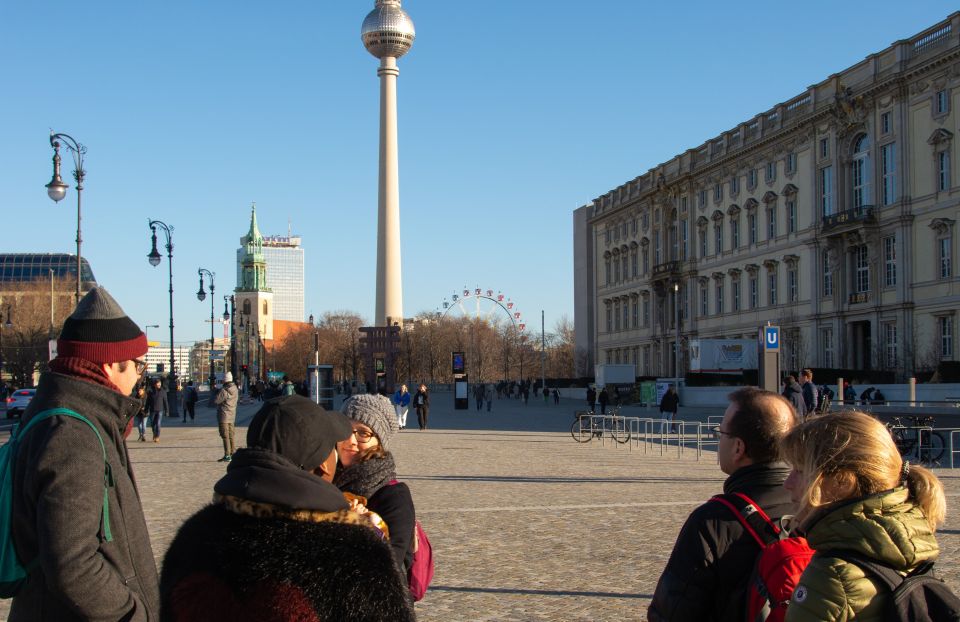
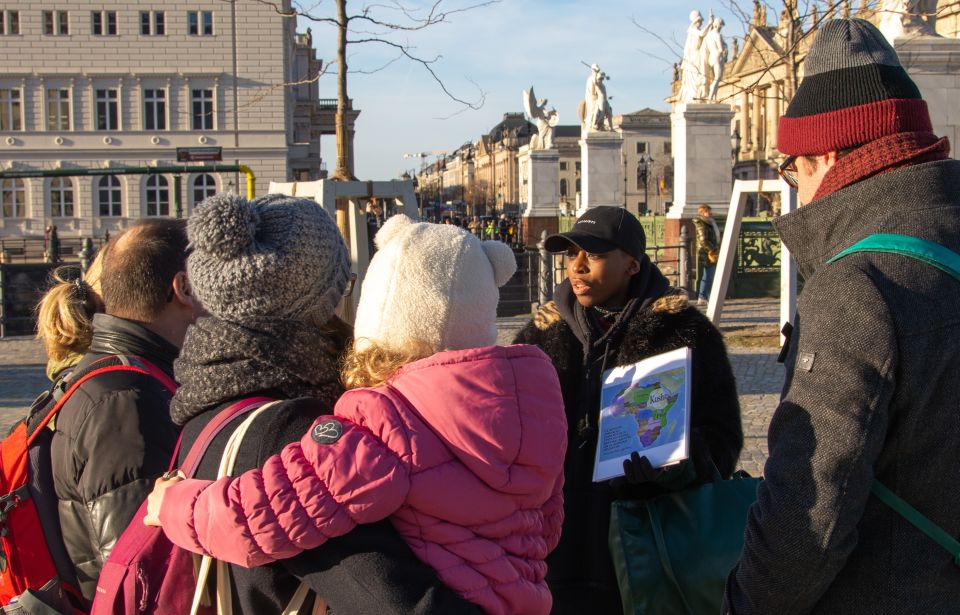
You meet your guide near the reconstructed Sanchi Gate (Rekonstruktion des Sanchi-Tores), where there are white chairs to sit down. The tour includes time outside first, roughly 1 hour, before you head into the museum.
That outside block matters. It’s where you’ll get orientation for what you’re about to see and why the palace itself is part of the conversation. In a lot of museums, people rush straight to rooms and forget to read the building. Here, you get time to slow down and connect architecture and meaning.
Bring comfortable shoes and dress for the weather. The tour doesn’t mention moving fast through outdoor distance, but you are outdoors for a significant chunk of the 2 hours. Also note the rules: no food or drinks, and no luggage or large bags. If you’re planning to carry a big daypack, consider keeping it small enough to avoid hassle.
Berlin Palace, 500 Years of Story, and the New Lens You’re Given

A key promise of this tour is that you’ll understand the palace’s history from a different point of view, including its 500+ years of story. The guide’s goal is to show how the palace and its collections didn’t just happen in a vacuum. They were built and maintained through networks of power, knowledge, and extraction.
What I find useful is the tour’s focus on “why this matters now.” You’re not just collecting dates and names. You’re learning how colonial narratives became cultural heritage, how that heritage is displayed, and what it can mean for people who are represented—or misrepresented—inside museum spaces.
The palace setting also changes how you read the museum. When the building looks like a symbol of European greatness, it’s tempting to stop there. This tour nudges you past the surface and into the uncomfortable question: greatness for whom, and paid for by whom?
Humboldt Brothers: Why German Science Gets Linked to Colonial Structures
The Humboldt brothers come up as essential figures in German history, and the tour treats them seriously. You’ll hear who they were as scientists and why they matter—but you’ll also learn how colonial structures and collecting logic connected to that era of knowledge.
This is one of the tour’s strengths: it doesn’t separate science from politics. Instead, it shows how “research” and “exploration” were tied to imperial ambitions and the social systems that made movement, acquisition, and display possible.
If you like history that connects institutions to real-world outcomes, this section is likely your favorite. You’ll leave with a clearer sense of how the Humboldt name became part of the museum’s identity, and why that identity deserves critique, not just respect.
Inside the Ethnological Collection: Audio Walk Plus Critical Reading
Once you reach the museum, you’ll have access to the ethnological collection (entry is included) and you’ll explore using an audio walk. The goal isn’t to speed through exhibits; it’s to analyze them from a critical perspective while you’re there.
This is the part where the tour changes how you experience labels, categories, and display choices. The objects themselves may be familiar if you’ve seen photos before, but you’re guided to notice what the presentation emphasizes and what it leaves out. You learn to ask questions like: who classified this, how was meaning attached, and what political context made that meaning “official”?
The tight timing can be real here. One potential drawback is that the museum time can feel shorter than you’d like, especially if you want to linger over multiple exhibits. If you’re the type who reads everything carefully, plan to do a follow-up self-visit afterward—this tour sets the framework, then you can spend extra time absorbing the details on your own.



Missionaries, the Roof Cross, and the Symbolic Language of the Museum
A standout detail in the tour description is the emphasis on missionaries and the symbolic meaning of the cross on the roof. That’s not an afterthought; it’s a useful teaching moment.
You’ll learn about the role missionaries played in creating colonial structures, and you’ll connect that to visible symbolism on the building. This kind of explanation matters because symbols shape behavior. If a roof cross signals faith and legitimacy, the museum can quietly borrow authority from that symbolism—even when the exhibitions cover other cultures and colonial histories.
What I like about this approach is that it gives you a concrete, memorable thread. After the tour, you’re likely to notice symbolic design cues in other European civic buildings too: coats of arms, architectural gestures, religious references, and how they frame “heritage.”
Price, Value, and What You’ll Get in 2 Hours
The tour costs $41 per person and lasts 2 hours, with entry to the ethnological collection included. For Berlin, that’s not a budget-killer, and it’s not a luxury splurge either. You’re paying for structured interpretation, guided context, and access—plus the outside briefing that sets up how to read the museum once you’re inside.
You also get a clear format: a live English guide, a portion outdoors for meaning-making, then museum exploration with critical prompts via audio. If you’d rather not spend your limited time in Berlin figuring out how to interpret the Humboldt Forum yourself, this is a practical shortcut.
Still, manage expectations. The tour isn’t described as a long, room-by-room study. It’s designed to give you key frameworks—colonialism, the Humboldt brothers, missionaries, and how museums carry legacy—so you can continue thinking after you leave.
Who I think it’s best for:
- You want a decolonial perspective on a major Berlin landmark.
- You’re interested in how ethnological collections were built and explained.
- You like guided analysis instead of passive sightseeing.
- You’re okay with history being presented in a pointed way.
Should You Book This Decolonial Berlin Castle / Humboldt Forum Tour?
I’d recommend booking if you want your visit to do more than look. This tour gives you tools to interpret what you see: how colonialism links to the palace, why the Humboldt name isn’t neutral, and how missionaries and symbolism show up in the museum’s “official” face.
I’d think twice if you strongly prefer an interpretation that feels detached and comfortable. The tour’s whole point is that the legacy of empire isn’t just academic—it’s cultural, and it’s political. One more practical caution: there has been at least one reported instance of a guide not showing up, so when you book, make sure you have your confirmation details and meeting point clearly saved.
If you want a museum visit that helps you read between the lines, this is a smart use of time in Berlin. If you want a quick highlights tour with minimal friction, choose something else.
FAQ

How long is the guided tour?
The tour lasts 2 hours.
Where do I meet the guide?
Meet your guide near the reconstructed Sanchi Gate (Rekonstruktion des Sanchi-Tores).
Is the tour in English?
Yes, the live tour guide is English.
Is entry to the ethnological collection included?
Yes. Entry to the ethnological collection is included.
Will I spend time outside before going into the museum?
Yes. You’ll be seated outside for approximately 1 hour before heading into the museum.
Is there an audio component inside the museum?
Yes. You’ll browse through the ethnological collection with an audio walk and analyze it from a critical perspective.
Is the tour wheelchair accessible?
Yes, it is listed as wheelchair accessible.
What should I bring?
Bring comfortable shoes and weather-appropriate clothing.
Is there anything I should not bring?
Food and drinks are not allowed, and luggage or large bags are not allowed.
Is it possible to cancel and get a refund?
Yes. You can cancel up to 24 hours in advance for a full refund.