REVIEW · BERLIN
Visita en español al campo de concentración Sachsenhausen
Book on Viator →Operated by CULTURE AND TOURING TOURS · Bookable on Viator
Berlin to Sachsenhausen hits hard fast. This Spanish-language tour brings the camp’s layout and purpose into focus with a guide who explains as you walk. It’s one of those trips where language matters—you’re not just looking at history, you’re understanding it.
What I like most is that you get a guided visit across the whole memorial area, including areas visitors often find hardest to make sense of. You’ll also hear stories tied to how people were processed and moved through the site, with anecdotes of daily life used to help you grasp the reality behind the buildings.
One thing to consider: the experience is structured and timed, and that can feel a little intense if you want to linger slowly or if you’re traveling with kids who move at a different pace.
In This Review
- Key takeaways before you go
- A Spanish-Speaking Ride From Berlin to Sachsenhausen
- What You Actually See Inside the Camp
- Why the Spanish Guide Changes Everything
- Tour Timing, Group Size, and Why the Minutes Matter
- Price and Value: What You’re Getting for About $35
- What’s Not Included (and How to Plan Around It)
- Practical Tips for a Day of Walking and Weather
- Who This Tour Suits Best
- Should You Book This Spanish Tour of Sachsenhausen?
- FAQ
- How long is the Sachsenhausen concentration camp tour?
- Is the guide available in Spanish?
- Does the tour include admission?
- Where do we meet in Berlin?
- Do I need to bring a transport card?
- Is free cancellation available?
Key takeaways before you go
- Spanish-language guide for clearer understanding and fewer lost moments
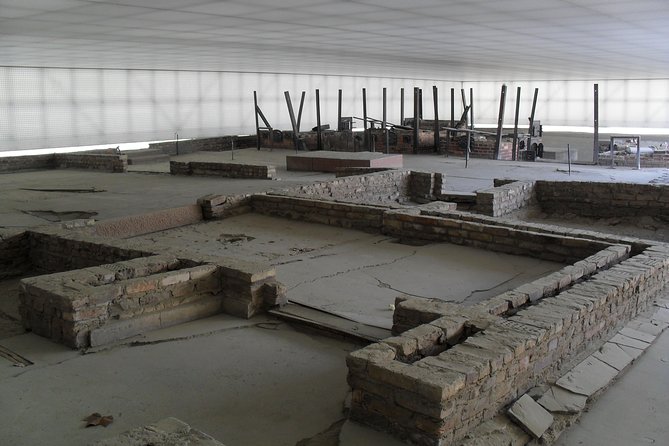
- Whole-camp route with major stop points like the execution area, headquarters, and casino
- About 5 hours total with round-trip from Berlin to Oranienburg
- Smallish group (max 30) tends to make questions more workable
- Mobile ticket keeps things simple, but you still need a transport card
A Spanish-Speaking Ride From Berlin to Sachsenhausen
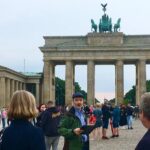
This is a round-trip outing based in Berlin, designed to get you to Sachsenhausen without you needing to figure out the logistics on your own. You start at Pariser Platz 4, 10117 Berlin, with a 9:00 am departure. The end point is at the Sachsenhausen Memorial & Museum address in Oranienburg, so you land right where the walking begins.
The big win here is the Spanish focus. The tour is built for Spanish-speakers, and that changes the tone of the day. You’ll spend less time translating your way through explanations and more time absorbing what you’re seeing—especially important in a place where details matter.
There’s also a practical element I appreciate: it runs in all weather conditions, and that’s exactly what you want for a memorial visit. You don’t want the day derailed by rain, and you can plan clothing around the reality of walking outside.
You can also read our reviews of more tours and experiences in Berlin.


What You Actually See Inside the Camp
This tour is long enough to cover a lot, but not so long that it becomes a blur. The core of your time is a guided visit that focuses on both the interior and exterior of the former camp facilities.
Inside the memorial area, you’ll go through major points such as:
- Armory
- Entrance
- Casino
- Command headquarters
- Tower A
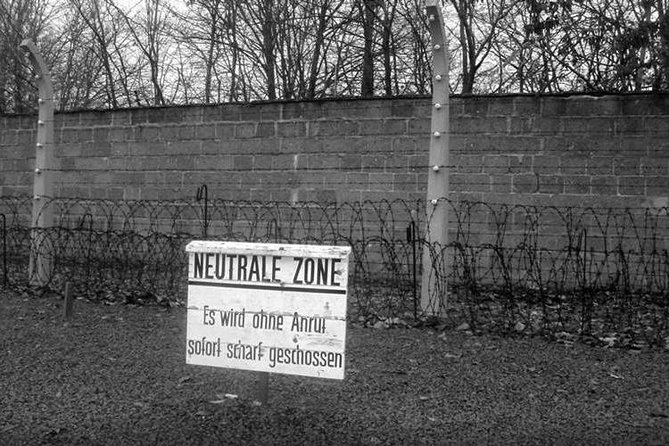
- Execution area
- Barracks
- Kitchen
That list matters because it matches what most people need to understand. You’re not only looking at one kind of space. You’ll see the parts tied to control and surveillance (like Tower A and the command headquarters), the parts connected to daily routine and confinement (like barracks and kitchen), and the parts that represent the violence at the heart of the system (like the execution area).
Even if some buildings feel visually similar, the meaning changes as your guide explains how people were processed and where key functions were carried out. The “whole camp” approach is what prevents this from becoming just a checklist of photos.
A realistic note: the memorial is not designed for casual sightseeing. You may find that there isn’t a lot of “easy wandering” on your own. Plan on following the route closely and letting the guide pace the experience.
Why the Spanish Guide Changes Everything
In a memorial visit, clarity is respect. This tour is structured around Spanish-language interpretation, and the results show in the way guides turn the site into understandable story.
Many guides associated with this route are praised for turning explanations into something you can actually process. Names that come up include Alberto, Vicent, Ivan, Micaela, Edu, Francisco, Jorge, and Eduardo. The pattern is consistent: the guide doesn’t just recite facts, they shape the walk into a narrative you can follow.
You’ll also get more than a general overview. The tour description highlights personalized insight and anecdotes of daily life, and that’s a powerful tool here. Buildings and barriers are difficult to interpret without context. When your guide explains what people would have encountered in that space, you start to see how the system worked from the inside—not as a concept, but as daily reality.
One more detail I appreciate: guides are expected to help you navigate so you don’t spend precious time getting lost or confused about where to stand and what to look at next. In a place like Sachsenhausen, that saves mental energy you’ll want for paying attention.
Tour Timing, Group Size, and Why the Minutes Matter
This is listed as roughly 5 hours total, with about 3 hours inside the guided visit. That structure is useful because it balances walking with explanation time. You’ll have enough time to see the main sites without feeling like you’re stuck inside a van for the entire trip.
The group size is capped at 30 travelers. That’s large enough to keep the tour efficient, but small enough that questions aren’t hopeless. I like that for memorial visits—sometimes you don’t know what to ask until you’re standing in front of something.
That said, one possible drawback pops up in the way timing can feel strict. Some people find it a bit stressful if you want more time at each stop, and the tour may move quickly to keep the schedule. This matters most if you’re traveling with kids. The pacing can be a mismatch for younger travelers who move slower.
If you’re the type who likes slow contemplation, I’d suggest doing what you can within the route and then planning to return for extra time separately if you want deeper reflection. On this tour, the value is the guided explanation across many key sites—so the pace is part of how you get the whole picture.
Price and Value: What You’re Getting for About $35
The price is $34.58 per person, and that’s not just a ticket price. You’re paying for:
- A professional Spanish-language guide
- Coverage of major camp areas in a structured route
- Round-trip from Berlin
- Admission ticket included for the main visit segment (the guided time in the memorial area)
For a trip like this, the math is pretty straightforward. If you were to piece it together independently, you’d spend time and energy coordinating transportation, finding the right memorial entrance plan, and figuring out interpretation on your own. Here, the guide is doing the heavy lifting.
Also, this is a popular experience booked on average 12 days in advance. That’s a sign you should plan early if your dates are fixed. A guided visit that starts on time is worth prioritizing—especially because you’re traveling from Berlin to Oranienburg.



What’s Not Included (and How to Plan Around It)
The tour keeps a simple boundary on what you pay for.
Not included:
- Food and drinks, other than any optional value-added offers specified by the guidebook
- You must bring your Tarjeta de transporte ABC (you need it purchased)
That transport-card note can catch people off guard if you’re used to tours that handle local transit. Here, you’re responsible for having the right pass on hand. If you already have it, great—your morning is smoother.
For meals, don’t assume there’s a long lunch break built into the schedule. The memorial part is time-focused, and food planning should be practical rather than elaborate. Think “grab and go” before or after, and keep the day’s energy for the walk.
Practical Tips for a Day of Walking and Weather
This is one of those experiences where what you bring affects how much you can actually absorb.
- Dress for all weather conditions. It’s an outdoor walk through meaningful spaces, so bring layers if the forecast looks changeable.
- Wear shoes that handle long walking. The memorial route includes several stops, and you’ll want stable footing.
- Bring your mobile ticket ready to show.
- If you’re traveling with a service animal, they’re allowed.
Finally, consider your expectations about pacing. The best approach is to stay close to the group, listen fully, and ask questions when you have them. If you keep your “I want to read everything slowly” brain switched on, you might feel rushed. If you switch to “I want to understand what I’m seeing,” the structure will feel right.
Who This Tour Suits Best
This tour is a strong match if you want:
- Spanish-language interpretation so you can follow the meaning, not just the visuals
- A guided, full-site route that hits major points like the execution area, headquarters, and casino
- A day trip format that doesn’t require you to self-plan transport and entry
It’s also a good fit if you like having a guide who can answer questions as you go. The tour is designed to keep you from missing key areas and to help you move efficiently between sections.
If you prefer unguided visits only, this may not feel like the right style for you. In Sachsenhausen, a guide often provides what you need to connect structures to what happened there. Without that thread, it’s easy to leave with photos instead of understanding.
Should You Book This Spanish Tour of Sachsenhausen?
If you’re in Berlin and you want to face Sachsenhausen with clarity and respect, I think this is a very good way to do it—especially because it’s in Spanish and built around explaining the camp’s core areas. The route covers the major parts most people want to understand, and the guide-led pacing helps you process the site as a system, not as disconnected buildings.
Book it if:
- Spanish is your comfort language and you want to understand deeply without mental translation
- You want a structured route that covers the whole camp areas efficiently
- You appreciate guided interpretation more than self-guided wandering
Skip it or reconsider if:
- You need lots of unscheduled time to linger at each spot
- You’re bringing very young kids who may struggle with a timed structure
FAQ
How long is the Sachsenhausen concentration camp tour?
It’s listed at about 5 hours total, with around 3 hours spent on the guided visit at Sachsenhausen.
Is the guide available in Spanish?
Yes. This experience is specifically offered in Spanish for Spanish-speakers.
Does the tour include admission?
Admission is included for the guided visit portion (the 3-hour Sachsenhausen visit).
Where do we meet in Berlin?
You meet at Pariser Platz 4, 10117 Berlin with a 9:00 am start time.
Do I need to bring a transport card?
Yes. You’re expected to bring your Tarjeta de transporte ABC, which must be purchased in advance.
Is free cancellation available?
Yes. You can cancel up to 24 hours in advance for a full refund.