REVIEW · BERLIN
East Berlin: City of Shadows Walking Tour
Book on GetYourGuide →Operated by insightcities.com · Bookable on GetYourGuide
East Berlin still whispers through its monuments. This 3-hour East Berlin City of Shadows walking tour strings together Iron Curtain landmarks with a historian guide who helps you read the city’s built environment like evidence, not just sightseeing. I especially like the way the tour brings the Stasi era into focus, and I also like the emotional punch of stops like the Palace of Tears and the Wall memorial.
One thing to plan for: you’ll use public transport during the tour, and the ticket cost isn’t included in the price. That doesn’t spoil the experience, but it does mean the schedule is partly transit-based, so build in a little patience.
In This Review
- Key highlights
- Why East Berlin Still Feels Like Another Story
- Starting at Unter den Linden 42: Where the Story Gets Its Legs
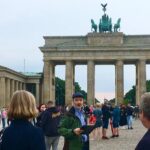
- Brandenburg Gate and the Soviet Embassy Monument: Control Built from Rubble
- Friedrichstraße Station and the Palace of Tears
- The Wall Memorial and the Death Strip: When Geography Was a Weapon
- Stasi Headquarters: Eric Mielke and How Spying Worked
- Alexanderplatz and the 1989 Demonstrations
- Price and Time: Is $153 Worth It?
- What to Expect From the Guide (and Why It Matters)
- Who This Tour Suits Best
- Should You Book East Berlin: City of Shadows?
- FAQ
- How long is the East Berlin City of Shadows walking tour?
- Where do I meet the guide?
- Is the tour in English?
- What is included in the price?
- Do I need to use public transport during the tour?
- Is there a cancellation option?
- Can I book a private or small group version?
Key highlights
- Historian-led explanations from professors, doctoral students, historians, journalists, art critics, or published authors
- Palace of Tears at Friedrichstraße, where families said goodbye under strict rules
- Berlin Wall memorial with stories tied to the Death Strip
- Stasi headquarters and what Eric Mielke built through spying and surveillance
- Alexanderplatz and the 1989 demonstrations that ended Communist rule
Why East Berlin Still Feels Like Another Story
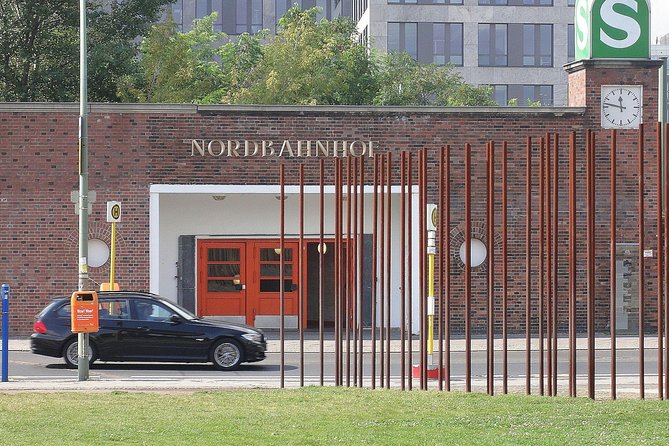
East Berlin isn’t just a place you visit. It’s a place you interpret. This tour does that well because it doesn’t treat the Cold War as a distant TV-era. Instead, it connects what you see now—buildings, checkpoints, memorials—to what once controlled daily life.
I like the tone here. It’s serious without turning into a lecture you can’t follow. Your guide sets the scene, explains the system, and then ties each stop to a specific human consequence: movement restricted, people monitored, families separated, and public life staged.
If you’re the kind of person who wants more than dates—if you want to understand how power works—this format helps. You get a walk-through of visible sites, but the real point is how they shaped behavior.
You can also read our reviews of more walking tours in Berlin



Starting at Unter den Linden 42: Where the Story Gets Its Legs
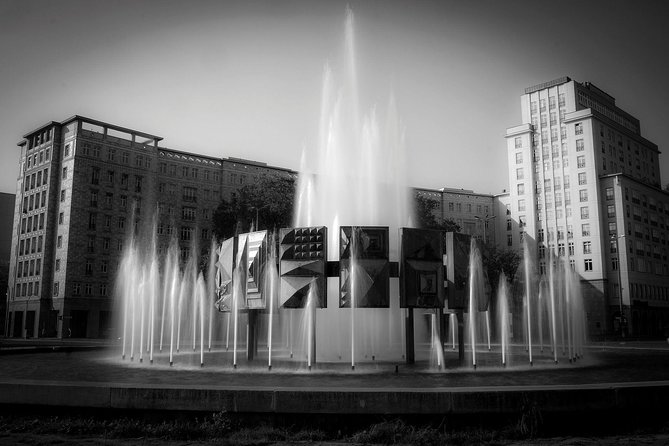
You’ll meet the guide at Unter den Linden 42, and from there you head toward the tour’s anchor point by the Brandenburg Gate area. This matters because it gives you a clear starting frame: you’re not starting deep in a museum archive. You’re starting in the open air, in a city that still carries layers from the post-war and Cold War eras.
The guides on this tour are not casual tour staff. They’re professors, doctoral students, historians, journalists, art critics, or published authors. In plain terms, you’re getting someone trained to explain context, not just repeat a script.
In the past, guides like Martin and Dan have led bookings, and that personal touch shows in the way the explanations stay anchored and clear. One review even notes how Dan checked in to make sure the pair on tour was doing well, which is a small detail but a real comfort on a 3-hour route.
Brandenburg Gate and the Soviet Embassy Monument: Control Built from Rubble
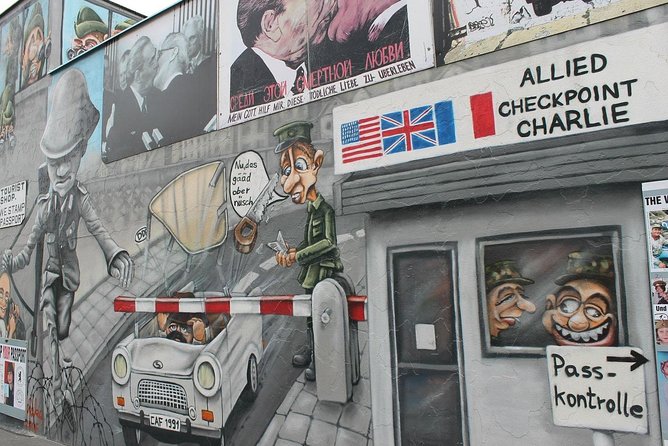
The tour begins at the Brandenburg Gate area, near a grand monument tied to the former Soviet Embassy. The key idea you’ll hear here is how war damage didn’t just destroy Berlin—it also became raw material for new political messaging.
Your guide points to a striking detail: the Soviet Embassy was built from the rubble left after World War II. That’s the kind of fact that makes you look twice. You start connecting the dots between reconstruction and power, between rebuilding and sending a signal about who was in charge.
This stop works because it puts you in the mindset of the Cold War right away. Before you even reach Friedrichstraße, you’re already seeing how monuments weren’t neutral. They were statements—made with material that had just come from destruction.
Friedrichstraße Station and the Palace of Tears
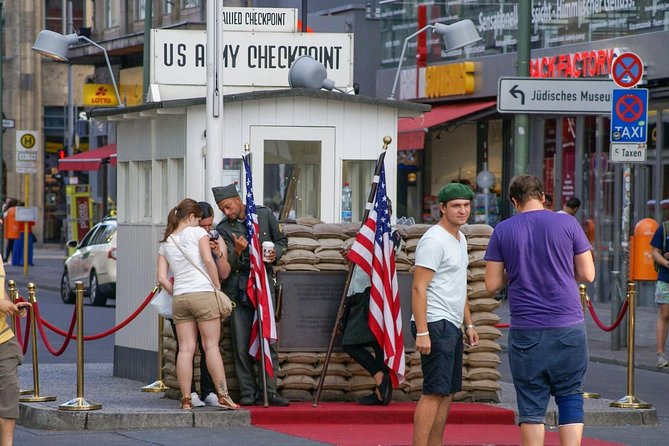
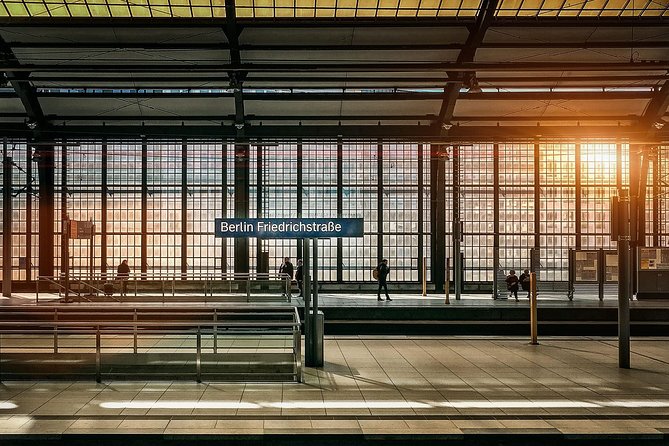
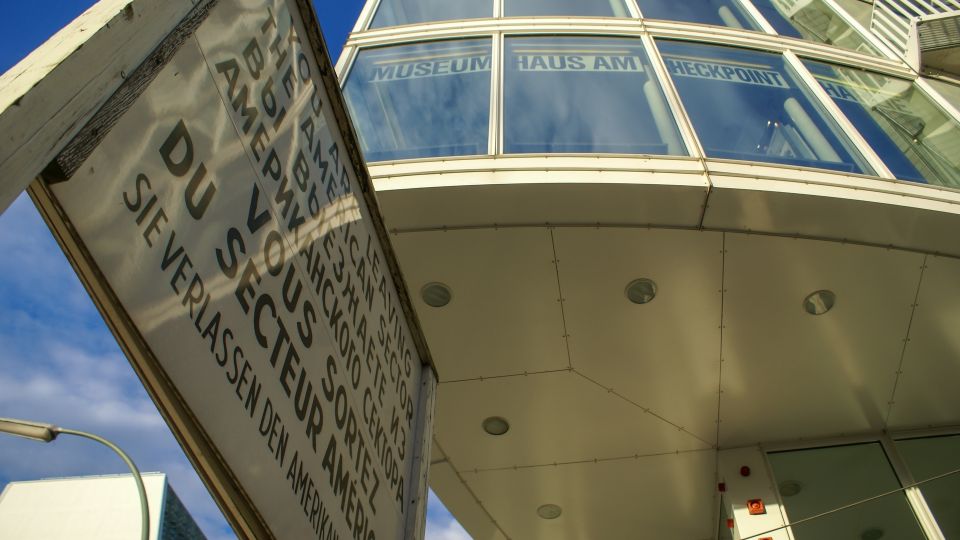
Next comes Friedrichstraße station, a major crossing point between East and West Berlin. This is where the tour shifts from political symbolism into personal reality.
Your guide takes you to the Palace of Tears, the office where families said their sad goodbyes under East Germany’s strict immigration laws. That phrasing matters: it’s not presented as a generic sad moment. It’s framed as an administrative process—rules enforced through paperwork and procedure, with real people trapped inside it.
Two things make this stop hit hard in a useful way:
- You understand the system by seeing where it operated.
- You see how policy became emotion, and how emotion became procedure.
If you care about the human side of political history—how state control can show up in everyday moments—this is a must-remember stop. And it’s also a good “reset” point in the tour, because after the monuments at the edge of the story, this one lands in the center of daily separation.
The Wall Memorial and the Death Strip: When Geography Was a Weapon
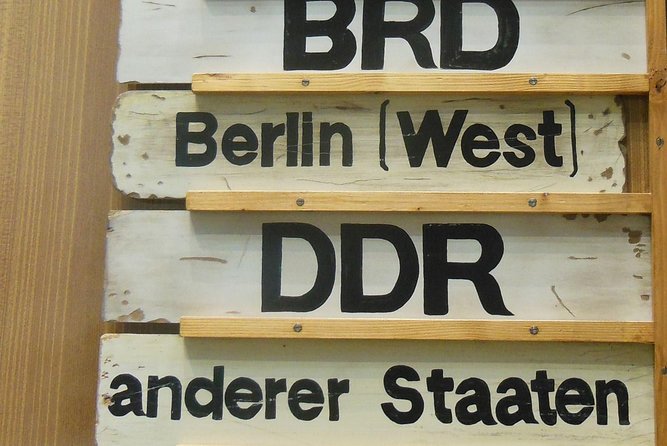
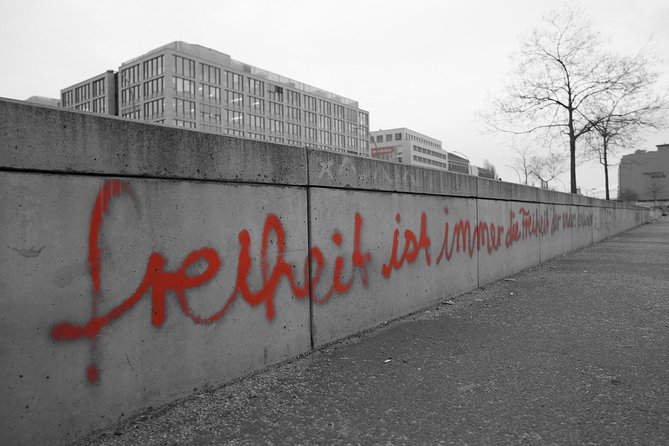
Farther along, you reach the Berlin Wall memorial, and this is where you’ll hear stories tied to the notorious Death Strip. The tour doesn’t treat the Wall as just a line on a map. It explains it as a built mechanism for preventing escape.
You’ll learn why this area became deadly and how attempts to flee were tragically shaped by what the Wall turned the city into. Your guide’s job here is to connect your eye-level view—what you can stand and see today—with the way that same space was engineered to stop people in the past.
This is also where the tour’s historian-led approach pays off. Instead of turning the subject into shock value, it keeps the focus on cause and effect: surveillance, barriers, and the way movement was controlled. That makes the stories feel grounded, not just grim.
If you’ve ever walked past a Cold War memorial and wondered what it actually meant for someone’s life, this section gives you the missing translation.
You can also read our reviews of more city tours in Berlin




Stasi Headquarters: Eric Mielke and How Spying Worked
At the former Stasi headquarters, the tour moves into one of the darkest topics of the East German system: surveillance.
You’ll hear about the feared leader, Eric Mielke, and how he helped build a massive network of spies. The tour also explains that the Stasi created innovative surveillance techniques. You don’t need technical detail to get the core point, but you do come away understanding the scale and purpose: constant observation isn’t just spying—it’s control.
This stop is valuable because it reframes what you thought you knew about the East German state. It’s easy to think of Communist power as tanks and borders. The Stasi angle shows how power also lived in relationships, daily behavior, and the fear of being watched.
In reviews, the best praise points toward exactly this kind of explanation of hidden elements before 1990. The tour uses the headquarters as a physical anchor so the abstract idea of surveillance becomes something you can visualize in space.
Alexanderplatz and the 1989 Demonstrations
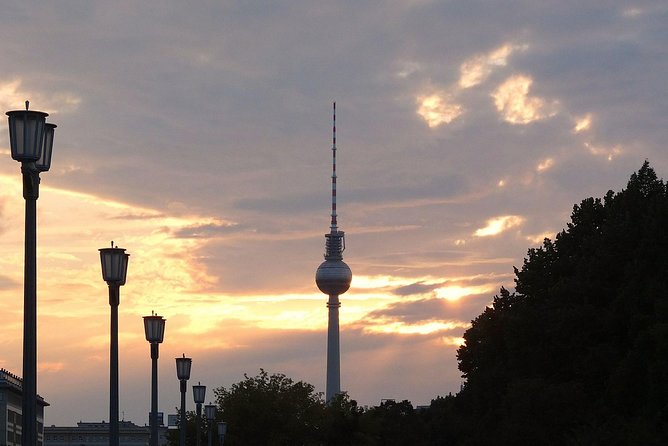
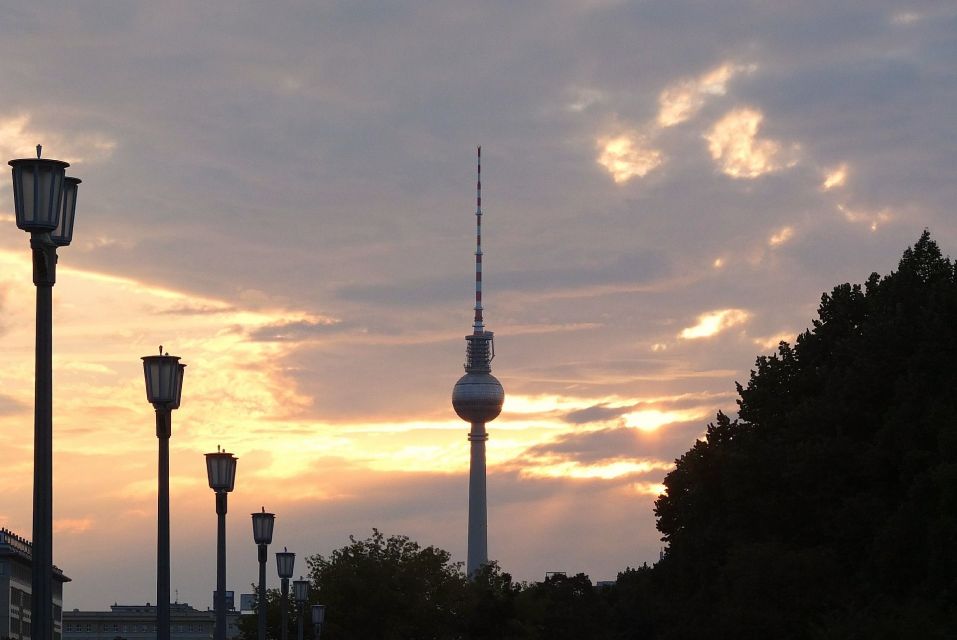
The tour ends at Alexanderplatz, the center of public life in East Berlin. The guide explains that the square was rebuilt in the 1960s and became a symbol of East German pride.
Then comes the key turning point: Alexanderplatz was also the setting for the mass demonstrations that helped bring the regime down in 1989. That detail gives the area a double identity. It’s both a stage of state confidence and a platform for public challenge.
This ending works well for most people because you finish with momentum. You start with post-war rubble and Soviet-era messaging, you move through separation and deadly escape geography, you confront surveillance, and then you land at a place where public pressure helped change everything.
You also get a clean historical arc: Communist rule lasts decades, and then the city itself becomes part of the story of its ending.
Price and Time: Is $153 Worth It?
At $153 per person for a 3-hour guided experience, you should think of this as an interpretation tour, not a quick highlights stroll.
You’re paying for three things that are hard to replicate on your own:
- A historian guide with academic and media credentials
- A focused route where each stop is tied to a specific aspect of East Berlin life
- Context that helps you understand what you’re seeing now, including how modern Berlin still reflects Cold War decisions
The one caution is the transit piece. Because the route includes longer distances between certain sites, you’ll take public transport during the tour, and transport tickets are not included. If you don’t want to manage that extra cost, you’ll want to budget a bit for the transit day.
Overall, for the amount of serious ground covered—Brandenburg Gate area, Friedrichstraße and Palace of Tears, Wall memorial and Death Strip stories, Stasi headquarters, and Alexanderplatz—the price feels aligned with the value of a guided historian explanation.
What to Expect From the Guide (and Why It Matters)
This tour is built around a specific kind of guide profile: professors, doctoral students, historians, journalists, art critics, or published authors. That’s not a marketing flourish for show. It usually means you get:
- Clear explanations of cause and effect
- Better transitions between monuments and what they represent
- A willingness to answer the kinds of questions people actually have
And the review feedback supports that approach. People have praised guides for explaining hidden aspects before 1990, and for keeping the tour organized and attentive. One booking specifically calls out how Dan stayed helpful throughout and how the cold afternoon still flew by. That’s a good signal: even if the subject matter is heavy, the delivery sounds practical and human.
Who This Tour Suits Best
This is a great fit if you want more from Berlin than postcard scenes. It suits you if:
- You like walking tours that explain what buildings and memorials meant
- You want context for how East Berlin worked day to day
- You’re interested in the Stasi, the Wall, and the 1989 demonstrations connected to Alexanderplatz
- You prefer a guide who can place sites into a broader timeline
It’s also ideal if you enjoy learning with structure. The stops are spaced to keep a narrative thread, and the order helps you build understanding: control via monuments, control via paperwork, control via geography, control via surveillance, and then public pushback in a central square.
If you’re looking for a relaxed “only the highlights” kind of stroll, you might find the pace and weight of the material more intense than you expected. But if you’re comfortable with serious topics, you’ll probably appreciate how grounded it stays.
Should You Book East Berlin: City of Shadows?
I’d book it if you want your Berlin Cold War experience to feel specific and explainable. The route hits the key locations—Palace of Tears, Stasi headquarters, and the Berlin Wall memorial—and you’re not left guessing what they were for or why they matter.
Skip it only if you’d rather spend your limited time on lighter themes, or if you strongly dislike tours that include transit between stops. Since public transport tickets aren’t included, you’ll want to factor that into your day.
If you’re torn, here’s the quick decision rule: if you can handle heavy history and you like learning by walking, this tour is a solid way to make East Berlin click.
FAQ
How long is the East Berlin City of Shadows walking tour?
It lasts 3 hours.
Where do I meet the guide?
Meet your guide at Unter den Linden 42, Berlin, Germany.
Is the tour in English?
Yes, the live tour guide speaks English.
What is included in the price?
The tour price includes a historian guide, but public transport tickets are not included.
Do I need to use public transport during the tour?
Yes. The tour uses public transport because some sites are farther apart.
Is there a cancellation option?
Free cancellation is available up to 24 hours in advance for a full refund.
Can I book a private or small group version?
Yes. Private or small groups are available.