REVIEW · BERLIN
Small-Group Historical Bike Tour in Berlin
Book on Viator →Operated by I Love Berlin Bike Tours · Bookable on Viator
Berlin has layers. This bike tour strings them together fast and in context, from East-West scars to restored city icons. I love the small-group feel and the included guide-led storytelling that makes each stop click. One watch-out: the ride packs a lot of famous sights into a few hours, so you’ll want to pace yourself on breaks.
You’re on two wheels through a city that’s built for getting around, not stressing. The tour runs about 3 to 4 hours, starts at 11:00 am at Panoramastraße 1 (10178 Berlin), and operates in English with a local professional guide and bicycle included. If you’re hoping for a long lunch stop or a slow, meandering day, this isn’t that kind of tour—but it’s a strong value hit for a first Berlin day.
In This Review
- Key Points Before You Pedal Off
- How This Berlin Bike Tour Fits a First-Time Visit
- Price and Value for a 3–4 Hour History Sprint
- Meeting at Panoramastraße and Finding the Group
- Berliner Fernsehturm: Views With Cold War Context
- Oranienburgerstraße and St. Nicholas Church: Older Berlin in the Same Day
- Berlin Wall Memorial on Bernauer Strasse: Division With Real Scale
- Reichstag and the Fire Story: Power Under Pressure
- Brandenburg Gate: No-Man’s-Land Becomes a Symbol
- Holocaust Memorial and Topography of Terror: Remembering With Space
- Checkpoint Charlie: Short Stop, Big Mood
- Gendarmenmarkt and Bebelplatz: Beauty and Censorship
- Museum Island Ride-Through: The City’s Cultural Spine
- Bikes, Pace, and Comfort: What You Need to Know
- Guides and Storytelling: Jerry, Demetrios, and Pablo
- Who This Tour Is Best For
- Should You Book This Berlin Bike Tour?
- FAQ
- How long is the Berlin small-group historical bike tour?
- Is the tour offered in English?
- Where does the tour start?
- What time does the tour begin?
- What’s included in the price?
- Is food and drinks included?
- Are admission tickets included for the sights?
- Is there a minimum age for children?
- Is this a private tour?
- Are service animals allowed?
Key Points Before You Pedal Off
- Major history, not just photos: you’ll learn what each landmark meant to Berlin, not only what it looks like.
- Included bicycle gear: you don’t need to hunt down rentals.
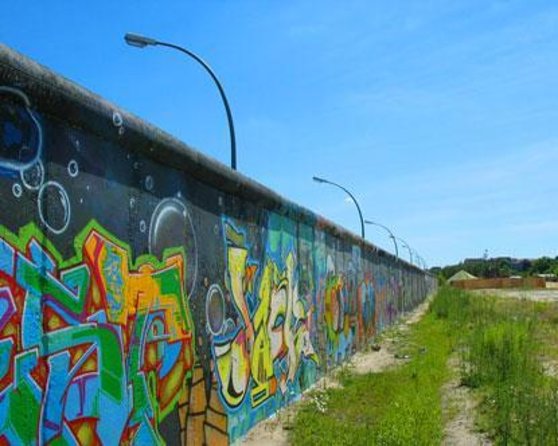
- Cold War stops you can feel: Berlin Wall Memorial and the checkpoints-style sights give you scale and location.
- Easy-going pace with frequent stops: plenty of time to look, ask, and take pictures.
- Real guide personality: guides mentioned in past groups include Jerry, Demetrios, and Pablo, and the storytelling style can vary.
- Two-ways tip for TV Tower: the Fernsehturm area can be confusing if you’re at the wrong side—arrive early and aim for the main entrance.
How This Berlin Bike Tour Fits a First-Time Visit
This tour is built like a history outline you ride through. You don’t just see Berlin’s headlines; you connect why these places matter—WWII aftermath, the division of Germany, and what reunification changed in everyday life. In a few hours, you get from government power to memorial space, then back toward the more graceful city center views.
The format helps. Small-group tours tend to keep questions in play, and you’re not stuck waiting for a giant lineup to move. Plus, Berlin is generally manageable on bikes because the city layout makes short hops between sights realistic.
You can also read our reviews of more cycling tours in Berlin

Price and Value for a 3–4 Hour History Sprint
At $54.42 per person for about 3 to 4 hours, this is priced like a solid “orientation + highlights” experience. What makes it feel like value is the mix of essentials: a local professional guide and a bicycle are included, and most of the named sight stops are marked Admission Ticket Free.
Is it a bargain? It’s not the cheapest way to bike Berlin, but it’s not a luxury tour either. For many people, the value comes from saving time: instead of planning routes to multiple sites (and figuring out how to connect them), the tour hands you a coherent path and stops long enough to actually absorb what you’re seeing.
Meeting at Panoramastraße and Finding the Group
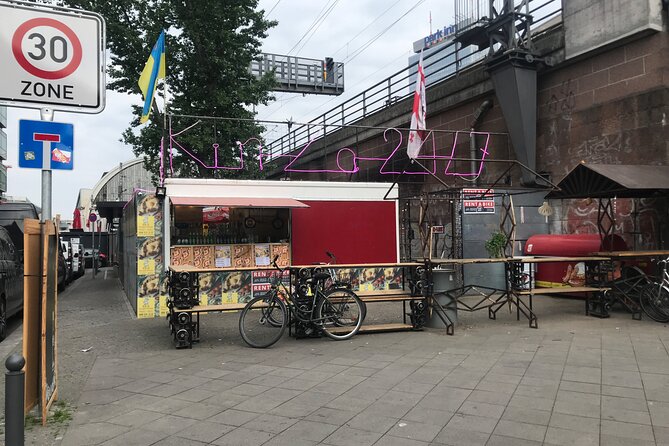
The meeting point is Panoramastraße 1, 10178 Berlin, and the tour starts at 11:00 am. The schedule also ends back at the meeting point, so you’re not left figuring out transport after you ride.
Here’s my practical advice: show up early and be specific about the area. One helpful detail from past confusion is the Berliner Fernsehturm zone—there are different sides and entrances around the tower. If you’re using a map app, aim for the main entrance area rather than the first marker you see.
Berliner Fernsehturm: Views With Cold War Context
You start near the Berliner Fernsehturm (TV Tower), with about 10 minutes on site. The point isn’t just the skyline view over Alexanderplatz. The tower is tied to the city’s story of power, planning, and public symbolism—exactly the kind of landmark that becomes more meaningful once you hear the background.
If you’re the type who likes your photos to come with meaning, this is a good opener. You get your reference point early, so later stops like Reichstag and the Wall Memorial feel less random.
Oranienburgerstraße and St. Nicholas Church: Older Berlin in the Same Day
Next you head toward Oranienburgerstrasse, where the focus includes Jewish history in Berlin and the area around the Jewish New Synagogue. You also get a stop connected to St. Nicholas Church, described as a landmark in the center of Berlin for over 800 years.
This pairing matters. It stops the tour from becoming only a 20th-century story. You get the sense that Berlin’s identity didn’t begin with WWII or the Cold War. Even on a packed afternoon ride, the tour threads in deeper roots.
One reason I like this kind of mix: it helps you avoid the “Berlin is only division” trap. You start seeing the city as a place with layers, not just a timeline of conflict.
You can also read our reviews of more historical tours in Berlin


Berlin Wall Memorial on Bernauer Strasse: Division With Real Scale
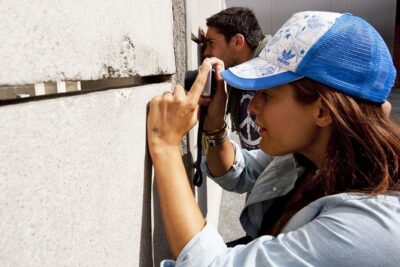
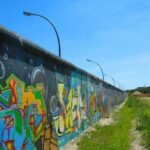
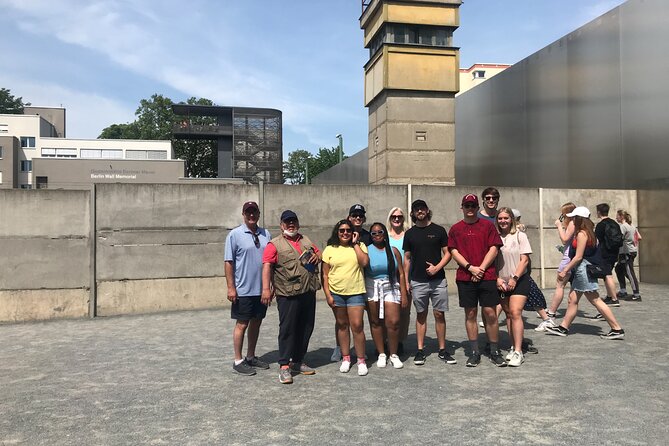
The ride’s emotional anchor is the Memorial of the Berlin Wall at Bernauer Strasse. You’ll have about 25 minutes here, and the memorial is set along the historic border strip—described as extending about 1.4 kilometers. The key idea is that you can see both preserved Wall sections and the grounds behind them, which helps make the evolution of border fortifications understandable.
This is where the “history stops you can feel” part of the tour becomes real. You don’t just hear facts; you’re standing where division was physically built into the city. The memorial is also part of the Berlin Wall Foundation, which connects to other sites dedicated to flight and emigration in divided Germany—helpful context if you want to keep exploring after the ride.
Reichstag and the Fire Story: Power Under Pressure
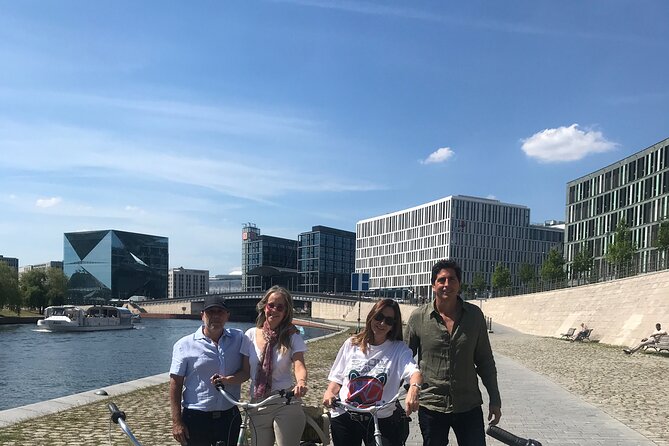
From the Wall Memorial zone, you move toward the Reichstag Building, with about 10 minutes on site. It’s closely tied to the Weimar Republic era and the moment it was seized by the Nazis in 1933. The tour also notes the building’s burning and what that story meant.
This is another stop where the background changes how you look. The Reichstag isn’t only an impressive façade; it’s a lesson in how institutions can be pulled into political violence. If you’ve ever read about the period but felt disconnected from the places, this stop helps bridge the gap.
Brandenburg Gate: No-Man’s-Land Becomes a Symbol
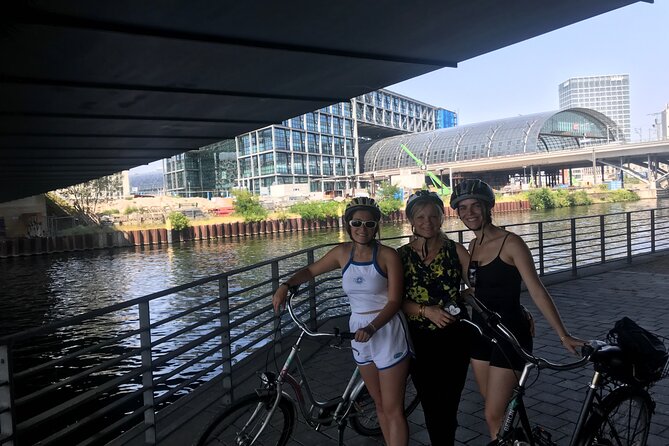
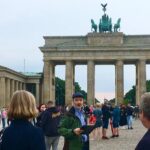
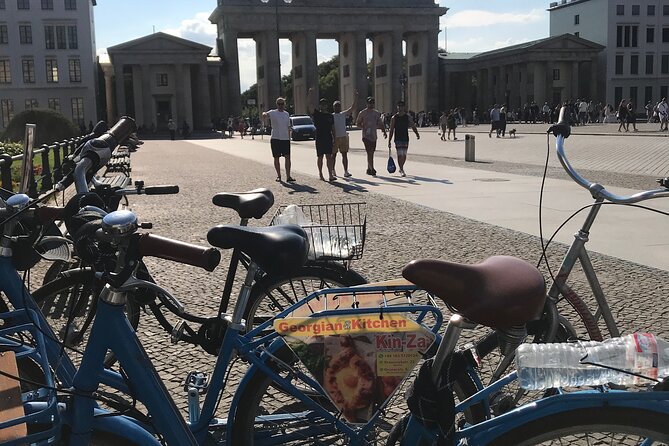
You’ll also pass the Brandenburg Gate, described as lying in “no-man’s land” between East and West during the Cold War and built in the reign of Friedrich Wilhelm II (18th century). This is one of Berlin’s most recognizable images, but the tour’s focus is on what the Gate meant when it sat between worlds.
It’s a smart choice mid-tour. After Holocaust and memorial-level stops, the Gate gives you a sense of scale and symbolism—how one monument can represent both division and reunification.
Holocaust Memorial and Topography of Terror: Remembering With Space
Next up: the Memorial to the Murdered Jews of Europe. You’ll have around 15 minutes and the tour notes that you can walk around it and take pictures. The ability to move at your own pace is important here; it turns the stop into a place you navigate, not just a backdrop for one photo.
Then you move to Topography of Terror for about 10 minutes, focused on where the Gestapo Headquarters once stood. Even a short stop can work well at Topography of Terror because the site is designed to explain—so your guide can highlight the core points without you losing time.
My advice: treat these as quiet, brain-on stops. Ask questions if you have them, but don’t feel you must race to “finish” the memorial areas. If you come in expecting a sombre pace, you’ll get more out of it.
Checkpoint Charlie: Short Stop, Big Mood
You’ll make a brief stop at Checkpoint Charlie for about 5 minutes. It’s short by design, and that’s reasonable here. Checkpoint Charlie is famous, but the value of the tour is the framing—what it represented in the Cold War system and why it became the face of that world to outsiders.
If you want more time at the site, you can always plan a longer visit on your own later. As a cycling tour stop, it works as a quick “now you’re here” moment.
Gendarmenmarkt and Bebelplatz: Beauty and Censorship
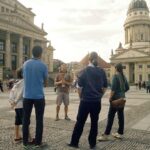
After the checkpoints and memorial areas, you ride through Gendarmenmarkt for about 10 minutes. This square is visually striking, and the tour includes photo time and discussion. It helps rebalance your day: you’ve been in heavy history zones, and now you get Berlin’s elegant center.
Then comes Bebelplatz and the Book Burning Memorial, with about 15 minutes. The tour gives an explanation connected to the memorial. This stop pairs nicely with everything else because it shows how oppression wasn’t only physical; it was also about controlling ideas.
If you’re into the theme of how regimes reshape society, this is a strong add-on. It connects the Holocaust-era and Cold War-era stories to the mechanisms of censorship and propaganda.
Museum Island Ride-Through: The City’s Cultural Spine
Near the end, you ride through Museum Island with about 15 minutes to see and talk about the museums and their history. You’re not doing a museum ticket sprint here—you’re getting a guided orientation as you bike.
This matters because Museum Island is one of Berlin’s cultural centers, and it’s easy to miss if you only focus on the major monuments. A ride-through is efficient. It also helps you decide later which museum you actually want to spend time on.
Bikes, Pace, and Comfort: What You Need to Know
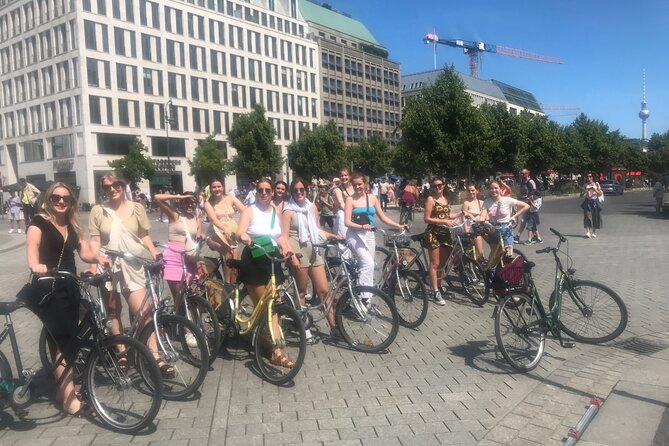
The tour includes bicycle use, and the riding is described as easy by people who found Berlin flat and bike lanes common. You’ll still cover ground, and the day is structured around frequent stops—so it’s not a long, uninterrupted pedal workout.
One practical note: some past participants mentioned a braking setup where pedaling backwards applies the rear brake. If you’ve never ridden that style before, practice the feel before you get fully comfortable with speed. It’s not hard to learn, but it is easy to overthink if you’re already nervous on unfamiliar brakes.
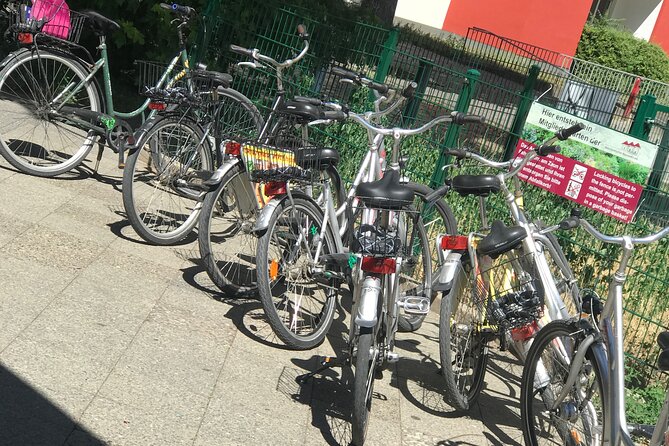
Also, a small number of issues were reported around finding the bikes at the meeting point and bike reliability on one occasion. My takeaway is simple: arrive on time, double-check you’re with the right group, and don’t be afraid to flag any bike problem immediately so repairs or swaps can happen fast.
Guides and Storytelling: Jerry, Demetrios, and Pablo
Guide quality is where tours like this rise or fall. Based on what’s been shared from past groups, guides such as Jerry, Demetrios, and Pablo can bring the city to life with humor, patience with questions, and stories that go beyond the usual facts. That storytelling style matters because Berlin’s history is dense. If the guide can translate it into human-size pieces, the whole tour clicks.
I’d also watch for the language vibe. The tour is offered in English, and the best guides keep it conversational—short explanations, then time to react. If you like asking questions, this format is a good match.
Who This Tour Is Best For
This is a great fit if you want a guided Berlin “starter pack” with major WWII and Cold War touchpoints. You’ll enjoy it most if:
- you’re visiting Berlin for the first time and want a fast overview
- you like walking-level interpretation but prefer to cover more ground
- you want a structured day that still leaves room for questions and pictures
It’s also good for mixed ages and first-time riders, since the route is set up for most travelers and the pace includes breaks. If you’re an experienced cyclist chasing distance or speed, you may find the stops interruptive. But if your goal is context, not mileage, you’re in the right place.
Should You Book This Berlin Bike Tour?
Yes, I’d book it if your priority is major sights plus clear historical framing in a half-day format. The value works best because you get a pro guide, a bike included, and sight stops that are marked as Admission Ticket Free on the schedule.
Skip it only if you want a relaxed, slow day focused on one neighborhood, or if you’re looking for food plans built into the tour. Otherwise, this is a strong way to get your bearings fast and understand why Berlin looks the way it does today.
FAQ
How long is the Berlin small-group historical bike tour?
It runs about 3 to 4 hours (approximately).
Is the tour offered in English?
Yes, the tour is offered in English.
Where does the tour start?
The meeting point is Panoramastraße 1, 10178 Berlin, Germany.
What time does the tour begin?
The start time is 11:00 am.
What’s included in the price?
The local professional guide and use of a bicycle are included.
Is food and drinks included?
No, food and drinks are not included.
Are admission tickets included for the sights?
The tour schedule lists Admission Ticket Free for the listed stops.
Is there a minimum age for children?
Yes. The minimum age is 2 years, and children must be accompanied by an adult.
Is this a private tour?
Yes. Only your group will participate.
Are service animals allowed?
Service animals are allowed.