REVIEW · BERLIN
All of Berlin (city panorama)
Book on Viator →Operated by cultourberlin · Bookable on Viator
Berlin clicks into place fast. In four hours, you’ll get a guided, stop-by-stop panorama of major landmarks and the stories that connect them.
I really like how the route is built for orientation: starting at the Berlin TV Tower area and moving through the city center gives you a mental map immediately. I also liked the Spanish guide commentary, and learning what each place meant historically without me having to plan ten different ticketed detours.
One watch-out: this isn’t for slow walkers. The tour isn’t recommended if you can’t manage long walking stretches, and it’s Spanish-only, so plan accordingly.
In This Review
- Key takeaways before you go
- Starting at Berlin TV Tower Panoramastraße: your bearings in one morning (or late morning)
- Alexanderplatz to Nikolaiviertel: East-meets-ancient in quick, teachable stops
- Past the UNESCO museum complex: why this block matters
- Berliner Dom, Lustgarten, and Unter den Linden: the royal axis, explained
- Bebelplatz to Neue Wache: how Berlin uses memory in public space
- Gendarmenmarkt, Checkpoint Charlie, and Potsdamer Platz: from “most beautiful square” to border reality
- Holocaust Memorial and Brandenburg Gate: a closing panorama with context
- What you get for $25.58: good value when time is tight
- Group size, pace, and the walk: how to judge if it fits you
- Stops-by-stop: what’s worth slowing down for
- Quick practical tips so the day goes smoothly
- Should you book All of Berlin (city panorama)?
- FAQ
- FAQ
- What time does the tour start?
- Where is the meeting point?
- How long is the tour?
- Is this tour in English?
- What kind of ticket do I get?
- How much does it cost?
- Are there admission fees for the stops?
- How big is the group?
- Is the tour suitable if I can’t walk well, and are service animals allowed?
Key takeaways before you go
- Spanish-only guide with strong historical context helps you understand what you’re seeing, not just where it is.
- A practical central route ties together Alexanderplatz, the museum-area UNESCO complex entrance, and the finish at Brandenburg Gate.
- Most stops are free from an entry-fee angle, with only specific exceptions (like Rotes Rathaus not included; Neue Wache included).
- On-foot segments reach spots a car or bus can’t really deliver—especially around squares and memorial areas.
- Small group size (max 25) keeps the pace manageable for a 4-hour tour.
Starting at Berlin TV Tower Panoramastraße: your bearings in one morning (or late morning)
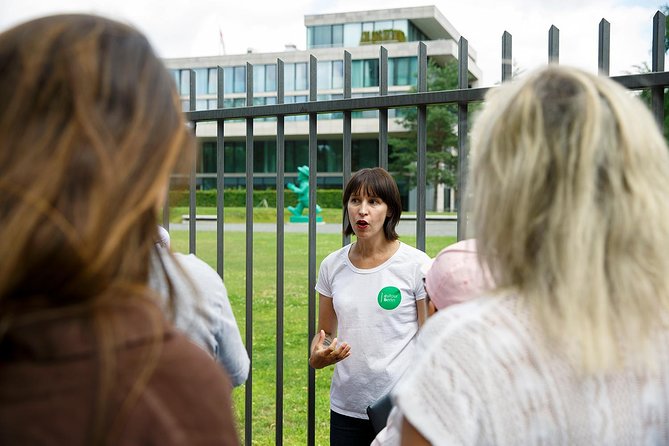
Meeting at Berlin TV Tower (Panoramastraße 1A, 10178 Berlin) is a smart move for first-timers. You’re already in one of the city’s most recognizable zones, and it makes everything that follows easier to understand. The tour starts at 10:00 am, and it runs about 4 hours, so it fits well on a sightseeing day when you still want energy left afterward.
The format is simple: a local guide leads you between major points, with frequent short stops so you can look, ask questions, and keep moving. You’ll also have a mobile ticket, which is convenient if you don’t want to hunt for paper passes in your bag.
You can also read our reviews of more city tours in Berlin


Alexanderplatz to Nikolaiviertel: East-meets-ancient in quick, teachable stops
You kick off at Alexanderplatz, right near the TV Tower entrance. This isn’t just a photo stop. You’ll learn the context behind the square—its history and why the area looks the way it does—so when you later hear Berlin described as layers on layers, you’ll know what that means on the ground.
Next is Neptunbrunnen, the Neptune Fountain in the middle of Alexanderplatz. It’s brief (about 5 minutes), but it’s a good example of what this tour does well: small details that help you read the city. You’ll understand what the fountain symbolizes, instead of just noticing it as “that fountain in the square.”
Then comes Rotes Rathaus, the red city hall building. The tour explains the role of the council of Berlin. Note the practical part: it lists admission as not included, so don’t count on an interior visit unless the tour day offers something different (based on what you see and what’s available in the moment).
A standout shift happens at Nikolaiviertel, described as one of the more original parts of Berlin. This is where the “Berlin is 800 years old in places” idea stops being a slogan. You’ll get context on the long foundation of the area, and you’ll even learn what St. Georg means in the middle of the square. It’s the kind of detail that makes a short stop feel worthwhile.
Past the UNESCO museum complex: why this block matters

The itinerary includes the entrance of a UNESCO World Heritage museum complex. Even though you may not go deep into interiors on this route, the value is in understanding why this stretch of Berlin is special enough to be recognized internationally. You’re seeing the city’s cultural center shaped in a very deliberate way, and the guide’s commentary helps you connect the museum-area setting to the wider history of Berlin.
If you’re the type who likes to later return on your own, this stop is useful. It gives you a direction: you’ll know where to go next if museums are your thing.
Berliner Dom, Lustgarten, and Unter den Linden: the royal axis, explained
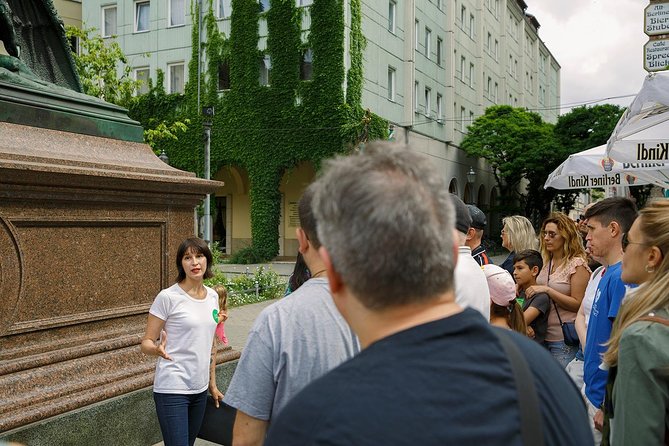
From the UNESCO area you move toward the grand center landmarks.
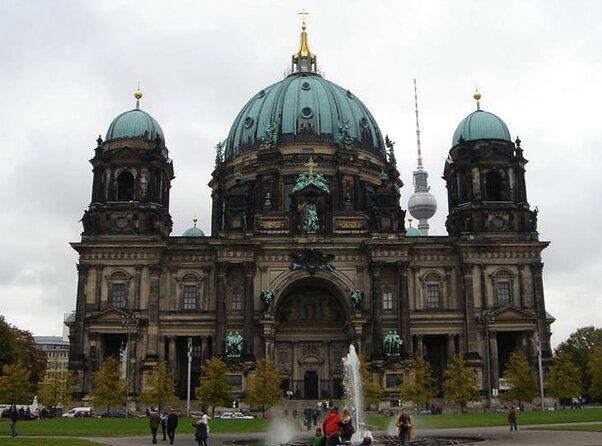
At Berliner Dom, you’ll spend about 10 minutes focusing on the dome and decoration. The guide’s framing matters here: you’ll learn the history behind the church and who made it possible. Again, this is not a long museum-style visit. It’s more like a fast cultural briefing that helps you look at the building the right way.
Then you reach Lustgarten, a small stop (about 5 minutes) that feels surprisingly useful. The guide talks about what Lustgarten is and why it has that name, plus why it’s considered a remarkable spot in the city center. This is one of those moments where you realize why squares are “political geography,” not just open space.
Next is Staatsoper Unter den Linden, where you admire the opera house and learn more about it. This is short too (about 5 minutes), but the Unter den Linden corridor is a major Berlin storyline. If you’ve heard the name before, this tour helps you attach meaning to it.
One thing I appreciate in this section is how quickly the guide ties aesthetics to function—buildings aren’t treated like pretty backdrops. They’re treated like evidence.
Bebelplatz to Neue Wache: how Berlin uses memory in public space
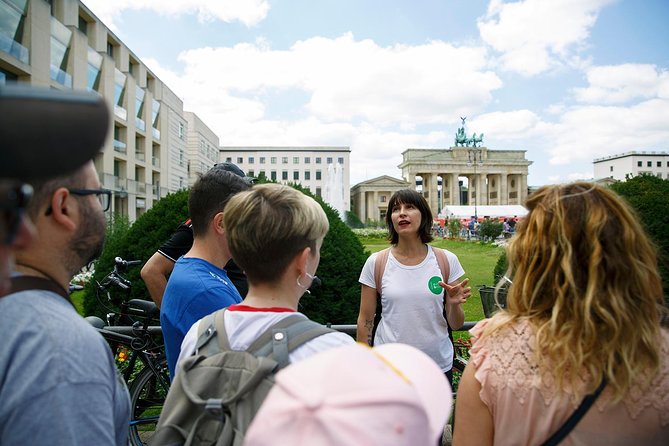
At Bebelplatz, you’ll learn why the square was so important in the 20th century and what memorial you find in the middle. The tour also explains why Hitler’s propaganda minister played an important role at this place. Even if you already know Berlin’s darker chapters, this stop gives you a clearer “what happened here” map, which makes your later walking around feel more intentional.
Then you move to Neue Wache, a memorial that’s described as adapted to different times of history. This stop includes admission, and you’ll see artwork by Käthe Kollwitz. That’s a big deal for value: you’re not only looking at a memorial from outside. You get an organized chance to experience it with the guide’s framing.
If you’re sensitive to heavy material, pace yourself. This section is where the tour leans into what Berlin had to survive and how it chooses to remember.




Gendarmenmarkt, Checkpoint Charlie, and Potsdamer Platz: from “most beautiful square” to border reality
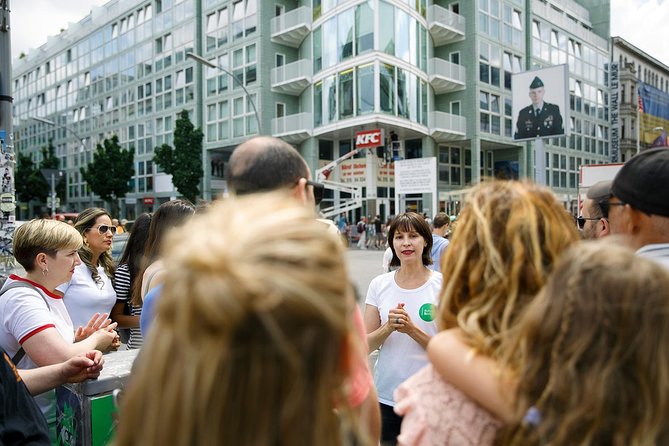
Gendarmenmarkt is next, and it’s often called Berlin’s most beautiful public square. You’ll spend about 15 minutes here, focusing on the harmony of the concert house and two church buildings with towers. This stop feels like a reset—before the tour heads back into the Cold War narrative.
Then it’s Checkpoint Charlie, the reminder of the former border crossing and the Cold War partition of Berlin. You’ll get about 25 minutes here, which is longer than several other stops on the itinerary. That extra time helps, because the topic is complex: it’s not just a point on a map, it’s a symbol of separation and control.
After that, you reach Potsdamer Platz. You’ll discover what it was from the beginning until today, and you’ll learn why it’s one of the more modern parts of Berlin right now. This is the tour’s “then and now” moment: you can compare the city’s political break with the way it has been rebuilt into something current.
Holocaust Memorial and Brandenburg Gate: a closing panorama with context
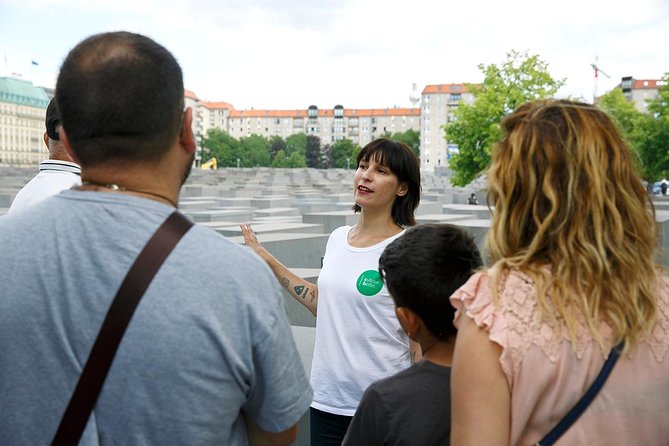
The tour includes the Holocaust Memorial – Memorial to the Murdered Jews of Europe near Brandenburg Gate. You’ll have about 15 minutes and you’ll try to understand the meaning of the memorial’s author. This is another emotionally heavy stop, but it’s placed well in the route—because it sets up the final view at Brandenburg Gate with the weight it deserves.
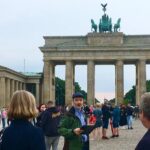
Finally, you finish at Brandenburg Gate for about 20 minutes. You’ll see the history behind the place and enjoy a view that stretches toward Tiergarten, the Parisian square, and the Adlon Hotel area. This is the classic photo ending, but the guide’s commentary is what makes it more than a postcard moment.
At the end, the tour returns to the meeting point around Berlin TV Tower.
What you get for $25.58: good value when time is tight
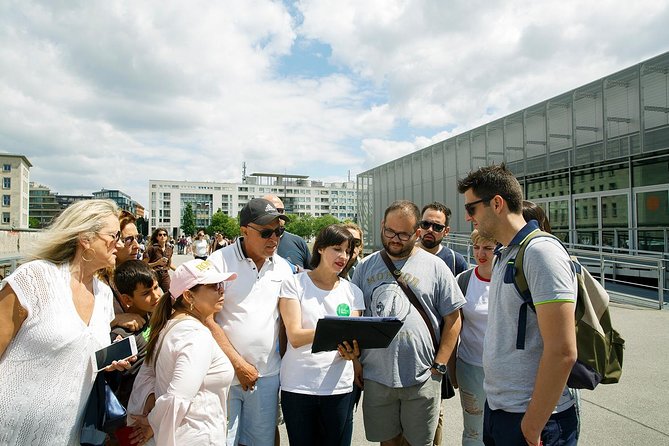
At $25.58 per person, this tour can feel like a steal if you’re only in Berlin for a few days. You’re covering a lot of central landmarks that would otherwise require careful planning and multiple transit decisions.
The biggest value is the structure:
- A 4-hour guided loop
- A maximum group size of 25
- Frequent short stops (usually 5–20 minutes) that keep you moving and seeing
- Explanations for what you’re looking at, especially in places like Checkpoint Charlie, Bebelplatz, and the memorial areas
As for admission costs, the itinerary suggests most stops are free from an entry-fee standpoint (many explicitly list admission free). But there are exceptions you should know about:
- Rotes Rathaus lists admission as not included
- Neue Wache lists admission as included
So you’re not paying for museum after museum. You’re getting a guided walkthrough of Berlin’s key sight locations, with some inside access where it counts.
Also, booking in advance helps. The tour is typically booked about 29 days ahead on average, so if you’re traveling in peak season or on a tight schedule, don’t wait until the last minute.
Group size, pace, and the walk: how to judge if it fits you
This is best seen as a brisk orientation walk with story stops. You’ll likely spend most of your time outdoors or moving between zones, with brief moments to look and listen.
Because it’s not recommended for people who can’t walk properly for long distances, you should consider:
- Can you comfortably handle repeated short transitions plus a few longer stops?
- Are you okay standing at squares and memorials for brief periods?
If you’re a confident walker, the route is rewarding. If mobility is an issue, the “get your bearings fast” style can turn frustrating.
Language matters too. The tour is operated by a Spanish guide and is just in Spanish. If you don’t read or understand Spanish well, you might miss the main point of the experience: the explanations.
On the plus side, service animals are allowed, and it’s near public transportation.
Stops-by-stop: what’s worth slowing down for
Not every stop will feel equally exciting, and that’s normal on a high-speed highlights tour. Here’s how I’d prioritize your attention so you don’t miss what matters.
- Alexanderplatz: Treat this as your anchor. After this, you’ll recognize the city center more easily.
- Nikolaiviertel: Spend a little longer looking at the square details since this is the “older Berlin” moment.
- Berliner Dom + Lustgarten: These two work together—big architecture plus the central open space in front of it.
- Bebelplatz + Neue Wache: If you only remember a few things, remember what Berlin decided to put in public space to explain its own past.
- Checkpoint Charlie: It’s one of the few stops with enough time (about 25 minutes) to let the story land.
- Brandenburg Gate + the Holocaust Memorial nearby: Don’t rush. The memorial sets the tone, and the gate feels heavier once you understand why.
Quick practical tips so the day goes smoothly
Bring a plan for standing:
- Wear shoes you can walk in for a few hours.
- Expect time in open squares, not quiet indoor spaces.
Bring a plan for language:
- If you know basic Spanish, you’ll catch more of the commentary.
- If you don’t, still go for the landmarks, but accept that the “story” layer may be limited.
And bring a plan for pacing:
- The stops are timed (many are 5–15 minutes), so if you get distracted by photos, you can miss the guide’s key point. Take a moment for photos, then return your attention to what’s being explained.
Should you book All of Berlin (city panorama)?
Book it if:
- You want a high-coverage central highlights tour in about 4 hours
- You like learning history through guided stop-by-stop explanations
- You’re okay with a walking pace and a route that mostly stays in the city center
Consider skipping or choosing a different style if:
- You can’t walk well for long distances
- You need a multilingual guide or you’re uncomfortable with a Spanish-only experience
- You want long, in-depth time inside major sites (this tour is designed for breadth, not museum marathons)
If you’re trying to fit Berlin into a limited schedule, this one is a smart use of time. You’ll leave with a clearer mental map and a better grasp of how the city’s landmarks connect—east to west, monuments to memory, and big views to big stories.
FAQ
FAQ
What time does the tour start?
The tour starts at 10:00 am.
Where is the meeting point?
You meet at Berlin TV Tower, Panoramastraße 1A, 10178 Berlin, Germany.
How long is the tour?
It’s about 4 hours.
Is this tour in English?
No. It’s operated by a Spanish guide and is just in Spanish.
What kind of ticket do I get?
You get a mobile ticket.
How much does it cost?
The price is $25.58 per person.
Are there admission fees for the stops?
Many stops are listed as admission free. Rotes Rathaus is listed as not included, and Neue Wache is listed as included.
How big is the group?
The tour has a maximum of 25 travelers.
Is the tour suitable if I can’t walk well, and are service animals allowed?
The tour is not recommended if you’re not able to walk properly for long distances. Service animals are allowed.