REVIEW · BERLIN
Berlin City Bike Tour with Beer Garden Stop
Book on Viator →Operated by Fat Tire Tours - Berlin · Bookable on Viator
Berlin’s history moves fast on two wheels. This small-group city bike tour strings together major sights like Alexanderplatz, Checkpoint Charlie, the Brandenburg Gate, and the Reichstag into one long, easy ride. What I like most is the way it uses bike paths and parks (more than 95% of the route) to keep you rolling, and how the stops turn tricky history into something you can actually picture. One thing to plan for: it’s a full schedule with lots of short photo breaks, and the beer garden lunch is own expense.
You start in the heart of Berlin at Panoramastraße 1a, right by the TV Tower, and you’re set up quickly with a cruiser bike and helmet. Then the day becomes a mix of big monuments, cold-war geography, and memorials that hit hard—but still stay human-sized because you’re stopping with your guide at the right moments. If you want a first-day overview without spending all day on your feet, this is built for that.
In plain terms, you get a guided route that’s designed for seeing more, faster, while still giving you time to breathe, take pictures, and ask questions—especially with a max group size of 15.
In This Review
- Key points to know before you ride
- Starting at the TV Tower: getting your bike and your bearings
- Potsdamer Platz and the Brandenburg Gate: Berlin’s center of gravity
- Museum Island, Bebelplatz, and Nazi-era landmarks you can actually face
- Gendarmenmarkt and Checkpoint Charlie: pretty squares with heavy context
- Fuhrerbunker and the Third Reich’s last days: confronting the past on a bike route
- Alexanderplatz, the Reichstag, and the Holocaust Memorial: Berlin’s political core
- Tiergarten and the beer garden lunch stop: a Berlin break that feels local
- Parliament offices, palaces, and photo stops along the route
- Finishing the loop: memorials, embassies, and the practicality of getting back
- What you’re really paying for: value for a first-time Berlin overview
- Should you book this Berlin bike tour?
- FAQ
- How long is the Berlin City Bike Tour with Beer Garden Stop?
- Where does the tour start?
- What time does the tour start?
- Is the tour in English?
- What is included in the price?
- Is the beer garden lunch included?
- How big is the group?
- Is hotel pickup or drop-off included?
- Is admission included for the sights?
- What is the cancellation policy?
- What should I expect at the meeting point?
Key points to know before you ride
- More than 95% on bike paths and parks means less stress than you’d expect for Berlin’s big-city streets.
- Alexanderplatz to the Brandenburg Gate and beyond gives you a clean “greatest hits” line through central Berlin.
- Cold War stops are not just names—you’ll stand at places tied to the Berlin Wall era and the Allied crossing legends.
- Memorials are part of the story, including the Holocaust Memorial, with time allocated for understanding what you’re looking at.
- Bike + helmet are included, so you’re not scrambling to rent gear on day one.
- Beer garden lunch stop is included as a break, but what you eat and drink is extra.
Starting at the TV Tower: getting your bike and your bearings
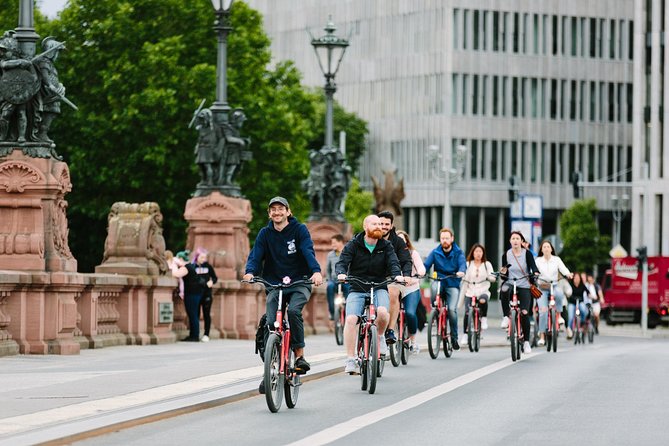
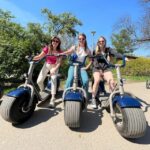
You meet at Panoramastraße 1a at the base of the TV Tower on the north side of Alexanderplatz. You check in at the office (there’s time for a bathroom break too), and you can buy drinks before you roll. Then you’re fitted with a Beach Cruiser bike and a helmet—simple, quick, and ready for the kind of day where you’ll be on the saddle a lot.
Berlin is famously flat, and this tour leans into that. You don’t need athletic legs to enjoy it, because the route is built around easy cycling and frequent pauses. The big win here is rhythm: you learn, you ride, you photograph, you move on—rather than getting stuck in long lines or walking endless blocks between highlights.
You’ll also want to show up on time. The tour has a 9:30 am start and runs about 5 hours 30 minutes, so “late” is not just late—it can throw off the pacing of the whole loop.
You can also read our reviews of more food & drink experiences in Berlin


Potsdamer Platz and the Brandenburg Gate: Berlin’s center of gravity
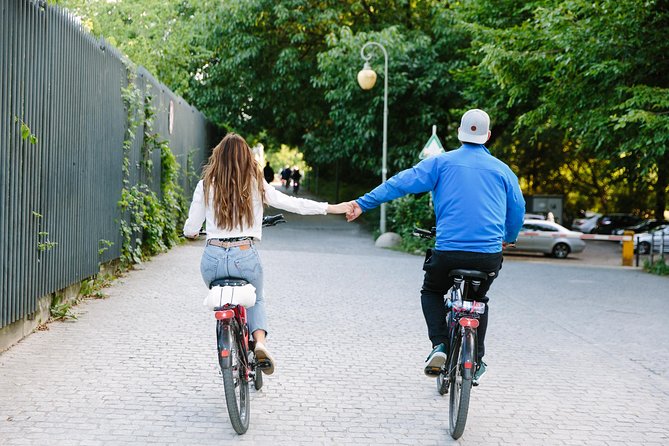
Once you’re on the move, the route heads toward Potsdamer Platz. This area used to feel like a symbol of division, and now it reads like a junction where eras overlap. The stop is short—more of a ride-by moment—so treat it as a transition point rather than a deep-dive site.
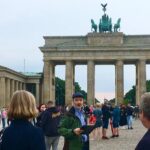
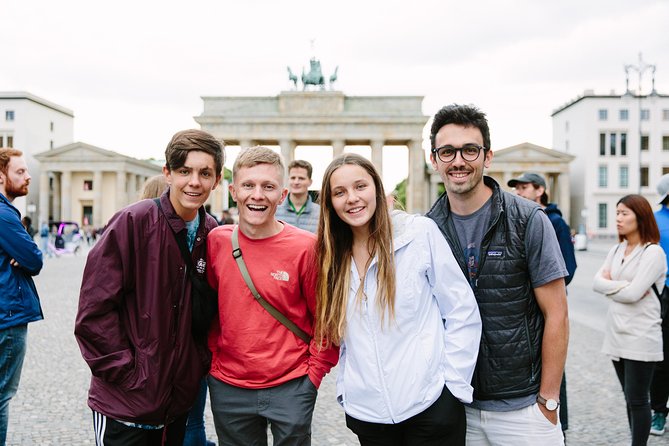
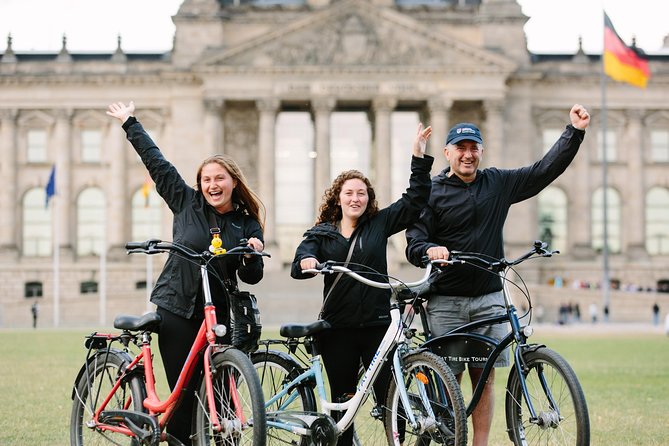
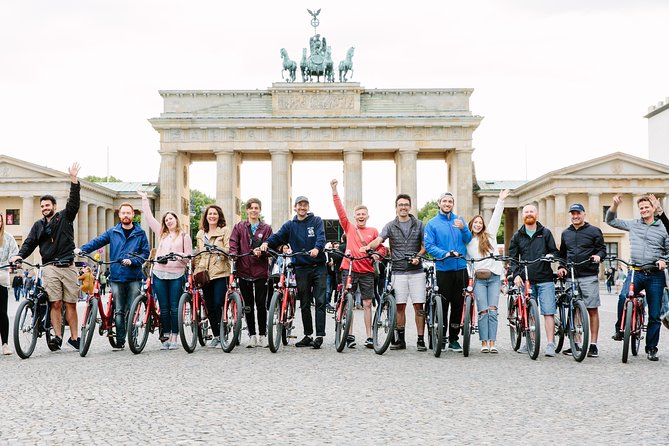
Then you reach the Brandenburg Gate. This is one of those places you recognize instantly from photos, and the guide’s job is to help you see it in layers. You’ll get a picture break plus an explanation of how it once symbolized division and now stands for peace and unity. It’s a classic “stand here, look around, and understand why it matters” kind of stop.
If you’re nervous about understanding Berlin’s complicated past, this early section is a good confidence boost. You’re not thrown into the toughest topics first—you get context and momentum.
Museum Island, Bebelplatz, and Nazi-era landmarks you can actually face
After the Gate, you roll through central cultural territory around Museum Island. You won’t be doing museum entry on this tour—this is mostly an outside look—but that’s actually useful. You get to see the “big picture” of the area so you know what you’d want to return to later with tickets and time.
Next comes Bebelplatz, tied to Nazi book burnings. You stop here for an explanation and pictures. This is one of those moments where the stop length matters: you can’t rush the meaning out of the place. It’s not just dark trivia; it’s part of how the city’s identity was shaped through suppression and propaganda.
Then you’ll see the Victory Column. Again, the vibe is a photo-and-explain stop rather than a full visit. If you’re trying to get oriented quickly, towers and monuments are great anchors—your brain maps the city faster when you’ve got landmarks you can point to.
Gendarmenmarkt and Checkpoint Charlie: pretty squares with heavy context
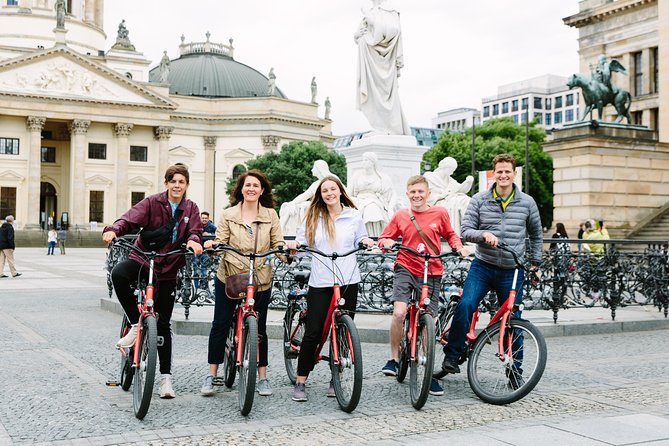
From Museum Island and memorial squares, the tour heads into Gendarmenmarkt, where the German and French cathedrals create a dramatic, symmetrical backdrop. This stop gives you contrast: architecture that feels elegant and orderly, with a guide who ties it back to the city around it.
Then the route moves to Checkpoint Charlie, the Cold War crossing point people still talk about decades later. You stop for pictures and an explanation, which helps you understand the geography of East vs. West rather than just collecting a famous name. This is one of the stops where you’ll feel the value of a guide. The spot is iconic, but the story behind it is what makes it stick.
Fuhrerbunker and the Third Reich’s last days: confronting the past on a bike route
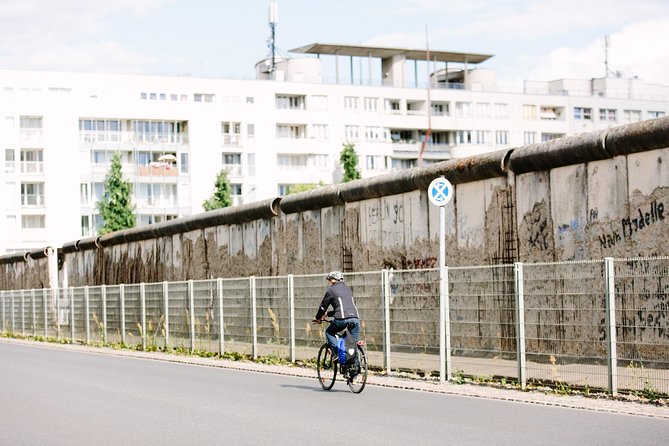
One of the more intense stops is the Fuhrerbunker site, described as the location assumed to be Adolf Hitler’s hidden bunker. You’ll stop briefly for context and explanation. This is not the kind of place you linger at without direction—so the guided framing matters.
The tour also includes Topography of Terror, which today documents the chronology of Nazi terror. You’ll see the site connected to the Prince Albrecht Hotel, taken over by the Gestapo and SS as headquarters. That combination—place + story—turns the urban landscape into evidence. You’re not just seeing a memorial. You’re connecting it to how power operated in real buildings.
If you want to balance weighty topics with lighter sightseeing, you do get that later too. But this section is where the tour earns its reputation as more than a sightseeing circuit.
You can also read our reviews of more cycling tours in Berlin

Alexanderplatz, the Reichstag, and the Holocaust Memorial: Berlin’s political core
You cycle past back toward Alexanderplatz and the TV tower area for a photo stop, with a short explanation. It’s a smart move because it resets the sense of where you are. After you’ve been through heavy history, seeing this modern transport hub again feels like a reality check: Berlin is still working, still moving.
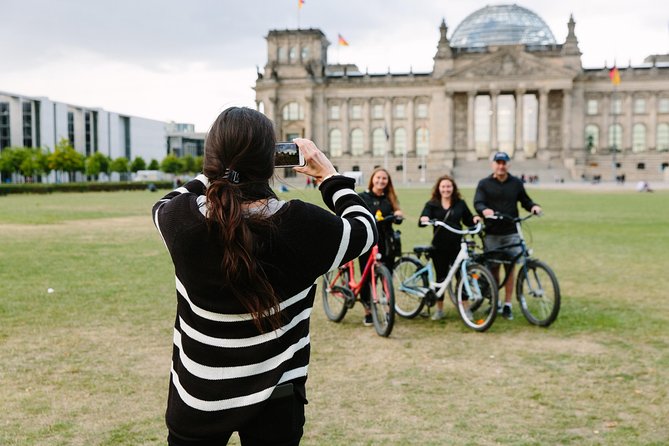
Then comes the Reichstag building for outside viewing and photos. You’ll get an explanation of its role as the meeting place of the German Parliament. The architecture is impressive, but the guide’s framing is what helps you see it as a living political symbol, not just a postcard.
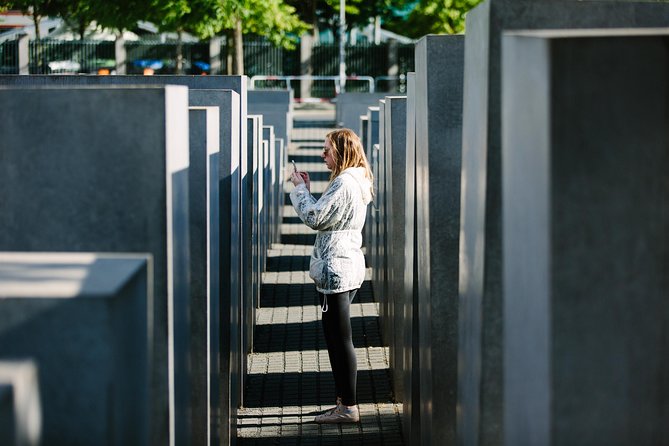
From there, the route continues into the emotional center of the city: the Holocaust Memorial (Memorial to the Murdered Jews of Europe). You stop for explanation and pictures, with the possibility to walk inside. That walk-in option is important. A memorial like this doesn’t land the same way from a distance. Even with a time limit, having a guide explain what you’re looking at helps you use the space with intention.
Tiergarten and the beer garden lunch stop: a Berlin break that feels local
At some point you’ll cycle through Tiergarten Park, Berlin’s largest and most popular park—often described as a green lung of the city. This section is a breather, and it matters because it resets your focus after concentrated history stops.
Then you hit the beer garden. This is Zollpackhof, with a dedicated lunch break (about 45 minutes). The stop is included, but your food and drinks are not. That’s a good setup: you can eat what you want, take your time, and still get back on the bikes without the chaos of finding lunch on your own.
If you’re picky about timing, note that this meal break is part of the fixed route. You won’t drift off to a random restaurant and lose the day. That’s the tradeoff for speed: you get less freedom in exchange for a full itinerary.
Parliament offices, palaces, and photo stops along the route
After lunch, you get a long stretch of outside viewing and photo opportunities around key political and historic sites. This is where the tour is great for orientation, especially if it’s your first trip.
You’ll see or pass by areas including:
- Lustgarten, used here as an open green photo spot with views toward Museum Island buildings.
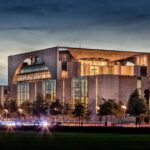
- Bundeskanzleramt (the German Chancellery, with Angela Merkel’s office mentioned as a possible photo moment).
- Paul-Lobe-Haus, a place associated with where German parliamentarians work.
- Bellevue Palace, the residence of the current president of Germany (Frank-Walter Steinmeier).
- Neptunbrunnen (Neptune Fountain) and Rotes Rathaus for quick architectural highlights.
- St. Mary’s Church, noted as the oldest functioning church in Berlin.
- Nikolaiviertel, with views toward Berlin’s oldest residential quarter.
- Humboldt University (faculty of Law) and St. Hedwig cathedral for imperial-style exterior views.
- Staatsoper Unter den Linden, for pictures around the State Opera House.
- Konzerthaus and the Schiller Monument for cultural anchors.
- Old Museum and the reconstructed Stadtschloss Berlin for royal-era visuals.
- French Cathedral and Berlin Cathedral exteriors for big, recognizable silhouettes.
Most of these are short stops. The benefit is you see a lot without losing the flow. The drawback is you won’t get interior time at most of them, so if a site truly grabs you, you’ll want to come back later with tickets.
A few side details are fun, too. For example, you may see the Hotel Adlon Kempinski Berlin area tied to the well-known pop-culture moment where Michael Jackson dangled his baby from the balcony (as described in the tour content). It’s the kind of detail that makes a street feel like it has memory.
Finishing the loop: memorials, embassies, and the practicality of getting back
The route keeps turning through central Berlin, mixing monuments with institutional buildings—embassies, cultural venues, and memorial viewpoints. You’ll also stop at the Holocaust-related memorial space earlier, and later you’ll see more big-ticket urban landmarks that help you map the city.
It all closes back at Alexanderplatz, near the TV Tower and the meeting point. That matters. You don’t end up stranded across town needing a complicated transit plan. You’re back at a major hub.
What you’re really paying for: value for a first-time Berlin overview
At $83.44 per person for about 5.5 hours, this tour isn’t the cheapest way to get around Berlin—but it’s priced like a quality, guided experience with gear included. The bike and helmet are part of the deal, and you’re getting a tight route that hits a lot of major sites in a manageable amount of time.
The value shows up in three places:
- Route efficiency: over 95% on bike paths and parks means you spend less time stuck in traffic.
- Guided stops: the tour doesn’t treat memorials and Cold War sites as photo props. It gives you context at the right points.
- Small group size: with a maximum of 15 travelers, you’re less likely to be lost in a crowd line.
The tour is also offered in English, and you get a mobile ticket, which keeps the day simple.
Should you book this Berlin bike tour?
Book it if you want a first-day orientation that covers Berlin’s biggest landmarks and the Cold War story behind them, without spending hours walking. I’d especially recommend it if you like history that’s explained in context—standing where it happened, not just reading about it later.
Skip it or think twice if you need long, unhurried time inside major attractions. This ride is built around frequent short stops and plenty of outside viewing. It’s a smart way to get your bearings, then pick your favorite places for deeper visits afterward.
If you’re going, bring a weather-aware mindset and dress for steady movement: you’ll be cycling through parks and between memorials, so comfort matters more than fashion.
FAQ
How long is the Berlin City Bike Tour with Beer Garden Stop?
It runs about 5 hours 30 minutes (approx.).
Where does the tour start?
The meeting point is Panoramastraße 1A, 10178 Berlin, at the base of the TV Tower on the north side.
What time does the tour start?
The start time is 9:30 am.
Is the tour in English?
Yes, it’s offered in English.
What is included in the price?
Bike rental and a helmet are included.
Is the beer garden lunch included?
The lunch stop at Zollpackhof is included as part of the tour time, but food and drinks are not included unless specified. Plan for lunch to be extra.
How big is the group?
The tour has a maximum of 15 travelers.
Is hotel pickup or drop-off included?
No, hotel pickup and drop-off is not included.
Is admission included for the sights?
Many stops are exterior/photo stops. Some sights show as admission ticket not included, while others are listed as free. The tour content indicates which stops are ticketed and which are free.
What is the cancellation policy?
You can cancel for free up to 24 hours in advance for a full refund.
What should I expect at the meeting point?
You check in at the office at Panoramastraße 1a by the TV Tower. You can use the bathroom, and you can purchase drinks before riding out.