REVIEW · BERLIN
Berlin: City Sightseeing Hop-On Hop-Off Bus Tour
Book on GetYourGuide →Operated by City Sightseeing Europe · Bookable on GetYourGuide
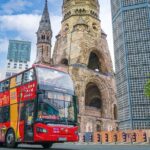
Berlin is easy to over-plan. This hop-on hop-off bus loop is a smart way to get bearings fast while still learning as you go. I like that the ride gives you panoramic views from the open-top deck plus multilingual audio guidance with headphones, so you’re not stuck guessing what you’re seeing. One thing to consider: the experience depends on bus hours and intervals, so you’ll want to pace your day around departures, especially if you’re hopping off often.
The Classic Route covers the “greatest hits,” linking places like Brandenburg Gate, Checkpoint Charlie, the East Side Gallery area, and major squares. The Trendy East Berlin & Wall Route is shorter, but it focuses your time where Berlin’s story gets sharpest. I also appreciate that you get a free Wi‑Fi option on board and staff presence at stops, which makes it easier to switch between routes without turning your day into a scavenger hunt.
At around $25 per person, the real value is not just convenience—it’s how much context you pack into limited sightseeing time. You’ll still need to budget for attractions and food, but for first-timers (and anyone who wants a history primer), this is a practical use of your day.
In This Review
- Key things I’d prioritize before you board
- How the hop-on hop-off setup really helps in Berlin
- Classic Route: the Berlin greatest-hits loop in 2 hours
- Tauentzienstraße + KaDeWe area
- Lützowplatz / Kulturforum and the Tiergarten side
- Potsdamer Platz and the Kolhoff-Hochhaus
- Gropiusbau
- Checkpoint Charlie (Friedrichstraße)
- Gendarmenmarkt
- Neptunbrunnen / Rotes Rathaus zone
- Alexanderplatz and Park Inn
- Lustgarten
- Unter den Linden and Friedrichstraße
- Brandenburg Gate
- Reichstag
- Hauptbahnhof (Berlin Central Station) + Bellevue Palace
- Victory Column (Siegessäule) area
- Berlin Zoo / Elefantentor (Elephant Gate) and Café Kranzler area
- Kurfürstendamm 236
- Trendy East Berlin & Wall: the shorter route with heavier meaning
- Neptunbrunnen / Rotes Rathaus
- Oranienburger Straße
- Mauergedenkstätte
- Mauerpark
- Alexanderplatz / Park Inn
- Karl-Marx-Allee
- East Side Gallery
- Ostbahnhof
- Open-top deck reality: great views, weather to plan for
- Audio, headphones, and multilingual freedom
- Pricing and value: what $25 gets you (and what it doesn’t)
- Practical tips that make your day smoother
- Who this tour fits best
- Should you book this Berlin hop-on hop-off bus tour?
Key things I’d prioritize before you board
- Multilingual audio (13 languages) means you can match the narration to your comfort level.
- Free onboard Wi‑Fi helps you look up next stops and routes on the fly.
- Two route styles: a longer west-and-center Classic loop plus a focused East Berlin & Wall option.
- Frequent departures on both routes make it realistic to hop off, walk, and re-board.
- Open-top viewing gives better sightlines than you’ll get in a typical city bus—bring a plan for weather.
How the hop-on hop-off setup really helps in Berlin
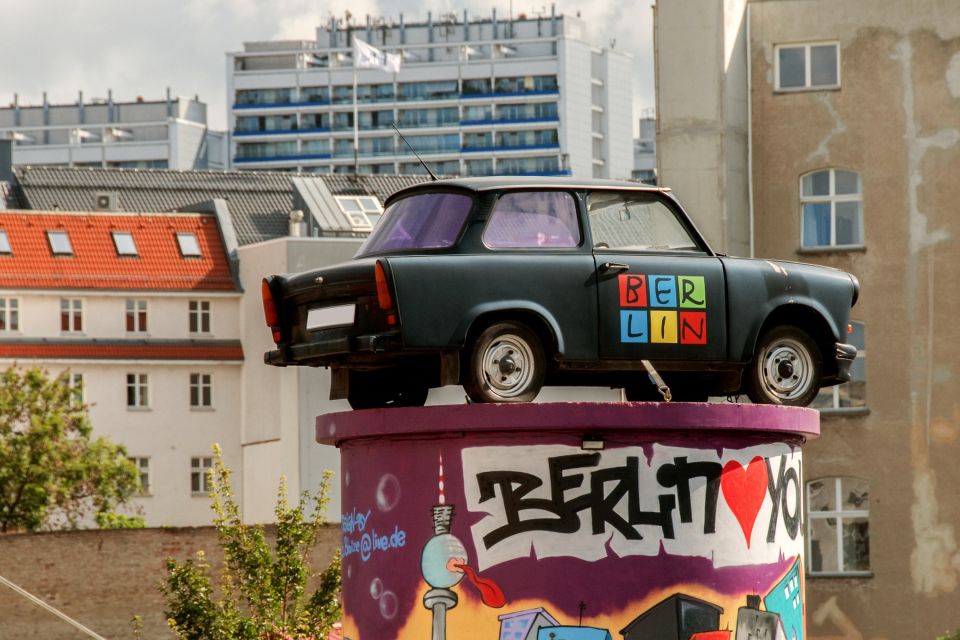
Berlin is spread out in a way that rewards a plan. This tour is built for that: you can start at multiple bus stop locations and then jump on and off along the route during operating hours. The key tool is the City Sightseeing Berlin app, which you use to check current times and see the stop list, plus track buses so you don’t wait forever.
That app matters more than it sounds. On a city like Berlin—where streets can be long, and public transport connections aren’t always intuitive—knowing what’s coming next turns the bus from “a ride” into “a tool.” And because you can start at any stop along the line, you can build around where you’re staying instead of forcing your day into one fixed meeting point.
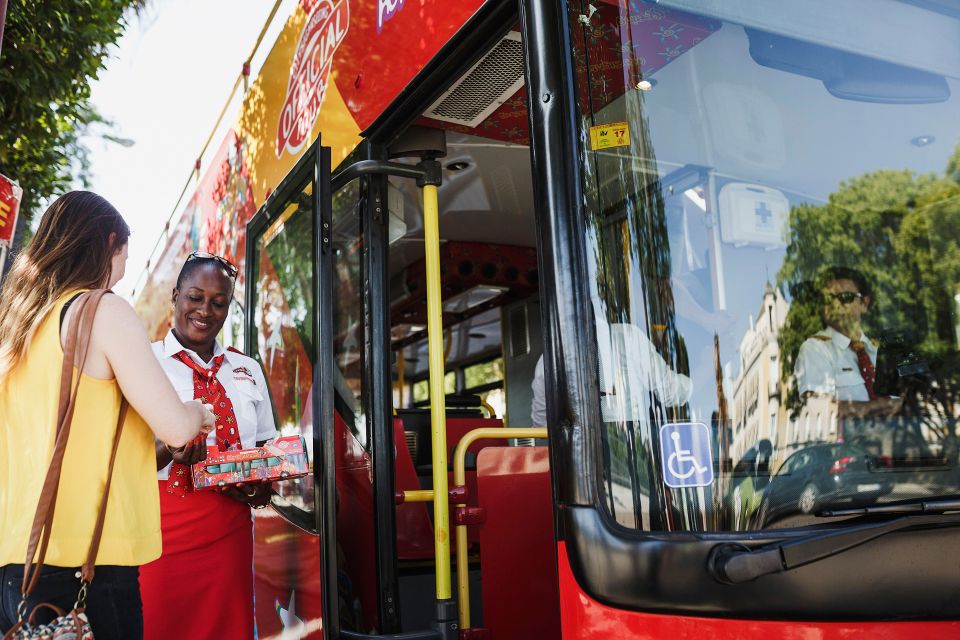
You’ll also get a lot of help from the tour operation. Staff are present at stops to guide you, including when you want to switch from the Classic route to the East Berlin & Wall route. In the day-to-day reality of sightseeing, that’s what stops a “perfect itinerary” from becoming a headache.
You can also read our reviews of more city tours in Berlin



Classic Route: the Berlin greatest-hits loop in 2 hours
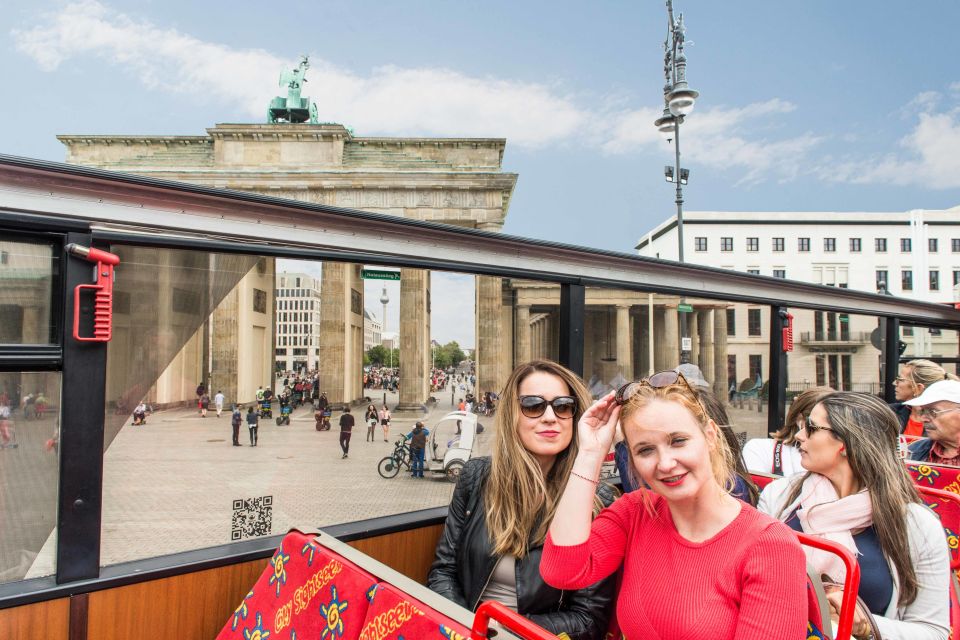
The Classic Route is designed to show you the big landmarks without asking you to commit to one neighborhood at a time. The operating window is straightforward: first departure is at 9:30am and the last is at 5pm. The ride time is about 2 hours, and buses run about every 25 minutes—good odds for hopping off and returning without losing the thread of the day.
Think of the Classic route as your orientation walk, except you also get narration for context. As you ride, you’ll hear the story behind the places—then you can choose what deserves your feet next.
Here’s the stop-by-stop flow, with what you should look for (and where you might want extra time):
Tauentzienstraße + KaDeWe area
You start in the Tauentzienstraße zone, near KaDeWe. This is a good opening move because it sets you up in central Berlin, where lots of other sights are reachable. KaDeWe is one of the city’s famous department stores, and even if you don’t go inside, the area helps you understand Berlin’s mix of grandeur and everyday city life.
Tip: If you’re shopping or people-watching, this stop is handy—just don’t expect it to be a quick “photo and go” if you decide to stroll.
Lützowplatz / Kulturforum and the Tiergarten side
From here you pass toward the Kulturforum and the Tiergarten area. This segment is where you start to feel Berlin’s scale: broad streets, major institutions nearby, and the green weight of the park showing up in the background.
What to notice: You’re traveling between “historic significance” and “city rhythm.” The bus makes that shift easy.
Potsdamer Platz and the Kolhoff-Hochhaus
Potsdamer Platz is one of Berlin’s most recognizable squares and crossroads. It’s also where modern and post-war architecture tends to feel close together. Passing the Kolhoff-Hochhaus gives you a clear view of how Berlin reinvented itself in the 20th century and after.
Practical note: This is a great “choose-your-own-adventure” stop for later, because you can connect to other parts of central Berlin from here.



Gropiusbau
The Gropiusbau area is often associated with cultural exhibits. Even if you don’t go in, it’s a nice visual marker that reminds you Berlin isn’t only monuments—it has museums, galleries, and changing programs.
Checkpoint Charlie (Friedrichstraße)
Checkpoint Charlie is the moment most first-timers have circled on their map. The bus passes by this area so you can connect the place-name to what you’ve learned about the Berlin Wall era.
Don’t rush it: Even if you stay on the bus, look for the sense of place here. If you’re the kind of person who likes context, the audio will do most of the heavy lifting.
Gendarmenmarkt
Gendarmenmarkt is one of those elegant squares that feels almost too well-composed. It’s a great stop for photos, and it’s also a good palate cleanser between the larger political landmarks.
If you want a break: This is where you can step off, walk around, and reset.
Neptunbrunnen / Rotes Rathaus zone
You’ll pass the Neptunbrunnen (Neptune Fountain) and the area near the Rotes Rathaus. This section is about classic Berlin city-center drama: fountains, civic buildings, and the kind of square energy that makes you understand why Berliners love their public spaces.
Alexanderplatz and Park Inn
Alexanderplatz is busy, central, and full of city life. Passing by Park Inn helps you clock the modern skyline presence near one of Berlin’s main transit and shopping nodes.
Tip: If you’re short on time, this stop is great for a quick look; if you have time, it’s also good for regrouping.
Lustgarten
Lustgarten is a calmer, park-adjacent pause in the city core. It works well if you want a little green space and a moment to breathe before you head into the most iconic political sights.
Unter den Linden and Friedrichstraße
Unter den Linden is one of Berlin’s big ceremonial avenues. You’ll get that long-street feeling here—wide roads, historic facades, and the sense that you’re moving through layers of the city’s past.
If you’re going top deck: This is where the open-air viewing pays off for long, straight views.
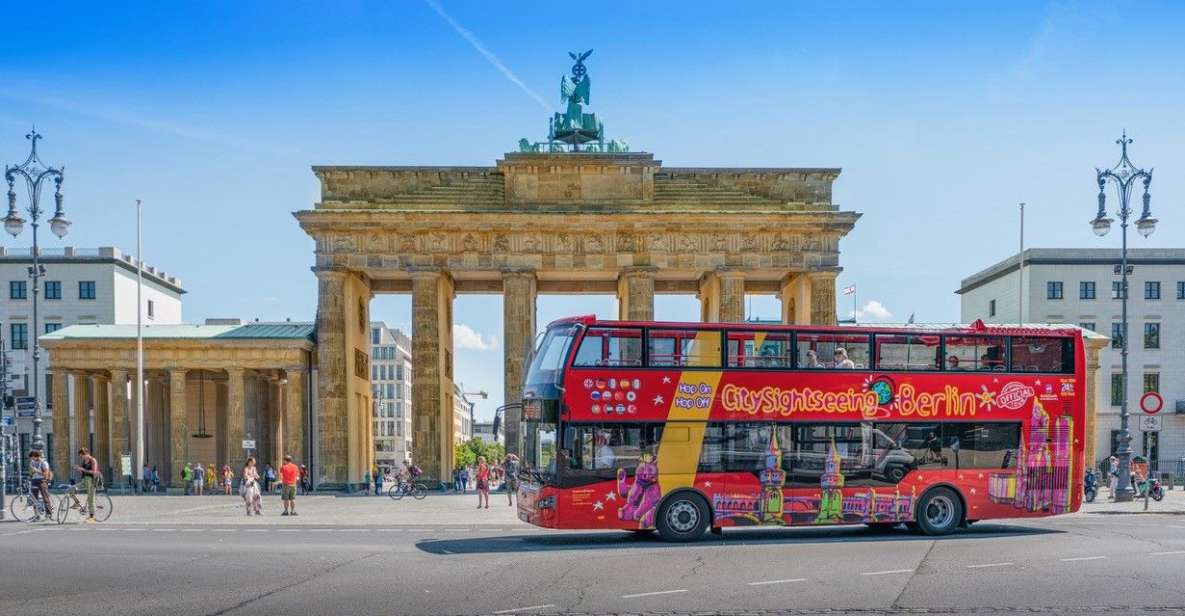
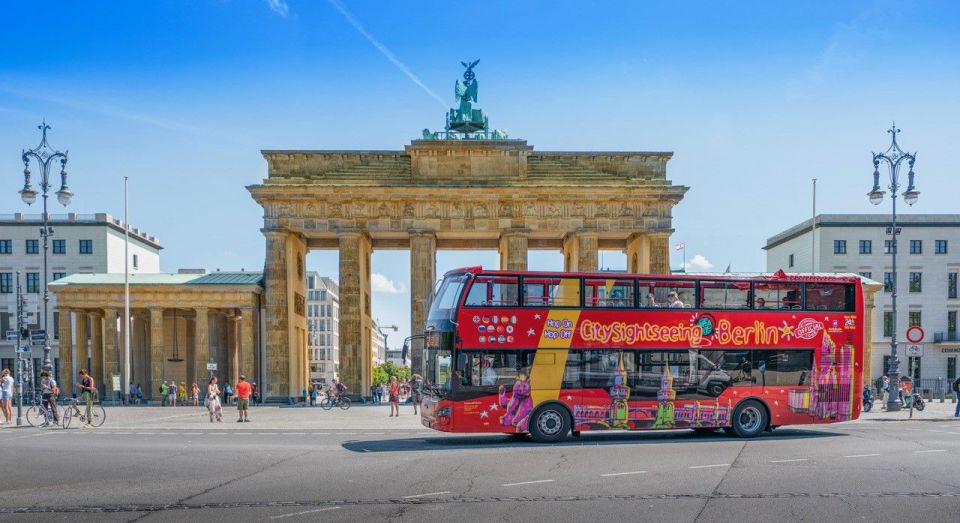
Brandenburg Gate
Brandenburg Gate is the star, and the bus route makes it easy to see it from the best “first-timer” angle: the whole surrounding plaza area. It’s also a spot where the audio context hits hardest because you’ve already moved through the broader story of Berlin’s political shifts.
Reichstag
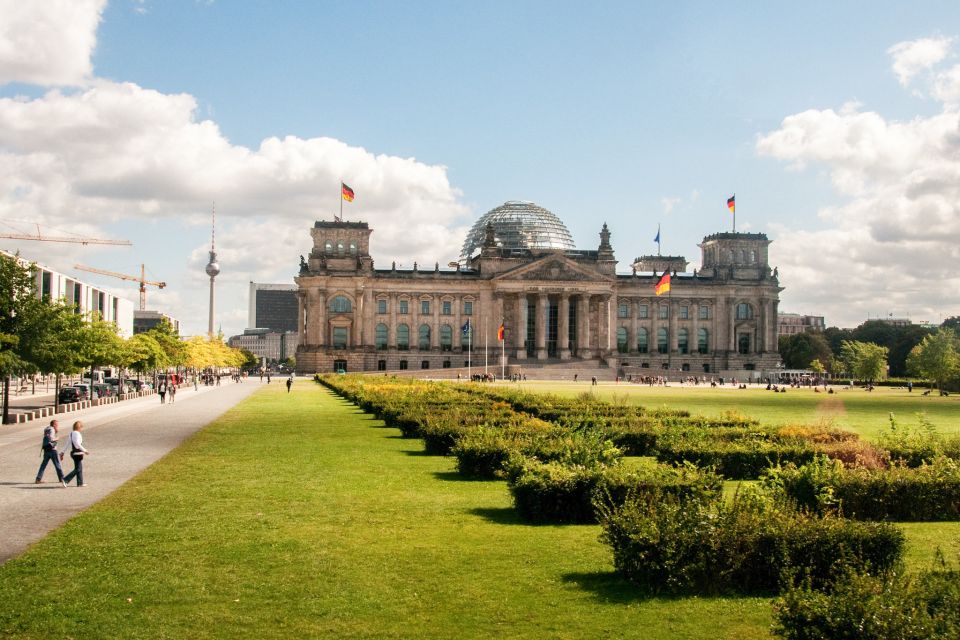
Reichstag is another major stop where Berlin’s modern political identity shows up in plain sight. Even from the bus, you can appreciate the building’s role in the city’s story.
Practical note: If you want to do more than just look, plan to step off and give it time.
Hauptbahnhof (Berlin Central Station) + Bellevue Palace
The route continues toward Hauptbahnhof and then Bellevue Palace. Hauptbahnhof is a useful anchor point because it’s a major transport hub, and Bellevue Palace ties into the political/ceremonial side of the city.
Why this matters: After you’ve seen the big “headline sights,” these stops help you understand where the city’s government and transit realities sit in the same space.
Victory Column (Siegessäule) area
Siegessäule and the surrounding area are worth catching because it’s one of Berlin’s biggest monuments in a more open setting. This is also a stop where the views can feel different from the dense central squares.
Tip: If you’re on the top deck, look for how the monument sits against wider streets and park edges.
Berlin Zoo / Elefantentor (Elephant Gate) and Café Kranzler area
The Zoo area brings you back to “Berlin as a live city,” with a famous entrance and the classic Kurfürstendamm shopping boulevard nearby. Passing these stops is a nice change of pace after wall-era and civic landmarks.
Kurfürstendamm 236
Kurfürstendamm is the shopping-and-street-life stretch. This end segment is perfect for grabbing something to eat nearby or mapping out your evening plans after the bus loop.
Trendy East Berlin & Wall: the shorter route with heavier meaning
If you want a focused route, the Trendy East Berlin & Wall option is built for that. It runs with first departure at 10am and last at 5pm. The route is about 1 hour long, with buses about every 40 minutes.
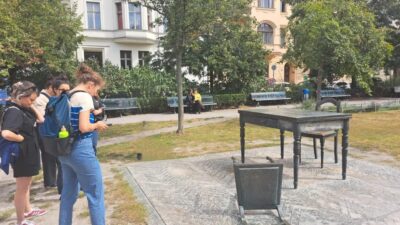
This is where you’ll spend time around Rotes Rathaus, Oranienburger Straße, and key East Berlin landmarks that connect to the Wall era. Because it’s shorter, it works especially well as a second-day activity, or a targeted add-on if your first day is already packed.
Here’s what you’ll see on this loop:
Neptunbrunnen / Rotes Rathaus
You start again near the city center civic area, giving you an easy orientation point. It’s also a good reset after the Classic route’s longer arc.
Oranienburger Straße
Oranienburger Straße is a transitional street—one of those places where the city’s layers feel visible in how neighborhoods connect.
Mauergedenkstätte
The Mauergedenkstätte area is the kind of stop that changes the tone of the day. This is the route’s focus point for Wall-era memory, and it pairs well with careful listening to the audio.
Mauerpark
Mauerpark adds a different angle: history that still has everyday life around it. The contrast is part of Berlin’s complexity.
Alexanderplatz / Park Inn
You’ll hit Alexanderplatz again, which makes re-planning simple. It’s also helpful if you want to connect transit after the loop.
Karl-Marx-Allee
Karl-Marx-Allee is known for its monumental feel, and the bus passing it gives you a quick sense of the broad-street scale that defines parts of East Berlin.
East Side Gallery
East Side Gallery is one of the most famous stretches of Berlin Wall art. Seeing this from the bus is a strong first look, and it’s the kind of stop that many people find worth revisiting on foot.
Ostbahnhof
Ostbahnhof brings the route to a major rail node, which is convenient if you’re continuing your day or moving to a later plan.
Open-top deck reality: great views, weather to plan for
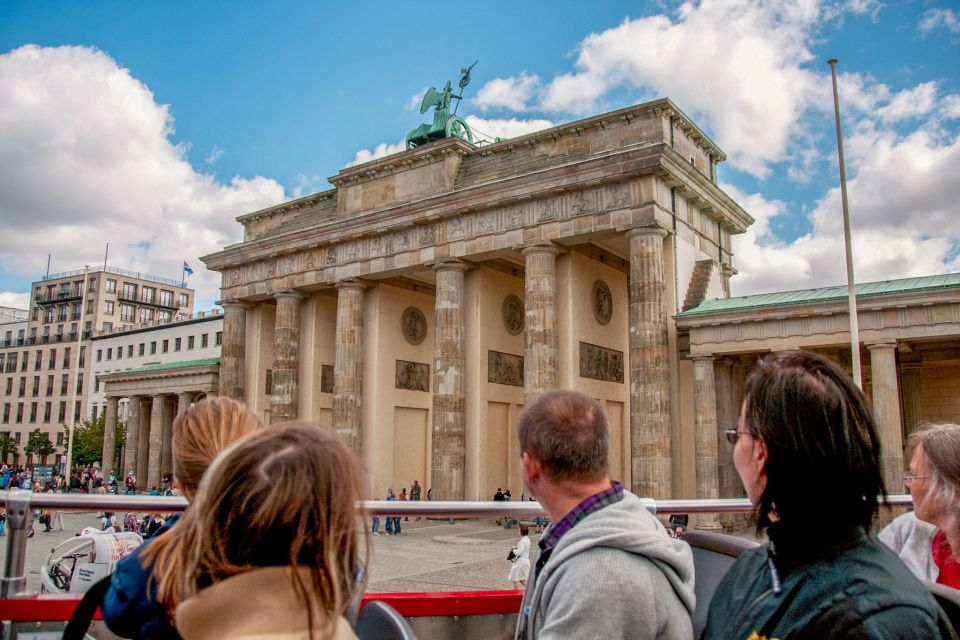
The open-top deck is a big reason to do this tour. From the top, your sightlines improve around squares and long boulevards—especially on stretches like Unter den Linden, where the road length becomes part of the visual story.
But plan for weather. A wet-day experience can turn into a soggy photo session if rain finds the gaps. If rain is likely, I suggest bringing a compact rain layer and being ready to move your seats if the bus is uncomfortable up top.
Also, seats can feel a bit stiff for the full ride. You don’t have to stay fixed in one spot the entire time. A practical move is to shift positions to match what you want to photograph or to reduce glare if the sun hits directly.
Audio, headphones, and multilingual freedom

The audio guide is included and available in 13 languages, with headphones provided. That language range is one of the best values for mixed groups or solo travelers who don’t want to rely on their own knowledge.
You can also change language and adjust volume, which matters because some cities can be loud around major stops. If you end up with weak sound, check the headphone jack right away and swap ports if needed. There’s staff support at stops, and it’s worth asking for help fast rather than waiting until the next major landmark.
I also like that the experience can include live-style commentary options for special themes like the Tour of Lights, when that option is booked separately. If you’re in Berlin during that light festival season, it can be an extra layer of fun beyond daytime landmarks.
Pricing and value: what $25 gets you (and what it doesn’t)
At $25 per person, the big win is coverage. You’re paying for two things at once: transportation along the main corridors and guided context for many landmarks.
What you don’t get is attraction admissions or food. That’s normal for hop-on hop-off tours, but it does change how you should budget. If you want to do interior visits at places like major museums or government-linked sites, save time and money for those separately.
The best “value strategy” is simple:
- Use the bus for orientation and context.
- Pick 2–4 places to return to on foot after you understand what matters to you.
Because the ticket can be used across 24 to 48 hours, it’s ideal for a short trip—especially if you build your second day around your favorite stops from the first.
Practical tips that make your day smoother
The tour is set up so you can start at any bus stop along the route, but you’ll still want a plan. Download the app before you go. Then, when you decide to hop off, don’t wander too far without a rough idea of where the next stop is. The whole system works best when you re-board quickly and keep your day flowing.
A few more practical points:
- Bring your passport or ID card.
- No pets, and no smoking on board.
- If you’re doing both routes, consider doing the Classic loop first for broad context, then use the East Berlin & Wall route for focus.
- If you want fewer waits, target popular stops a bit earlier in the day. Buses are frequent, but demand can spike.
Who this tour fits best
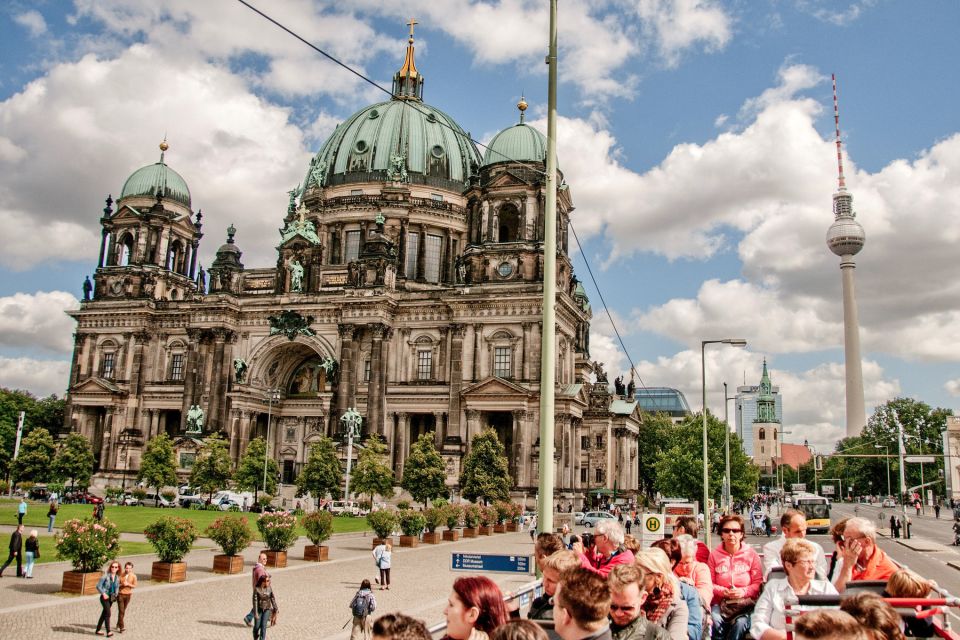
This is a strong match if:
- You’re in Berlin for a weekend and want a fast, structured overview.
- You like history and want context without reading for hours.
- You want a low-effort way to move between neighborhoods.
It’s also good for groups because the audio guide in many languages helps people stay synced.
If you already know Berlin well and only need one or two specific sites, you might find better value in a smaller, targeted walk or museum tour. But for most first-timers, this works because it balances movement and meaning.
Should you book this Berlin hop-on hop-off bus tour?
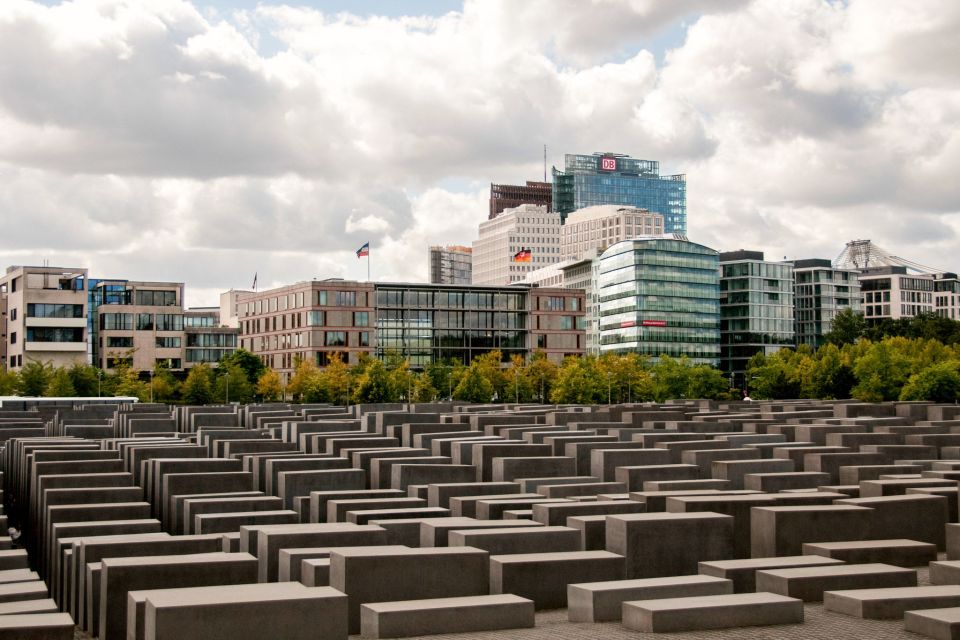
Yes, you should book it if you want a practical way to see the big sights while you’re still sorting out what to prioritize. The combination of open-top viewing, 13-language audio, free Wi‑Fi, and staff support at stops makes it easy to turn limited time into real understanding.
Book it especially if you’re doing 1–2 days and you want freedom without the stress of stitching together transit routes all day. If you’re sensitive to weather or hate waiting around, plan for rain and use the app to time your hops.