REVIEW · BERLIN
Berlin and National Socialism: Berlin under Nazism
Book on Viator →Operated by cultourberlin · Bookable on Viator
Berlin’s Nazi-era story clicks into place fast. This 4-hour, Spanish-speaking guided route connects Third Reich history to the real buildings and memorials you’ll see today, so the era stops feeling like a textbook chapter. You’ll cover major World War II landmarks, then walk on to Berlin’s official remembrance spaces.
What I like most is the way the guide explains the period with clear context (and often with photos/videos to anchor what you’re seeing). I also love the focused route: you get a lot of “must-see” stops without feeling rushed, and the group stays small (max 25), which keeps questions from getting lost.
One thing to consider: you’ll want a transit plan, because the tour doesn’t include an AB transport ticket, so you may need to cover getting to/from the meeting point on your own.
In This Review
- Key takeaways
- Why Berlin’s Third Reich Story Runs Through Real Streets
- What You Pay for: $25.54, Included Entry, and a Tight 4-Hour Route
- Meeting at Berlin TV Tower and Crossing Into the Post-War Rebuild: The Bundestag Stop
- Remembering Victims Beyond the Headlines: Sinti and Roma Memorial
- Soviet Memorial Tiergarten and the Battle of Berlin: A Different Kind of Loss
- Tempelhof Airport: Aviation Prestige Meets 20th-Century Reality
- Topography of Terror: Where Propaganda and Terror Become Physical Evidence
- Fuhrerbunker Area: Hitler’s Last Hours and the End of the Myth
- How to Make This Tour Fit Your Berlin Day (Without Running on Empty)
- Who This Tour Is For (and Who Might Want a Different Option)
- Should You Book This Tour?
- FAQ
- How long is the Berlin under Nazism tour?
- What time does the tour start?
- Is the tour in Spanish?
- Are admission tickets included?
- What about transportation to reach the meeting point?
- Where does the tour start and end?
- How big is the group?
Key takeaways
- Small group size (max 25) makes the explanations easier to follow and questions more likely to get answered.
- Admission tickets are included for the main museum stop, saving you time and fuss.
- Stop-by-stop context turns scattered sites into one coherent story of Nazi power and its collapse.
- Honors multiple victim groups, including the Sinti and Roma memorial tied to the Porajmos.
- You end at a major remembrance site, so the tour naturally carries forward into Berlin’s wider memory culture.
Why Berlin’s Third Reich Story Runs Through Real Streets
Berlin under Nazism isn’t just history to look at. It’s history built into street corners, institutional buildings, and memorial landscapes you’ll walk past every day. That’s what makes this tour work so well: it ties the Third Reich directly to the city’s physical map, not just dates on a timeline.
Berlin also has a habit of rewriting itself. Buildings get repaired, institutions get rebuilt, and new memorials rise in places that once meant something completely different. You’ll see that shift in real time, especially as you move from wartime-era locations toward post-war Germany.
This route is designed for people who want to understand rather than just photograph. If you prefer a straight line through a complex period, this format helps you build mental connections quickly—like putting captions on a bunch of blurry images until they finally look sharp.
You can also read our reviews of more tours and experiences in Berlin.


What You Pay for: $25.54, Included Entry, and a Tight 4-Hour Route
At about $25.54 per person for roughly 4 hours, the big value isn’t only the length. It’s what you get inside that time: multiple major stops plus at least one museum admission that’s included.
Here’s the practical angle. Some stops are free to enter, and one of the core stops is included admission—Topography of Terror. If you’ve ever tried to plan Berlin visits on the fly, you know museum logistics can eat up your day. This tour bundles that work for you.
Also notice the structure: you start at Berlin TV Tower and finish at the Memorial to the Murdered Jews of Europe. That end point matters. Instead of stopping mid-day with no next step, you leave with a strong “what now?” anchor for the rest of your day.
One last value point: you’re not paying for a single monument view. You’re paying for a guided thread through the city, which is the hard part of understanding this era on your own.
Meeting at Berlin TV Tower and Crossing Into the Post-War Rebuild: The Bundestag Stop
You start near the Berlin TV Tower, and that’s a smart warm-up. You get oriented in one of Berlin’s most visible modern landmarks before you step into the older layers of the city.
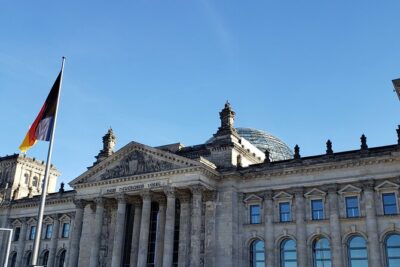
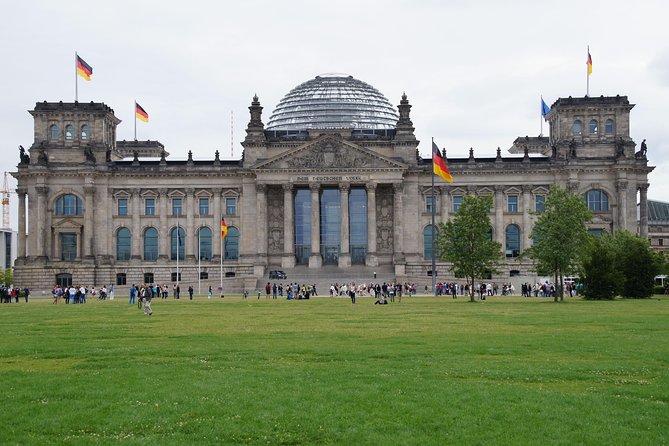
From there, the tour hits the Bundestag. The site matters because it carries a long story of partial ruin, political change, and reconstruction. The building was protected from the elements and partially renovated in the 1960s, but full restoration didn’t happen until after reunification on 3 October 1990. Then architect Norman Foster led the reconstruction, and by 1999 the Bundestag became the meeting place of the German parliament again.
Why this stop is powerful: it shows how Germany’s governance space re-entered public life after Nazism and World War II. It’s not about pretending history vanished. It’s about showing how a country rebuilds institutions while still living in the shadow of what came before.
The tour gives you about 20 minutes here, which is enough to take in the symbolism without turning it into a lecture with a hundred side roads. If you like to connect political history to architecture, this is one of the best “bridge” moments on the route.
Remembering Victims Beyond the Headlines: Sinti and Roma Memorial
Not every Nazi-era tour balances victim remembrance the same way. This one explicitly includes the Memorial to the Sinti and Roma Victims of National Socialism.
This memorial is dedicated to the memory of those murdered in the Porajmos, within the Nazi genocide of European Sinti and Roma peoples. The figure given for murdered people is 220,000 to 500,000, which helps you understand the scale without shrinking the tragedy into vague numbers.
You’ll spend around 5 minutes here. That sounds short, but in this context it’s often the right amount of time. Memorials need space in your mind, not a sprint. The guide’s job is to place what you’re seeing into history so it lands as remembrance, not just a stop on a checklist.
What I appreciate is the focus on a victim group that can be less present in pop-history versions of the period. If you’re building a fuller understanding of what the regime did, this stop pushes you to widen your lens.
Soviet Memorial Tiergarten and the Battle of Berlin: A Different Kind of Loss
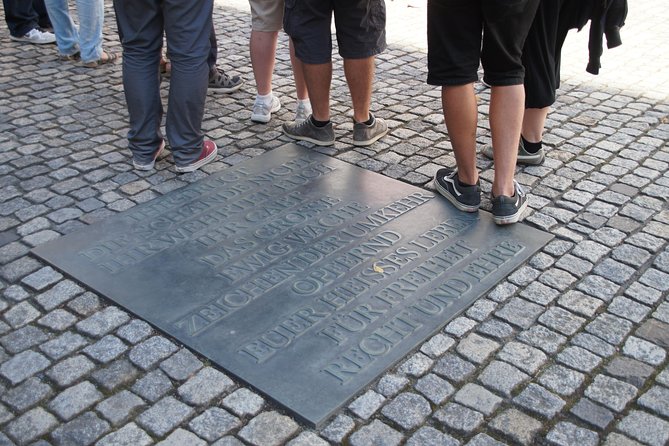
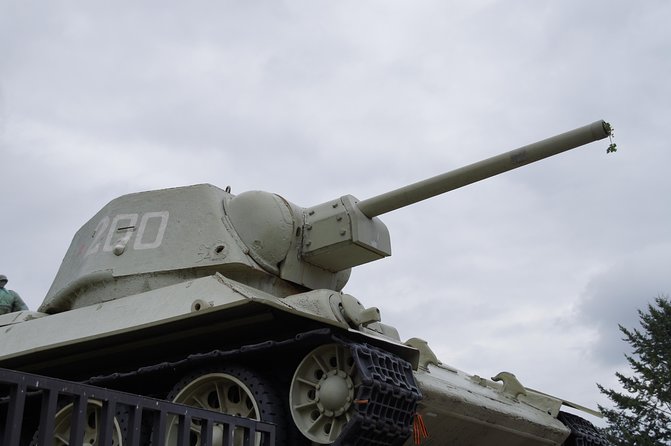
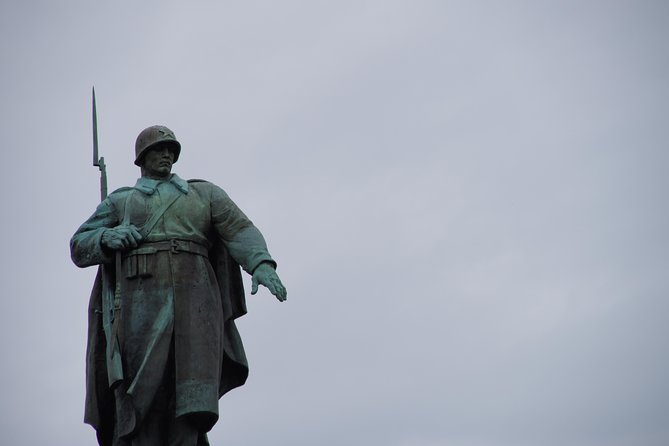
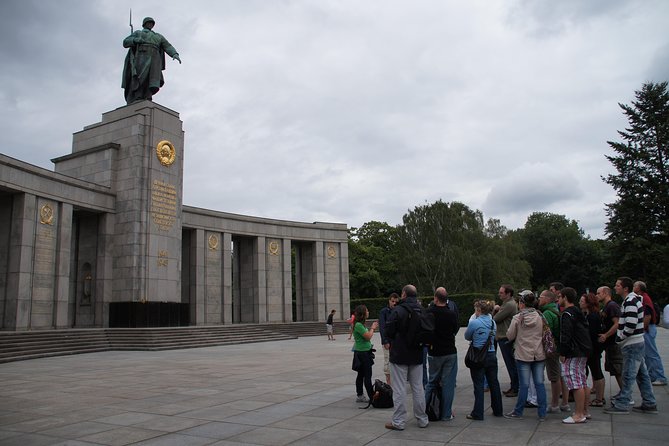
Next comes the Soviet Memorial Tiergarten, one of several war memorials erected by the Soviet Union to commemorate war dead—especially the 80,000 soldiers of the Soviet Armed Forces who died during the Battle of Berlin in April and May of 1945.
This stop is useful because it reminds you that the war ended with enormous losses across many sides, not only within the territory you might naturally picture. Even if you already know the outcome, the memorial wording and focus ground the story in human cost.
You’ll have about 15 minutes, which gives enough time to read and absorb. This is also a good moment to pause your mental image of the era as purely German-Nazi focused. Germany’s war and collapse were part of a much wider machine—and Berlin was a central crash point.
A note for your expectations: this is emotionally heavy material. If you’re sensitive to war memorial themes, go slow, take a breath, and don’t force yourself to “power through” the whole tour in one mood.


Tempelhof Airport: Aviation Prestige Meets 20th-Century Reality
The tour then moves to Tempelhof, which takes you to one of Berlin’s major early 20th-century aviation nodes. In 1926, it was the largest airport in Europe, with ten flights daily.
That kind of detail does more than entertain. It helps you see how modern infrastructure can exist alongside politics that later become monstrous. Tempelhof isn’t just a wartime symbol; it’s a reminder of how normal life and ambition looked before things turned brutally wrong.
You’ll have around 25 minutes here, which suggests the guide will give you enough breathing room to connect the airport’s early role to the later historical context you’re studying. It’s the “how the city got here” chapter, not only the “what happened at the worst moment” chapter.
Practical tip: airports are open spaces, so if the weather is bad, you’ll feel it. Dress for Berlin conditions, not just for the season on your flight map.
Topography of Terror: Where Propaganda and Terror Become Physical Evidence
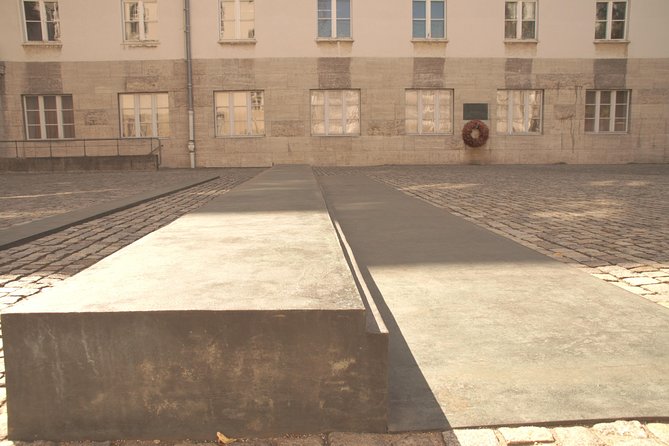
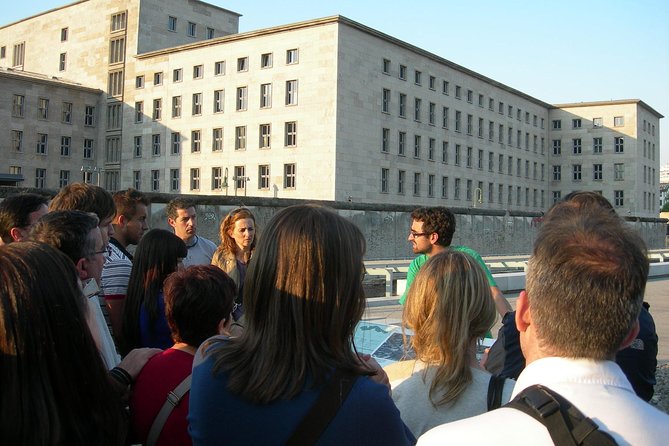
If you want one stop where the Nazi regime stops being abstract and starts feeling documented, make it Topography of Terror.
This site is an indoor and outdoor history museum in Berlin. It’s included in the tour, meaning you won’t have to figure out admission separately. That included access is a big part of the tour’s value, because museum time is where self-guided plans often go wrong: you arrive late, you miss the right sections, or you simply end up tired and under-reading what you see.
You’ll spend about 15 minutes here, so you should expect a guided snapshot rather than a full museum day. The benefit is that the guide’s explanations help you understand what you’re looking at in those limited minutes.
Why this museum stop matters for your understanding: it deals with terror and the machinery behind it, not just high-level political events. You see how systems produce both propaganda and violence, and you start to recognize patterns that repeat in history.
Also, based on how guides in this program teach, you can often expect more than names and dates. The explanations tend to include supporting material like photographs and videos to help you picture the era rather than only reading labels.
Fuhrerbunker Area: Hitler’s Last Hours and the End of the Myth
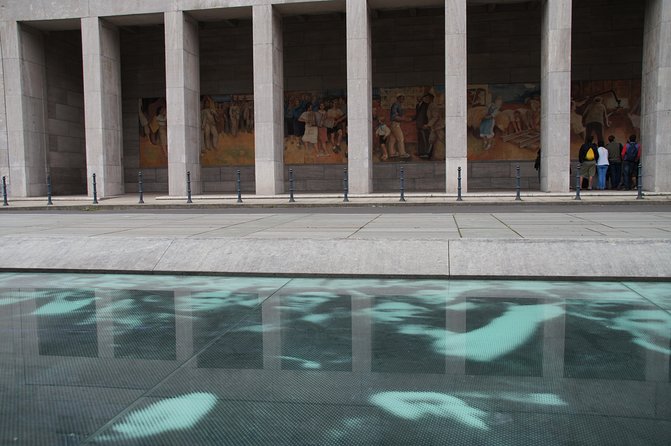
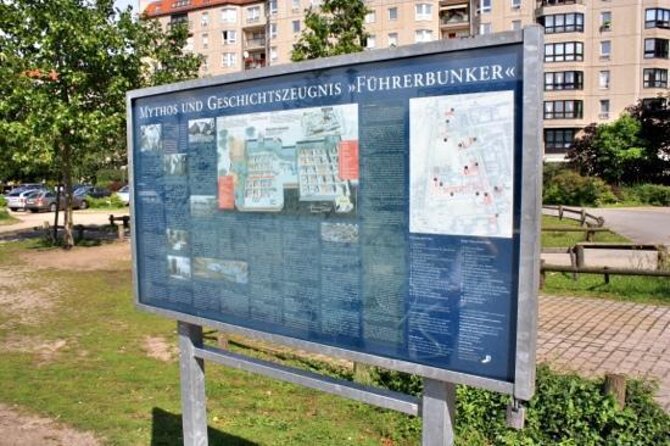
The final major historical stop is the Fuhrerbunker area—where Hitler had his refuge during his last hours alive.
This is one of those places where the guide’s tone matters. The point isn’t theatrics. It’s history: how the regime ended, what the last days looked like, and what the collapse meant for Berlin and Germany.
You’ll spend around 15 minutes here, and that makes sense. This isn’t a “wander and guess” location. You need an explanation to keep the site from turning into vague atmosphere.
The value for you is perspective. The Nazi era wasn’t only a set of laws and institutions—it was also a regime that surrounded itself with myths of control. Standing near the bunker area, you get to see that myth run out of time.
How to Make This Tour Fit Your Berlin Day (Without Running on Empty)
This tour has a clean flow, but Berlin days can get crowded fast. So plan it like this: treat it as the backbone of your morning or early afternoon, then build your remaining sightseeing from there.
You’ll start at 10:00 am, and you finish at the Memorial to the Murdered Jews of Europe. That end point is a strong emotional landing pad. If you plan something right after, keep it lighter—think food, coffee, and walking to let the information settle.
Since you’re outdoors for several stops (and one is an open airport area), I strongly suggest you dress for wind and rain, even in fair months. One bad-weather tour can still be great, but it’s easier when you’re comfortable.
Bring water and keep your phone charged. You may want to take notes right away while the guide’s connections are fresh. And if you’re the kind of person who likes questions, this small-group format helps. Guides on this route have a reputation for being attentive and answering what comes up rather than steamrolling the script.
Who This Tour Is For (and Who Might Want a Different Option)
You’ll probably love this tour if you want a structured introduction to the Third Reich using real Berlin locations. It’s especially good for people who feel overwhelmed by Berlin’s layers and want a focused thread instead of wandering from site to site.
It’s also a strong fit if you’re traveling in Spanish or want a guide who can explain clearly and respectfully. The program’s guides have included Julia/Júlia, Helena, and Celia, and the consistent praise is about professional, thoughtful explanation.
Consider a different option if you’re looking for a short, lighthearted “quick hit” tour. This is built around WWII and Nazi history, including memorial sites tied to genocide and war deaths. It’s not designed to be casual.
Should You Book This Tour?
Yes—if you want a well-paced, guided way to understand Berlin under Nazism, this is a smart booking. The price is reasonable for the time and the included admission at Topography of Terror, and the route moves from political power to remembrance and back into a broader story of how Berlin lives with the past.
I’d book it especially if:
- you like guided context more than self-guided wandering
- you want a small group (max 25)
- you want the tour to connect multiple victim and memorial perspectives, not just one
If you’re traveling without a transit plan, build that in first since the AB transport ticket isn’t included. Otherwise, you’re set up for a meaningful few hours that leave you with a clearer map of what happened—and why the city looks the way it does today.
FAQ
How long is the Berlin under Nazism tour?
It’s approximately 4 hours.
What time does the tour start?
The start time is 10:00 am.
Is the tour in Spanish?
Yes. The guide is Spanish speaking.
Are admission tickets included?
Yes. Admission tickets are included (and Topography of Terror is marked as included).
What about transportation to reach the meeting point?
An AB transport ticket is not included, so you’ll need to handle local transit separately.
Where does the tour start and end?
It starts at Berlin TV Tower (Panoramastraße 1A, 10178 Berlin) and ends at the Memorial to the Murdered Jews of Europe (Cora-Berliner-Straße 1, 10117 Berlin).
How big is the group?
The maximum group size is 25 travelers.