REVIEW · BERLIN
Berlin Private Complete History All Day Walking Tour
Book on Viator →Operated by Birchys Berlin Tours · Bookable on Viator
Berlin history feels close on this walk. This private all-day walk strings together the moments that reshaped Germany, from Nazi power to the Wall era, with real time for questions.
I like two things most. The route starts with Berlin’s headline monuments so you quickly understand the city’s layout, and the pacing is built for learning without endless ticket lines.
The trade-off is simple: you’ll do a lot of walking with no vehicles, and the subject matter gets heavy, especially around the Holocaust Memorial and the Fuhrerbunker site.
In This Review
- Key highlights I think you should know
- What a private history walk really buys you in Berlin
- Price and logistics: the walk-first design
- Start at Ebertstraße, then build your Berlin map fast
- Brandenburg Gate to Reichstag: the city’s power shifts in one corridor
- Soviet memorials, Tiergarten, and the Victory Column from the right distance
- Holocaust Memorial and the Fuhrerbunker: where the day turns serious
- The human stories: Elser, the Aviation Ministry, and Topography of Terror
- The Berlin Wall story through memory sites and escapes
- Gendarmenmarkt, Bebelplatz, and the academic Berlin you forget to seek
- Museum Island, Humboldt Forum, and St. Mary’s Church before you hit Alexanderplatz
- Who should book this walking tour, and who should rethink it
- Should you book Birchys Berlin’s Complete History All Day Walk?
- FAQ
- How long is the Berlin Private Complete History all day walking tour?
- Is this tour private or shared with other groups?
- Is food included in the price?
- Do you use a vehicle for transportation during the tour?
- Where does the tour start and end?
- What language is the tour offered in?
- Are tickets or admissions included for the stops?
- Is there a mobile ticket?
- Are service animals allowed?
- What is the cancellation policy?
Key highlights I think you should know
- Private guide, no sharing: Only your group is on the route, so questions don’t get cut off.
- Big WWII and Cold War stops in one line: Brandenburg Gate to Checkpoint Charlie, plus the places in between.
- Most stops are admission-free on the day: Many locations are listed as free entry, which matters for value.
- Guides like Rhys and Paul set a fast pace for facts: Reviews mention humor, flexibility, and real answers.
- On-foot pickup and walking-only logistics: No bus rides; you move through neighborhoods.
- End at Alexanderplatz: You finish in a major hub, so it’s easier to keep exploring after.
What a private history walk really buys you in Berlin
Berlin is big, and history here is not tidy. This kind of private walking tour is a smart fix: you get one guide with time to connect the dots while you move between sites that are too far apart for a quick bus hop.
At $253.95 per person, it’s not a budget deal. But you are paying for something you can’t easily replace on your own: a guide who can explain why the same street corner can mean different things in different decades. Reviews also point to a repeat theme—guides like Ciaran Ryan and Rhys staying flexible, patient, and ready to answer follow-ups rather than rushing through talking points.
The best value angle is the mix of famous landmarks and emotionally demanding sites. Many stops are listed as admission ticket free, so your money mostly goes to guide time and interpretation, not venue fees.
You can also read our reviews of more walking tours in Berlin



Price and logistics: the walk-first design
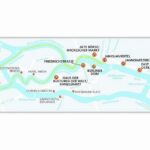
This is a no-vehicle tour. That sounds obvious until you plan your day. You start at 10117 Ebertstraße 24 and finish at Alexanderplatz (10178), and the walking is the point—your guide turns the route itself into the timeline.
You’ll want comfortable shoes. Six hours on foot is not a casual stroll, even if the guide keeps things relaxed. Reviews mention the day “flew by,” but they also include a clear note: don’t book this if you can’t handle sustained walking.
Good news: it’s set up for real travel rhythms. You’re near public transportation, pickups are on foot with the guide, and the tour uses a mobile ticket. If you’re sensitive to long days, I’d still plan for breaks—this tour is described as well-paced and adaptable to the group.
Start at Ebertstraße, then build your Berlin map fast
Starting near Ebertstraße puts you in a part of Mitte where a lot of the city’s key storylines overlap. The guide-led flow matters here. You’re not wandering in the dark between highlights; you’re building a mental map while the meaning of each place is explained.
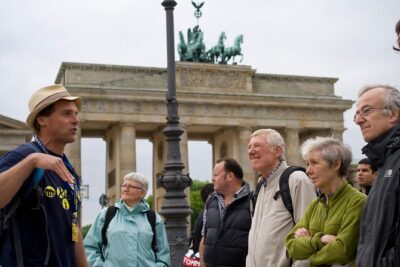
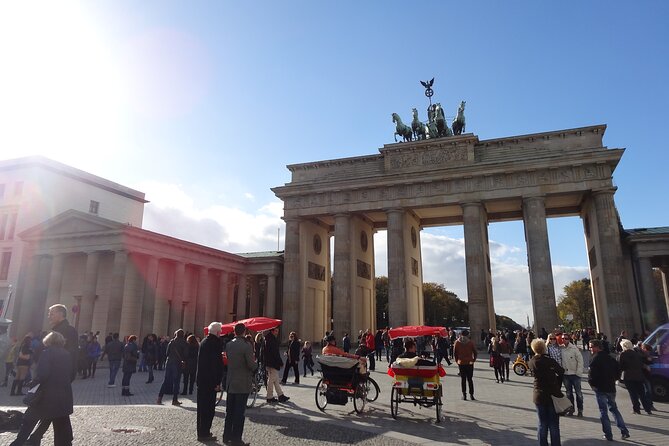
One practical tip: at major photo stops like the Brandenburg Gate, the guide encourages you to ask for a picture. That may sound small, but in Berlin you’ll see a lot of famous architecture from angles you might miss if you’re juggling your phone and your bearings.
The ending at Alexanderplatz is also useful. It’s a central place to grab lunch later, catch transit, or continue toward other neighborhoods without retracing your steps.
Brandenburg Gate to Reichstag: the city’s power shifts in one corridor
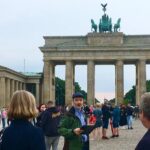
The day kicks off at the Brandenburg Gate, and the point isn’t just that it’s iconic. Your guide explains what it meant when it was built, and how it became a focal symbol as Berlin—and Germany—went through cycles of unity and division. It’s the kind of stop where you’ll understand why Cold War Berlin propaganda and symbolism clung to this exact structure.
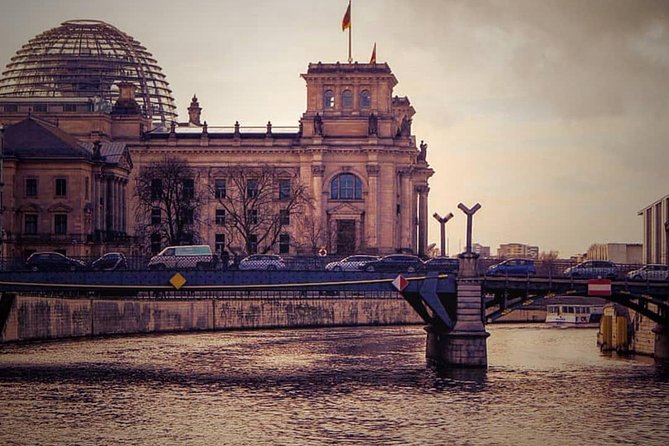
Then you shift to the Reichstag Building. This is where the guide’s job becomes essential. You learn about the Hohenzollerns in the building’s background, why the Nazis used the Reichstag as a stage in early 1933, and how the fighting in the Battle of Berlin left marks on the story of the building itself. After reunification, the building’s role changes again—so the lesson is not just WWII, but how meaning gets rewritten.
What I like about this pairing is the emotional rhythm. The Gate gives you a symbol to hold in your head. The Reichstag turns that symbol into politics, then war, then rebuilding.
Soviet memorials, Tiergarten, and the Victory Column from the right distance
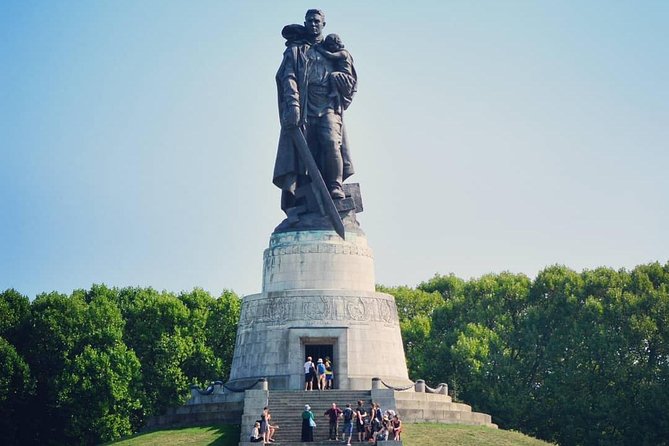
Berlin’s WWII story isn’t only about Germans. The tour includes the Soviet Memorial in Tiergarten, and the guide frames it as a surprising location: it was in West Berlin. That detail alone adds tension to the geography—politics shaped where memory was allowed to sit.
You’ll also hear about the memorial’s construction, including the origin of its building materials, plus symbolism and controversy. This is one of those stops where history isn’t a simple moral scorecard. It’s contested memory, and Berlin forces you to look at how different sides commemorate the same events.
After that, the tour walks through the Tiergarten, the large park that Berlin residents know well. The guide connects the park’s development from earlier periods to how modern events affected it.
And then the Victory Column, viewed from a distance. From up close, you might miss the point. From the right angle, it reads as a reminder that monuments don’t just honor victory; they broadcast it.
You can also read our reviews of more private tours in Berlin


Holocaust Memorial and the Fuhrerbunker: where the day turns serious
Two stops are the emotional center of the route: the Memorial to the Murdered Jews of Europe and the Fuhrerbunker site.
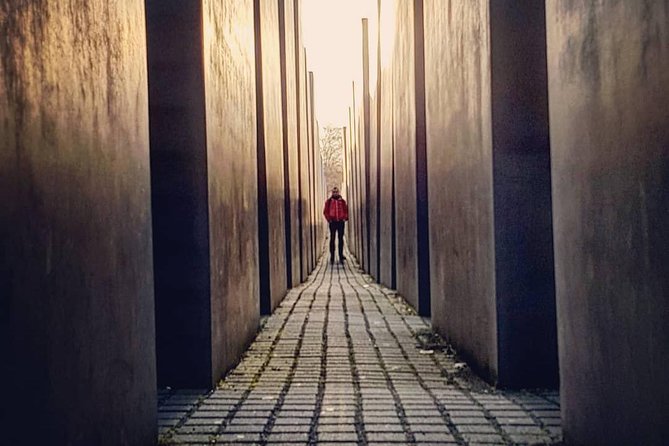
At the Holocaust Memorial, the tour doesn’t treat the place like a photo backdrop. The emphasis is on why this memorial exists and what it asks you to remember. Even if you already know the history, having it framed in a walking context—connected to the broader Nazi-to-reunification arc—makes it harder to reduce the topic to facts on a page.
Then you go to the Fuhrerbunker. Your guide explains this site as the place where one of history’s worst tyrants spent his final days, and the striking detail is that it’s described as an infamous parking lot/car park today. Berlin has a way of keeping the ghost of a place while using the real land for something ordinary. That contrast is uncomfortable, but it’s also exactly the point.
If your group needs a slower emotional pace, this is where a good guide matters. Reviews consistently highlight that guides can translate confronting moments into understandable stories without turning them into a lecture.
The human stories: Elser, the Aviation Ministry, and Topography of Terror
One of the most interesting stops is the sculpture connected to Johann Georg Elser. The guide tells you his story as a near-miss that could have changed world history. It’s a reminder that major events don’t always follow a straight line; sometimes history turns on one person, one decision, one narrow gap.
You’ll also pass the Aviation Ministry of Berlin (described as a building in continuous use since 1936). Your guide frames it as a witness to turbulent 20th-century years, which helps you see buildings as participants rather than backdrops.
Then comes Topography of Terror. This site is tied to the former SS, Gestapo, and SD headquarters in Berlin, and your guide covers what happened here during the Nazi era and what changed afterward. This stop can feel heavy, but it’s also one of the most important for understanding the machinery of terror, not only the major political decisions.
The Berlin Wall story through memory sites and escapes
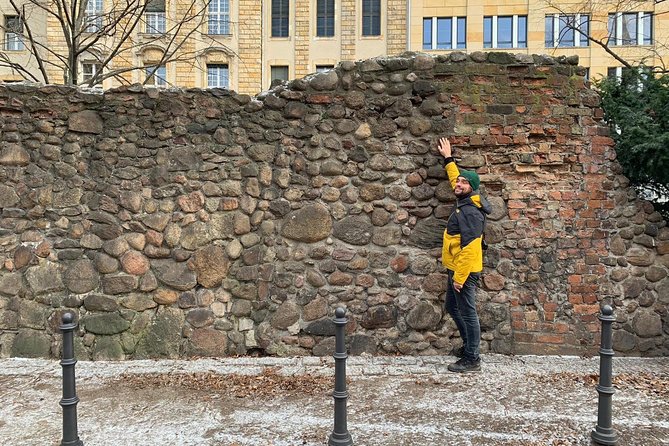
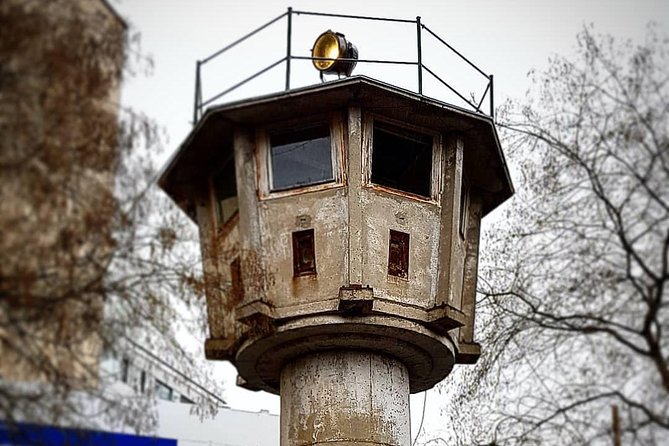
The route includes a section of the Berlin Wall and the guide’s explanation of when and how it was constructed. The most valuable part is the human one: stories of escapes and tragic deaths tied to the Wall era.
This is where the private format really helps. If you care about a specific escape attempt or want to understand how the Wall worked in practice, your guide can tailor the conversation on the spot. In reviews, guides like Paul and Eugen are described as accommodating and ready for questions rather than sticking to a rigid script.
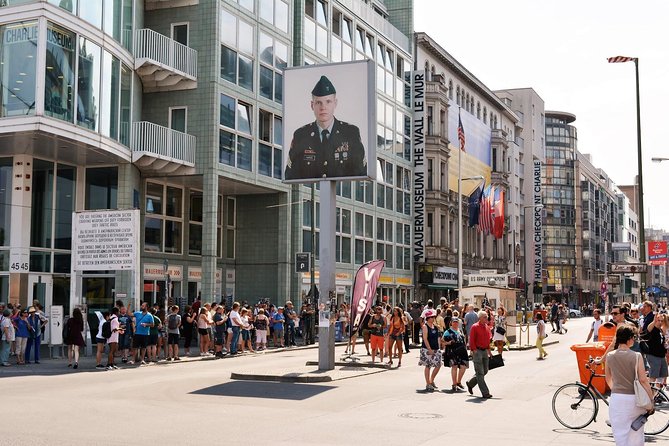
From there, you hit Checkpoint Charlie, one of the most famous Cold War checkpoints. The guide ties it back to the logic of the Cold War city—who could go where, what crossing points meant, and why this particular spot became globally symbolic.
A short stroll down Friedrichstraße, once known as Cabaret Mile, gives the day a different texture. It’s still about history, but it shows how daily life and nightlife existed alongside political tension.
Gendarmenmarkt, Bebelplatz, and the academic Berlin you forget to seek
Berlin isn’t only the 20th century. This tour takes you into places tied to culture and learning.
At Gendarmenmarkt, the guide explains the origins and how the square became an architectural showpiece. You’ll stand in a space that feels calm compared to the heavy sites earlier, but it’s also a useful contrast: Berlin built beauty and status alongside power and propaganda.
Then Bebelplatz adds a sharp memory lesson. The tour covers surrounding 18th-century buildings and key institutions, including the Catholic cathedral (St. Hedwig), Humboldt University’s law faculty, and the City Opera House. The guide also points out that this square was the site of Nazi book burnings, and you’ll see the thought-provoking memorial connected to that act.
The nearby stop at Humboldt University reinforces the point that education in Berlin wasn’t just a backdrop; it was part of the city’s identity—and something history tried to control.
Museum Island, Humboldt Forum, and St. Mary’s Church before you hit Alexanderplatz
The tour reaches Museum Island, a UNESCO World Heritage area in the guide’s telling. The explanation includes how the island developed and the museums and cathedral there, with attention to the architects who shaped the look of this cultural center.
You’ll also visit the Humboldt Forum, where the guide focuses on its complicated and surprisingly recent history. That’s a strong reminder: Berlin’s rebuilding isn’t only physical. It’s interpretive. It’s about deciding what a recovered building means now.
Next is St. Mary’s Church, presented as Berlin’s oldest church in continuous use (with an emphasis on architecture and the survival story). If you can go inside, it’s a nice way to end the emotional weight of the day with something older and steadier.
Finally, you close at Alexanderplatz, rebuilt after the war and described as the capital of the DDR. It’s a fitting finish because it shows how Berlin’s division wasn’t only walls and borders—it was also urban planning and everyday life.
Who should book this walking tour, and who should rethink it
Book it if:
- You want a one-day framework for Berlin history without juggling museums on your own.
- You like asking questions and getting specific answers tied to real buildings.
- You’re okay with WWII, the Holocaust Memorial, and sites tied to Nazi leadership.
Consider another option if:
- You prefer shorter walks or you’re not steady on your feet for a full day.
- Your group struggles with heavy topics. This route doesn’t water anything down, and it should not be treated like sightseeing fluff.
This tour is also a good fit for couples and small groups. Reviews mention guides meeting needs across ages, with examples of flexibility and patience, and even adding short breaks to keep energy up.
Should you book Birchys Berlin’s Complete History All Day Walk?
I’d book it if you want to understand Berlin more than you want to just see it. The big win is how the guide links sites into a story, so the city feels logical even when the history is brutal.
The main decision comes down to your comfort with walking and emotional weight. If you can handle six hours on foot and you’re ready for the Holocaust Memorial and the Fuhrerbunker stop, you’ll leave with a sharper sense of what Berlin is trying to remember—and how it tries to move forward.
If you do book, I’d plan your day like a Berlin local: wear good shoes, carry water, and accept that you’ll likely want to spend extra time revisiting a few places afterward.
FAQ
How long is the Berlin Private Complete History all day walking tour?
It runs for about 6 hours.
Is this tour private or shared with other groups?
It’s private. Only your group participates.
Is food included in the price?
No. Food and drinks are not included.
Do you use a vehicle for transportation during the tour?
No. It’s a walking tour with no private transportation, and pickups (if offered) are on foot with the guide.
Where does the tour start and end?
It starts at 10117 Ebertstraße 24, Berlin, and ends at Alexanderplatz, 10178 Berlin.
What language is the tour offered in?
The tour is offered in English.
Are tickets or admissions included for the stops?
The tour information lists many stops as admission ticket free. It does not say food, drinks, or separate transportation are included.
Is there a mobile ticket?
Yes, a mobile ticket is included.
Are service animals allowed?
Yes, service animals are allowed.
What is the cancellation policy?
You can cancel for free up to 24 hours before the experience start time for a full refund. Changes made less than 24 hours before the start time aren’t accepted.