REVIEW · BERLIN
Rickshaw Tours Berlin – Groups of up to 16 people with several rickshaws
Book on Viator →Operated by Rikscha & Bier Bike & Party Beer Bike - Leo Rickshaw Tours · Bookable on Viator
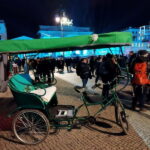
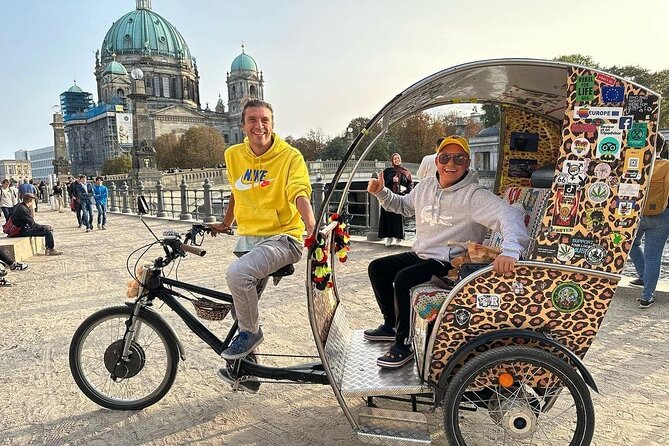
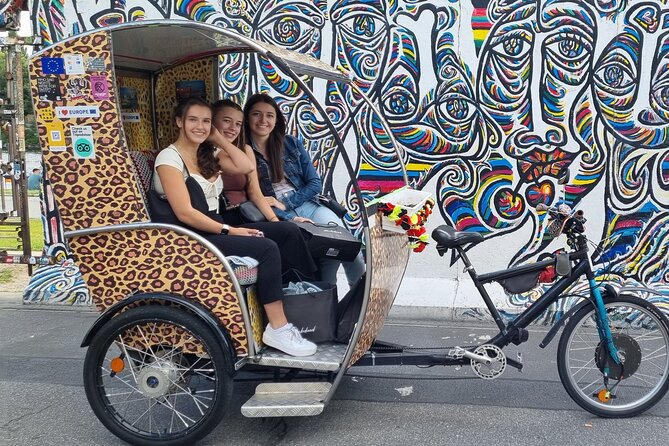
Berlin on wheels is an efficient way to see Berlin. This private rickshaw tour threads together major sights across East and West with a guide, onboard WiFi, and photo support. I like the small-group pace (up to 16 people) because you get plenty of time at the stops instead of rushing through like a checklist. I also like that guides can be very personality-driven, and names like Leo and Hugo show up in standout experiences.
My one big caution is consistency: there are cancellations and no-shows in the provider’s recent history, plus occasional issues with audio volume or seating cramp. If your schedule is tight, plan a backup option for the day you book.
In This Review
- Key things to know
- Why This Berlin Rickshaw Tour Feels Faster Than Walking
- Price and What $53.10 Really Buys You in Time
- Starting at Brandenburg Gate: The Classic Face of Germany
- Reichstag/Bundestag Area and the German Chancellery: Power With Scars
- Tiergarten’s Memorials and the Park-Style Break You Actually Need
- Topography of Terror and Gropius Bau: Two Ways Berlin Thinks
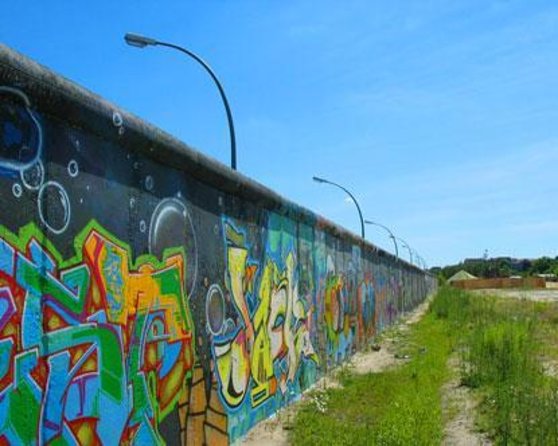
- The Wall Memorial to Checkpoint Charlie: East-West Berlin in Plain View
- Gendarmenmarkt to Bebelplatz: A Central Europe Feel in One Tight Route
- Museum Island, Berlin Cathedral, and Lustgarten: Where Art, Power, and Leisure Meet
- Alexanderplatz: Finish at Berlin’s Everyday Center
- Comfort, Pacing, and the One Thing to Watch: Your Seat
- Should You Book This Berlin Rickshaw Tour?
- FAQ
- How long is the rickshaw tour?
- What language is the tour offered in?
- Is pickup included?
- How big is the group?
- Is this a private tour?
- What’s included with the tour?
- Are alcoholic beverages included?
- Do I need admission tickets for the stops?
- Which stops are listed as free?
- What if the tour is canceled due to weather?
Key things to know
- Small-group private tour: up to 16 people, with several rickshaws for your group
- Guide-led, photo-friendly: a photographer and photo-taking along the route
- WiFi on board: handy for maps, messages, and last-minute ticket planning
- Major “both Berlins” stops: Wall sites, Checkpoint Charlie, and central landmarks
- Some admissions aren’t included: several key venues require separate tickets
Why This Berlin Rickshaw Tour Feels Faster Than Walking
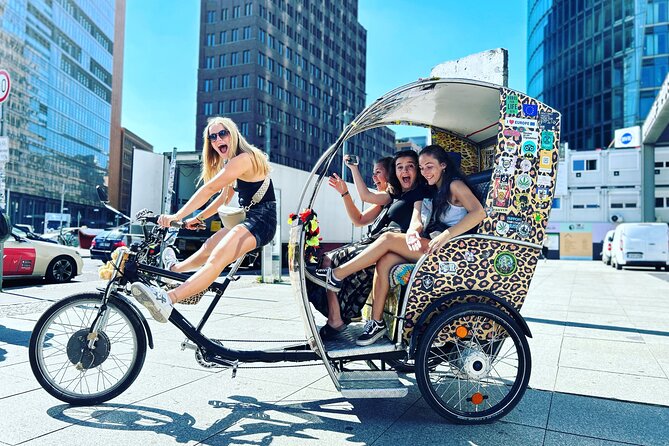
A rickshaw tour is a smart fit for Berlin because the city is huge and split into clear zones, but many of the landmarks you want are close enough to string together by short rides. Instead of walking block after block, you get that rolling rhythm: move, pause, look, shoot photos, move again.
You’ll also feel the advantage of a group limit. With up to 16 people, your tour is still big enough to keep energy up, but small enough that the route can make sense without turning into a chaotic parade. And since it’s private (only your group participates), you can usually expect the guide to tailor pacing and questions.
One detail that really matters in real life: the tour includes private transportation and gets you between far-flung points efficiently. That’s the difference between seeing “a few highlights” and actually covering both the monumental and everyday Berlin in one go.
You can also read our reviews of more tours and experiences in Berlin.


Price and What $53.10 Really Buys You in Time
At $53.10 per person, this isn’t a budget-only sightseeing ride. It’s priced like a paid-guide experience plus “comfort with motion,” and you’re paying for two things most walking tours don’t fully deliver: transport and time.
You’re looking at about 1 to 4 hours, depending on how the day is paced and how long you spend at stops. If you’re in Berlin for a short stay, that range can be a lifesaver. It’s long enough to hit meaningful anchors like Brandenburg Gate, the Reichstag/Bundestag area, and Wall-era sites, while still short enough to keep your day flexible afterward.
Included add-ons also make the price feel more reasonable. You get WiFi on board, music on request, a tour guide, and a photographer. On a city tour, those aren’t fluff if you hate holding your phone over your head and you want photos that don’t look like they were taken at random street intersections.
Pickup is available within a 2km radius of Brandenburg Gate, and farther than that is charged at €10 per km. So this works best when you’re staying fairly central.
Starting at Brandenburg Gate: The Classic Face of Germany
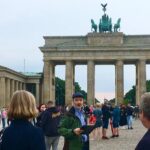
Your tour begins at Brandenburg Gate, and it’s a good opener because it’s instantly readable. This sandstone monument was built from 1788 to 1791 with designs tied to classical Greek inspiration. It also sits at the end of the grand boulevard Unter den Linden, which helps you understand why it’s such a symbolic anchor.
Even if you’ve seen photos of Brandenburg Gate before, being there in person helps you connect the look to the story: classicism, power, and a city that always seems to be reinventing itself. The guide focus here sets the tone for the rest of the day—Berlin isn’t one story. It’s layers.
Keep in mind: for this kind of stop, you should treat it as an outside viewing moment. Admission tickets for specific venues nearby aren’t part of the base package, so your best use of time is photos and quick context from the guide rather than expecting a museum entry.
Reichstag/Bundestag Area and the German Chancellery: Power With Scars
From Brandenburg Gate you roll toward the Reichstag/Bundestag area, where German political turning points are written into the building’s history. The balcony moment from November 9, 1918 is part of the setting, and the guide can point out how the Reichstag fire of February 27, 1933 and later destruction changed everything. The image of a Soviet victory flag raised on April 30, 1945 is one of those details that makes the present-day view feel heavy and purposeful.
One important practical note: admission ticket is not included for this stop, so don’t plan on going inside unless you’ve arranged tickets separately.
Then you head to the German Chancellery, and this is where the tour shifts from politics-in-the-abstract to architecture-in-motion. The building is described as highly transparent and light for something tied to government operations, with large glass surfaces between concrete pillars and glazed atriums. Even without stepping inside, you’ll see how the design communicates modern openness against older forms of authority.
If you like buildings that tell stories without needing a plaque, this part is a strong payoff. If you need a sit-down indoor museum experience, you’ll want to pair this tour with at least one ticketed interior visit another day.
Tiergarten’s Memorials and the Park-Style Break You Actually Need
Next comes the Soviet War Memorial in Tiergarten: it’s quick, but it lands. You’ll see the bronze statue of a Red Army soldier with a rifle, with names of fallen Soviet soldiers listed on the pillars behind. There are also graves in the memorial area. It’s the kind of stop where you don’t need a long explanation to feel the weight, and where a short pause works best.
Then the tour incorporates the broader Tiergarten area, including the park’s longer evolution. Tiergarten began as a hunting ground turned into a pleasure park, and later Peter Joseph Lenné reshaped it into an English-style public park. That shift matters because it’s one reason Berlin feels livable between the big monuments—this is a place where the city “breathes.”
A short ride can feel like a reset, especially after the heavy politics stops. You’ll still be moving through sights, but the greenery gives your mind a moment to unclench and your body a moment to rest.
Afterward, you roll toward Potsdamer Platz, and that change of tempo is the point. Potsdamer Platz is a modern district shaped by planned architecture, with cafes, cinemas, and shops that locals and visitors use every day. It’s a reminder that Berlin isn’t only about the past. It’s also about rebuilding into something functional, commercial, and social.
Topography of Terror and Gropius Bau: Two Ways Berlin Thinks

Topography of Terror is one of the most serious stops on the route. The area was a central location for planning and control of Nazi crimes, and multiple institutions of the Nazi terror apparatus were housed there. The tour keeps this to a short viewing window, which means you’ll get context but you won’t absorb everything like you would inside a full exhibition visit.
Good news for your planning: admission is free at this site. So if you want more time here, you can often extend your day independently with less friction than ticketed venues.
From there, you go to Gropius Bau. This stop is less about a single tragic event and more about cultural production—dedicated to cultural history, contemporary art, and photography. Admission ticket is not included, so treat it as a visual and interpretive stop unless you decide to add entry separately.
Why does this combo work? Berlin needs both modes: the hard, specific truth at Topography of Terror, then the creative and present-day lens at Gropius Bau. If you’re doing Berlin for the first time, this pairing helps the city feel less like a theme park of tragedy and more like a working place with art, ideas, and memory living side by side.
The Wall Memorial to Checkpoint Charlie: East-West Berlin in Plain View
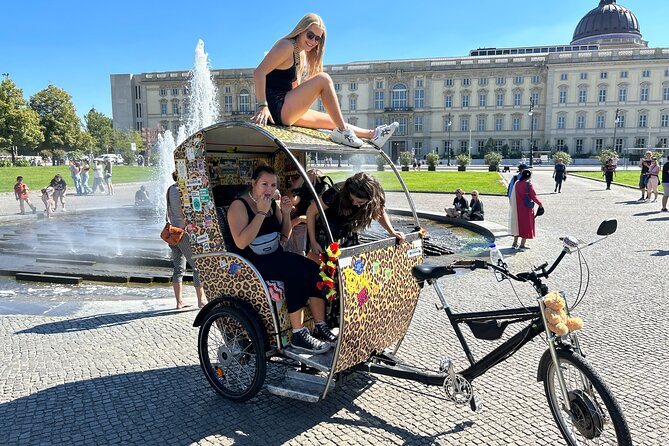
This segment is the heart of any Berlin “both sides” tour.
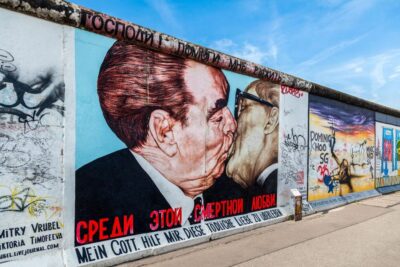
At the memorial on Bernauer Straße (the Wall Memorial), you learn about the boundary between Wedding (West) and Mitte (East). This is also where escape attempts took horrific turns—people in East Berlin homes tried to reach freedom by jumping out of windows. The memorial was inaugurated in 1998, and it’s designed to keep those escape stories and the wall’s human impact from fading into abstract history.
Admission ticket status here is listed as not included, so again: plan for viewing and guide context rather than expecting a fully timed entrance without extra tickets.
Then you reach Checkpoint Charlie, the most famous border crossing during Berlin’s division. The guide framing matters here: it’s not just a famous photo spot, it’s one of three border points controlled by Americans. The other checkpoints were different access points, and this one was controlled in a way that limited who could cross.
This is also where it’s great that admission is free, because you can stand, look, and absorb without worrying you’ve “paid for nothing.”
Next is Friedrichstraße, which runs north-south and became a shopping and movement corridor after the fall of the Wall. The point isn’t to “shop tour” the street; it’s to show you how the city’s geography changed from boundary to connection. That shift is one of Berlin’s most practical lessons: the same axis can mean control one decade and commerce the next.
Gendarmenmarkt to Bebelplatz: A Central Europe Feel in One Tight Route
You’ll then swing into some of Berlin’s most visually elegant squares and institutional buildings.
At Gendarmenmarkt, the square’s long arc—from 17th-century planning and Huguenot settlement to its renaming in the late 1700s—is part of why it feels like a different country inside Berlin. It’s also where the architecture gives you symmetry and classic street-corner photogenic angles. Admission is free for this stop.
Near it is the Deutscher Dom, where the permanent exhibition focuses on the development of liberal parliamentary democracy across multiple floors. Admission ticket is not included, so use the outside and guide explanations here unless you want to add entry separately.
Then you reach the Konzerthaus am Gendarmenmarkt. Built as a comedy house earlier and later reworked into a leading theater, the classicist architecture is a highlight on its own. Again: admission ticket is not included. Even if you don’t go inside, this stop gives you a feel for how Berlin’s cultural identity has been institutionalized for centuries.
Bebelplatz is the emotional reset. The place ties directly to Nazi book burnings in May 1933, when over 20,000 books were burned, including works by major German-language writers and thinkers. Admission is free, and that matters because it means you can spend real time there without needing to budget for entry fees.
If you’re the type who likes knowing what you’re looking at before you look, this is a stop where the guide’s framing makes the memorial’s simplicity feel blunt and unforgettable.
Museum Island, Berlin Cathedral, and Lustgarten: Where Art, Power, and Leisure Meet
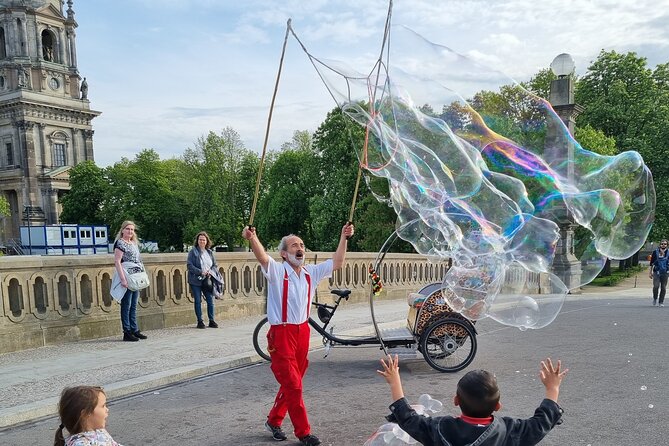
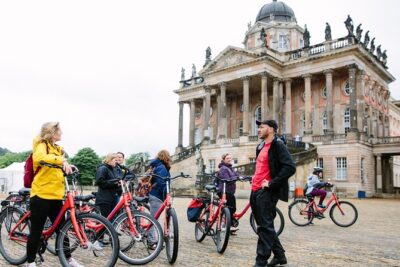
The tour moves toward Museum Island, the Spree-and-Kupfergraben pocket of big collections. The buildings here are anchored by the completion of the Old Museum in 1830, guided by plans connected to Schinkel. It’s the sort of stop where you can understand why people plan entire trips around it, even though this tour won’t fully replace museum time.
Admission for this area is listed as not included, so think of it as a “stand and understand the layout” stop rather than a museum day.
Then you see the Berlin Cathedral area, topped by its dome. Even if you don’t climb or enter, the outside presence is intense. The Berliner Dom stop notes that the dome climb offers views toward the Spree, Lustgarten, and Museum Island, but admission ticket is not included—so that’s another spot where you might decide later whether to add a ticketed visit.
Lustgarten follows, and it’s a welcome change. It’s the traditional pleasure garden space between major streets and the cathedral area, with linden rows and a red granite bowl. Admission is free. In warmer months, it’s a place to sit and cool off at a fountain, but even in cooler weather, it gives you breathing room between monuments.
Alexanderplatz: Finish at Berlin’s Everyday Center
You’ll end by heading toward Alexanderplatz, one of Berlin’s most alive squares across eras—1920s, GDR times, and today. It’s the eastern center, with attractions like the television tower, the world clock, and the fountain of friendship between peoples. Admission is free for the stop itself.
This ending is practical. Alexanderplatz is not just a sight; it’s a transportation hub and a place where your next plan can start easily. After a ride that mixes major landmarks and heavy memory stops, it feels good to land in a square that’s still clearly part of normal city life.
Comfort, Pacing, and the One Thing to Watch: Your Seat
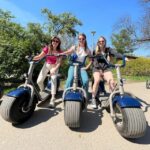
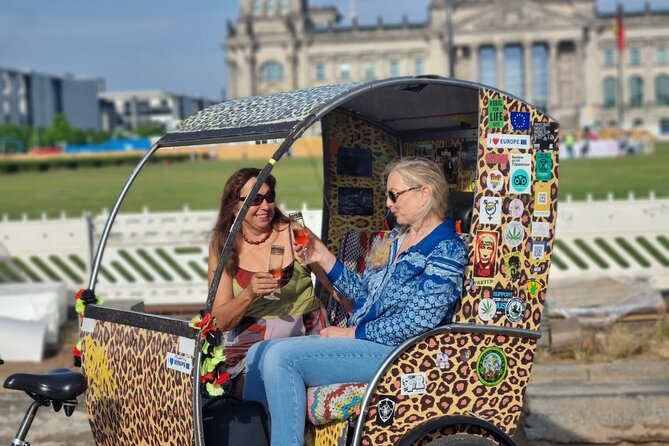
Rickshaws can be a fun way to see the city, but your comfort depends on how your group gets split across vehicles. Some experiences note crammed seating in fewer rickshaws and differences between guides in how much they explained while riding.
If you’re sensitive to road motion or want a smoother ride, I’d treat driver style as part of the experience. One review noted a rough ride and even an impact with a van from behind, so it’s fair to say road safety matters here, just like with any vehicle.
Also, music can be a mixed bag. The tour includes music on request, but some people wanted less volume so they could hear the guide clearly. If you care about listening to historical context, ask your guide early for a voice-first setup.
Should You Book This Berlin Rickshaw Tour?
Book it if you want a time-efficient Berlin overview that hits Brandenburg Gate, Reichstag/Bundestag, Wall-era stops, Checkpoint Charlie, and central squares in a single go. It’s especially good if you like getting your bearings fast and you don’t want to spend your limited time walking between far points.
I’d think twice (or at least add a buffer day) if your schedule is unforgiving. There have been instances of no-shows and cancellations, and on cold days there can be disruptions tied to the ride equipment. If you can flex, this tour can be a genuinely enjoyable way to see Berlin as a connected city, not a set of distant photos.
If you do book, go in with the right mindset: this is a moving, interpretive tour. You’ll get context and viewpoints, but for museums and interior exhibits you’ll likely still want ticketed add-ons on a separate day.
FAQ
How long is the rickshaw tour?
The tour runs for about 1 to 4 hours, depending on how it’s paced.
What language is the tour offered in?
The tour is offered in English.
Is pickup included?
Pickup is included within a radius of 2km from Brandenburg Gate. Beyond that, it’s €10 per km.
How big is the group?
It’s for groups of up to 16 people, with several rickshaws for your group.
Is this a private tour?
Yes. Only your group participates.
What’s included with the tour?
Included features are WiFi on board, private transportation, music on request, a photographer, and a tour guide.
Are alcoholic beverages included?
No. Alcoholic beverages are not included.
Do I need admission tickets for the stops?
Some stops list admission tickets as not included, while others are free to view.
Which stops are listed as free?
Stops listed as free include Soviet War Memorial Tiergarten, Potsdamer Platz, Topography of Terror, Checkpoint Charlie, Friedrichstrasse, Gendarmenmarkt, Bebelplatz, Lustgarten, and Alexanderplatz.
What if the tour is canceled due to weather?
The experience requires good weather. If it’s canceled due to poor weather, you’ll be offered a different date or a full refund.