REVIEW · BERLIN
Berlin Private Half-Day Walking Tour: Discover the German Capital’s History
Book on Viator →Operated by Original Berlin Walks · Bookable on Viator
Berlin’s story runs right through the streets. This private half-day walking tour is built for people who want big moments and clear explanations, not vague landmarks. I really like how the guides (I’ve seen them named like Jimmy and Dylan) tell the history like a plot you can follow, with time to ask questions as you go.
Two standout strengths for me: you get undivided attention from a local guide, and the route hits the core sites fast, from Museum Island through the Reichstag to the Holocaust Memorial and Brandenburg Gate. Hotel pickup helps too, so you’re not burning your morning figuring out transport.
One thing to consider: it’s a lot of stops in about four hours, with many listed for only a couple to 10 minutes. If you prefer slow museum time or long indoor visits, this tour style may feel like a sprint—still a smart one, but a sprint.
In This Review
- Key reasons this Berlin history walk works
- A private guide, hotel pickup, and a tight four-hour plan
- Who this tour suits best
- Museum Island and the royal-religious core: where Berlin’s power gets built
- Quick hits that still stick
- From City Hall to Victory Column: Berlin’s public monuments as political messages
- The Reichstag corridor: democracy interrupted, then fought for again
- Cold War Berlin: Checkpoint Charlie and the Wall’s afterlife
- Dark corners and big questions: Topography to the Führerbunker
- Price and logistics: what you’re paying for, and what you’ll still cover
- How to get the most out of the tour (without getting tired or lost)
- So should you book this Berlin private walking tour?
- FAQ
- How long is the Berlin private walking tour?
- Is the tour in English?
- Does the tour include hotel pickup?
- Are there tickets or entry fees for the stops?
- Do I need to pay for public transport during the tour?
- What’s included in the price besides the guide?
- What if I cancel?
Key reasons this Berlin history walk works
- Private guide attention means you can steer the conversation and ask follow-ups without competing for airtime
- Hotel pickup (or Starbucks at Hackescher Markt) saves you time and keeps the day feeling efficient
- The route strings together eras, from royal power (Stadtschloss, Dom) to 20th-century trauma (Holocaust Memorial, Topography of Terror)
- Most stops are listed with free admission tickets, so you can focus on learning rather than buying timed entries
- It’s a well-paced overview: quick stops that still add up to a full-city understanding in one afternoon
A private guide, hotel pickup, and a tight four-hour plan
You’re paying $180.87 per person for a tour that’s about four hours long. That sounds steep until you look at what you’re actually buying: a private guide, hotel pickup, and a route that covers major Berlin history sites without you planning the whole map yourself.
In other words, this isn’t just walking. It’s guided interpretation, and that’s what makes the price feel more reasonable. You’re not hiring a taxi to move between scattered points; you’re hiring someone to translate what you’re seeing into a timeline you’ll remember.
You’ll also get a map of Berlin that includes top museum recommendations and public transport info. That’s useful because Berlin rewards prep. Even if this tour doesn’t put you inside every building, the map helps you decide what to do next on your own.
The tour is offered in English, uses a mobile ticket, and runs as a private activity (only your group participates). It’s also booked fairly far in advance on average, so if your dates are fixed, booking early is a smart move.
You can also read our reviews of more walking tours in Berlin



Who this tour suits best
This is a strong fit if you:
- have limited time and want a big-picture orientation
- like history but don’t want to read captions for hours
- want to ask questions and get direct answers, not just sit and listen
The tour lists moderate physical fitness as the requirement. You’re walking outdoors between sites, and even with short stop times, your feet should be ready for an efficient route.
Museum Island and the royal-religious core: where Berlin’s power gets built

The story starts on Museum Island. The guide explains the history of the site, and even if you only get brief views, this is a smart opener because it sets up Berlin’s long obsession with institutions—culture, learning, and status.
Next comes the Berliner Dom. You’ll get a short history briefing, which matters because the Cathedral isn’t only a religious landmark. It’s also part of how Berlin projects authority—visually, politically, and symbolically.
Then you hit Stadtschloss Berlin. From the outside, this is the kind of place where a guide’s context really pays off. Without explanation, it’s easy to see “old building.” With explanation, it becomes a shortcut to power shifts and the way rulers used architecture to claim legitimacy.
After that, you’re at Rotes Rathaus, the Red City Hall. This is your civic anchor—Berlin’s government story. Even a short stop can connect the dots between royal/cultural imagery and the daily machinery of the city.
Quick hits that still stick
You’ll then see several museum landmarks in short bursts:
- Altes Museum (2 minutes, listed free admission)
- Neues Museum (2 minutes, listed free admission)
- Pergamonmuseum (2 minutes, listed free admission)
These are short stops on purpose. The guide is using them to reinforce themes: empire collecting, cultural prestige, and the way Berlin built its identity through major institutions. If you later decide to spend real time inside, you’ll know what to look for.
You also stop at Neue Wache (5 minutes). That one deserves attention because memorial space has meaning beyond the architecture. Even in a brief stop, a good guide helps you read it as Germany thinking about its own history—sometimes with discomfort, sometimes with clarity.
From City Hall to Victory Column: Berlin’s public monuments as political messages
After the museum and civic cluster, you move into landmark territory that’s designed to be seen from far away—starting with Victory Column (5 minutes). This is a “look up” moment. Monuments like this often communicate power through scale, placement, and ceremonial naming, and a guide’s job is to translate the symbolism into historical context.
Then you’re at Deutsches Historisches Museum (10 minutes). Even if you don’t enter for long here, the pause is valuable. You’re being oriented to Berlin’s broader historical narrative through a place built to house it.
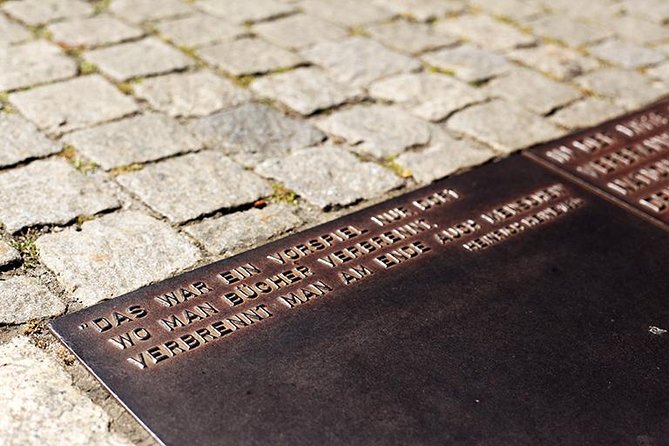
Bebelplatz (10 minutes) is another stop where meaning matters. This is one of those locations where history isn’t only in dates—it’s in the idea of what society chooses to suppress, protect, or debate.
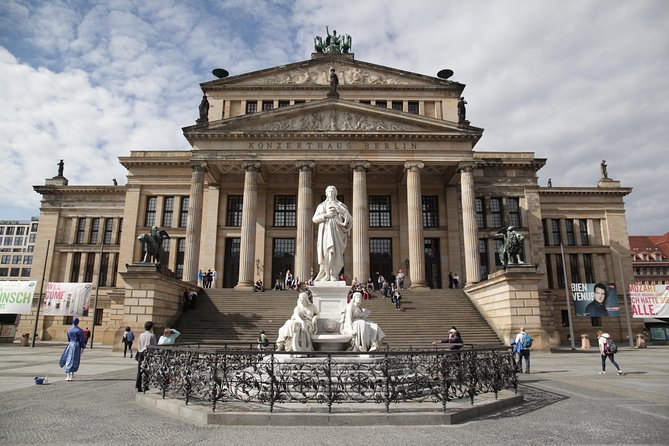
And you’ll also pass Staatsoper Unter den Linden (5 minutes) and Konzerthaus (10 minutes). Music venues sound like a break from politics, but in Berlin they’re part of the same story: culture as identity, culture as public life, and culture tied to national pride.
You can also read our reviews of more private tours in Berlin



The Reichstag corridor: democracy interrupted, then fought for again
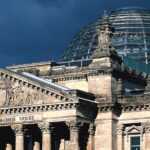
The tour reaches Reichstag Building (10 minutes). This is a high-stakes stop, and it’s the kind of place where your guide’s pacing is everything. Even if you’re not spending a long time inside, hearing what the Reichstag represented in different eras helps you understand why it still pulls people in.
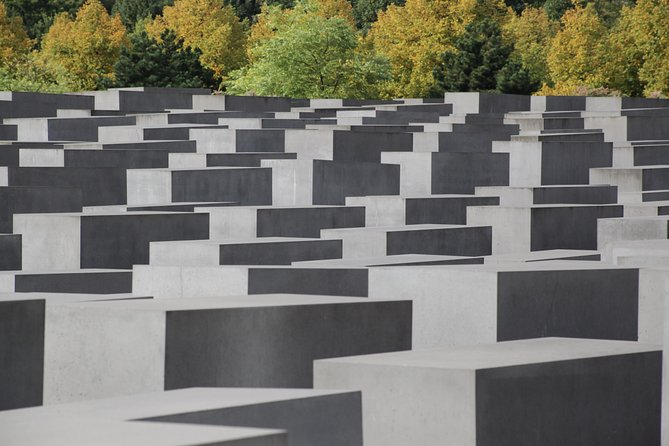
Right after, you’ll be at The Holocaust Memorial – Memorial to the Murdered Jews of Europe (10 minutes). This stop is not a photo op. It’s a place you walk slowly, even if the guide’s formal explanation is short. You’ll want to take it in with respect, and you’ll likely appreciate that this tour doesn’t rush past it as if it’s just another landmark.
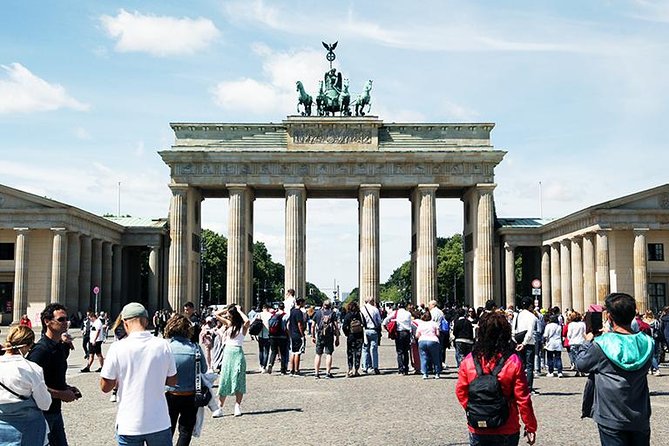
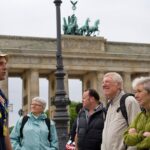
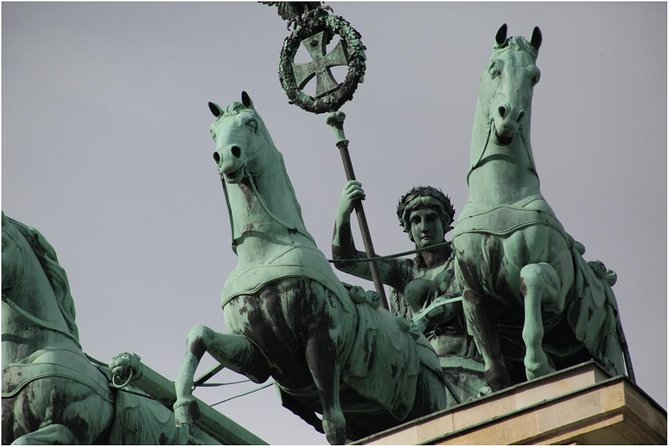
Then comes Brandenburg Gate (10 minutes). A guide can make this gate feel less like a famous background and more like a witness. It connects eras: empire, division, reunification, and how a single symbol can carry contradictory meanings depending on who controls the city.
Finally, there’s Platz des Volksaufstandes von 1953 (10 minutes). This is where the Cold War stops being abstract. You get a reminder that ordinary people shaped the city’s political reality through resistance, upheaval, and the pressure of life under a system.
Cold War Berlin: Checkpoint Charlie and the Wall’s afterlife
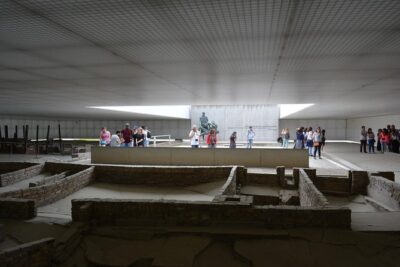
Now the route pivots into the 20th-century conflict era with Topography of Terror (10 minutes). This area helps you understand how the machinery of terror worked geographically. It’s heavy content, and it’s also the kind of stop where a good guide can keep you grounded in facts without turning it into sensationalism.
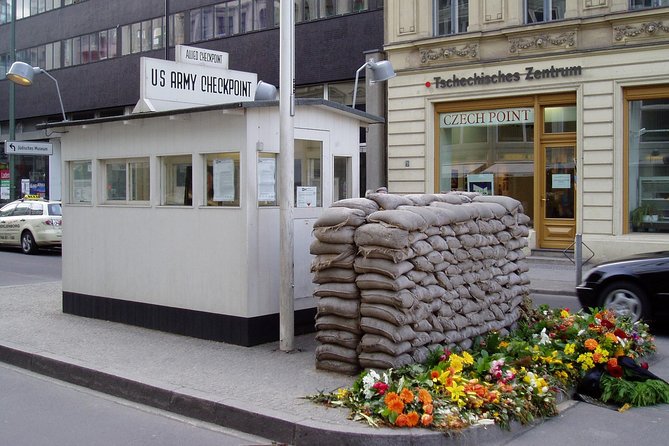
Then you reach Checkpoint Charlie (10 minutes). It’s famous, yes, but history shows up best when you’re told what the crossing meant in daily life. The guide’s explanation helps you see why people looked at the border not as a line on a map, but as a gate into freedom—or a wall to everything else.
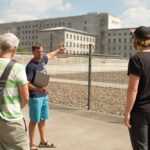
You also stop at the Memorial of the Berlin Wall (10 minutes). This is the afterlife of the Wall: a reminder that division was physical and personal. Even on a short stop, a guide can help you connect the memorial to the bigger political story the tour has been building all morning.
At this point, you’ll also see Berliner Dom again (10 minutes). That repeat matters more than you might think. When you come back to the Cathedral after hearing the 20th-century sites, the building can start to feel like it belongs to a whole different layer of Berlin: continuity alongside upheaval.
Dark corners and big questions: Topography to the Führerbunker
You’ll also visit Fran zoesischer Dom (5 minutes). The name alone hints at Berlin’s layered connections with other powers. Short stop or not, this kind of location helps you remember that Berlin’s story isn’t sealed inside one nation’s borders.
Then you head to Fuhrerbunker (10 minutes). This is the stop that links directly to the tour highlight about Hitler’s bunker. Even if you’re mostly viewing and listening from the outside, the point is to understand what it meant to build a place of power and then have that power end in collapse. A guide’s job here is to keep the focus on historical reality, not myths.
You’ll finish with Staatsoper Unter den Linden earlier, and later Konzerthaus (10 minutes). Ending in an area tied to public culture is a subtle reminder: after the worst chapters, Berlin still rebuilt life, institutions, and music halls. It doesn’t erase the past, but it shows the city continuing.
Price and logistics: what you’re paying for, and what you’ll still cover
Let’s make the money part practical.
Included:
- Hotel pickup
- Expert local guide
- A map of Berlin with museum and public transport info
Not included:
- Food and drink
- Public transport costs (Berlin single ticket is listed as €2.70; Day Pass €7.00; group ticket for 5 is €17.30, with prices subject to change)
You’ll also want to plan for the fact that most stops are listed with free admission tickets, so the tour’s cost isn’t inflated by museum entry fees. That’s a good deal if you’re trying to see a lot without stacking ticket costs on top of a guide.
One more practical note: you’ll be outdoors most of the time. If weather is awful, bring what you need. It’s Berlin, so bring a plan for wind and sudden rain even when the sky looks fine.
How to get the most out of the tour (without getting tired or lost)
This tour works best if you do two simple things.
First: wear shoes you trust. The route packs in major sites quickly, and many stops are only a few minutes. That means you won’t have long waits to recover—your best recovery is comfortable footing.
Second: bring a few questions. Guides like Jimmy or Luisa (names you may see associated with this walk) tend to respond well when you ask follow-ups like why a building was used for propaganda, or how one event connected to the next. The tour is built for conversation, not just listening.
If you’re the type who likes photos, you’ll be able to stop and take them. But don’t treat every site like a checklist shot. Places like the Holocaust Memorial and Topography of Terror deserve a slower moment even in a fast route.
So should you book this Berlin private walking tour?
I’d book this half-day Berlin history private walking tour if you want a one-afternoon orientation that connects the city’s big symbols to real events. The private format, hotel pickup, and strong guide storytelling make the most sense when time is tight and you want clarity.
Skip it if you:
- want long museum interior time
- hate walking between many stops
- prefer a more relaxed pace with fewer locations
If your goal is to understand Berlin’s turning points—from founding-era institutions to the darkest 20th-century sites and beyond—this is a smart way to spend half a day.
FAQ
How long is the Berlin private walking tour?
It’s listed as about 4 hours.
Is the tour in English?
Yes, it’s offered in English.
Does the tour include hotel pickup?
Yes. If your hotel is centrally located, you can be picked up from the lobby. Otherwise, you meet in front of Starbucks at Hackescher Markt.
Are there tickets or entry fees for the stops?
The stops are listed with admission ticket free.
Do I need to pay for public transport during the tour?
Public transport costs are not included. Berlin single ticket is listed as €2.70, Day Pass €7.00, and a group ticket for 5 people €17.30 (prices may change).
What’s included in the price besides the guide?
Hotel pickup, an expert local guide, and a map of Berlin with top museum recommendations and public transport info are included.
What if I cancel?
Free cancellation is available. You can cancel up to 24 hours in advance for a full refund, and changes within 24 hours of the start time aren’t accepted.