REVIEW · BERLIN
Berlin Wall: City Tour of Divided Germany
Book on GetYourGuide →Operated by Paaßens & Kniestedt Berlin kompakt GmbH · Bookable on GetYourGuide
Berlin was the stage for two hostile systems, right next to each other. This tour helps you connect the dots by following how the wall shaped daily life, street by street. I love how it stays practical—stations, routes, and visible traces—while still being human, thanks to guides who share personal-style stories. My second favorite part is the route itself: you go from Friedrichstrasse to the government district, then down to the Brandenburg Gate and the places where the division is still easy to spot.
One thing to consider: you’re on foot for about two hours, so you’ll want comfortable shoes and the stamina to stand and walk around major memorial and border sites.
If you’re trying to understand Berlin’s Cold War life without getting lost in big abstract ideas, this is a smart way to do it.
In This Review
- Key highlights worth showing up for
- Price and what you get for $21
- Meeting at Tränenpalast: start where the emotions were
- Friedrichstrasse and the border station where you felt the control
- Following the Spree to the parliament district along the border strip
- Brandenburg Gate: the border symbol you can actually picture
- Holocaust memorial area and the former death strip context
- Potsdamer Platz and the Tiergarten Triangle split you can see
- Longest remaining wall stretch: proof you can walk past
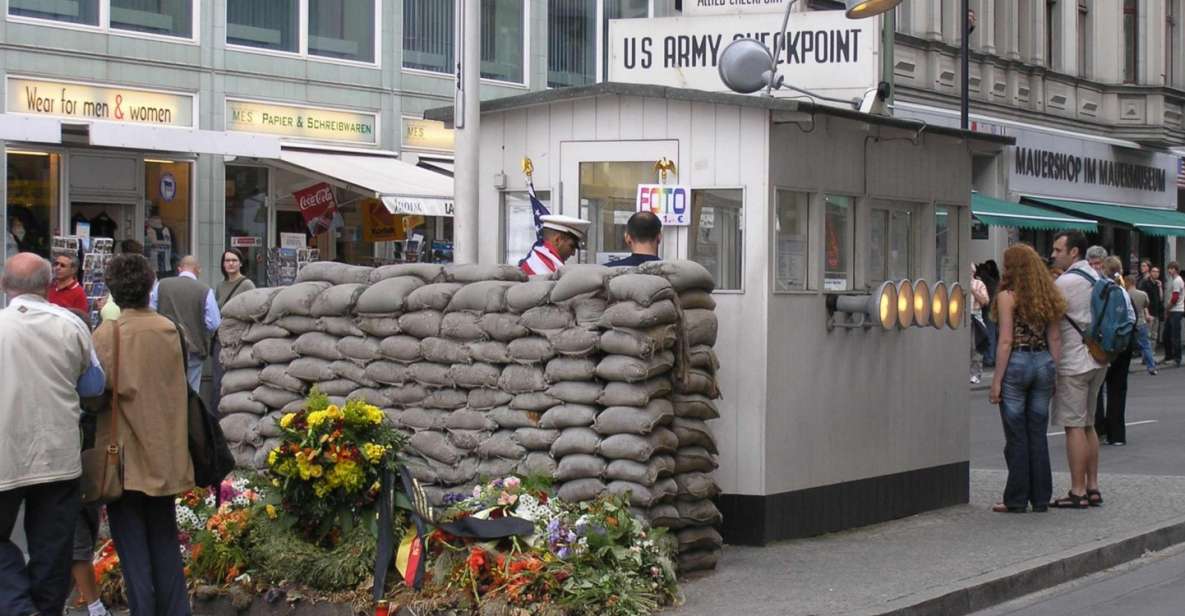
- Checkpoint Charlie: the famous name, but grounded in context
- Guides who tell it like it mattered
- Who should book this Berlin Wall city tour
- Should you book? My call
- FAQ
- How long is the Berlin Wall city tour of Divided Germany?
- Where do I meet the guide?
- How much does the tour cost?
- What language is the live tour guide in?
- What should I bring?
- Is there free cancellation?
Key highlights worth showing up for
- Friedrichstrasse border station area and how that single checkpoint shaped movement
- Follow the Spree to the parliament and government district along the border strip
- Brandenburg Gate as a real border landmark, not just a photo stop
- Former death strip area near the Holocaust memorial, with serious context
- Potsdamer Platz and Tiergarten Triangle where the split becomes easy to visualize
- Longest remaining wall stretch and Checkpoint Charlie for the last “wow, it’s still here” moments
Price and what you get for $21
At around $21 per person for a 2-hour guided walk, this feels like solid value in a city where history-focused tours can drift into either expensive or overly general territory. You’re not just getting a list of monuments. You’re getting a guided route through the key border-related spaces that made Berlin’s daily rhythm feel different on each side.
Two hours is long enough to learn the big picture, but short enough that you won’t feel trapped. If you’re planning a full day in Berlin, this works as a concentrated “anchor” experience. If you only have a morning or a single afternoon, it also works, because the stops are clustered around the central area you’d likely visit anyway.
What makes the price feel fair is the structure: it’s built around specific locations (Friedrichstrasse, Brandenburg Gate, Potsdamer Platz, Checkpoint Charlie) where you can actually see what the wall changed. That turns the topic from something you read about into something you can point at.
You can also read our reviews of more city tours in Berlin

Meeting at Tränenpalast: start where the emotions were
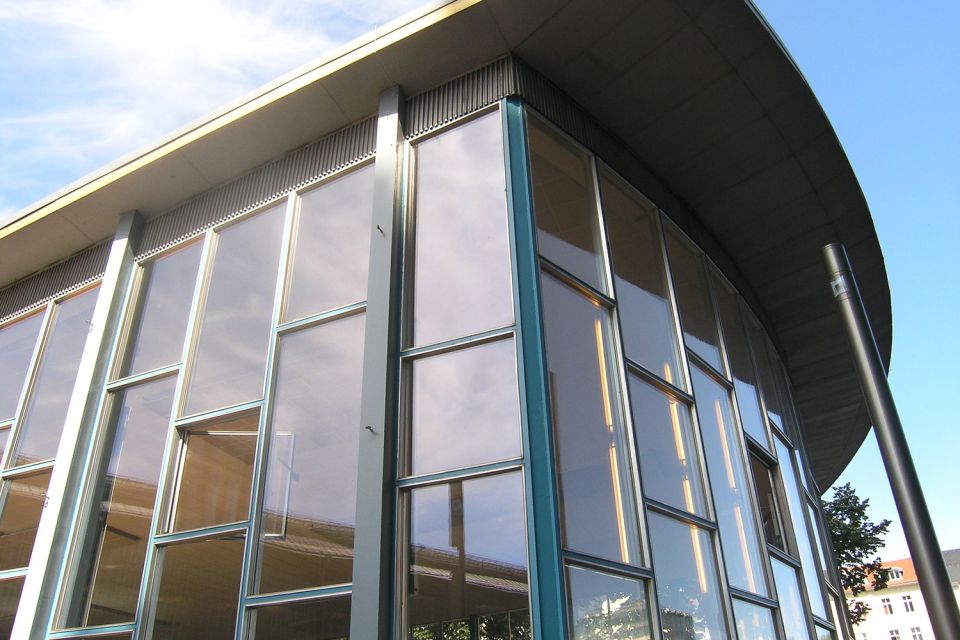
You meet at the entrance of Tränenpalast (Palace of Tears), in front of Friedrichstraße station, on Reichstagufer (10117 Berlin). An important practical detail: Tränenpalast has only one entrance, so it’s worth arriving a few minutes early to avoid a mini panic.
Why this start matters: Tränenpalast isn’t just a random landmark. It’s tied to the human side of border control—separations, uncertainty, and moments that happened because movement across the border was restricted and stressful. Starting here sets the tone for everything that comes after.
If you’re the type who appreciates context before walking into the “big sights,” you’ll likely enjoy how the tour begins. You’re not only learning geography—you’re learning why that geography mattered.
Friedrichstrasse and the border station where you felt the control
From Friedrichstraße station, the tour focuses on what was essentially a hinge point during the Cold War: Friedrichstrasse as a single border station. That detail is crucial. Berlin didn’t just have a wall; it had systems—places where lives collided with rules.
As you walk in this area, you’ll get a sense of how the wall influenced everyday travel and decisions. You’ll also start noticing how the city’s layout still reflects those Cold War functions, even when everything looks normal now.
I like this kind of start because it trains your eyes. After Friedrichstrasse, you’re more likely to see the border logic in the spacing between buildings, the direction of routes, and the way certain spaces were designed to control movement.
Following the Spree to the parliament district along the border strip
Next, you’ll follow the Spree toward the parliament and government district—buildings positioned partly along the border strip. This is where the tour becomes more than “wall spotting.” It shows you how politics and geography were forced into the same frame.
Standing in this part of Berlin, it’s easier to understand why borders feel ideological. They weren’t only about keeping people out or controlling movement. They also defined which side represented authority and legitimacy, and they placed government spaces in a tense physical relationship to the division.
If you’re a planner, here’s a practical way to get the most out of this segment: as you move along the Spree, watch what changes and what stays consistent. The river is a natural guide line in the city. Use it to orient yourself, and you’ll understand the route faster.
Brandenburg Gate: the border symbol you can actually picture
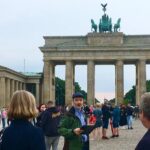
No Berlin Wall tour is complete without the Brandenburg Gate, and this one uses it as a meaningful stop rather than a quick photo. The key point here is that the border ran at this location—so the gate became, in a very real sense, a symbol of division and the fate of the city.
This is also where the tour’s pacing can help. By the time you reach Brandenburg Gate, you’ve already learned about stations and border logic. That makes the stop feel anchored in everyday reality instead of just iconic imagery.
One thought to keep in mind: the Brandenburg Gate is famous worldwide, so it can feel overexposed if you treat it like a generic landmark. But if the guide connects it back to movement, restrictions, and the way people lived with the border nearby, the place starts to make emotional sense.




Holocaust memorial area and the former death strip context
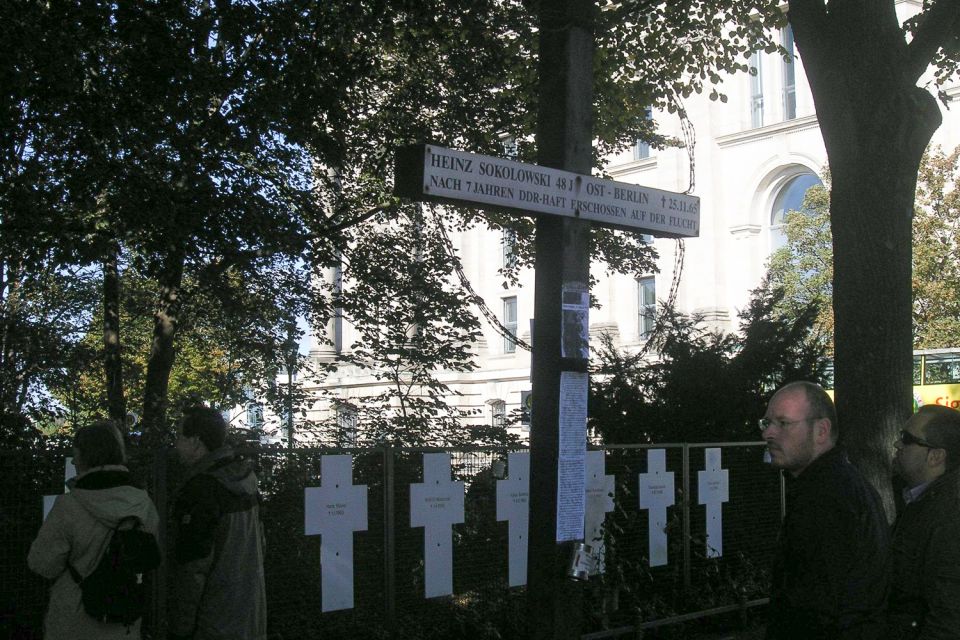
From the memorial area near the Holocaust memorial and the former death strip, you’ll shift from the Cold War border story into something heavier and more historical. This part deserves your full attention.
I recommend approaching it slowly. Even if you know the basic facts, the power here is in the location. The area ties geography to consequence—what confinement and violence looked like on the ground.
The best tours don’t rush through this. They give you context so your brain can connect the dots between the past and the specific site you’re standing on. If your guide takes that tone seriously (and feedback suggests the guides here do), you’ll leave feeling the meaning, not just the facts.
Potsdamer Platz and the Tiergarten Triangle split you can see
After that, the tour heads to Potsdamer Platz, where the division becomes particularly visible in the former Tiergarten Triangle. This stop is often the one that makes people go quiet—because you can look at the geometry and understand how the city was separated.
What I like about this part is that it turns the abstract idea of division into something spatial. You’re not only hearing about borders; you’re learning how they shaped how the city connected—or didn’t.
If you enjoy “reading” a city, take a minute here to stand and look before you move on. Think about routes: where would you go, where would you be stopped, and how would your daily decisions change? Potsdamer Platz is the kind of place where that mental map clicks fast.
Longest remaining wall stretch: proof you can walk past
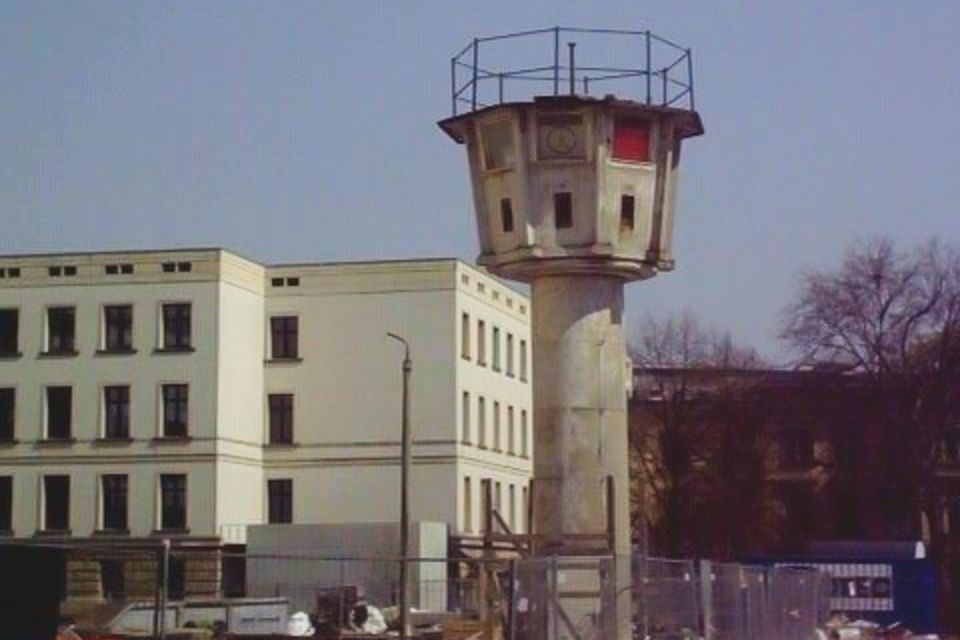
Then comes one of the most concrete moments on the tour: the longest remaining stretch of the wall. This is the part where your learning suddenly gets physical. You’re no longer just translating history into imagination.
There’s a practical benefit, too. Because the wall is still there, you can connect details you heard earlier—border stations, the border strip concept, and how the city’s structure was shaped. Seeing the wall segment helps you keep the story straight instead of losing it in a blur of major names.
If you’re tempted to treat this as a quick stop, don’t. Give yourself a little time and let it sink in. The tour makes a strong case that these weren’t just political lines. They were constraints that affected human movement every day.
Checkpoint Charlie: the famous name, but grounded in context
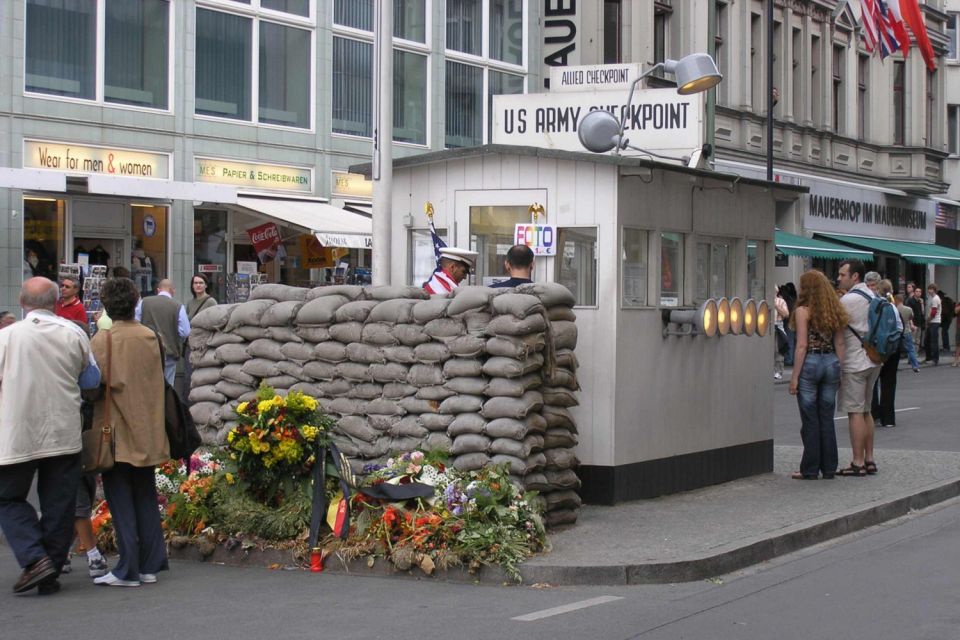
Finally, you’ll reach Checkpoint Charlie. Yes, it’s famous. But this tour’s payoff is that it’s not only about the fame—it’s about how checkpoint culture worked as part of the border system.
By the time you arrive, Checkpoint Charlie feels less like a movie set and more like a node in a network. You’ve already seen how Friedrichstrasse functioned, how the border strip ran near major governmental spaces, and how the city’s central areas reflected the split. That background gives the checkpoint its real weight.
Also, it’s a good ending point because it’s easy to keep your bearings after the tour. You’re in a central area, which helps if you plan to continue exploring Berlin afterward.
Guides who tell it like it mattered
One theme in the feedback is guide storytelling. People describe personal, intensive guidance, with guides such as Stephan and Stefan specifically named in written comments. There’s also mention of a guide extending the tour by about an hour, which usually signals that the group didn’t get shoved out the door before key explanations.
What this means for you: the tour doesn’t have to be dry. If you care about how people felt and how rules changed everyday choices, you’ll likely appreciate the guide style. You’ll get more than a timeline—you’ll get sense-making.
If you prefer a tour that answers your questions on the spot, this kind of guide-led narrative can be a strong fit.
Who should book this Berlin Wall city tour
I think this tour is a great match if you:
- want a 2-hour, high-impact introduction to divided Berlin
- like guided structure more than wandering on your own
- care about border life—how daily routines and movement changed
- want to hit the central “must-see” places with real context
It may be less ideal if:
- you dislike walking or standing around memorial sites
- you want only casual stops with minimal explanation
Should you book? My call
If your goal is to understand how Berlin’s division shaped real movement and daily life, I’d book this. For $21 and two guided hours, you get a route that links Friedrichstrasse, the Spree-to-government area corridor, Brandenburg Gate, the former death strip context, Potsdamer Platz/Tiergarten Triangle, and the wall remnants all the way to Checkpoint Charlie.
The best reason to choose it is also the simplest: you’re guided through places where the border was operational, and that makes the story concrete. If you want a quick, meaningful way to learn divided Germany in Berlin, this is a smart use of your time.
FAQ
How long is the Berlin Wall city tour of Divided Germany?
The tour lasts 2 hours.
Where do I meet the guide?
Meet at the entrance of Tränenpalast (Palace of Tears) in front of Friedrichstraße station on Reichstagufer, 10117 Berlin. Tränenpalast has only one entrance.
How much does the tour cost?
The price is $21 per person.
What language is the live tour guide in?
The live tour guide speaks German.
What should I bring?
Bring comfortable shoes for walking.
Is there free cancellation?
Yes, you can cancel up to 24 hours in advance for a full refund.