REVIEW · BERLIN
Berlin: Jewish Walking Tour including World War II
Book on GetYourGuide →Operated by Talternative · Bookable on GetYourGuide
Berlin tells its hardest story block by block. This Jewish Walking Tour in Mitte connects the community’s rise in the 1600s to the trauma of World War II, with sights you can actually stand in front of. Guide Tal (certified with the Berlin Guides Association) walks you through Jewish Berlin’s changing neighborhoods, its institutions, and what’s being remembered today.
I really liked how the tour mixes big-picture history with specific places, especially the Old Jewish Cemetery and the Otto Weidt Workshop for the Blind. I also like that Tal doesn’t treat this as a lecture. It comes with personal details and context that help the story stick.
One thing to consider: this is still a 3.5–4 hour walking route, with memorials and cemetery time, so you’ll want comfortable shoes and the right head covering.
In This Review
- Key moments you’ll notice on this route
- Berlin’s Jewish story, mapped street by street in Mitte
- Tal the guide: passion, structure, and real academic grounding
- The opening stop near Starbucks and Hackescher Markt’s Jewish gravity
- Block of Women: the memorial that makes 1943 feel immediate
- Otto Weidt Workshop for the Blind: courage with names and jobs
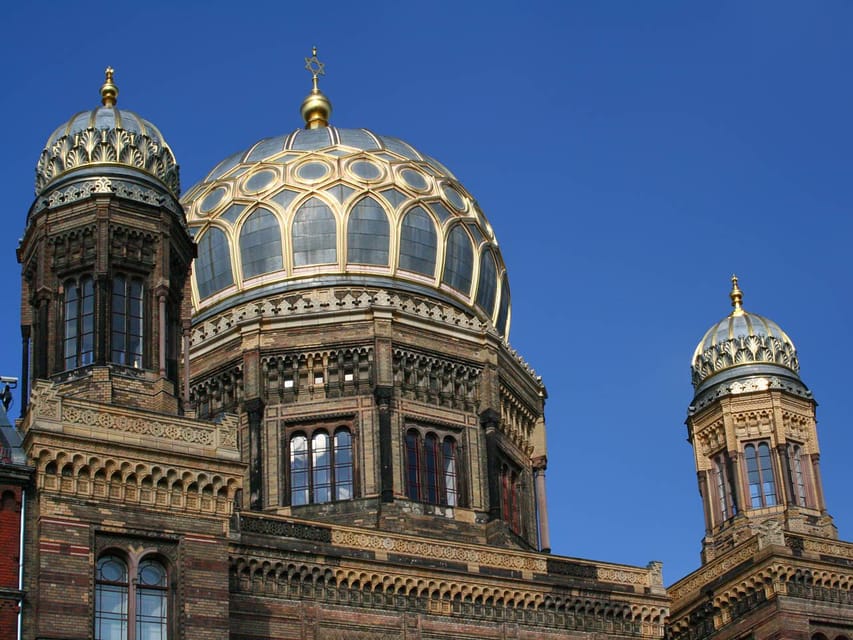
- Synagogues you can see: Old Synagogue, New Synagogue, and the Great Synagogue from the outside
- “Moving west” and the arrival of the Ostjuden
- Community institutions in Mitte: schools, organizations, and how life was organized
- Old Jewish Cemetery and the first cemetery: where the city remembers
- Finishing near the memorial cemetery and looping back to Hackescher Markt
- Optional add-ons if you want to extend the story
- Is $318 worth it? Thinking about value, not just cost
- What to bring and how to prepare so the day goes smoothly
- Should you book this Berlin Jewish walking tour?
- FAQ
- How long is the Berlin Jewish Walking Tour including World War II?
- Where does the tour start and where does it end?
- What languages is the live guide available in?
- What’s included in the price?
- Is the Centrum Judaicum museum included in the New Synagogue stop?
- What should I bring?
Key moments you’ll notice on this route
- Moses Mendelssohn’s era begins in Mitte, when Jewish life re-forms in the late 17th century
- Hackescher Markt links directly to Jewish re-settlement, including the move west and the arrival of the Ostjuden
- The Block of Women memorial grounds WWII history in a specific 1943 act of resistance
- Otto Weidt’s work at the Workshop for the Blind shows rescue and courage during the Holocaust
- Synagogues you can see from the outside, including the Great Synagogue and the New Synagogue’s Jewish Centre
- Old cemetery stops (including the first cemetery) turn the past into a place you can visit and look at
Berlin’s Jewish story, mapped street by street in Mitte
If you want Berlin’s Jewish history in one focused route, this tour gives it to you without rushing. You start in the Mitte area near Hackescher Markt, where many Jewish community institutions were concentrated, and you move through neighborhoods where the story changes over time. The pace works: about 3.5–4 hours of walking and guided stops, plus a short break.
What makes this one feel different is the way it connects several layers at once. You’ll hear about the “golden days,” then the fall, and then what’s happening today. That arc matters, because it helps you see tragedy as something with causes and choices, not just a single event.
You’ll also get more than WWII facts. The tour spends time on earlier Jewish Berlin, including the late 1600s re-establishment of the community and the intellectual and cultural impact tied to Moses Mendelssohn. That context helps the later history make sense, instead of feeling like a separate chapter dropped onto the city.
You can also read our reviews of more walking tours in Berlin


Tal the guide: passion, structure, and real academic grounding
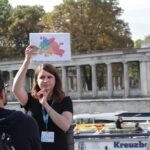
This tour is led by Tal, a certified Berlin guide with the Berlin Guides Association, and the difference shows in how the information lands. You can tell she’s comfortable moving between scholarship and street-level storytelling. The academic depth is not heavy or abstract; it’s used to explain why things happened.
I especially appreciated Tal’s attention to how Jewish community life wasn’t static. You’ll hear about internal splits and social tensions, including how debates over community practices could get personal and even embarrassing for some German Jews after the arrival of Eastern European Jews. That kind of detail is one reason this doesn’t feel like a one-note Holocaust tour.
Tal also brings professional experience related to how institutions handle their own past. She has worked on how the professional staff at Charité Hospital in Berlin deals with the hospital’s history in the 1930s and 1940s. You don’t need to know that background to benefit from it—you just feel a guide who takes historical responsibility seriously.
The opening stop near Starbucks and Hackescher Markt’s Jewish gravity
You meet in front of Starbucks in Mitte. It’s a practical start: a central, easy-to-find spot in the area that’s tied to Jewish community life and institutions. From there, the tour quickly moves into Hackescher Markt, the kind of place where you can sense how the city reorganized itself over time.
In this section, Tal frames Hackescher Markt as a focal point for Eastern European Jews—Ostjuden—who found refuge in Berlin from pogroms. That idea is worth pausing on. Refuge doesn’t only mean safety; it also means new neighborhoods, new institutions, new tensions, and new community patterns.
At Hackescher Markt, you’re also setting your mental map. The tour is built around transitions: from earlier re-establishment to a later demographic shift and then the catastrophic interruption of WWII. By the time you leave this area, you’ll know what kind of Berlin you’re seeing and why it matters.
Block of Women: the memorial that makes 1943 feel immediate
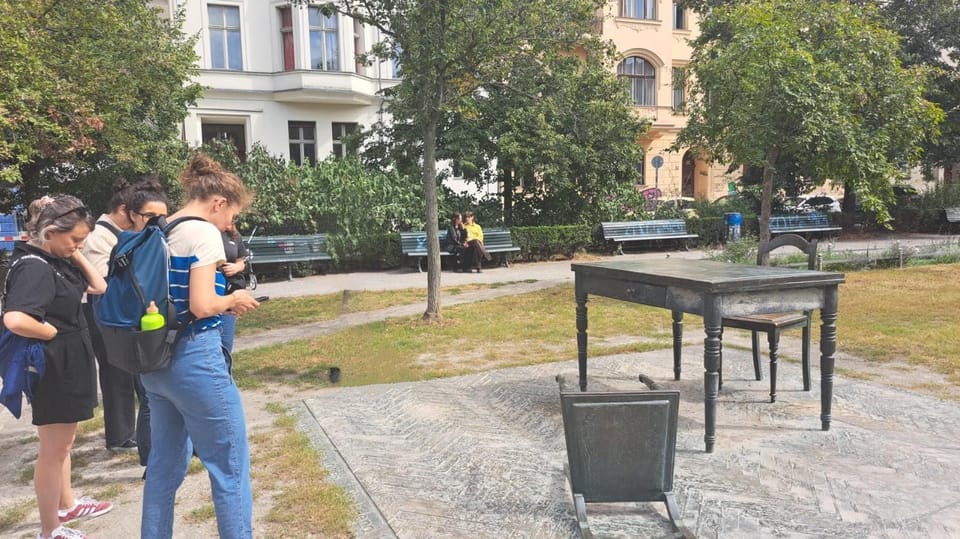
One of the most striking stops is at the Block of Women memorial site (a women’s protest memorial from 1943). This is where the tour shifts from general context into a specific act of resistance.
The value here isn’t just the historical marker. It’s the way the memorial helps you understand that WWII wasn’t only about what was done to people. People responded—sometimes with protest, sometimes with help, sometimes with survival strategies that weren’t “hero” in the movie sense but were still courageous.
This is also a good moment to slow down. The setting is outside, and you’ll be standing and listening. Bring the energy for it: treat it like a moment of reflection, not a quick photo stop.
Otto Weidt Workshop for the Blind: courage with names and jobs
Next comes the Otto Weidt Workshop for the Blind, and it’s one of the best reasons to book this tour. The entry ticket to the Otto Weidt Museum is included on the tour (with the usual note that it can be excluded on days the museum is closed).
This stop focuses on Otto Weidt and his efforts to save lives during the Holocaust. What makes it compelling is that it’s not only about hiding in a dramatic sense. It’s about work, risk, and using an operation as cover for human action. You’ll walk away with a clearer sense of how rescue can be both practical and morally urgent.
Tal’s approach helps you connect the museum’s story to the wider city context you heard earlier. In other words, you’re not just learning about a famous person. You’re learning how Berlin’s systems and institutions could be used, pressured, and sometimes bent toward survival—until they couldn’t.




Synagogues you can see: Old Synagogue, New Synagogue, and the Great Synagogue from the outside
The tour includes several synagogue-related stops, and you’ll see the role of place in community identity.
You’ll learn about the Old Synagogue site and explore the New Synagogue area as part of the Jewish Centre. The “Great Synagogue” is also highlighted, and it’s described as something you’ll marvel at from the outside. That matters for expectations: you’ll be able to orient yourself visually, but the tour’s synagogue time is about meaning and history, not just architecture.
A practical note: entry to Centrum Judaicum (the museum in the new synagogue) is not included. So if you want museum time inside, you may need a separate ticket. Even without that extra visit, the tour’s synagogue stops give you the story of a golden era and the fall that followed.
“Moving west” and the arrival of the Ostjuden
Midway through the route, Tal tackles one of the most important themes: how Jewish life in Berlin changed geographically. You’ll hear about the move toward the west of the city and the arrival of the Ostjuden.
This is where the tour stops being only about buildings. It becomes about patterns: where people lived, what they needed, and how Berlin’s Jewish institutions responded. You’ll also hear about community embarrassment and internal frictions related to the arrival of Eastern European Jews—an uncomfortable but human detail that makes the community feel real rather than mythologized.
This theme is particularly valuable because it helps you read the city. Later, if you walk past a school building, a memorial, or an institutional facade, you’ll have a mental “why” attached to it. You’re not sightseeing randomly; you’re learning to connect Berlin’s physical layout to Jewish life as it evolved.
Community institutions in Mitte: schools, organizations, and how life was organized
After synagogues and WWII stops, you’ll shift back into institutions. The tour mentions places like the Mendelssohn School and girls’ school, plus additional community sites in the Mitte area.
This is a smart move. Cemeteries and memorials are essential, but institutions are what show daily life. Schools, religious buildings, and community programs are where continuity lived—especially before the war shattered normal rhythms.
Tal’s teaching style also helps here. You’re not only seeing where institutions were. You’re hearing how they fit into the bigger story: re-establishment, growth, internal debate, demographic change, and then the violence of WWII. That makes the stops more than photo ops. They become clues.
Old Jewish Cemetery and the first cemetery: where the city remembers
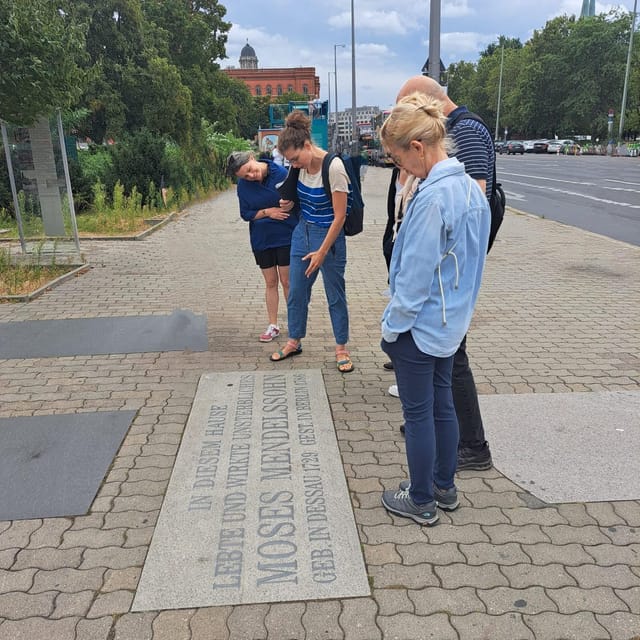
You explore the Old Jewish Cemetery, described as the community’s first cemetery, and Moses Mendelssohn is mentioned as being buried there. The entry ticket to the old cemetery is included, except on Jewish holidays and Saturday.
Cemeteries are quiet by nature, but the tour gives you a framework for what you’re looking at: who belongs to the community’s early story, why the cemetery matters, and how memory is physically anchored in Berlin.
This stop also offers an emotional balance. After memorials and Holocaust-era rescue stories, the cemetery gives you a different kind of understanding. It’s not only about suffering; it’s about generations who built life and identity long before WWII.
Finishing near the memorial cemetery and looping back to Hackescher Markt
The tour finishes at the Memorial Jewish Cemetery and then ends back near the starting area. That loop is useful. By the time you’re done, you can step out into Berlin with a clearer sense of direction—both geographically and historically.
If you want photos, this is one of your better windows. But keep the mood respectful. This is not the place to rush.
Optional add-ons if you want to extend the story
If 3.5–4 hours doesn’t feel long enough, there’s an optional extension (extra time and cost) that can bring the story to more memorial sites. The extension options include:
- Schönhauser Allee Cemetery (final resting place of famous members from the community’s golden era)
- Kindertransport Memorial at Friedrichstraße Station
- Grunewald Deportation Memorial (commemorating the deportation of Berlin’s Jews)
These add-ons make sense if you want to connect WWII history to later remembrance or to a broader timeline of Jewish suffering and survival. Also, if you’re the type who likes to keep walking after a tour, this is a clean way to extend without losing context.
Is $318 worth it? Thinking about value, not just cost
At $318 per person, this is not a budget walk. The value comes from three concrete things you’re getting for that price.
First, you’re paying for a highly structured guide-led route that covers both the pre-WWII community story and WWII tragedy, without pretending one is separate from the other. Tal’s background and the way she connects themes make the time feel purposeful.
Second, you get included entry tickets that many self-guided visits would cost extra for: Otto Weidt Museum and the Old Jewish Cemetery (with the stated exceptions for holidays/Saturday). That saves planning time and reduces the risk of arriving when you can’t enter.
Third, it’s in the heart of Berlin’s historical district, so the walking route is efficient. You’re not paying for transit across the city; you’re paying for interpretation where it matters.
The main “cost” of the $318 is your attention. This tour asks you to listen and absorb emotionally heavy content. If you’re coming for light sightseeing, you might find it heavy. If you want Berlin that respects its complexity, the price starts to feel more like a fair exchange for meaning and guidance.
What to bring and how to prepare so the day goes smoothly
This tour is straightforward, but a few items help you stay comfortable and respectful:
- Comfortable shoes (the route is on foot for several hours)
- A hat and water, especially in warm weather
- A head covering or kippah (recommended for the kind of religious and cemetery context you’ll be in)
- Sunscreen if it’s sunny
Also remember:
- No smoking
- No flash photography
If you’re planning your day, build in time for slow walking. Even with a break, you’ll want your body to cooperate so your brain can stay present.
Should you book this Berlin Jewish walking tour?
Book it if you want a guided route that treats Jewish Berlin as a full story: earlier community re-establishment, shifting neighborhoods, institutional life, WWII catastrophe, and what’s remembered today. The strongest reason to choose it is Tal. Her passion and the way she shares personal stories alongside the historic context are the difference between facts you forget and meaning you keep.
I’d skip it (or at least think carefully) if you can’t handle long periods of walking and standing at outdoor memorial sites, or if you prefer minimal emotional weight in your sightseeing. But if you’re ready for a thoughtful, place-based tour that uses Berlin’s actual sites instead of generic explanations, this one is a strong pick for Mitte.
FAQ
How long is the Berlin Jewish Walking Tour including World War II?
It lasts about 3.5 to 4 hours.
Where does the tour start and where does it end?
You meet in front of Starbucks in Mitte and the tour finishes back at the meeting point, with the route ending at the Memorial Jewish Cemetery.
What languages is the live guide available in?
The tour is offered with a live guide in English and Hebrew.
What’s included in the price?
You get a walking tour with a guide, entry ticket to the Otto Weidt Museum (except days it’s closed), and entry ticket to the old cemetery (except Jewish holidays and Saturday).
Is the Centrum Judaicum museum included in the New Synagogue stop?
No. Entry to Centrum Judaicum is not included; it requires a separate ticket to the museum in the new synagogue.
What should I bring?
Wear comfortable shoes, bring water, and consider a hat and sunscreen. The tour also suggests a head covering or kippah.