REVIEW · BERLIN
Dark Berlin Criminal Tour
Book on Viator →Operated by Freizeit-und Reiseclub Berlin · Bookable on Viator
Dark crimes, real Berlin corners. This walking tour follows Berlin’s criminal history from the late 19th century to today, using real addresses tied to violence, betrayal, greed, and sex-for-profit crime. You’ll also hit some spots that feel totally surprising for a “dark” subject.
What I like: you get a certified guide telling connected stories, not just random spooky facts. And the route is short and human-sized—about 2 hours—so you can fit it between museum stops without your day collapsing.
One thing to consider: the tour needs good weather, and it’s a walking experience in the city center, so plan comfortable shoes and expect a bit of outdoor time.
In This Review
- Key Things That Make This Tour Work
- What You’re Really Doing in a “Criminal” Walking Tour
- Price and Timing: Getting Value for $18.52
- Meeting at Rosa-Luxemburg-Platz: How the Tour Starts
- Stop 1: Volksbühne Berlin and the 1931 Shooting
- Stop 2: Scheunenviertel and the 1920s Underworld Scene
- Stop 3: Alexanderplatz, the Name Behind Alex, and War-Year Fear
- Stop 4: Alexa Shopping Center and Why It Made World Fame
- Stop 5: Littenstraße and a Defense Attorney’s 1920s Reputation
- Stop 6: Rotes Rathaus and Berlin’s First Banking Scandal
- How the Guide’s Style Changes the Experience
- What to Expect on the Walk (and Who It Fits Best)
- Should You Book the Dark Berlin Criminal Tour?
- FAQ
- How long is the Dark Berlin Criminal Tour?
- What does the tour cost?
- Where do I meet for the tour?
- When does the tour start?
- Do I need to buy tickets or pay extra at the stops?
- What happens if the weather is bad?
- Can I cancel and get my money back?
Key Things That Make This Tour Work
- Small group size (up to 25) keeps the pace conversational and the questions flowing.
- Mobile ticket means less fuss right before you start.
- Stop-by-stop story chain links crimes, motivations, and consequences across decades.
- Famous Berlin landmarks with hidden crime angles: Alexanderplatz, Volksbühne Berlin, Rotes Rathaus.
- Crime types you can actually picture: protection-money extortion, prostitution, stolen-goods handling.
What You’re Really Doing in a “Criminal” Walking Tour
This isn’t a lecture about criminals as characters. It’s Berlin viewed through the consequences of crime—how it spread, how it paid, and how it shaped institutions. The tour frames organized crime as practical business: protection money, prostitution, and receiving stolen goods. Those aren’t abstract ideas. You can stand on the street and imagine the deals, the rumors, and the fear.
Another reason it works: the guide doesn’t only focus on violence. The story set also includes bizarre incidents and comedy. That matters, because Berlin history often gets treated as solemn. Here, you’ll see that people in hard times still found ways to laugh—sometimes because they had to.
And you’ll learn how the Berlin criminal police built world fame through investigation and pressure. The tour even points out a surprising location tied to the police, which helps explain why crime stories are also stories about the state reacting.
Finally, this is designed as a tight route. Each stop is brief, but the story keeps moving. If you like walking tours where the time passes fast and you don’t feel dragged from one wall plaque to the next, this format is a good fit.
You can also read our reviews of more tours and experiences in Berlin.


Price and Timing: Getting Value for $18.52
At $18.52 per person for about 2 hours, you’re buying guided storytelling tied to specific places, with no extra paid entries mentioned at the stops. That’s the key value piece: you’re not paying just to hear “crime trivia.” You’re paying for context that makes the city readable.
The tour runs at 2:00 pm, starting at Rosa-Luxemburg-Platz 1/u. That afternoon timing can be smart because Berlin mornings are often for museums, and you can use the afternoon for city texture. Plus, the ending at Rotes Rathaus puts you near a core transit hub and a natural place to continue exploring.
The fact that it’s commonly booked about 44 days in advance tells me it’s not one of those obscure niche things that’s always empty. If you want a specific date, it’s worth booking ahead. One more practical note: the tour uses a mobile ticket, so you can show up ready without extra printing.
Meeting at Rosa-Luxemburg-Platz: How the Tour Starts
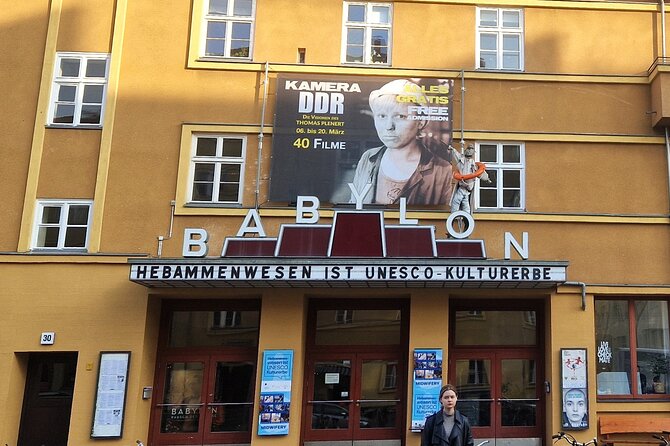
You meet at Rosa-Luxemburg-Platz 1/u, 10178 Berlin. The start point is easy to reach by public transportation, which matters on a walking tour where your time window is short. This also helps if you’re coming in from another neighborhood and don’t want to build a “getting there” headache into your plan.
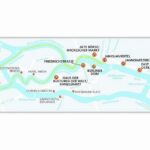
From there, the route walks you through Berlin’s center—places that are still important today. The tour ends at the entrance of Rotes Rathaus (with direct access to the underground). That’s a small detail, but it can seriously affect how smooth your afternoon feels when you’re done with the stories.
If you’re the type who likes to start with a clear plan—where you’ll end up and how you’ll get back—this tour gives you both. You’re not left guessing.
Stop 1: Volksbühne Berlin and the 1931 Shooting
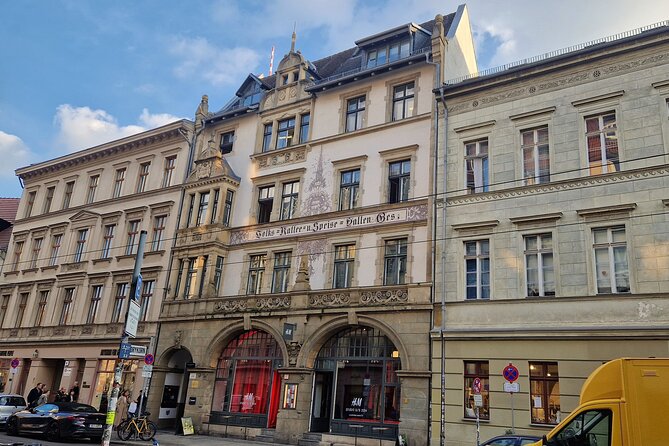
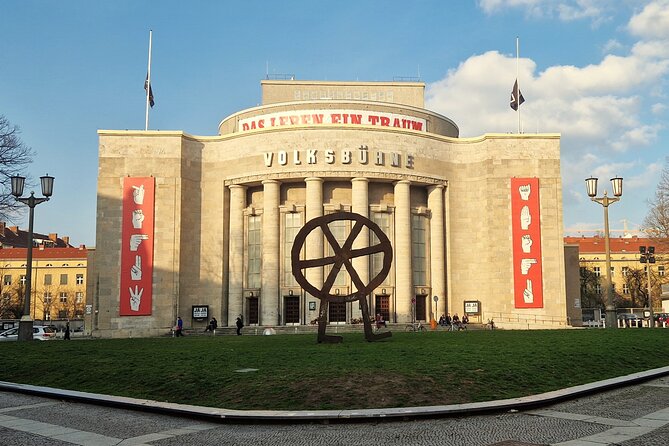
The tour opens with Volksbühne Berlin, tied to a gruesome incident on August 9, 1931. Two police officers were shot there by a man who later became Minister for State Security in the GDR, along with a buddy.
What makes this stop compelling is that it anchors later political power in an earlier moment of violence. You’re not only hearing about a crime; you’re watching how careers and institutions evolve. It’s the kind of connection that gives you that “oh, that’s why this matters” feeling.
A drawback at this type of stop: the building and the street will look like your modern-day Berlin. Without the guide’s framing, it’s easy to miss what happened here. With the guide, though, you get a mental movie running behind the present-day façade.
Stop 2: Scheunenviertel and the 1920s Underworld Scene
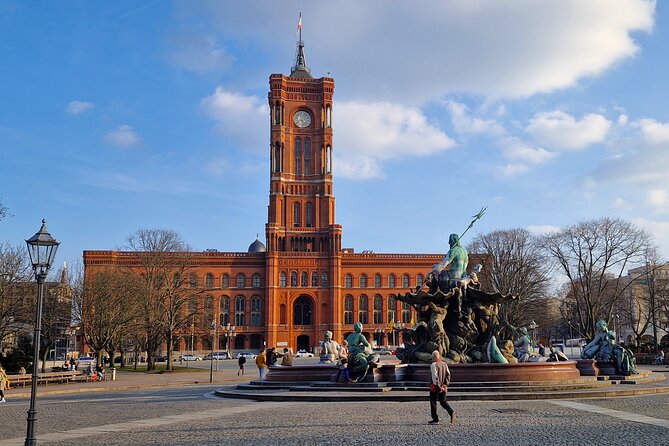
Next you get to Scheunenviertel, described as a place in the 1920s where factory workers came home exhausted, dressed simply after shifts. The tour also points out the other side of the street life story: bright makeup and short skirts tied to prostitution, plus crooks, pimps, and the messy overlap between “working life” and paid exploitation.
This stop works because it moves beyond famous names and shows how crime functioned in everyday neighborhoods. It also gives you a visual sense of why certain crimes grew: when people are worn down, exploited, and surrounded by intermediaries, “survival” starts to blur into illegal income.
One consideration: the tone here is adult. If you’re sensitive to topics like prostitution and extortion, you should know the tour does include them directly as part of how organized crime made money.
But if you want a Berlin story that feels grounded in social reality—not just headline violence—this is a strong stop.


Stop 3: Alexanderplatz, the Name Behind Alex, and War-Year Fear
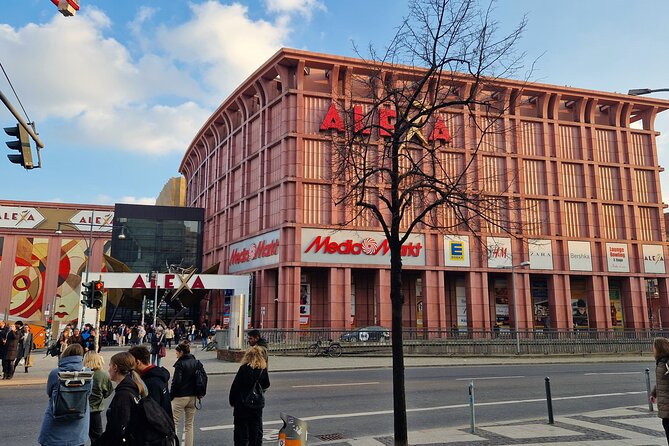
Then it’s on to Alexanderplatz, affectionately called Alex by Berliners. The story here connects the name of the square with how a gang of young people terrified the city during the war years.
This stop is more than “crime happened here.” It’s about perception—how people label places and how public fear changes the reputation of a location. Alexanderplatz is familiar to most people, which makes the contrast stronger. You’re used to it as a landmark of modern Berlin, but here it becomes a stage for youth violence and city-wide anxiety.
A small practical note: because Alexanderplatz is busy and open, the experience can feel a bit more public. That’s normal. Just don’t expect quiet, museum-like focus. The value is that the story hits where real life continues.
Stop 4: Alexa Shopping Center and Why It Made World Fame

The tour moves through a stop connected to Alexa, the shopping center. The point isn’t shopping. It’s the reminder that this spot had a pre-war building, and the changes to what stood here helped lead to world fame and high esteem.
This is the part of the tour that gives you variety. Not every stop is about violence or extortion. Some are about how Berlin’s built environment and reputation are shaped by events and reputations that spread beyond the city.
If you like tours that mix dark themes with unexpected pivots, this stop delivers. It also helps you understand how Berlin’s history isn’t confined to old blocks—it keeps influencing what happens in modern architecture and naming.
Stop 5: Littenstraße and a Defense Attorney’s 1920s Reputation
At Littenstraße, the story ties to the district court of Berlin Mitte and then shifts into one of the tour’s more character-focused angles: one of the most famous defense attorneys of the 1920s, who was totally impressed by Lola.
Even without turning this into a soap opera, this stop shows why criminal history isn’t only about criminals. It’s also about the courtroom, the legal strategy, and the people fighting to control the narrative of blame and guilt.
This stop can feel a little more abstract than the others because court buildings don’t naturally scream “crime story” in the way a shooting location might. The guide’s job here is to connect the place to the legal drama. If you’re the type who enjoys systems and strategy, you’ll probably like this one.
Stop 6: Rotes Rathaus and Berlin’s First Banking Scandal
You finish at Rotes Rathaus, where the tour points to the first banking scandal in Berlin’s history in the 1920s—and that the mayor was involved.
This is a smart ending theme. Early organized crime and violence can feel chaotic. A banking scandal shows how corruption can be structured, financed, and scaled. It also connects crime to power in government, not only the street.
It’s also a good “big picture” moment for your brain. By the end, you’ve seen how crime worked as an economy (protection, prostitution, stolen goods), and now you’re looking at how financial institutions and officials can be pulled into the same web.
Because you end right near the underground, it’s easy to keep going after the last story rather than spend your energy figuring out transit.
How the Guide’s Style Changes the Experience
The biggest consistent praise from people who rate this highly is that the tour feels very exciting, full of facts, and genuinely interesting even for people who already know Berlin. That usually comes down to two things: storytelling that connects to the street, and a guide who brings the places to life.
From the description, you’re not getting a monotone “and then crime happened” vibe. The tour is built around a connected arc—from end of the 19th century to the present—and it includes violence, death, betrayal, greed, passion, and even comedy and bizarre moments.
That balance matters. Crime tours can go too far into horror. Here, the humor and odd angles are part of how Berlin life actually looked when people were stuck in ugly realities.
What to Expect on the Walk (and Who It Fits Best)
The tour lasts about 2 hours, and the individual stops are short. That makes it ideal if you want a focused experience instead of a long hike across town. You’ll move through central Berlin and hit places that are recognizable enough to keep your bearings.
It also suits you if:
- You like city history tied to real addresses, not only museums
- You enjoy crime stories that explain how things worked
- You want a break from art and architecture without leaving Berlin behind
It might not be your top choice if:
- You want a light, carefree walk
- You strongly dislike adult themes like prostitution and extortion
- You prefer quiet, purely observational sightseeing
And one more real-life factor: it’s weather-dependent. Berlin can change fast. If it looks like rain is coming, plan accordingly with a jacket and shoes that handle wet pavement.
Should You Book the Dark Berlin Criminal Tour?
If you want Berlin that feels real—crime not as a gimmick, but as a window into money, power, and institutions—this tour is a strong buy for the $18.52 price point. The short duration, guided storytelling, and end-location convenience make it easy to fit into a normal day.
I’d book it if you’re the kind of traveler who enjoys street-level history and doesn’t need everything to be cheerful. But if you’re looking for a gentle history stroll with minimal adult content, you may want to skip or choose a different kind of walking tour.
FAQ
How long is the Dark Berlin Criminal Tour?
It lasts about 2 hours.
What does the tour cost?
The price is $18.52 per person.
Where do I meet for the tour?
The meeting point is Rosa-Luxemburg-Platz 1/u, 10178 Berlin, Germany.
When does the tour start?
The start time is 2:00 pm.
Do I need to buy tickets or pay extra at the stops?
The stops listed show admission ticket free.
What happens if the weather is bad?
The tour requires good weather. If it’s canceled due to poor weather, you’ll be offered a different date or a full refund.
Can I cancel and get my money back?
No. This experience is non-refundable and cannot be changed for any reason.