REVIEW · BERLIN
Hitler to Stalin – WWII & Cold War Tour (Small Group)
Book on GetYourGuide →Operated by On the Front Tours · Bookable on GetYourGuide
Berlin’s past feels close here. On this WWII to Cold War small-group walk, you trace how one regime’s violence set the stage for the next era’s standoff, all while keeping your feet on real streets. I like how the tour is run by Berlin’s only World War II tour specialists, so you’re not stuck with vague talking points; you get clear cause-and-effect from the city itself. I also like the small group pace, which makes it easier to ask questions and stay together.
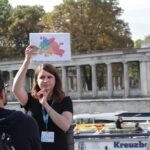
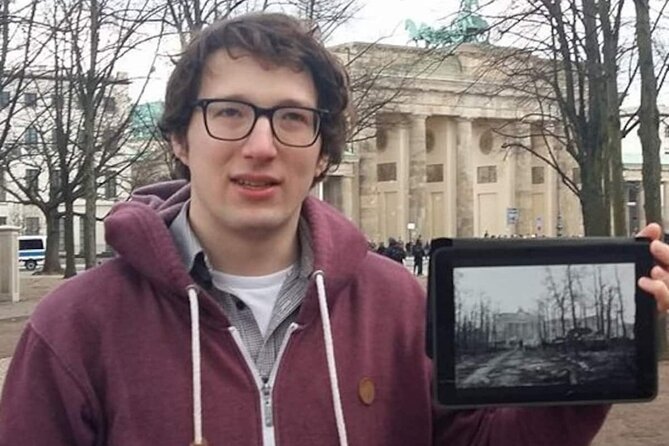
I also love the Then & Now photos and maps that the guide uses along the route. They’re not decoration. They help you see how locations went from war-torn or propaganda-heavy spaces to today’s memorial landscape. One caution: you’ll cover some heavy subject matter in a short time, and the route involves steady walking rain or shine, so it may feel intense if you prefer a slower, museum-style approach.
In This Review
- What Makes This Tour Work So Well
- Meeting at Brandenburg Gate: start where Berlin reframes itself
- Brandenburg Gate to the Reichstag: politics in plain sight
- Hitler’s Bunker and Gestapo HQ: the machinery of fear
- The Holocaust Memorial: a stop that asks you to pause
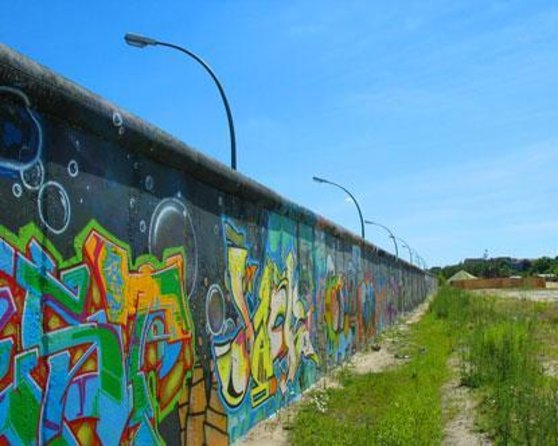
- Berlin Wall and the Iron Curtain: seeing a division you can’t unsee
- Checkpoint Charlie: a city staged between worlds
- How the 2.5 Hours Fits Together (and why that matters)
- Price and Value: what $34 really buys you
- Who Should Book This Tour
- Should You Book Hitler to Stalin?
- FAQ
- How long is the tour?
- Where does the tour start and end?
- What does the tour include?
- Is the tour wheelchair accessible?
- Will the tour run in bad weather?
- What language is the guide?
- What should I bring?
- Can I cancel for a refund?
What Makes This Tour Work So Well
- A specialist focus on how WWII turns into the Cold War, not two separate history lessons stitched together
- Street-level landmarks that map the story: Reichstag, Gestapo HQ, Hitler’s Bunker, Berlin Wall, and Checkpoint Charlie
- Then & Now photos and maps to track change over time without guessing
- Balanced anchors like Brandenburg Gate and the Reichstag on the political side, plus the Holocaust Memorial on the human-cost side
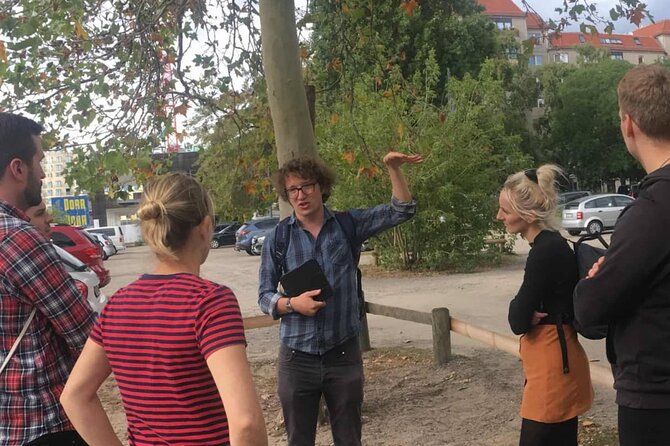
- A small group format that keeps the discussion grounded and the walk manageable
Meeting at Brandenburg Gate: start where Berlin reframes itself
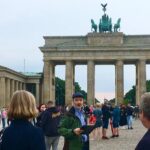
You meet at the Tourist Center at the Brandenburg Gate. Look for the blue umbrella. That simple detail matters because this is a very specific start point, and it puts you right where Berlin likes to tell its big story.
The best part of starting here is that you get an instant visual contrast. The Brandenburg Gate has long been used as a symbol—sometimes of national ambition, sometimes of unity, and later of division and reconciliation. On this tour, your guide uses that symbolism as a framing tool. Instead of treating the landmarks as separate photo stops, you learn what questions to ask as you move.
You should expect an organized, timed walk that ends back at the meeting point. Because the total tour time is 2.5 hours, you’re not wandering. You’re moving with a purpose, stopping long enough to connect what happened there with what came next.
You can also read our reviews of more tours and experiences in Berlin.


Brandenburg Gate to the Reichstag: politics in plain sight
The tour includes the Brandenburg Gate as a key transition point. You’ll connect war-torn scars with enduring emblems of unity—without the story turning into slogans. The point isn’t just what the monument looks like. The point is why Berlin kept returning to the same places as power changed hands.
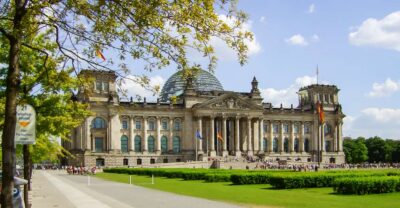
Next comes the Reichstag, and this stop is about politics, not pageantry. The building is tied to Germany’s governmental power and the shifting political realities that led through WWII. You’ll learn how to read the setting: what it represented, how it featured in the era’s struggles, and why it became part of Berlin’s later self-understanding.
This is one of the tour’s strengths: you don’t just “see” the Reichstag. You understand why it matters to the WWII-and-then-something-else narrative. If you like when buildings come with context, this portion will click fast.
Hitler’s Bunker and Gestapo HQ: the machinery of fear
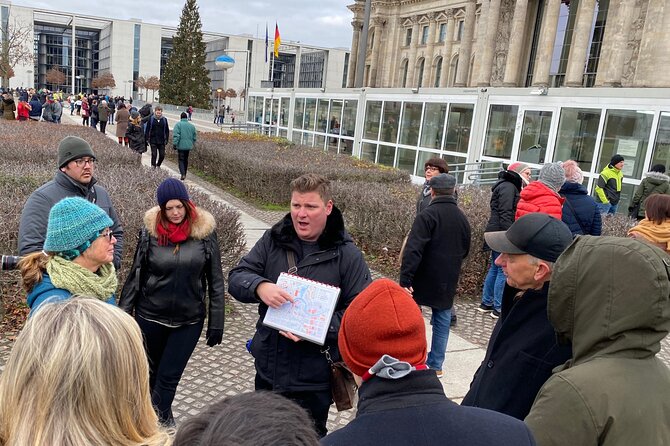
From there, the route turns darker, and it should. Hitler’s Bunker and Gestapo HQ are included because the WWII story isn’t complete without the systems that enabled it.
You’re walking through Berlin with the aim of understanding the machinery behind the violence: how authoritarian control worked on the ground, how fear was organized, and how power operated through institutions rather than just individual decisions. The emotional tone here is serious, and the guide’s job is to keep it accurate and respectful.
Practical note: this kind of stop is not “light learning.” But that’s also why it’s valuable. When you reach later Cold War sites, you’ll better grasp what people were reacting to—and why the stakes felt global even while the conflict played out locally.
The Holocaust Memorial: a stop that asks you to pause
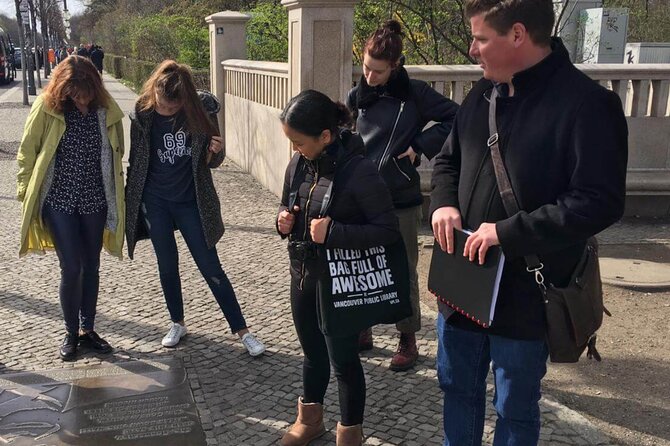
You’ll also visit the Memorial to the Holocaust. This isn’t handled as a quick photo break. It’s part of the tour’s lesson on the Nazi era’s human cost and the lessons people try to carry forward.
What I appreciate about including this site inside a WWII-to-Cold War walking route is the pacing of understanding. You go from symbols of power, to institutions of terror, then to a memorial space that forces you to slow down and reflect. The guide’s framing ties the tragedy to the broader moral and historical warnings that came out of WWII.
If you’re traveling with someone who gets uncomfortable with heavy topics, you’ll want to be honest about this upfront. It’s worth it. It’s also real.
Berlin Wall and the Iron Curtain: seeing a division you can’t unsee
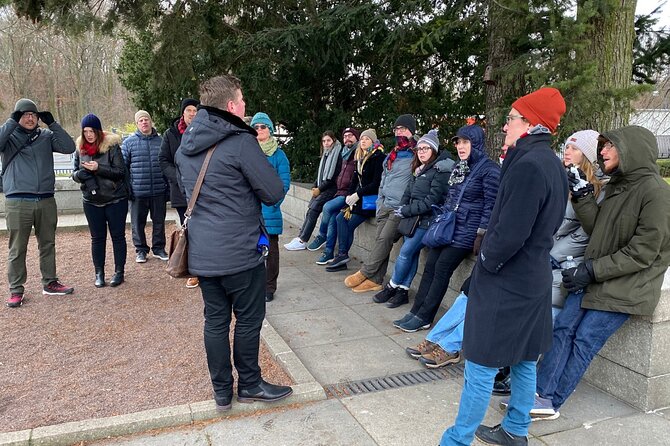
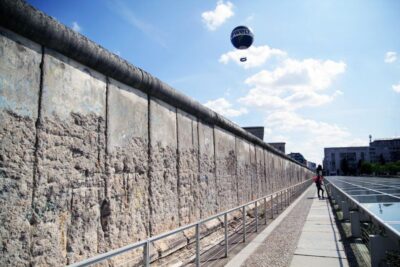
The tour’s Berlin Wall segment is a standout because it turns an idea you’ve read about into something physical. You view the actual line of division, often described in terms like the Iron Curtain, and the guide helps you connect the barrier to the lived reality on both sides.
This is where the “WWII-to-Cold War” framing pays off. You start to see continuity: how a city that was already scarred and reshaped by WWII becomes, in the Cold War, a frontline for ideology, security, and control.
You’ll get context on the events that led to Berlin’s division and the eventual unification. That storyline matters because the wall is easy to treat like a relic. The tour encourages you to treat it like a system—created for a reason, maintained for a reason, and eventually broken by changes that were bigger than any one monument.



Checkpoint Charlie: a city staged between worlds
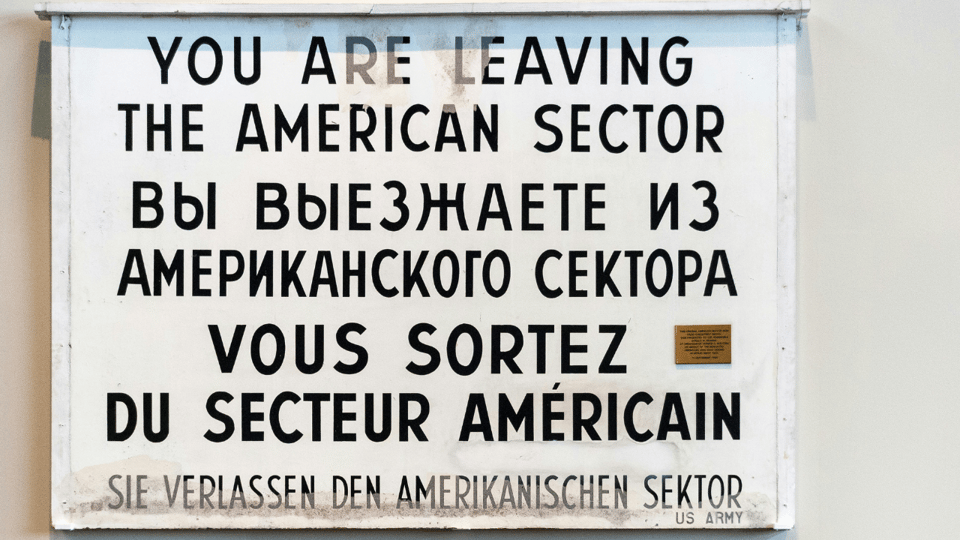
Next up is Checkpoint Charlie, one of the most recognizable Cold War locations in the world. Here, you witness a city divided, but with emphasis on how the division played out in daily life and international tension.
Checkpoint Charlie works well on foot because the guide can point out how space, access, and rules shaped behavior. The lesson isn’t just the famous name. It’s the feeling of a place where boundaries were not abstract. They were enforced in real time.
This stop also helps close the loop. Once you’ve walked from Nazi-era control to Cold War-era division, Checkpoint Charlie becomes more than a landmark. It becomes a checkpoint in understanding—how Berlin served as a high-stakes map where world power met street reality.
How the 2.5 Hours Fits Together (and why that matters)
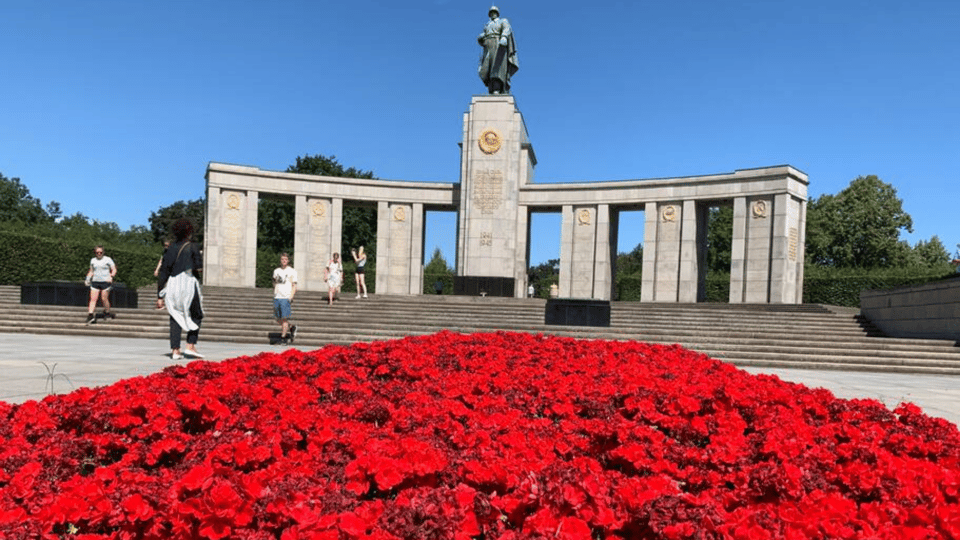
At 2.5 hours, this tour is compact. That’s a feature, not a flaw, if you want one efficient, meaningful route rather than a full-day plan.
Here’s what makes the timing work:
- The stops are chosen to tell a chain, not a random collection of highlights.
- Photos and maps help you connect eras without needing to study on your own first.
- The walk is structured, so you’re not constantly moving without context.
The tradeoff is obvious: you won’t get museum-length time at each location. If you want deep reading in a building, you’ll still need to add extra time on your own after the tour. But if your goal is to understand the big plot of WWII and the Cold War through Berlin’s key sites, this length is strong value.
Price and Value: what $34 really buys you
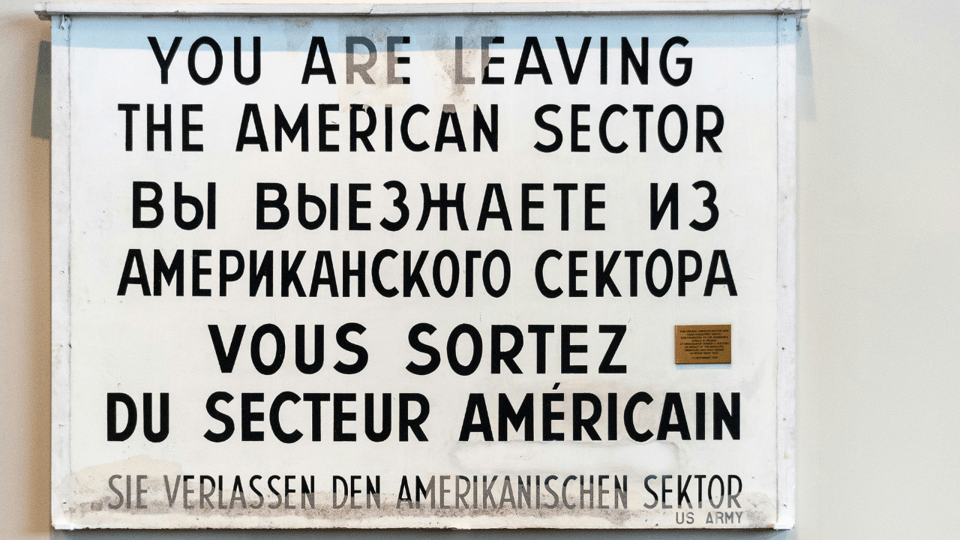
The price is listed as $34 per person, and for a specialist-led 2.5-hour walk in central Berlin, you’re paying for more than footsteps. You’re paying for:
- An expert live guide who connects sites into a single story
- Then & Now photographs and maps to speed up your understanding
- A small group format so you can actually talk and get clarifications
In practical terms, the value comes from compression. You’re learning how major locations connect to the events that led to division and unification. That’s harder to do on your own unless you already know exactly where to look and what to compare.
If you’re on a short trip to Berlin and want a clear framework before you start exploring museums or other memorials, this is a smart use of limited time.
Who Should Book This Tour
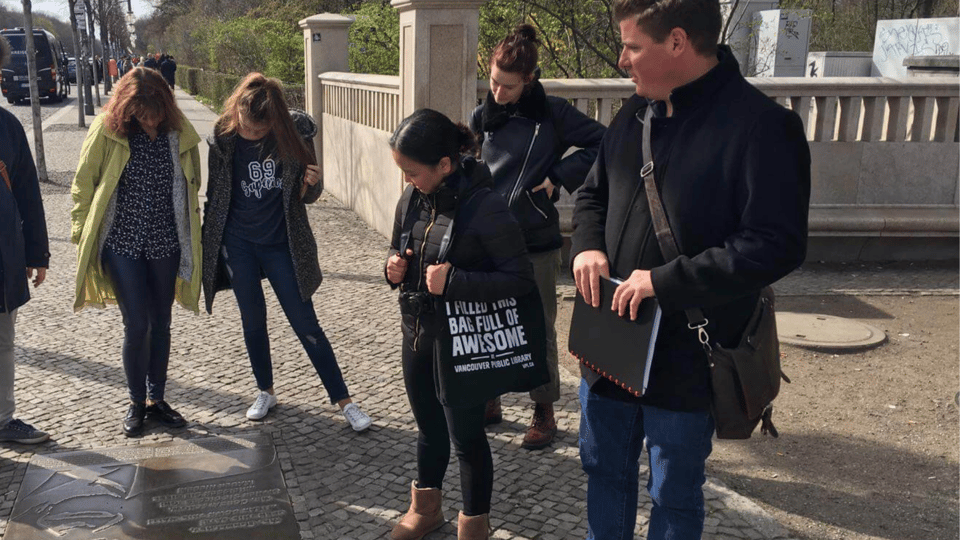
This tour suits you best if:
- You want a focused Berlin route that links WWII to the Cold War
- You like history explained on the street, not only inside venues
- You appreciate a small group with an English live guide
- You’re comfortable walking and want context for major landmarks without building a DIY itinerary
It might be less ideal if you’re searching for a light, casual city stroll, or if you need lots of quiet time to process heavy topics. The subject matter is serious, and it’s packed into one walk.
Should You Book Hitler to Stalin?
I think you should book it if you want a well-structured Berlin framework in one shot. Starting at the Brandenburg Gate, moving through WWII-era sites like Hitler’s Bunker and Gestapo HQ, and then pivoting to Cold War reality at the Berlin Wall and Checkpoint Charlie is exactly the kind of route that helps you make sense of the city fast.
It’s also a good match for your money. For $34, you get specialist guidance plus Then & Now visuals that make the changes across decades easier to grasp.
Just go in prepared: wear comfortable shoes, bring water and a light snack, and expect rain or shine. If you’re ready for a serious, fast-moving story, this tour can give you a strong sense of why Berlin’s past still shapes the streets today.
FAQ
How long is the tour?
It lasts about 2.5 hours.
Where does the tour start and end?
You meet at the Tourist Center at the Brandenburg Gate (look for the blue umbrella). The tour ends back at the meeting point.
What does the tour include?
It includes an expert tour guide, an exclusive small group tour, Then & Now photographs and maps, and an accessible tour.
Is the tour wheelchair accessible?
Yes, the activity is wheelchair accessible.
Will the tour run in bad weather?
Yes, it runs rain or shine.
What language is the guide?
The live guide speaks English.
What should I bring?
Bring comfortable walking shoes, water, and light snacks. It’s also smart to bring an umbrella or raincoat in unfavorable weather.
Can I cancel for a refund?
Yes. Free cancellation is available up to 24 hours in advance for a full refund.