REVIEW · BERLIN
Berlin Protest History Tour: Rebels, Resistance, and Revolution
Book on Viator →Operated by Beyond and Beneath Tours · Bookable on Viator
Berlin argues with itself on every street. This 2-hour walk connects rebels, resistance, and revolution through East and West landmarks you can actually see.
I especially love how it uses street-level details like terracotta timelines to explain how uprisings get remembered. I also like the sharp, story-driven guiding style credited to guides such as Martina and Simone, who focus on small details you’d miss on your own.
One possible drawback: it’s a short route with timed stops, so if you want museum-length pacing at each site, this isn’t that kind of tour.
In This Review
- Key highlights you’ll notice fast
- Protest history in Berlin, told on foot
- Getting oriented: start at the Red Town Hall, end at Alexanderplatz
- Stop 1: Rotes Rathaus and the terracotta timeline of early uprisings
- Stop 2: Nikolaiviertel and the last remnants of the Palace of the Republic
- Stop 3: Gasthaus Mutter Hoppe and the East German timeline that leaves a gap
- Stop 4: Marx-Engels-Forum and the politics of statues
- Stop 5: Humboldt Forum and the rebuilt Berlin Palace as a witness
- Stop 6: Rosenstraße and the 1943 women’s act of civil disobedience
- Stop 7: St. Mary’s Church, Martin Luther King in 1964
- Stop 8: Berlin’s TV Tower as a communist power symbol
- Stop 9: The Peaceful Revolution of 1989 at Brunnen der Völkerfreundschaft
- Stop 10: Weltzeituhr, East Berlin’s meeting spot and global time
- Price and value: what $30.04 buys you in real terms
- Who this tour suits best
- A few tips so you get the most from the walk
- Should you book this Berlin protest history tour?
- FAQ
- How long is the Berlin Protest History Tour?
- What does the tour cost?
- Is the tour offered in English?
- Where does the tour start and end?
- Do I need to buy tickets for the stops?
- Is a mobile ticket included?
- How big is the group?
- Do I need good weather?
- Is there free cancellation?
- Are service animals allowed?
Key highlights you’ll notice fast

- Terracotta timelines at the Rotes Rathaus and Gasthaus Mutter Hoppe that turn buildings into storyboards
- Absences matter, including how the East German timeline handles the Berlin Wall
- Civil disobedience in 1943 at Rosenstraße, tied to Jewish life under Nazi rule
- 1848 and 1989 through the same axis: Berlin Palace events and the fall-of-the-Wall lead-up
- Martin Luther King’s 1964 sermon stops a lot of people in their tracks
- Alexanderplatz finish at the Weltzeituhr, a popular meeting point in East Berlin
Protest history in Berlin, told on foot
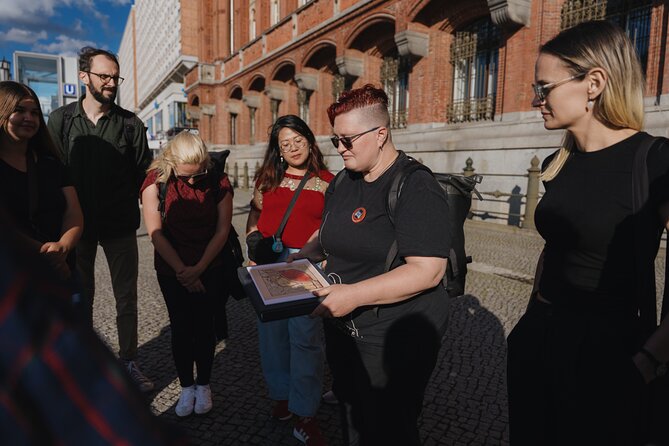
Berlin makes it easy to mix politics with geography. You walk a tight loop, and suddenly the city feels like a living text: some messages are carved in stone, some are rebuilt, some are intentionally missing, and some are waiting for you to read between the lines.
This experience is built around the theme Rebels, Resistance, and Revolution. The goal is not just dates. It’s how people push back, how power responds, and how the physical city keeps score—sometimes honestly, sometimes with propaganda, sometimes with silence.
You’ll also get practical comfort: the tour runs about 2 hours, stays in central areas, and uses an English-speaking expert guide. Tickets are mobile, and admission at each stop is listed as free—so your money mostly goes toward interpretation, not entry fees.
You can also read our reviews of more historical tours in Berlin
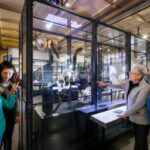
Getting oriented: start at the Red Town Hall, end at Alexanderplatz
The meeting point is the Sculpture Aufbauhelferin by Fritz Cremer at Rotes Rathaus on Jüdenstraße. That’s a good start because it immediately frames the tour around Berlin’s official identity—then the walk steadily complicates it.
The route ends at the World Time Clock, Weltzeituhr, at Alexanderplatz (World Time Clock, Alexanderpl. 1). That finish works well because it’s both a recognizable landmark and a reminder that East Berlin had its own public-facing symbols of time, coordination, and daily life.
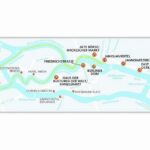
You’ll also be walking between sites that are close enough to make the day feel efficient. One review noted the walk as small (around 2 km), and that matches the tight stop timings built into the schedule.
Stop 1: Rotes Rathaus and the terracotta timeline of early uprisings
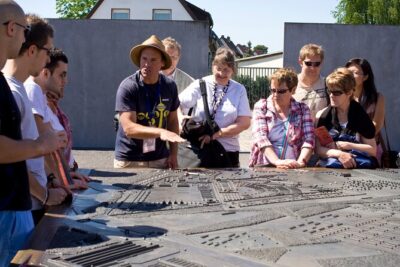
At Rotes Rathaus, the guide points out a terracotta timeline wrapped around the building. Instead of reading history in a book, you’re reading it in layers on stone-colored surfaces around the city’s civic heart.
This stop is about origins—how the city’s early history and one of Berlin’s major early uprisings are depicted. The value here is simple: you can spot the story quickly, and the guide helps connect the dots so it doesn’t feel like random decoration.
What you’ll like: this is history you can look at right away, not just facts thrown at you. It also sets the tone for the rest of the tour: Berlin “talks” through architecture.
Time on site: about 15 minutes.
Stop 2: Nikolaiviertel and the last remnants of the Palace of the Republic
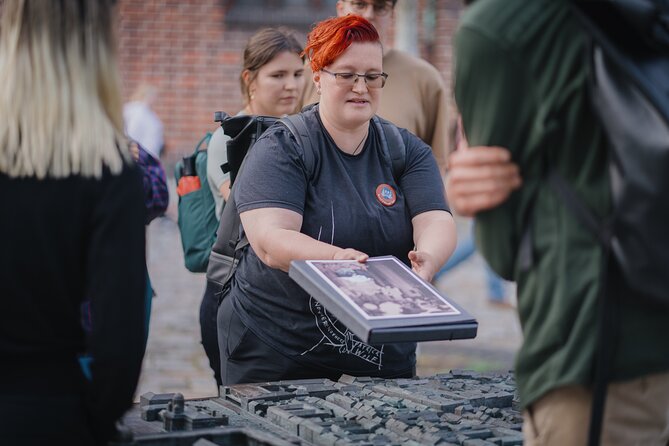
Nikolaiviertel is where Berlin shows you how socialist eras can become styled, styled again, and turned into an anniversary-ready backdrop. The walk here focuses on socialist kitsch built for the 750th anniversary of Berlin.
You also get a key historical anchor: the last remnants of the Palace of the Republic. This was the seat of East German parliament and also a major entertainment venue in the socialist half of the city.
This is a helpful stop if you’re trying to understand how regimes use public space. Government buildings weren’t only about policy; they were about culture, attention, and identity.
Time on site: about 10 minutes.
Stop 3: Gasthaus Mutter Hoppe and the East German timeline that leaves a gap
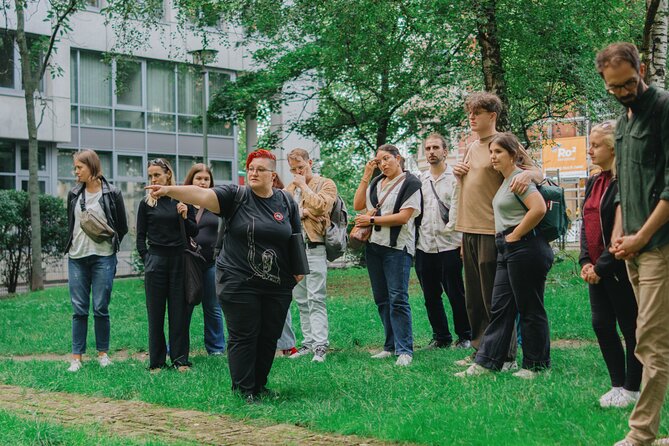
Gasthaus Mutter Hoppe is the East German answer to the Red Town Hall’s terracotta timeline. The point isn’t just that there’s a similar visual format—it’s that the story being told is selective.
Here, the timeline shows important socialist-country moments, but one very specific element is noticeably missing: the building of the Berlin Wall is absent from the timeline.
That absence is the kind of detail that makes this tour worth paying for. On your own, you might read it as normal decoration. With a guide, you start asking why a painful or politically inconvenient moment doesn’t fit the story being presented.
Time on site: about 5 minutes.


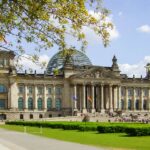
Stop 4: Marx-Engels-Forum and the politics of statues
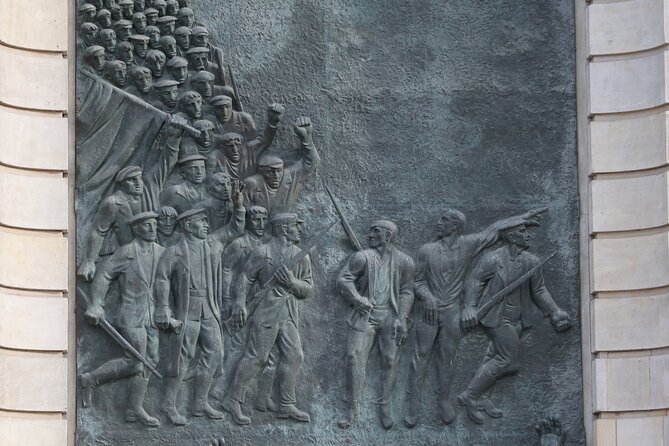
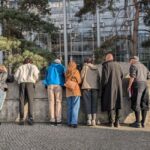
Next is the Marx-Engels-Forum, where you meet the public image of The Communist Manifesto authors: Karl Marx and Friedrich Engels.
This stop adds a human layer to political history. The statue of the two philosophers has been debated over the years, and the guide uses that debate to explain how symbols can become targets long after the original ideas spread.
If you like your political history with street-level reality, this is one of the more memorable stops. You don’t just see faces in metal; you see how interpretation changes with time.
Time on site: about 15 minutes.
Stop 5: Humboldt Forum and the rebuilt Berlin Palace as a witness
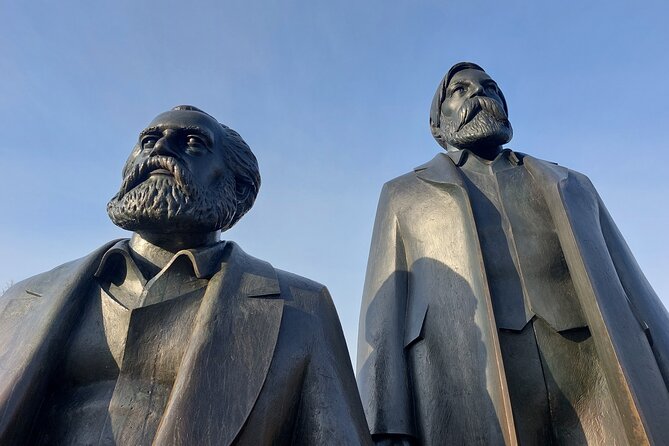
The Humboldt Forum is where Berlin’s “before and after” story gets tangible. You’ll see the reconstructed Berlin Palace and learn how the original palace witnessed protests and revolutions—especially the March Revolution of 1848, which planted seeds of democracy in Germany.
This stop works because it ties protest movements to power centers, not only to underdogs in the streets. It also helps you connect earlier uprisings to later political change, so 1848 doesn’t feel like a random chapter.
What to look for: the guide’s framing of the building as a witness. Buildings aren’t neutral. They’re stages, and the same site can host different kinds of public pressure across centuries.
Time on site: about 20 minutes.
Stop 6: Rosenstraße and the 1943 women’s act of civil disobedience
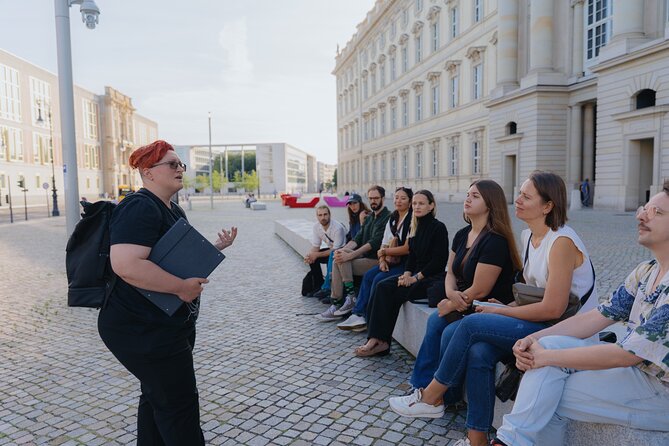
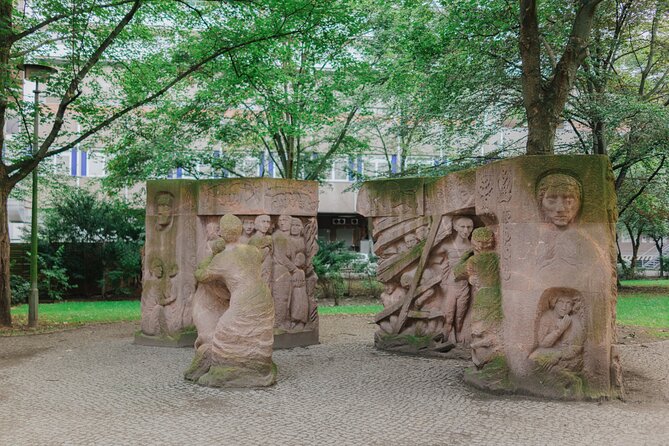
Rosenstraße is heavy, and it earns its weight. Here you see the Rosenstraße monument for women who staged a courageous act of civil disobedience during the cold winter of 1943.
This protest is described as the only protest by Germans against the Final Solution. The guide also covers Jewish life under Nazi rule and points out the foundations of the oldest synagogue in Berlin.
This is the kind of stop where I’d tell you to slow down, even if the schedule keeps moving. It helps to take in the names and the location and let the guide’s story make sense of why this site is protected as a memorial.
Time on site: about 15 minutes.
Stop 7: St. Mary’s Church, Martin Luther King in 1964
Then the walk shifts to St. Mary’s Church, one of the oldest churches in Berlin. Here you learn that Martin Luther King delivered a sermon to a huge crowd in 1964.
That detail matters because it connects global civil rights history to Berlin’s own timeline of public moral pressure. You’re still in protest history, but now it’s about how ideas and activism travel.
Even if you’re not a church-history person, the setting helps. It’s a calm pause in a tour full of monuments and ideological signals.
Time on site: about 10 minutes.
Stop 8: Berlin’s TV Tower as a communist power symbol
You’ll catch sight of Berlin’s Television Tower, a landmark of the city and a symbol of communist power.
You don’t linger here long, but it’s a useful visual punctuation mark. Earlier stops show ideology through stone, timelines, and memorials. The tower adds scale—political authority made tall and visible from far away.
Time on site: not specified, but it functions like a quick, shared landmark moment.
Stop 9: The Peaceful Revolution of 1989 at Brunnen der Völkerfreundschaft
Brunnen der Völkerfreundschaft is one of the tour’s emotional high points. You trace the history of the Peaceful Revolution of 1989 by following events that led toward the Fall of the Wall.
The guide highlights young East German oppositionists and the famous T-shirt protest in autumn 1989 at the fountain.
This is where the theme rebels, resistance, and revolution comes together in a modern form you can picture easily. A protest doesn’t need a grand building to matter. Sometimes it starts with what people wear, what they chant, and how they show up in public.
Time on site: about 15 minutes.
Stop 10: Weltzeituhr, East Berlin’s meeting spot and global time
The finish at Weltzeituhr (World Time Clock) is more than a decorative end point. You stand at the most popular meeting spot in East Berlin, and you see the rotating clock design showing time in 148 cities around the world.
It’s a satisfying wrap for the tour because it turns political divides into something daily-life shaped. Even in the middle of geopolitical competition, people still needed to coordinate schedules, plan meetings, and live ordinary lives.
If you’ve been thinking about protest as pure confrontation, this stop gently reminds you that daily rhythms exist alongside politics.
Time on site: about 15 minutes.
Price and value: what $30.04 buys you in real terms
At $30.04 per person for about 2 hours, the biggest value isn’t the free admission listed for each stop. It’s the expert guide connecting symbols across the city into one clear story about rebellion and resistance.
A lot of Berlin tours move fast with broad themes. This one stays focused. You’re not bouncing from random attraction to random attraction—you’re walking a protest-history line that uses architecture, memorials, and public monuments as evidence.
Also worth noting: the group size max is 15. That’s not tiny, but it’s small enough for people to hear and for the guide to tailor explanations to the flow of questions.
Who this tour suits best
This is a strong match if you:
- want protest history that you can see in real places (not only in museums)
- like East German history and the way everyday symbols carry political messages
- enjoy story-led walking tours with short stop times and strong visual anchors
- want a route that ends at Alexanderplatz instead of leaving you in the middle of nowhere
It’s less ideal if you:
- want long museum-style reading time at each stop
- dislike walking between multiple outdoor sites
- are looking for a tour built around modern viewpoints only
A few tips so you get the most from the walk
You’ll get the best results if you treat it like a guided “reading of the city.” When you see timelines, monuments, or statuary, pause for a moment before the guide explains them. It helps your brain anchor the story visually.
Since the experience requires good weather, plan to wear layers and keep a light rain option in mind. Berlin can switch moods quickly.
And because the tour is in English, if you’re rusty with listening, use the start point as your reset: get oriented, then ride the momentum of the guide’s narrative.
Should you book this Berlin protest history tour?
If your Berlin wish list includes resistance movements, political symbols, and the human cost of historical choices, I’d book this. It’s short, focused, and built around visible clues—timelines, memorials, church history, and turning points like 1989.
If you prefer museums over outdoor monuments, or you want deep time spent at fewer sites, you might feel rushed. But for most people who want a smart, guided introduction to Berlin’s protest history, this is a solid use of a couple hours.
FAQ
How long is the Berlin Protest History Tour?
It’s approximately 2 hours.
What does the tour cost?
The price is $30.04 per person.
Is the tour offered in English?
Yes, it’s offered in English.
Where does the tour start and end?
It starts at the Sculpture Aufbauhelferin – Fritz Cremer at Rotes Rathaus on Jüdenstraße. It ends at the World Time Clock (Weltzeituhr) at Alexanderplatz, Alexanderpl. 1.
Do I need to buy tickets for the stops?
The tour information lists admission tickets for the stops as free.
Is a mobile ticket included?
Yes, the tour includes a mobile ticket.
How big is the group?
The tour has a maximum of 15 travelers.
Do I need good weather?
Yes, the experience requires good weather.
Is there free cancellation?
Free cancellation is offered if you cancel at least 24 hours in advance for a full refund.
Are service animals allowed?
Yes, service animals are allowed.