REVIEW · BERLIN
Berlin: Berlin Story Bunker Entry Ticket
Book on GetYourGuide →Operated by Berlin Story Bunker · Bookable on GetYourGuide
Berlin’s bunker museum makes history feel close. The Berlin Story Bunker uses a real Second World War bunker setting near Anhalter Bahnhof and Potsdamer Platz, plus an exhibition that traces Berlin’s rise and fall in a way that’s hard to forget.
What I love most is the way the exhibits move through time at your own pace, using photo displays and short film clips across 50 stations (from Imperial times through the end of the war and beyond). I also like the downstairs Führerbunker replica, because it turns names and headlines into scale and space. The main drawback is simple: there’s a lot of reading, standing, and walking, and you must go with a camera-free attitude.
In This Review
- Key Things You’ll Notice (Before You Go)
- Entering The Berlin Story Bunker: Why This Place Works
- Your Self-Paced Route: From Imperial Times to the Wall
- The Audio Guide in 10+ Languages: How It Helps You Stay Oriented
- The Exhibit Focus: Hitler’s Rise, the Nazi Reign, and Berlin’s Power
- Inside the Bunker Floors: The Führerbunker Replica and Real-Feeling Space
- Reading vs. Moving: How to Pace the 50 Stations
- Location Near Anhalter Bahnhof and Potsdamer Platz: Getting There Easily
- Practical Rules: No Photos, No Pets, and Bring Comfort
- Value Check: Is a $21 Ticket a Good Deal Here?
- Who This Experience Suits Best
- Should You Book the Berlin Story Bunker Entry Ticket?
- FAQ
- What languages are available for the audio guide?
- What are the last entry times?
- Can I take photos or videos inside the museum?
- Where do I meet for the Berlin Story Bunker ticket?
- How long should I plan to spend there?
- Is the museum suitable for mobility impairments?
Key Things You’ll Notice (Before You Go)
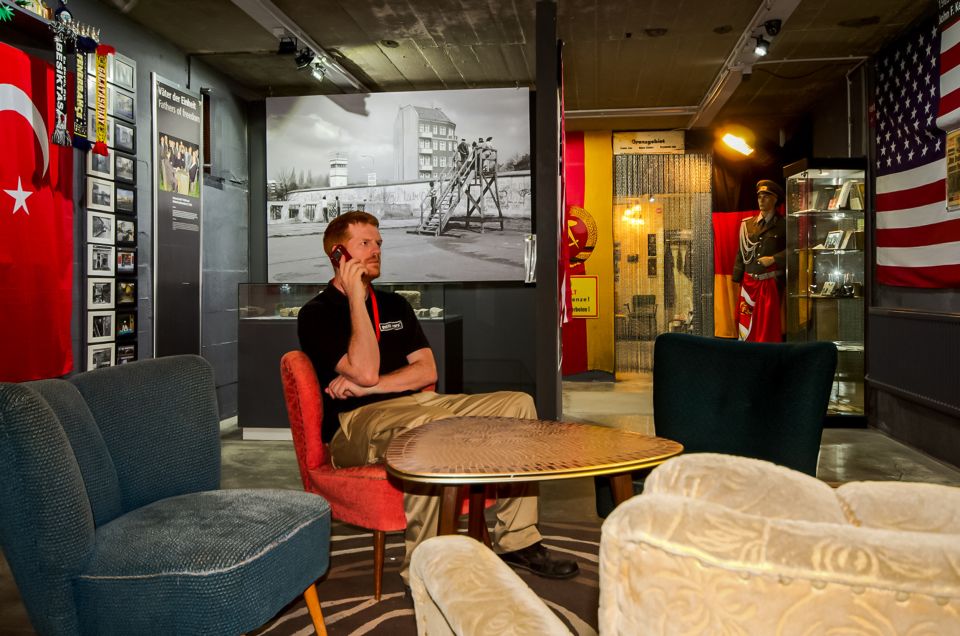
- A real bunker setting that makes the exhibits feel weighty, not just informative
- 50 stations built like a timeline, with photos, installations, and short films
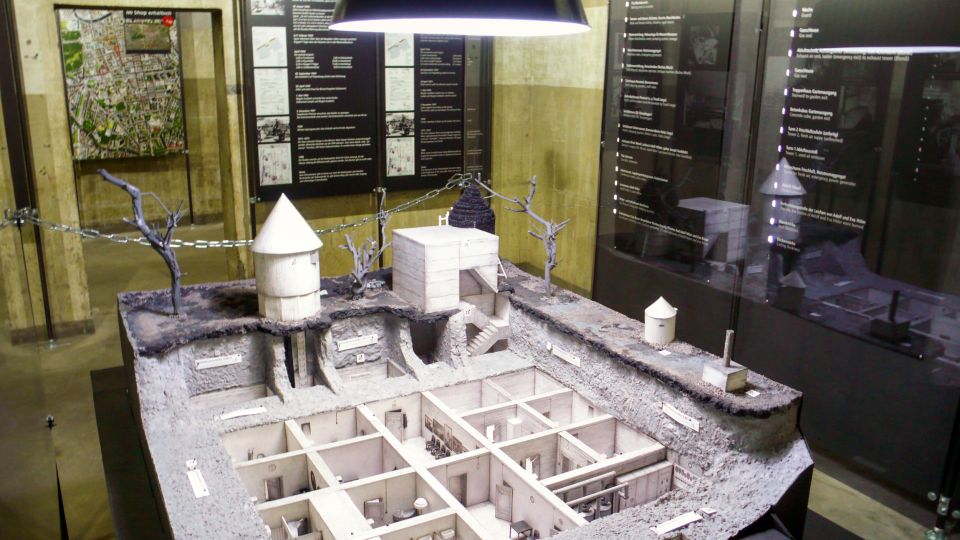
- A full-scale Hitler bunker replica and a model of the Führerbunker area
- Audio guide in many languages, so you can follow the story without crowd pressure
- Rules that limit distractions: no cameras or video recording inside
- Expect a longer visit if you read the boards instead of skimming
Entering The Berlin Story Bunker: Why This Place Works
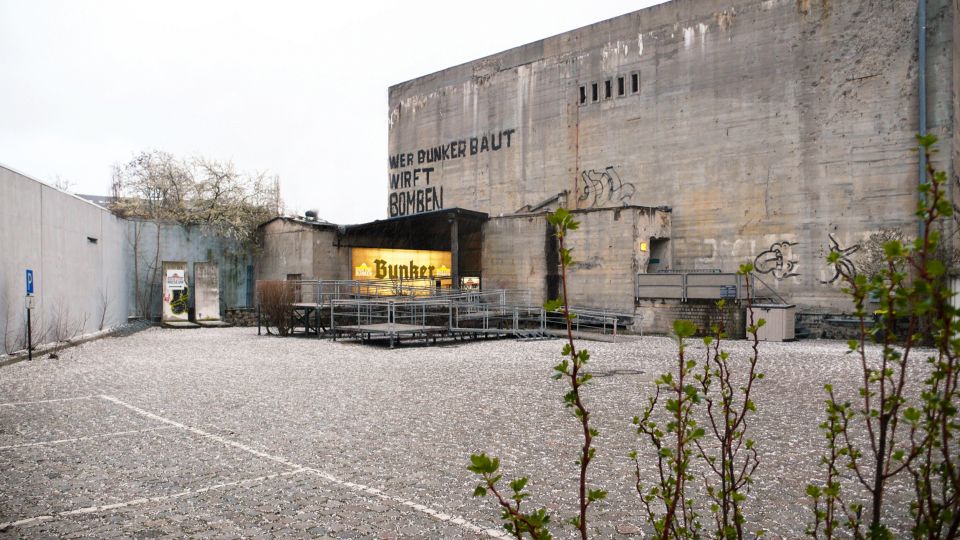
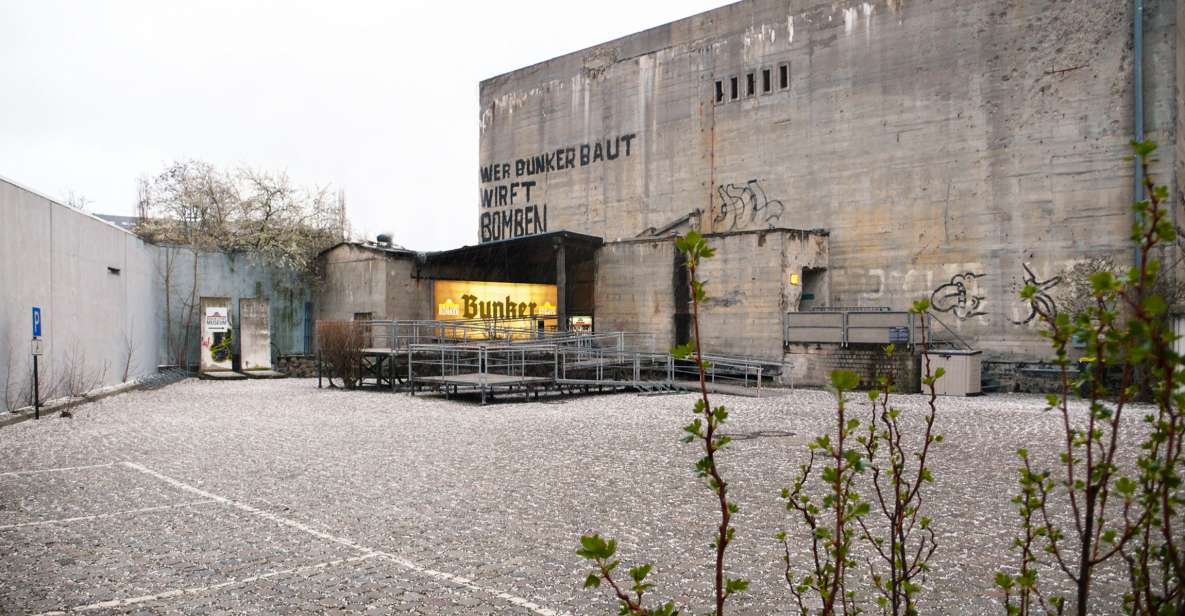
This isn’t your typical “walk-through galleries for an hour” museum. The setting is the point. You’re inside a bunker from the Second World War era, and the exhibition is designed to match that mood—heavy, controlled, and very matter-of-fact about what happened.
The value starts right away. For a ticket around $21, you get an entrance, plus an audio guide with options in multiple languages (including English, German, French, Spanish, Italian, and more). That combo matters because the museum is packed with information. If you try to read everything without guidance, you’ll still learn—but the audio keeps you oriented.
And because the exhibits are laid out in a timeline format, you don’t just get random facts. You get context: how a city becomes a center of power, and how the Nazis used that power to crush human rights. It’s also paired with an 800-year sweep of Berlin history through stations, photographs, and film sequences, so you can connect the “Berlin story” to the WWII story instead of treating them like separate chapters.
You can also read our reviews of more tours and experiences in Berlin


Your Self-Paced Route: From Imperial Times to the Wall
The museum is built as a guided path through history, but you control your speed. The audio guide tells the story in sequence, and the rooms guide you visually through the themes.
Here’s the arc you’ll follow:
- Early history and the buildup of power
- Hitler’s rise and the mechanisms of propaganda and terror
- Berlin as a power center during the Nazi era
- The end of the war and the aftermath
- The long view that brings you toward the fall of the Berlin Wall
The museum uses multiple installations and lots of text panels. That’s good news if you like to read—people with a habit of absorbing details usually end up spending longer than planned. One of the most useful parts is that you’re not just shown “WWII stuff.” You’re given the Berlin context: the city’s role, the choices made there, and how power concentrated in one place affected real lives.
If you prefer short stops, you can still do it. But you’ll feel rushed by the sheer amount of information unless you commit to a slower pace.
The Audio Guide in 10+ Languages: How It Helps You Stay Oriented
The audio guide is included with your entry. The museum lists a long set of language options (English, German, Spanish, French, Italian, Danish, Dutch, Russian, Hebrew, Portuguese, and Ukrainian).
In practice, that’s the difference between “I walked through” and “I understood what I was seeing.” The audio doesn’t replace the boards. Instead, it stitches the exhibits into a narrative so you don’t miss the big connections between rooms.
A small practical tip: some visitors noted that the device controls can act a bit odd when you press number buttons (jumping ahead). If that happens to you, use the device’s next-step control to move through sections in order. That keeps you from getting lost in the middle of a timeline.
Also, plan to use the audio in short stretches: listen, then stop and read the panel right next to you. If you try to do both at full speed, you’ll either miss the story or miss the details.
The Exhibit Focus: Hitler’s Rise, the Nazi Reign, and Berlin’s Power
The exhibition centers on the Nazi period and Hitler’s rise to power. It doesn’t treat WWII as a distant event with simple villains and heroes. It explains how Hitler gained control and how the regime operated through terror.
What I find especially valuable is the “cause and effect” feeling. The museum is telling you how you get from political movement to state-driven cruelty. That helps you connect what you already know from textbooks to the actual mechanisms the exhibit shows: propaganda, power structures, and how Berlin fits into that story.
You’ll also come across a lot of photos and short film sequences. Some images can be graphic. The museum doesn’t hide the truth, and that’s exactly why it’s so effective. If you come expecting a sanitized version of history, you’ll be disappointed. If you come ready for an honest account, it lands.
There’s also a respectful tone throughout. It’s factual, not sensational, which matters in a subject this difficult.
Inside the Bunker Floors: The Führerbunker Replica and Real-Feeling Space
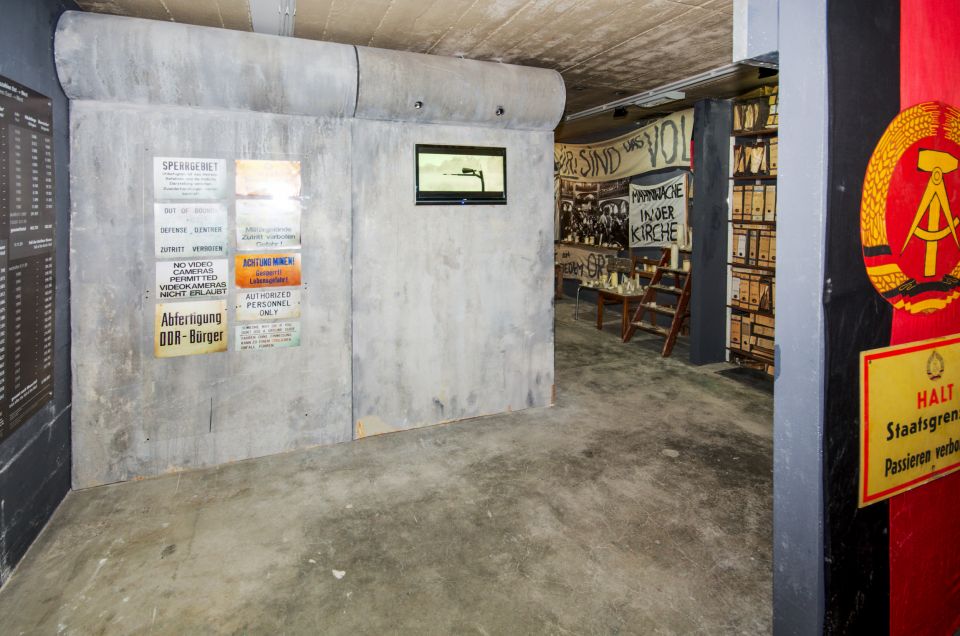
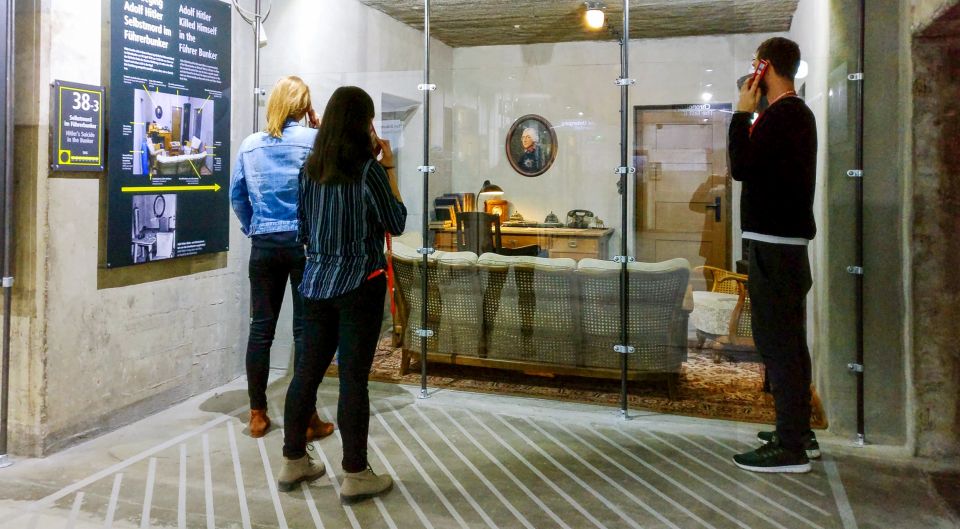
One reason this ticket stands out is the way it uses physical space. The lower level includes a full-scale replication of Hitler’s bunker. There’s also a model of the Führerbunker, so you can grasp layout and scale instead of just imagining rooms from old photos.
Even if you know the history, the replica changes the experience. It’s one thing to read about power and secrecy. It’s another to walk through spaces designed to isolate, control, and protect a person at the center of a violent regime. The room scale makes the story feel closer to reality, which is precisely the point.
There’s also conserved material on the floor above the bunker. One visitor noted that parts of that upper area are preserved in their original state from the 1940s. That kind of preserved atmosphere gives you a direct time link—like stepping into the setting rather than only viewing it through screens.
If you’re sensitive to claustrophobic spaces, take it seriously. The bunker environment can feel enclosed to some people, and it’s also reported to be warm inside. At the same time, the museum includes fans and rooms can be fairly large. My advice: bring water, take breaks when you need them, and don’t force pace.





Reading vs. Moving: How to Pace the 50 Stations
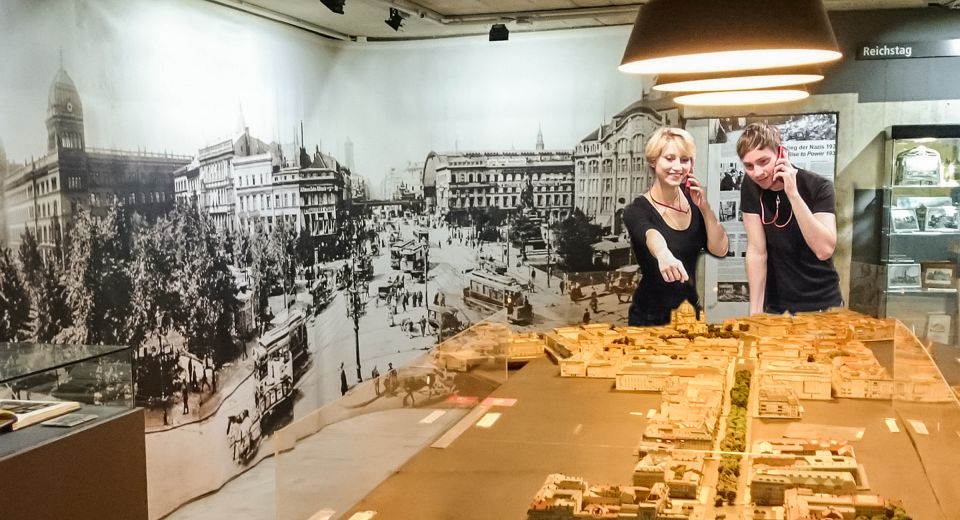
The museum’s design encourages staying with each station long enough to absorb what’s there. Boards include photos, timeline text, and short film components. You’ll see a lot of installations, and the information load is real.
This is where you’ll decide what kind of visitor you are:
- If you like reading, plan a longer visit. Many people report 3 to 5 hours when they actually read the boards and take their time.
- If you skim, you can probably do less—but you’ll lose the point of a timeline built to connect details.
One practical reality: signage can feel light in places, so you may want to rely on the audio guide to keep you moving confidently through the sections. Sitting areas also help. A few reviews noted chairs are available so you can stop, read, and listen more comfortably.
Don’t forget the “human factors” either. This is a lot of standing, walking, and stairs. Comfortable shoes are not optional if you want to enjoy the visit instead of surviving it.
Location Near Anhalter Bahnhof and Potsdamer Platz: Getting There Easily
The Berlin Story Bunker is near Anhalter Bahnhof and Potsdamer Platz, which is handy for combining it with other Berlin history stops.
Your meeting point is the ticket office at Schöneberger Str. 23a, 10963 Berlin. The ticket also includes skip-the-line entry, which helps when you’re on a tight schedule.
If you’re building a day plan, give yourself time before and after. The museum’s last entrance is listed as 5:30 PM, and the visit can easily run long if you’re reading. One visitor noted the museum can close around 7 PM, so treat the late afternoon like the last “real” window, not a suggestion.
Practical Rules: No Photos, No Pets, and Bring Comfort
Before you go, memorize these basics so you don’t get stuck at the door:
- No cameras inside
- No video recording
- No photography
- No pets
The camera-free rule actually makes the experience better for a museum with this kind of content. You can focus on reading and audio instead of recording everything for later. Still, if you want souvenirs, plan on taking notes instead.
What to bring:
- Comfortable shoes (lots of walking, standing, and stairs)
- Water
- Something light to snack if you tend to get hungry while reading
On-site, there’s a café and toilets, which is a real comfort if you’re going for the full story.
Also plan for warmth. More than one visitor mentioned it can get warm inside. Fans help, but you’ll still feel the bunker environment.
Value Check: Is a $21 Ticket a Good Deal Here?
For about $21, you’re getting more than entry to a room. You’re getting:
- A structured exhibition that uses photos, film sequences, and stations
- A built-in narration tool (the audio guide)
- Access to the space itself, including the bunker replica and preserved areas
This museum is heavy on information. That’s why the price feels fair: you’re paying for a lot of interpretation and a lot of exhibit content in one stop.
If your Berlin priorities are quick hits—just a photo and a short stop—then any museum can feel “expensive per hour.” But if you like learning and you’re willing to spend real time, this is one of the better values in central Berlin history options.
Who This Experience Suits Best
This ticket is best for people who want an organized, factual story of WWII-era Nazism and Berlin’s role in that period.
It also tends to fit:
- Adults who like history that explains how things worked, not just what happened
- Families with older kids who can handle serious topics (a visitor mentioned bringing an 11-year-old who found it understandable)
- Anyone who prefers self-paced learning with audio support
It may be tough for:
- People with mobility impairments. The museum is listed as not suitable for mobility issues.
- Anyone who hates long reading sessions or needs constant short breaks.
Should You Book the Berlin Story Bunker Entry Ticket?
Book it if you want a structured, audio-supported way to understand Hitler, Nazi rule, and Berlin’s power role in WWII, all inside a real bunker-style setting. The Führerbunker replica and timeline approach make it more than a standard museum stop.
Skip it if you’re looking for something quick, photo-heavy, or low-stress. The camera-free rules, lots of stairs, and the sheer amount of text mean you’ll need comfort and time.
If you’re on the fence, think of it like this: this is a “spend a chunk of your day learning” attraction. Give it the time, and it pays you back with clarity.
FAQ
What languages are available for the audio guide?
The audio guide is offered in a long list of languages, including English, German, Spanish, French, Italian, Danish, Dutch, Russian, Hebrew, Portuguese, and Ukrainian.
What are the last entry times?
The last entrance is listed as 5:30 PM.
Can I take photos or videos inside the museum?
No. Cameras and video recording are not allowed, and photography inside is prohibited.
Where do I meet for the Berlin Story Bunker ticket?
Meet at the ticket office of the Berlin Story Bunker at Schöneberger Str. 23a, 10963 Berlin.
How long should I plan to spend there?
Plan for at least a couple of hours. Many people report spending around 3 to 5 hours, depending on how much you read and listen.
Is the museum suitable for mobility impairments?
No. The activity is listed as not suitable for people with mobility impairments.