REVIEW · BERLIN
Private Walking Tour Berlin 3 hours: Brandenburg, Historic Center
Book on Viator →Operated by Private Tour Berlin · Bookable on Viator
Berlin can feel like a puzzle box. This private walking tour helps you make sense of it with 3 hours of custom routes guided by locals.
I especially like that the guide keeps things moving without you having to navigate, and the focus can shift toward the parts you care about most, from WWII and the Cold War to Jewish Berlin. One possible drawback: there are no personal headsets, so you’ll want to stay close to the guide in busier areas.
My other favorite part is the feel of a true private tour: you go at a pace that fits your group, and you can ask for a short food stop for a typical Berlin snack or lunch. You also get plenty of big-picture stops plus lesser-known angles, which is exactly what you want in a big city.
Do plan for some walking. This experience calls for moderate physical fitness and it runs in all weather, so dress for cold, rain, or wind.
In This Review
- Key points before you go
- How a Berlin private walking tour saves you from map stress
- 3 hours in Berlin’s historic center: what your guide will aim to show you
- Checkpoint Charlie and the feeling of the border in the center
- Gendarmenmarkt: a classic square with domes that signal power
- Alexanderplatz and the East-Germany meeting point
- Museumsinsel: why an island matters in a city of institutions
- Unter den Linden: Berlin’s grand boulevard and the politics in the streets
- WWII to the Cold War: the stops that carry the heaviest weight
- The former site of Adolf Hitler’s bunker: a place where history still presses in
- East Side Gallery and original remnants of the Berlin Wall
- Potsdamer Platz: from division to modern Berlin geometry
- Jewish heritage and the Holocaust Memorial: how to make this visit meaningful
- Power, parliaments, and architecture: Prussia to Germany today
- Reichstagsgebäude: from imperial parliament to Germany’s parliament
- Brandenburger Tor: the landmark that became a symbol for everything
- Kaiser-Wilhelm-Gedächtniskirche and Kurfürstendamm: old West energy
- Logistics that actually matter: pace, pickup, and weather
- Price and value: what $392.19 per group really means
- Who should book this private tour (and who might skip it)
- Should you book this Berlin private walking tour?
- FAQ
- How long is the Private Walking Tour Berlin 3 hours: Brandenburg, Historic Center?
- How big is the group for this tour?
- Is the tour offered in English?
- Is a mobile ticket provided?
- Can the tour focus on specific themes like WWII, the Cold War, or Jewish heritage?
- Is food included in the price?
- Are headsets provided during the walking tour?
- Does the tour run in bad weather?
- Can pickup be arranged from my hotel or train station?
Key points before you go
- Private group up to 15 means you can actually shape the route to your interests
- Mobile ticket and English-speaking local guides from the Berlin Guides Association
- Major Berlin landmarks plus lesser-seen spots, not just the easiest photo stops
- Flexible themes you can steer toward WWII, the Cold War, the Berlin Wall, Prussian history, or Jewish heritage
- No headsets on the street, so you’ll need to listen up and stay near the guide
How a Berlin private walking tour saves you from map stress
Berlin is huge, and the sites you’re excited about are spread out. A private guide matters because you’re not trying to stitch together directions while also trying to understand what you’re seeing. You get the route choices and the pacing in real time, which is a big deal when your time window is only a few hours.
I also like that this tour is built around control. Your guide can focus the walk toward WWII and the Third Reich, the Cold War and the Berlin Wall, Prussian-era history, or Berlin’s Jewish heritage. That flexibility helps you feel like you’re getting your Berlin, not a generic checklist.
Finally, you can ask for small, practical extras. A typical Berlin snack or lunch stop can be added on request, which helps when you want a break without turning the tour into a long day.
You can also read our reviews of more walking tours in Berlin


3 hours in Berlin’s historic center: what your guide will aim to show you
Your route is customizable, but you can expect time at or around some of Berlin’s most recognizable center-city anchors. The guide’s job is to connect them into a story you can actually remember, not just a series of monuments.
Here are the big stops you can plan around, depending on your interests and how your guide groups them:
Checkpoint Charlie and the feeling of the border in the center
Checkpoint Charlie is the border crossing everyone recognizes, and it’s a powerful way to start thinking in timelines. The point isn’t only the location—it’s what a crossing represented when Berlin was split and movement was controlled.
If you’re the type who loves context, you’ll appreciate how the guide can frame this stop in relation to the Berlin Wall era and the larger Cold War picture. It’s also a convenient anchor point for orienting yourself for the rest of your stay.
Gendarmenmarkt: a classic square with domes that signal power
Gendarmenmarkt is one of Berlin’s showpiece squares, and it works well because it’s architectural. You’ll see the baroque-style setting with the French and German domes, and that balance of grandeur and symmetry gives you something visual to hold onto while the guide talks history.
This stop is a good reminder that Berlin isn’t only WWII and division. It’s also a city that built, planned, and competed with itself for cultural and political presence.
Alexanderplatz and the East-Germany meeting point
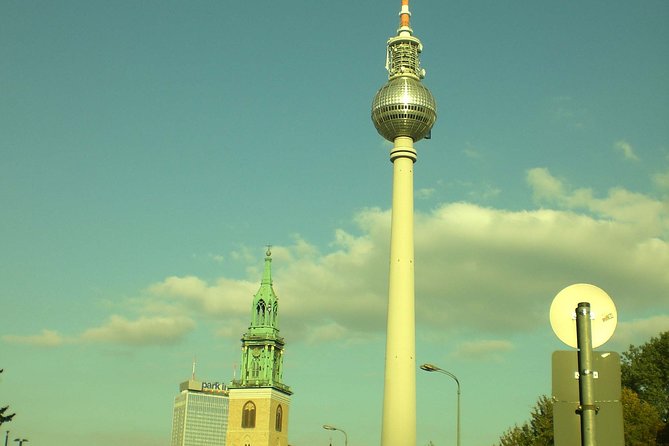
Alexanderplatz is a central meeting point today, and it carried that role in East Germany too. The famous TV Tower makes it instantly recognizable, but the guide’s value is in explaining what made this area important beyond the skyline view.
This is where your Berlin story often turns from monuments into daily life. When you understand why people gathered here, the Cold War setting feels less abstract.
You can also read our reviews of more private tours in Berlin


Museumsinsel: why an island matters in a city of institutions
Museumsinsel is an island in the middle of Berlin, lined with standout museums. Even if you don’t go inside during a short walking tour, you’ll still get the sense of Berlin building cultural authority in a concentrated space.
The guide can also help you decide what kind of museum day you might want later, based on what you like (art, history, or science).
Unter den Linden: Berlin’s grand boulevard and the politics in the streets
Under the Lime Trees, as the name suggests, is one of Europe’s famous boulevard-style city promenades. It’s the kind of street where you can feel eras stacking up: buildings, institutions, and the way the city organizes movement.
A good guide turns this into more than a walk. You get a sense of why these lines of sight mattered politically and how Berlin’s major powers wanted to be seen.
WWII to the Cold War: the stops that carry the heaviest weight
Some parts of Berlin hit harder than others. This tour is designed to handle those areas with care and clarity, and your guide can steer how much time you want on particular themes.
The former site of Adolf Hitler’s bunker: a place where history still presses in
You can include the former site of Adolf Hitler’s bunker. Even without a long stop, the guide can explain what happened here and why the location matters in the WWII story.
I like this kind of visit when it’s framed responsibly and kept factual. You don’t need extra drama—you need understanding.
East Side Gallery and original remnants of the Berlin Wall
The East Side Gallery is where the Wall becomes art, through painted sections that people visit for both meaning and craft. It’s also a reminder that the Wall wasn’t just a barrier; it shaped lives, families, and movement for decades.
In addition, you can see original remnants of the Berlin Wall. Those fragments bring the story down to scale, and they help you grasp what it meant to be trapped next to a physical line.
Potsdamer Platz: from division to modern Berlin geometry
Potsdamer Platz is one of Berlin’s newer centers, known for modern architecture. It’s a smart stop after Wall-era sites because it shows what came next: rebuilding, reshaping, and re-centering.
This is a useful contrast moment. It helps you leave the heavy parts with a sense of what changed afterward.
Jewish heritage and the Holocaust Memorial: how to make this visit meaningful
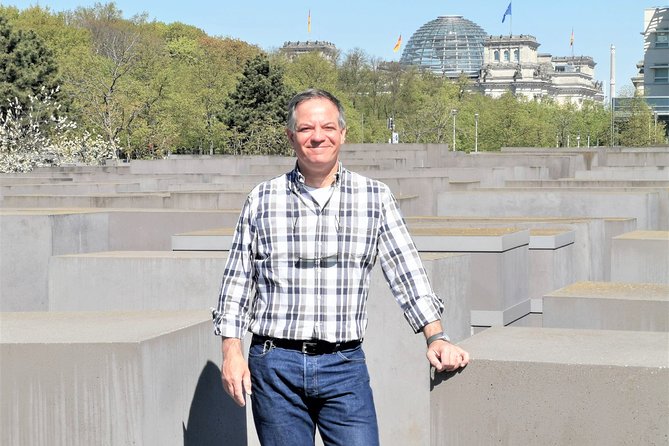
If Jewish Berlin and WWII history are high on your list, the tour can focus strongly here. You’ll have the option to include the Holocaust Mahnmal, the Memorial to the Murdered Jews of Europe.
This stop matters because it forces attention. The guide’s job is to set context so you understand what the memorial represents, and how to navigate it thoughtfully during a busy city walk.
I also like that the tour can shift toward Jewish heritage as a theme, not only tragedy. That approach is important if you want the full picture of community, culture, and history.
Power, parliaments, and architecture: Prussia to Germany today
Berlin loves a good building story. When the tour leans into Prussian history and political landmarks, you’ll see how architecture reflects authority.
Reichstagsgebäude: from imperial parliament to Germany’s parliament
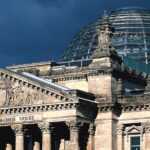
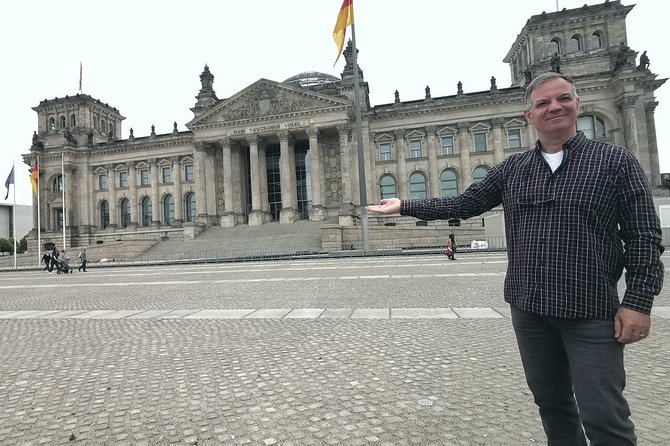
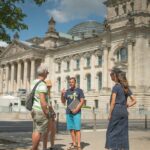
The Reichstag building is the former Emperors Parliament and today it’s Germany’s Parliament. Even if you don’t go inside, the guide can explain how the site symbolizes shifts in German political life.
This stop works best when you’re paying attention to both form and function. You’ll start seeing Berlin as a city that uses architecture to declare identity.
Brandenburger Tor: the landmark that became a symbol for everything
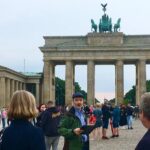
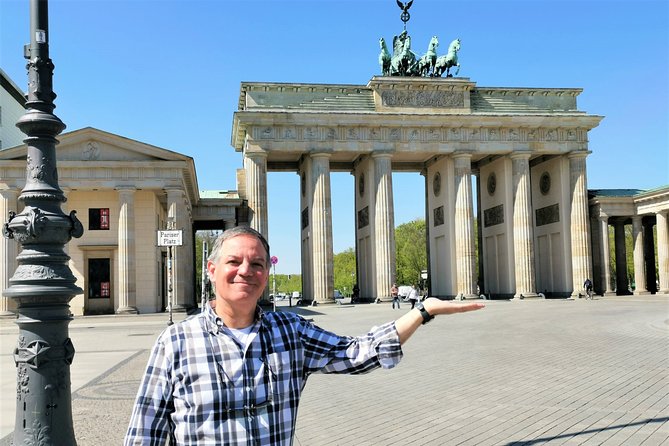
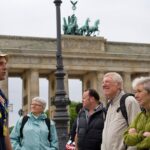
The Brandenburg Gate is earlier city gateway turned into Berlin’s main landmark. It’s the kind of place you think you know from photos, but in person it carries the weight of how many times Berlin reinvented itself.
It’s also a natural “breather” stop in the route—everyone can stand back, look up, and reset before the next part of the story.
Kaiser-Wilhelm-Gedächtniskirche and Kurfürstendamm: old West energy
The Emperor William Memorial Church is another recognizable stop tied to Berlin’s layered past. Along with Kurfürstendamm, the famous shopping street in former West Berlin, you get a sense of everyday city life and the feel of West-era energy.
Kurfürstendamm is useful because it helps you visualize where people shopped, met, and spent time. That’s part of how Berlin becomes real, not just historical.
Logistics that actually matter: pace, pickup, and weather
This tour runs in all weather conditions, so you’ll want to dress for rain, wind, or cold. You’re walking, and your experience depends on comfortable shoes and layers.
The guide is flexible with pickup too. On request, you can arrange pickup from the airport, train station, or hotel, and potentially from other places in Berlin. That can save you stress on arrival day.
Duration is about 3 hours, and confirmation happens at booking time. If you want to extend, you can—on request, the tour may be lengthened as long as you’d like.
One practical note: there are no personal headsets used when you’re with the guide on the street. If you’re in a noisy area, you might have to step closer or pay extra attention.
Price and value: what $392.19 per group really means
The price is listed as $392.19 per group, up to 15 people, for roughly 3 hours. That pricing structure is one reason this can be good value: you’re not paying per person.
If you fill the group limit, the cost per person drops a lot. If it’s just a smaller group, it costs more per person, but you still gain the benefit of private routing, flexible focus, and a guide who handles the logic.
When I’m deciding on a walking tour in a city like Berlin, I focus on time and friction. A guided route reduces the cost of confusion. You spend your time looking at the sites instead of figuring out connections between neighborhoods.
Also, the guide being a local expert and an English speaker from the Berlin Guides Association is a real value signal. It usually translates into smoother pacing and clearer explanations, especially when the conversation is heavy and needs to stay accurate.
Who should book this private tour (and who might skip it)
This tour fits best if you want Berlin’s major landmarks but also want understanding, not just photos. It’s ideal for first-time visitors who want orientation fast, and for return visitors who want a sharper theme—WWII, the Cold War, Prussian history, or Jewish heritage.
It’s also a strong choice if you’re traveling with a mixed group—people with different interests—because your guide can adjust. That flexibility is hard to get on standard group tours.
Skip it if you want a totally unguided day, or if you dislike walking for a few hours in variable weather. Also, if hearing is a challenge for you in crowded settings, the lack of headsets is a point to consider.
Should you book this Berlin private walking tour?
Yes, if you want a structured, flexible Berlin walk with a guide who can shape the topic and pacing. It’s a good way to cover major center-city sights like Checkpoint Charlie, Brandenburg Gate, Unter den Linden, and more, while still having the option to focus on heavier themes like the Berlin Wall and the Holocaust Memorial.
I’d especially recommend it if you appreciate explanations tied to real locations. That’s how Berlin becomes understandable quickly.
If you’re more of a DIY explorer and you’re comfortable navigating big city blocks on your own, you might get by without a guide. But if you want to reduce stress and sharpen your understanding in just 3 hours, this is the kind of private tour that does real work for your trip.
FAQ
How long is the Private Walking Tour Berlin 3 hours: Brandenburg, Historic Center?
It runs for about 3 hours.
How big is the group for this tour?
It’s private, and the group size can be up to 15 people.
Is the tour offered in English?
Yes, the tour is offered in English.
Is a mobile ticket provided?
Yes, a mobile ticket is included.
Can the tour focus on specific themes like WWII, the Cold War, or Jewish heritage?
Yes. Your guide can be flexible and focus the tour on subjects such as the Third Reich, WWII, the Cold War, the Berlin Wall, Prussian history, or Berlin’s Jewish heritage.
Is food included in the price?
No. Food and drinks are not included.
Are headsets provided during the walking tour?
No. Personal headsets are not used when you are with the guide on the street.
Does the tour run in bad weather?
Yes. It operates in all weather conditions, so you should dress appropriately.
Can pickup be arranged from my hotel or train station?
On request, pickup can be arranged from the airport, train station, hotel, or any other place in Berlin.