REVIEW · BERLIN
Berlin Uncensored: A History of Sex & Freedom
Book on Viator →Operated by BerlinGuide.de · Bookable on Viator
Sex in Berlin came with rules—and consequences.
This tour connects sex & freedom to real places you can still stand in, from 19th-century nudism to Nazi crackdowns and postwar life. Led by Jeff, a sociologist and certified sex educator, it’s built for questions, not silence.
I really like two things here: first, the guide’s approach—Jeff explains sex and politics in plain language, while keeping the tone respectful and trauma-informed. Second, the AR and 200+ archival materials help you see how ideas, laws, and communities changed over time, instead of just hearing dates and names.
One consideration: this isn’t a party-only story. You’ll hear about persecution, policing, and violence aimed at LGBTQIA+ people, so if that topic is hard for you, go in with eyes open. Also, the AR is helpful when it matches the moment, but it can feel a bit extra at times.
In This Review
- Key points worth knowing before you go
- Nollendorfplatz: nudism (FKK) and the idea of body freedom
- Magnus-Apotheke: Hirschfeld’s Institute and the science that was attacked
- The Monument to Homosexuals Persecuted: when ideology becomes punishment
- Kurfürstenstraße and Schwerinstraße 9: prostitution, kink, and lesbian subcultures
- Christopher Isherwood’s Berlin: art, gossip, and permission to be oneself
- Denns BioMarkt and the Eldorado Club: drag, glamour, and danger
- East and West Berlin at the memorial: sexuality behind and through the Wall
- Back at Nollendorfplatz: Berlin’s modern sex-positive nightlife map
- What you’re paying for: value beyond the walking part
- How to make the tour work for you (and feel respectful)
- Should you book Berlin Uncensored: A History of Sex & Freedom?
- FAQ
- What is the duration of the tour?
- What language is the tour offered in?
- How large is the group?
- Is there a minimum age?
- Is the tour suitable if I want to ask questions?
- Do I need to pay admission fees at the stops?
- What’s included in the price?
- Is food or coffee included?
- What happens if the weather is bad?
Key points worth knowing before you go

- Jeff is both a sociologist and a certified sex educator, so the talk has structure, context, and real answers
- Small group size (max 10) means you actually get room to ask questions
- AR, Mixies photos, and 200+ archival images/videos turn a walking tour into a memory you can revisit
- The route spans nudism, sex science, LGBTQ memorials, and nightlife without skipping the heavy parts
- Stop-by-stop free admission tickets for the listed sights keeps the experience simple
- It blends history with modern sex-positive Berlin tips, so it lands in the present, not the past
Nollendorfplatz: nudism (FKK) and the idea of body freedom

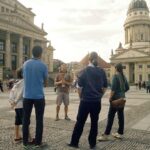
The tour kicks off at Nollendorfplatz with a concept Berlin is still famous for: FKK nudism. You’ll hear how a movement that promoted body freedom formed over time, and why nudism became part of daily life for many people in lakes and parks.
What I like about starting here is the logic. Instead of treating “sex” as taboo or shock value, the tour shows it as a social issue—how people push for bodily autonomy, how rules form, and how culture sticks around even after governments change.
Expect an easy-to-follow opening: Jeff frames the “why” behind what you’re seeing, then connects it to what comes later. If you’re worried the tour will jump around, this first stop gives you the spine of the whole story.
You can also read our reviews of more historical tours in Berlin
Magnus-Apotheke: Hirschfeld’s Institute and the science that was attacked

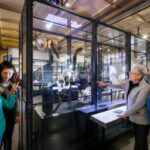
Next comes the Magnus-Apotheke stop, where Berlin’s role in modern sexology takes center stage. Berlin hosted the world’s first Institute for Sexual Science, associated with Magnus Hirschfeld, and the tour covers groundbreaking work on desire, relationships, contraception, and gender identity.
You’ll also hear about specific inventions and research themes that made sex education more practical. One example mentioned is the invention of the rubber condom, plus early work that relates to Viagra precursors and advances in sexual health.
Then the story turns dark, fast: the Nazis destroyed the institute in 1933 because they saw the research as a threat. The tour points to how erased archives can mean erased futures, and it names people linked to early gender affirmation surgeries, including Dora Richter, Lili Elbe, and Karl M. Baer.
This stop matters because it shows a pattern. Berlin wasn’t just “loose” socially; it was experimenting with science and rights. When power shifted, that work didn’t get debated—it got crushed.
The Monument to Homosexuals Persecuted: when ideology becomes punishment

At the Monument to Homosexuals Persecuted Under National Socialist Regime, the tour focuses on how Nazi rule targeted sexual diversity. You learn how censorship expanded beyond language and media, reaching erotic clubs and laws that outlawed different ways of being.
A key name you’ll hear is Ernst Röhm, connected to the Night of the Long Knives. The tour explains that his known homosexuality became part of the persecution narrative, along with attacks on LGBTQIA+ people, sex workers, and those labeled “degenerate.”
The pink triangle symbolism gets covered too—how it marked people sent to concentration camps, and how later it was reclaimed by LGBTQIA+ rights movements. That arc is one of the most meaningful parts of the tour for me, because it’s about recovery as much as it is about tragedy.
Be ready for this segment to feel heavy. It isn’t graphic in what you’ll do, but the subject matter is real, and Jeff keeps the pace careful.
Kurfürstenstraße and Schwerinstraße 9: prostitution, kink, and lesbian subcultures

Moving into Kurfürstenstraße, the tour shifts to pre-Nazi Berlin nightlife and the city’s more visible sex economy. You walk through locations tied to prostitution and to a culture of fetish and kink that existed long before it became a mainstream theme.
This is where Berlin’s reputation starts to feel earned rather than exaggerated. The tour doesn’t frame it as novelty. It frames it as a mix of economic life, identity, and the underground spaces where people found what society wouldn’t provide openly.
Then Schwerinstraße 9 brings in a different thread: a strong early 20th-century lesbian community. You’ll visit points connected to that scene, including Toppkeller, a meeting place for women who defied societal norms.
You’ll also hear how nightlife, music, and identity overlapped. The tour brings in Claire Waldoff, a cabaret singer linked to lesbian identity, plus the Lavender Song lyrics as a sign of how culture carried meaning.
And there’s Josephine Baker too—her time in Berlin included both admiration and racial discrimination, and the tour treats that as part of the full context, not a side note. That balance helps you avoid the trap of turning famous names into feel-good history.
If you want a tour that treats LGBTQIA+ nightlife as culture, not caricature, these two stops are a big reason to book.
Christopher Isherwood’s Berlin: art, gossip, and permission to be oneself

At the residential building associated with Christopher Isherwood, you get the literary angle on Berlin’s 1920s and early 1930s atmosphere. The tour describes how Berlin attracted gay men from across Europe, and Isherwood captured that world with memoir writing that later influenced Cabaret.
Standing in an area connected to where he lived and socialized makes the story feel more human. Instead of sex and identity being discussed as abstract “history,” it connects to everyday scenes—people meeting, moving in circles, finding a place to breathe.
This stop is also a reminder of how art can document social change. The tour uses Isherwood not to romanticize everything, but to show what “freedom” looked like on the ground before the Nazi crackdown.
Denns BioMarkt and the Eldorado Club: drag, glamour, and danger

Next is Eldorado Club territory, tied to the nightlife spotlight at Denns BioMarkt. The tour discusses the club as a meeting place for drag performers, sexually open individuals, and even high-ranking Nazi officials before the regime clamped down.
You’ll hear Ernst Röhm mentioned again, now in the context of how early Nazi-era figures could exist in the same nightlife spaces as everyone else. That contrast makes one point very clearly: persecution doesn’t always arrive with a single dramatic moment. It can roll in as power changes, then laws follow.
The tour also shares how a journalist from US magazine Vogue visited Eldorado and named a drag queen the most beautiful woman in Berlin. Even if you don’t care about fashion, this detail helps you understand what people valued and how public attention could land—before it was redirected by ideology.
This stop is fun, but it’s not just fun. The story closes the loop back toward what happens when the city’s openness becomes too risky for the people in charge.
East and West Berlin at the memorial: sexuality behind and through the Wall

After WWII, Berlin split into East and West, and the tour follows that divide at the Internationale Stele GEGEN DAS VERGESSEN. You’ll learn how West Berlin’s sexual revolution encouraged openness toward relationships, pornography, and alternative lifestyles.
In East Berlin, restrictions were real, yet public nudism (FKK) became popular. The tour even mentions how people referred to the Wall as the condom of the GDR, as a bit of cultural commentary on boundaries and separation.
One of the more practical-sounding points here is the Aids crisis angle. The tour explains that a conservative politician helped save thousands of lives during the AIDS crisis, which complicates any simple story about “liberal versus conservative.” History here is messy, and the tour leans into that.
This stop also adds a “why it matters today” layer. When you see how different systems shaped attitudes toward sex, you start to notice the roots of modern Berlin’s tone.
Back at Nollendorfplatz: Berlin’s modern sex-positive nightlife map

The final stretch brings you back to Nollendorfplatz for today’s scene. The tour talks about Berlin as one of the world’s most sexually open cities and points you toward the club culture that keeps evolving.
You’ll hear about Berghain and its strict no-photo policy, plus the KitKat Club, Insomnia, and Lab.Oratory—each described as part of the city’s electronic music and sexual exploration mix. Folsom Europe also gets covered as the largest fetish festival in the world, bringing thousands of visitors to Berlin each year.
What I like is that the tour doesn’t pretend the city is one big party. It gives you a map of different spaces and explains the cultural logic behind them. And because the tour includes insider tips on modern sex-positive nightlife and events, you leave with leads that are more useful than a generic “go clubbing” suggestion.
What you’re paying for: value beyond the walking part
At $82.90 per person for about 3 hours 30 minutes, this is not a cheap “hang out” tour. The value is the package: a professional sociologist and certified sex educator leading the talk, plus AR elements, Mixies personalized photos, and 200+ rare archival materials.
You’re also walking to specific sites tied to the story, and the listed stops note admission ticket free. That matters in Berlin, where small fees can pop up if you’re moving between museums and memorials on your own.
The small group size (max 10) is part of the value too. When you’re allowed to ask questions and the guide actually has time to answer, the tour becomes interactive in a way that feels worth your time.
The only “cost” you take is emotional. Some parts of the route involve persecution and political violence. If you can handle that with a respectful mindset, you’ll likely feel like you got more than your money’s worth.
How to make the tour work for you (and feel respectful)
This experience is best for adults who are curious about how culture, law, and identity connect. The minimum age is 18+, which tells you the tour is meant for mature conversation, not school-field-trip shock.
Go in ready to ask questions. Jeff explicitly allows group questions, and the format stays tight enough that you won’t get brushed off. If you’re bringing a friend, agree ahead of time that you’ll both ask at least one thing. It makes the tour feel personal instead of like a lecture.
Wear comfortable shoes. You’re walking and stopping for short segments throughout the 3.5 hours, so you’ll enjoy it more if your feet don’t revolt halfway through.
And about the AR: it’s designed to add visuals through augmented reality and video-style elements, plus Mixies photos. In practice, use it as a tool, not a distraction. When the explanation matches the visuals, it helps you “see” what you’re hearing.
Should you book Berlin Uncensored: A History of Sex & Freedom?
I’d book it if you want Berlin sex history to be more than gossip or a nightlife checklist. The guide’s background as a sociologist and certified sex educator, the careful way it handles heavy topics, and the combination of archival material + AR + question-friendly pace make it a standout choice for people who like context.
I’d skip it if you want a purely light, party-focused evening, or if you know the Nazi-persecution sections will hit too hard. This tour treats sex as human life shaped by power, and that includes cruelty.
If you want a smart, respectful tour that ends with real options for what to do next in Berlin, this one is a strong match.
FAQ
What is the duration of the tour?
The tour lasts about 3 hours 30 minutes.
What language is the tour offered in?
It’s offered in English.
How large is the group?
The group is limited to a maximum of 10 travelers.
Is there a minimum age?
Yes, the minimum age is 18.
Is the tour suitable if I want to ask questions?
Yes. The experience encourages questions, and the small group size helps make it workable.
Do I need to pay admission fees at the stops?
The listed sights in the route show admission ticket free.
What’s included in the price?
You get a guided walking tour led by a sociologist & certified sex educator, augmented reality elements, Mixies personalized photos with AR effects, 200+ rare historical photos/videos/archival materials, and insider tips on modern sex-positive nightlife and events.
Is food or coffee included?
No. Coffee and/or tea is not included, though you might have a café break during the tour.
What happens if the weather is bad?
If it’s canceled due to extreme weather like heavy rain or storm, you’ll be fully refunded. If it’s canceled because a minimum number of travelers isn’t met, you’ll be offered another date or a full refund.