REVIEW · BERLIN
Welcome/Farewell SightseeingTaxi Tour +Transfer from/to the airport
Book on Viator →Operated by Gunter Bauer GAT-Productions · Bookable on Viator
Berlin in a taxi beats the guesswork. You get airport-to-city (and back) transfer wrapped together with a guided sights loop, so you’re not spending your first or last hours sorting routes. I like the comfortable, air-conditioned ride with WiFi, and I also like how the guide turns big, famous places into quick, understandable stories you can actually use.
One heads-up: with a 1 to 3 hour window, you’ll get stops and photo pauses more than long museum time, and a few places may be drive-past depending on what you care about most.
In This Review
- Key highlights you’ll feel right away
- Airport-to-City Comfort: How this taxi welcome actually helps
- Door-to-door Berlin: The route’s rhythm from Gate to neighborhoods
- Brandenburg Gate and Pariser Platz: Reunification written in stone
- Along Unter den Linden: Linden trees, power, and the street as a story
- Reichstag: When politics becomes architecture (and you can see the room)
- Wall-time Berlin in transit: Why one station mattered
- Memory squares and the Forum Fridericianum feel like a guided map
- Hackescher Höfe and the “small-town inside big-city Berlin” moment
- Alexanderplatz and Red City Hall: Socialist planning meets old governance
- Nikolai Church area and the Spree lock: Old Berlin that feels real
- Hausvogteiplatz and the Jewish clothing district: A quieter, overlooked story
- Holocaust memorial and the ministerial gardens walk: Hard, focused, useful
- Potsdamer Platz area: From death strip to entertainment quarter
- Humboldt Forum and Berlin Cathedral areas: big views, not big stress
- Price and time: What $171.52 gets you (and what it doesn’t)
- Who should book this taxi tour?
- Should you book this Welcome/Farewell Taxi Tour?
- FAQ
- Is this tour available in English?
- How long is the taxi sightseeing portion?
- Does the price include airport transfer?
- Where do you pick you up for the welcome part?
- Where do you pick you up for the farewell part?
- What’s included in the ride?
- Is WiFi available in the taxi?
- Are snacks included?
- Can families and groups participate?
- Is there help for strollers, baby seats, or service animals?
- Can I cancel for a full refund?
Key highlights you’ll feel right away
- Airport transfer included both ways (BER) so the day stays easy
- Private-group format so you’re not sharing your questions with strangers
- Photo-friendly pacing at major landmarks, not a rushed blur
- English-speaking guide who explains what you’re looking at while you’re looking at it
- A focused blend of Cold War and royal-era Berlin across central neighborhoods
- Door-to-door pickup options from your hotel or apartment for the farewell part
Airport-to-City Comfort: How this taxi welcome actually helps

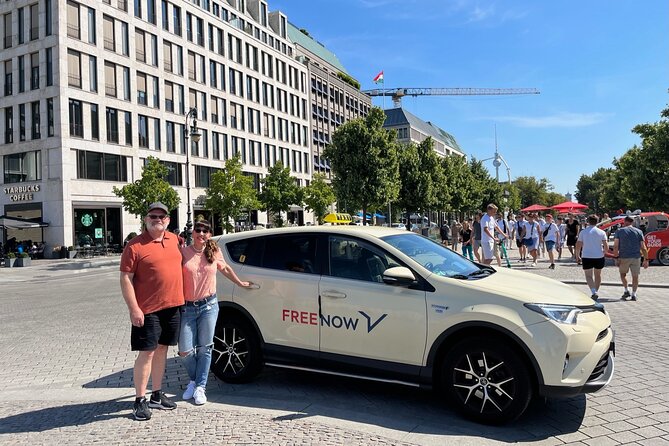
This isn’t just a transfer with a quick wave at the sights. The format is a taxi ride that doubles as orientation, with an English-speaking guide in the car and a route built around key central landmarks. You’re picked up from where you are—hotel or apartment for the farewell side, and BER airport for the welcome side.
What I like from a practical point of view is how much mental energy it saves. After a flight, you don’t want to figure out which train goes where, then shuffle suitcases across platforms, then guess which direction “Unter den Linden” is from your lodging. Here, you get picked up, driven, and told what the scene means as you pass it.
There’s also a small but real convenience built in: WiFi on board and parking fees included. It’s the little stuff that keeps you from feeling like the city is making you do chores.
You can also read our reviews of more tours and experiences in Berlin



Door-to-door Berlin: The route’s rhythm from Gate to neighborhoods
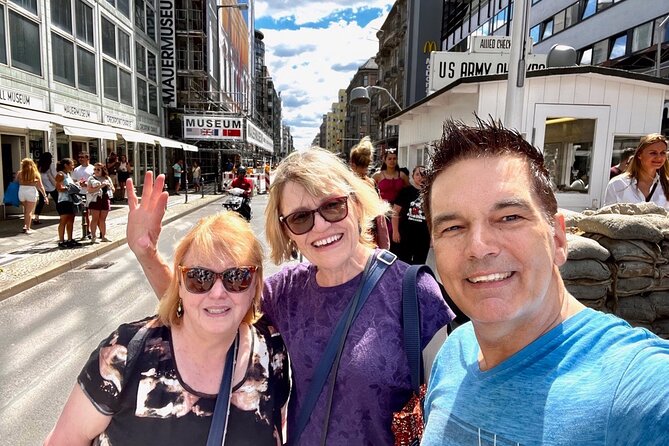
The experience is designed as a sights loop with a steady rhythm: famous monuments, then the political landmarks that explain how Berlin became Berlin, then the older town layers you can still feel in small spaces. Even when you’re not walking long distances, you still get the “read” of each place.
You’ll notice a theme: Berlin is a city where power and identity are written in buildings. The guide points out what each structure used to do, what it was forced to endure, and what it represents now—especially around the reunited city center. That makes later self-guided exploring easier, because you’re not collecting random photos. You’re collecting context.
Also, the tour is private—just your group—so the pacing can fit you. If you’re the type who wants more time outside the Reichstag dome area versus more time on quieter squares and side streets, the route can flex. The only limitation is time.
Brandenburg Gate and Pariser Platz: Reunification written in stone
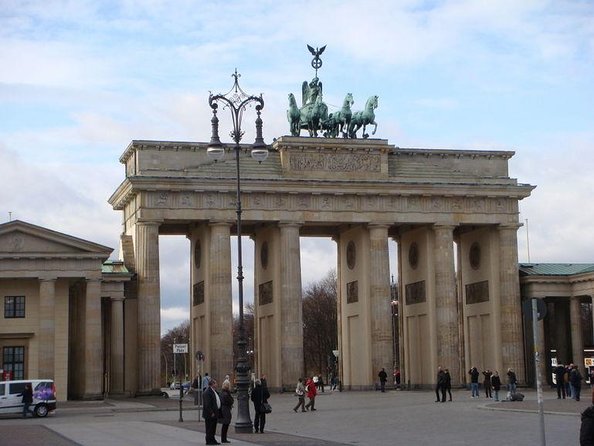
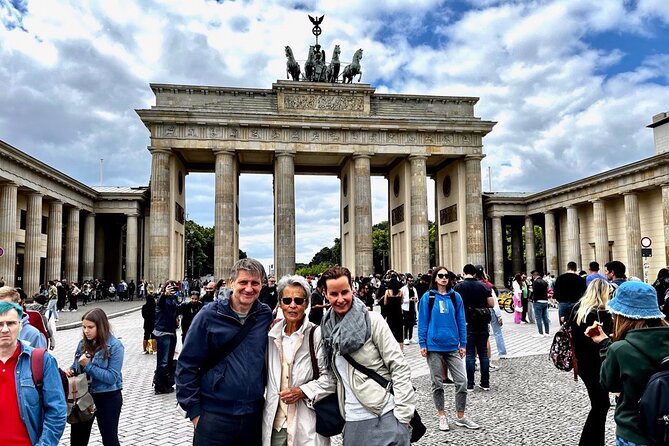
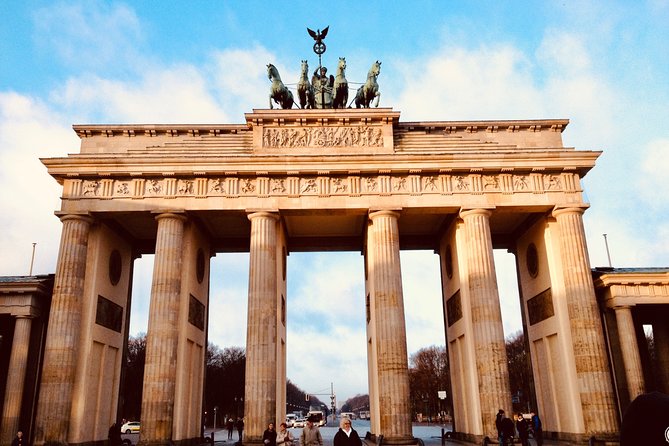
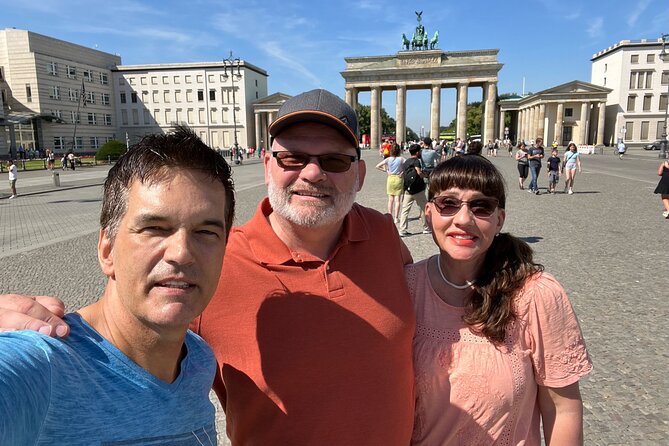
You start with the Brandenburg Gate, the big visual anchor that somehow still feels like a turning point even after you’ve seen it in a thousand photos. The guide’s explanation matters here: the gate isn’t just a postcard. It’s a monument with shifting meanings tied to who held power and what they wanted to project.
You’ll hear how the gate’s story got redirected during the Napoleonic era, including the infamous four-horse quadriga cart and its movement to Paris, then the return triumphal procession. Then the focus shifts to the modern age: when Berlin was divided, the gate stood isolated—separated by walls, fences, and barriers—and it wasn’t really accessible from the west the way it is today.
Then you move into Pariser Platz, the “good room” feel of central Berlin. The tour frames why this square looks so curated now: war damage and postwar demolition removed much of what once stood around it, leaving the Brandenburg Gate as the main survivor. After the Wall fell, rebuilding choices brought back the block pattern but in a more modern way.
On Pariser Platz itself, you’ll also get the Cold War scale of architecture—Soviet-era foreign representation built to show dominance from the center of Berlin. It’s the kind of building you can’t understand purely by looking at it. The guide’s context gives you the key.
Along Unter den Linden: Linden trees, power, and the street as a story
From Pariser Platz you head into the broad historic spine of Berlin: Unter den Linden. This boulevard started as a kind of organized hunting path idea, then grew into a grand avenue as the city expanded. The guide ties it to who lived near it and what that says about Berlin’s changing centers of gravity.
One detail I’d actually remember for later walking: the street tree debate. The boulevard was planted with linden trees, not walnut—at least in the final outcome you see today. It’s a tiny story, but it adds texture when you’re actually outside and looking at rows of trees and facades.
The avenue is lined with major civic buildings—things like the State Library and the Humboldt University area, plus the opera—so it’s a natural route for understanding how education, culture, and government sit together in Berlin’s layout. If you plan to walk the city on your own later, this is where you learn where the big “gravity wells” are.
Reichstag: When politics becomes architecture (and you can see the room)
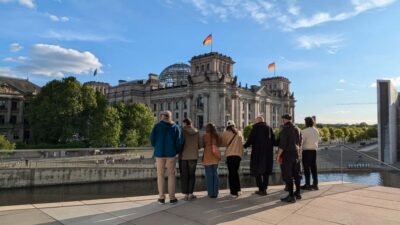
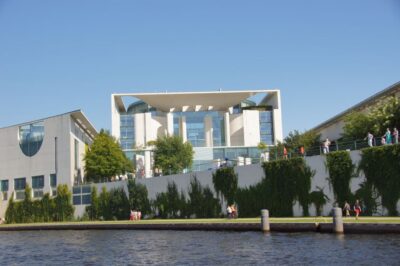
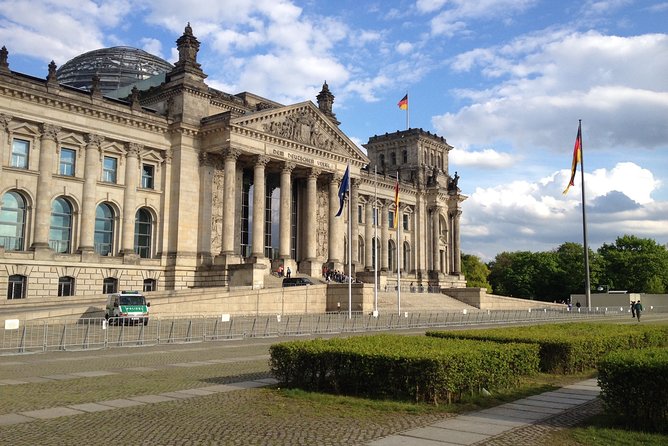
The tour pays special attention to the Reichstag area and the modern political buildings that grew from it. You’ll hear about the building’s “new” Berlin identity—especially after rebuilding and the famous Christo wrapping that many people know from photos.
What I find useful is the distinction between speeches and the actual mechanics. The guide explains that the big public speeches happen in the main parliamentary chamber, while the real committee work happens across the long building structure with many levels and side spaces. Even better, it’s explained as a glass parliament concept, so parts of the governmental “machine” can be read from outside.
This is one of those moments where being guided beats reading a plaque. The building looks impressive either way, but when you know how the space is used, you stop feeling like you’re just admiring facades and start understanding function.
If you’re curious about interior structure and the dome’s view logic, this part gives you a clean mental model before you do your own exploring.





Wall-time Berlin in transit: Why one station mattered
Berlin’s division isn’t only about walls you can photograph. It also lived in controlled travel corridors. The tour addresses this by pointing out the specific train-station reality during the Wall era: there was a station where passage between east and west was possible in a way other stations weren’t.
You’ll also learn what made it intense: barriers, customs checkpoints, and Stasi observation practices. The guide’s angle here is important. You don’t just hear Cold War facts. You understand why the experience of crossing felt different—and often risky.
It’s also tied to family goodbyes. That human element can catch you off guard when you’re expecting pure monument sightseeing. It’s one of the reasons this taxi format works: it brings those stories into the same line of sight as modern landmarks.
Memory squares and the Forum Fridericianum feel like a guided map
Next comes a run of central squares and ensembles that can feel like “too much” if you’re wandering alone. With the guide, they become a map of Berlin’s layers: royal-era design, religious buildings repurposed for new civic roles, and memorial spaces that force you to slow down.
You’ll pass through the Forum Fridericianum zone where a cluster of buildings creates a set piece around the state, culture, and church life—including cathedral-like structures that are actually parish houses. The tour explains what you see: the German side shifted to a museum role for parliamentary history, while the French side continues as a reformed congregation with French-language services on Sundays, plus a small Huguenot museum.
Then there’s Bebelplatz, the famous book-burning memory site. The tour points you to the square’s meaning and the visual idea underneath, where a glass opening references the destroyed contents. You’ll also get the date context for the Nazi-era book burnings, which changes how you look at an otherwise calm plaza.
Finally, the guide connects the broader neighborhood to mourning and war memory. This includes the striking memorial work associated with Käthe Kollwitz’s pieta concept for war victims. The result is that you’re not just collecting sights—you’re learning how Berlin uses public space to hold grief.
Hackescher Höfe and the “small-town inside big-city Berlin” moment
After government landmarks and memorial squares, the tour shifts gear toward Hackescher Markt and the Hackesche Höfe courtyard complex. This is one of the most satisfying tone changes on the route.
The guide frames it like this: once you get used to Berlin’s grand show buildings, Hackesche Höfe feels almost small-town. It’s where you can still admire an older Berlin vibe—even if much of what you see has a postwar-to-reunification restoration story.
This part is also a reminder that Berlin isn’t only monuments and museums. The courtyards are tied to studios, working spaces, and everyday life, so you feel a more human scale. If you’re the type who wants your photo stops to include street life and not only official buildings, this is a strong payoff.
Alexanderplatz and Red City Hall: Socialist planning meets old governance
From here, the tour looks at Alexanderplatz, including how it was reshaped in the GDR era with a socialist-styled redesign mindset. The guide points out major named buildings tied to that era, and the sheer “space for modern ideals” approach that was supposed to work for everyone.
Then you get the Red City Hall context—built in Gothic style, with some interiors you can visit for free, plus a mix of plaster cast rooms. The tour uses this to explain the way Berlin’s governance roles were split during the Cold War era, with East and West leadership housed in different city hall buildings.
For me, this is the value of a taxi tour with a guide: you see the big name places, but you also get the logic of what’s behind the names. It turns the city grid from confusing into navigable.
Nikolai Church area and the Spree lock: Old Berlin that feels real
Next is the Nikolai church area and the surrounding reconstructed old-town feeling. The tour is careful about what reconstruction means here: the backdrops are accurate in spirit, but the reality included fewer original houses and older church components compared with what you see today. You’ll also learn how many apartments were planned for the small space and how the architecture was shaped by that pressure.
Close by, you’ll hear about the garlic house and what kind of living history it’s meant to represent. If you’ve ever walked around a recreated street and thought, This is too polished, this tour gives you the framework for understanding why Berlin did it anyway.
Then you get a view-and-story moment around the Spree lock. The guide explains the idea of the oldest crossing in that area, and how the river was treated over time—with mills and later the push toward more modern lock design. The story lands because it ties geography to commerce and daily life, not just military history.
Hausvogteiplatz and the Jewish clothing district: A quieter, overlooked story
One of the more interesting stops is Hausvogteiplatz, because it shifts from the big monuments to a neighborhood-level history that many people walk past. The tour connects the square’s name to a very old vogtei facility and then explains how, in the 19th century, it became tied to Jewish tailoring work.
The guide points out that this was shaped by restrictions—tailor-made work was forbidden by punishment rules—so the clothing tailoring business clustered there. Even now, the tour mentions mirrors as art objects that hint at that past.
What you’ll take away is that Berlin’s layers aren’t just on museum islands. They show up in small details in rebuilt or restored streets that look “normal” until someone gives you the backstory.
Holocaust memorial and the ministerial gardens walk: Hard, focused, useful
The tour includes time near the 2711 stelae memorial, the one that sits between Brandenburg Gate and Potsdamer Platz. The guide explains why the design feels confusing at first and what you’re meant to experience as you move through it.
This part is emotionally heavy, but it stays practical in the way it’s explained. You’ll hear about the messages represented in the spacing and information cues: insecurity under Nazi rule, the question of what you can take when forced to emigrate, and the darker “recruitment” logic that leads toward the extermination camps. There’s also mention of more information available in the basement area.
If your schedule is tight, this tour helps you understand why this memorial is structured the way it is. Without guidance, it can still be powerful, but it’s easier to miss what the experience is trying to communicate.
Potsdamer Platz area: From death strip to entertainment quarter
Finally, the tour reaches the area around what used to be the Wall-era wasteland and the infamous broad strip that defined the border. The guide explains how the war destroyed most buildings, how demolition and the Wall’s setup created the “death strip” width, and how later development reshaped the zone into something almost unrecognizable.
Here, Berlin shifts from division to reinvention. You’ll hear about Sony and Mercedes involvement in the development phase, then about the entertainment and museum mix that came afterward—things like the Film Museum, LEGO Museum, and the general entertainment quarter vibe.
This part is worth your attention because it shows how Berlin doesn’t just preserve its scars. It also repurposes space—sometimes controversial, sometimes useful, always complicated.
Humboldt Forum and Berlin Cathedral areas: big views, not big stress
You also get highlights in the museum-and-cathedral zone. The tour includes the Stadtschloss Berlin site, rebuilt as the Humboldt Forum with an opening in the 2021 to 2022 window, and the story of how there used to be nothing but a large parking lot for decades. The guide connects the rebuilding choices to the idea that the original silhouette and baroque identity were documented and then reconstructed.
A true benefit here is time efficiency. When you’re in a taxi with a guide, you can reach multiple key sights while keeping your day moving. If you want to add museum time after, this tour gives you the right starting point and orientation so you don’t waste the first hours wandering.
The tour also covers the Berlin Cathedral area and the “this is newer than it looks” concept. It’s explained as Berlin’s compressed timeline: a building that pretends to be older, but actually reflects the city’s rapid reconstruction and repeated change.
Then there’s Museum Island, described as the UNESCO-protected museum cluster on the northern tip of the Spree. The tour notes the major museum identities and points out the idea that different classical and early-historical themes were housed in temple-like museum buildings. The guide also mentions famous works, including Nefertiti, so you know where to focus if you add time later.
Price and time: What $171.52 gets you (and what it doesn’t)
At $171.52 per person for an experience running about 1 to 3 hours, the value comes from combining three things:
1) Airport transfer logistics (from BER and back, depending on whether you book welcome or farewell),
2) a guided city loop that helps you interpret what you’re seeing without needing to read an audio guide while moving,
3) a private-group format that avoids the stop-and-start frustration of shared tours.
If you were doing this alone, you’d pay for transit or a taxi anyway. The difference is that here the ride has an agenda and an expert running the commentary. The included parking fees and WiFi also reduce small annoyances.
What it doesn’t promise is long indoor time for every stop. You’ll get the story plus photo-friendly access. If you want multiple museum tickets and extended dome or church hours, think of this as your orientation and first-draft planning session, not your full Berlin deep-dive day.
And yes, snacks aren’t included, so you’ll want to plan for that if your timing runs long.
Who should book this taxi tour?
This works best if you:
- want door-to-door airport convenience and still want a meaningful guided overview
- like history but hate spending your first day staring at confusing maps
- want help planning your next days after you’ve seen the big orientation points
- prefer a private ride where the guide can adjust to your interests
It may be less ideal if you:
- want long museum sessions at multiple indoor sites in one go
- dislike memorial-related stops (this tour includes the stelae memorial area and serious WWII-era context)
- want a purely walkable neighborhood tour without driving between districts
Should you book this Welcome/Farewell Taxi Tour?
Yes, if you want your Berlin trip to start and end smoothly, this is a strong choice. The experience is built around convenience and meaning: airport transfer + guided orientation, with enough structure that you leave with a clearer picture of where everything sits and why it matters.
If your main goal is stepping into every museum room for hours, you’ll still use this well, but think of it as the opener that sets direction. If your goal is smart, comfortable orientation with a guide named Gunter Bauer and quick stops you can actually remember, this taxi format is exactly the kind of planning shortcut that makes the rest of your Berlin days feel easier.
FAQ
Is this tour available in English?
Yes. The experience is offered in English.
How long is the taxi sightseeing portion?
It’s approximately 1 to 3 hours.
Does the price include airport transfer?
Yes. Transfer from and to BER airport is included, and the taxi ride according to the tariff and the city tour are included.
Where do you pick you up for the welcome part?
For the welcome tour, the pickup is from BER Airport. You provide your flight number and arrival time, and you’ll send a message after landing when you have your suitcases.
Where do you pick you up for the farewell part?
For the farewell tour, the pickup is from your hotel or accommodation. The organizer asks that you come out onto the street only after the organizer has sent you a message, and you should include a cell phone number when booking.
What’s included in the ride?
Included: air-conditioned vehicle, parking fees, WiFi on board, pickup from your desired location in the city, and the BER airport transfer.
Is WiFi available in the taxi?
Yes, WiFi on board is included.
Are snacks included?
No, snacks aren’t included.
Can families and groups participate?
The service says most travelers can participate. It also notes the experience is private (only your group will participate). Group discounts are mentioned in the overview.
Is there help for strollers, baby seats, or service animals?
Yes. Service animals are allowed. A baby car seat (MaxiCosy) is available on request. Stroller instructions are given (removable cradle and foldable frame) and there are notes about space for additional suitcases.
Can I cancel for a full refund?
Yes. Free cancellation is available. You can cancel up to 24 hours in advance for a full refund.