REVIEW · BERLIN
Day trip through multicultural city landscapes & photo highlights
Book on Viator →Operated by Rikscha & Bier Bike & Party Beer Bike - Leo Rickshaw Tours · Bookable on Viator
Berlin has more stories than a bookstore.
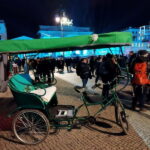
This private rikscha tour strings together big, emotional Berlin sights with easy pacing, plus photo-focused stops where the city feels cinematic without you cranking your neck for hours. I especially like how the route mixes iconic monuments with local-feeling streets and parks, so you get more than postcard hits. One thing to plan for: a few attractions on the way list ticketed entry as not included, so your timing (and budget) can shift if you decide to go inside.
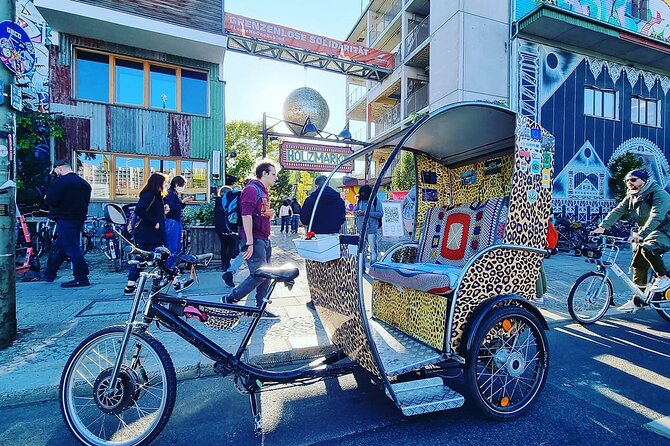
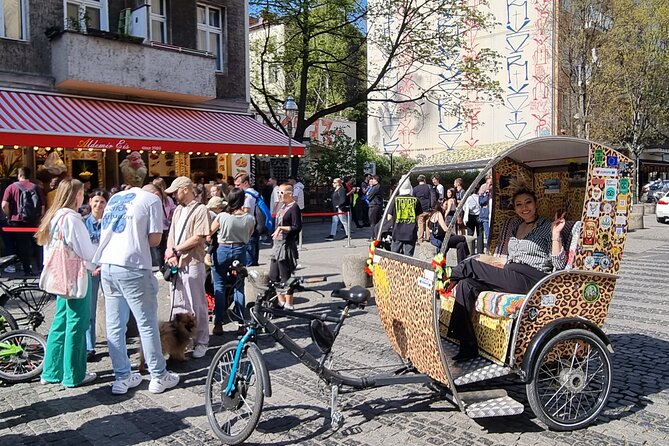
I also love that you do not just get driven past views. You get a real guide in English (Leo) who connects the dots between the German story you read in books and the streets you stand on, and the rickshaw format helps you reach paths and corners that cars cannot. If you are sensitive to weather, note that this experience requires good weather, and some segments are tight outdoor stops rather than long museum time.
In This Review
- Key moments I’d prioritize on this Berlin rikscha route
- Why Berlin looks better from a rikscha
- Brandenburg Gate to Bundestag: German turning points, set in stone and glass
- Tiergarten pauses: Soviet memorials and a park built for people
- Potsdamer Platz to Topography of Terror: modern Berlin and the weight of what happened
- From Gropius Bau and the Wall area to Checkpoint Charlie
- Gendarmenmarkt to Bebelplatz: classic squares and a book-burning memorial
- Museum Island and Berliner Dom area: UNESCO-grade sights, outside-in pace
- The East Side Gallery wall art: the Berlin Wall as a living gallery
- Kreuzberg streets and canal views: Bergmannstraße to Oranienstraße
- Parks for a breather: Görlitzer Park, Gleisdreieck, and Tempelhofer Feld
- Value check: is $140.77 worth it?
- Who should book this rikscha tour (and who might not)
- Should you book this Berlin rikscha photo tour?
- FAQ
- Is this tour private?
- What language is the guide?
- How long does the tour take?
- Is pickup available?
- Are any admissions included?
- What does the tour include besides the guide?
- Is good weather required?
- Can I bring a service animal?
- Where does the tour take you?
- Can I cancel for free?
Key moments I’d prioritize on this Berlin rikscha route
- Private, guided, and photo-friendly: a photographer is included, plus quick stops that are made for photos.
- English-speaking guide named Leo: expect clear context and practical wayfinding so sites make sense fast.
- East-West hits in one sweep: Wall memorial area, Topography of Terror, Checkpoint Charlie, and more.
- Parks and squares, not just monuments: Tiergarten, Gendarmenmarkt, Museum Island area, and city canals.
- Food and comfort extras: coffee or tea and alcoholic beverages are included, plus music on request.
Why Berlin looks better from a rikscha
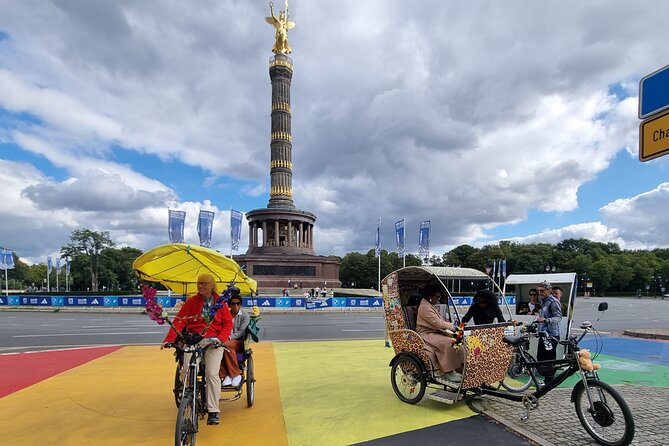
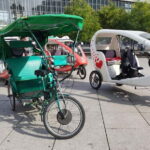
If you have limited time in Berlin, you need efficiency. This tour covers a lot of ground in roughly 3 to 6 hours (the route is structured as lots of short sight stops), and the rickshaw format helps you move with less walking fatigue than a long self-guided loop.
I like that it is not just speed. The tour is built around viewpoints and photo moments—so you get your “here’s the landmark” shots and your “now I understand why this matters” moments. With a photographer included, you are not scrambling to coordinate group photos every few minutes.
You also get small comfort bonuses that actually help on a city day: coffee and/or tea plus alcoholic beverages are included, and there is music on request. It is a small thing, but it changes the vibe from sightseeing duty to sightseeing fun.
Practical tip: because many stops are outdoor and short, bring a small camera kit and comfy shoes. Even if you are riding, you will still step out for key photos and brief explanations.
You can also read our reviews of more city tours in Berlin
Brandenburg Gate to Bundestag: German turning points, set in stone and glass
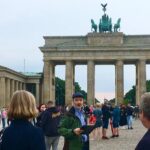
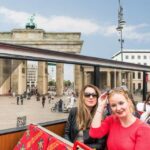
You start with one of the most recognizable pieces of German classicism: the Brandenburg Gate. It is sandstone, built in 1788 to 1791 based on designs by Carl Gotthard Langhans the Elder, and it was commissioned by King Friedrich Wilhelm II to close off the boulevard Unter den Linden with architectural gravity. Admission there is free, and even a short stop feels worthwhile because the gate’s role is larger than its shape.
Next comes the Reichstag/Bundestag building. This is where Berlin’s 20th-century drama is not abstract—it is tied to specific dates:
- November 9, 1918: Philipp Scheidemann (SPD) calls the Republic from the west portal balcony.
- February 27, 1933: the Reichstag fire destroys the plenary hall and dome.
- April 30, 1945: Soviet victory symbolized by a red flag raised by two Red Army soldiers.
The important planning note: the Reichstag dome/plenary experience is not included (ticket not included). So if your goal is mainly photos and exterior context, you are set. If you want interiors, factor in extra time and your own ticket.
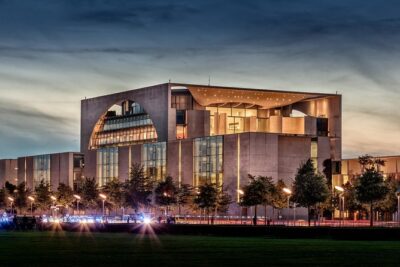
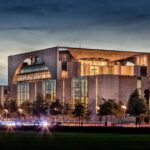
Then you roll to the German Chancellery, a modern statement of the same idea Berlin has always grappled with: power, transparency, and how government is seen. The centerpiece rises about 36 meters, with a design that uses arch openings and big glass surfaces between concrete pillars to create a sense of lightness. Even if you only get a short glance, you get a useful contrast: classicism at the gate, then a deliberate “look inside” design philosophy for modern government.
Tiergarten pauses: Soviet memorials and a park built for people
From politics to memory. In Tiergarten, you pass the Soviet War Memorial. It is flanked by two T 34 tanks, and a bronze statue shows a Red Army soldier carrying his rifle. Behind are names of fallen Soviet soldiers, and in the rear area there are graves of around 2,500 soldiers. Admission is free, and the short visit lands because it is concrete—no metaphor required.
Then the tour turns into a real breather: Tiergarten proper. This park started as a “pleasure park for the population” from an old hunting ground, and later Peter Joseph Lenné reshaped it between 1833 and 1838 into an English-style public park. The tour also points you to the fact that Tiergarten is not only trees and paths. It is packed with monuments and memorials and includes places like the Victory Column, plus cultural stops such as the House of World Cultures and the English Garden area around a pond.
Why this matters on a timed tour: a park stop gives your brain a rest from hard history while still keeping you in the heart of Berlin’s meaning layers. It is also where the rickshaw helps—because you can move between points without exhausting yourself.
Potsdamer Platz to Topography of Terror: modern Berlin and the weight of what happened
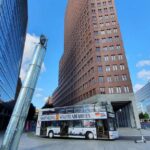
You head to Potsdamer Platz, a district-planning success story with cafes, cinemas, shops, and a big shopping arcade tucked between futurist-style high-rises. It was created on roughly 6.8 hectares between Potsdamer Platz and Reichpietschufer. Admission is free, and even a couple of minutes works because the area is designed like a city within a city.
Then comes Topography of Terror, one of the most serious stops on the route. This site is tied to the planning and control of Nazi crimes. Between 1933 and 1945, major SS and police terror apparatus institutions were housed here, including the Secret State Police Office, the Reichsführung SS, and the Reich Security Main Office. Admission is free, and the quick stop format works best if you keep your eyes open and let the facts do the heavy lifting.
If you feel the mood shift: that is normal. This part of Berlin is not for ignoring. It is for recognizing how places can function like infrastructure for evil, then remembering that history still sits in the ground around you.
From Gropius Bau and the Wall area to Checkpoint Charlie
After Topography of Terror, the tour moves toward cultural and border-history landmarks.
Gropius Bau is dedicated to cultural history, contemporary art, and photography, and it is listed with ticketed entry not included. That means your stop may be primarily exterior unless you decide to add an entry on your own. If you like modern art and photo exhibitions, it is a good place to consider.
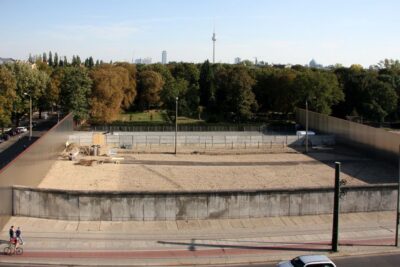
A nearby stop focuses on the Memorial of the Berlin Wall area (ticket not included). Even with short timing, it’s worth a careful look, because this is where Berlin’s split stopped being a political concept and became a daily reality.
Then you hit Checkpoint Charlie, the most famous border crossing controlled by Americans. The tour context clarifies that there were other checkpoints too, including Helmstedt-Marienborn (Checkpoint Alpha) and Dreilinden-Drewitz (Checkpoint Bravo). Checkpoint Charlie mattered because it was used by foreigners and employees of the Permanent Representation of the FRG in the GDR, plus GDR officials. Admission is free, and the short photo stop is enough to get your bearings quickly.
From there the route follows Friedrichstraße, Berlin’s north-south axis, and you learn how the shopping mile grew between Checkpoint Charlie and Friedrichstraße station after the fall of the wall.
You can also read our reviews of more tours and experiences in Berlin
Gendarmenmarkt to Bebelplatz: classic squares and a book-burning memorial
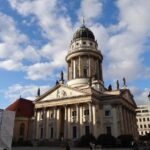
Next is a very photogenic pocket of central Berlin: Gendarmenmarkt. The square traces back to late 17th-century plans by Johann Arnold Nering, and it was shaped by French immigrants, especially French Protestants (Huguenots). It changed names over time and was finally renamed Gendarmenmarkt in 1799 because the guard and stables of the Gens d’armes regiment were located there. Admission is free.
A couple of minutes later you approach Deutscher Dom with its permanent exhibition titled Ways – wrong trails – detours, focused on the development of liberal parliamentary democracy across five floors. The ticket is not included, so you can either enjoy the surrounding area as a visual stop or decide if interior time fits your day.
Then you reach the Konzerthaus am Gendarmenmarkt, a major classicist architecture work by Karl Friedrich Schinkel. The building story starts with Frederick the Great’s push to open a small comedy house in 1776, later renamed the Royal National Theater in 1787 as it rose to become one of the leading theaters. Ticketed entry is not included, so again: you can treat it as an exterior architecture moment if you prefer to keep momentum.
Then the tour hits Bebelplatz, which looks calm and beautiful—but it carries a brutal memory. On May 10, 1933, the Nazis burned over 20,000 books there, believing selected volumes had non-German spirit. The list given in the tour context includes authors and works by Erich Kästner, members of the Mann family, Magnus Hirschfeld, Lion Feuchtwanger, Karl Marx, Else Lasker-Schüler, and nearly 400 others, plus Heinrich Heine’s books. Admission is free.
Practical takeaway: even on a short stop, pause longer here. The square works as an antidote to denial. If your brain wants to move on quickly, force it to stop for 30 seconds more. That is the point of the place.
Museum Island and Berliner Dom area: UNESCO-grade sights, outside-in pace
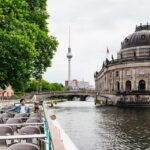
Berlin’s Museum Island sits on the Spreeinsel and is one of Europe’s standout museum complexes. The tour notes that the museum district became a UNESCO World Cultural Heritage site in 1999 and has been restored and expanded since the late 1990s, with a new reception building. Admission at this stop is free, which makes it a great place to do your photos first and decide later if any interior tickets make sense for your interests and time.
From there, you move to the Berliner Dom area. The Berlin Cathedral has a striking dome and served as the court and cathedral church of the Hohenzollerns. It was rebuilt 1894 to 1905 under Emperor Wilhelm II. Ticketed entry is not included, so you may just get the exterior and a sense of the building’s scale.
Just beyond, you pass Alexanderplatz, called Alex, one of Berlin’s most visited squares and a major transportation hub. It is a good “city center feel” stop when you want your eyes to reset from monuments back to everyday Berlin life.
The tour also includes Nikolaiviertel, on the Spreeinsel, presented as an open-air look at older Berlin. In its current form it was created for Berlin’s 750th anniversary in 1987.
Finally you see Neptunbrunnen, the Neptune Fountain in front of the Red City Hall, nicknamed locally as Forckenbecken. The tour context explains the wordplay and the symbolism: Neptune stands with his trident over a basin, and four female figures represent the rivers Elbe, Rhine, Oder, and Vistula. It’s quick, but it is a nice reward after heavier history.
The East Side Gallery wall art: the Berlin Wall as a living gallery
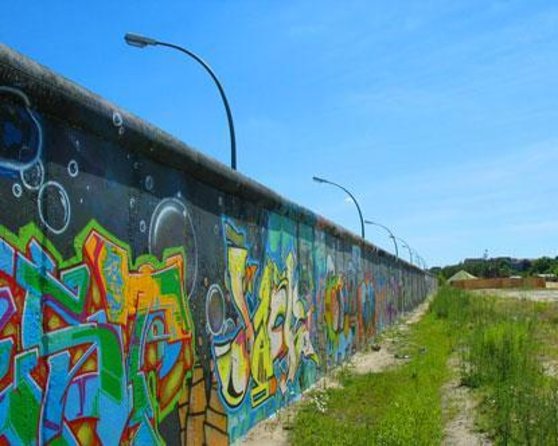
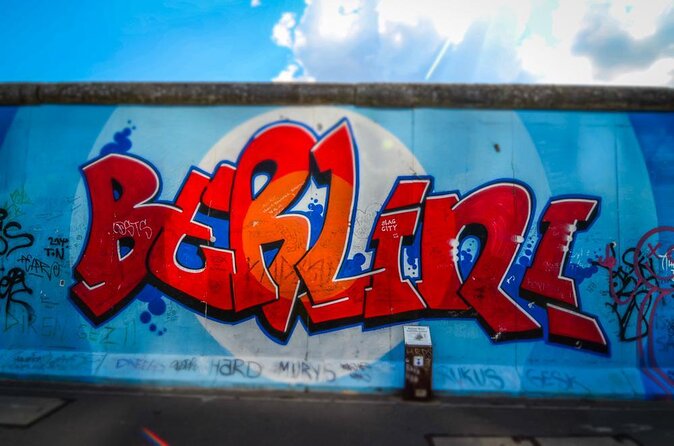
Then the route swings to one of the most famous wall segments: the East Side Gallery along the Spree. It is a painted section of the former Berlin Wall, about 1.3 kilometers long, with over 100 original wall paintings. Admission is not listed as ticketed, and it functions as an outdoor museum where the wall becomes art instead of barrier.
Here is how to make the most of it without losing time: pick a few works, not all of them. You will get better photos and better meaning if you choose what draws your eye rather than trying to read everything at once.
Kreuzberg streets and canal views: Bergmannstraße to Oranienstraße
Now you shift to a different Berlin mood, more everyday and more multicultural in feel.
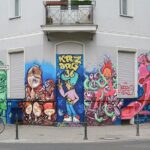
The tour stops at Bergmannstraße, a well-kept area of older buildings in what used to be Kreuzberg SW 61. The point here is texture: you see side streets and everyday life patterns rather than just big landmarks. The tour frames the area as a calmer version of the more club-scene-focused parts nearby, still lively and culturally mixed.
Next comes Landwehrkanal, one of Berlin’s key inner-city canals. The tour context gives you the why: in the 19th century, road and rail were not enough for industrial growth, so the city built a transport canal. It started in 1845 and finished in 1850, with Peter Joseph Lenné involved in the design commission. You get a “Berlin as systems” moment here—how transport shaped the city’s development.
Then you reach Admiralbrücke, a summer favorite meeting place. The details matter: cobblestones, old gas lanterns, and groups gathering to talk, drink, and listen. The tour also notes that after local residents complained about nighttime volume, the bridge was cleared peacefully every evening at 10 p.m. with police support. That kind of practical local rule is exactly what helps you understand the city.
Finally you arrive at Oranienstraße, where the street scene is dominated by food and nightlife. The tour frames it as having many small shops, bars, and restaurants with international flair, plus a lively atmosphere especially at night. Admission is free, and it works well if you want energy at the end of the ride rather than just one last photo stop.
Parks for a breather: Görlitzer Park, Gleisdreieck, and Tempelhofer Feld
If you want a Berlin day that does not feel like constant “look at this, look at that,” the park sequence helps.
At Görlitzer Bahnhof, the tour pivots to Görlitzer Park in Kreuzberg, created in the early 1990s on the former site of the Görlitz train station. The tour provides clear prehistory: the station opened with major Prussian royal involvement, and the area was once a 14-hectare zone used for troop transports and goods movement. Today it is lawns, sports fields, playgrounds, and even a children’s farm near Glogauer Straße. Admission is free.
Then you go to Park am Gleisdreieck. The tour frames it as a product of urban change and citizen action: after the railway area lay fallow after WWII, vegetation grew, and local citizens pushed to keep it green permanently. It’s a small story that feels big because it shows Berlin can convert leftover spaces into useful public areas.
And you end with the biggest open-air “what was here” story: Tempelhofer Feld. This was the old Tempelhof Airport, including a large check-in hall and a large airfield of over 300 hectares. After flight operations ended, the space opened to the public in May 2010. The tour explains how citizen participation is now part of the future plan, after a successful referendum in May 2014 with the Tempelhofer Feld Law coming into force in June 2014.
For you, that means you get a powerful contrast: borders, government, and ideology on one side, then open sky and public space on the other.
Value check: is $140.77 worth it?
At $140.77 per person, the value is mostly about what you are getting bundled in and how much walking you avoid.
You get:
- a private experience (only your group)
- private transportation via the rickshaw
- a travel guide in English
- a photographer
- coffee/tea and alcoholic beverages
- music on request
If you were to build a DIY day, you would still pay for guide help (or spend your time reading screens), and you would likely miss the photo coordination and the “how to connect the dots” commentary. The ticketed interiors that are not included (like Reichstag/Bundestag dome options, Gropius Bau, parts of the Deutscher Dom and Konzerthaus, Berliner Dom) can add extra costs if you choose them, but the tour still works as an outside-and-context day at no added admission for many stops listed as free.
If you want a low-stress day that still feels substantial, this is priced like a smart shortcut.
Who should book this rikscha tour (and who might not)
This tour fits you best if:
- you want a fast, structured way to see major Berlin landmarks across multiple districts
- you like history but also want breaks in parks and squares
- you value photos and do not want to play solo photographer all day
- you prefer less walking and more “let the vehicle do the legwork”
You might skip or adjust if:
- you are aiming for lots of indoor museum time, since several key sites list ticketed entry as not included and many stops are short exterior moments
- you need a day with guaranteed long seated museum breaks (this route is designed for moving and seeing)
For timing, choose a day with good weather. This experience requires it, and it will make the outdoor photo stops much more enjoyable.
Should you book this Berlin rikscha photo tour?
Yes—if you want a practical, high-impact Berlin day without turning your feet into sandpaper. The combination of a private rickshaw ride, English guidance by Leo, and a photographer makes it feel like you are being shown Berlin, not just transported around it. Add the parks, the canal scenes, and the central squares, and you get both the big story and the lived-in city details.
If you are the type who always wants to go inside every major building, plan to add tickets for the listed ticket-not-included stops. Otherwise, treat the tour as a very strong orientation day with excellent photo coverage and just enough depth to steer what you do next.
FAQ
Is this tour private?
Yes. It is a private tour/activity, so only your group participates.
What language is the guide?
The tour is offered in English.
How long does the tour take?
The duration is listed as 3 to 6 hours (approx.).
Is pickup available?
Pickup is offered. The pickup details mention hotels, central station, and cafes. The activity ends back at the meeting point.
Are any admissions included?
Many stops list Admission Ticket Free, but some stops list Admission Ticket Not Included (for example, Reichstag/Bundestag, Gropius Bau, the Wall memorial stop, Deutscher Dom, Konzerthaus, Berliner Dom). So it depends which places you choose to enter.
What does the tour include besides the guide?
Included items list private transportation, a photographer, music on request, coffee and/or tea, and alcoholic beverages.
Is good weather required?
Yes. The experience requires good weather. If it is canceled due to poor weather, you are offered a different date or a full refund.
Can I bring a service animal?
Service animals are allowed.
Where does the tour take you?
The route includes major central sights like Brandenburg Gate, Reichstag/Bundestag, Potsdamer Platz, Topography of Terror, Checkpoint Charlie, Museum Island, the East Side Gallery, plus parks and canals such as Tiergarten, Görlitzer Park, Tempelhofer Feld, and Landwehrkanal.
Can I cancel for free?
Free cancellation is available. You can cancel up to 24 hours in advance for a full refund, and late changes within 24 hours are not accepted.