REVIEW · BERLIN
Berlin: 7 Lakes Boat Tour through the Havel Landscape
Book on GetYourGuide →Operated by Reederei Lüdicke · Bookable on GetYourGuide
Seven lakes, one slow ride through Berlin’s past.
This Berlin to Potsdam boat route is interesting because it mixes UNESCO-listed water scenery with real-world Cold War and Prussian-era landmarks, all while you’re learning from live commentary. I especially like how the tour links the leafy shorelines around Glienicke Bridge to the story of what this region looked like, and who lived here.
One thing to plan for: the commentary is German only, and you’ll need to buy drinks or snacks onboard since food isn’t part of the ticket.
In This Review
- Key points before you go
- Havel lakes: why this boat tour feels like history you can see
- Where it starts: Lindenufer in Spandau (and why the location matters)
- Grunewaldturm, Imcheninsel, and Schwanenwerder: parklands and peninsula views
- Schildhorn and Grunewald: the protected area that shapes the view
- Wannsee and the villas: where the shoreline turns into a roll call of famous names
- Pöhlesee and Stölpchensee: the chain-of-lakes feeling, not just one big stop
- Griebnitzsee and toward Potsdam: setting up the palaces
- Babelsberg Palace and Park: seeing royal-style building from the water
- Glienicke Bridge (Agents Bridge): the Cold War icon on your route
- Jungfernsee and the Church of the Redeemer: palaces, then spirituality
- Pfaueninsel (Peacock Island): the fairy-tale payoff with Schloss Pfaueninsel
- Kladow harbor and the return to Lindenufer: finishing with a real working feel
- Price and value: is $30 worth 3.5 hours of sights?
- Practical tips so you enjoy it more (German-only commentary included)
- Who should book this Berlin-Havel boat tour
- Should you book the Berlin: 7 Lakes Boat Tour?
- FAQ
- How long is the Berlin: 7 Lakes Boat Tour?
- Where does the boat depart?
- Is there live commentary on the boat?
- What language is the commentary in?
- Is a toilet available onboard?
- Is food included in the ticket price?
- Can I bring my own food or drinks?
- Which Potsdam landmarks does the route pass?
- Which Wannsee area sights can you see from the boat?
- What is the cancellation policy?
Key points before you go
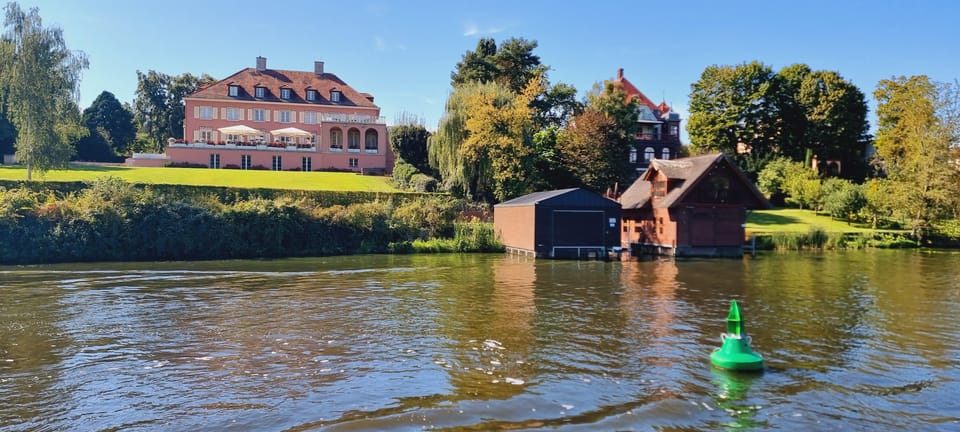
- UNESCO World Heritage waters: You’re on the Havel chain of lakes that UNESCO recognizes as part of Berlin-Brandenburg’s outstanding cultural scenery.
- Border-area sights from the water: You pass places tied to the former division between GDR and West.
- Iconic Wannsee names: Expect views around the Wannsee Conference site and the Liebermann villa area.
- Potsdam showstoppers nearby: Babelsberg Palace and the Glienicke Bridge area are front and center along the route.
- Peacock Island payoff: Schloss Pfaueninsel adds a fairy-tale stop with historic buildings on the water.
- Easy, low-hassle format: 3.5 hours, toilet onboard, and you can keep your day moving without switching trains.
Havel lakes: why this boat tour feels like history you can see
If you like history but you don’t want it trapped inside museums, this is a strong match. The Havel route turns the shoreline into your “exhibit,” so Prussian-era villas and parks, plus Cold War landmarks, slide by at boat speed.
The big win for me is how the scenery does the storytelling. You’re not just reading dates—you’re watching how wealth, power, and politics played out along these calm waterways.
And because it’s a 3.5-hour cruise with live commentary, it’s also a good use of limited time. You get a lot of famous names in one go, without the stress of coordinating multiple stops.
You can also read our reviews of more boat tours in Berlin
Where it starts: Lindenufer in Spandau (and why the location matters)
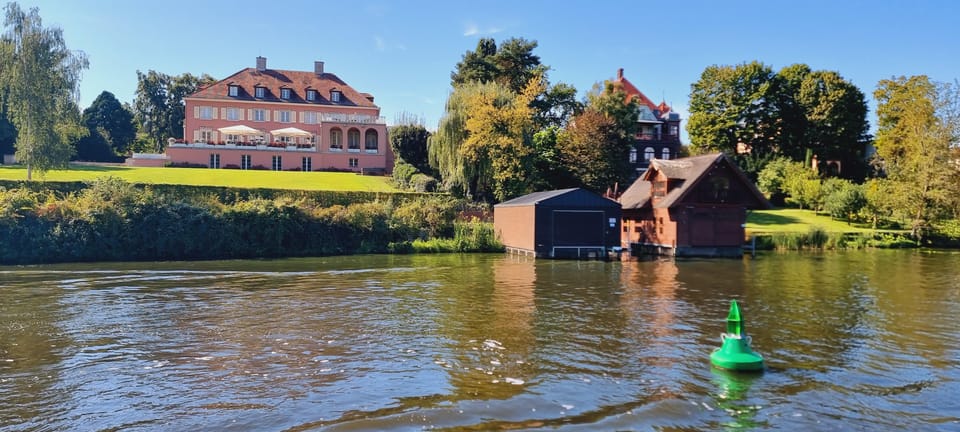
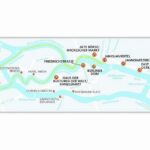
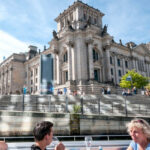
The tour departs from Anlegestelle Spandau (Lindenufer). It’s at the Lindenufer behind Spandau town hall, along the Havel. Starting here matters because Spandau puts you on the Berlin side of the river story, before the boat carries you toward Wannsee and then Potsdam.
Give yourself a little buffer for getting oriented at the pier. A boat departure is simple, but it’s still easy to lose time if you arrive unsure where the right dock is.
Grunewaldturm, Imcheninsel, and Schwanenwerder: parklands and peninsula views
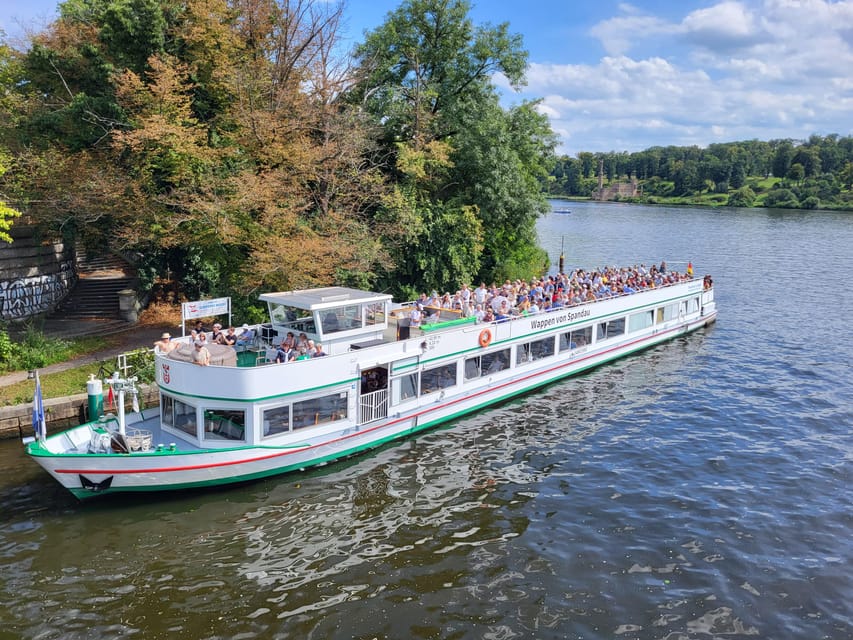
Early in the cruise, you’re in the stretch where nature protection and grand estates sit side by side. You pass the Grunewaldturm, then glide by Imchen Island, and continue toward the Schwanenwerder Peninsula.
These stops aren’t about quick photo ops. They’re about the feel of the Havel route: quiet water, protected banks, and the sense that the shoreline is the main attraction. If you like watching architecture sit against water and trees, this is where the tour starts paying off.
You’ll also see the kinds of landforms that make the Havel so special for daydreaming: islands, narrow peninsulas, and sheltered channels. It’s the calm version of a sightseeing drive.
Schildhorn and Grunewald: the protected area that shapes the view
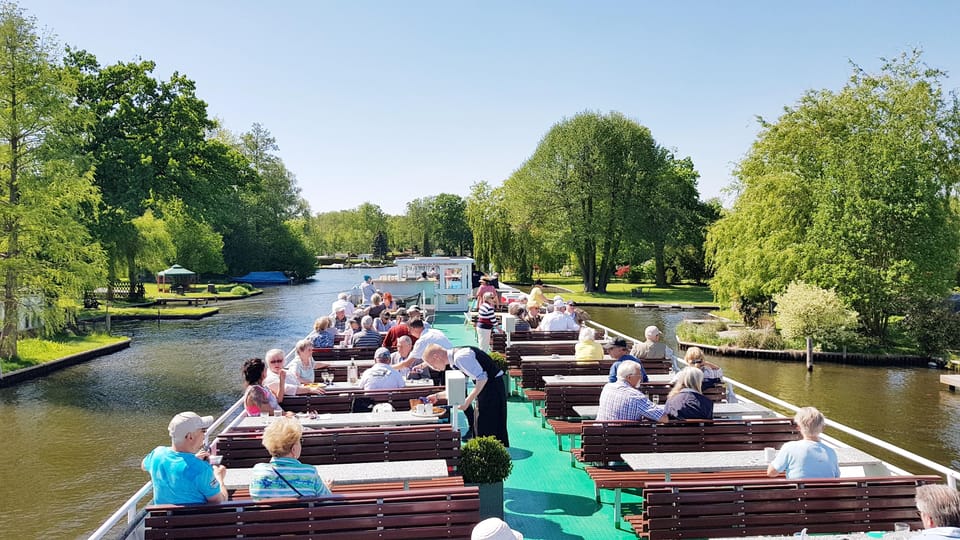
As you continue, you pass Schildhorn, described as Berlin’s largest protected area, and you also see the Grunewald area from the water. The point of this section is clear: this isn’t just a river cruise for buildings. The boat route works because the area has long been protected, so the views stay open.
Practically, this means you can relax. You’re not constantly dodging crowds or trying to line up at viewpoints. You’re moving, and your perspective keeps refreshing.
Wannsee and the villas: where the shoreline turns into a roll call of famous names
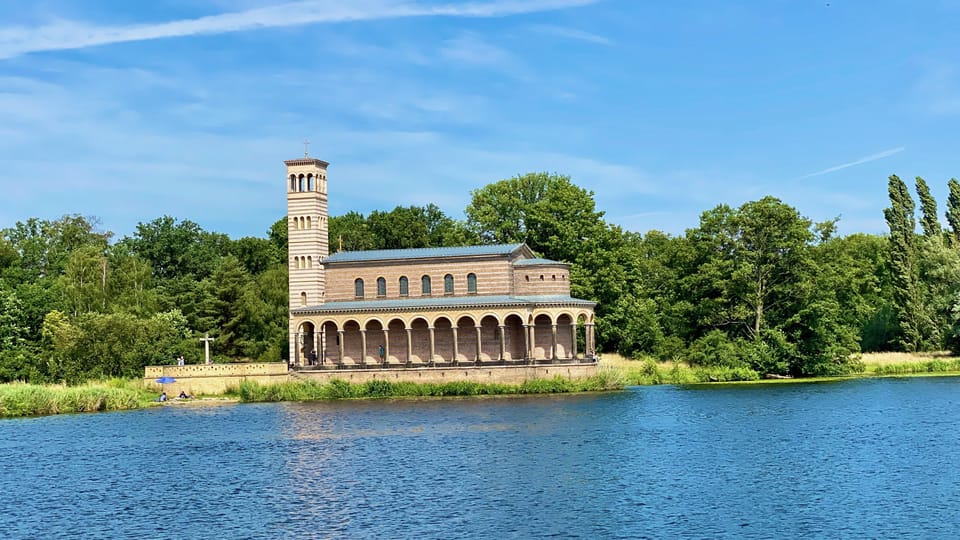
When the tour reaches Wannsee, it turns into a “how did people live like this?” moment. You glide past key Wannsee areas, including the Wannsee lido and the House of the Wannsee Conference, plus the Liebermann villa area.
A lot of places can claim history. Wannsee earns it through setting. The shoreline makes it easier to picture how these grand homes, gardens, and gathering spots fit the landscape.
Two names I’d file under must-spot categories are Villa Lemm and the Wannsee Conference House area. Even if you’ve only heard the name before, seeing the shoreline approach helps you connect the label to a real place.


Pöhlesee and Stölpchensee: the chain-of-lakes feeling, not just one big stop
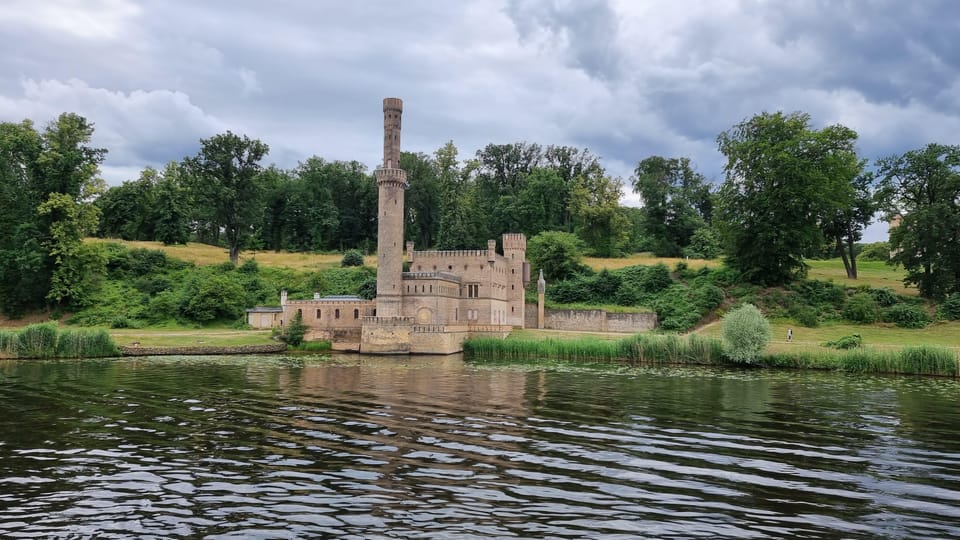
Between bigger landmarks, the boat moves through the lake chain. You pass Pöhlesee and Stölpchensee, which are the kind of scenic pauses that make this tour work as a proper river cruise.
This part is useful if you’ve ever done city walking tours and felt like you needed a break. Here, your “wandering” happens by sliding across water and letting the shoreline come to you.
Think of it like changing chapters. Less emphasis on a single famous building, more emphasis on the overall Havel mood.
Griebnitzsee and toward Potsdam: setting up the palaces
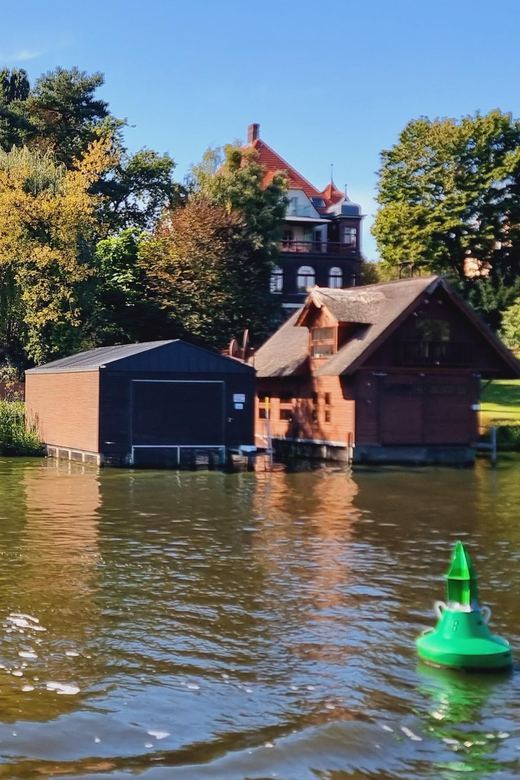
You continue to Griebnitzsee and reach the Potsdam Havel area. This is where the tour starts leaning harder into the Potsdam side of the story.
The water helps here. From the boat, Potsdam’s famous architecture doesn’t feel like isolated landmarks. It feels like part of a planned river-and-park world.
If you’re the type who loves the “transition moment” on a day trip—the point where the scenery changes—this is your section.
Babelsberg Palace and Park: seeing royal-style building from the water
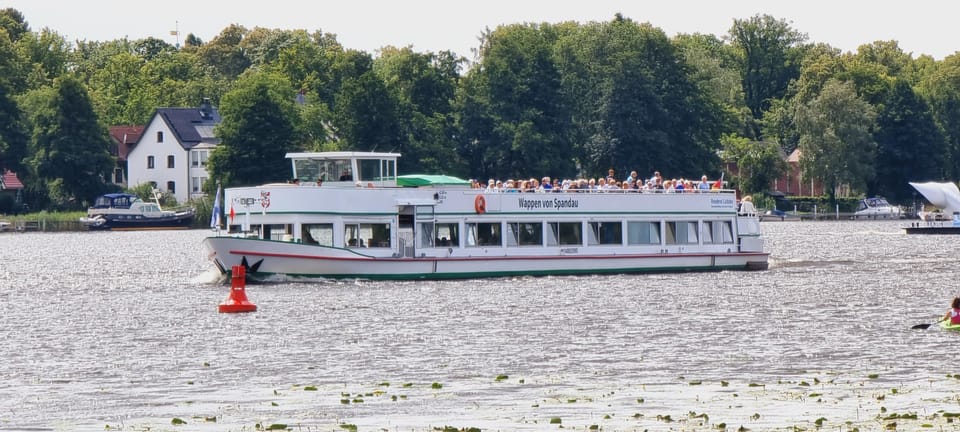
From Babelsberg Palace and Park, you get views that are tied directly to the river. Babelsberg isn’t just seen from a distance; the boat route brings it into your line of sight in a way that feels connected to the water.
I like this stop because it’s visually legible. You can often spot the palace setting quickly, even without deep architectural knowledge. And once you see it from the Havel, it becomes much easier to understand why Potsdam earned its reputation.
Glienicke Bridge (Agents Bridge): the Cold War icon on your route
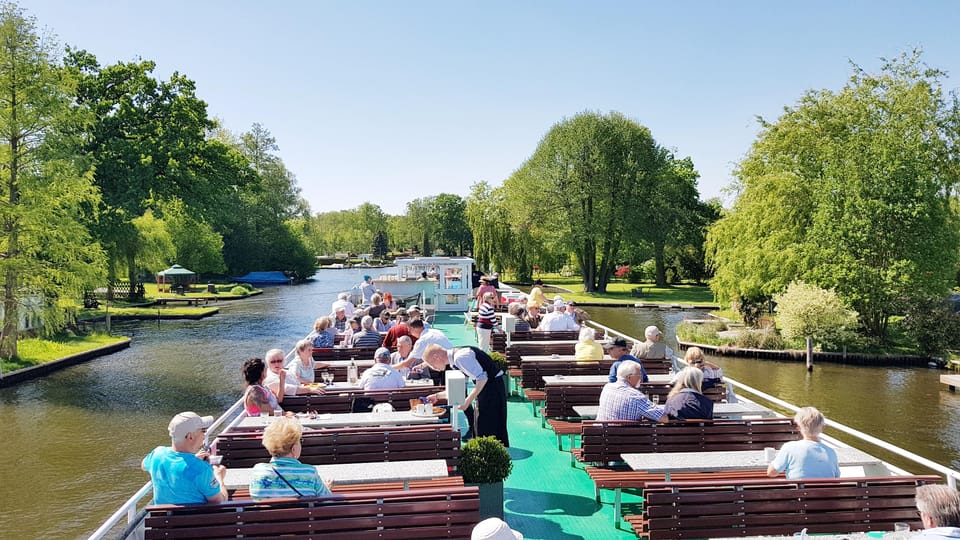
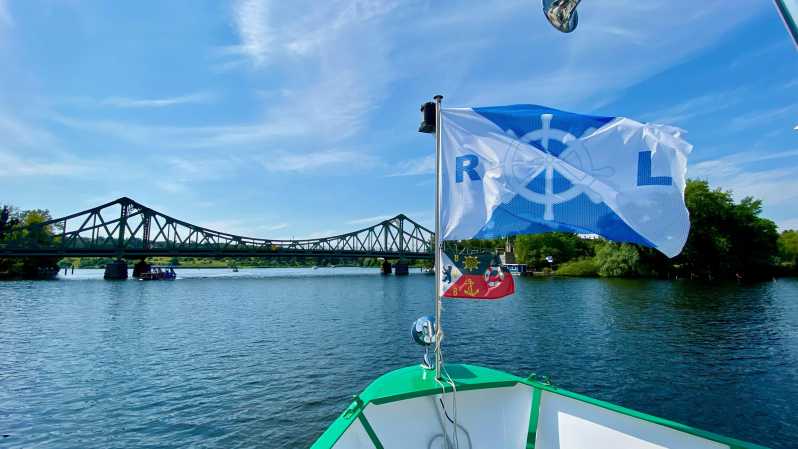
Then comes Glienicke Bridge, known as the Agents Bridge. This is the stop that gives the tour its sharp edge. One moment you’re in villa-and-gardens mode; the next you’re looking at a landmark tied to Cold War tension.
Whether you’re a history fan or just curious, this bridge is a strong “anchor.” It’s the kind of sight that helps your brain organize the rest of what you saw earlier—especially the areas tied to the former border between GDR and West.
From a photography point of view, bridges are often easier to frame than shoreline buildings, because you get a defined structure cutting across water.
Jungfernsee and the Church of the Redeemer: palaces, then spirituality
As you move to Lake Jungfernsee, the cruise continues toward the Church of the Redeemer in the former border area context. This is another example of why the route feels different from a simple sightseeing loop: the tour keeps shifting themes—power, culture, then faith—without changing locations.
This section is also a reminder that the Havel region isn’t only about big estates. It includes churches and smaller historic presences that help the area feel lived-in across time.
Pfaueninsel (Peacock Island): the fairy-tale payoff with Schloss Pfaueninsel
One of the most memorable moments comes when you reach Schloss Pfaueninsel on Peacock Island. The tour highlights it as a fairy-tale island experience, with a pleasure palace and historic buildings.
This is where the cruise earns the “slow travel” vibe. The scenery tightens, and the island setting helps you picture the island as an intentional retreat, not just a random dot on the map.
If you only take one “stand and watch” moment on this boat ride, make it here. Let the island setting do the work.
Kladow harbor and the return to Lindenufer: finishing with a real working feel
After the island section, you continue onward toward Kladow in Spandau, then return to Anlegestelle Spandau (Lindenufer).
I like ending with a harbor rather than another grand palace view. It gives your day a sense of closure, like you’re finishing the route where everyday life meets the tourist sights.
By the time you’re back, you’ll probably feel like you saw more than just “Berlin highlights.” You’ll have the sense of a connected water system—from protected banks and villa shores to palaces and iconic bridges.
Price and value: is $30 worth 3.5 hours of sights?
At around $30 per person for 3.5 hours, this tour is priced for accessibility. You’re paying for a guided format that stacks multiple famous areas into one outing.
What makes it feel like value is the combination of:
- live commentary (so you’re not just staring out at water),
- UNESCO-recognized Havel scenery context,
- and major named stops like the Wannsee Conference House area, Babelsberg Palace, and Glienicke Bridge.
Food and drinks are not included, and you’re not supposed to bring your own food and drinks. That means you’ll likely spend a bit onboard if you want snacks, but the ticket still covers the experience itself: the route, the commentary, and the boat time.
If you’re choosing between this and piecing together multiple half-day activities, the boat tour often wins because it’s low-effort. You get movement plus interpretation, and you don’t have to keep switching plans.
Practical tips so you enjoy it more (German-only commentary included)
The commentary is in German, and there’s a German host/greeter. If you don’t speak much German, you can still enjoy the visuals, but your understanding will depend on how much you catch in real time.
What helps: focus on the big landmarks as they appear, then use the names you recognize from Berlin and Potsdam when the boat approaches them.
Also, bring your patience for a slower pace. This is not a fast “jump on, jump off” tour. It’s a steady cruise where the best memories come from watching the shore repeat in new forms—peninsulas, islands, and lake connections.
And yes: the tour includes a toilet onboard, so you can keep your day comfortable without leaving the boat at awkward times.
Who should book this Berlin-Havel boat tour
Book it if you want a straightforward way to connect Berlin and Potsdam sights in one outing. It’s especially good for:
- history lovers who prefer outdoor learning,
- people who like architecture but also want scenery,
- couples or friends who want a calmer pace than walking-heavy days,
- anyone who wants a single ticket that covers Wannsee, Babelsberg, and Glienicke Bridge areas.
If you need English commentary, you may find it frustrating. In that case, you’ll likely enjoy it most for the scenery and the famous names visible along the route.
Should you book the Berlin: 7 Lakes Boat Tour?
I’d book it if you want an easy, scenic day that strings together UNESCO-recognized Havel waters, Wannsee landmarks, Babelsberg, and the Agents Bridge area, all in one 3.5-hour boat ride. At $30, the price is fair for the amount of named sightseeing you cover, and the live commentary makes it more than just a pretty cruise.
Skip it only if German-only narration would seriously cut into your enjoyment, or if you strongly prefer guided experiences where you can fully understand every word.
FAQ
How long is the Berlin: 7 Lakes Boat Tour?
The tour lasts about 3.5 hours.
Where does the boat depart?
It departs from Anlegestelle Spandau (Lindenufer), behind the Spandau town hall on the Havel.
Is there live commentary on the boat?
Yes. The cruise includes live commentary.
What language is the commentary in?
The languages listed are German.
Is a toilet available onboard?
Yes, there is a toilet on board.
Is food included in the ticket price?
No. Food and drink are not included, but you can purchase them on board.
Can I bring my own food or drinks?
Food and drinks are not allowed.
Which Potsdam landmarks does the route pass?
You pass Babelsberg Palace and Park, Glienicke Bridge, and Lake Jungfernsee.
Which Wannsee area sights can you see from the boat?
You pass the Wannsee lido, the House of the Wannsee Conference area, and the Liebermann villa area.
What is the cancellation policy?
Free cancellation is available up to 24 hours in advance for a full refund.