REVIEW · BERLIN
Berlin: Hansaviertel “The City of Tomorrow” Guided Tour
Book on GetYourGuide →Operated by Sonderweg-Berlin · Bookable on GetYourGuide
Berlin’s tomorrow plan still holds up. The Hansaviertel walk turns a slice of mid-century design into a readable story, tied to the 1957 International Building Exhibition and the way Berlin rebuilt itself after major upheaval. I like that the tour doesn’t rush you through names; it helps you understand what you’re seeing while you’re seeing it.
I love the payoff of stopping at the Berlin Pavilion and then moving right on to the Müller-Rehm/Siegmann House, where the architecture becomes the lesson. It’s the kind of route where the buildings feel like characters in the same plot, not random postcards.
One thing to consider: it’s a 2-hour walking experience, and in winter the light can disappear early, so you may want an earlier start time if that matters to you.
In This Review
- Key highlights you shouldn’t miss
- Hansaviertel: The City of Tomorrow, in real walking distance
- Meeting your guide: Tobias, Mr Schwabe, and the best kind of banter
- The 1957 plan behind the streets: how to read Hansaviertel
- Berlin Pavilion and the Müller-Rehm/Siegmann House: the tour’s early anchor
- Gropius-Haus and the Kaiser-Friedrich Memorial Church: modern form meeting landmark meaning
- Hansaplatz to civic life: station, library, and hospital
- Swedish House and the neighborhood’s standout residential expressions
- Academy of Art: ending with culture, not just buildings
- What the 2-hour format feels like on your feet
- Price and value: $23 for a guided architecture story
- Language and pace: English or German, with Q&A friendly energy
- Should you book the Hansaviertel City of Tomorrow tour?
- FAQ
- How long is the Hansaviertel guided tour?
- How much does the tour cost?
- What’s included in the ticket price?
- Is the tour offered in English?
- Where do we meet?
- Is there a way to start from a different location?
- Can I cancel for a refund?
- What’s the booking payment option?
- Is the tour wheelchair accessible?
Key highlights you shouldn’t miss
- Hansaviertel’s 1957 “structured, spacious city” idea explained as something you can still see today
- Berlin Pavilion + Müller-Rehm/Siegmann House for an early anchor to the district’s design goals
- Gropius-Haus, Kaiser-Friedrich Memorial Church, and the Swedish House for a quick tour of standout forms
- Hansaplatz station, Hansaviertel Library, and Hansaviertel Hospital showing the everyday city behind the design theory
- Van den Broek House, Schwippert House, and the Academy of Art to connect housing, culture, and architecture
Hansaviertel: The City of Tomorrow, in real walking distance

Hansaviertel is one of those Berlin neighborhoods where the past doesn’t just sit in a museum. You feel it in the streets, the spacing between buildings, and the fact that whole blocks were designed around a modern plan. That’s why this tour works so well: it gives you a framework for noticing what’s usually easy to skip.
I found it especially effective for two reasons. First, it’s not only about individual buildings. The guide ties them to the original idea behind the district—modern urban development shaped for the 1957 International Building Exhibition. Second, the walking pace is easy, so you’re not forced to sprint from one photo spot to the next.
If you like Berlin for its contrasts—old walls, new ideas, and political history—this is a smarter way to get the architectural side of the story. It’s also off the usual tourist loop. The tour area is presented as something that only recently opened to the public, so it can feel fresh even if you’ve been to Berlin before.
You can also read our reviews of more guided tours in Berlin



Meeting your guide: Tobias, Mr Schwabe, and the best kind of banter
You meet your guide at a meeting point that can vary depending on the option you booked. Once you’re together, the tone is friendly but focused: you get explanations as you walk, not a lecture delivered at one stop.
Several guides are mentioned by name in people’s experiences, including Tobias and Mr Schwabe. The big theme is engagement. Expect questions answered on the spot and a guide who can connect design choices to the larger story of Berlin rebuilding itself.
If you’re the type who likes to ask why a building looks the way it does, this tour suits you. The guidance style seems built for back-and-forth, not passive listening. And in places, it comes with humor, which makes the architecture feel more human.
The 1957 plan behind the streets: how to read Hansaviertel
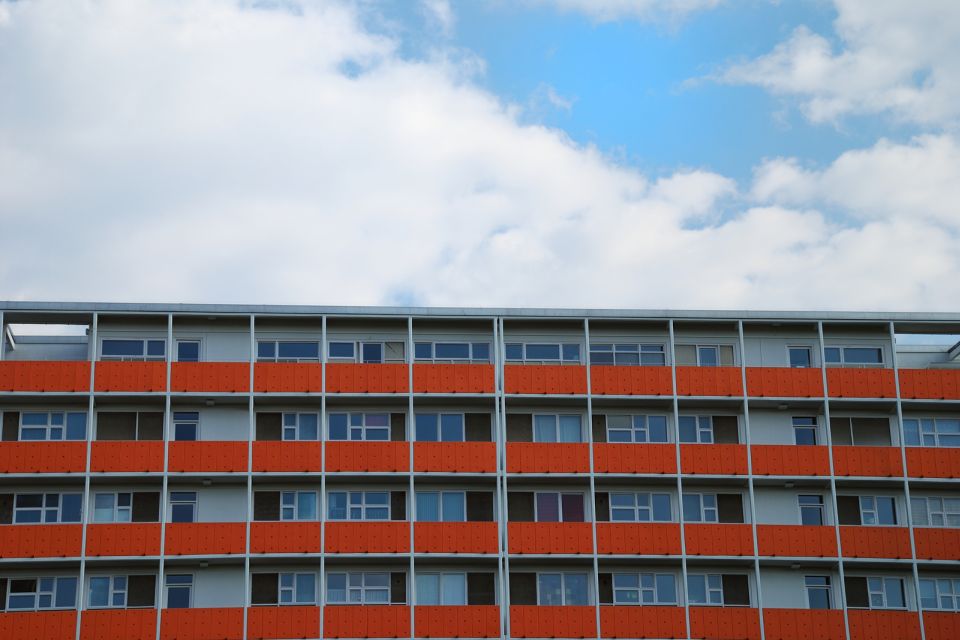
The tour’s core idea is that Hansaviertel was created around a concept: a “structured, spacious city”. The guide walks you through what that means in practice—how modern planning principles translate into layout, building placement, and the mix of civic and cultural spaces.
You’ll also hear that the district was newly designed for the International Building Exhibition of 1957. That context matters, because it explains why you see multiple architectural approaches in close quarters. It’s not just one neighborhood style; it’s a showcase of competing and complementary ideas.
As you listen, try this trick: don’t look for perfection. Look for intent. You’re trying to spot how the planners wanted the city to function—how people would move, where public life would happen, and how daily services would be woven in.
Berlin Pavilion and the Müller-Rehm/Siegmann House: the tour’s early anchor
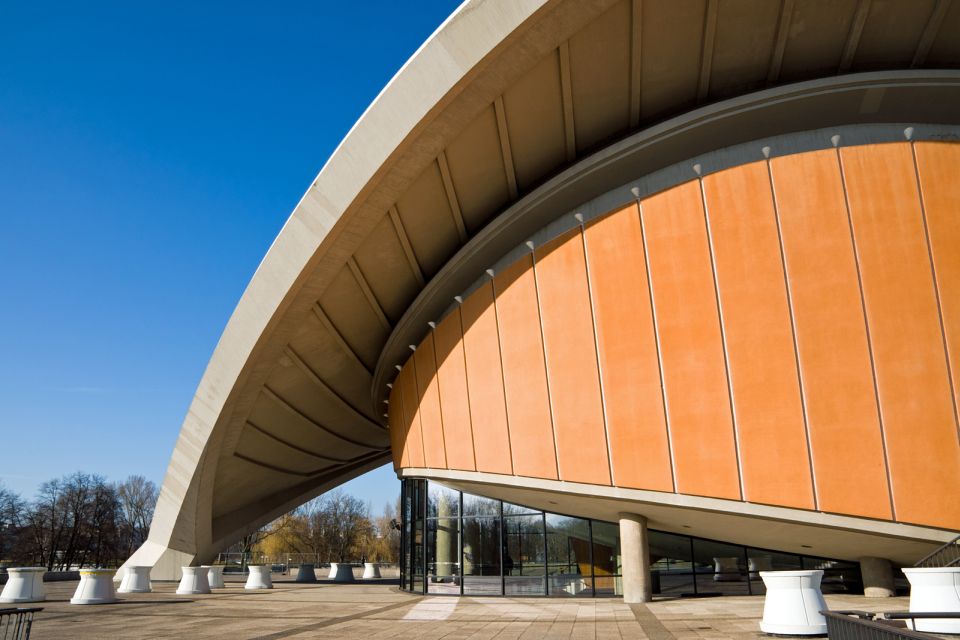
The itinerary quickly sets a foundation. You start with the district walk and then make your way toward the Berlin Pavilion, where the tour’s “City of Tomorrow” theme becomes more concrete.
From there, the Müller-Rehm/Siegmann House is a key stop. This is where the tour shifts from big-picture planning to building-level details. You’ll have a chance to admire the design and hear how it connects to the district’s broader goals.
What I like about this early sequence is that it prevents the tour from becoming a list of names. When you understand the theme first, later stops land with more meaning. You’re not just spotting architecture; you’re comparing how different designers interpreted the same kind of challenge.
Gropius-Haus and the Kaiser-Friedrich Memorial Church: modern form meeting landmark meaning
Next comes a section where the architecture is front and center. You’ll be guided past or toward the Gropius-Haus and the Kaiser-Friedrich Memorial Church.
This part is useful even if you aren’t an architecture nerd. The guide helps you notice how modern design thinking sits next to (and in dialogue with) older landmark presence. The point isn’t to rank one style above another. It’s to show how Berlin holds different eras in the same frame.
If you’re interested in why certain buildings feel bold or calm, this is where you’ll start to feel the tour’s rhythm. The church provides a recognizable anchor, while the modernist works make you ask what “tomorrow” meant to mid-century architects and planners.
You can also read our reviews of more city tours in Berlin






Hansaplatz to civic life: station, library, and hospital
A smart move in the route is the inclusion of everyday institutions. You’ll pass the Hansaplatz U-Bahn station and learn about what’s around it, including the Hansaviertel Library and the Hansaviertel Hospital.
These stops are valuable because they keep the tour grounded. It would be easy for a design-focused walk to drift into theory only. Instead, you see the types of public services a planned district needs to function, not just impress.
Try looking at these places like a planner would. Ask: is the area designed for community life, or just for appearances? Even without you doing any heavy thinking, the guide’s explanations make it harder to treat these buildings as background.
Swedish House and the neighborhood’s standout residential expressions
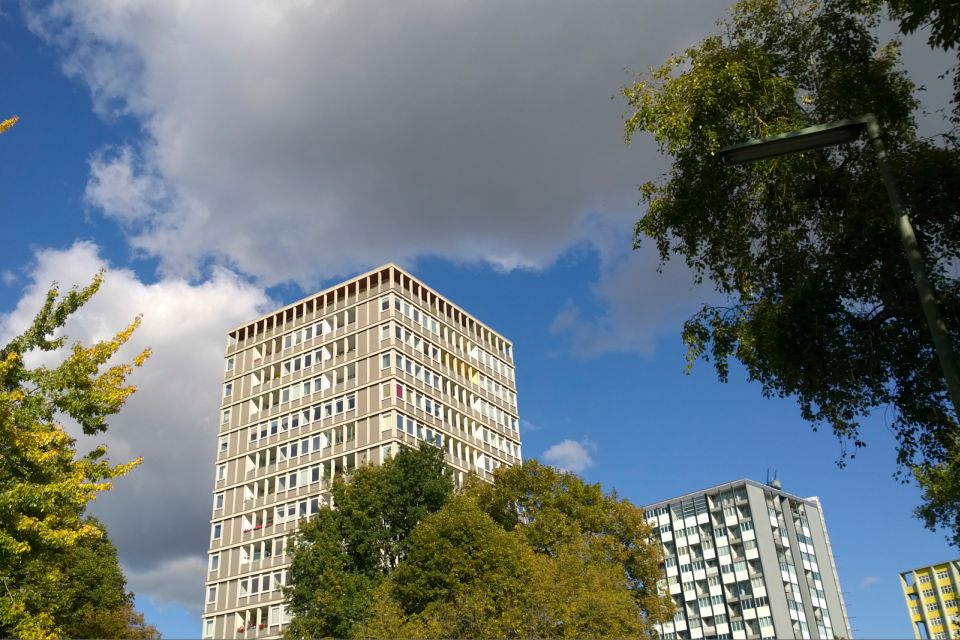
The tour then highlights the Swedish House. From there, it moves into another cluster of architecture that helps you see variety within the same district concept.
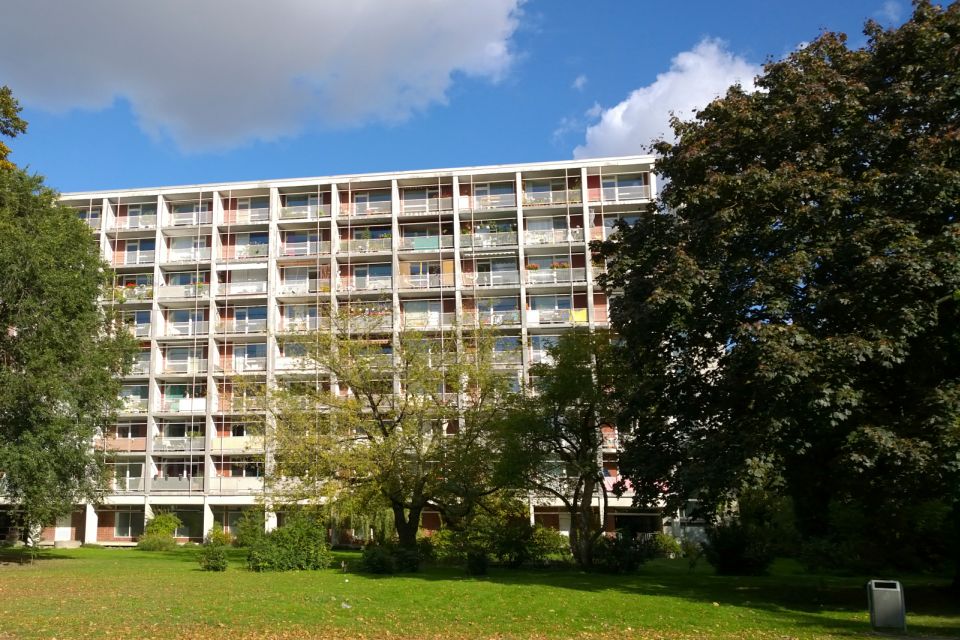
You’ll visit or pass the Van den Broek House and the Schwippert House as part of this stretch. This is a great moment to compare impressions. The design language may feel consistent in spirit, but the details and forms can read differently from one building to the next.
One reason this works is the walking distance between stops. You get enough time to notice shifts, but the route stays compact enough to keep the story cohesive. It’s a “compare and contrast” segment built into the pace.
If you enjoy photographing architecture, this is also where you’ll get usable angles because you’re moving through the district rather than waiting at one corner.
Academy of Art: ending with culture, not just buildings
The tour doesn’t end at a random point. It includes the Academy of Art, closing the loop between planned space and cultural purpose.
This matters because it turns the “City of Tomorrow” idea into something more than concrete and steel. A planned district needs places for learning, creation, and public life. The Academy stop signals that the neighborhood’s vision wasn’t only about housing or traffic patterns.
I like ending with a cultural institution because it gives you something to carry forward. When you leave, you can look at the rest of Berlin differently. You start seeing how cities shape creative life through layout, services, and the placement of institutions.
What the 2-hour format feels like on your feet
This is a 2-hour walking tour. That’s an ideal length for a focused neighborhood experience without turning your day into endurance training. The route is paced as a leisurely walk, which helps you take in details without feeling constantly behind.
Still, it’s a walking tour, so comfortable shoes are the smart play. If you’re visiting in winter, consider that you might want an earlier time slot so you’re not finishing in the dark.
The good news: the tour is wheelchair accessible, so it’s designed for more than just able-bodied mobility. If you’re using a wheelchair or mobility aid, it’s worth confirming the practicalities with the operator when you book, since meeting points can vary.
Price and value: $23 for a guided architecture story
The price is listed as $23 per person for a 2-hour guided walking tour. That’s strong value if your goal is learning something real in a short window.
Here’s why: you’re paying for a guide who connects the dots between specific buildings—like the Berlin Pavilion, Gropius-Haus, and Kaiser-Friedrich Memorial Church—and the larger planning framework of the 1957 exhibition. Without that context, it’s easy to enjoy architecture and still miss why the district was designed the way it was.
Also, the range of stops is broad for the time. You cover architecture, civic buildings, and a cultural institution. For $23, that’s not a lot of time to spend, but it’s a lot of meaningful sights per hour.
If you only want to take quick photos and don’t care about history or planning ideas, you might get more value from a self-guided stroll. But if you enjoy explanations that make architecture feel purposeful, this price is fair.
Language and pace: English or German, with Q&A friendly energy
The tour is offered in English and German. If you’re bilingual, you’ll likely appreciate how directly the guides can tailor explanations. If you’re learning German or want the English version, the structure seems designed for clear listening while walking.
Multiple experiences point to guides being friendly and willing to answer questions. That matters more than people think. In a neighborhood like Hansaviertel, where buildings can look similar at first glance, having the guide interpret what you’re seeing makes the difference between wandering and understanding.
Should you book the Hansaviertel City of Tomorrow tour?
Book this tour if you want a structured way to understand Berlin’s architecture in just a couple hours. It’s especially worth it if you’re into mid-century design, postwar city planning ideas, or you simply like walking tours where the guide helps you see more than you would on your own.
Skip it if you’re mainly chasing big-ticket sights and you’re short on time, because this experience is about a specific district and its design story. Also, if winter light is a big deal for you, choose a time that gives you enough daylight to enjoy all the stops.
If you do book, I’d go with this mindset: you’re not collecting landmark photos. You’re learning how a planned vision became a neighborhood you can still walk today.
FAQ
How long is the Hansaviertel guided tour?
The tour lasts 2 hours.
How much does the tour cost?
The price is $23 per person.
What’s included in the ticket price?
Your ticket includes a walking tour and a tour guide.
Is the tour offered in English?
Yes. The tour guide is available in English (and also German).
Where do we meet?
The meeting point may vary depending on the option booked.
Is there a way to start from a different location?
Yes. It’s stated that tours can be organized starting from specific points at certain times.
Can I cancel for a refund?
Yes. Free cancellation is offered if you cancel up to 24 hours in advance for a full refund.
What’s the booking payment option?
You can use Reserve now & pay later, meaning you can book your spot and pay nothing today.
Is the tour wheelchair accessible?
Yes. The tour is listed as wheelchair accessible.