REVIEW · BERLIN
Berlin: Stasi Museum Private Guided Tour with Entry Ticket
Book on GetYourGuide →Operated by Rosotravel Germany · Bookable on GetYourGuide
Stasi secrets still feel current in Berlin. A private visit to the Stasi Museum at Forschungs- und Gedenkstätte Normannenstraße takes you into the former Stasi HQ, where the Cold War wasn’t an idea—it was a daily system for watching, pressuring, and controlling people.
I especially like the way the tour connects objects to real life. You’ll see original spy technology (including things like bugs and hidden cameras) and you’ll also spend time in the office setting of Erich Mielke, highlighted by his famous red briefcase. I also like that you get a guide with expert commentary in your chosen language, plus included two-way transit so you’re not juggling routes while time slots matter.
One thing to consider: at $257 per person, this is a premium choice. A similar concern showed up in one past rating about the price for the amount of time, and the museum’s location means you’ll want to stick to the schedule rather than wandering at your own pace.
In This Review
- Key things to know before you go
- Why the Stasi Museum feels different than a standard exhibit
- Meeting at Alexanderplatz and taking transit the easy way
- Inside Forschungs- und Gedenkstätte Normannenstraße: former offices, real atmosphere
- The spy technology stop: bugs, hidden cameras, and what they imply
- Erich Mielke’s office and the red briefcase moment
- Understanding the fear: informants, propaganda, and daily life in the GDR
- Private tour pacing, language choice, and the human factor
- Price and value: is $257 per person worth it?
- What this tour is (and isn’t): Stasi Museum vs. Stasi prison
- Should you book the Stasi Museum private guided tour?
- FAQ
- How long is the Stasi Museum private guided tour?
- Where do I meet my guide?
- What museum is included in this tour?
- Is this the same as the Berlin-Hohenschönhausen Memorial?
- Are skip-the-line tickets included?
- What does the tour include besides the guide?
- Will I see original Stasi spy technology?
- What language is the guide?
- Is the tour wheelchair accessible?
- What if I need to cancel?
Key things to know before you go
- Skip-the-line time slot at Forschungs- und Gedenkstätte Normannenstraße: you’re not stuck waiting outside while other groups trickle in.
- Inside the original Stasi building: the setting matters because you’re looking at surveillance from the source, not a simplified replica.
- Spy gear on display: bugs and hidden-camera style equipment help you picture how information was collected.
- Erich Mielke’s office and red briefcase: a focal point for understanding how power worked inside the Stasi.
- How informants and control operated in the GDR: you’ll hear the mechanics behind fear, propaganda, and everyday compliance.
- Private group with language-specific commentary: it’s built for questions and clarity rather than a crowd shuffle.
Why the Stasi Museum feels different than a standard exhibit

The Stasi Museum isn’t just a collection of photos and timelines. It’s in the original building that served as the Ministry of State Security’s headquarters. That changes the emotional temperature. You walk into offices where documents, decisions, and surveillance tools were part of the same machine.
What I like most is how the tour treats Cold War politics as something personal. The guide frames what you see in terms of daily life behind the Berlin Wall—how the GDR’s communist system sold its story, and how the Stasi made that story hard to question. You’re not only learning what happened; you’re learning how it was enforced.
And yes, there’s a lot here that can feel heavy. The tour doesn’t glamorize the Stasi, but it also doesn’t flatten the subject into moral slogans. The experience is built around explanation: why citizens feared the Stasi, and what that fear looked like in practice.
You can also read our reviews of more tours and experiences in Berlin


Meeting at Alexanderplatz and taking transit the easy way

Your tour starts at Alexanderplatz, meeting the guide in front of the DM drugstore at Alexanderplatz 1, 10178 Berlin. This spot is a good opener because it anchors you in East Berlin’s public life. You’ll also hear that Alexanderplatz is tied to the largest demonstration in GDR’s history in 1989—an important reminder that people did push back, even under pressure.
From there, you take public transport to the museum. The tour includes two-way tickets, which is a practical lifesaver because the Stasi Museum is outside the city center. If you’re trying to plan independently, this is where time can get messy. With the tour, you can focus on listening instead of checking transit apps while you’re holding a pre-booked entry slot.
Private tours also have a pacing advantage. If someone in your group needs an extra minute to orient or you want a quick clarification before walking into the next area, your guide can usually handle it without turning the whole day into a logistical tug-of-war.
Inside Forschungs- und Gedenkstätte Normannenstraße: former offices, real atmosphere
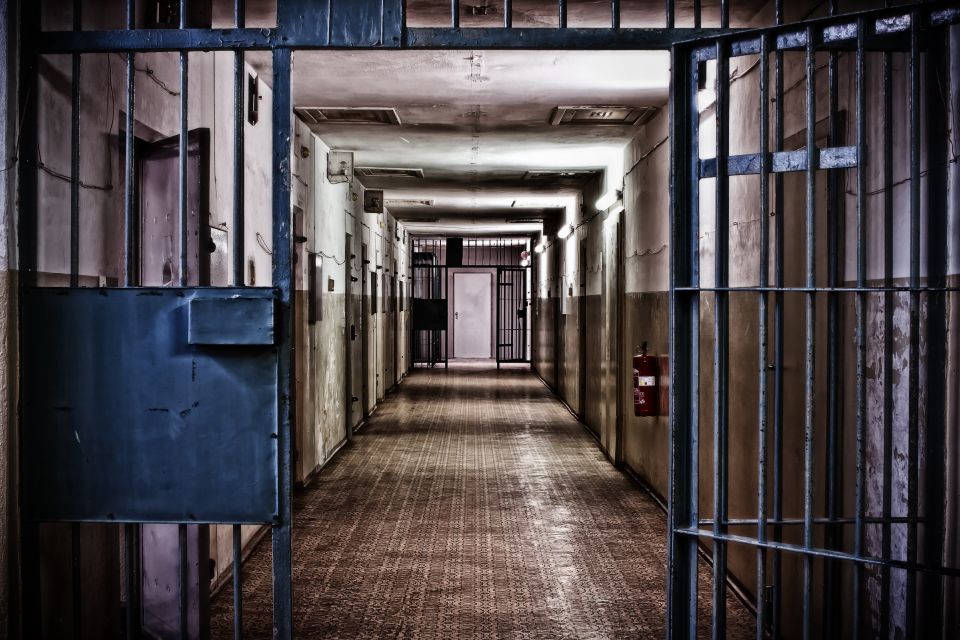
Once you arrive at Forschungs- und Gedenkstätte Normannenstraße, the experience shifts from street-level context to institutional reality. The Stasi Museum is set up around the idea that the Stasi wasn’t some distant agency. It operated through offices and workflows—rooms where surveillance, paperwork, and decision-making happened together.
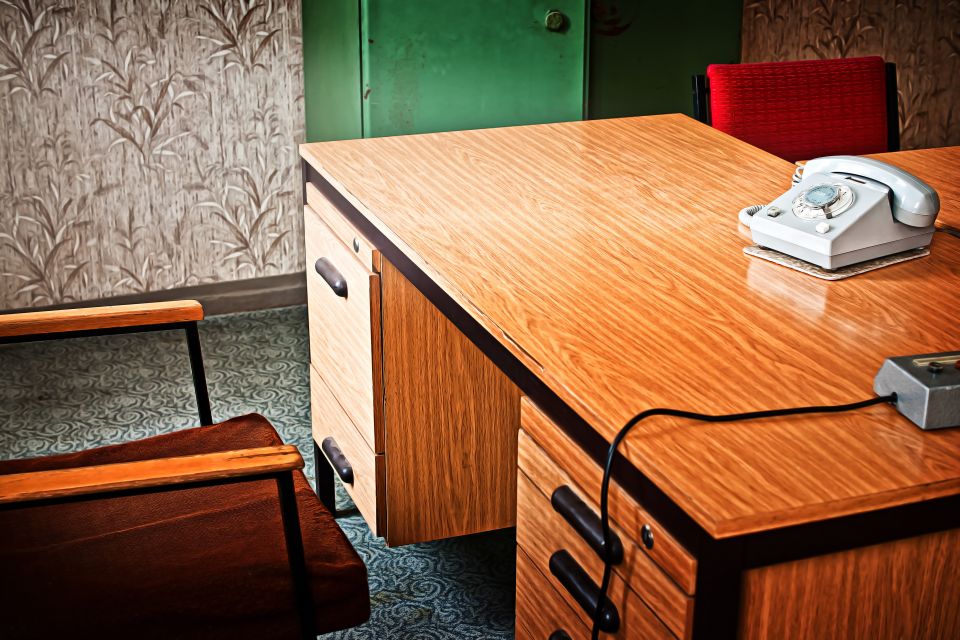
You’ll visit areas described as ministerial offices and you’ll also see the office of Erich Mielke. Even if you know the big facts about the Stasi, the office setting helps you understand something harder to absorb from books: this was bureaucracy with teeth. The guide’s commentary turns that into clearer cause and effect—why certain actions had consequences, and why people adapted their behavior.
One practical note that matters: because the tour uses skip-the-line tickets with a pre-booked time slot, you’ll want to show up on time at the meeting point and stay aligned with the schedule. You’re buying convenience, but that convenience comes with a clock.
The spy technology stop: bugs, hidden cameras, and what they imply

A major highlight is the chance to see original spying technology used by the Stasi secret police. The tour includes examples like bugs and hidden cameras. Seeing them in person does something that photos can’t: it makes the surveillance feel less like a concept and more like hardware.
The guide’s job here is crucial. Technology alone is just objects. The value comes from hearing how it was used, what kind of access it relied on, and how it fed into the wider system of control. When you connect the equipment to informants, documents, and monitoring, the tools stop being “interesting gadgets” and start being evidence of coercion.
This is also where the tour tends to score high with people who care about context. In past feedback, guides have been praised for staying engaging—using personal stories and explanations that make the mechanics easier to grasp. If your guide is someone like Silvia (a name that appears in prior bookings), you’ll likely get that extra layer of human delivery, not just a lecture style.
Erich Mielke’s office and the red briefcase moment
One of the most talked-about parts of this experience is the visit to Erich Mielke’s office, including his famous red briefcase. Even if you only know him as a symbol, this stop makes the symbolism tangible. The briefcase is presented as a way to understand how sensitive information moved at the top of the system.
This isn’t just museum theatrics. The Stasi’s effectiveness depended on managing and sharing intelligence quickly and discreetly. By highlighting Mielke’s office and that signature prop, the museum helps you see power as a workflow—information gathered, processed, and acted on.
If you’re the type who likes “show me how it worked,” this is your moment. It ties together what you saw earlier (spy tech) and what you’ll hear later (informants and control). It’s one of those anchors that gives the tour shape.
You can also read our reviews of more guided tours in Berlin






Understanding the fear: informants, propaganda, and daily life in the GDR
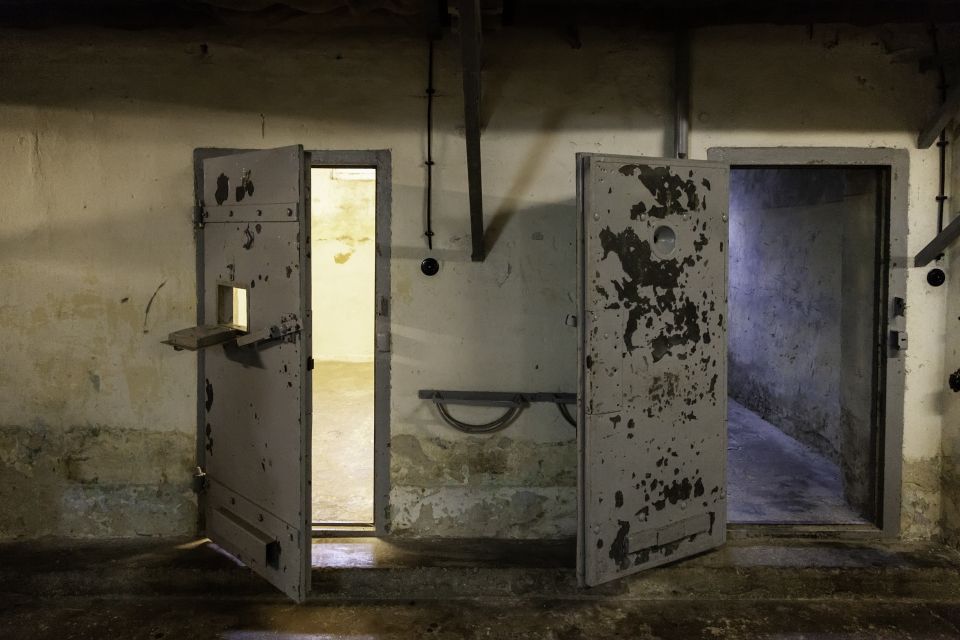
The core question the tour answers is simple: what was everyday life like in the postwar GDR, and how did the Stasi operate so that people feared them? The Stasi Museum gives you the structure to understand that fear.
You’ll learn about:
- how informants were recruited
- how citizens were spied on and controlled
- how the GDR maintained legitimacy through communist propaganda and dictatorship
The value isn’t just that these topics are covered. It’s that the guide connects them. Propaganda sets expectations. Surveillance enforces them. Informants reduce uncertainty for the Stasi—turning ordinary social life into a risk environment.
For you as a visitor, the best takeaway is usually pattern recognition. Once you understand the system, you can look at Cold War-era stories with better instincts. You’ll notice how “private” actions weren’t truly private, and how even small behaviors could become part of a bigger file.
This also makes the tour useful beyond classic Cold War history buffs. If you’re interested in how authoritarian systems maintain control—through information, fear, and public messaging—this museum gives you concrete examples rather than vague moral lessons.
Private tour pacing, language choice, and the human factor
This is a private group tour with a licensed guide, and it’s offered in English or German. For many people, the “native language” part matters because the subject has layers. The guide has to explain terms, methods, and relationships between institutions without oversimplifying.
In practical terms, private format helps you ask the annoying questions you’d never ask in a big group—questions about how surveillance worked day-to-day, or about what people did to protect themselves. It also makes the time feel better spent. Three hours is long enough to cover the main stops without turning the visit into a blur.
There’s also a human delivery angle that shows up in the history of guides. Past feedback praised guides for friendliness and strong engagement, including using their own experiences to make the visit more memorable. That doesn’t mean you’ll get a personal memoir from every guide, but it does mean the tour is set up for clear, lively explanation, not just recitation.
And one extra detail from prior bookings: even when the tour was booked in English, one guide reportedly could also speak Danish. If you have a Danish-speaking friend, that can be a pleasant surprise—but it’s not something you should plan around.
Price and value: is $257 per person worth it?
Let’s talk money in plain terms. A $257 per person private tour is not a bargain. If your goal is only to see a museum exhibit, you’ll find cheaper ways to visit.
So where does the value come from?
First, you’re paying for guided interpretation inside a complex, politically loaded setting. This museum is easy to misread if you’re only scanning information panels. A good guide turns artifacts and rooms into a coherent story about surveillance and control.
Second, you get skip-the-line tickets with a pre-booked entry slot. That matters because museum time can get wasted, and private tours depend on staying aligned with your schedule.
Third, the tour includes two-way public transport tickets, which reduces hassle when the museum isn’t in the center of Berlin.
Finally, you’re buying time in the right sequence: starting at Alexanderplatz, arriving by transit, and then spending focused time at key areas like ministerial offices and Mielke’s office. For a lot of people, the “value” is less about how many objects you see and more about leaving with clear understanding.
One caution: if you’re very price-sensitive, this tour might feel like a stretch—especially because it’s three hours and concentrated in one site. That’s fair. If you want maximum budget efficiency, you may want to compare to self-guided options. If you want the story explained well, this is the direction that typically makes the museum click.
What this tour is (and isn’t): Stasi Museum vs. Stasi prison
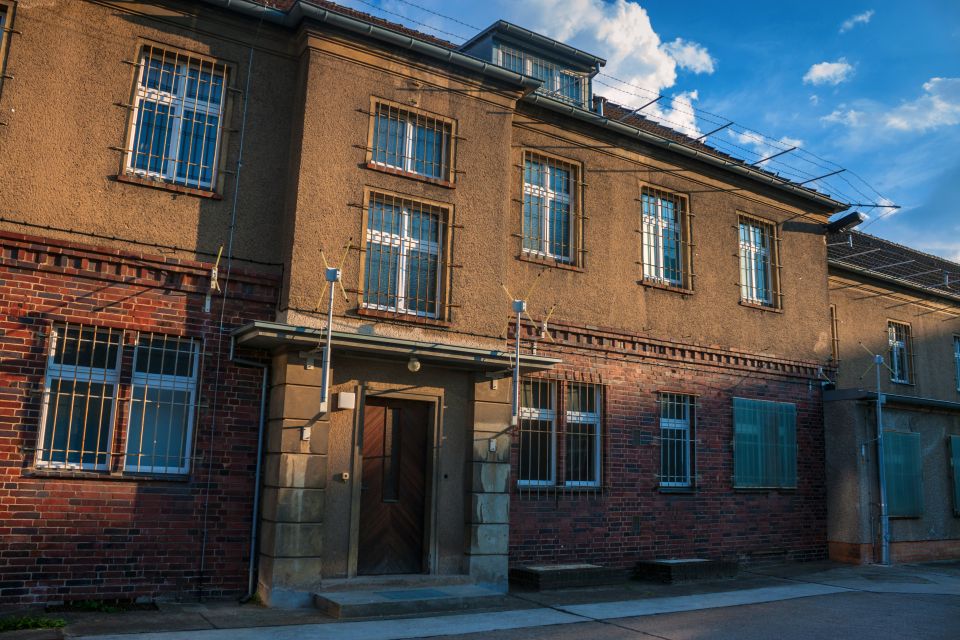
There’s an important distinction before you go. This tour includes tickets to the Stasi Museum (Forschungs- und Gedenkstätte Normannenstraße). It is noted as a different museum than the former Stasi prison memorial known as Berlin-Hohenschönhausen Memorial (Gedenkstätte Berlin-Hohenschönhausen).
So, if you’re specifically chasing the feel of incarceration—cells, prisoner life, and that prison location experience—this won’t replace that. But if you want the “headquarters and system” side of the Stasi, the Stasi Museum is exactly the right target.
Should you book the Stasi Museum private guided tour?
Book it if you want:
- a guided walkthrough inside the former Stasi HQ
- original surveillance technology explained with context
- time in Erich Mielke’s office and the red briefcase focus
- a private format where language choice matters
Skip it (or consider pairing differently) if:
- your budget is tight and you mainly want to browse museum displays
- you’re looking specifically for a Stasi prison memorial experience rather than the HQ/system side
If you land in the “I want real understanding, not just facts on walls” category, this is a strong bet. The combination of skip-the-line entry, included transit, and a private guide’s interpretation makes it one of the more effective ways to process a subject that’s otherwise easy to leave as blur and trivia.
FAQ
How long is the Stasi Museum private guided tour?
The tour lasts 3 hours.
Where do I meet my guide?
Meet your guide in front of the DM drugstore at Alexanderplatz, 1, 10178 Berlin.
What museum is included in this tour?
The included site is the Stasi Museum (Forschungs- und Gedenkstätte Normannenstraße).
Is this the same as the Berlin-Hohenschönhausen Memorial?
No. The tour notes that this is a different museum than the former Stasi prison memorial at Berlin-Hohenschönhausen.
Are skip-the-line tickets included?
Yes. Skip-the-line tickets to the Stasi Museum are included with a pre-booked entry time slot.
What does the tour include besides the guide?
The tour includes two-way public transport tickets and entry tickets to the Stasi Museum, plus expert commentary on state surveillance and the division of Germany.
Will I see original Stasi spy technology?
Yes. The tour includes seeing original spy technology used by the Stasi police, such as bugs and hidden cameras.
What language is the guide?
The live tour guide is offered in English and German.
Is the tour wheelchair accessible?
Yes, the tour is wheelchair accessible.
What if I need to cancel?
Free cancellation is available up to 24 hours in advance for a full refund.